Connect with us

%

Holiday Ends In Tragedy As British Tourist Found Dead In Algarve Villa Pool

Published

on

holiday-ends-in-tragedy-as-british-tourist-found-dead-in-algarve-villa-pool

Authorities are treating the case as a sudden unexplained death. Photo credit: Serhiy Stakhnyk/Shutterstock

Holidaymakers in the Algarve have been left shaken after a 27-year-old British tourist was found dead in a villa swimming pool in Vilamoura, with police now awaiting autopsy results to determine how the tragedy happened. The man was discovered in the early hours at a holiday rental property in one of the Algarve’s most popular resort areas for British visitors. Emergency services were called to the scene, but he unfortunately was pronounced dead at the property.

At this current moment, Portuguese authorities have not confirmed the cause of death, and the case remains officially classified as an unexplained death pending full forensic analysis. Vilamoura is widely regarded as one of the Algarve’s most established and frequently visited holiday destinations for British tourists.

What is known so far about the incident

The man was found in the swimming pool of a private villa, located in the municipality of Loulé in the Algarve region of southern Portugal. Emergency services were alerted during the early hours of the morning after the man was discovered floating in the water. Despite rapid response, he could not be revived and was pronounced dead at the scene.

His identity has not yet been officially released, as formal identification procedures are ongoing and next of kin must be informed before any details are made public. Vilamoura is a major coastal resort known for its marina, golf courses, nightlife, and large number of private holiday rentals, particularly popular with British tourists during the summer season.

Investigators are now reconstructing events using witness accounts and forensic evidence to establish a clear timeline of what happened in the hours leading up to the discovery.

Friends spoken to as part of investigation

Reports indicate the man had been staying at the villa with friends at the time of the incident. Portuguese police have already spoken to those present as part of standard investigative procedures. These interviews are being used to help establish when the man was last seen, what he was doing beforehand, and how he came to be in the swimming pool. At this stage, there is no suggestion of foul play, and no arrests have been made.

Authorities are treating the case as a sudden unexplained death, which is standard procedure until forensic and medical evidence provides a confirmed explanation. Investigators are also reviewing the scene and surrounding circumstances to ensure a full understanding of the timeline before the emergency call was made.

Autopsy ordered in Faro as cause of death remains unknown

A post-mortem examination has been ordered in Faro, which will be the key step in determining the official cause of death. The autopsy will assess whether drowning was the direct cause or whether other contributing factors, such as a medical episode or toxicological influences, may have played a role.

Until those results are completed, Portuguese authorities have not drawn any conclusions about how the death occurred. Police have secured the property and continue routine investigative procedures, including gathering evidence and reviewing all available information from the scene. In cases involving foreign nationals, it is standard practice for authorities to coordinate with consular services regarding identification and repatriation once formal procedures allow.

No evidence of suspicious circumstances reported

At present, authorities have not reported any signs of suspicious circumstances or criminal involvement. The investigation remains open but is being handled as a routine unexplained death pending forensic confirmation.

This approach is standard in Portugal when a tourist dies unexpectedly, particularly where the cause is not immediately clear at the scene. Officials are focusing on establishing verified facts through medical examination rather than speculation.

Investigation continues as family awaits answers

The key development will be the results of the autopsy in Faro, which will determine the official cause of death and how the case is ultimately classified. If findings confirm an accidental death or medical cause, the investigation is likely to be closed following standard procedures. If further concerns are identified, additional inquiries may follow.

For now, Portuguese authorities are continuing to focus on establishing a verified timeline and cause through forensic evidence, with no official explanation yet confirmed for how the man came to be in the pool. Further updates are expected once the post-mortem results are completed and formal identification procedures have been finalised.

%

Lorry Snags Power Cable On A-7 In Mijas

Published

on

lorry-snags-power-cable-on-a-7-in-mijas

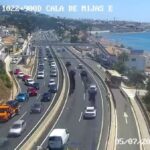
A lorry became tangled in overhead power lines on the A-7 near Mijas on Tuesday, June 30 morning, leaving drivers exposed to live cables on the road and triggering tailbacks that disrupted residents and commuters for hours.

What happened on the A-7 near Calahonda

Emergency services received calls from members of the public at around 8.20am after a lorry struck overhead cables on the Marbella-bound carriageway near kilometre 1022, close to Calahonda. Officials believe the downed cable affected four vehicles in total, with drivers forced to stop suddenly close to a live wire on the carriageway.

Both the right-hand and left-hand lanes were shut at the scene, causing massive congestion stretching up to four kilometres back from the first Mijas junction. Commuters faced lengthy delays during the busy morning rush, unable to pass the danger zone safely.

Major risk to drivers and nearby residents

Live overhead cables falling onto a motorway carry an obvious electrocution risk to drivers and to anyone attempting to move stranded vehicles or assist others nearby. Residents in surrounding areas faced disruption too, with the closure cutting off a key route through Mijas during peak travel hours.

Guardia Civil officers, firefighters and Endesa technicians attended the scene to secure the area, given the danger of wires remaining energised after such a collision. Thankfully, despite the nature of the incident, no injuries have been reported among those involved.

Emergency response and clean-up

Endesa staff worked to assess and remove the damaged cabling with traffic officers managing stranded vehicles and rerouting drivers around the hazard. Authorities have not yet confirmed what caused the lorry to make contact with the lines, nor how long repairs to the damaged power infrastructure may take.

Separate lorry incident near Marbella

Elsewhere on the A-7, a lorry tyre blew out shortly before 7am near kilometre 1045, on the Cadiz-bound carriageway towards Marbella. Debris partially blocked the right-hand lane, producing a separate jam of roughly 1.5 kilometres during peak rush hour traffic, not a good morning for drivers across the Costa del Sol.

Continue Reading

%

Heatwave Shock As France Turns To Spain To Learn How To Survive 40º Heat

Published

on

heatwave-shock-as-france-turns-to-spain-to-learn-how-to-survive-40o-heat

Spain is often viewed as a country that has had longer experience dealing with extreme heat conditions. Photo credit: F. J. CARNEROS/Shutterstock

When temperatures push into the high 30s and 40ºC range, much of Europe tends to slow down, grind to a halt, or struggle to cope. But in Spain, life continues in a way that is now catching the attention of neighbouring France, where officials are reportedly preparing to visit Spain to learn how the country manages extreme heat.

The idea is that Spain could offer practical lessons on adapting to increasingly intense summers, particularly in cities where extreme heat has become a regular feature rather than an exception. At the centre of that interest is Madrid, where even at 40ºC, the city continues to function.

France looks to Spain as heatwaves intensify across Europe

The French government is preparing a study visit to Spain to better understand how public services, infrastructure and daily routines cope with extreme heat. The move reflects growing concern in France about how to adapt to rising temperatures, particularly in urban areas where heatwaves are becoming more disruptive to transport, workplaces and public health systems.

Rather than focusing purely on emergency response, French officials are said to be interested in how Spain has gradually adapted its way of life, from working patterns to public behaviour, in order to function during prolonged periods of extreme heat. Spain, especially cities like Madrid, Sevilla and Córdoba, has long experience of dealing with summer temperatures that regularly exceed 35ºC and often reach or surpass 40ºC.

Madrid’s ability to function in 40ºC heat draws attention

The reference point repeatedly highlighted is Madrid itself, where summer heatwaves are now a familiar part of life rather than an exceptional event. Despite extreme temperatures, the city continues to operate with offices open, public transport running, and daily routines largely maintained, albeit adjusted for the conditions.

Life does not stop during heatwaves; instead, it shifts. That includes later working hours in some sectors, extended evening activity, widespread use of air conditioning in public spaces, and cultural habits such as avoiding peak afternoon heat. It is this combination of infrastructure and lifestyle adjustment that is believed to be attracting international interest.

What France hopes to learn from Spain

The focus is expected to be on practical adaptation strategies, local media reports that French officials want to examine how Spain manages:

  • Public health responses during extreme heat 
  • Urban planning and cooling strategies in cities 
  • Work patterns and labour adjustments during heatwaves 
  • Transport and infrastructure resilience 
  • Communication with the public during heat alerts 

The aim is not to replicate Spain’s climate or geography, but to understand how systems can remain functional under sustained heat stress. As heatwaves become more common across southern and central Europe, governments are increasingly looking at cross-border learning rather than developing strategies in isolation.

Heatwaves becoming a shared European challenge

The interest from France comes as heatwaves are no longer confined to traditionally hotter southern regions. Countries such as France, Germany and the Netherlands have all experienced record-breaking summer temperatures in recent years, leading to increased pressure on hospitals, transport systems and energy grids.

Spain is often viewed as a country that has had longer experience dealing with extreme heat conditions and has gradually built infrastructure and habits around it. This does not mean Spain is unaffected by heatwaves, far from it, but rather that adaptation has become part of everyday life over time.

Why Spain is being used as a reference point

Part of the reason Spain is attracting attention is because of how normalised extreme heat has become in many regions. In cities like Madrid, temperatures above 35ºC are not unusual during summer months, and 40ºC days are increasingly common. Over time, this has influenced how cities operate, from shaded public spaces to adjusted working hours and increased reliance on cooling systems.

A growing change in how Europe prepares for heat

As climate patterns continue to change, European countries are beginning to treat heatwaves with the same seriousness traditionally reserved for cold-weather emergencies. The reported French interest in Spain highlights a wider shift: learning how societies adapt, rather than only how they respond in crisis.

Whether through infrastructure, policy or daily habits, the focus is increasingly on resilience. And for Spain, long used to high summer temperatures, that experience is now being watched more closely than ever by its European neighbours.

Continue Reading

%

Households In Spain Could Save On Electricity Bills As 7 Per Cent Power Tax Cuts Begin This Year

Published

on

households-in-spain-could-save-on-electricity-bills-as-7-per-cent-power-tax-cuts-begin-this-year

Taxpayers in Spain could save €315 million in 2026 with 7 per cent power tax cuts. Credit: Renata Photography / Shutterstock.

Households in Spain facing another season of expensive electricity bills could soon be promised some relief, as the government begins removing a 7 per cent tax on power generation from 2026. The tax is due to disappear by 2028, but the savings may be harder to spot than many households expect.

How Spain’s power tax cut could reach household bills

For anyone living in Spain and already watching the electricity bill before switching on air conditioning, pool pumps, ovens or electric heaters, a tax change buried deep in the energy system could soon make a difference.

The Spanish government has approved the progressive removal of the Impuesto sobre el Valor de la Producción de Energía Eléctrica, known as IVPEE. It is a 7 per cent tax on the value of electricity production, paid by generators rather than directly by households.

That means it is not usually a neat line on a domestic bill. But because generation costs feed into the wider electricity system, the government says removing the tax should help reduce bills for consumers.

Spain’s Minister for Ecological Transition, Sara Aagesen, said the impact would vary depending on the type of consumer, but could reach up to a 6 per cent reduction in the electricity bill.

Why the 7 per cent charge was added before electricity reached homes

The tax dates back to when Spain introduced several energy-related fiscal measures. The IVPEE applied to electricity produced and fed into the Spanish system, including renewable, cogeneration and waste-based production.

At the time, Spain was dealing with the legacy of the so-called tariff deficit, a long-running gap between regulated electricity-system costs and the income collected to cover them.

In simple terms, a cost charged upstream to producers can still influence what ends up being paid by homes, businesses and larger industrial users.

The tax has long been criticised by parts of the energy sector and consumer groups, partly because it affected electricity generation at a time when Spain is trying to encourage more electrification, renewable power and lower dependence on fossil fuels.

How Spain will phase out the electricity generation tax by 2028

The measure forms part of a new government package approved on Monday, June 29, through a royal decree-law. The tax burden will be reduced through 2026 before being cut to 3.5 per cent in 2027 and removed completely in 2028, when the rate is expected to become 0 per cent.

For 2026, the government says previous reductions already applied to the first and second quarters. The new decree-law adds a 30 per cent reduction for the third quarter and a 40 per cent reduction for the fourth quarter.

Officials say the change will mean €315 million in savings for taxpayers in 2026. The government also says the wider reduction and elimination of the tax will add €2.7 billion in fiscal savings during 2027 and 2028.

Why households may not see the same saving at the same time

These tax cuts do not always translate into an identical and immediate fall in every monthly bill. The final price paid by a household in Spain depends on several moving parts, including the electricity contract, consumption, contracted power, wholesale market movements, network charges, VAT, the special electricity tax and the supplier’s own terms.

Those on Spain’s regulated small-consumer tariff, known as Precio Voluntario para el Pequeño Consumidor (PVPC), may see market changes differently from customers on fixed or free-market contracts. Free-market customers may need to wait for renewals or check whether their supplier passes on wider cost reductions.

Spain’s Competition and Markets Regulator already recommends that domestic consumers understand what type of electricity contract they have and compare offers before changing suppliers.

How the tax cut could help businesses, renewables and jobs

The government has also framed the change as a competitiveness measure, especially for electro-intensive industry, meaning businesses whose production costs depend heavily on electricity.

The Minister for Ecological Transition said the tax removal could increase industrial production by €2.6 billion a year and support around 3,700 jobs. She also linked the reform to investment in areas such as renewable hydrogen.

Renewable energy groups had been calling for the tax to be scrapped, arguing that Spain should not penalise electricity generation while trying to move more homes, transport and industry away from fossil fuels.

APPA Renovables, the Spanish renewable energy association, said earlier this year that the tax made electricity more expensive and slowed electrification. The group also argued that Spain was at a disadvantage after Portugal removed a comparable mechanism in the Iberian electricity market.

Why residents should still check the contract before expecting relief

For households in Spain, bills should be checked closely, especially the contract type, renewal date, contracted power and price per kilowatt hour. The tax phase-out is designed to lower pressure in the system, but it does not remove the need to compare tariffs or challenge poor deals.

The decree-law will also have to go through the usual parliamentary validation process for royal decree-laws in Spain. For now, the key dates to watch are the second half of 2026, when the reductions begin to bite, 2027, when the rate is due to fall to 3.5 per cent, and 2028, when the government plans to remove it completely.

Continue Reading
Advertisement
Advertisement

Spanish Real Estate Agents

Tags

Trending

Copyright © 2017 Spanish Property & News