Connect with us

%

How Will Animals React To Spain’s Total Solar Eclipse? Scientists Are About To Find Out

Published

on

how-will-animals-react-to-spain’s-total-solar-eclipse?-scientists-are-about-to-find-out

researchers will monitor bears, primates, birds and a variety of other species. Photo credit: Allan91/Shutterstock

For centuries, people have claimed that animals can sense a solar eclipse long before humans fully understand what is happening. Birds suddenly stop singing. Bats emerge in broad daylight. Nocturnal creatures begin their nightly routines, while daytime animals appear confused as the sky unexpectedly turns dark. In the coming weeks, scientists across Spain hope to discover exactly how much of that is true.

As the country prepares for the total solar eclipse on August 12, two of northern Spain’s best-known wildlife parks, Cabárceno Nature Park and Santillana del Mar Zoo, will become part of one of the largest studies ever carried out in the Iberian Peninsula into how animals react when day suddenly becomes night.

A rare opportunity for science

The eclipse is already expected to attract thousands of visitors, astronomers and photographers eager to witness one of nature’s most spectacular events. It will also mark the first total solar eclipse visible from mainland Spain in more than a century, creating a scientific opportunity that few researchers have experienced during their careers. While millions of people will be watching the sky, researchers inside twelve zoos across Spain and Portugal will have their attention fixed elsewhere.

Their focus will be on the animals.

The project, coordinated by the Asociación Ibérica de Zoos y Acuarios (AIZA), will use high-definition cameras and audio equipment to document behavioural changes before, during and after the eclipse, creating one of the most detailed records ever assembled of wildlife responses to this rare natural phenomenon. Lions, elephants and other species under close observation At Cabárceno, researchers will pay particular attention to lions and elephants.

Lions naturally become more active towards dusk, leading scientists to wonder whether the sudden darkness created by the eclipse will trigger behaviour normally seen later in the day. Elephants are also expected to provide valuable information because their activity patterns often change as daylight fades.

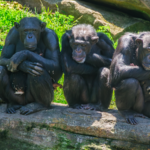
Across the other participating parks, researchers will monitor bears, primates, birds and a variety of other species, looking for changes in movement, vocalisations, feeding behaviour and social interactions. Every reaction, whether dramatic or barely noticeable, could provide new insight into how animals interpret sudden changes in their environment.

What scientists already know

Previous eclipses have produced remarkable observations around the world. Birds have been seen abandoning daytime activity and returning to their nests as though sunset had arrived. Crickets and other insects have begun their evening chorus despite it being the middle of the day, while bats have emerged to forage before quickly retreating once daylight returned.

Some primates have displayed signs of confusion, gathering together or changing their normal routines, while giraffes, flamingos and other zoo animals observed during earlier eclipses have shown unusual behaviour ranging from increased alertness to settling down for the night. Scientists believe many of these reactions are linked to animals relying on changing light levels to regulate their internal body clocks.

However, behaviours in a captive environment detailed scientific evidence remains limited, making the 2026 eclipse an important opportunity to collect data across multiple species under carefully monitored conditions.

Every movement will be recorded

This study goes far beyond simply watching what happens on eclipse day. Researchers are already recording the same animals at exactly the same time each day before the event, creating a baseline that will allow them to compare normal behaviour with reactions during the eclipse itself.

By analysing video, sound recordings and behavioural observations together, scientists hope to determine whether animals genuinely interpret the eclipse as nightfall or whether they respond to other environmental changes, such as falling temperatures or shifts in light intensity. The standardised approach across all participating parks will also allow researchers to compare how different species react under similar conditions.

Looking down while everyone else looks up

On August 12, millions of people across Spain will pause to watch daylight disappear. Astronomers will point telescopes towards the Sun. Families will gather wearing eclipse glasses. Cameras will be aimed at the sky in anticipation of a spectacle that many people will only experience once in their lifetime. At exactly the same moment, scientists inside Cabárceno, Santillana del Mar and ten other wildlife parks will be watching something very different.

They will be listening for birds falling silent, watching whether lions begin their evening routines hours early, and recording every movement that could help answer a question people have asked for generations. When Spain briefly falls into darkness, the eclipse will reveal far more than a breathtaking astronomical event. It could also provide one of the clearest insights yet into how the animal kingdom responds when the familiar rhythm of day and night is suddenly turned upside down.

%

Spanish Brown Bears Caught Faking Their Size

Published

on

spanish-brown-bears-caught-faking-their-size

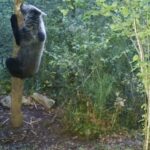
Brown bear scaling tree in Cantabria, northern Spain. Credit: MNCN YT

Some crafty brown bears in northern Spain have been rumbled for pulling a fast one on their rivals. Scientists have filmed the animals deliberately leaving marks higher up trees so they seem bigger and more intimidating than they really are.

Researchers from the Museo Nacional de Ciencias Naturales (MNCN-CSIC) spent four years watching 164 brown bears in the Cantabrian mountains. They collected a massive 117,000 hours of camera-trap footage across 14 popular marking spots between 2021 and 2024. Results, published in the Journal of Mammalogy, show seven of those bears, roughly one in twenty, worked out how to cheat the system.

Bears normally leave scratch marks and scent signals at the highest point they can reach while standing on their back legs, around two metres off the ground. That height usually gives a fair idea of an animal’s real size and strength. However, a handful of crafty males decided that wasn’t enough. They climbed trees or used natural platforms to push their marks higher, sometimes as far as three metres up. One broken branch found right under an especially high mark gave the game away, clear proof the bear had scrambled up to leave it.

First time this cunning has been filmed in bears

Lead researcher Vincenzo Penteriani from the MNCN said the discovery was a real eye-opener. “Although this is exceptional behaviour, it is the first time it has been documented in bears, which shows their communication is more complex than we thought.”

To test the idea properly, the team fixed wooden platforms next to the usual marking trees and posts. Sure enough, some bears hopped onto them to leave their calling cards higher than nature intended. Scientists believe the tactic could help younger or less dominant males put off bigger rivals without a proper fight. It might even improve their chances with the females during the mating season.

Penteriani summed it up neatly: the bears’ communication sits in a constant balancing act, not completely honest, not completely dishonest, but always shifting between the ones sending the signals and the ones reading them. For a species once thought to stick to straight-up messages about size and power, these Cantabrian brown bears have shown they can be a bit more slippery than anyone expected. It’s so far unclear if Spanish bear cubs boast to their friends that their dad’s bigger.

Continue Reading

%

900kg Bull Strolls Into A Catalan Bar For Breakfast

Published

on

900kg-bull-strolls-into-a-catalan-bar-for-breakfast

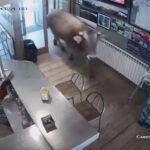
A bull walks into a bar, and says… Credit: Bar Gusi FB

Breakfast time took a wild turn at a roadside café in northern Catalonia when a hefty young bull decided to pop in for a look around and maybe some toast with tomato on it.

Nearly ten o’clock on Monday morning, the animal had been moving with its herd along the main road past Bar Gusi in Ribes de Freser, Girona. Local farms regularly move cattle this way to reach fresh pasture, and the beasts have right of way on that stretch. Owner David Torrecillas says the animals pass often and “in 30 years nothing like this had ever happened.”

This time one bull lagged behind. “He drifted away from the herd and got left behind,” David explains. Standing out on the terrace, he spotted the creature heading straight for the door. “I saw it coming towards us but never thought it would actually go inside the café. I reckoned it would turn round and head up the road. I never would have imagined it. It kept getting closer and closer until it walked right into the bar. When I saw it, I thought, Is this really happening?

CCTV cameras captured the whole thing. About twenty people, including locals and holidaymakers, stared gasping as the bull, estimated at “at least 500 kilos” by one staff member, pushed past the tables. “Seeing one go past on the road is one thing, but watching a bull walk into the bar is something else,” a waitress said. “Luckily it left the same way it came in. We were all shocked. It wasn’t a dog. It was a proper big animal.”

The herd’s shepherd dashed in straight away but arrived too late to stop the entry. He stayed by the main door to shield customers and asked a waiter to head round the back in case the bull turned.

Waiter’s cool head saves the day

Inside the dining area, an elderly couple, regulars about to sit down for breakfast, suddenly found themselves face-to-face with the unexpected visitor. At that moment, waiter Samuel stepped forward exactly as the shepherd had suggested.

“The waiter stood in front of the bull without any sudden movements,” David recalls. “Then it turned towards the exit and walked out without causing any damage to people or property. I rang him afterwards to congratulate him and say thanks. He handled it so calmly and naturally. I believe his family used to keep livestock, so he wasn’t scared. He kept his cool and moved slowly so he didn’t startle it, letting it turn round and leave.”

Samuel later posted the CCTV clips online with a light-hearted note: “Today we had a very special visit at Bar Gusi. Seems he heard the food is fantastic here. He hadn’t booked, but with a customer that size we weren’t going to turn him away! Official note: No customers or staff were hurt in this adventure.”

The entire visit lasted just 20 seconds. The bull spun round, knocked a few tables over, exited through the front door and rejoined the herd with the shepherd following.

Locals who saw the footage couldn’t resist a chuckle. One wrote: “What authentic customers you’ve got, David!” Another joked: “He’s bringing the goods for the burgers!!!” A third admitted, “It made me laugh!!! I don’t know what I would have done.” And a final comment summed it up: “The bull – luckily everything went well.”

Continue Reading

%

Spain’s Tastiest Trophy

Published

on

spain’s-tastiest-trophy

Most footballers dream of lifting the World Cup, celebrating with millions of adoring fans and adding another glittering medal to the trophy cabinet. Few, however, probably imagine the next stop on their victory tour involves receiving their own bodyweight in tomatoes.

But in southern Spain, that’s exactly what happened.

Fresh from helping Spain become world champions for the second time, midfield stars Fabián Ruiz and Gavi returned to their hometown of Los Palacios y Villafranca, in Seville province, where they were greeted not with champagne, luxury watches or the keys to the city, but with mountains of freshly harvested tomatoes.

Thankfully, they were for taking home rather than throwing.

The unusual welcome left fans smiling and proved that, in Spain at least, some of the most treasured traditions have nothing to do with glitz or glamour and everything to do with local pride.

A tradition rooted in local pride

Los Palacios y Villafranca is renowned across Spain for producing some of the country’s finest tomatoes, with its fertile farmland supplying markets and restaurants nationwide. So when one of the town’s own achieves sporting greatness, there’s only one fitting reward.

Every player who returns home as a major international champion receives tomatoes equal to their bodyweight.

The tradition has become one of Spain’s most charming and distinctive sporting celebrations, blending football fever with the agricultural heritage that has shaped the town for generations.

Following Spain’s World Cup triumph, Fabián Ruiz stepped onto the scales before delighted locals and was presented with around 84 kilograms of tomatoes. Fellow midfielder Gavi followed, collecting approximately 68 kilograms after receiving the same warm hometown welcome.

The ceremony drew applause, laughter and plenty of photographs as residents celebrated not only the players’ achievements but also a tradition that has become a source of enormous civic pride.

Honouring local heroes

The tomato ceremony dates back to Spain’s first men’s World Cup victory in 2010, when local favourite Jesús Navas returned home after helping La Roja conquer the world in South Africa.

Since then, every major international success involving one of the town’s footballers has been marked in the same unmistakable way.

This year, the celebrations extended well beyond the produce.

Local authorities announced plans for a monument honouring Ruiz, Gavi and Navas, recognising the extraordinary contribution all three have made to Spanish football while inspiring young people growing up in the town.

Two local football grounds where Ruiz and Gavi first developed their talent have also been renamed in their honour, ensuring future generations will train on pitches bearing the names of players who once dreamed exactly where they now stand.

It’s a powerful reminder that even global sporting superstars all started somewhere, and that hometowns never forget their own.

Spain celebrates another historic triumph

Spain’s 1-0 victory over Argentina in the 2026 FIFA World Cup final secured the country’s second men’s world title, 16 years after Andrés Iniesta’s famous winning goal against the Netherlands in Johannesburg.

The victory sparked huge celebrations across Spain, with an estimated 1.8 million supporters lining the streets of Madrid to welcome the champions home during an open-top bus parade through the capital.

But while the national celebrations showcased Spain’s footballing success on a grand scale, it was the quieter homecoming in Los Palacios y Villafranca that captured hearts for a very different reason.

There were no extravagant gifts or lavish ceremonies. Instead, neighbours, friends and families came together to celebrate two local boys who had reached the pinnacle of world football without forgetting their (tomatoe) roots.

And while World Cup medals, trophies and winner’s bonuses will undoubtedly take pride of place in Ruiz and Gavi’s homes, only in this corner of Spain does sporting glory also come with enough tomatoes to keep the gazpacho flowing all summer.

Continue Reading
Advertisement
Advertisement

Spanish Real Estate Agents

Tags

Trending

Copyright © 2017 Spanish Property & News