
Donald Trump
Iran War Strains The Gulf States’ Strategic Relationship With The United States

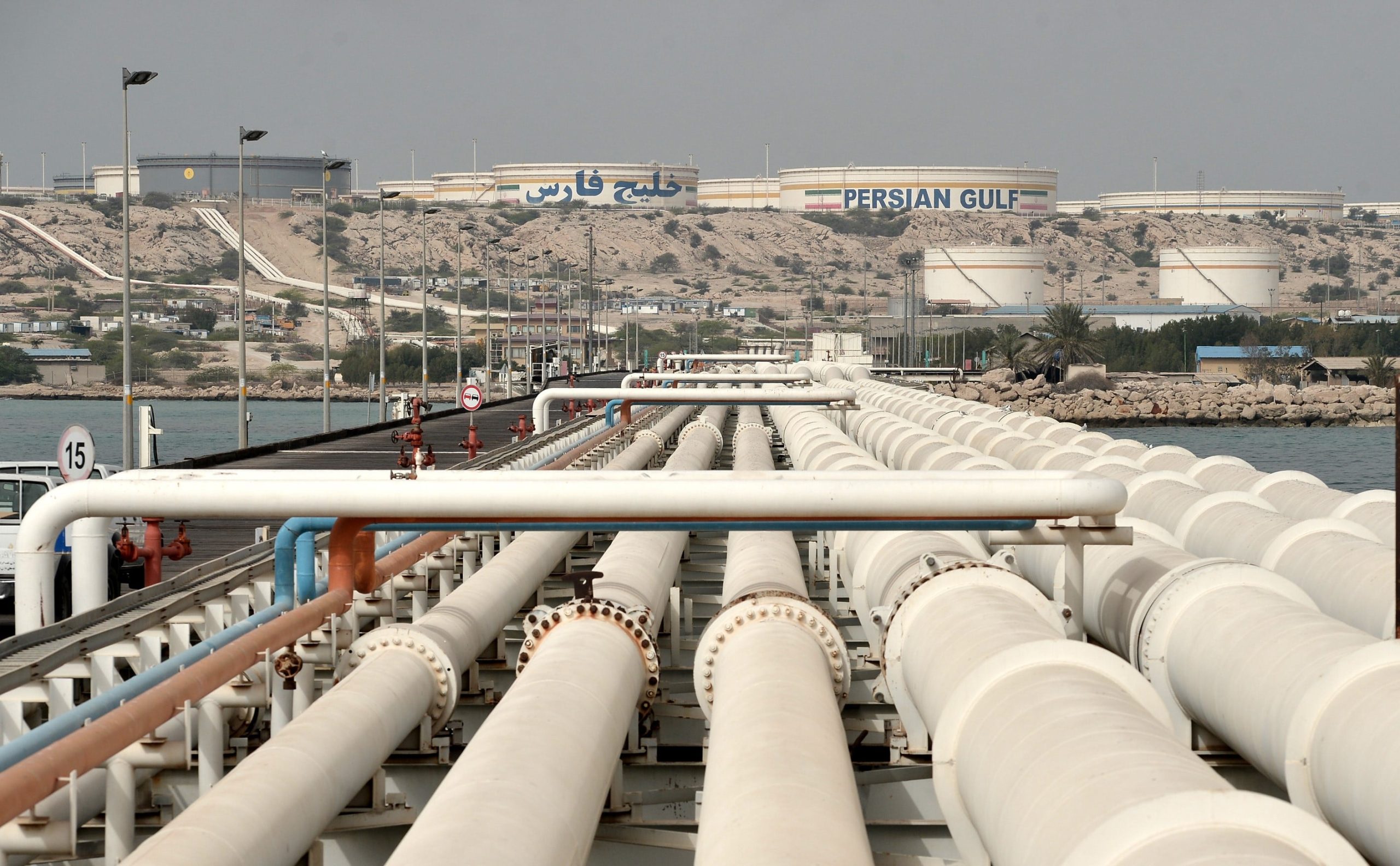
On Valentine’s Day in 1945, a dying Franklin D. Roosevelt met with Abdul Aziz Ibn Saud in the waters of the Suez Canal. The U.S. president and the King of Saudi Arabia agreed on almost nothing, but they got along well. They had arranged to meet to discuss a possible state for the Jews in Palestine — Ibn Saud rejected the idea — but that conversation would end up being the seed of a strategic alliance that other Persian Gulf countries would later replicate. That historic tacit pact meant that Washington would provide security to those countries in exchange for oil. It lasted for decades, but the regional upheaval caused by the war between Israel and the United States against Iran has shown that its foundations were weaker than previously believed.
Barely a few hours had passed since the first U.S. and Israeli bombings of Tehran, on February 28, when the Islamic Republic attacked not only Israel but also the United Arab Emirates, Qatar, Kuwait, and Bahrain. In just a few days, Iranian missiles and drones struck 11 countries across the region. U.S. military bases, seen for decades as the main guarantee of security for the countries hosting them — from the Emirates to Bahrain, and Kuwait to Qatar — became a burden, a liability: far from serving as protection, they turned those countries into Iranian targets.
Washington prioritized “the defense and security of Israel,” while these states feel they were sidelined and, to some extent, “left to fend for themselves” in the face of Tehran’s military reprisals, says Leyla Hamad Zahonero, an associate researcher at the Center for Contemporary Arab Studies (Cearc), speaking by phone. The result, she says, is that the war against Iran has not only “altered the military balance of the region” but has also led those states to “recalibrate their relationship with Washington.” The decades-long strategic pact linking the U.S. with the wealthy countries of the Arabian Peninsula has begun to crack.
Heightened by the war, the fragility of that unwritten pact has become evident, both among the Gulf states and on the U.S. side. First, because of the behavior of the Gulf countries themselves over these past nearly four months: despite many of them being hostile to Iran, rather than pressuring Washington to continue the conflict — as Israel had assumed they would — they have done exactly the opposite, trying, with little success, to persuade it to hold back.
Not only because, with the Strait of Hormuz closed, they were beginning to feel the squeeze of economic suffocation. It is also because, as Hamad Zahonero points out, Iran may be “an uncomfortable neighbor,” but that neighborhood is not going to disappear. Faced with a disappointing alliance with Washington and the dictates of geography, the Gulf countries are now leaning toward trying to mend the rift opened with Iran. That will not be easy either.
On the U.S. side, the war has shown that its alliance with its Gulf partners — those petromonarchies esteemed by a Trump who has in turn been lavishly praised by the sheikhs — was less vital than it seemed. The fracking revolution has driven a surge in oil and gas production in the United States, which is approaching an energy self-sufficiency it could never even have dreamed of: any rise in oil prices still affects it, as has been shown in recent months, but supply itself is secure. The days when Roosevelt sought to control Saudi oil are therefore long gone: now, the United States simply does not need it. Or at least, not as much as it once did.
Having become, along with Israel, a prime target of Iranian retaliation, the war has “exposed the limits of the Gulf states’ outsourced security model and the fragility of an economic development closely tied to stability,” says Zahonero.
The maritime highway of the Strait of Hormuz began to come back to life on June 18, shortly after Donald Trump signed the 14 points in Versailles that promise the difficult task of peace.
The Gulf states’ disappointment with the memorandum is also significant: the document says nothing about the Iranian missiles and drones that Tehran has used to strike even critical civilian infrastructure such as desalination plants.
As for the Strait of Hormuz, the agreement itself leaves room for many interpretations. It states that the Iranian and Omani authorities “will conduct dialog with the Sultanate of Oman to define the future administration and maritime services in the Strait of Hormuz” — a formula that leaves the door open for Iran to charge some kind of fee to ships. Immediately afterward, however, it adds that the arrangement must be “in line with the applicable international law,” which does not allow any toll to be charged for navigating a maritime strait. Adding more ambiguity — and another setback endorsed by the White House.
Alternatives
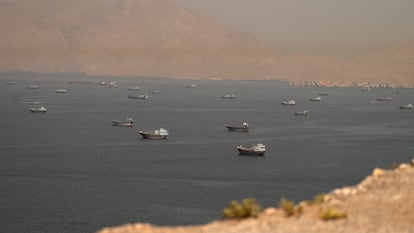
War yields countless lessons, but one stands above the rest: Iran has shown the world — and itself — that it can close the Strait of Hormuz almost at will. In short, it holds the rest of the world at its mercy. This is especially true for the Gulf countries, which export most of their hydrocarbons through that passage and, with or without an agreement, are still considering alternatives to avoid the ordeal of another shutdown. With more reason than ever: they now know for certain that U.S. military power is not enough to reopen this crucial maritime route.
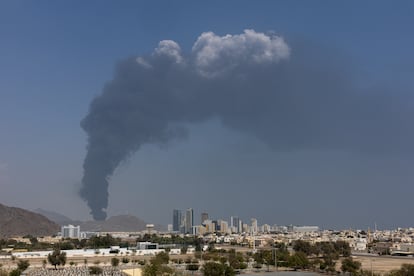
In mid-May, the United Arab Emirates announced it would accelerate its plan to double the capacity of the only pipeline that allows it to bypass the strait and ship oil already from Fujairah, on the Arabian Sea coast. The other major regional player, Saudi Arabia — the country in the region that has managed to safeguard the largest share of its oil exports — is in talks with Kuwait — one of the hardest hit — so that Kuwaiti oil could avoid Hormuz by crossing Saudi territory.
After once again seeing that the White House’s priority is Israel, not them, the Gulf countries are also seeking to increase their strategic autonomy and reduce their dependence on U.S.-supplied weapons. In March, when they began to fear that the constant Iranian attacks might deplete their stocks of interceptors used to stop Tehran’s missiles and drones, the Trump administration’s response was to shut the door, according to the specialized outlet Middle East Eye. It reported that at least one of those countries (without specifying which) asked U.S. officials about the possibility of replenishing those interceptors, only to have its request denied.
In May, Kuwait’s defense minister, Abdullah Ali Abdullah Al Salem Al-Sabah, signed a memorandum of intent with Haluk Gorgun, head of Turkey’s Defence Industry Agency, to strengthen cooperation in that field. Saudi Arabia, the United Arab Emirates and Qatar are also seeking arms deals with Turkey, particularly on drones and short-range air defense systems.
In parallel, these petro-states are also exploring joint development with Turkey of ballistic missile interceptors—a technology that Turkey itself has not yet developed but, as Hamad Zahonero notes, they are “looking into in order to jointly build that industry,” without having to rely on weapons supplies from Washington.
The usual outspokenness of Trump and his aides during this war has only further irritated the Gulf countries. For instance, when Trump singled out states such as the United Arab Emirates while mentioning the promise of a $300 billion investment fund in Iran, in which he said the U.S. would not be “putting up 10 cents.” Or by making the signing of peace with Iran conditional on the Gulf countries — especially Saudi Arabia — joining the Abraham Accords, under which four Arab states established diplomatic relations with Israel in 2020.
“Gulf leaders understand that the Iranian regime is not going anywhere, and they see no strategic benefit in trying to isolate Tehran or push it into a corner. This does not mean that Gulf states have become naïve about Iran. They remain deeply aware of the challenges and threats posed by Tehran,” Danny Citrinowicz, a former Israeli army analyst, recently posted on X (formerly Twitter). “However, their preferred strategy is de-escalation and coexistence rather than confrontation. From their perspective, maintaining channels of communication with Iran is a necessity, not a choice.”
Sign up for our weekly newsletter to get more English-language news coverage from EL PAÍS USA Edition







Donald Trump
The Lucrative Business Of The World Cup: How FIFA Secures Millions In Profits, While Host Nations Take All The Risks

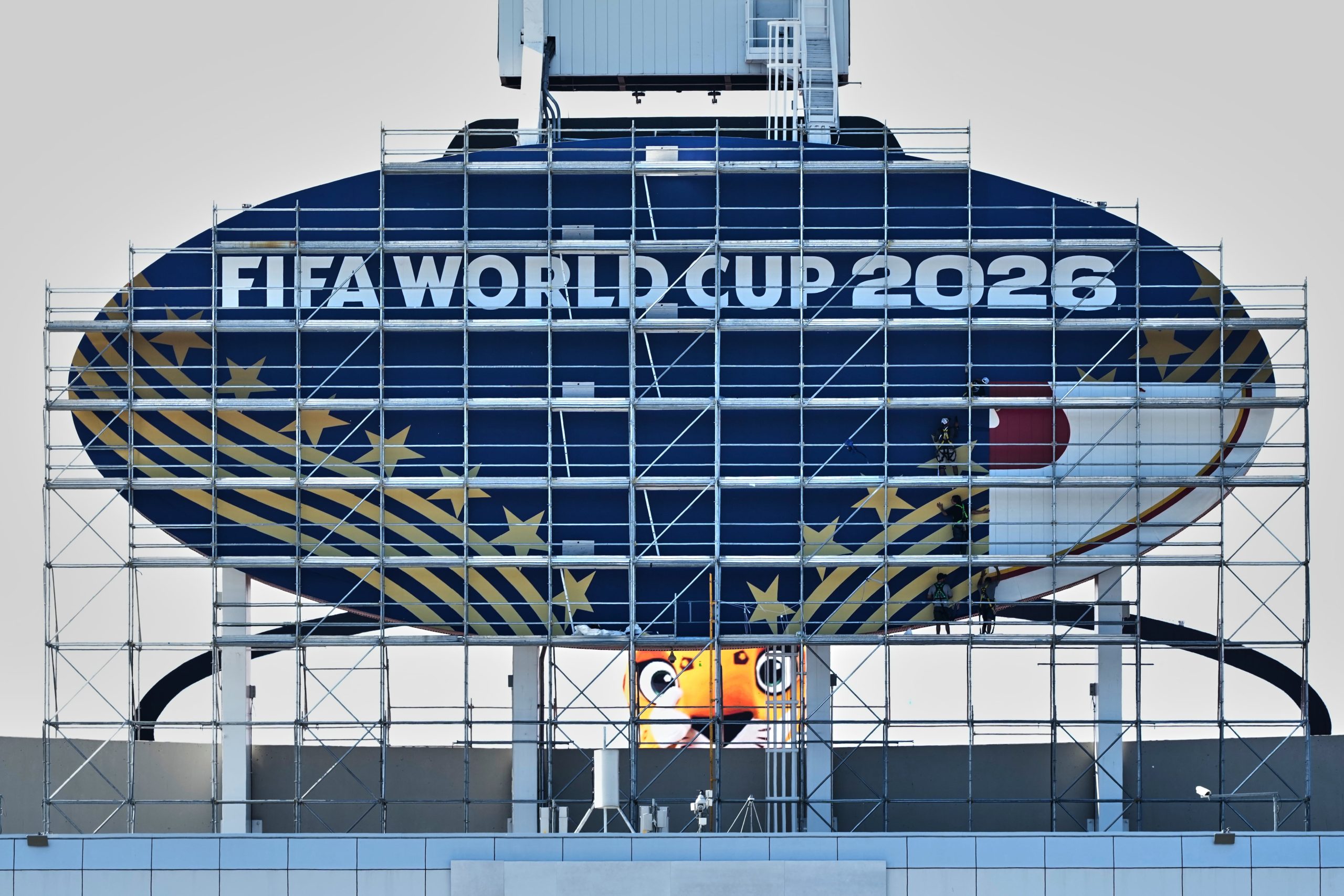
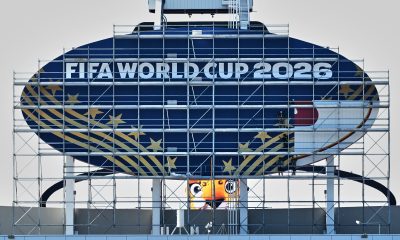
Beyond being a passion, soccer is a business. The 2026 World Cup — currently being held in the United States, Mexico and Canada — is poised to become the biggest sporting event on the planet. And the three host nations hope it will also be a phenomenal economic springboard.
The U.S., Mexico and Canada are staging the most ambitious soccer championship ever held: for 39 days, a total of 48 national teams will play 104 matches in 16 venues across the three host countries. Never before has a tournament of this scale featured so many matches. It’s a lucrative business for the television networks that have acquired the broadcasting rights: they’re expecting an unprecedented audience of millions. A report published by Bank of America estimates that some six billion people — 75% of the world’s population — will enjoy some of the matches via television, streaming platforms, or social media.
FIFA — the governing body of world soccer — is rubbing its hands together at the prospects for the competition. Compared to previous editions, the investment made by the organizers in this World Cup has been significantly lower. The stadiums were already built, so they barely needed to spend on major projects. Nor have the 16 host cities undertaken the kind of large-scale urban redevelopment that often leaves a lasting legacy of historic competitions, as is typically the case with the Olympic Games.
“The U.S. has done it more efficiently than maybe anybody before,” said Andrew Giuliani, the executive director of the White House Task Force on the 2026 FIFA World Cup. “It’s cost us a fraction of what other hosts [have spent] because we have the infrastructure in place to be able to do it, whether it’s [the] rail system, whether it’s stadiums,” he elaborated a few days ago, during an interview at the Atlantic Council.
While Qatar, Russia and Germany spent billions of dollars building new stadiums, improving transportation systems and undertaking other urban development projects in an effort to capitalize on the competition’s momentum to improve infrastructure, the United States has taken advantage of the large, modern American football stadiums to host the matches.
Washington has spent a mere $1.2 billion. Slightly more than half of that went toward reinforcing security — one of the country’s main concerns — across its 11 host cities. Another $500 million was spent on preventing drone attacks. Only about $100 million was allocated to improving transportation in the host cities.
To put this in perspective, Brazil allocated more than $12 billion from its budget to build stadiums, roads and transportation infrastructure for the 2014 World Cup. Russia invested over $14 billion in the 2018 tournament, while Qatar used the 2022 World Cup as an opportunity to launch an ambitious infrastructure plan, including complex urban development projects, transportation systems, as well as some of the most cutting-edge stadiums in the world. While no official figure was ever released for Qatar’s investment in the soccer competition, the sports network ESPN estimates it at $220 billion, making it the largest investment in World Cup history.
The 2026 World Cup has avoided all of that investment. In the United States — where success is often tied to money — substantial profits are expected from the championship. A report prepared by FIFA — led by Swiss soccer manager Gianni Infantino — and the OECD maintains that the World Cup will have a $41 billion impact on global GDP. It estimates that 824,000 jobs will be created and that it will generate more than $9.4 billion in direct and indirect tax revenue for North America’s public coffers.
According to the report (which was delivered to U.S. President Donald Trump in the Oval Office by his friend Infantino), in the United States alone, projections indicate that the World Cup will boost domestic GDP by over $17 billion, while creating 185,000 jobs. Fans are also projected to spend more than $11 billion on travel, accommodations and other expenses while attending the matches.
“This figure is probably greatly exaggerated,” notes Victor Matheson, professor of Sports Economics at College of the Holy Cross. “FIFA’s estimates should be interpreted more as press releases than as serious economic studies,” he clarifies via email. This expert maintains that “while we’re seeing large crowds and many foreign visitors, the money that U.S. fans spend on the World Cup is money that’s not [going to be used] for other forms of entertainment.”
Matheson explains that World Cup revenue is redistributed wherever the money is spent. However, he notes, this doesn’t necessarily mean that the event increases the total amount of spending in the economy. Furthermore, he argues that foreign visitors are likely to replace regular tourists in the host cities. And, finally, he believes that much of the money spent in the United States for the event won’t stay in the country, since most of it is being collected by FIFA through ticket sales and partnerships with sponsors and large international corporations. These firms — based thousands of miles away from where the matches are played — add those profits to their bottom lines.
Kevin Daly, an analyst at the investment bank Goldman Sachs, elaborates on the same point. “While the World Cup is undoubtedly the biggest sporting and commercial event on the planet, it won’t necessarily have a major impact on macroeconomic figures,” he argues. He estimates that it will only have an impact equivalent to 0.2% of U.S. GDP.
“Only a portion of the economic benefit will remain in the host cities. Much of the spending by fans will simply come at the expense of other activities, and any increase in spending before and during the final [match] is usually followed by a decrease in the weeks and months that follow,” Daly notes. The expert — along with Mambuna Njie, another analyst at Goldman Sachs — analyzed the economic data and GDP impacts of all the world championships since the one hosted by Spain in 1982.
In another analysis, Saxo Bank, a Danish investment bank, concludes that “the 2026 World Cup is not a meaningful growth driver for the United States.”
The hostility shown by the United States toward immigrants, the president’s outbursts, as well as the much higher prices for tickets, flights and accommodations compared to previous editions of the World Cup have resulted in fewer tourists arriving than expected. FIFA anticipated that 40% of those attending the 104 matches — some five million fans — would be international visitors. However, it seems that those expectations were too high. “The truth is that many travelers have expressed reservations about traveling to the United States,” notes academic Ebenezer Obadare, a fellow at the Council on Foreign Relations (CFR).
A report published by the American Hotel & Lodging Association (AHLA) this past April — two months before the World Cup’s opening match between Mexico and South Africa (2-0) — warned that 80% of hotels in the 11 U.S. cities were reporting fewer reservations than anticipated. The hotel industry association warned that “indicators suggest the anticipated economic lift may fall short of expectations,” while alluding to political tensions and fears over visa problems.
Although the World Cup isn’t expected to have a major economic impact on the cities’ economies, it will generate enormous profits for the host nations. “The net benefit for the United States, and to a lesser extent Mexico and Canada [as they are hosting fewer matches] will be much greater than in previous events,” says Matheson, noting that there are more teams and more matches. “Our stadiums are much larger than in the rest of the world, so the number of fans who can attend is greater. And our host cities are big metropolitan areas that can accommodate a larger number of fans. So, with higher profits and lower costs than in recent World Cups, it’s much more likely that this edition will have a net positive impact for the hosts.”
But that money doesn’t stay in the cities. Rather, it ends up in the hands of FIFA and the large multinational corporations that make a killing with the World Cup, such as soft drink and beer companies, sports brands (Adidas and Nike), as well as hotel and accommodation chains.
Although there are no precise figures for FIFA’s revenue from the 2026 World Cup, the organization expects to generate around $9 billion this year, according to its official budget. Ticket sales alone are projected to bring in $3.017 billion — more than triple the $930 million earned at the previous World Cup in Qatar. This would be supplemented by revenue from broadcasting rights, marketing deals, and licensing.
Richard Sheehan, professor emeritus of finance and author of Keeping Score: The Economics of Big Time Sports, estimates that the increase in ticket revenue could help FIFA surpass $15 billion in total income, according to an analysis published by The Conversation.
The big winner in the World Cup business is FIFA. It has leased the stadiums at a fixed price — with advantageous terms — and manages ticket sales and sponsorship relationships. “FIFA takes all the revenue and shifts much of the cost onto the hosts. FIFA makes a profit no matter what,” concludes Victor Matheson.
Indeed, ticket prices have been one of the main controversies of the 2026 World Cup. A quick search on Ticketmaster shows that the most expensive ticket for the final — to be played on July 19 at MetLife Stadium in New Jersey — costs $71,373. Furthermore, general admission tickets start at $10,000, a cost that’s around ten times higher than those seen in the Qatar final. Even Trump hinted that he found them too expensive. “I would certainly like to be there, but I wouldn’t pay it either, to be honest with you,” the Republican president replied when asked if he would spend $1,000 to attend one of the matches.
FIFA has established a dynamic pricing system. Tickets are becoming more expensive due to increased demand, a strategy that has substantially raised prices.
“We have to look at the market — we are in the market in which entertainment is the most developed in the world. So we have to apply market rates,” Infantino argued a few days later, while speaking at the Milken Institute Global Conference in Los Angeles. “Even though some people are saying that the ticket prices we have are high, they still end up on the resale market at an even higher price, more than double […] our price,” he added.
Sign up for our weekly newsletter to get more English-language news coverage from EL PAÍS USA Edition

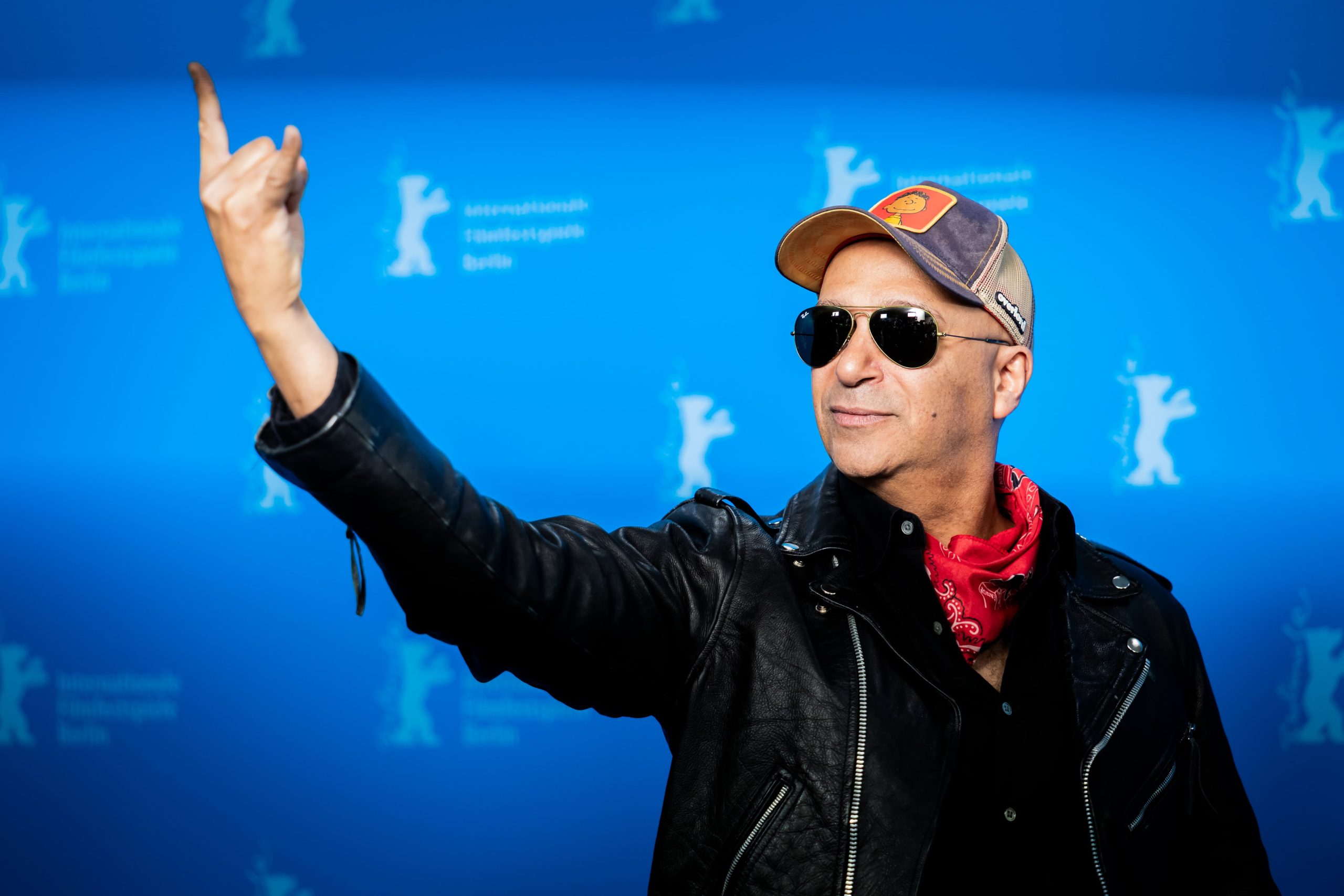
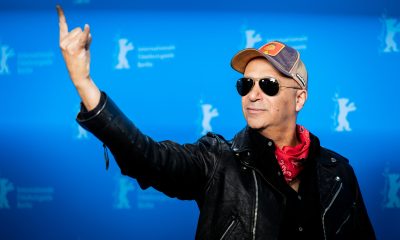
Tom Morello likes to use a word that many musicians stopped uttering long ago: resistance. The 62-year-old singer uses it naturally, the way he would when talking about songs, chords or the road. On June 27, he will perform at the BBK Legends festival in Bilbao, and in a video call interview, he sums up the spirit of the event: “It will be a celebration of the guitar and of resistance.”
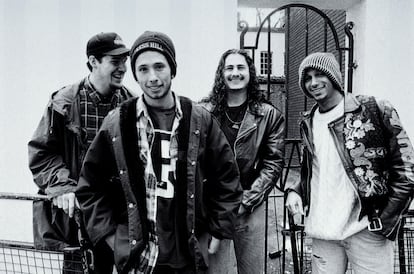
More than three decades have passed since Rage Against the Machine, the band with which he rose to fame, made a seismic impact on popular culture, and he still sees no contradiction whatsoever between the two: music and rebellion.
Rock and roll has seemed, since its beginnings, synonymous with fun; while politics is, for many, just the opposite — a drag. The guitarist disagrees: “Rock music has been extremely political from the beginning. The idea of a white artist like Elvis Presley singing with the voice of a Black artist and turning white audiences on to Black music was an incredibly political statement, even if the lyrics were about love. John Coltrane’s music, purely instrumental, challenges the conventions and norms of how you can play an instrument or how you can view jazz, and in the same way, it challenges conventions in society.”
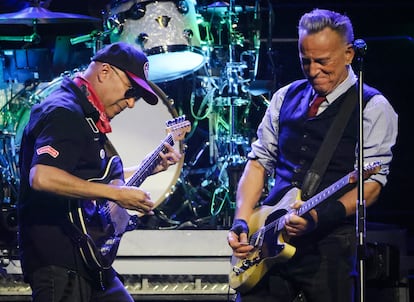
On March 31, Morello joined Bruce Springsteen on a tour of 19 large venues titled Land of Hope and Dreams, driven by that same insurgent instinct. “They were a lot of fun, but also very serious politically, because I believe that as an artist, your responsibility is not to hide who you are in what you do.”
On October 3, he will rejoin Springsteen at the Power to the People concert in Columbia, Maryland, very close to Washington, organized by Morello and also featuring Foo Fighters, Joan Baez, Serj Tankian (System of a Down), Cypress Hill, Dave Matthews, and Jack Black, among others.
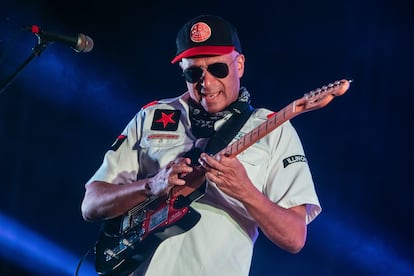
He takes his convictions so far that one starts to wonder whether he sees himself as a musician or as an activist who uses music the way others use a megaphone.
“I didn’t choose to be a guitarist,” he replies. “The guitar chose me. It was a calling, almost religious. But once I had that calling, I had to find a way to bring my convictions into my vocation. I was seized by being a guitarist, but also by having a revolutionary perspective on the world, and I tried to find a way where I could be as effective as possible while playing guitar solos.”
Revolution… Morello gives the solemn word a everyday, almost domestic feel. “It means not accepting things as they are and not allowing unjust human relationships to become normalized. In my view, it’s revolutionary to entertain and to confront an audience with an onslaught of joy and justice.”
He adds: “Most of my biggest influences regarding music and social commitment weren’t musicians but political activists: the Black Panthers, the Weather Underground, anti-colonial movements in the Third World, the Lincoln brigades that fought in Spain against the fascists.”
As for musicians, he cites Woody Guthrie, Public Enemy and System of a Down. “I can’t conceive of music separated from political activism. Life is something you must engage in.”
He’s far from happy with the United States under Trump. “I’m worried about a lot of things; it’s a long list. I think we are facing someone who wants to be the dictator of democracy every day, from his terrible foreign policy to the tactics of pursuing immigrants in their own homes,” he says. “Probably worse than all that is the anti-intellectualism and anti-science stance, which leads to policies that are undoing decades of environmental work and helping push the planet toward destruction. America is a much more dangerous place than it used to be. It’s a very, very dangerous time, and I wish I could retire and sit on a beach, but that’s not going to happen soon. There’s still work to do.”
Over three decades in music, he has repeated that idea in many different ways, but rarely as combatively as now. “If there has been a message throughout my career, it is that the world is not going to change itself,” he says. “It is our responsibility to make it change. History is not something that happens; it is something we make. When the world has changed in progressive, radical or even revolutionary ways, it has been because of people no different from those reading this now. The people who have changed the world don’t have more courage, power, money or intelligence than the readers of this interview.”
Behind that conviction is also a personal experience. Born in New York in 1964, the son of a Kenyan diplomat and a teacher with Italian and Irish roots, Morello grew up in Libertyville, Illinois, in a predominantly white community. “I didn’t have to read political philosophers to learn about human relationships and injustice,” he says. “I encountered them on the playground when I was four or five. The idea that there was hate, ignorance and injustice in the world came to me very early.”
His mother, also an activist, was a key figure in his upbringing (his father returned to Kenya when Tom was still a baby. “She never made me feel inferior in any way, even though the world was trying to tell me I was,” he recalls. “I always had a very strong heart thanks to the support and love of my family.”
Long before becoming one of the most recognizable guitarists in contemporary rock, he was a teenager obsessed with the instrument. For years, he tried to follow the same path as the great virtuosos of the 1980s. “At first I was a very fast guitarist, heavily influenced by Randy Rhoads, Eddie Van Halen and people like that,” he says.
His search changed direction when he stopped trying to sound like others. “It wasn’t until the beginning of Rage Against the Machine that I began to find my own voice on the instrument. I began identifying as the band’s DJ. I diverted my attention from traditional guitarists toward animal or mechanical sounds, trying to recreate the sounds of industry and nature.”
It was a decision that ended up defining his entire career: “That, combined with the big heavy riffs of my favorite bands like Black Sabbath and Led Zeppelin, led me to find an authentic voice on the instrument.”
For Morello, what separates a great guitarist from a merely good one is personality. “One of the things that impresses me most about guitarists is when they have their own voice on the instrument,” he says. “Sometimes that can mean playing many notes very quickly, other times playing with feeling, other times producing otherworldly sounds you’ve never heard before.”
At 62, he continues to seek new challenges. The next will come in the form of a record. “It will be my 22nd album, but the first solo rock album as Tom Morello. I wanted to make an album with all the riffs in the style of Rage Against the Machine and Audioslave [the group he formed after the former’s breakup] and the lyrical depth of Bruce Springsteen, Bob Dylan and Roger Waters. I wanted to take the weight and power of the rock of my whole life and bring it to 2026 to make a modern, heavy album that is as devastating musically as it is politically relevant.” His son Roman, also a guitarist, is part of the project.
When asked to choose a Rage Against the Machine song to explain the present, he doesn’t think twice: “The first that comes to mind is Killing in the Name. Frederick Douglass [a slave and later abolitionist in the mid-19th century] wrote in his autobiography that the day he was freed was not when his chains were removed; it was the day the master said yes and he said no. And that is Killing in the Name: a refusal of illegitimate authority. You don’t need to submit to illegitimate authority. Whether in your home, at your school, your workplace or your country. You can always rise up against it.”
But not everything in Morello’s life has been so serious. In 1986, freshly graduated from Harvard, where he studied social sciences, he worked as a stripper at bachelorette parties in Los Angeles to make some money. “I wanted to sell Iron Maiden T-shirts, and I didn’t even get that job,” he says. “I didn’t pass any audition; I got in through a friend. It’s a job like any other. There’s an old saying: the rent isn’t going to pay itself,” he jokes.
Sign up for our weekly newsletter to get more English-language news coverage from EL PAÍS USA Edition

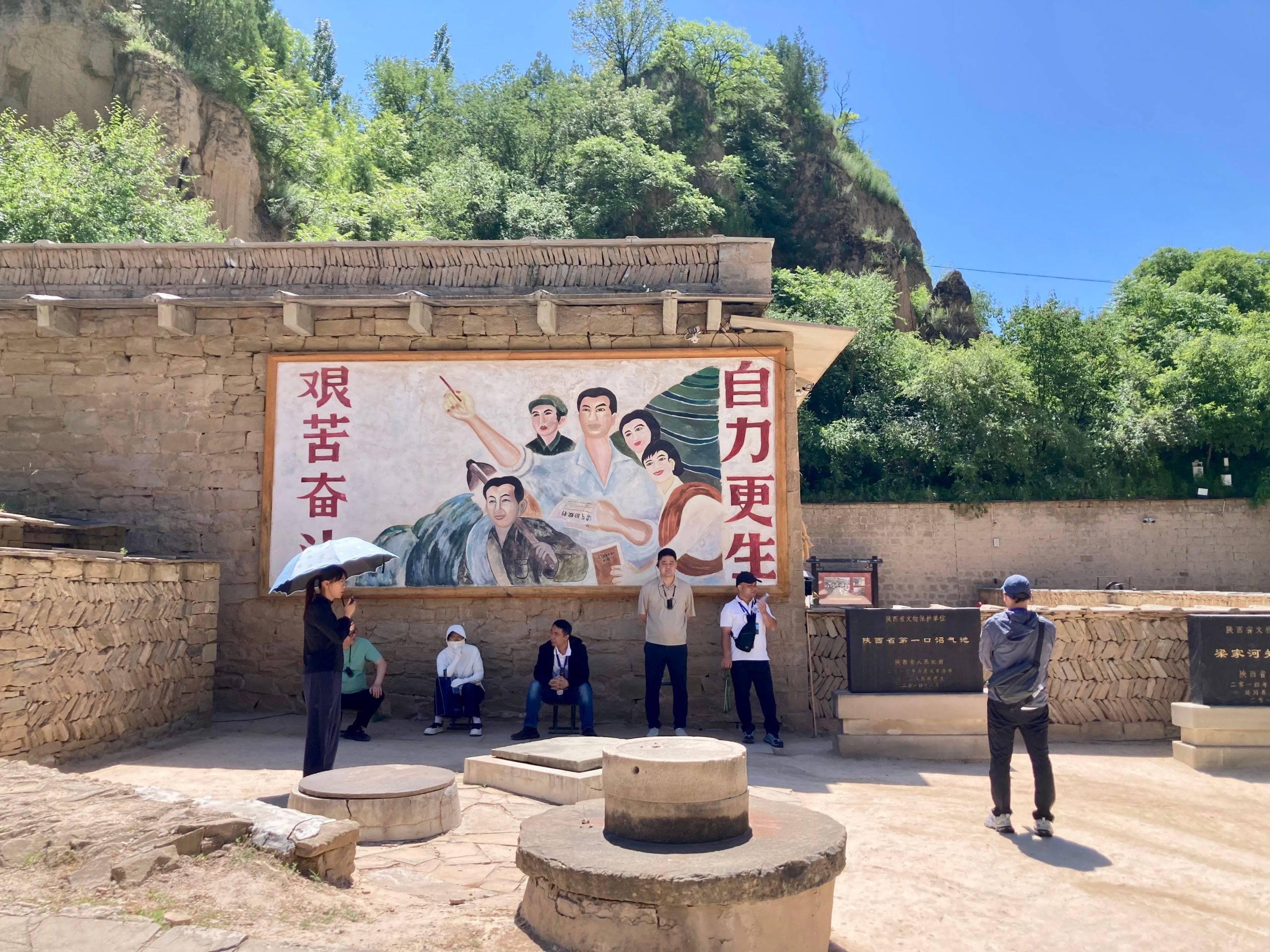
In Liangjiahe, a rural village surrounded by clay-colored hills, a well helps explain who Xi Jinping is and what he wants. Xi is the president who has led China, the world’s second-largest economy, for nearly 14 years; the leader who defied Donald Trump’s tariff wall; the one visited by heads of state and government from around the world; the man world leaders travel to meet; the absolute figure no one in the Chinese Communist Party — a Leninist organization with more than 100 million members that controls every sphere of a superpower of over 1.4 billion people — now dares to challenge.
Xi, who recently turned 73, helped dig the well in Liangjiahe more than half a century ago. Dubbed the “well of the young intellectuals,” a plaque recalls how “Jinping” — his given name — led the village in 1973 to solve its chronic water shortage. The teenager had been sent to this remote village in Shaanxi province, where locals still lived in caves, as part of the re‑education campaigns during Mao Zedong’s devastating Cultural Revolution.
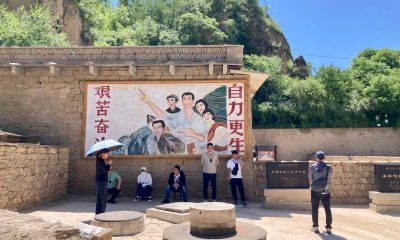
He arrived in 1969 at age 15. He struggled to fit in, but it was here — after enduring all manner of hardship — that he found his calling to serve the people and the party. A mural depicts a young Xi with the message: “Hard work; self‑reliance.” That is the metaphor of the well, the message emphasized by propaganda in Liangjiahe: Xi dug “with his legs completely submerged in muddy water,” a panel recalls.
Today, the site is a popular destination for so-called “red tourism,” although, more than ordinary tourists, it draws visitors tied to the ideological training of Chinese Communist Party members. “Here he learned the spirit of overcoming the harshest conditions,” a guide explains to one such group, shepherded by a “leadership school” specializing in “Xi Jinping Thought.” This, too, is a hallmark of his era. Under his rule, education related to the president and his worldview has been reinforced at every level, from schools to the highest ranks. It is an ongoing instruction designed to counter what Xi sees as the “historical nihilism” that brought down the Soviet Union.
“The knife is sharpened on a stone; people are strengthened by adversity,” he said of his seven years in the village in 2002, when he was a promising governor of Fujian province. Two decades later, in 2022, as he was about to be reelected party general secretary for a historic third term, Xi urged perseverance in the “spirit of struggle” developed “in the face of abrupt changes in the international situation” and “the blackmail, obstacles, blockades and maximum pressure from abroad.”
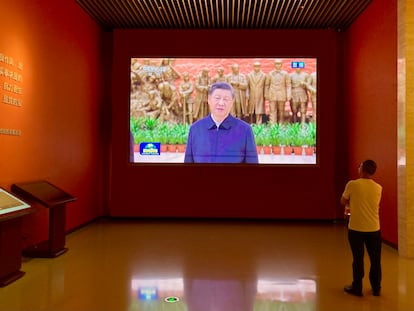
U.S. historian Joseph Torigian believes the Chinese leader was the answer to the idea that contact with the West would lead China to open up in the style of liberal democracies. “Xi believes, instead, in the need to harden the regime against political and economic pressure; to change course and show that there are alternatives to the Western system,” he says by phone.
Torigian, a senior fellow at the Council on Foreign Relations, is an expert on Xi’s father, Xi Zhongxun, a revolutionary leader who fought alongside Mao, and has published a book on him called The Party’s Interest Come First. Xi’s son is what is commonly known as a “princeling,” the offspring of the generation of communists who founded the People’s Republic and rose to senior positions once in Beijing.
They were turbulent years in any case. Xi’s father rose to vice premier only to be purged later. He would spend years in isolation while his son faced the wrath of the Red Guards because of his family background and was sent to the countryside. But he continued to believe in the system: from the village, Xi sent a dozen letters to the Party until they admitted him.
From Liangjiahe, he returned to Beijing to study chemical engineering at the prestigious Tsinghua University. With Mao’s death in 1976, the years of reform and opening under Deng Xiaoping began. His father returned to public life. The era of rapid growth was beginning, and many princelings set about making up for lost time, enjoying themselves and absorbing Western influences. Xi, by contrast, “chose to survive by becoming redder than the red,” a friend later told the U.S. Embassy, according to a WikiLeaks diplomatic cable.
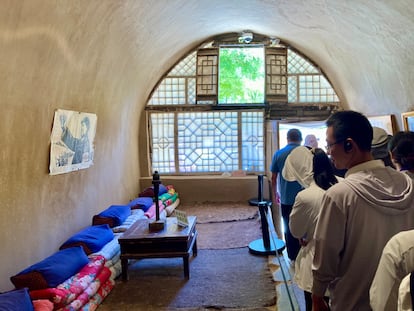
His first notable post was as secretary to the defense minister; he later pursued a career away from Beijing. In 1985, as a local official in Hebei province, he traveled to the U.S. state of Iowa as part of a delegation to learn agricultural techniques and strengthen ties. For a couple of nights, he even experienced what it was like to sleep in the bedroom of a young American decorated with Star Trek memorabilia. “A pleasant, charming and intelligent leader; very curious about many aspects of agriculture, food processing and life in the United States,” recalls Luca Berrone, an Italian‑American businessman who organized that trip.
They spent two weeks together, and Berrone would not connect the dots again until 2011, when Xi was vice president and the apparent heir. Since then, Berrone has been invited to a dozen meetings with the Chinese president, who often cites his Iowa trip as an example of the importance of people‑to‑people ties to avoid conflict. “I think he does not seek a confrontational position, but rather genuine mutually beneficial cooperation,” Berrone says. “He respects the United States a lot.”
It is true that Xi’s only daughter, who has left almost no public trace, graduated from Harvard in 2014. But four decades after that Iowa visit, China is no longer the student, but a disruptive power competing on equal terms in the economic, military and technological spheres — and that has changed things.
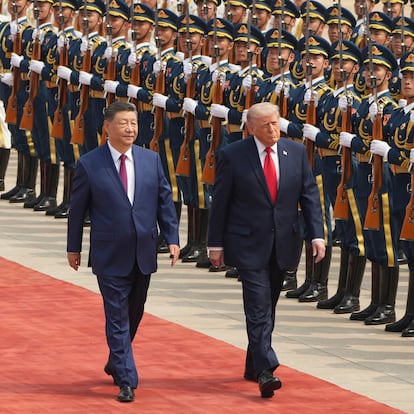
During the bruising trade clash of 2025, Beijing showed the tools it had prepared to protect its interests by restricting critical resources. When Trump landed in China in May for a summit with Xi, the choreography was staged to convey that the two nations were negotiating on equal footing. The cordial détente was sealed with a formula proposed by the Chinese leader that softens the Cold War premise of co‑existence between powers: “constructive strategic stability.”
“He is a very strong leader who should not be underestimated,” says Rafael Dezcallar, former Spanish ambassador to Beijing and author of El ascenso de China (The Rise of China). “He wants to place China where it belongs, as a great power capable of competing with the United States, never again subjected to its influence or dominance, self‑sufficient in technology and in fundamental matters.” On the domestic front: “He has managed to put the party under his control.”
Xi was chosen as a consensus figure by those within the Party who believed that firm leadership was needed to rein in years of excesses. As soon as he took office, he launched an anti-corruption campaign that is still ongoing. Since 2012, more than seven million public officials have been found guilty and sanctioned by disciplinary inspection and supervisory bodies. The crackdown has extended from the grassroots level to the very top, reaching ministers and the military leadership.
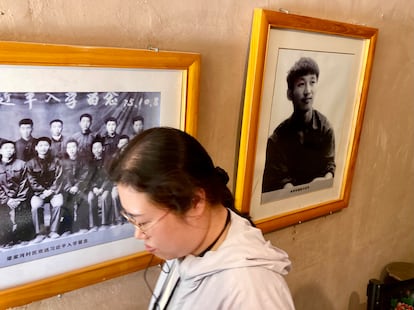
This is compounded by a marked anti-hedonistic impulse, reflected in measures such as banning alcohol, luxury dishes, and cigarettes at official banquets. “Calvinist communism,” as a European diplomatic source based in Beijing describes it. For Xi, the source adds, Westernization amounts to paganism.
Xi has reinstated ideology and repositioned the Party at the center. His ideology, officially inscribed in the Constitution alongside Mao’s and Deng’s, is cited in every political speech. He is also a bestselling author: the three best‑selling books in China in 2025 were volumes compiling Xi’s ideas, according to Chinese media.
Wang Yiwei, vice president of the Academy of Xi Jinping Thought on Socialism with Chinese Characteristics for a New Era (the convoluted official name of his ideology), summarizes the president’s vision as “Xivilization.” He sees it as a new phase of “traditional Leninism” that confronted the capitalist system. “Now we have changed: whether socialism, capitalism or any other ism, all have a shared future.” And it draws not only on Karl Marx. “We have synergies with China’s classical culture and civilization.”
Torigian also believes that Xi’s sense of history leads him to fuse present-day Communist China with its past: he is mindful of the repeated collapse of imperial dynasties and witnessed, in his youth, the fall of communism around the world. This prompts him to ask: “How do you immortalize his vision? How do you ensure that what he believes the country needs survives not only while he lives but into the future? How do you prevent institutions from decaying and ultimately collapsing?” With no apparent successor for now, most analysts believe he will remain in power beyond 2030.
During his tenure, a heavy hand has been the answer to dissent. He has launched campaigns against anything that smells of divergence in civil society and has imposed firm control over Xinjiang, Tibet, and Hong Kong. It is hard to gauge his approval in an authoritarian country where surveys about the leader are not published, and technological surveillance reaches unimaginable levels. Simply uttering his name in public elicits respect, and it is not uncommon for people, when referring to the president, to lower their voices or speak in euphemisms.
If you ask people about Xi, the response is usually positive. “We only have one president, not like abroad,” says a taxi driver in Yan’an, the city nearest Liangjiahe and another hub of red tourism. Yan’an was where Mao ended the Long March in 1935, and its streets mix communist monuments with a bustling provincial life.
“Xi is not bad, but he still has a long way to reach Mao’s level,” replies Bai Guanglin, a 76‑year‑old farmer, at the city’s revolutionary museum. His granddaughter, Bai Yuxin, 28, a high‑school teacher, adds: “He has contributed a lot economically and in foreign relations.”
Yan’an was also the destination Xi chose for his first trip after being reelected in 2022. Alongside the other six members of the Politburo Standing Committee — the Party’s top decision-making body — he visited the caves where Mao once lived, toured the museum, and in his speeches called for “hard work” and a “fighting spirit,” while recalling those seven years he spent in the village.
Sign up for our weekly newsletter to get more English-language news coverage from EL PAÍS USA Edition

Dos Heridos, Uno Grave, En Un Tiroteo En Barcelona, Donde Se Busca Al Agresor

Milagro En La Iglesia De La Guaira: “Dios Quiso Que Nos Salváramos”

Panamá – Inglaterra, En Directo | El Partido Del Grupo L Del Mundial 2026, En Vivo
El ‘Hondius’ Zarpa De Nuevo: El Crucero Que Sufrió El Hantavirus Viaja Al Ártico Cargado Con Empleados
Torremolinos installs smart traffic lights on its beaches to warn about UV radiation levels
Dinosaurs are roaring over to Estepona this summer in a massive 5,000m² exhibition


-
Antártida2 weeks ago
El ‘Hondius’ Zarpa De Nuevo: El Crucero Que Sufrió El Hantavirus Viaja Al Ártico Cargado Con Empleados
-
Costa del Sol2 weeks ago
Torremolinos installs smart traffic lights on its beaches to warn about UV radiation levels
-
Costa del Sol7 days ago
Dinosaurs are roaring over to Estepona this summer in a massive 5,000m² exhibition
-
Alcohol limits Spain2 weeks ago
Drivers in Spain warned: This mistake could cost you €1,000 and six licence points this summer
-

 %1 week ago
Families Caring For Elderly Parents In Spain Say Brexit Has Left Them With Impossible Choices
-
 Uncategorized2 weeks ago
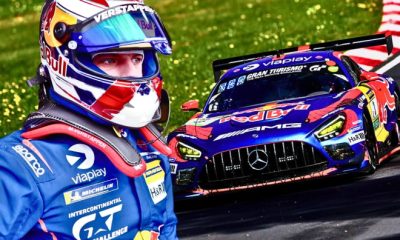
Max Verstappen rules out Nurburgring return after 24 hour-heartbreak
-
Latest1 week ago
KEY POINTS: What Changes About Life In Spain In July 2026
-

 %1 week ago
One Of Spain’s Top Supermarkets Has Just Been Ranked Among Europe’s Most Innovative In A Major New Report