Connect with us

%

Dublin Airport Ruling: Spain Flights At Risk?

Published

on

dublin-airport-ruling:-spain-flights-at-risk?

EU court ruling raises uncertainty over future flights from Dublin Airport. Credit : Tupungato, Shutterstock

Irish holidaymakers and home-owners heading to Spain could face uncertainty over their future flight options after a major European ruling on Thursday, 15 October. The ruling could reduce the take-off and landing slots that airlines, such as Ryanair and Aer Lingus, have available, though at present no flight is expected to be cancelled as a result.

The Court of Justice of the European Union has ruled that Dublin airport’s annual limit of 32 million passengers must be taken into account when allocating slots to airlines. It also confirmed that carriers do not have an automatic right to keep their old slots.

This question is being asked by the Irish with a home in Spain, and the people who are going to Spain on holiday or have regular visits to Spain. Will it in any way affect their future travel between Ireland and Spain?

Why the EU court ruling could affect flights from Dublin Airport

It’s a dispute about passenger limits imposed in the planning permission for terminals of Dublin Airport, which was granted in 2007 and 2008, in an effort to regulate how many people could pass through them.

Under these conditions the airport was restricted to handling a maximum of 32 million passengers a year, though the demand for flights continued to grow.

According to the Irish Times, the airport has already exceeded that limit, handling about 36.4 million passengers in 2025.

The Irish Aviation Authority, which allocates the slots, has previously sought to impose seasonal restrictions in order to ensure the airport’s compliance with the planning restrictions.

Nevertheless, these decisions were challenged by the operator of the Dublin airport, the Daa, as well as several airlines, leading Ireland’s High Court to seek clarification from the European court.

In its judgment of 15 October the Court held that legally binding passenger restrictions can be taken into account when determining the operational capacity of an airport.

The ruling also addresses so-called historic slots, which normally give airlines priority to retain take-off and landing times they have regularly used in previous seasons.

However, the court confirmed that this priority is not an absolute right. In exceptional circumstances, airlines could lose previously allocated slots if the airport’s available capacity is insufficient.

This could affect the future routes of the aero-liner, especially in the case of those that intend to maintain existing connections or to establish new ones.

This decision, however, does not imply that the aircraft must be immediately cancelled.

What the decision means for Ryanair, Aer Lingus and travellers to Spain

As for travellers flying between Ireland and Spain, they are mainly concerned that the ruling could mean a restriction of the routes that are available, especially during the busy holiday periods.

Ryanair and Aer Lingus have direct connections between Dublin and Spanish tourist centres, and it is to them that the prospect of increased airport facilities is of the greatest interest.

If the limit of passengers continues to restrict the number of available slots, it may prove difficult for the companies to maintain or extend their schedules.

It might well influence future route-plans, though the Court has not ordered the discontinuance of any service.

Ryanair has strongly criticised the passenger cap.In a statement issued after the verdict, the Irish government was called upon to lift the cap, with the airline arguing that the second runway gives the airport enough infrastructure to handle significantly more passengers.

The company contends that the present regulation is out of date and prevents the full use of the airport’s capacity.

However, there is a very important difference between the verdict and the consequences it might have for travellers.

This decision sets out the criteria that are to be taken into consideration in the allocation of air-slots. It does not specify which routes the companies are to operate, or whether flights to Spain should be reduced.

Those who have already booked flights must not expect their flights to be affected.

Could Ireland remove the passenger cap before flights are affected?

Despite this verdict, the future of the passenger limit in Dublin airport remains uncertain. The Irish government has already taken steps towards changing the restriction.

By legislation dated 2026, the Minister for Transport is empowered to change or cancel the ceiling, subject to the relevant legal and environmental procedures.

Minister of Transport Darragh O’Brien announced his intention to increase the capacity of the airport, which would allow up to 40 million passengers to be handled per annum.

RTE reports that significant reductions in air traffic are not expected as a result of the decision, in part because the government has already established a mechanism to modify the cap.

Irish Times also reports that the ruling will not affect plans to allow up to 28 additional daily take-off and landing slots at Dublin Airport for summer 2027.

However, lifting the restrictions or increasing the passenger limit is not a matter of course. The government must, before the change can be made, go through all the usual formalities and must make the necessary studies.

The underlying case will be sent back to Ireland’s High Court, which will be required to give effect to the interpretation made by the European Court of Justice.

For now, travellers planning journeys between Ireland and Spain can continue booking flights as normal.

The longer-term implications will depend on how quickly the Irish government acts, whether the existing passenger cap remains in place and how future airport capacity is allocated.

Although the ruling raises questions about future airline schedules, no reductions in flights between Dublin and Spain have been confirmed as a direct result of the judgment.

%

Axarquia Support Bancosol Food Drive 2026

Published

on

axarquia-support-bancosol-food-drive-2026

A small donation at the supermarket till this weekend could help ensure families across Malaga have food on the table this winter. Bancosol, the Costa del Sol Food Bank, is holding its Great Food Collection, or Gran Recogida de Alimentos, on Friday, November 13, and Saturday, November 14. Residents throughout the region are being encouraged to take part.

Andalucia’s delegate for Social Services, Families and Equality, Laura Valle, has called on people across Malaga and the Axarquia to show commitment, generosity and solidarity.

How residents can donate

It is easy to take part. Shoppers can visit a participating supermarket and ask staff to add a donation to their receipt. Contributions start from just €1, making the campaign accessible to anyone who wants to help but cannot give a large amount.

Bancosol is encouraging monetary donations rather than physical food this year. Money allows the charity to purchase exactly what its partner organisations need, while helping it manage stock, storage and distribution more efficiently.

People who prefer to give from home can use Bizum, Spain’s instant mobile-payment service, with the code 00887. Donations can also be made at the checkout in participating supermarkets across the province.

Support for vulnerable families

Bancosol hopes to raise more than €450,000 during the two-day campaign. Funds will help the organisation continue providing food support to 20,589 vulnerable people through 129 social organisations across the area.

Nearly a third of those receiving help are children or young people. Bancosol says rising living costs and ongoing hardship mean public generosity is essential to maintaining supplies for families who might otherwise go without.

A community effort in the Axarquia

Volunteers will be at collection points to explain the campaign, encourage donations and thank shoppers for their support. Around 4,000 people are expected to help across Malaga province, including students from the Santa Rosa de Lima education centre.

Local organisations in the Axarquia have long played an important role in the annual collection. Past campaigns have involved town halls, charities and volunteers from local towns including Nerja and Velez-Malaga, helping bring the province-wide effort closer to neighbourhoods across the region.

Last year’s Great Food Collection raised €450,000, and Bancosol is hoping the community will help it surpass that total in 2026. Every donation, however small, contributes to a wider network of support for households in need.

Supermarkets joining the appeal

Major supermarket chains are taking part, including Grupo MAS, Carrefour, El Corte Ingles, Alcampo, Eroski, Dia, El Jamon and Mercadona. With 285 stores involved, shoppers in Axarquia towns and villages should easily be able to find a nearby collection point.

Bancosol says there is no minimum donation and no pressure to give more than a person can afford. Every contribution helps the charity continue its work supporting vulnerable households who need it most.

Continue Reading

%

Elche Basilica Hosts Two Free Concerts

Published

on

elche-basilica-hosts-two-free-concerts

Basílica de Santa María, Palmeral de Elche. Credit: tolobalaguer.com / Shutterstock.com

Music lovers can enjoy two free organ concerts in one of Elche’s most beautiful buildings this November, with internationally acclaimed musicians performing at the Basilica of Santa Maria. The concerts form part of the 13th International Organ Festival, La Musica del Cielo (Music from Heaven), bringing leading European organists to the city for two special Friday evening performances.

International Organ Festival brings world-class musicians to Elche

The 13th International Organ Festival, La Musica del Cielo, continues this November with two concerts featuring musicians who have performed at some of Europe’s most prestigious churches and cathedrals.

Both performances take place at the Basilica of Santa Maria in central Elche, giving audiences the opportunity to hear organ music in a historic setting.

Admission is free, with both concerts beginning at 9:00 PM and no advance tickets required.

The programme offers music lovers the chance to experience the basilica’s magnificent organ, an instrument closely connected to the city’s religious and musical heritage.

November 13: Polish organist Michal Markuszewski performs

Polish musician Michal Markuszewski performs on Friday, November 13.

A professor at Warsaw’s Fryderyk Chopin University of Music, he has given around 800 concerts across Europe, America and Asia, including performances at Notre-Dame Cathedral in Paris and St Paul’s Cathedral in London.

His international experience brings an impressive musical background to the Elche festival, with audiences able to enjoy his performance without an admission charge.

The concert begins at 9:00 PM at the Basilica of Santa Maria.

November 27: Milika Radovanovic closes the festival

The final concert, on Friday, November 27, features Serbian-born organist and pianist Milika Radovanovic, who lives in Norway.

Her performances have taken her to Westminster Abbey and several major European cathedrals, with music ranging from Bach to contemporary compositions.

Radovanovic’s appearance will bring the 13th edition of the festival to a close, offering another opportunity to hear an internationally experienced musician perform in Elche.

The concert begins at 9:00 PM, with free admission.

Continue Reading

%

Decathlon Shoppers Told To Stop Using Sports Bottle That May Release Aluminium Into Drinks

Published

on

decathlon-shoppers-told-to-stop-using-sports-bottle-that-may-release-aluminium-into-drinks

Owners have been told to stop using the bottle straight away. Credit: Mo Photography Berlin / Shutterstock

Anyone who’s been filling up an 800ml Vital Sport aluminium bottle bought through Decathlon in the last 14 months should stop using it straight away. The bottle may release aluminium into whatever’s inside it, and the barcode is the quickest way to tell whether yours is one of them.

Buyers told to stop using the bottle immediately

Shoppers who picked up the Vital Sport aluminium bottle, an 800ml sports bottle with a safety cap, have been told to stop using it immediately as it’s been withdrawn from sale over a risk of the metal moving from the bottle into the drink.
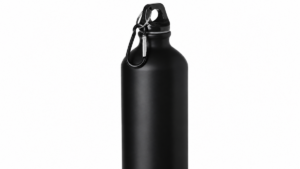
A black aluminium water bottle with a clip on it's lid.
The Vital Sport bottle in question. Credit: Decathlon.

The warning was flagged by FACUA-Consumidores en Acción, the Spanish consumer rights organisation, on Tuesday November 10, which said the aluminium released into the contents could be harmful to people’s health.

The bottles affected were sold between Friday August 1 2025 and Thursday October 1 2026. So anyone who’s bought one in the past year or so could well still be reaching for it today, whether that’s at the gym, on the bike or at their desk.

Check the barcode on yours 

The bottle to look for carries the EAN code 8437021197198 under the barcode. If the numbers match, it’s one of the bottles affected.

Vital Sport isn’t one of Decathlon’s own in-house brands, though. Its bottles have been listed on Decathlon’s online marketplace, where independent sellers trade through the retailer’s website, and the withdrawal notice names Soluciones Técnicas 2000 SL as the business that detected the safety problem.

Owners are being asked to contact the company at administracion@soltec2000.es for information on the withdrawal and how each case will be handled. The notice doesn’t mention refunds, and it doesn’t say whether any of the bottles were sold in Decathlon’s shops either. 

Why aluminium in your drink is a concern

Neither Decathlon nor the seller has explained what went wrong with the bottle or how much aluminium could end up in a drink.

Aluminium bottles are normally coated on the inside so the liquid never actually touches bare metal. A good bit of info to know is that acidic drinks pull far more metal out than plain water does, which matters for anyone filling up with fruit juice, lemon water or many sports drinks.

The body holds on to aluminium, which is why the European Food Safety Authority (EFSA) sets its safe limit as a weekly one: 1mg for every kilo of body weight. It’s also said many Europeans may already go over that through their normal diet, with children and young people the most exposed, before a drinks bottle adds anything at all.

Animal studies have linked high exposure to effects on the nervous system, although EFSA said it didn’t consider aluminium in food to be a risk for Alzheimer’s disease.

Now, researchers at Germany’s Hessian State Laboratory found in their worst-case scenarios that tea kept in an aluminium bottle could be enough to take a small child weighing 15kg past that weekly limit. Those tests weren’t carried out on this bottle, but they show why a faulty one isn’t something to shrug off.

What to do if you’ve got one at home

First of all stop filling it, even with plain water, until you’ve heard back from the seller. The notice also asks people to pass the warning on to family and friends, particularly if the bottle was given as a present, lent out or sold on second-hand. Sports bottles are an easy thing to hand down, so it’s worth a quick message to anyone who might have ended up with yours.

Those who bought online should dig out their order confirmation before emailing, as it’ll show exactly when the bottle was bought and who sold it. It’s the latest in a run of product withdrawals in Spain this autumn, after an urgent recall of a children’s mouthwash in September and teeth whitening products found to be far over the legal peroxide limit in October.

Anyone with one of these bottles at home should put it aside today and email the seller to find out how the withdrawal will be handled for them.

Continue Reading

Trending

Copyright © 2017 Spanish Property & News