Connect with us

%

Dublin Airport Ruling: Spain Flights At Risk?

Published

on

dublin-airport-ruling:-spain-flights-at-risk?

EU court ruling raises uncertainty over future flights from Dublin Airport. Credit : Tupungato, Shutterstock

Irish holidaymakers and home-owners heading to Spain could face uncertainty over their future flight options after a major European ruling on Thursday, 15 October. The ruling could reduce the take-off and landing slots that airlines, such as Ryanair and Aer Lingus, have available, though at present no flight is expected to be cancelled as a result.

The Court of Justice of the European Union has ruled that Dublin airport’s annual limit of 32 million passengers must be taken into account when allocating slots to airlines. It also confirmed that carriers do not have an automatic right to keep their old slots.

This question is being asked by the Irish with a home in Spain, and the people who are going to Spain on holiday or have regular visits to Spain. Will it in any way affect their future travel between Ireland and Spain?

Why the EU court ruling could affect flights from Dublin Airport

It’s a dispute about passenger limits imposed in the planning permission for terminals of Dublin Airport, which was granted in 2007 and 2008, in an effort to regulate how many people could pass through them.

Under these conditions the airport was restricted to handling a maximum of 32 million passengers a year, though the demand for flights continued to grow.

According to the Irish Times, the airport has already exceeded that limit, handling about 36.4 million passengers in 2025.

The Irish Aviation Authority, which allocates the slots, has previously sought to impose seasonal restrictions in order to ensure the airport’s compliance with the planning restrictions.

Nevertheless, these decisions were challenged by the operator of the Dublin airport, the Daa, as well as several airlines, leading Ireland’s High Court to seek clarification from the European court.

In its judgment of 15 October the Court held that legally binding passenger restrictions can be taken into account when determining the operational capacity of an airport.

The ruling also addresses so-called historic slots, which normally give airlines priority to retain take-off and landing times they have regularly used in previous seasons.

However, the court confirmed that this priority is not an absolute right. In exceptional circumstances, airlines could lose previously allocated slots if the airport’s available capacity is insufficient.

This could affect the future routes of the aero-liner, especially in the case of those that intend to maintain existing connections or to establish new ones.

This decision, however, does not imply that the aircraft must be immediately cancelled.

What the decision means for Ryanair, Aer Lingus and travellers to Spain

As for travellers flying between Ireland and Spain, they are mainly concerned that the ruling could mean a restriction of the routes that are available, especially during the busy holiday periods.

Ryanair and Aer Lingus have direct connections between Dublin and Spanish tourist centres, and it is to them that the prospect of increased airport facilities is of the greatest interest.

If the limit of passengers continues to restrict the number of available slots, it may prove difficult for the companies to maintain or extend their schedules.

It might well influence future route-plans, though the Court has not ordered the discontinuance of any service.

Ryanair has strongly criticised the passenger cap.In a statement issued after the verdict, the Irish government was called upon to lift the cap, with the airline arguing that the second runway gives the airport enough infrastructure to handle significantly more passengers.

The company contends that the present regulation is out of date and prevents the full use of the airport’s capacity.

However, there is a very important difference between the verdict and the consequences it might have for travellers.

This decision sets out the criteria that are to be taken into consideration in the allocation of air-slots. It does not specify which routes the companies are to operate, or whether flights to Spain should be reduced.

Those who have already booked flights must not expect their flights to be affected.

Could Ireland remove the passenger cap before flights are affected?

Despite this verdict, the future of the passenger limit in Dublin airport remains uncertain. The Irish government has already taken steps towards changing the restriction.

By legislation dated 2026, the Minister for Transport is empowered to change or cancel the ceiling, subject to the relevant legal and environmental procedures.

Minister of Transport Darragh O’Brien announced his intention to increase the capacity of the airport, which would allow up to 40 million passengers to be handled per annum.

RTE reports that significant reductions in air traffic are not expected as a result of the decision, in part because the government has already established a mechanism to modify the cap.

Irish Times also reports that the ruling will not affect plans to allow up to 28 additional daily take-off and landing slots at Dublin Airport for summer 2027.

However, lifting the restrictions or increasing the passenger limit is not a matter of course. The government must, before the change can be made, go through all the usual formalities and must make the necessary studies.

The underlying case will be sent back to Ireland’s High Court, which will be required to give effect to the interpretation made by the European Court of Justice.

For now, travellers planning journeys between Ireland and Spain can continue booking flights as normal.

The longer-term implications will depend on how quickly the Irish government acts, whether the existing passenger cap remains in place and how future airport capacity is allocated.

Although the ruling raises questions about future airline schedules, no reductions in flights between Dublin and Spain have been confirmed as a direct result of the judgment.

%

Santa Pola Museo Del Mar

Published

on

santa-pola-museo-del-mar

Santa Pola’s Sea Museum. Credit: Ayuntamiento de Santa Pola.

Santa Pola’s Museo del Mar is heading towards a record-breaking year after welcoming 133,145 visits so far in 2026. The figure is already closing in on the almost 150,000 visits recorded throughout the whole of last year, with the museum’s network of historic and cultural attractions continuing to draw visitors to the coastal town.

Museo del Mar approaches annual visitor record

Santa Pola’s Museo del Mar is heading towards a record year after attracting 133,145 visits so far in 2026, already approaching the almost 150,000 recorded during the whole of last year.

The museum complex includes its main exhibitions inside the Castillo Fortaleza, covering the history and ethnography of the sea and fishing, music, archaeology and local history.

The castle also hosts a changing programme of national and international art exhibitions, adding to the range of attractions available within the historic building.

Museum network extends beyond Castillo Fortaleza

Several external sites form part of the museum, including the Mediterranean Aquarium, the preserved Esteban Gonzalez fishing boat and Portus Ilicitanus, the Roman port which operates as an open-air museum.

Visits remain free, including guided activities, workshops, concerts and talks.

The combination of permanent exhibitions, archaeological attractions and cultural activities means the Museo del Mar extends well beyond a traditional museum building, with different sites exploring Santa Pola’s history and its close relationship with the Mediterranean.

Aquarium and fishing boat closed for improvements

Two attractions are currently temporarily closed. The Aquarium is undergoing improvements and new museum installations, while the Esteban Gonzalez is receiving major restoration work to its hull.

Both are expected to reopen in December.

Portus Ilicitanus has also experienced temporary closures during archaeological excavations and work to install a protective shaded structure over part of the remains.

La Picola will join museum network in 2027

The museum network is set to expand again in 2027 with the addition of the La Picola archaeological site.

The Iberian and Roman site is being prepared for visitors through a €1.25 million project fully funded by Spain’s Ministry of Industry and Tourism.

Its addition will give visitors another archaeological attraction to explore as part of Santa Pola’s growing museum network, while the strong visitor figures recorded during 2026 put the Museo del Mar within reach of surpassing last year’s total.

Continue Reading

%

Woman Missing After Being Swept Into Torrent

Published

on

woman-missing-after-being-swept-into-torrent

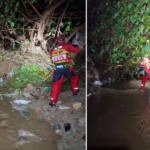
In their latest update on Sunday 18 morning, firefighters said they had maintained the search throughout the night without any change in the situation Credit: X/BombersCat

Emergency services launched a major search operation in north-eastern Spain after a woman reportedly fell into a rain-swollen stream during torrential downpours, prompting fears she may have been swept away by the powerful current.

The incident happened in Cabrera de Mar, in Barcelona province, on Saturday evening, October 17, as heavy rainfall affected parts of Catalonia.

Firefighters from the Bombers de la Generalitat were mobilised after receiving an emergency alert at 7.41pm reporting that a person had fallen into a riera, a normally smaller watercourse that can become dangerously fast-flowing during periods of intense rain.

Six firefighting units were initially deployed to search for the missing woman, with the operation involving Catalonia’s regional police, the Mossos d’Esquadra, and Spain’s Maritime Rescue service.

The search was continuing in the latest reports, with no confirmed outcome available at the time of publication.

Emergency teams continue to search for missing woman

The operation brought together several emergency services to locate the woman following the reported fall.

The firefighters confirmed the deployment in a post on social media, announcing that crews were working alongside the Mossos d’Esquadra and Salvamento Marítimo.

The involvement of maritime rescue teams highlights the potential danger posed by fast-moving watercourses during severe weather, particularly where a stream flows towards the coast.

The incident occurred in the Maresme area, a coastal region north-east of Barcelona that experienced particularly heavy rainfall on Saturday afternoon and evening. The Vallès Oriental area was also among the parts of Catalonia that recorded significant precipitation during the same period.

Firefighters confirmed on Sunday morning, October 18, that the search had continued throughout the night and into the early hours, but there had been no new developments.

Heavy rain raises concerns across Catalonia

The search operation unfolded as thunderstorms and intense rainfall affected several areas of Catalonia, raising concerns about sudden flooding and dangerous conditions near waterways.

A riera can appear relatively harmless during dry weather but may fill rapidly when heavy rain falls, creating strong currents capable of carrying away people and vehicles.

Such watercourses are a particular hazard during Mediterranean storms, when intense rainfall can fall over a short period and cause water levels to rise quickly. Emergency authorities have repeatedly warned residents to avoid attempting to cross flooded streams, rivers and underpasses during periods of heavy rain. Even shallow-looking water can conceal a strong current, while the depth and speed of the flow may change rapidly as further rain arrives upstream.

Search comes amid severe weather

The incident adds to concerns about the impact of the unsettled weather affecting north-eastern Spain.

The Maresme, where Cabrera de Mar is located, was among the areas experiencing the heaviest rainfall on Saturday, according to reports. Emergency crews faced the challenge of searching in conditions made more difficult by the weather and the possibility of fast-moving water.

Continue Reading

%

Czech Football Coach Goes Viral For Avoiding Reporter’s Gaze To Keep His Wife Happy

Published

on

czech-football-coach-goes-viral-for-avoiding-reporter’s-gaze-to-keep-his-wife-happy

Everyone watching the footage was discussing the manager’s self-control. Photo credit: Komsan Loonprom/Shutterstock

One football manager appears to have mastered the art of keeping his eyes on anything except the woman standing in front of him. And after explaining why, he has won himself an army of online admirers who reckon he knows exactly what he is doing. David Oulehla, manager of Czech second-division side FK Viagem Ústí nad Labem, went viral after a post-match interview with club reporter Sabina Jáksová. 

His team had just lost 3–2 to Opava, but the result was quickly forgotten as viewers noticed his apparent determination not to look directly at the woman asking him questions. The reason became the talking point of the internet. Oulehla later explained that his wife was waiting for him at home, and he had no intention of taking any unnecessary risks. “My wife is waiting for me at home,”  and, judging by the footage, he was taking that very seriously.

‘Poor man is fighting for his life’

The interview attracted attention partly because Jáksová was wearing an extremely revealing a top with much of her breasts visible, viewers were quick to notice that Oulehla seemed to be directing his gaze everywhere except towards the reporter. Online, plenty of men appeared to admire his determination to avoid trouble at home. One commenter joked, “man’s wife was watching he wasn’t going to take any risks”, while another suggested, “I don’t think it was the eye contact he was avoiding”. one man even suggested ” He worked harder in this interview than the whole team during the game” with a third summing up the situation with the comment, “poor man is fighting for his life”.

The reactions played on the idea that Oulehla was less concerned about the interview itself than about what might happen when he got home if his wife saw him looking in the wrong direction. Another popular interpretation was that it was not eye contact he was trying to avoid at all. The jokes continued, with viewers imagining the consequences if he had allowed his eyes to wander for even a second. In the court of social media, Oulehla had apparently been handed a test of marital loyalty, and the safest strategy was to keep looking at the nearest available wall. His football team might not have got the result it wanted, but his post-match interview was proving a much bigger success online.

Reporter’s outfit sparks a separate debate

While many viewers were amused by Oulehla’s apparent self-control, others focused on Jáksová’s clothing. Some critics argued that her top was inappropriate for a professional football interview, with comments suggesting she looked as though she had “forgotten to put a blouse on” or was dressed as though she were wearing her underwear.

The criticism centred on how much of her breasts were visible, with some viewers apparently struggling to understand why she had chosen the outfit for a professional interview. Others questioned why so much attention was being paid to her appearance when she was simply carrying out her job. The debate added another layer to the viral clip, which had already prompted jokes about the manager’s apparent determination to keep his eyes firmly elsewhere.

‘I was concentrating on what he was saying’

Jáksová has defended her approach to dressing, explaining that she does not consider herself to be dressing provocatively. She has also said that looking smart, wearing attractive clothes and putting on heels are normal choices for women in the Czech Republic. The reporter also said she had not even noticed that Oulehla was avoiding her gaze during the interview because she was concentrating on what he was saying.

The moment that thousands of viewers turned into an internet spectacle was not necessarily as awkward for the two people involved as it appeared from the outside. Oulehla was trying to discuss football whilst being presented with distractions. Jáksová was trying to conduct an interview. The internet, meanwhile, had other ideas. And his explanation about his wife gave the clip a punchline that practically wrote itself. After all, losing a match is one thing. Having to explain to your wife why you were staring at the reporter afterwards might be an entirely different kind of defeat.

Continue Reading

Trending

Copyright © 2017 Spanish Property & News