
Brent
The Sea’s Grip On The Global Economy: The Chokepoints That Can Bring World Trade To Its Knees

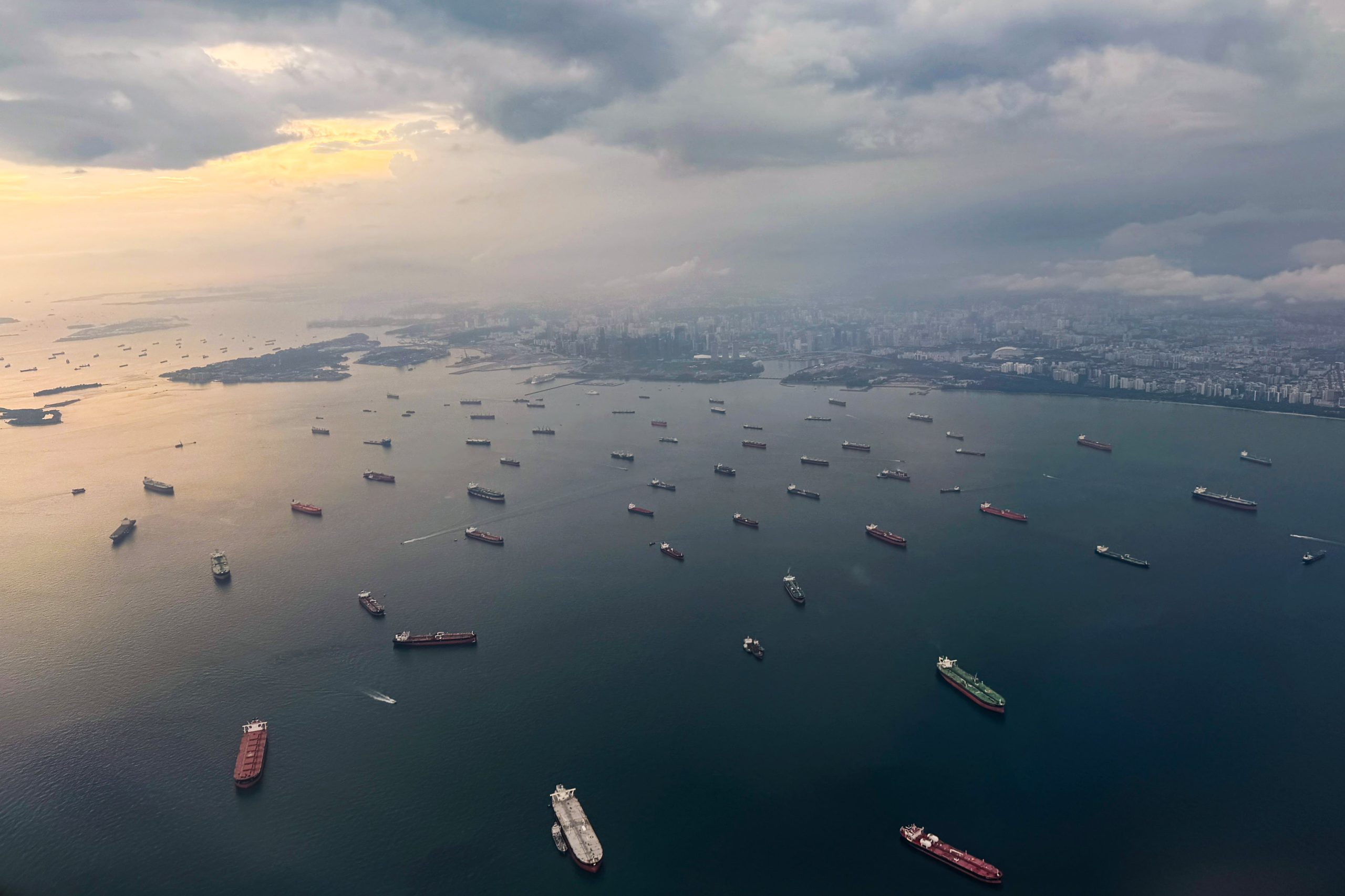
More than 80% of global merchandise trade is transported by sea, a vast share that, in times of peace, allows commerce to flow smoothly but, in times of turmoil, starkly reveals the oceans’ influence over the economy and consumers’ purchasing power. The closure of the Strait of Hormuz, a narrow waterway just over 20 miles wide through which 20% of the world’s oil consumption passed as recently as February, is a traumatic and unprecedented example of how disrupting maritime traffic through a strategic chokepoint can trigger a massive snowball effect. Less energy supply, a sudden spike in fuel prices, soaring shipping costs and higher inflation. It is impossible for the global economy to function independently of the sea.
The shockwave from the closure of Hormuz has been global and has hit the U.S. economy particularly hard. U.S. President Donald Trump likely never imagined that the conflict launched alongside Israel against Iran would last this long, or that it would drive gasoline and diesel prices for Americans to record highs. The collapse in maritime traffic through Hormuz has disrupted oil exports from the Persian Gulf and sharply increased transportation costs worldwide. According to analysts, higher shipping rates are adding more than $30 to the cost of each barrel of oil, roughly 10 times more than before the conflict.
Hormuz, with its enormous influence over the world’s energy supply, is the clearest example of the strategic importance of maritime straits to global trade and the economy. But the world is dotted with other waterways that are just as critical to the movement of goods and the shape of the geopolitical landscape. These are the so-called chokepoints: highly sensitive passages through which a significant share of global trade flows. Whoever controls them holds a lever capable of moving the world.
They do not even need to be blocked, as in Hormuz. A deterioration in weather conditions or security is enough to send ripples across the global economy. That is already happening in the Bab el-Mandeb Strait, which separates the Horn of Africa from the Arabian Peninsula and serves as the southern gateway to the Red Sea, before vessels pass through the Suez Canal on their way to Europe. Attacks by Yemen’s Houthi rebels against Saudi Arabia are threatening navigation in the area, which has never fully recovered since the militia disrupted traffic through the strait in 2023 and 2024 in protest against Israel’s offensive in Gaza.
For weather-related rather than military reasons, the Panama Canal is another hotspot. Drought linked to the El Niño phenomenon has forced the Panama Canal Authority to cut traffic and impose draft restrictions on vessels, as the canal’s locks require large volumes of water to operate.
The risk of disruption has also briefly hovered over the Strait of Malacca, located between Malaysia, Singapore and Indonesia, which is one of the world’s busiest shipping routes, serving as the main corridor between Asia and Europe via the Indian Ocean. In April, Indonesia’s finance minister even floated the idea of introducing a toll, though he quickly walked back the proposal.
“The Strait of Hormuz is the major energy chokepoint; the Strait of Malacca is Asia’s major commercial and energy chokepoint,” notes Alicia García Herrero, chief economist for Asia-Pacific at Natixis.
Hormuz, Bab el-Mandeb, Suez, Panama and Malacca are the world’s key maritime chokepoints. Any disruption in these passages has an immediate impact on the global economy. But there are other strategically vital straits, including Gibraltar, the Bosporus and the Dardanelles in Turkey, the Taiwan Strait, Lombok and Sunda in Indonesia, and the English Channel. These critical passages are monitored daily by the powerful maritime industry: shipowners, shipping companies that manage the transport of goods, and insurers that cover vessels and cargo and also issue war-risk policies in times of conflict —premiums that have surged since the outbreak of the war against Iran. War-risk insurance premiums for ships transiting Hormuz have risen to between 3% and 10% of a vessel’s value, compared with around 0.25% before the conflict.
A study by the University of Oxford estimated last year that disruptions at maritime chokepoints cost the global economy about $192 billion annually, due to delivery delays, rerouting and higher insurance premiums. “The world has changed, but the consequences in terms of detour distances and costs remain the same,” one of the authors, Professor Jim Hall, said in an email.
In June, at the height of the Hormuz blockade, Allianz estimated that more than $125 billion worth of cargo was stranded aboard over 1,000 ships anchored in the area. In its latest report, published in October, the World Trade Organization warned that “upward momentum in trade may have stalled following the outbreak of the Middle East conflict.” Global container traffic volumes had reached record highs in February this year, but by July 2026 they had fallen by 2.5%, including a 4.0% decline in traffic through Chinese ports, according to the WTO.
Hormuz: An energy and financial chokepoint
“No shipping, no shopping” has long been a favorite slogan of the maritime industry, but it has never rung truer than it does today in Hormuz. Never before has this sea passage been completely shut down, and “there is no historical precedent in the sample for traffic at a major global chokepoint dropping to zero within days,” according to the Bank for International Settlements (BIS). The institution argues that Hormuz is the world’s most economically significant maritime chokepoint, not only because of its impact on energy supplies but also because of its financial implications.
Before the war, nearly a fifth of the world’s oil and liquefied natural gas passed through Hormuz, along with 13% of all chemicals traded globally, including fertilizers and plastics.
More than 130 vessels a day used to transit the strait. That figure has now fallen to around 20, driving up the price of these commodities and fueling broader inflationary pressures for which, so far, no ceiling is in sight as long as shipping disruptions persist. The crisis in Hormuz has, in fact, forced central banks to raise interest rates, twice in the case of the European Central Bank and once, its first increase in three years, in the case of the U.S. Federal Reserve. It has also contributed significantly to the current rise in bond yields, pushing up borrowing costs across the economy.
According to the BIS, the Strait of Hormuz is of “critical importance” to global financial stability and the world’s most consequential maritime chokepoint in terms of its influence on credit conditions. “The unique role of Hormuz as a chokepoint for global energy flows makes it a key variable in assessing financial vulnerabilities,” the BIS warns, underscoring its strategic importance.
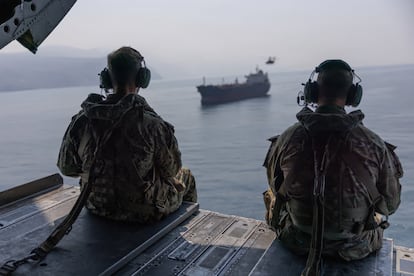
Freight rates and the inflationary chain reaction
Shipping a tonne of oil from the Persian Gulf to China now costs around $237, compared with $25 in February, before the war. On a per-barrel basis, freight costs have risen from about $3.50 to more than $30, meaning they now account for more than a quarter of the price of Brent crude, compared with barely 2% to 3% before the conflict.
Transport costs have, in fact, become the main obstacle preventing fuel prices from easing, even as Gulf producers begin to increase their oil exports. What began as a supply crisis is increasingly turning into a maritime transport crisis. Meanwhile, fears that hostilities could flare up again in the Persian Gulf remain acute, helping to push Brent prices in recent days back to their April highs of around $116 a barrel.
“Even when there is supply, there is a shortage of vessels and shipping routes have become longer,” explains Jorge Molinero, an analyst at commodities platform Sparta. “What the war has done is reduce the effective supply of tankers through several channels at once. The global fleet may be unchanged [since building a ship takes years], but many tankers have been stranded inside the Gulf. At the same time, voyages have become longer. Shipments that once travelled from the Gulf to Asia are being replaced by crude from more distant origins, which means more days at sea and fewer ships available.”
On top of that, war-risk insurance premiums for tankers have soared, a cost that shipowners are passing on through higher freight rates. The same pattern can be seen elsewhere. Freight rates for tankers sailing from the United States to Europe reached about $188 per tonne in October, an all-time high and nearly four times the level recorded in February.
“Tankers have been redeployed and voyages are longer, so there is a shortage of ships everywhere,” Molinero adds. With renewed tensions around Bab el-Mandeb, vessels avoiding the Red Sea and carrying crude to Europe via the Cape of Good Hope can add as much as two weeks to their journey.
Tankers have become the most valuable assets in global shipping, particularly for traders and energy companies that do not own fleets and must charter vessels on the open market. According to maritime consultancy Clarksons Research, average weighted tanker earnings exceeded $200,000 per day by late September. In the case of VLCCs (Very Large Crude Carriers), which can transport around two million barrels of oil, daily earnings have reached $600,000, roughly 17 times their average level over the past decade. But the impact of the disruption in Hormuz extends far beyond oil and is rippling across the entire transport chain.
“Rising crude and refined product prices are pushing up the cost of marine fuel, jet fuel and road freight, which in turn raises transport costs worldwide,” says Izabela Listowska, head transport analyst at S&P Global Ratings.
Container shipping lines have also imposed emergency surcharges to offset higher fuel and operating costs, rerouting expenses and rising insurance premiums. “For example, for a container carrying 10,000 pairs of adult shoes, an emergency surcharge of $3,000 per container would add around $0.30 per pair to shipping costs,” Listowska explains in an email. Freight rates on the route from China to the U.S. West Coast have climbed to $7,500 per 40-foot container, up from $1,850 at the end of February.
China’s search for routes beyond Malacca
The disruption of shipping through Hormuz has affected not only energy prices but the entire maritime logistics chain. Yet if there is one strait whose closure would deal a truly devastating blow to global trade, it is Malacca.
According to García Herrero, “Roughly one-third of global maritime trade passes through it and, in terms of volume, more oil now flows through Malacca than through Hormuz [around 23 million barrels a day compared with about 21 million]. It is critical for China, Japan and South Korea: nearly 80% of China’s imported oil passes through the strait.”
There are alternatives to Malacca, such as Indonesia’s Lombok and Sunda straits, but they are slower and more expensive. Anticipating the possibility of a disruption at this strategic choke point, China has developed a network of pipelines bringing crude oil from Russia, Central Asia and Myanmar, alongside a chain of ports stretching across the Indian Ocean. This network is known as the “String of Pearls”: commercial facilities with clear potential military value, including Gwadar in Pakistan, Hambantota in Sri Lanka, Kyaukpyu in Myanmar and Chittagong in Bangladesh.
“China is a power and is surrounded by governments that may become threats, such as Japan or Taiwan,” explains Emilio Rodríguez‑Díaz, director of the Department of Navigation Sciences and Naval Construction at the University of Cádiz in Spain and an expert in maritime security.
Trade protection and geopolitics converge in China’s maritime strategy. Beijing recently launched a regular commercial route linking Asia and Europe through the Arctic by way of the Northern Sea Route, which is under Russian control. While the route is highly seasonal and handles relatively small cargo volumes, China sees it as an “Ice Silk Road” because it allows ships to travel from China to Europe in roughly 20 days, about half the time required via Suez, while bypassing Hormuz, Malacca and the Red Sea.
As García Herrero notes, “It does not replace Suez or Malacca on a large scale, but it does give Beijing another card to play in its contest with Washington.”
The contest for global supremacy is therefore also being fought at sea. That helps explain Donald Trump’s determination to secure influence over Hormuz and Greenland.
“For decades the United States has been the great defender of freedom of navigation, and now it is seeking to secure control of specific points,” explains Judith Arnal, senior researcher at the Elcano Royal Institute. “It escorts the tankers of its Gulf partners in Hormuz while blocking Iranian exports; it even proposed in July to charge for that protection, and it has signed an agreement with Denmark and Greenland that allows it to expand its military presence on the island.”
A new reality
With Trump seeking greater control over key maritime routes and Iran planning to levy transit fees on ships passing through Hormuz, what lies ahead for maritime security? The Strait remains the Gordian knot at the center of the energy and shipping crisis, but “for maritime traffic through the Strait of Hormuz to return to normal, blockades and attacks on vessels would have to cease and safe passage would need to be guaranteed,” warns Niels Rasmussen, chief shipping analyst at the Baltic and International Maritime Council (BIMCO), the world’s leading shipping association. For now, Rasmussen adds, most shipowners believe the risks of transiting Hormuz are too high.
A return to normality will require a credible and lasting agreement between Iran and the United States, and even that may not be enough. “Insurers and shipowners demand proof of sustained stability before they consider an area that was previously in conflict to be normal,” says Listowska. “After the memorandum of understanding signed in June between the U.S. and Iran, we observed greater insurance capacity return to the market, but premiums remained well above pre‑war levels.”
Deflating the massive shock that the war with Iran has inflicted on global shipping will not be easy, even once the conflict eventually ends. Reopening a strait can happen relatively quickly if there is a political agreement, but restoring pre-conflict security conditions and confidence in the rules of navigation is a much slower process.
“Iran has charged some vessels for crossing Hormuz and is considering legislation to formalize this. And the United States even announced a 20% toll on cargo,” recalls Arnal.
The long-term scars that the war with Iran will leave on maritime trade remain uncertain, even if the disruption is currently at its peak.
“I resist the notion that the international legal order governing the seas has somehow disappeared simply because serious regional disturbances are taking place in certain parts of the world,” says Antonios Tzanakopoulos, professor of Public International Law at the University of Oxford’s Faculty of Law. He points out that risks to navigation have fluctuated throughout history. “More than a decade ago, risks in the Gulf of Aden were significant due to piracy, and today they are less so.”
Only time will tell whether the unprecedented closure of Hormuz leaves the world with permanently higher shipping costs.
Sign up for our weekly newsletter to get more English-language news coverage from EL PAÍS USA Edition













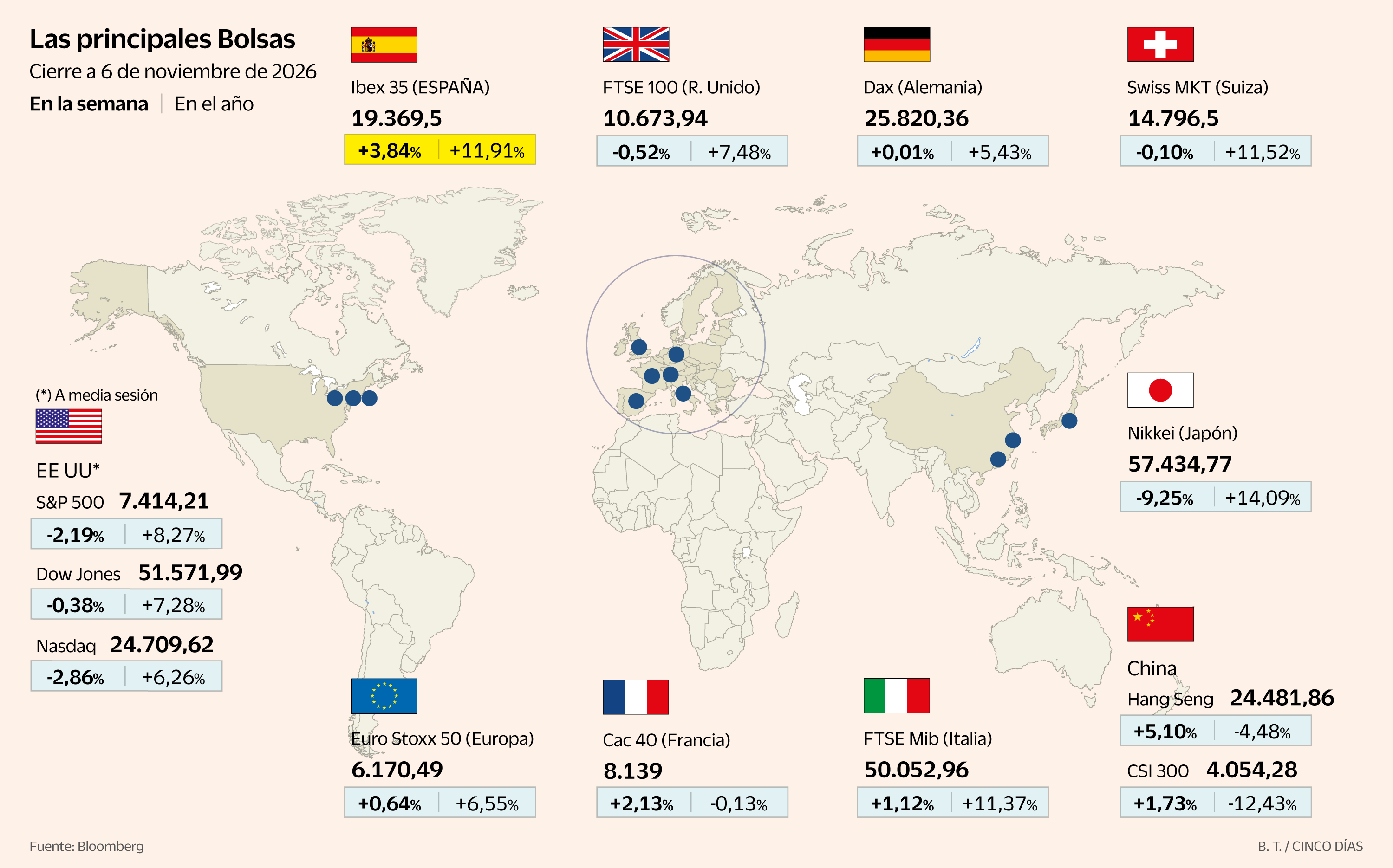
Lo que prometía ser una semana marcada por el alivio terminó convertida en una nueva demostración de la fragilidad del entusiasmo bursátil. La contundente victoria demócrata en las elecciones de mitad de mandato y el brusco descenso del petróleo devolvieron inicialmente el apetito por el riesgo a los mercados, pero el optimismo duró apenas unas horas. El temor a una desaceleración de las inversiones ligadas a la inteligencia artificial desató una fuerte corrección entre los gigantes tecnológicos y borró de un plumazo las ganancias logradas tras el impulso electoral.
Bolsa
Jueves Negro Para La Bolsa: El Nasdaq Sufre La Peor Caída Desde 2020 Por El Miedo A Que Se Agudice El Frenazo De La IA



Almuñecar Turns Up The Volume
Ben Shelton – Carlos Alcaraz En Directo, La Final Del Masters 1000 De París En Vivo | El Murciano Se Lleva El Primer Set En El ‘tie-Break’

Spanish Judge ‘asks UAE To Arrest Couple’ Suspected Of Ordering Execution Of Marbella’s Infamous BBL Surgeon Dr ‘Buttman’


-
DGT3 weeks ago
Viral video in Spain sparks fury over drivers who ‘have no idea how to drive’
-
Automated supermarket4 weeks ago
Spain’s 24-hour shop with no tills expands to Barcelona Airport
-

 Uncategorized4 weeks ago
Williams F1 driver caught up in four-car pit lane pileup
-
News4 weeks ago
Hundreds evacuated as huge fire erupts on Spain high-speed train route
-
Keeping cats and dogs outside3 weeks ago
Spain’s pet owners face fines of up to €200,000 for animal welfare offences
-
Council tax (IBI)3 weeks ago
Barcelona plans 150% property tax increase on tourist flats ahead of 2028 ban
-
Age Concern Marbella - San Pedro2 weeks ago
Halloween lunch sells out as 51 join Marbella get-together
-
airports3 weeks ago
Travelling between Spain and Italy? The extra border checks could soon end