
ElPais
Kyiv’s Two Worlds: Between Celebration And War

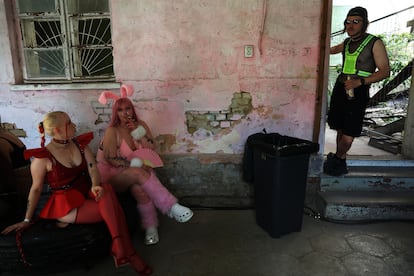
Dasha, 18, sways to the music from head to toe alongside a group of friends as Belgian DJ Matthias Geerts performs. It is Saturday and, along with several hundred other young people, they are celebrating life amid war at a summer festival that serves as a kind of therapy.
They are doing so in one of the places targeted during Russia’s latest major attack on Kyiv on June 15: the grounds of the historic Oleksandr Dovzhenko Film Studios, founded in 1927.
Dasha is a bundle of joy and fun. But, sitting for a few minutes beside the reporter, she admits that her dancing conceals the tragedy of the war: “My father died three years ago after stepping on a mine in the village of Vodyane, in the Donetsk region.”
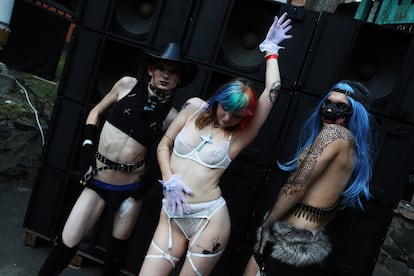
Despite everything, life in Ukraine’s capital bubbles along with apparent normality. With the harsh winter — marked by power outages caused by the Russian offensive — now over, the resilience of Kyiv’s residents remains the chief survival tool for those who do not wear a uniform, like Dasha. Yet the city continues to embody a painful contradiction.
“After the drones and the missiles, we get up, go to work and then meet friends,” sums up Karina Romanchenko, 24. She works in one of the departments of the vast historical, cultural and religious complex that includes the Kyiv Pechersk Lavra (Monastery of the Caves), a holy site of Orthodox Christianity dating back to the 11th century and a UNESCO World Heritage Site. The complex was also struck by Russian Shahed drones in the early hours of June 15.
On the one hand, the city is full of children enjoying their summer holidays, groups of young people attending concerts, spending time in restaurants and cafés, visiting exhibitions and theaters, and gathering with their families along the banks of the Dnipro River. On the other hand, as Romanchenko notes, there are still nights and early mornings of bombardment, constant worry about relatives and friends at the front, and the impossibility of returning to a normal life.
Just a hundred meters from where Dasha and her friends celebrate their youth and freedom, the remains of a completely destroyed building were still smouldering nearly two weeks after the attack. It housed Ukraine’s largest collection of film costumes — around 100,000 in total. In an indirect nod to that irretrievable loss of props and costumes, the Veselka Festival — veselka means “rainbow” in Ukrainian and is also the name of the famous New York restaurant — embraces a simple idea, as Dasha points out while admiring the eccentric outfits of many attendees: “Here everyone can be who they really are.”
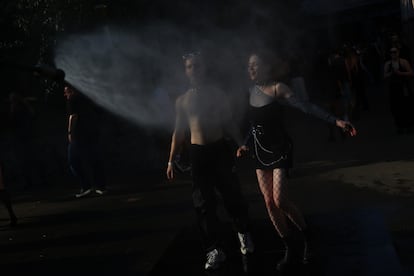
The night before the June 15 attack, the studio grounds had hosted the Dirty Dog festival. The event ended at 10 p.m. because of the curfew, which remains in force between midnight and 5 a.m. Just four or five hours later, the missiles began to fall. The extensive damage — not only to the costume department — has not prevented the Veselka Festival from going ahead.
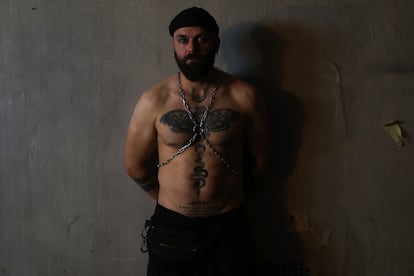
Serguei, 36, strolls through the festival shirtless, displaying his tattoos beneath a chain worn like a cross. “We are at war, but we need this as a refuge,” explains this police officer, whose duties include registering the deaths of fellow officers killed in combat.
He says he once hoped to become an actor and singer — he even hums a song by Spanish artist Alex Ubago, though he knows little about him beyond his nationality. But the 2013 Revolution of Dignity, or Maidan, pushed him to do more for his country, eventually leading him into uniform.
“We live under two worlds,” he concludes, referring to the dichotomy that envelops Kyiv.
Rapid repair
The Kyiv Pechersk Lavra — the oldest monastery in Ukraine — managed to return almost immediately to normal operations after the June 15 bombardment. The city has endured similar attacks since Moscow launched its full-scale invasion in 2022.
Shortly after firefighters extinguished the blaze, workers covered the damaged Dormition Cathedral — the building most affected — with a temporary roof made of wooden beams and plastic sheeting. Within two days, the site had reopened to visitors, although the interior of the cathedral remained closed.
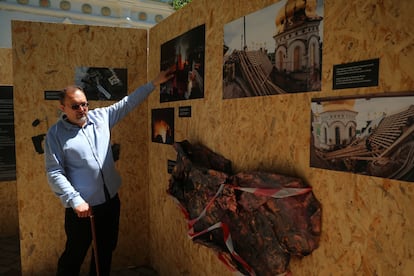
“It was a direct attack,” says historian Kostiantyn Krainii, deputy director of the complex, as he shows the damage.
Alongside the cathedral walls, a makeshift exhibition has been set up using chipboard panels to commemorate the strike. Twisted fragments of the roof lie on display, along with what are identified as parts of the Russian kamikaze drones used in the attack.
Krainii says the rapid response by firefighters prevented the cathedral’s main sections from being damaged. The gilded wooden decorations and large icons inside remain intact while workers continue repairs. Several powerful fans run constantly to reduce the high levels of humidity caused by the large amounts of water used to extinguish the fire.
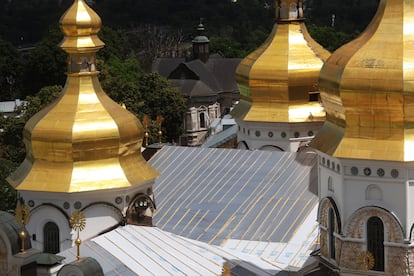
“The damage has been minimal,” the historian, who has worked at the complex for 37 years, says gratefully. “If the fire had reached inside here, this would have burned within seconds, and it would have been a true disaster,” he adds, recalling the dozens of neighbors and emergency workers who saved relics and everything they could in the first minutes after the impact.
In the gardens, a group of children wearing colored identification bibs tour the facilities on a field trip. One of the few tourists is Marion, a 39-year-old Frenchwoman who has traveled to the Ukrainian capital for the first time to spend several days with a friend. She says she is not afraid because she works for a humanitarian agency in a conflict zone, though she prefers not to give more details. She does note, however, that “despite the cost of the war, life goes on” in Kyiv.
Next to the walls of the Kyiv Pechersk Lavra stands the much smaller Monastery of St Theodosius, where Father Makarios, 64, once again welcomes the EL PAÍS correspondent 51 months after their previous meeting. Back then, he spoke of attending courses to prepare for the Russian invasion.
Only a few metres from the entrance arch of St Theodosius, a large building still bears the marks of a second drone strike targeting the monastery.
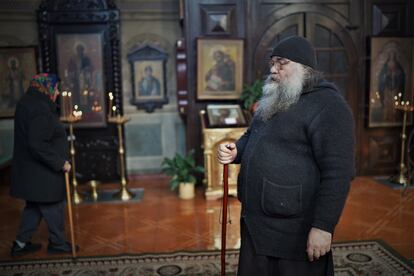
Despite everything, the clergyman, wearing a black cassock and a thick beard, downplays the attack and shows the same conviction and faith as in March 2022. “They bomb loudly and often, and sometimes we can’t sleep for days. But God loves us, protects us and will not allow anything to happen to us. Ukraine will win!” he says firmly, leaning as always on a walking stick.
Occupied areas
Karina Romanchenko gazes at the repaired roof of the Dormition Cathedral from the neighboring bell tower, the highest structure in the complex and one of the best vantage points in the city.
She comes from the outskirts of Melitopol, in the southern region of Zaporizhzhia, which has been under Russian occupation since 2022. Ukrainian forces have recently intensified attacks in the area, seeking to disrupt Russian supply lines to neighboring Crimea.
Romanchenko, who has lived in Kyiv since 2019, tries to speak with her mother every day, although that is not always possible. She says Melitopol suffers frequent power outages. But she is convinced that “crying in the corners all day won’t solve anything.” Although “it isn’t easy, we’ve gotten used to it,” the young woman concludes.
Sign up for our weekly newsletter to get more English-language news coverage from EL PAÍS USA Edition





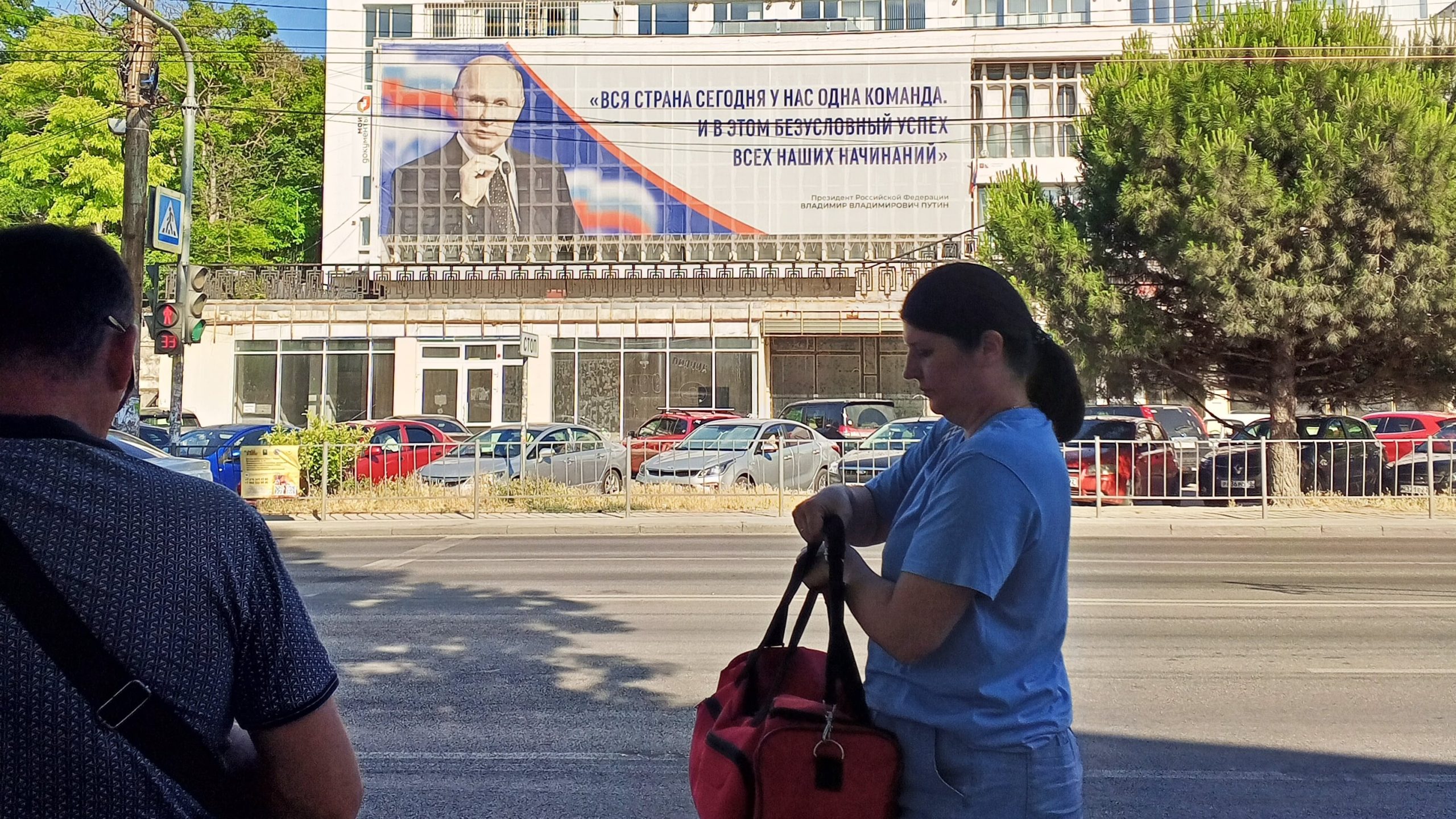
In Sevastopol, the most populous city on the Crimean Peninsula, a state of emergency has once again taken hold. Throughout its history, it has been the scene of repeated sieges and has been battered during the four years of Russia’s war against Ukraine. But now, the city is experiencing a siege of a different kind — one fought from afar, through the air. Russia’s main Black Sea naval base has had to ration fuel. No enemy is visible at the entrance to its imposing bay, but explosions tear through the sky at intervals of just a few hours. This is the new face of war: precision missiles and waves of low-cost drones.
The Ukrainian military has launched an offensive against infrastructure — bridges, roads, railways — intended to strangle the enemy’s logistics on the Crimean Peninsula, Ukrainian territory occupied by Moscow since 2014. Last week it managed to cut power to Sevastopol, a city of about 350,000 people. After a three-day blackout, authorities managed to restore power and many cafés reopened, although tourists have disappeared.
The return of electricity, however, proved to be little more than a brief reprieve. Sevastopol Governor Mikhail Razvozhayev announced on Tuesday that power restrictions were being reimposed.
“This measure is mandatory and necessary to resolve instability in the power grids outside our area. If possible, do not use elevators, and if you have electricity, charge your phones and power banks,” he said, among other recommendations.
Before the latest outages, an orchestra in a restaurant was playing the 1982 hit song Felicità, seemingly oblivious to the conflict. “Life goes on. We have to keep going, although I think things will get even worse,” says Tatiana with a note of resignation as she watches her daughter, about 10 years old, playing with a friend along the waterfront.
Sevastopol’s residents continue to stroll through the city and try to maintain a semblance of normal life despite everything. As in many Russian cities, the urban landscape has come to include massive concrete shelters known as ukrytiye, designed for quick refuge during attacks. But unlike before, buses and trolleybuses are no longer routinely evacuated when air-raid sirens sound. Public transport is operating normally again after the disruptions of recent weeks.
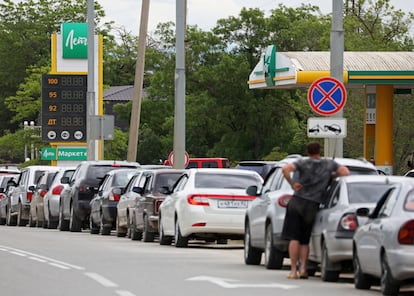
Governor Razvozhayev announced on Monday that residents would be limited to purchasing 20 liters of fuel per vehicle, using QR codes issued by the authorities on a case-by-case basis. Together with the growing use of hybrid and electric vehicles, the measure is helping to keep logistics functioning — just barely — in the Black Sea city.
“We were without power or water for three days,” Tatiana continues. “The food in the fridge went bad, and we had to buy everything, even water, in the shops. It’s terrible, [the Ukrainian forces] constantly attack military facilities, ships and energy infrastructure,” she adds, taking some comfort in the fact that her daughter and her friend, who arrived a month ago, “don’t understand what’s happening.”
As the sun sets over the entrance to Sevastopol Bay, a bride poses for wedding photos with her friends. In the distance, bursts of anti-aircraft fire can be heard, though no one pays much attention. Night falls. In the distance, tracer rounds flash in the sky and vanish. After 11 p.m., air-raid sirens suddenly wail across the city. Minutes after they stop, two powerful explosions shake the hotel room. Calm returns, but at 6 a.m. the alarm clock of war sounds again: first the sirens, then the explosions.
“Air defenses have repelled two Ukrainian attacks. Twenty-nine drones were shot down,” Sevastopol’s governor reported on Telegram. Six explosions were heard this time, though farther away. The city returns to its routine. Past noon the sirens sound again.
No gunfire had been heard in Crimea from the time Russia annexed the peninsula in 2014 until Moscow launched its full-scale invasion of Ukraine in February 2022. Nor has it ever faced shortages on this scale. Ukraine’s bombing campaign against Russian oil refineries this year has caused fuel shortages across much of the country, while the Black Sea peninsula has also been affected by Kyiv’s efforts to disrupt access through drone attacks on its two main supply routes: the Kerch Bridge and the R-280 highway from Donbas.
Unlike the rest of Crimea, Sevastopol remained a Russian naval base after the dissolution of the Soviet Union in 1991, while the remainder of the peninsula became part of independent Ukraine. Kyiv and Moscow initially agreed that the arrangement would remain in place until 2017, although it was extended in 2010 through 2042. It was from this enclave that Russian forces seized Crimea’s parliament in 2014, when Ukraine was being governed by an interim administration following that year’s Maidan protests against the pro-Russian government.
A mural at the entrance to Sevastopol recalls the final line of the speech Russian President Vladimir Putin delivered to his Federal Assembly in December 2014: “We are ready to take up any challenge and win.” That was how the Russian leader addressed lawmakers at the end of the year in which the Kremlin annexed Crimea in violation of international law and unleashed a war in eastern Ukraine while denying any involvement, insisting that Russian soldiers fighting there were simply volunteers on “vacation.”
Twelve years later, with Russia’s offensive extended across all of Ukraine, Crimea is under intense bombardment, and Putin still does not control Sloviansk, the city in Ukraine’s Donetsk region where the current war — the largest armed conflict Europe has seen in 80 years — first took root.
In Sevastopol, there is little room for anything but pro-Russian nationalist graffiti. “Where the Russians are, there is victory,” reads a mural painted over the czarist imperial flag in one of the bay’s gorges. “A united team, a strong country. Together we are Russia,” declare posters plastered across the city to commemorate Crimea’s annexation.
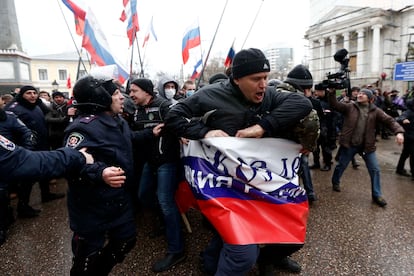
Spontaneous demonstrations — even by a single person — are banned in Russia. Yet the authorities have tolerated, or perhaps encouraged, three men collecting signatures in support of declaring a state of emergency and escalating the war against Ukraine.
“A war is being waged against our country,” they shout beside a flag bearing the image of a resolute Putin and a car topped with a mock-up of a nuclear missile emblazoned with the words: “To Washington.”
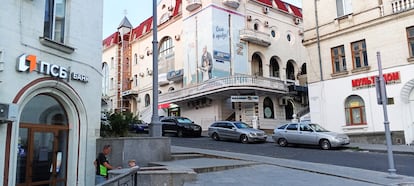
But not everyone shares that blind faith. Even some veterans admit to a measure of disappointment as Ukrainian strikes become increasingly frequent.
An elderly man pushes his grandson on a swing in Komsomol Park, named after the Soviet-era Communist youth organization that inspired the Kremlin’s own youth movement at the start of the conflict.
“The way Putin is waging this war, it will never end,” says Vladimir Ivanov, a retiree, former reconnaissance platoon commander in the naval infantry and member of a long line of military servicemen, as he plays with the child. Pausing for a moment, he turns to the boy. “Well, what’s up, cosmonaut?” he asks affectionately. “I have to keep him entertained because his dad is at the front,” he adds.
“I’m a fatalist. As the saying goes, the man destined to be hanged will never drown. All of this is sad. We have plenty of problems here, and on top of that we have to put up with the fascists,” he says, blaming Ukraine — whose government Russian propaganda routinely labels fascist — for the current conflict, as well as Soviet authorities, “who allowed the Banderovtsi [Ukrainian ultranationalists who follow the legacy of Stepan Bandera] to maintain a strong position in the west of the country.”
Ivanov notes that his great-grandfather’s name appeared in the museum dedicated to the defense of Sevastopol during the Crimean War of 1854–55. On June 10, a Ukrainian strike damaged the building and its vast mural by Franz Roubaud. The museum is now closed and is expected to reopen next year.
“We’ve heard attacks everywhere these past two weeks; it was to be expected that the situation would worsen,” says Liubov, who lives near the museum and is out walking her dog, Tioma.
She speaks with resignation about whatever may come next. “We wait and wait. One never knows what will happen; it’s not up to you,” she says. “The fuel situation is bad. There will undoubtedly be restrictions; it’s inevitable in a wartime scenario,” adds the retiree, who moved to Sevastopol 30 years ago with her first husband.
Many of the women who live in the city, like her, are or have been partners of members of the Russian armed forces. “This is a military city,” Liubov stresses, before carefully noting that what is happening in Ukraine is a “special military operation” and laughing as she recalls that the Russian authorities “have never declared that this is a war.”
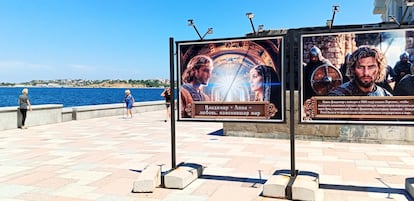
Majority support among Russians for the war against Ukraine, as reflected in opinion polls, is even more pronounced in a military hub such as Sevastopol, where it is difficult to find anyone who questions the decision to wage war.
“This will end up like the Chechen war. A truce will be signed and the fighting will resume a couple of years later, although perhaps less intensely,” predicts Alexei, an active-duty serviceman, as he strolls along the shore of Pivdenna Bay.
A sign posted at a lookout point warns that photographing the docks and ships of the Russian Black Sea Fleet moored there is strictly forbidden.
“You must be careful not to give the enemy clues. The Ukrainian idiots attack constantly, but the air defenses work,” says Alexei.
The threat posed by Ukraine’s long-range weapons has effectively sidelined the Russian navy from frontline operations and forced Moscow to relocate some vessels to the port of Novorossiysk, whose facilities still pale in comparison with Crimea’s strategic warm-water harbor.
The danger that modern missiles and drones pose even to the most powerful navies is now evident in the fighting in the Black Sea and the Strait of Hormuz. But it was already demonstrated in April 2022, when two Ukrainian missiles sank the Black Sea Fleet’s flagship, the Russian cruiser Moskva. Today, the ship survives only as a memory on the souvenir magnets sold in Sevastopol’s gift shops.
“The situation is going to get worse,” says the owner of one such stall on the waterfront, as air-raid sirens sound in the background. “Our forces are about to liberate Donbas, the special military operation will conclude and they [Ukraine] are trying [with these bombings] to divert Russian forces from the front.”
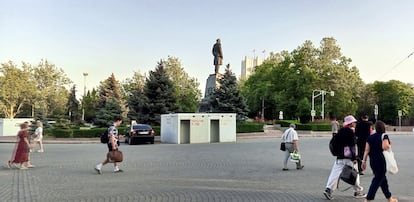
Curiously, the souvenirs bearing Putin’s face that used to be everywhere in these shops have disappeared from the shelves. Today in Sevastopol there are only three types of keepsakes for sale: city monuments, the Black Sea fleet and a single Russian historical figure: Joseph Stalin, the dictator who is increasingly viewed favorably in Russia.
Sign up for our weekly newsletter to get more English-language news coverage from EL PAÍS USA Edition

Inglaterra – RD Congo, En Directo | Los Africanos Se Van Con Ventaja Al Descanso

El PP Pide La Imputación De La Directora De La Guardia Civil En El ‘caso Leire Díez’

Los Alcazares Pride Returns With Star-Studded Line-Up And Free Health Services
Dinosaurs are roaring over to Estepona this summer in a massive 5,000m² exhibition

Families Caring For Elderly Parents In Spain Say Brexit Has Left Them With Impossible Choices
Denia launches new La Marineta music festival this summer with Fangoria and Nil Moliner


-
Costa del Sol1 week ago
Dinosaurs are roaring over to Estepona this summer in a massive 5,000m² exhibition
-
 %2 weeks ago
Families Caring For Elderly Parents In Spain Say Brexit Has Left Them With Impossible Choices
-
Costa Blanca North2 weeks ago
Denia launches new La Marineta music festival this summer with Fangoria and Nil Moliner
-

 ElPais2 weeks ago
Primary Elections In New York, Maryland, And Utah: Date And How To Vote
-

 %2 weeks ago
One Of Spain’s Top Supermarkets Has Just Been Ranked Among Europe’s Most Innovative In A Major New Report
-
Latest2 weeks ago
KEY POINTS: What Changes About Life In Spain In July 2026
-
Finland2 weeks ago
Finns abroad keep Juhannus traditions alive on Spanish coast in 2026
-
 Foreign demand2 weeks ago
Barcelona Home Sales Rose Just 1pc Last Year As Foreign Buyers Hit A Record High