Connect with us

%

Fuengirola’s Charity Mile For Cudeca

Published

on

fuengirola’s-charity-mile-for-cudeca

A community event with a long local history is returning, hoping residents will walk or run in support of Cudeca’s hospice work

Come together for care

Fuengirola is digging out the right walking shoes for the ninth edition of the Milla y Marcha Pedro Cuevas, the annual mile run and coastal walk raising funds for Cudeca. This year it is taking place on Saturday, September 19 at Plaza Pedro Cuevas in Los Boliches. Walkers can get themelves ready for a 7pm start, to raise funds for Fundacion Cudeca, the hospice charity offering compassionate support to people facing cancer across the Costa del Sol.

Choose your own pace

Participants can choose between the traditional mile race or a relaxed walk along the Paseo Maritimo. Both options begin at the same square, giving families, visitors and seasoned runners an accessible way to contribute to Cudeca’s work at their own pace. The event is organised in collaboration with Club Atletismo Fuengirola, whose volunteers help promote registrations and encourage community involvement.

Entries are available through Dorsalchip, with fees set at €4 for Under‑9s to Under‑13s and €5 for Under‑15s up to the veterans group. Payments are made as donations to Cudeca during bib collection. Twenty bibs will be held back for late sign‑ups between 6pm and 6:50pm on the day, offering a final chance for those who miss the online deadline. Bib pick‑up takes place on Friday, September 18 at the Sports Department from 8:30am to 2pm. Additional collection opens at 6pm on the day of the event in Plaza Pedro Cuevas, giving participants time to prepare before the start.

Awards and community support

Trophies will be presented to the top three male and female runners in the Under 15’s to veteran categories, with medals for the leading finishers in each age group. Raffles and prize draws will support Cudeca, made possible through contributions from local businesses and organisations.

Created in honour of former Sports Councillor Pedro Cuevas, the event has become a familiar date for many people in Fuengirola. Residents know Cudeca’s work well, and plenty have seen friends or neighbours supported by the charity. Taking part on September 19 is a pleasant and simple way for locals to show appreciation for that care, whether they choose to run the mile or join the coastal walk.

%

Scabies Outbreak Hits Spanish Troops Deployed To Ceuta During Migration Crisis

Published

on

scabies-outbreak-hits-spanish-troops-deployed-to-ceuta-during-migration-crisis

Defence has confirmed the cases but has not attributed them to the former K-8 facility. Photo credit: Shootdiem/Shutterstock

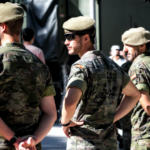
The troops that were sent to Ceuta to help deal with the migration crisis are now facing problems of their own, with at least 14 military personnel reportedly infected with scabies after being deployed to the Spanish territory.

Their military union says the infections may be connected to the conditions in which some of the troops were housed, including claims of overcrowding and poor maintenance at an old military facility. The Ministry of Defence has confirmed around a dozen cases, but has not established that the infections were caused by the accommodation or linked to the migration crisis.

Troops housed at abandoned facility

According to the Union of Military Troops (UMT), affected personnel from the 54th Regulares Group were housed on August 15 at the former K-8 Coastal Battery in García Aldave. The union claims the facility was normally unused and had not received adequate maintenance. It also alleges that there had previously been problems with pests and that troops were placed in crowded conditions.

Those claims have not been confirmed by Defence as the source of the infections. The circumstances have nevertheless raised questions about whether accommodation arranged during the emergency deployment was suitable for large numbers of personnel.

Why scabies can spread quickly

Scabies is caused by microscopic mites that burrow into the skin. It spreads mainly through prolonged skin-to-skin contact, although sharing clothing, bedding or towels can also transmit the infestation. Crowded living arrangements can make controlling an outbreak more difficult, particularly when people sleep in close proximity or share facilities.

Symptoms can take several weeks to appear after an initial infestation, meaning someone can carry the mites before realising they have been infected. That makes identifying cases and treating close contacts important when several infections appear within the same group.

Military associations want answers

The UMT says at least 14 personnel have been affected, while Defence has confirmed a figure of around 10 cases. Other military organisations are now seeking clarification over the extent of the outbreak. The Spanish Association of Troops and Sailors (ATME) has called for information about the number of infections, the units involved and the health measures introduced following the cases.

The association also wants to know whether other military personnel could have been exposed. UMT has asked whether cases have appeared in other units stationed in Ceuta, including the Legion, Montesa, Ramix, RING and ULOG.

Could it spread beyond the troops?

The concern is not limited to the affected soldiers, UMT has asked Defence what measures are being taken to prevent infections reaching military families or civilians. It has also called for information about the cleaning and disinfection of accommodation, gyms and military vehicles used by personnel who may have been exposed.

That matters because troops deployed to Ceuta live alongside other service personnel and may have contact with relatives and members of the wider community. An outbreak contained within one group presents a different challenge from infections spreading across several units.

Another problem for Ceuta

The cases have emerged while Ceuta is already dealing with the consequences of the mass migration crisis. The territory experienced a huge influx from Morocco at the end of July, prompting the deployment of additional security and military personnel.

Thousands of migrants remain in Ceuta, putting pressure on accommodation and public services. The military reinforcements were brought in to support the response. Now some of those personnel are dealing with an infectious condition that can be difficult to contain in shared accommodation.

What remains unclear

The exact source of the infections has not been established publicly, defence has confirmed the cases but has not attributed them to the former K-8 facility, while UMT has pointed to the accommodation and the conditions reported there. The difference between those positions matters.

If the accommodation played a role, identifying and treating anyone who may have been exposed will be important to prevent further infections. If the cases came from another source, the military will need to establish how personnel became infected and whether anyone else is at risk. For now, military associations are pressing Defence for more information about the outbreak and the measures being taken.

Troops face a new risk

The soldiers sent to Ceuta were deployed to reinforce the territory during an unprecedented migration emergency. They are now dealing with a health problem that could affect other personnel if infections are not contained. At least a dozen cases have been confirmed by Defence, while the military union puts the figure at 14.

The cause remains disputed, but the questions surrounding accommodation have added another layer to an already difficult deployment. Troops brought into Ceuta to help manage the migration crisis are now facing an outbreak of their own, and military associations want to know how it happened and whether more personnel could be affected.

Continue Reading

%

Scare At Benalmadena Hotel As Fire

Published

on

scare-at-benalmadena-hotel-as-fire

Firefighters set up outside Benalmadena hotel. Credit CPB Benalmadena

Nearly 300 holidaymakers staying at Spirit Hotel Benalmadena faced a sudden scare on Sunday night when flames broke out inside the beachfront property. No one suffered any injuries, and crews brought the situation under control without major drama.

Fire starts in basement massage room

Flames appeared around 9pm in a room on floor -2, specifically the massage salon that had already closed for the evening. Empty at the time, the space still filled with smoke quickly enough to trigger safety protocols across the hotel. Guests already inside received instructions to stay put or move to safer areas as a partial evacuation got under way. New arrivals were held outside until the all-clear came through.

Two crews from Benalmadena firefighters raced to the scene and extinguished the blaze in short order. Hotel staff worked hand-in-hand with the firefighters throughout, while Local Police and National Police officers helped manage the perimeter and keep everyone calm. Officials later praised the smooth teamwork that stopped the incident escalating.

Guests return after all-clear

By roughly 10.15pm the area was declared safe. Holidaymakers filtered back to their rooms, and the hotel returned to normal operations. Manager Hugo Uria described the evening as “a right scare” yet stressed that sensors and sprinklers had kicked in fast, limiting the damage. Investigators are still looking into exactly how the fire started.

This latest alert comes after other recent incidents on the Costa del Sol, including a tragic house fire in Arroyo de la Miel earlier this summer that claimed young lives (see our earlier coverage here). Local crews have also been honing skills through night-time drills at the Benalmadena cable car, involving provincial firefighters and drones.

Spirit Hotel Benalmadena sits right on the seafront along Avenida Antonio Machado. Anyone planning a stay can check current facilities and offers on the official site here. For wider Costa del Sol emergency updates, keep an eye on local fire service channels and Euro Weekly News reports.

Guests can rest easy knowing the rapid response and solid coordination prevented any harm this time.

Continue Reading

%

Premature Baby Born At Just 24 Weeks Has Sight Saved By Spanish Doctors

Published

on

premature-baby-born-at-just-24-weeks-has-sight-saved-by-spanish-doctors

Retinopathy of prematurity is one of the major causes of childhood blindness. Photo credit: Iryna Inshyna/Shutterstock

A baby born so early that every day of survival mattered was facing another devastating battle, the possibility of losing its sight. Born at just 24 weeks, the premature baby developed a serious eye condition that can lead to permanent blindness, but doctors in Elche managed to intervene before the damage became irreversible.

The baby was suffering from severe retinopathy of prematurity (ROP), a condition affecting the developing blood vessels in the retina. In serious cases, it can cause the retina to detach and result in permanent loss of vision. Specialists at the Hospital General Universitario de Elche treated the baby with a highly specialised procedure designed to stop the abnormal blood-vessel growth before it could cause irreversible damage.

A race to protect the baby’s sight

Being born at 24 weeks meant the baby’s eyes were still developing when it entered the world. The blood vessels in the retina normally continue developing during the final stages of pregnancy. Extremely premature birth interrupts that process and can leave the retina vulnerable to abnormal blood-vessel growth. In severe ROP, those vessels can damage the retina and eventually cause it to detach.

That was the danger facing the baby in Elche, doctors identified the condition and were able to intervene while treatment could still prevent permanent damage. The hospital says the intervention preserved the baby’s visual function, avoiding the loss of sight that can occur when severe ROP progresses untreated.

Highly specialised treatment

The treatment involved an intraocular injection of an anti-VEGF biological drug. The medication works by reducing the signals responsible for abnormal blood-vessel growth in the retina. By controlling that growth, doctors can reduce the risk of further damage and retinal detachment.

Although the injection is minimally invasive, carrying it out on a baby born at only 24 weeks presented significant challenges. The patient was extremely fragile and required specialist neonatal care before, during and after the procedure. The hospital therefore brought together its Ophthalmology Department and Neonatal Intensive Care Unit for the intervention.

Protecting a fragile patient

Ophthalmologists Cristian Fernández and Manuel Baeza performed the eye procedure, while paediatrician Consuelo Vázquez and the neonatal intensive-care team were responsible for preparing and monitoring the baby. The team used a specific neonatal intensive-care protocol and a micro-dosing system to administer the medication.

The baby’s condition meant that the procedure could not simply be treated as a routine eye injection. Its extremely premature birth and very low weight required careful monitoring throughout. The cooperation between the specialist teams allowed doctors to treat the eye problem while maintaining the level of intensive care required by such a vulnerable patient.

A condition that can steal a child’s sight

Retinopathy of prematurity is one of the major causes of childhood blindness, fortunately it is preventable  It occurs primarily in babies born very prematurely because their retinal blood vessels have not completed their normal development. Some cases are mild and resolve without treatment. More severe cases require close monitoring and intervention to prevent permanent damage.

That makes screening particularly important for babies born at very low gestational ages. In this case, doctors were able to detect the problem and act before the retina suffered irreversible damage. The successful intervention means the baby has avoided one of the most serious consequences associated with severe ROP.

What happens now?

The treatment does not mean the baby’s medical journey is over, extremely premature babies often require continued specialist monitoring, and babies treated for ROP need follow-up examinations to check how the retina develops and ensure there are no further complications. For this child, however, doctors have achieved the outcome that mattered most: protecting its sight during the earliest and most vulnerable stage of life.

The case also demonstrates the importance of specialist neonatal and ophthalmological care for babies born at the limits of viability. A child who arrived at just 24 weeks was facing the possibility of permanent blindness on top of the many challenges associated with extreme prematurity.

Doctors in Elche have now stopped that threat before it could become irreversible. For the family, the intervention means their baby can continue growing with its visual function preserved, something that could have been very different without timely specialist treatment.

Continue Reading

Trending

Copyright © 2017 Spanish Property & News