
ElPais
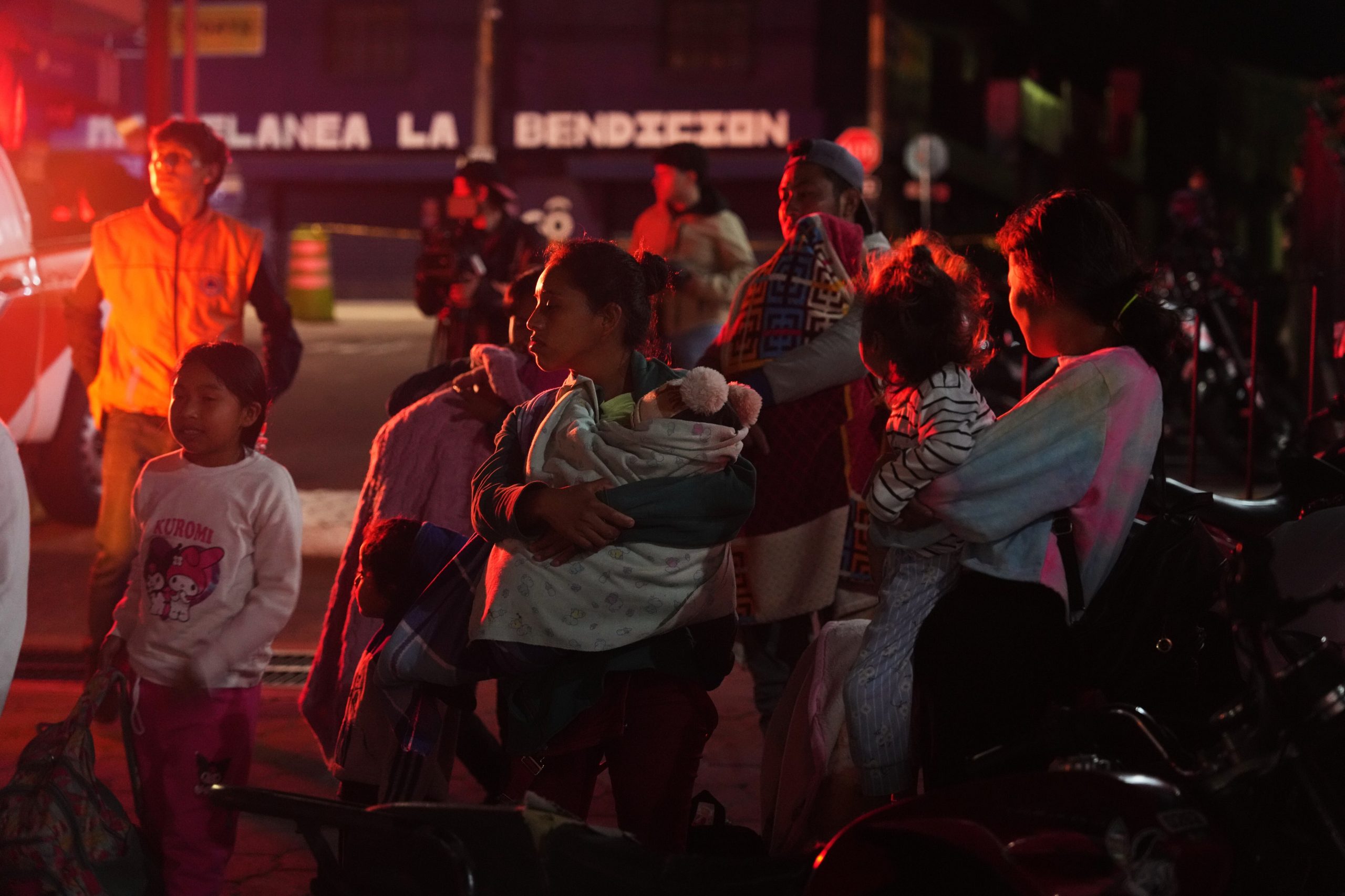
The Fuego Volcano Eruption In Pictures


10 fotos
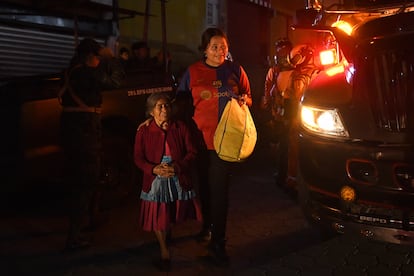
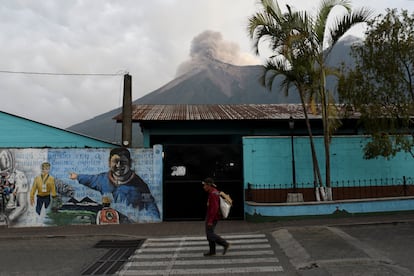
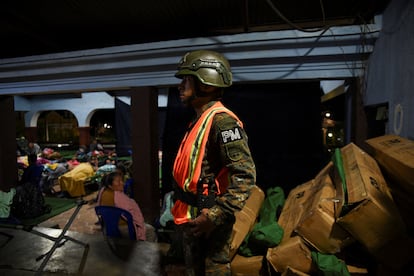
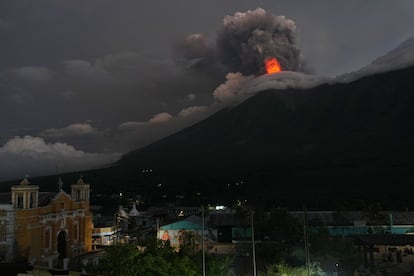
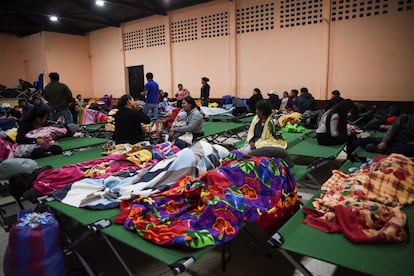
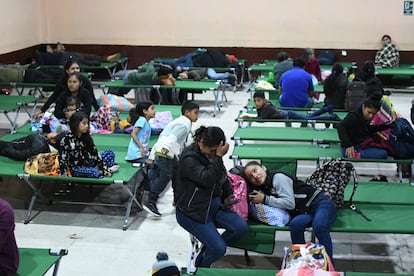
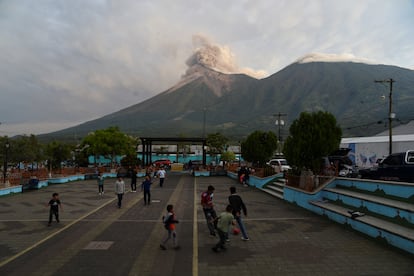
Guatemala declares an orange alert over the eruption of the most active volcano in Central America; hundreds of families from nearby communities were evacuated in the early hours of Tuesday because of intense activity that includes ash, gas, and lava fragments



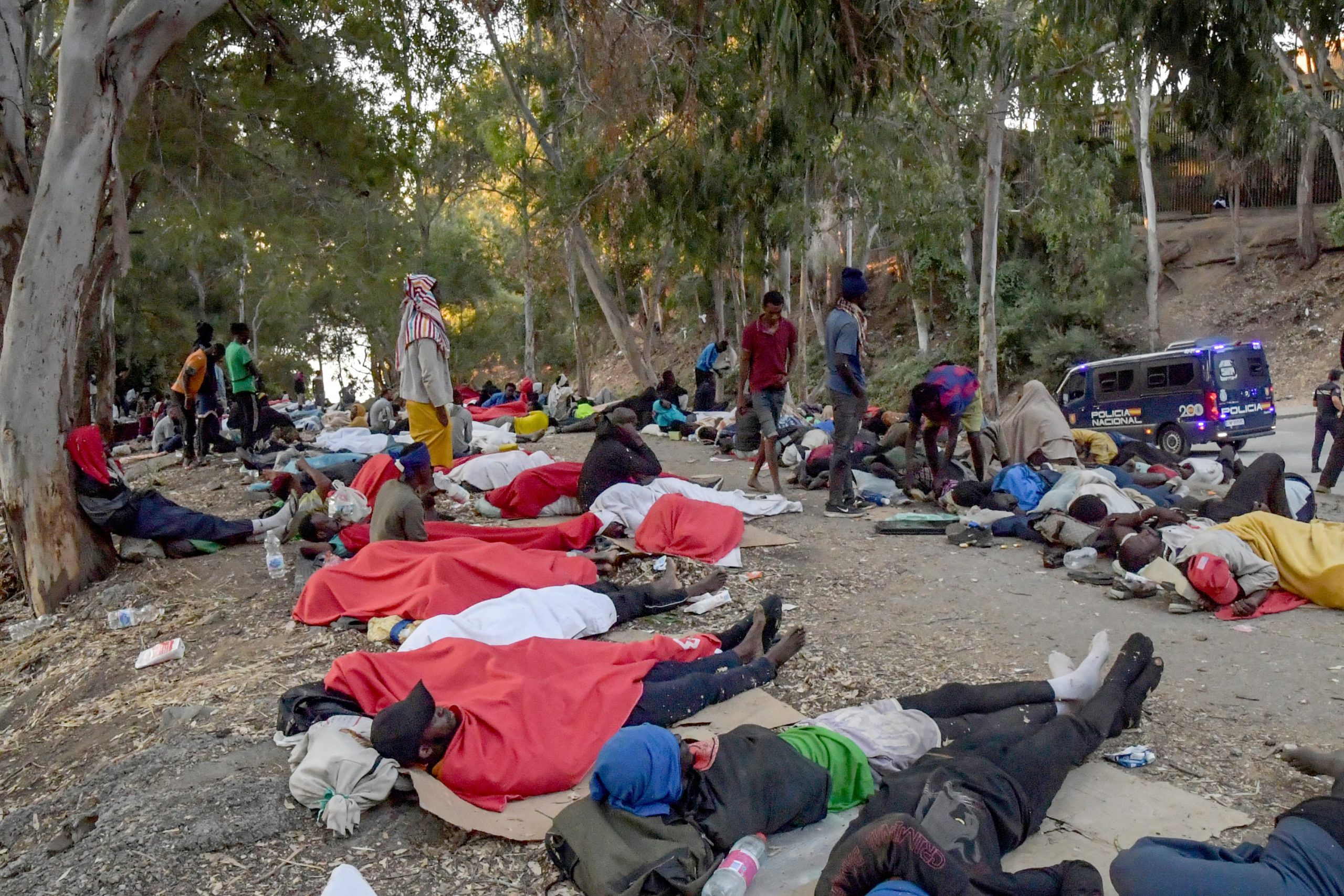
“Most of the kids who are sharing the thing about storming Ceuta on August 15, I swear they won’t get anywhere,” reads a Facebook message in a group for “those interested in migration from Morocco to occupied Ceuta” with nearly 23,000 members, which has grown by more than 6,000 in the past week, according to the platform’s own data. This message is just one example of the hundreds this newspaper has seen, mainly on WhatsApp and Facebook, talking about a possible new mass influx into the Spanish exclave on August 15. Thousands of young Moroccans are debating whether it’s real, whether it’s worth it, whether it’s feasible, or whether it’s all designed to deceive minors. “Is your life really worth so little? Leave the people of Ceuta alone. Enough is enough: the young people who left and those who are missing — their parents are devastated,” the message continues.
The date August 15 is not just a rumor: “Brothers, 8/15/2026,” says a WhatsApp message in a 35-member group called “Migration to Ceuta and Melilla” created last Thursday. This newspaper privately asked the creator of one of these groups if the goal was to try to enter Ceuta on August 15. “Yes, or even more than that,” he replied. When asked if it would be safe, if there would be a lot of people, or if there would be deportations, he simply replied, “God only knows. Come on, join the group and ask.” All of these messages and conversations on social media are in Arabic.

There are lots of mentions of August 15 on social media. The comments are a mix of enthusiasm: “See you there on the 15th. Be there on time,” “I’m heading up from Marrakesh to the north to experience that day.” But there are even more comments expressing suspicion or caution: “Don’t take any risks — the situation is still tense. I probably won’t go; I’ll go at the end of the month, when things have cooled down. Are they really that stupid? The first time caught them off guard, but now they’ve got it all figured out. Be patient, wait, and take advantage of a lapse in security,” says a member of a 123-member group. The rumor has spread to such an extent that in one of the WhatsApp chats, someone posted a message from the far-right Spanish party Se Acabó La Fiesta with screenshots about August 15. In another, a man claiming to be Spanish, named Ángel, wrote: “We’re going to kick you out of Spain.”
EL PAÍS accessed five Facebook groups with nearly 400,000 members and nine WhatsApp groups with several hundred. An investigation by fact-checking organization Maldita found 10 groups with 422,560 members, other smaller ones on WhatsApp, as well as scattered posts on Instagram. The August 15 rumor could also be a way to draw people from other cities to the Ceuta area so they might then be tempted to buy a spot from a trafficking gang on an inflatable or small boat.
One example of the doubts and tone on WhatsApp is this Tuesday conversation among several users: “Hello, brothers. Is there something on the 18th?” “Or the 30th? Or in 2030? Haha,” “they say the 15th,” “for the kids who are in Agadir, write to me. Are you going on the 15th? You won’t find transport. I’m next to the customs gate,” “photos to see,” “send us a video, brother,” “brothers, don’t stay: let everyone do their own thing; whoever wants to go up and do the hrig [illegal migration], let them look after themselves,” “kids, those of you passing through Beni Ensar, the Melilla entrance: explain the plan, how to cross there,” “I entered and the Guardia Civil returned me,” “but everyone is going to cross from Fnideq [Castillejos],” “nobody is going to cross through Melilla, brother. Those who are there are all in Fnideq,” “we, brother, go by the fence,” “how do you cross the fence? Explain it to us.”
“Social media is practically the only source of information these young people have about Spain,” says María Guevara, a researcher at Pablo de Olavide University in Seville. “Moroccan youth are very connected to one another, on a peer-to-peer basis. They keep each other well informed about the different options. They tend to talk only about the positive aspects of the migration process; no one wants to be seen as a crybaby. It’s possible they heard there was an opportunity, but I’ve almost never seen anyone here cross by swimming — only on a small boat,” she explains.
On social networks, alongside messages about the possible day for the attempt, dozens of people post photos of missing relatives or try to understand how to cross. One of the longest recent threads is a complex conversation about which type of inflatable boat is more useful, accompanied by an image more suited to children playing on the beach. “The Strait has a strong current, kayaks capsize. Better look for something serious; the sea is no laughing matter,” one person says. “I don’t advise you to go with that. I tried it: it capsizes quickly, and on top of that it can be punctured, it’s very thin,” another says. The list of risks in the Mediterranean Sea is not short: “Getting rammed by a ship, hitting a fish and having the boat deflate, or being capsized by an orca. And then there’s the swell and the watchtower. The probability is no more than 1%,” warns another.
Conspiracy theories about what happened last week or whether the sea barrier can be overcome by swimming open other lines of debate. “My husband went out to pray and saw someone running, without understanding what was going on. Around nine o’clock, I heard a commotion outside; I peeked out and saw kids running. I already knew people were crossing, but every so often I’d see five or six of them running down the street. Someone asked them what was going on, and one boy said, “Ceuta is open.” And he kept telling it to the next person, until chaos broke out. Cell phones made it all easier,” a woman explains on Facebook.
Sign up for our weekly newsletter to get more English-language news coverage from EL PAÍS USA Edition
Charlie Kirk
‘One Family, One Vote’: The Men (And Women) Seeking To Revoke Women’s Suffrage In The United States

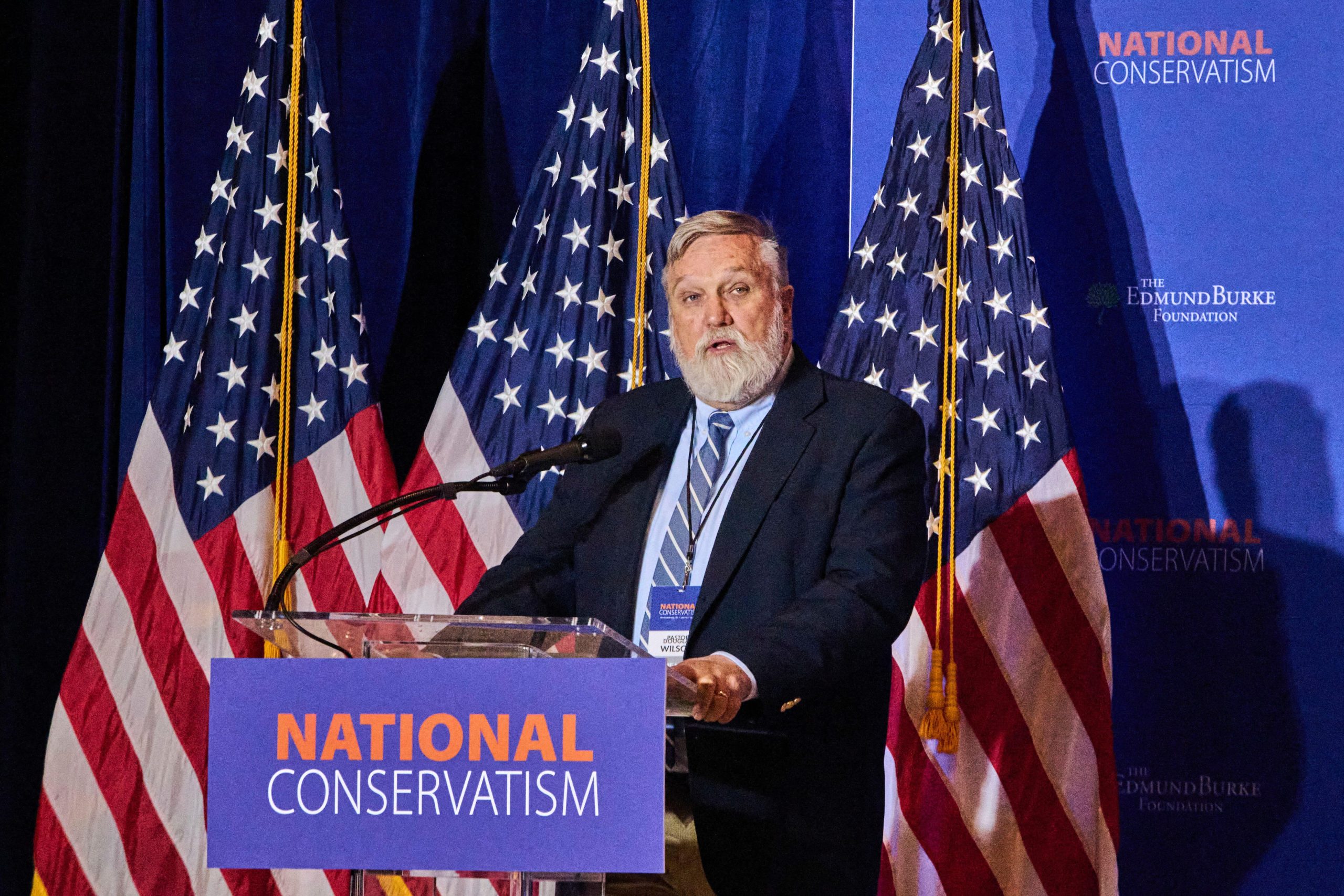
The theologian and pastor Doug Wilson has been preaching from his corner, both literal and figurative, of the United States since the 1970s. He is co-founder of his own Christian denomination, the Communion of Reformed Evangelical Churches, which includes around 170 congregations across the country. He also leads an empire of ultraconservative ideas that encompasses a small university, a K-12 school, a streaming service, and a publishing house. He runs it all from the town of Moscow, Idaho, in one of the most conservative states in the Union.
There are many preachers like him in a country where religion is also a lucrative business. Few, however, can count among their followers the U.S. secretary of defense, Pete Hegseth, who has even invited Wilson to the Pentagon to deliver a sermon.
That closeness to Washington’s new center of power has recently drawn attention to the views of a religious leader who openly advocates a theocracy based on the principles of white Christian nationalism. In particular, scrutiny has focused on his proposal to repeal the Nineteenth Amendment, which granted women the right to vote in 1920. Wilson would replace it with the system used in his own congregation, where voting is conducted “by household.” The goal, he argues, is to combat the “cancer of individualism” that, in his view, was introduced by the amendment.
It may sound outlandish and unrealistic to imagine the United States stripping women of their right to participate in the democratic process. Such a move would require the support of two-thirds of Congress and three-quarters of the states. Then again, with the United States, one can never be entirely certain. Few expected the Supreme Court to overturn federal protections for abortion rights, yet that happened in 2022.
“The success of these formerly marginal theories in moving toward the center of political discourse, amid a broader global backlash, lies in the very fact that they have gained a degree of visibility and relevance,” political philosopher Wendy Brown, one of the most influential contemporary thinkers in the United States, writes in an email. “They are supported by both men and women, which means the women who endorse them are consciously willing to renounce their own status as citizens.”
Brown nevertheless considers more alarming, because they are far more “realistic,” the strategies with which Donald Trump is threatening to influence next November’s elections: “Gerrymandering, voter-identification laws, and intimidation tactics that suppress Black political participation and reduce Black electoral influence.”
“Wilson loves to provoke, hear himself speak and go viral with the most outrageous, hate-filled remarks,” says professor Matthew Avery Sutton, author of Chosen Land, a recent book that aims to serve as the definitive history of Christianity in the United States. “Almost no one in Moscow sees anything in him that resembles Jesus Christ, but the white nationalist militias of northern Idaho love what he represents.”
Wilson may be the best-known example, but he is far from the only figure using a megaphone to advocate stripping women of a right they have enjoyed for more than a century. His views are part of a broader movement that might best be described as “masculinism” for lack of a better label. As so often happens, it has gained traction through social media and within the online circles of the MAGA manosphere.
The rise of ‘masculinism’
Helen Lewis defined it in the June cover story of The Atlantic as “a movement to fight back against the advances of feminism and reassert the primacy of men.” It is a body of ideas rooted in religious traditions, built around the “notion of male headship and St. Paul’s belief that godly women should ‘be quiet,’” Lewis writes.
She notes, however, that secular masculinists are also increasingly prominent, including “nominally Muslim ones, such as the streamer Sneako, the self-proclaimed pimp Andrew Tate” and Nick Fuentes, the antisemitic and misogynistic leader of a segment of disaffected Generation Z men.
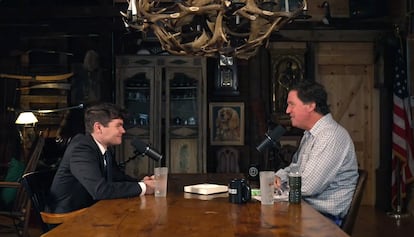
“Woman-bashing plays well on social media and sells lots of ads for crypto, sports betting, and supplements. You can make good money telling men that they’re the truly oppressed sex,” Lewis writes in her article.
Traces of masculinism can also be found in Washington — perhaps nowhere more so than at the top of the Pentagon, where Hegseth has systematically blocked the promotion of women and minorities within the military and recently sparked a political uproar by announcing mandatory testosterone testing for U.S. service members over the age of 30, whom he calls “warriors.”
The idea of “one family, one vote” — provided the vote belongs to the husband or, in the case of unmarried women, to a father, brother or uncle — has also found support among some women in Trump’s America and amid the online rise of the retrograde tradwife (traditional wife) lifestyle movement.
Perhaps the most prominent advocate of these views is influencer Savanna Stone, who took part in the Women’s Leadership Summit organized in June in San Antonio, Texas, by the MAGA youth advocacy group Turning Point. Founded by Charlie Kirk, who was killed in September 2025, the organization is now led by his widow, Erika Kirk.
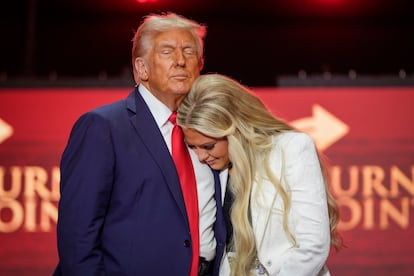
Stone described feminism from the stage as “the spirit of Jezebel reborn,” a reference to the biblical queen who has come to symbolize manipulation. “Feminism is the biggest lie we have ever been sold as women,” Stone said. “[It] is a movement funded by the wealthiest evil people with the goal to destroy marriage and the family.”
During the 2024 election, a version of the “one family, one vote” idea gained traction in some Republican circles, including among Hispanic voters, where men were encouraged to oversee how their wives and daughters voted. The aim was to prevent them from casting ballots for Kamala Harris rather than for Trump. Fifty-four percent of women voted for Harris, compared with 44% who backed Trump.
Those elections produced a government with a conservative agenda that is reshaping the United States to such an extent that ideas once considered outlandish, such as barring women from voting, no longer seem entirely unimaginable. Political scientists refer to this as the Overton window, a concept describing how activists can make proposals that initially appear radical or unthinkable seem increasingly acceptable by shifting public debate with even more extreme ideas.
Trump has shown himself to be a firm believer in the effectiveness of that strategy, and in the notion that almost any idea can begin to sound reasonable if it is repeated often enough.
Sign up for our weekly newsletter to get more English-language news coverage from EL PAÍS USA Edition

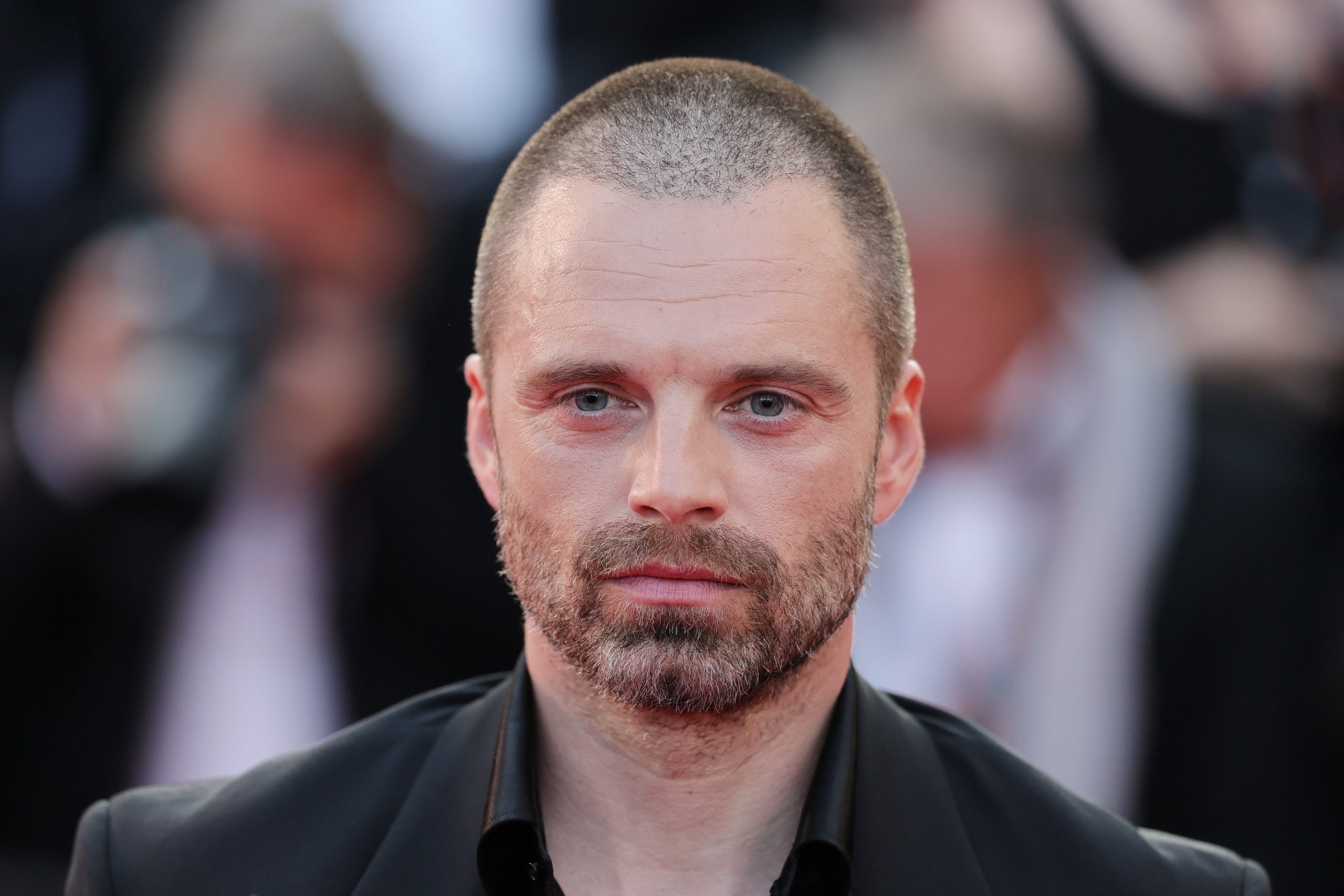
When applied to Sebastian Stan (Constanza, Romania; 43), the adjective “chameleonic” takes on new meaning. It’s not just that the actor is adept at stepping into the skin of very different characters in the top-grossing, best-known films of the moment, but also that he’s capable of doing so without drawing too much attention to the fact. In 2025, he was a Best Actor nominee at the Oscars for his work on The Apprentice, and received Golden Globe nominations for two different roles, that of Donald Trump in the aforementioned Ali Abbasi film and another for his portrayal of an actor with neurofibromatosis in A Different Man, for which he took home the award. His latest on-screen appearances have been for completely different projects, each successful in their own way: Thunderbolts, the Marvel antihero super-production that earned $382.4 million; and Fjord, an indie drama from Romanian filmmaker Cristian Mungiu that won the Palme d’Or at the most recent Cannes Film Festival. Even so, Stan has, rather strangely, been able to keep a low profile.
“I feel like it’s really difficult nowadays to be able to have any privacy whatsoever,” the Romanian American actor said in an interview with Vanity Fair in 2025. He was referring to recent interest in his relationship with actress Anabelle Wallis (Oxford, 41), a quiet romance that had attracted little notice until the two attended the Golden Globes together last year. “Annabelle, I love you,” he said in his acceptance speech. After that moment, publications like People offered reminders that the Marvel universe’s Winter Soldier and the Peaky Blinders actress had been sighted kissing at Robert Pattinson’s birthday party in 2022, and walked the red carpets at the Berlin and Cannes Film Festivals together in 2024. “It’s the one part of my life that I try to keep somewhat for myself, even though it sort of ends up being out there,” Stan admitted to Vanity Fair.
In April, the two performers were seen on a casual stroll through the streets of New York, and Wallis’s early-pregnancy tummy revealed that they would soon be welcoming their first child. “I’m feeling the responsibility of being a good father, and not to mention a good man. I’m 43 and I feel, in a lot of ways, I’m just starting to learn now. It’s just crazy to me. So, I love when I see I’m discovering different people’s point of view. I try to read as much as I can, no matter what the point of view is, just to understand it,” Stan confessed in a long-form interview with Deadline.
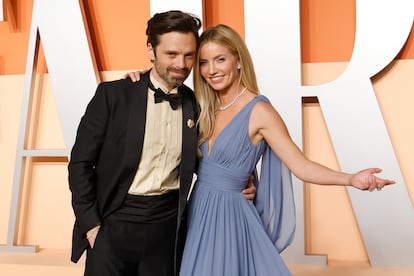
His role in Fjord — which Neon has scheduled for an October 9 U.S. release date — the first in which he speaks in Romanian, his first language, has connected the actor back to his own childhood. Stan grew up under the communist regime of Nicolae Ceaușescu, and his father helped dissidents to clandestinely escape the dictatorship in cargo ships. Ultimately, his family was also forced to flee the country. At eight years of age, the actor moved to Vienna with his mother, a pianist by profession; when he was 12, they went to New York with his U.S. stepfather, who worked as the headmaster of a private school. “This is for my mom, who left Romania in search of a better life, gave me everything, and for my stepfather, Tony, who took on a single mom and a grown-up kid. Thank you for being a real man,” he said in his Golden Globes speech.
The actor told Deadline that he reunited with his biological father “much later in life,” but largely reflected on how Tony presented a father figure whose values would deeply influence his stepson. “This quiet integrity that you spoke about, this quiet strength, this way of providing, this way of being there. Listening and understanding and protection as well. You’ve got to provide and protect. That’s kind of what I thought about in terms of what it means to be a man. And sometimes that means putting your own ego aside and looking at how you can support your family, or your loved ones, and be an example,” he summed up.
After several minor roles and a recurring turn on Gossip Girl as a Manhattan elite bad boy, Stan’s career took off in 2011 when he made his debut as Winter Soldier in Captain America: The First Avenger. The actor says that in 2014 he signed a contract that included nine Marvel Studios films — besting the six-film agreement of Captain America himself, Chris Evans — which gave him “great job security.” Still, in an interview for Stronger Podcast in November 2025, Stan was already talking about his superheroes franchise in the past tense. “The Marvel stuff, I’ll always, ‘til the end of time, [feel it] really helped me grow as a person and helped me grow as an actor and it taught me relationships and [I worked with] Robert Downey [Jr.] and Scarlett [Johansson] and all these people I looked up to. It was a business. It was a family and it gave me a sense of belonging, and it’s always there for that, but it was only the step one for me,” he explained.
The premiere of Thunderbolts in March 2025 marked Stan’s ninth project playing Bucky Barnes a.k.a. Winter Soldier — but not his goodbye from Marvel, as he is already confirmed as part of the cast of Avengers: Doomsday, whose premiere is slated for December. He’s also signed on for another superhero super-production, this time in the DC universe. The Romanian will play Harvey Dent/Two Face in the sequel of The Batman, for which he will be reunited with Johansson, who may be playing his wife. He calls the film “a challenge, like everything else. I feel like it’s a really ambitious movie and I think if we do it all right — and obviously I’m so excited about Matt Reeves [directing] because he’s been one of my favorites for a long, long time — I really think it’s going to blow people away,” he teased in Deadline.
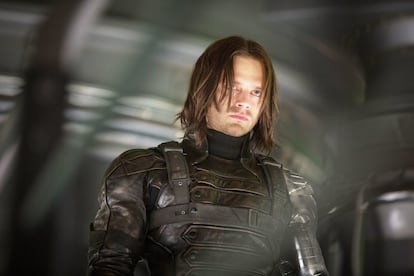
Bringing characters to life from classic comics is never easy, given the demands of their fandoms and potential comparisons to past performances of the roles. But portraying real people is even more risky. Stan proved fearless when he accepted the starring role in The Apprentice, in the full knowledge that the biographical drama was not going to please the top executive of the U.S. government. Trump called the retelling of his early years as an impresario a “cheap, defamatory and politically disgusting hatchet job,” shortly before he was re-elected as president. “Many people now, thanks to him, feel they have this permission to behave like animals, and all we’ve certainly tried to do is inspire some conversation,” responded Stan at the time.
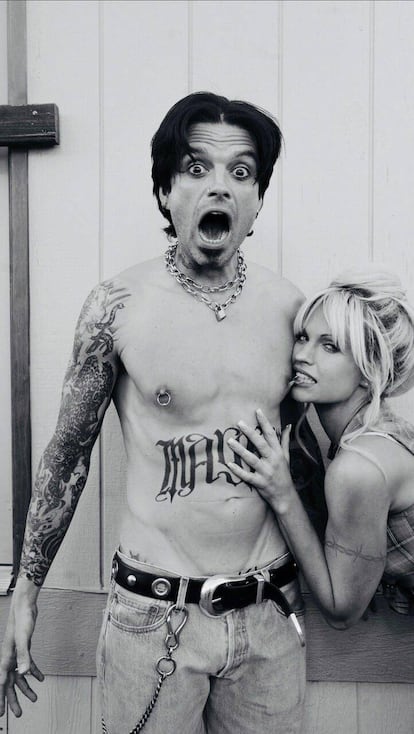
It’s not the first instance of the actor playing controversial, extremely well-known characters. In 2017, he took on the role of Jeff Gillooly, the former partner of figure skater Tonya Harding, who was convicted of charges related to organized crime, in the Margot Robbie film I, Tonya. Five years later, he played Tommy Lee in Pam & Tommy (2022), the miniseries on the turbulent romance between the actress and the musician that centered on the global scandal of their leaked sex video. He’s said that every character has their own different challenges — and that playing real people can be a blessing and also a curse, because the existence of footage on Youtube that viewers can compare to your recreation can lead to higher expectations and more pressure.
Stan’s own blessing and curse runs somewhat to the contrary. In general, little is known about him, despite the fact that he is a key face in the panorama of current cinema. Not that this seems to concern him much. His last post on Instagram, where he has close to eight million followers, was a childhood photo in which little Stan appears with a big grin. It was published on August 13, 2022, his 40th birthday. He’s now on the brink of turning 44, having long since stopped sharing content. He seems to have little regard for other people’s opinions, a trait he may have inherited from his father. “I think what fascinates me is that he was in his twenties when he was helping people escape the country, and he was, in his own way, still providing for me and my mom, which was not in a conventional way, but he was in his twenties. And I just think about that, because there was a degree of awareness and a degree of a drive, and a belief that I feel had nothing to do with approval. It had nothing to do with, ‘I’m going to do this so that I get more attention online, or, I’m going to fight for this cause or whatever so that someone will give me a pat on the back.’ It was totally selfless in that regard,” Stan told Deadline. Like his progenitor, the actor seems to perform without expecting much in return. As the old Romanian saying goes, “Din stejar, stejar răsare” — “From an oak tree, an oak tree rises.”
Sign up for our weekly newsletter to get more English-language news coverage from EL PAÍS USA Edition

The Fuego Volcano Eruption In Pictures

‘See You There On August 15′: Thousands Of Moroccans Debate A New Mass Influx Into Ceuta

Mueren 17 Migrantes Al Tratar De Alcanzar Las Costas De Baleares


-

 Latest2 weeks ago
Can Spanish Property Owners Cut Off Utilities To Squatters?
-

 Amazon2 weeks ago
Un Tangle Teezer De Viaje: El Cepillo De Pelo Perfecto Para Tu Neceser De Vacaciones
-

 New Developments2 weeks ago
Luxury Villas For Sale, Estepona – ProjectL1
-

 ChatGPT2 weeks ago
Food-Related Scams Are Flooding Social Media With Hyper-Realistic AI-Generated Videos
-

 Andalucia2 weeks ago
Man Arrested For Assaulting Six-Month Pregnant Partner At Malaga Airport
-
Latest1 week ago
Spanish Wildfires Intrude On Holidaying Foreign Visitors
-
ElPais2 weeks ago
Spain Moves Forward With Law Granting Citizenship To Sahrawis
-
Business2 weeks ago
How UK small businesses are meeting the demand for always-on customer service