Connect with us

%

Major Fire Erupts Near Charles De Gaulle As Runways Close

Published

on

major-fire-erupts-near-charles-de-gaulle-as-runways-close

Around 80 firefighters were sent to the scene. Photo credit: @AKHIKHO75 on X

Travellers using Paris Charles de Gaulle this evening are dealing with changes to access around the airport after a major fire broke out nearby, closing the airport’s RER station and forcing two runways to shut as a precaution. Flights have continued operating, but the emergency is still ongoing and the huge plume of black smoke has spread across northern Paris. 

The fire began at around 03:00pm in Louvres, in the Val-d’Oise department, roughly 10 kilometres from Charles de Gaulle. Several vehicles caught fire in a car park within an activity zone near the local railway station, sending thick black smoke high above the area.  Around 80 firefighters were sent to the scene. Emergency services asked people to stay away while crews worked, with the cause of the fire not yet established. 

Two runways closed

Charles de Gaulle closed two runways temporarily because of the fire and the smoke. The closures were precautionary and did not stop air traffic, meaning the airport has continued operating despite the incident.  That is important for passengers because there is currently no confirmed report of widespread flight cancellations or delays caused by the blaze. The runway closures should not be interpreted as an airport shutdown, the more direct transport problem has been on the ground.

The Aéroport Charles-de-Gaulle 2 RER station was also closed as part of the emergency measures. Local transport services have also been affected while authorities deal with the fire.  For anyone travelling to or from the airport by public transport, the station closure means the normal route may not be available.

Cars caught in flames

The fire broke out in a car park used by people travelling through Charles de Gaulle, according to aviation reporting. Numerous vehicles were reportedly caught in the blaze, with images from the scene showing several cars engulfed in flames.  

That could leave some motorists with another problem once access to the site is restored: determining whether their vehicles have survived the fire and how they can retrieve them. The number of vehicles damaged has not been confirmed in the latest reports. There have also been no reports of deaths or serious injuries linked to the fire in the sources available at the time of writing.

VAL-D’OISE : Un impressionnant incendie est en cours au niveau d’un parking où stationnent de nombreux voyageurs, près de l’aéroport Roissy / Paris-Charles de Gaulle. Des dizaines de véhicules sont concernés (TF1).pic.twitter.com/aepvhJu3iz

— Infos Françaises (@InfosFrancaises) August 11, 2026

Smoke visible from Paris

The scale of the fire has been particularly striking because of the enormous smoke column rising above Louvres. French reports said the plume could be seen from several kilometres away, including parts of Paris and La Défense. Images taken from aircraft and surrounding areas showed the smoke rising close to the airport. 

Local reports confirm that at 5:32pm that the fire was still burning and that firefighters remained at the scene. There was no confirmation in the latest report that the blaze had been brought under control. 

The continuing emergency is also why the precautionary measures around the airport remain significant. Authorities have not yet confirmed when the affected runways or railway station will reopen.

What passengers need to know

For passengers flying from Charles de Gaulle tonight, the airport remains operational and flights are continuing. The main confirmed travel issue is the closure of the airport’s RER station, rather than a suspension of flights. Anyone planning to reach the terminals by train should check the latest transport information before leaving and allow extra time if an alternative route is required. 

Passengers who have left vehicles at the affected car park may also need to wait for authorities to confirm when the site can be accessed. The fire is outside the airport itself, in Louvres, but close enough to have prompted measures at one of Europe’s major aviation hubs. There is still no confirmed explanation for how the fire started. For now, Charles de Gaulle is still receiving and sending flights, but travellers arriving by rail are dealing with a closed airport station while firefighters continue tackling the blaze nearby

%

Polish Swimmer Conquers Baltic After 55 Hours Then Doctors Make Strange Request

Published

on

polish-swimmer-conquers-baltic-after-55-hours-then-doctors-make-strange-request

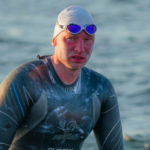
Bartłomiej Kubkowski had spent more than two days in open water. Photo credit:Bartłomiej Kubkowski on Instagram

What would happen to your body after almost 55 hours swimming through the Baltic Sea without sleep? One Polish athlete has now given scientists a rare chance to find out, after an extraordinary request was made following his latest challenge. Bartłomiej Kubkowski had spent more than two days in open water during his attempt to swim from Sweden to Poland. The request came after he finally reached the Polish coast, following a journey of more than 160 kilometres.

Doctors asked if they could freeze samples of his blood for scientific research, Kubkowski agreed. The unusual request followed a feat that pushed him through exhaustion, sleep deprivation, cold water and difficult conditions. He completed the crossing on his fifth attempt, becoming the first person to swim from Sweden to Poland across the Baltic Sea. 

A fifth attempt finally succeeds

Kubkowski set off from Kåseberga in southern Sweden and reached Dziwnów on Poland’s Baltic coast. The journey covered just over 160 kilometres and took around 55 hours. Reports put his completion time at approximately 55 hours and 10 minutes. 

He remained in the water throughout the crossing, a support boat accompanied him, but he was not allowed to touch it. Food and drinks could be provided from the boat, meaning he had to keep swimming rather than climbing aboard to rest. He also went without sleep during the crossing. 

The achievement came after four previous attempts over five years. His previous effort ended when he was only around 11 kilometres from the Polish coast. Exhaustion and worsening conditions forced him to stop before reaching land. This time, he made it all the way to Dziwnów. 

His body became the next question

After the swim, medical staff carried out tests on Kubkowski, the results prompted the unusual request to preserve his blood for research. The samples could give scientists an opportunity to examine the physical effects of an endurance effort lasting more than two days. Kubkowski’s experience is particularly unusual because the crossing combined prolonged physical exertion with a lack of sleep and exposure to open water.

According to reports, the head doctor told Kubkowski that his blood results resembled those of someone who had just completed a marathon. That comparison came after a swim roughly four times the distance of a standard marathon, performed continuously through the Baltic. The samples will now be frozen rather than simply discarded after routine medical testing, allowing them to be used for further scientific work.

The final kilometres were the hardest

Getting to the Polish coast was not simply a matter of continuing at the same pace until the finish. Kubkowski said that around 11 kilometres from the end, he began losing consciousness and became unsure of where he was. A change in the weather added another difficulty during the final part of the crossing.

After spending more than two days awake and swimming, he still had to maintain enough concentration and strength to complete the remaining distance. He eventually reached the beach at Dziwnów, where supporters were waiting. The finish marked the end of a challenge that had occupied him for years.

The swim also raised money

Kubkowski’s Baltic challenge was linked to a fundraising campaign for Cancer Fighters, a Polish foundation supporting children with cancer. The campaign had raised more than one million Polish złoty by the time of the latest reporting.  That means the crossing was not solely a personal sporting challenge. Money was being raised for children receiving cancer treatment while Kubkowski attempted a route that nobody had previously completed in the same way.

Now the achievement has another potential legacy. The frozen blood samples could allow researchers to study what happens inside the body after an extreme endurance effort lasting almost 55 hours. Kubkowski set out to conquer the Baltic Sea after four failed attempts, He succeeded on the fifth.  But after 160 kilometres in the water, the most unusual part of the story may only just be beginning, because scientists now want to see what his body went through.

Continue Reading

%

British Couple Flee Madrid Airbnb After Discovering Camera Pointing At Bed

Published

on

british-couple-flee-madrid-airbnb-after-discovering-camera-pointing-at-bed

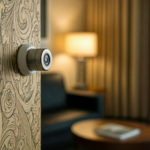
Airbnb has since removed the apartment listing from its platform. Photo credit: Polymathein LLC/Shutterstock

Imagine arriving in Spain for a long-awaited holiday, checking into your accommodation and closing the door behind you, expecting nothing but privacy, comfort and a few days away from everyday life. Now imagine that sense of security disappearing so quickly that you decide you cannot stay there.

That is the situation British couple Donna and Raymond Nunn found themselves in during a trip to Madrid to celebrate their 39th wedding anniversary. The couple had travelled to the Spanish capital for a bucket-list break they had wanted to take for years. Instead, their Airbnb stay ended with them leaving the city after discovering something inside the apartment that left them frightened to remain there.

Camera found pointing at the bed

The couple arrived at the apartment in Madrid’s Lavapiés neighbourhood on August 3. When they entered, they noticed what appeared to be a camera in the living room facing towards the front door. There was no flashing light, so they assumed it was a security device that was switched off. The following day, Donna, 62, went sightseeing while Raymond, 87, remained at the apartment because he is less mobile.

That was when he noticed another device, a camera in the bedroom had a green light flashing and was positioned facing directly towards the bed. Donna said that the camera was around four inches long and tucked into a corner of the room. She said they were extremely frightened when they realised what they had found as they had already slept in the bed the night before discovering it.

The couple contacted Airbnb on August 4 and were advised to leave the apartment immediately. However, by then it was around 08:00pm, leaving them with nowhere else to go that night. They eventually found another apartment around two hours south of Madrid and left the Airbnb on August 5, just two days after arriving. 

Their Madrid anniversary was cut short

The discovery meant the couple could not continue their planned trip around the Spanish capital. Donna said they had booked the accommodation in March and had expected to spend their anniversary exploring Madrid. Instead, they had to arrange alternative accommodation and abandon part of their sightseeing plans.

The couple, who originally come from Britain and moved to Spain in 1999, had specifically chosen Madrid for a trip they had wanted to make for years. The experience has left them unwilling to return to the capital, according to Donna.

For British visitors planning a Spanish city break, the unsettling part of the story is not simply that a camera was found. It is where the device was positioned. A bedroom is where holidaymakers expect to be able to sleep, change clothes and relax without being watched.

Airbnb removes the property

Airbnb has since removed the apartment listing from its platform and issued the couple with a full refund covering their original stay and the cost of rebooking elsewhere. The company has also suspended the listing while it investigates what happened as Airbnb’s rules leave little ambiguity over indoor cameras.

The company banned security cameras and recording devices inside its rental properties worldwide from April 30, 2024. The prohibition applies regardless of where inside the property the device is located and even if the camera is switched off or disconnected. Hidden cameras are specifically prohibited.  That means the device discovered in the Madrid bedroom would not be permitted under Airbnb’s current policy. Airbnb said violations can lead to listings and users being removed from the platform, and confirmed that it was investigating the Nunns’ case. 

What happened to the camera?

The discovery does not, by itself, establish whether anyone watched the couple or whether footage was recorded, stored or accessed. Those questions have not been answered in the reports about the incident. Donna said the camera had not shown a flashing light when they first arrived, but a green light appeared when Raymond noticed it the following day. 

She believed this suggested the device could potentially be switched on remotely, although that has not been independently established. Raymond decided to turned it around and leave it facing the wall after finding it. The couple then contacted Airbnb rather than continuing to stay in the property.

A warning for holidaymakers in Spain

When an incident that invades your privacy occurs it leaves other feeling particularly vulnerable and uncomfortable when booking private accommodations because guests often choose an apartment precisely because it offers the feeling of having a home of their own while abroad. Airbnb’s rules give guests a clear expectation: there should be no indoor security cameras monitoring them inside a property. 

If a holidaymaker discovers a suspected hidden camera, documenting what they have found and reporting it to the accommodation platform is important. If they believe a crime may have taken place, they can also contact the police.

The Nunns’ Madrid trip was meant to mark nearly four decades of marriage. Instead, after only two nights, they were packing their belongings and searching for somewhere else to sleep. They had travelled to Madrid expecting privacy behind the door of their holiday rental.They found the complete opposite.

Continue Reading

%

Long-Time Costa Del Sol Expat Steve Shares Simple Ways To Beat Summer Thieves

Published

on

long-time-costa-del-sol-expat-steve-shares-simple-ways-to-beat-summer-thieves

Shoplifters are not just a summer problem, but holidays can create more chances for criminals to target shoppers, older residents and visitors. Costa del Sol expat Steve says a few simple habits can make a big difference. And he knows after learning the hard way.

Keep cash and cards out of sight

“Although shoplifters are a real pain all year round, they are certainly more prevalent during the summer months and major holiday periods,” Steve explains. “Only carry the amount of cash you really need. If you are robbed, thieves will take the cash and hopefully discard the wallet and cards close by.”

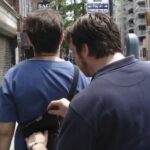
Handbags need attention. “Always ensure that all zips are kept fastened and facing inwards,” he advises. “Don’t put your wallet at the top of your handbag. It’s too easy to steal.” An inner zipped pocket is better, while a simple money belt can provide extra protection.

Take extra care at cash machines

The more elderly of our community are targets for criminals, most of whom only come to the Costa del Sol when more tourists are here. “If you need to take money out and you have the opportunity, take someone with you to keep lookout,” Steve says. “If thieves don’t see an opportunity, they will be more likely to move on.” Spanish National Police also advise ATM users to watch those around them and shield their PIN.

Steve recommends preparing for the worst. “Make a point of having taken colour photocopies of all your cards, including ID and passport. Keep these locked away at home.” Copies can help banks and police deal with stolen documents.

Don’t make yourself an obvious target

Expensive jewellery can attract attention, while using a mobile phone in public can leave someone vulnerable. “Do not draw attention to yourself by wearing expensive jewellery or use your phone unless absolutely essential,” Steve warns. “Your mobile can easily be snatched from you while using it!”

Caution can prevent holiday time in southern Spain becoming a costly headache.

Continue Reading
Advertisement
Advertisement

Spanish Real Estate Agents

Tags

Trending

Copyright © 2017 Spanish Property & News