
Africa
Makhtar Diop, Head Of The IFC, The World Bank’s Financial Arm: ‘We Want To Use Madrid To Channel More Private Investment To Emerging Markets’

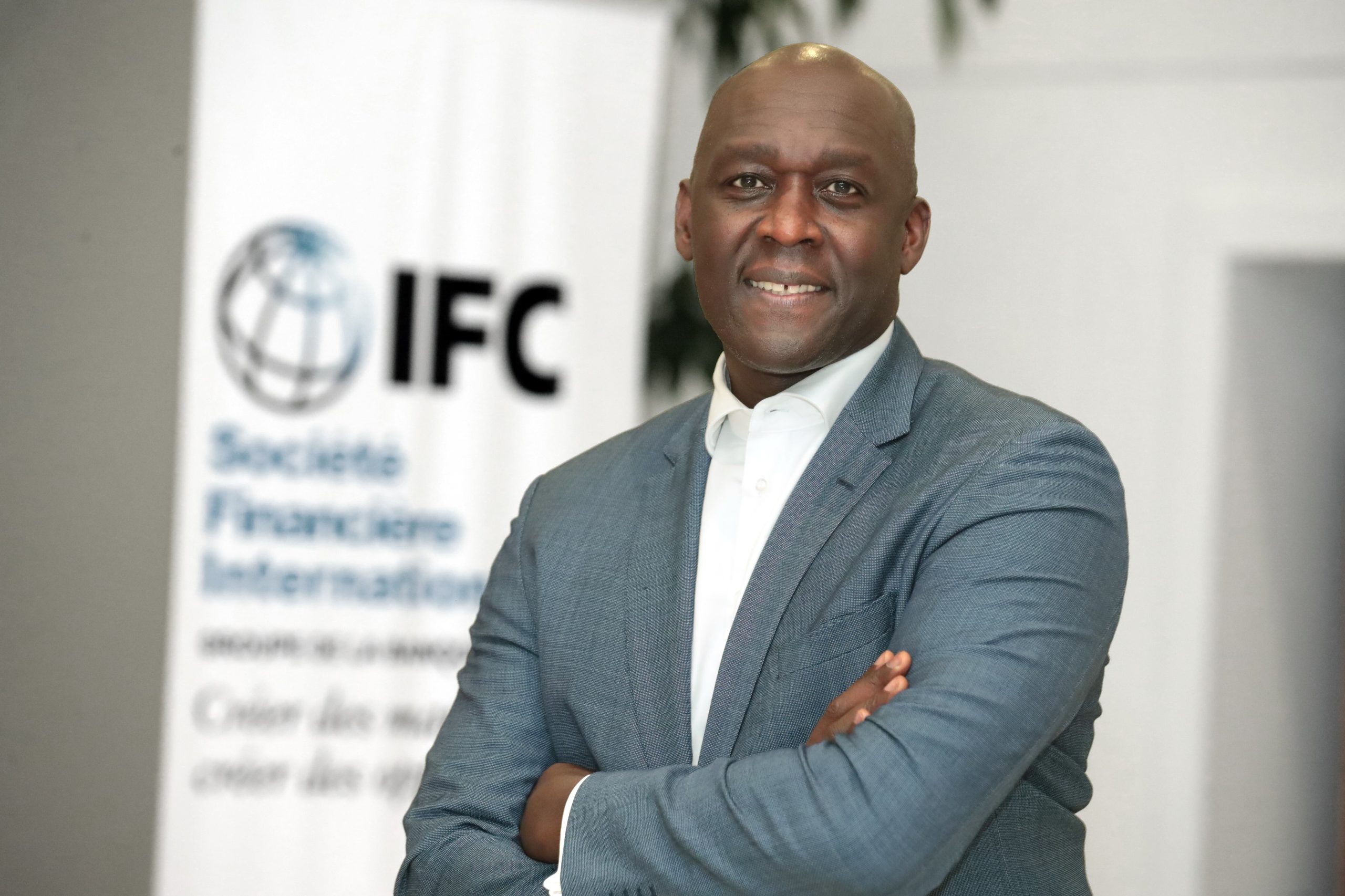
Makhtar Diop traveled to Spain this weekend to attend the opening on Monday of the World Bank’s new office in Madrid. The economist, who was born in Dakar in Senegal, turned 66 on Saturday — so when he arrives in Spain, he will have two reasons to celebrate. Diop served as Senegal’s Minister of Economy and Finance at the start of the century. He has since had a stellar career in multilateral institutions: he has worked at the International Monetary Fund (IMF) and the World Bank, where he rose to become managing director of the International Finance Corporation (IFC), the world’s largest development institution focused on the private sector in developing countries. It is known as the World Bank’s financial arm.
Diop, one of the most influential African voices in Washington’s peculiar ecosystem of technocrats, is a jazz and karate enthusiast. He receives EL PAÍS in his office a few blocks from the White House, and explains that the decision to open the new office reflects the growing interest of Spanish companies in investing in developing countries through the institution.
Question. This morning, I asked ChatGPT about the International Finance Corporation, and it replied that it was that it is probably the least well-known part of the World Bank Group, but also one of the most influential. What exactly is the IFC and what role does it play within the World Bank?
Answer. The World Bank Group is made up of several institutions. The World Bank was created right after World War II to finance the reconstruction effort, particularly in Europe. At the time, it was thought the public sector should lead that effort, which is why the International Bank for Reconstruction and Development (IBRD) and the International Development Association (IDA) were established first. Later, it became clear that the private sector was also critical in creating wealth, growth and jobs once reconstruction was underway. That shift in thinking coincided with the creation of the IFC. It was set up to address what could be done to help the private sector invest and develop in emerging countries. Over time, it became clear that attracting private investment was not easy and that investors needed political stability and risk guarantees. That is why MIGA, the World Bank Group’s political risk insurance agency, was created. Today, the IFC is the premier institution in bringing private-sector investment to emerging markets. We help countries change policies to be more business-friendly, improve regulation and encourage competition to attract private investment.
Q. How would you define your work?
A. It consists both of investing directly with our own resources and, increasingly, mobilizing third-party capital. That is one of the major transformations we are undertaking. When I arrived five years ago, for every dollar we invested from our balance sheet, we mobilized roughly another dollar. Today, we mobilize three dollars for every dollar of our own and our target is to increase that capacity even more. But I want to stress something important: we do not promote private investment for its own sake. Our ultimate objective is to create jobs. Sustainable, resilient and lasting jobs.
Q. You say private capital is fundamental. How do you persuade companies to invest in development?
A. Three years ago, we launched the Private Sector Investment Lab, where we brought together some of the world’s leading financial sector figures. The question was simple: you manage trillions of dollars in assets. What would you need to invest more in emerging markets? The answers were very clear. First was the predictability of public policies. These investments are long-term and require political and regulatory stability. Second was guarantees. Many investors see emerging markets as high risk and look for mechanisms to protect themselves. Third is financing in local currency to reduce risks from exchange-rate volatility. Fourth is inequality and lack of domestic capital. Many companies have growth potential but lack the capital to scale. And finally, investors need partners who know those markets well and can help them navigate complex environments.
That is precisely what the IFC provides. In addition, we have an AAA credit rating, which is extremely valuable because it allows us to finance ourselves on very favorable terms and to act as a reference partner for other investors.
Q. And how does Spain fit into this strategy?
A. Spain has become one of our most important partners. It is currently the third-largest European source of investments we channel to emerging markets. I have visited Spain several times and have met with the prime minister and the finance minister. Spain has also shown a strong commitment to international development. In the most recent replenishment of resources for the World Bank’s development funds (the IDA), Spain increased its contribution by roughly 40%. The IFC has a long-term committed portfolio of about $5 billion with Spanish companies, making Spain one of its key partners in Europe.
Q. Why did the World Bank Group decide this was the right moment to open an office in Spain?
A. Because we observed that our project portfolio with Spanish companies, such as banks like Santander, BBVA and Caixabank or energy firms like Iberdrola or Acciona, kept growing. There came a point when it no longer made sense to manage it from Paris or other European capitals. We needed to be closer to companies to maintain a day-to-day conversation. Approximately 72% of the Spanish investments we support go to Latin America.
We also work intensively with Spanish banks: 70% of our investment with Spanish companies is with banks, and another third is with leading companies in sectors such as infrastructure, water, renewable energy and power [like Iberdrola and Acciona]. Spain has become a champion in solar energy. We have also seen growing interest from other international institutions in settling in Madrid and a willingness from Spanish authorities to participate in major debates about global development. Finally, we are seeing more Spanish companies interested in expanding into emerging markets — not only in finance but also in the real economy.
Q. Spain is often described as a bridge to Latin America and one of the European countries closest to Africa. How much did that influence the decision?
A. It was a critical factor. Spain maintains very close historical, economic and cultural ties with both Latin America and Africa. It also plays an increasingly important role in issues related to labor mobility and workforce training. Europe faces a significant demographic challenge. Countries like Spain and Italy have very low birth rates and increasingly aging populations. That means labor will be an essential resource in the coming years. That is why we work with Spain on initiatives related to vocational training and temporary mobility of workers. The idea is that people from developing countries can gain experience and skills in Spain for a set period and then return to their countries of origin. That process can generate benefits for both sides. Workers gain knowledge and experience in advanced markets and, when they return, can create more competitive small and medium-sized enterprises able to generate better quality jobs.
In addition, some of the sectors we have identified as priorities for job creation are areas where Spain has enormous expertise. One is healthcare. Another is agriculture. And a very important one is tourism. Spain receives about 100 million visitors a year. We want to leverage that experience to help other countries develop their own tourism sectors. Spain can also contribute a great deal in other areas, such as solar energy and efficient water management. And, of course, it plays a strategic role as a bridge between Europe and North Africa. Integrating the power grids between the two regions can contribute to the energy transition and improve supply security.
Q. What kinds of projects will the Spanish office specifically promote?
A. A very important part of our work is carried out with the financial sector. One of our goals is to facilitate financing for small and medium-sized enterprises. In many cases, we take on part of the risk so banks can expand credit to this segment. We also work on women’s access to finance, on agriculture, on green finance and on the energy transition. In addition, we develop numerous infrastructure projects and collaborate with Spanish companies in sectors such as water, renewable energy and transport. We also provide guarantees for international trade operations and develop innovative instruments for managing and transferring financial risks.
Q. What goals do you have for the Spanish office over the next five years?
A. We want to increase the volume of investments channeled through Spanish companies to emerging markets. Currently, a large part of our activity is concentrated in infrastructure and financial services. We want to expand that presence into other sectors, especially manufacturing, agriculture and services. We also want to mobilize more resources from Spanish capital markets and secure a more active participation from the country’s financial institutions in our financing operations.
Q. One last question about artificial intelligence. From the perspective of developing countries, what opportunities and risks do you see?
A. It is a very important issue. We cannot expect developing countries to build their own large AI models. That requires enormous amounts of energy, advanced infrastructure and highly skilled personnel. However, there is another, much more promising area: what we call small AI. These are relatively simple applications that require fewer computational resources but can transform the lives of millions. In agriculture, for example, a farmer can photograph a sick plant and immediately receive information about the problem and the appropriate treatment. In healthcare, AI tools can help identify diseases and improve access to diagnostics in rural areas.
In addition, these technologies can significantly increase the productivity of small businesses, helping them with administrative, accounting or commercial tasks. That is why I am relatively optimistic about AI’s impact on developing countries. In the short term, employment risks may be greater in advanced economies, where there are many administrative jobs susceptible to automation. Sectors that will continue to have strong demand for labor are those that require direct human interaction, such as healthcare or elder care.
Sign up for our weekly newsletter to get more English-language news coverage from EL PAÍS USA Edition








Africa
A New Wave Of Xenophobia Is Sweeping Through South Africa, With Migrants Murdered, Homes Destroyed And Thousands Displaced

For decades, the West has told itself that the fear of immigrants is a matter of skin color, religion, culture, or different continents. But one only needs to look at South Africa today, where a new wave of xenophobic violence is demonstrating that the mechanism of rejecting the other isn’t always about phenotypes.
In a country where the Black majority suffered for decades under the oppression of apartheid – a system imposed by the white minority – mobs of Black South Africans with xenophobic views are accusing migrants and asylum seekers (who are also African and Black) of stealing their jobs, overwhelming hospitals, monopolizing public aid and committing crimes.
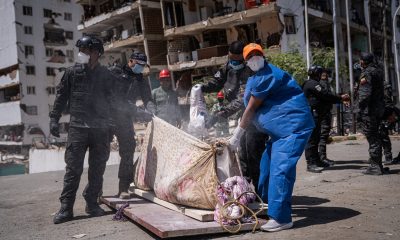
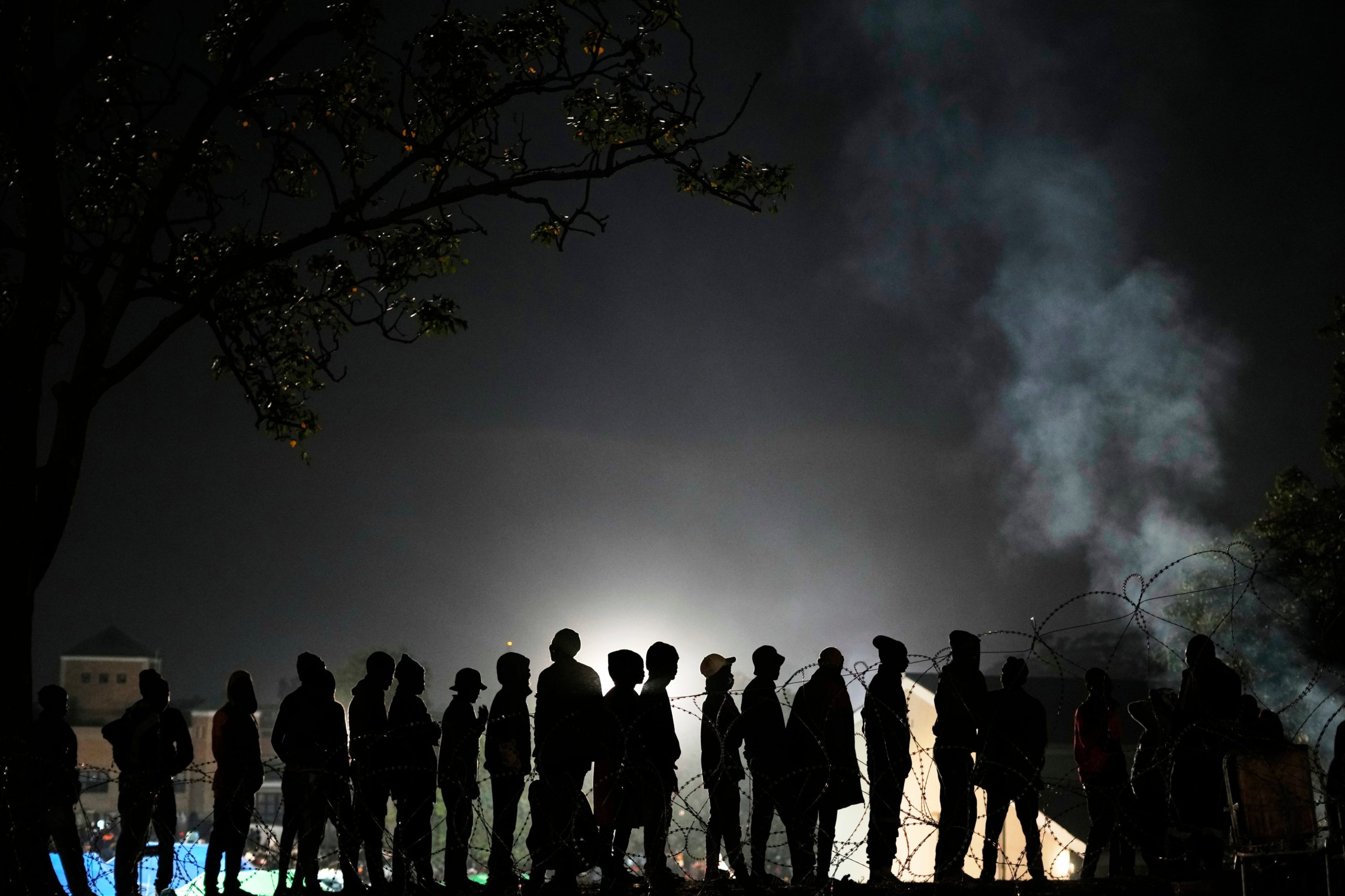
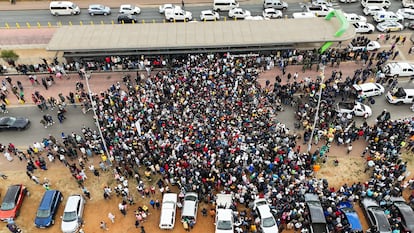
The violence has left hundreds of homes burned, thousands of displaced people camped out in the streets, as well as several migrants murdered. The most recent case occurred on June 19, when a 29-year-old Malawian man was stoned to death in the city of Pietermaritzburg during an anti-immigration protest. Xenophobia has also fueled mass deportations and forced President Cyril Ramaphosa to intervene as June 30 approaches. This is the deadline that has been set by anti-immigrant groups for undocumented immigrants to leave the country and for the government to take action, under threat of a national strike.
South Africa is no stranger to dealing with anti-immigrant sentiment. The country – one of the African continent’s largest economies – is a magnet for those seeking to escape poverty in countries like Zimbabwe, Mozambique and Malawi, or wars such as the one being fought in the Democratic Republic of Congo. Since Nelson Mandela ended apartheid in the early 1990s and championed an open South Africa, hundreds of thousands of immigrants have found employment in the country’s mines.
The idea, however, was not well received by all of society, which was already grappling with its own problems stemming from decades of racial discrimination. Hence, this openness ultimately gave rise to a violent series of xenophobic flare-ups. Back in 2008, at least 62 people died and 150,000 were forcibly displaced, in one of the most serious episodes. And there were other peaks of violence in 2015, 2019 and 2021, the latter resulting in more than 300 deaths.
The latest wave of violence against migrants began in mid-March and intensified at the end of May. Ghana raised the alarm when it reported that 300 of its citizens had requested to return to Accra, the capital. In the following days, hundreds more people from Nigeria, Mozambique and Malawi also expressed their desire to return to their home countries, after suffering repeated threats and attacks from groups of citizens demanding the mass expulsion of foreigners.
Organizations that defend the rights of migrants emphasize that foreign workers have become scapegoats in a country where the unemployment rate exceeds 30% and hits the Black South African population particularly hard.
In the small coastal town of Kleinmond – just under 200 miles from the much larger harbor town of Mossel Bay – entire families have sought refuge in the town hall, in order to escape the citizen patrols that roam the streets demanding documentation from people who, to them, look like foreigners. A 49-year-old Mozambican man named Lado Amido – who arrived in the country this past February in search of work – told Reuters: “People came to my house, knocked on the door and then took all my belongings.” On Tuesday, June 23, in Boksburg, a city on the outskirts of Pretoria, protesters once again vandalized businesses run by foreigners.
Among those who want to leave, there are examples of how xenophobia not only affects newcomers, but also people who have lived in South Africa for decades. These immigrants speak the local languages and have built their lives in the country. One of them is Leanne Sefu, a Congolese woman who arrived in South Africa as a child. She recently worked in a beauty salon in Durban that was vandalized by a group of protesters. “From the salon, I always saw the protests… but the situation worsened when they started attacking us,” she explained to the television network News Central.
Days later, in a shantytown in Mossel Bay, dozens of shacks – inhabited by migrants – were set on fire by an angry mob. At least five Mozambicans died, according to the government in Maputo. Two more later died in a traffic accident while fleeing the country.
Since then, a kind of migrant hunt has been unleashed, leading thousands to leave their homes for fear of reprisals. Durban has become the epicenter of tensions. As of June 24, 8,000 Malawian citizens had departed the city, heading back to their country. The previous week, violence erupted when police fired rubber bullets and stun grenades at several groups of migrants camped out in the open air. They had attacked the officers, throwing stones and sticks, due to frustration over the delay in processing their return applications. However, the authorities deny any such delay.
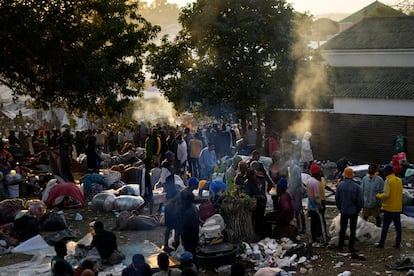
Foreigners who haven’t been repatriated yet are being housed in two temporary accommodation centers in Durban and one in Pietermaritzburg, all set up by the government. These structures are currently sheltering around 20,000 people, as explained by Siyabonga Hlatshwayo, the spokesperson for the South African Red Cross Society in Durban, who spoke with EL PAÍS by phone: “We’re distributing food, blankets, mattresses, clothing, baby food, psychosocial support, free Wi-Fi and phone chargers.”
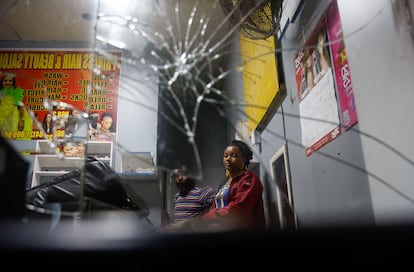
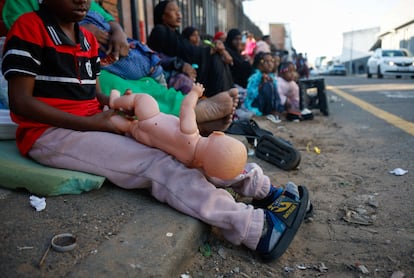
Among the campers there are numerous women and children. Covered with blankets, they’re sleeping out in the open, surrounded by bags and suitcases. There are also pregnant women and women in labor: according to South African media, at least 17 babies have been born in these makeshift settlements in recent weeks, a fact confirmed by the Red Cross spokesperson.
Many of these migrants, Hlatshwayo explains, say that they don’t want to leave because they’ve been attacked, but rather out of fear of the June 30 ultimatum. In his opinion, the situation is worsening: more and more people are arriving at the evacuation centers. “Many people are leaving their homes and asking to be repatriated.”
The March & March movement
The accusations being heard these days in South Africa are identical to those made by anti-immigration movements in Europe and the United States: that foreigners take jobs, overwhelm public services and increase crime.
Behind this rhetoric and the citizen mobilizations is an organization that presents itself as a defender of South Africans who are against irregular immigration. Known as March & March, the group has found a platform on social media that’s being exploited by figures with significant media appeal, such as the actor Nkosikhona Ndabandaba, the radio host Ngizwe Mchunu, as well as the anti-immigration activist Jacinta Ngobese-Zuma.
“South Africans, in their majority, have expressed that they are no longer comfortable living with people [who] they don’t know, who are in the country illegally […] We miss the days [when] South Africa was, you know, South Africa… where you would walk on the streets and there [weren’t] 50,000 people selling [things] and you fall off the streets… and nobody in government sees that as a problem,” Ngobese-Zuma criticized on Wednesday, June 24, in a televised press conference.
The result of this campaign is that ordinary citizens across the country now feel justified in taking matters into their own hands. They’re demanding identification from suspected immigrants, evicting them from their homes, or assaulting them if they cannot immediately prove their legal status. However, even presenting your papers can be insufficient, judging by numerous reports from people who are legally residing in the country and claim to have been attacked or intimidated.
A diplomatic problem
Ghana, Mozambique, Nigeria and Malawi have launched repatriation programs for their citizens. In addition to the 8,000 Malawians who have already returned to their country, more than 1,000 Nigerians have requested assistance to return home, while Ghana has already received 300 nationals. Mozambique has also received hundreds of its citizens from the areas most affected by the violence. Ethiopian authorities are also considering how to assist their citizens.
South Africa’s Department of Home Affairs claims that they haven’t been idle, having deported more than 100,000 people who were in the country irregularly over the past two years, while intercepting another 500,000 who were attempting to cross the border without documents. Yet, the escalation of violence has transcended borders and, like a snowball, is growing to the point of threatening to become a diplomatic problem for Pretoria. Several foreign ministries across the continent have expressed their concern, prompting South Africa to dispatch diplomatic envoys to explain the measures being taken. Ghana has requested that the situation be debated at the African Union.
The situation has spiraled so out of control that it has forced President Ramaphosa to intervene. In a televised address to the nation on June 7, he condemned vigilantism and xenophobia. “We have also said that responsibility for enforcing our laws rests with the state and the state law, and that no individual may stop any person to demand documentation or proof of identity or nationality,” he warned.
The president argued that the country’s economic problems cannot be solved by attacking foreigners, but said that he understood the public’s concerns. He promised to strengthen controls on irregular immigration and tighten immigration policies. Days later, the president spoke again, insisting that the violence is damaging South Africa’s image and harming its relations with the continent.
Meanwhile, the clock is ticking toward June 30, the date that xenophobic groups have turned into an ultimatum. However, they haven’t explained what will happen afterward. And thousands of people don’t know if they’ll be able to continue living in the country that they have called home for years, or if they will have to leave with nothing but the clothes on their backs.
“The truth is, we’re confused,” the Red Cross spokesperson admits. “We have no reliable information about what will happen that day.”
Sign up for our weekly newsletter to get more English-language news coverage from EL PAÍS USA Edition
Africa
El Caso Del Pablo Escobar Del Sáhara Se Salda Con Condenas Por Corrupción Política En Marruecos

Africa
Africa’s Lucrative, Nutritious Grasshopper Business Runs Into Western Prejudice Against Eating Insects

Ride a motorbike in Spain? These three everyday habits could soon set you back €200
This stunning Mallorca castle is hosting concerts all summer
Big boost for commuters as Valencia extends travel discounts
Dinosaurs are roaring over to Estepona this summer in a massive 5,000m² exhibition

Families Caring For Elderly Parents In Spain Say Brexit Has Left Them With Impossible Choices
Denia launches new La Marineta music festival this summer with Fangoria and Nil Moliner


-
Costa del Sol1 week ago
Dinosaurs are roaring over to Estepona this summer in a massive 5,000m² exhibition
-
 %1 week ago
Families Caring For Elderly Parents In Spain Say Brexit Has Left Them With Impossible Choices
-
Costa Blanca North1 week ago
Denia launches new La Marineta music festival this summer with Fangoria and Nil Moliner
-

 %2 weeks ago
One Of Spain’s Top Supermarkets Has Just Been Ranked Among Europe’s Most Innovative In A Major New Report
-
Finland1 week ago
Finns abroad keep Juhannus traditions alive on Spanish coast in 2026
-
Latest2 weeks ago
KEY POINTS: What Changes About Life In Spain In July 2026
-

 ElPais2 weeks ago
Primary Elections In New York, Maryland, And Utah: Date And How To Vote
-
Costa del Sol1 week ago
Local community gets ready for its annual Calahonda Day celebration on June 27