Connect with us

%

Man Impersonated 30 People In Spain With AI To Obtain Their Digital Certificates

Published

on

man-impersonated-30-people-in-spain-with-ai-to-obtain-their-digital-certificates

AI can now recreate a face convincingly enough to pass a live identity check. Credit: Tero Vesalainen / Shutterstock

The face on screen matched the photo on the ID card, and the card even caught the light like a real one. What the man was trying to walk away with would have let him sign legal documents and deal with the Spanish state as somebody else. 

The second-long glitch that undid the attempt

The man was not playing a previously edited video of someone else, he was sitting in front of the camera himself and holding up a forged DNI (Spanish national identity card) while software altered his features live so they matched the photograph on the document, and let him move, speak and respond naturally through the check. According to the National Police, it worked well enough to be attempted 38 times, using more than 30 identities belonging to real people. 

During one of those checks the program lagged and for roughly a second the digital mask disappeared and the camera recorded the face of the person actually making the request, before the disguise reappeared. The certificate company had kept the full recording of the session, and that single second became one of the main leads in the investigation, police said.

What a certificate in someone else’s name unlocks

An electronic certificate is the master key to dealing with the Spanish state online. It carries a qualified electronic signature, which under Spanish and European law has the same legal weight as a signature written by hand. Anyone holding one in another person’s name can log in as them at Hacienda (the Spanish tax agency) and see their full income and tax history, file or amend a return, and alter the account a refund is paid into. The same credential opens Seguridad Social (the social security system), where benefits are claimed and workers are registered, along with town hall paperwork, vehicle records and company filings.

That is why police said the aim was later financial fraud rather than the video call itself. A forged card only had to survive a few minutes in front of a webcam, as a certificate issued by a legitimate provider keeps working afterwards, and it carries the real person’s identity wherever it is used.

More than 30 people had their details put through that process. Some may have no idea their information was even circulating at all.

Coloured bulbs and a tilted card to fake the holograms 

Changing his face was only half the man’s problem and the first step to being believable. The operator on the other end also had to be satisfied by the document itself. Police said the man used forged DNI cards with altered photographs and personal details, then built a small studio around them. Household lamps fitted with coloured bulbs were positioned to reproduce the flashes and reflections a genuine card gives off under light. A fairly genius idea. He also rocked the card in front of the webcam to imitate the way holograms shift on a real document. Officers described the combination as a pioneering technique.

More than 320 phone lines traced back to 24 handsets

Working from the real face, investigators began cross-checking the applications against each other: emails, telephone numbers, payment methods, devices and connection data. Then requests that looked entirely unrelated started pointing at the same person. Police identified more than 320 telephone lines linked to just 24 mobile devices, most contracted using other people’s identities and bought from outlets in Murcia. 

The man had also used tools to obscure where his connections came from. Police noted those tools are legal and widely used for ordinary privacy reasons, but said here they formed part of a structure designed to separate the activity from his real identity.

How to check whether a name has been used

The man was arrested in Murcia on suspicion of a continued offence of forgery of an official document. Officers searched his home and seized an encrypted laptop, several mobile phones, storage devices and paperwork, all of which still has to be analysed to establish whether more identities were involved. Police have documented 38 fraudulent attempts rather than 38 completed frauds, and no figure has been released for money taken.

Anyone worried their details have been used elsewhere can request a free report from CIRBE, the Bank of Spain’s credit risk register, which lists loans and credit registered against their name. Suspected identity theft should be reported to the Policía Nacional or Guardia Civil.

%

Polish Swimmer Conquers Baltic After 55 Hours Then Doctors Make Strange Request

Published

on

polish-swimmer-conquers-baltic-after-55-hours-then-doctors-make-strange-request

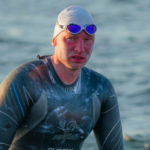
Bartłomiej Kubkowski had spent more than two days in open water. Photo credit:Bartłomiej Kubkowski on Instagram

What would happen to your body after almost 55 hours swimming through the Baltic Sea without sleep? One Polish athlete has now given scientists a rare chance to find out, after an extraordinary request was made following his latest challenge. Bartłomiej Kubkowski had spent more than two days in open water during his attempt to swim from Sweden to Poland. The request came after he finally reached the Polish coast, following a journey of more than 160 kilometres.

Doctors asked if they could freeze samples of his blood for scientific research, Kubkowski agreed. The unusual request followed a feat that pushed him through exhaustion, sleep deprivation, cold water and difficult conditions. He completed the crossing on his fifth attempt, becoming the first person to swim from Sweden to Poland across the Baltic Sea. 

A fifth attempt finally succeeds

Kubkowski set off from Kåseberga in southern Sweden and reached Dziwnów on Poland’s Baltic coast. The journey covered just over 160 kilometres and took around 55 hours. Reports put his completion time at approximately 55 hours and 10 minutes. 

He remained in the water throughout the crossing, a support boat accompanied him, but he was not allowed to touch it. Food and drinks could be provided from the boat, meaning he had to keep swimming rather than climbing aboard to rest. He also went without sleep during the crossing. 

The achievement came after four previous attempts over five years. His previous effort ended when he was only around 11 kilometres from the Polish coast. Exhaustion and worsening conditions forced him to stop before reaching land. This time, he made it all the way to Dziwnów. 

His body became the next question

After the swim, medical staff carried out tests on Kubkowski, the results prompted the unusual request to preserve his blood for research. The samples could give scientists an opportunity to examine the physical effects of an endurance effort lasting more than two days. Kubkowski’s experience is particularly unusual because the crossing combined prolonged physical exertion with a lack of sleep and exposure to open water.

According to reports, the head doctor told Kubkowski that his blood results resembled those of someone who had just completed a marathon. That comparison came after a swim roughly four times the distance of a standard marathon, performed continuously through the Baltic. The samples will now be frozen rather than simply discarded after routine medical testing, allowing them to be used for further scientific work.

The final kilometres were the hardest

Getting to the Polish coast was not simply a matter of continuing at the same pace until the finish. Kubkowski said that around 11 kilometres from the end, he began losing consciousness and became unsure of where he was. A change in the weather added another difficulty during the final part of the crossing.

After spending more than two days awake and swimming, he still had to maintain enough concentration and strength to complete the remaining distance. He eventually reached the beach at Dziwnów, where supporters were waiting. The finish marked the end of a challenge that had occupied him for years.

The swim also raised money

Kubkowski’s Baltic challenge was linked to a fundraising campaign for Cancer Fighters, a Polish foundation supporting children with cancer. The campaign had raised more than one million Polish złoty by the time of the latest reporting.  That means the crossing was not solely a personal sporting challenge. Money was being raised for children receiving cancer treatment while Kubkowski attempted a route that nobody had previously completed in the same way.

Now the achievement has another potential legacy. The frozen blood samples could allow researchers to study what happens inside the body after an extreme endurance effort lasting almost 55 hours. Kubkowski set out to conquer the Baltic Sea after four failed attempts, He succeeded on the fifth.  But after 160 kilometres in the water, the most unusual part of the story may only just be beginning, because scientists now want to see what his body went through.

Continue Reading

%

British Couple Flee Madrid Airbnb After Discovering Camera Pointing At Bed

Published

on

british-couple-flee-madrid-airbnb-after-discovering-camera-pointing-at-bed

Airbnb has since removed the apartment listing from its platform. Photo credit: Polymathein LLC/Shutterstock

Imagine arriving in Spain for a long-awaited holiday, checking into your accommodation and closing the door behind you, expecting nothing but privacy, comfort and a few days away from everyday life. Now imagine that sense of security disappearing so quickly that you decide you cannot stay there.

That is the situation British couple Donna and Raymond Nunn found themselves in during a trip to Madrid to celebrate their 39th wedding anniversary. The couple had travelled to the Spanish capital for a bucket-list break they had wanted to take for years. Instead, their Airbnb stay ended with them leaving the city after discovering something inside the apartment that left them frightened to remain there.

Camera found pointing at the bed

The couple arrived at the apartment in Madrid’s Lavapiés neighbourhood on August 3. When they entered, they noticed what appeared to be a camera in the living room facing towards the front door. There was no flashing light, so they assumed it was a security device that was switched off. The following day, Donna, 62, went sightseeing while Raymond, 87, remained at the apartment because he is less mobile.

That was when he noticed another device, a camera in the bedroom had a green light flashing and was positioned facing directly towards the bed. Donna said that the camera was around four inches long and tucked into a corner of the room. She said they were extremely frightened when they realised what they had found as they had already slept in the bed the night before discovering it.

The couple contacted Airbnb on August 4 and were advised to leave the apartment immediately. However, by then it was around 08:00pm, leaving them with nowhere else to go that night. They eventually found another apartment around two hours south of Madrid and left the Airbnb on August 5, just two days after arriving. 

Their Madrid anniversary was cut short

The discovery meant the couple could not continue their planned trip around the Spanish capital. Donna said they had booked the accommodation in March and had expected to spend their anniversary exploring Madrid. Instead, they had to arrange alternative accommodation and abandon part of their sightseeing plans.

The couple, who originally come from Britain and moved to Spain in 1999, had specifically chosen Madrid for a trip they had wanted to make for years. The experience has left them unwilling to return to the capital, according to Donna.

For British visitors planning a Spanish city break, the unsettling part of the story is not simply that a camera was found. It is where the device was positioned. A bedroom is where holidaymakers expect to be able to sleep, change clothes and relax without being watched.

Airbnb removes the property

Airbnb has since removed the apartment listing from its platform and issued the couple with a full refund covering their original stay and the cost of rebooking elsewhere. The company has also suspended the listing while it investigates what happened as Airbnb’s rules leave little ambiguity over indoor cameras.

The company banned security cameras and recording devices inside its rental properties worldwide from April 30, 2024. The prohibition applies regardless of where inside the property the device is located and even if the camera is switched off or disconnected. Hidden cameras are specifically prohibited.  That means the device discovered in the Madrid bedroom would not be permitted under Airbnb’s current policy. Airbnb said violations can lead to listings and users being removed from the platform, and confirmed that it was investigating the Nunns’ case. 

What happened to the camera?

The discovery does not, by itself, establish whether anyone watched the couple or whether footage was recorded, stored or accessed. Those questions have not been answered in the reports about the incident. Donna said the camera had not shown a flashing light when they first arrived, but a green light appeared when Raymond noticed it the following day. 

She believed this suggested the device could potentially be switched on remotely, although that has not been independently established. Raymond decided to turned it around and leave it facing the wall after finding it. The couple then contacted Airbnb rather than continuing to stay in the property.

A warning for holidaymakers in Spain

When an incident that invades your privacy occurs it leaves other feeling particularly vulnerable and uncomfortable when booking private accommodations because guests often choose an apartment precisely because it offers the feeling of having a home of their own while abroad. Airbnb’s rules give guests a clear expectation: there should be no indoor security cameras monitoring them inside a property. 

If a holidaymaker discovers a suspected hidden camera, documenting what they have found and reporting it to the accommodation platform is important. If they believe a crime may have taken place, they can also contact the police.

The Nunns’ Madrid trip was meant to mark nearly four decades of marriage. Instead, after only two nights, they were packing their belongings and searching for somewhere else to sleep. They had travelled to Madrid expecting privacy behind the door of their holiday rental.They found the complete opposite.

Continue Reading

%

Long-Time Costa Del Sol Expat Steve Shares Simple Ways To Beat Summer Thieves

Published

on

long-time-costa-del-sol-expat-steve-shares-simple-ways-to-beat-summer-thieves

Shoplifters are not just a summer problem, but holidays can create more chances for criminals to target shoppers, older residents and visitors. Costa del Sol expat Steve says a few simple habits can make a big difference. And he knows after learning the hard way.

Keep cash and cards out of sight

“Although shoplifters are a real pain all year round, they are certainly more prevalent during the summer months and major holiday periods,” Steve explains. “Only carry the amount of cash you really need. If you are robbed, thieves will take the cash and hopefully discard the wallet and cards close by.”

Handbags need attention. “Always ensure that all zips are kept fastened and facing inwards,” he advises. “Don’t put your wallet at the top of your handbag. It’s too easy to steal.” An inner zipped pocket is better, while a simple money belt can provide extra protection.

Take extra care at cash machines

The more elderly of our community are targets for criminals, most of whom only come to the Costa del Sol when more tourists are here. “If you need to take money out and you have the opportunity, take someone with you to keep lookout,” Steve says. “If thieves don’t see an opportunity, they will be more likely to move on.” Spanish National Police also advise ATM users to watch those around them and shield their PIN.

Steve recommends preparing for the worst. “Make a point of having taken colour photocopies of all your cards, including ID and passport. Keep these locked away at home.” Copies can help banks and police deal with stolen documents.

Don’t make yourself an obvious target

Expensive jewellery can attract attention, while using a mobile phone in public can leave someone vulnerable. “Do not draw attention to yourself by wearing expensive jewellery or use your phone unless absolutely essential,” Steve warns. “Your mobile can easily be snatched from you while using it!”

Caution can prevent holiday time in southern Spain becoming a costly headache.

Continue Reading
Advertisement
Advertisement

Spanish Real Estate Agents

Tags

Trending

Copyright © 2017 Spanish Property & News