Connect with us

Argentina

Maradona Death Trial Upended By Bizarre Error: Experts Analyzed His Father’s Clinical Records

Published

on

maradona-death-trial-upended-by-bizarre-error:-experts-analyzed-his-father’s-clinical-records

The sidewalks outside the San Isidro courts, on the outskirts of Buenos Aires, were once again filled with television cameras, journalists, and onlookers on Thursday morning. After a first failed attempt, these courts are hosting a second trial to determine responsibility for Diego Maradona’s death in November 2020. Now, a new element has cast doubt over the process. The lawyer for one of the accused warned that some of the clinical analyses examined by the medical panel did not belong to the soccer legend but to his father, who was also called Diego Maradona. As a result, a central part of the evidence will have to be reviewed and risks being declared null and void.

Nicolás D’Albora, who represents defendant Nancy Forlini — home care coordinator for the healthcare company Swiss Medical — was the one who pointed out the mistake. It is notable because he was the person who sent the information to the court, but he said he merely forwarded the data without checking it. “There was an inadvertent error by the Swiss Medical laboratory and we noticed it when we were preparing the cross-examination, because there were values that did not match a hospital admission. There we saw the same name, but the membership number and clinical record number did not correspond,” D’Albora said; he is also legal counsel for Swiss Medical.

The medical panel’s report is a key part of a large body of evidence assembled by the San Isidro prosecutor’s office to charge eight people with simple homicide with eventual intent, a crime that carries a sentence of between eight and 25 years in prison. They are all healthcare workers who were responsible for caring for the Argentine World Cup-winning idol while he remained under home hospitalization at his residence in Tigre, in the northern Greater Buenos Aires area. It is known that the footballer died of pulmonary edema resulting from acute heart failure, three weeks after surgery for a chronic subdural hematoma, but the question to be determined is whether the care he received at home was adequate.

In the medical board’s report, signed by 22 professionals, 17 of them assert that medical negligence played a role in Maradona’s death. It has now come to light that some of the laboratory test results reviewed did not belong to Maradona, and the court will have to decide how to proceed.

In that context, prosecutor Patricio Ferrari asked to search the administrative offices of Swiss Medical and two clinics where Maradona was treated to seize his actual medical record. The prosecutor said the healthcare company tried to “deceive them” to “derail the trial.” “They are not going to be able to,” he said during a very tense hearing, in a climate similar to May 2025, when the possibility emerged that former judge Julieta Makintach was making a documentary about the case without authorization — an issue that ended with the trial’s annulment and the magistrate’s removal.

Sign up for our weekly newsletter to get more English-language news coverage from EL PAÍS USA Edition

Continue Reading
Click to comment

Leave a Reply

Your email address will not be published.

Argentina

From Clothing To Yerba Mate And Cell Phones: Smuggled Goods Flood Argentina

Published

on

from-clothing-to-yerba-mate-and-cell-phones:-smuggled-goods-flood-argentina

In recent years, the circulation of smuggled goods has increased significantly in Argentina. This is something that consumers and business owners can attest to, even though the phenomenon eludes official records.

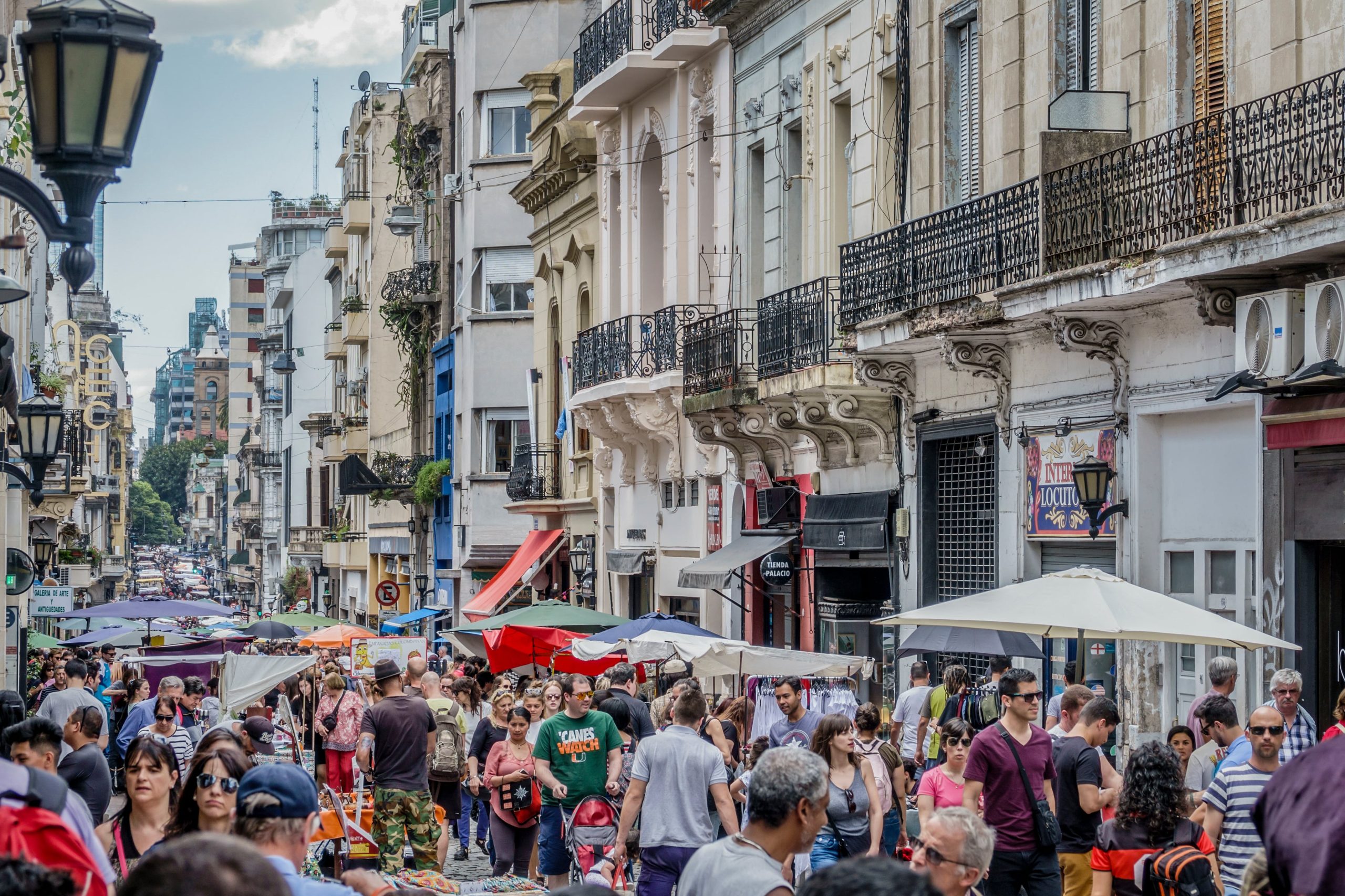
You can find this merchandise everywhere, in street markets and upscale shopping malls. You can buy contraband products in bazaars, on digital platforms, in bus terminals and airports, or in branches of well-known chains.

A survey by the business consultancy MAP indicates that there’s sectoral evidence and private studies showing that, in 2025, there was a sharp increase in smuggling and illegal trade in Argentina. This has become “a very serious problem” for the country.

“The problem has always existed, but it grew in conjunction with the opening and deregulation of the economy, which eliminated some mechanisms that were used to combat it. This has fostered a context of free movement of illegal goods, jeopardizing traditional oversight mechanisms,” the study points out. It concludes that, in 2025, at least $2.3 billion in tax revenue was lost due to smuggling, representing 0.3% of the national GDP. When contacted by EL PAÍS, the General Customs Bureau declined to comment, as did the Ministry of National Security.

Since Javier Milei’s administration began in December of 2023, there has been a lifting of import barriers, as well as a relaxation of controls. Another key factor has been an exchange rate that’s favorable to purchasing products abroad, combined with the elimination of the gap between the official and black market dollar rates (previously, it was more profitable to operate within legal channels). The expansion of e-commerce and online sales platforms has also contributed to the problem: without effective controls or clear identification of operators, this has allowed informal actors to enter the market, amplifying the scale and scope of the issue.

Marco Meloni, the owner of a textile factory in Luján – a city located about 40 miles west of Buenos Aires – and vice president of Industriales Pymes Argentinos (IPA), explains that merchandise enters the country illegally through border areas with Chile, Bolivia and Paraguay. This is in addition to “legal smuggling”: merchandise that passes through customs upon arrival, but is under-invoiced. For example, T-shirts are declared at a value of merely one cent each, which means that the importer pays less in taxes than if the merchandise’s true value were declared.

According to the businessman, the textile and apparel sector is “flooded with stock.” This is because both smuggling and imports have increased. The situation is compounded by a drop in demand, resulting from Argentines’ household budgets being tightened: they’re prioritizing other expenses.

How does this all impact the textile industry? “Since December of 2023 (the beginning of Javier Milei’s administration), 700 companies in the textile and footwear sector have closed. We’ve lost 20,000 formal jobs, [as well as potentially] 10,000 informal jobs. And there are record-breaking bankruptcy filings,” Meloni summarizes. He also believes that Argentines mustn’t lose sight of the health and environmental consequences of imported products. “In the developed world, there are increasingly more controls on social traceability, carbon footprints, phytosanitary issues and capital flows, while here, they’ve all been removed. Even the ban on importing used clothing – like the kind that accumulated in the Atacama Desert – has been lifted,” he laments.

Something similar is happening with thermoses, an essential item for storing and preparing mate, a herbal tea that’s a staple in Argentine culture. “It’s alarming how much the smuggling of toxic thermoses has grown,” Martín Nadler sighs. He’s the CEO of Lumilagro, the most popular Argentine brand. He explains that 50% of the thermoses currently in circulation entered the country through smuggling. And half of these are made with toxic metals that can cause health problems: they’re prohibited by authorities.

The key issue is that, to identify these products, consumers can only rely on the price (they should be suspicious if a one-liter metal thermos costs less than 40,000 Argentine pesos, or about $27 dollars) and the distribution channel. This is because the government has eliminated the tax stamp, which previously allowed for the easy identification of products that were legally imported through customs.

The smuggled thermoses cross primarily through the border with Bolivia. From there, they’re distributed throughout the country. “They’re in bazaars, on online platforms… and we’ve even seen them in official airport stores and convenience store chains,” Nadler points out.

Electronic devices are another example. One in three new cell phones activated in Argentina was neither manufactured in the country nor imported through legal channels, according to data from the Association of Argentine Electronic Terminal Factories (AFARTE). “Some sectors have historically been affected by smuggling – such as tires and tobacco – but now [we’re seeing] unusual items, like beer and flour. And the problem is that it’s been going on for two years and it’s eroding [the domestic] industry in a huge way,” says Ana Vainman, the executive director of AFARTE. She notes that there’s always been a smuggling rate of between 5% and 7%… but now, in the case of mobile phones, this figure exceeds 30%.

Vainman points out that most of the mobile phones enter through the border with Paraguay, although there are also other entry points. They’re then distributed throughout Argentina, where they can be purchased everywhere. This is unlike what happens with larger appliances – such as air conditioners or televisions – which, after entering the country, are typically sold in the border areas themselves.

Counterfeit cell phone accessories – such as headphones and chargers – are also circulating massively and are even offered in upscale shopping malls. “There’s low demand, because people don’t have money and there’s no financing available to offer [payments via] installments. Of what little is sold, a third is lost to smuggling. It’s a really messy situation for us,” Vainman warns.

A few weeks ago, in the Argentine province of Córdoba, a woman died in a car accident caused by a cell phone charger exploding. Vainman points out that such incidents are more likely when using accessories that don’t meet electrical safety standards and certifications. “These are extremely dangerous things: people don’t consider this when choosing based on price,” she warns.

According to the MAP report, in 2025, Argentina lost $2.3 billion in tax revenue due to smuggling, representing 0.3% of the national GDP. This lost revenue – from uncollected tariffs, value-added taxes (VAT) and excise taxes, among other sources – is equivalent to building 3,800 schools, 80 specialized hospitals, or nearly 1,200 miles of national highways.

The official response

According to business owners, the government is aware of the situation, but has so far taken only lukewarm measures. It has established a Smuggling and Counterfeiting Task Force and has begun issuing fines to companies that underreport the value of their imports. This is in addition to the regular operations carried out by the security forces.

Argentina’s Customs Bureau, for its part, announced that it will implement changes to door-to-door delivery and even raised the possibility of reviewing the “declarant” role created by the Milei administration, which allows an individual to carry out customs procedures without being a registered customs broker.

Nadler, the CEO of Lumilagro, warns that “there has been such a flood of contraband products that, even if strong measures are taken today, it will take a long time to clear the stock.”

There are currently bills in Congress that seek to address the problem, such as one piece of legislation proposed by left-wing Peronist representatives Guillermo Michel and Kelly Olmos, which aims to make online sales platforms liable for the transactions carried out on them. If approved, the digital platforms would, for example, be responsible for paying customs duties if they allow the sale of imported goods without the required documentation.

Sign up for our weekly newsletter to get more English-language news coverage from EL PAÍS USA Edition

Continue Reading

Argentina

From Aristocratic Vault To Café: Buenos Aires Tenders Old Tombs At La Recoleta Cemetery

Published

on

from-aristocratic-vault-to-cafe:-buenos-aires-tenders-old-tombs-at-la-recoleta-cemetery

—It’s behind that pine, a little further on. Past Evita’s grave.

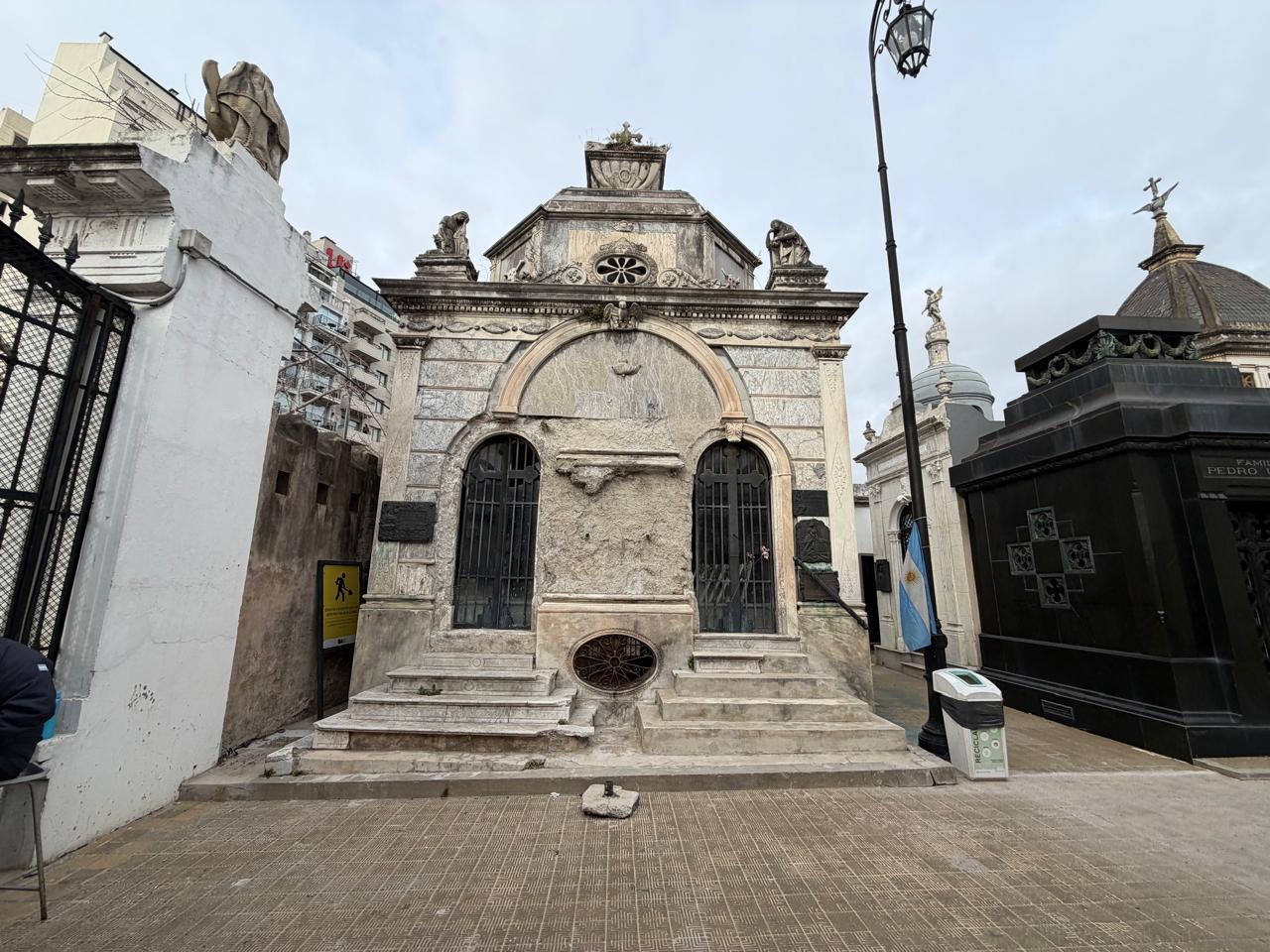
The man giving directions is sweeping the white marble floor on a cloudy Wednesday morning at La Recoleta Cemetery, the most aristocratic neighborhood in Buenos Aires. The directions take one to the vault that once belonged to the Girado family, a surname on the very small list of Argentina’s landed bourgeoisie in the 19th and 20th centuries, and which will soon be repurposed as a grab-and-go gift shop and café. The Government of the City of Buenos Aires has published a tender for the concession of use and “commercial operation” of that space, originally designed to house 12 tombs.

Built in 1822 as Buenos Aires’ first public cemetery, La Recoleta Cemetery is a reminder of an era when the country was an emerging economic power and the city’s leading families competed with each other to build lavish mausoleums. Many of these are now in ruins, with broken glass, mold and exposed coffins. That is the case with the Girado vault, which borders the wall facing Junín Street and is neighbors with the Álzaga family pantheon —another patrician surname— where the remains of the famed Felicitas Guerrero de Alzaga rest: she the country’s youngest, richest and most beautiful widow, murdered in 1872 by a suitor.
A little further on is the tomb where Eva Perón’s body was finally laid to rest after a long journey, and also —with its obelisk and the bronze condor that crowns it— that of former president Domingo Faustino Sarmiento, author of one of the foundational works of Argentine literature, Facundo. Nearby are the remains of writer Adolfo Bioy Casares, but not those of his friend and colleague Jorge Luis Borges, who died in Switzerland, even though he had expressed a wish to be buried in his family pantheon in La Recoleta, in the same grounds as the “fathers of the nation.”

According to the public tender, the concession for the vault —which covers roughly 25 square meters— will be granted for a five-year term and may host a gift shop, a food and beverage outlet and a “rest and support area” for visitors who book the new nighttime tour service. In exchange, a monthly fee of 1.6 million pesos (just over $1,070) will be charged, plus 20% of gross revenues from operating the nighttime tours.

The café will operate only as takeout, with no tables or chairs allowed and no on-site food preparation. Although the tender explicitly allows that possibility, city government sources say “there is no chance that the space will be considered a café.” “As in other cities around the world, the City tendered a space to establish a gift shop in La Recoleta Cemetery, and it will join the trend of expanding cultural and service offerings as seen in the cemeteries of Vienna, Dublin, Berlin and London,” they said. The site currently receives an average of 1,816 visits per day.
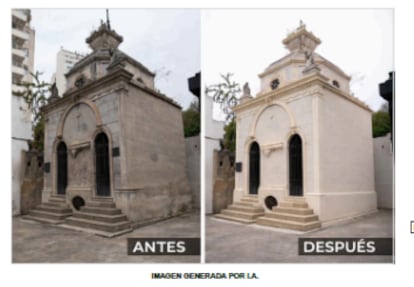
More than 90 vaults have been declared National Historic Monuments and the cemetery’s architecture is legally protected, so only restoration work is permitted. An annex to the tender includes two images: one of the vault’s current condition, labeled the “before,” and another generated with artificial intelligence showing a possible “after.” There are no structural changes, but a fresh coat of paint and the removal of commemorative plaques that still survive on the pantheon’s eroded walls are shown: the plaque reading “To engineer Francisco J. Girado from his colleagues and friends of the Pelota Club of Chascomús,” dated 1934, and the one remembering Federico M. Girado, signed “from his classmates at the National College” in 1913.

The vault was recently returned to the city government after an administrative procedure. City government sources said it had been available for 10 years and that all steps required by burial laws were followed (the same legislation that prohibits “any commercial activity, in its different forms” within cemeteries), a procedure that provides for notifying rights holders and giving them the opportunity to file legal challenges in advance. Although they did not specify the fate of the human remains, the law states that if relatives do not remove them, they should be sent to the common ossuary or communal crematorium.
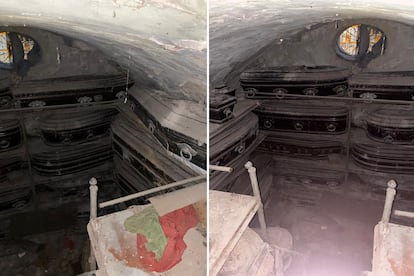
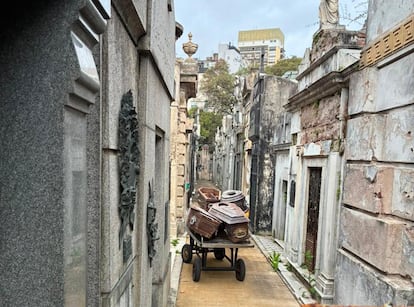
This past Wednesday the vault was cordoned off with yellow fences put up by the City Government and guarded by four security guards who not only refused to confirm the identity of the vault behind them, but who also tried to mislead approaching journalists. “You can’t take photos and you must leave, we are in the middle of a conflict right now,” one of them said. On Tuesday, when local media published news of the tender, a journalist named Gabriel Levinas went inside the vault and recorded at least a dozen coffins still inside. He later wrote that a cemetery employee told him some had been moved and showed a photo of a wheelbarrow loaded with coffins.

The man sweeping the white marble floor of one of the vaults that still receives care from its lineage says the uproar started because “the owners are against” the tender. They are upset by the idea of people wandering around during a funeral with a coffee in their hand. “They are going to file a complaint. And these are important people,” he warns. Asked by EL PAÍS, the city government did not specify whether it had received any formal complaints so far.

Sign up for our weekly newsletter to get more English-language news coverage from EL PAÍS USA Edition

Continue Reading

Argentina

Leonardo DiCaprio Joins Fight To Save Endangered Chilean Frog From Power Project

Published

on

leonardo-dicaprio-joins-fight-to-save-endangered-chilean-frog-from-power-project

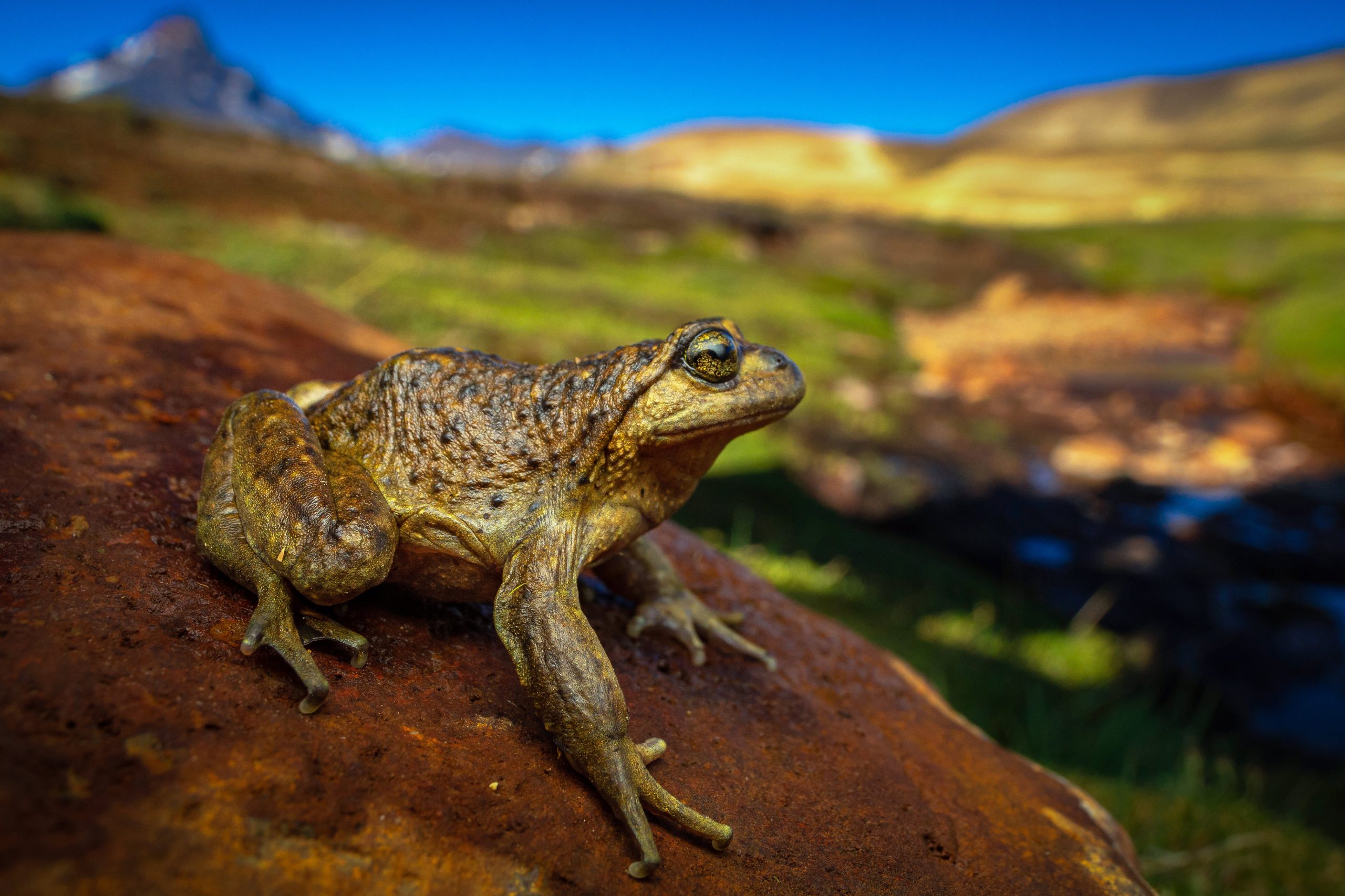
Actor and environmental activist Leonardo DiCaprio has come out in defense of the Pehuenche frog (Alsodes pehuenche), an amphibian listed as critically endangered, amid concerns that the Los Cóndores-Río Diamante power transmission project in Chile’s Maule region could threaten the species’ survival.

In an Instagram post on Sunday, in which he tagged the Chilean Herpetological Network and shared photographs of the frog and its habitat, the Titanic star warned that fewer than 1,000 individuals remain. He said Chile could approve “ a catastrophic plan to destroy the heart of their only known habitat.”

DiCaprio stressed, however, that his appeal is not aimed at halting the project altogether. “Conservationists are not asking for the transmission project to be stopped,” he wrote, but rather for it to be built in a location that would not expose the species to greater risk.
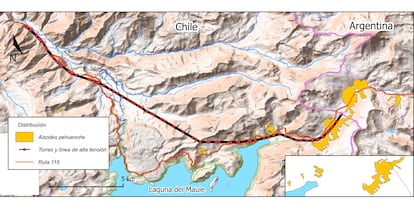
The project referenced by DiCaprio, developed by Enel Generación Chile, involves the construction of a 500-kilovolt power transmission line designed to interconnect the energy grids of Chile and Argentina. On the Chilean side alone, the plan calls for a 26.6-kilometer overhead transmission line and 72 high-voltage towers, infrastructure that would cut directly through the habitat of the Pehuenche frog.

A key milestone for the project had been scheduled for Monday, when the Environmental Assessment Commission (COEVA) was due to rule on a report by the Environmental Assessment Service (SEA) recommending its approval. However, following DiCaprio’s message, the session was suspended. No public explanation has been given for the postponement, nor has a new date been announced, Claudio Azat, director of the One Health Institute and co-chair of the International Union for Conservation of Nature’s (IUCN) amphibian specialist group, told EL PAÍS.

The Chilean government of José Antonio Kast responded to the actor’s comments. Environment Minister Francisca Toledo told Radio ADN that DiCaprio’s message referred to a project that remains under environmental review and therefore declined to comment on its merits while the process is ongoing. Instead, she defended Chile’s environmental institutions, saying: “Chile has a robust environmental framework in which all the evidence is examined and weighed as part of environmental assessments.”

The Pehuenche frog exists nowhere else in the world except the high Andes of Chile and Argentina. The person who helped bring the species’ plight to the attention of Re:wild, the conservation organization co-founded by DiCaprio, was Chilean biologist Claudio Azat.

“It is a little-known species. It was described by science about three or four decades ago,” Azat explained. “We know it has a very restricted distribution and that its main threat is the international highway that connects the Chilean city of Talca with Malargüe in Argentina.”
This amphibian is distinguished by the fact that, during the breeding season, males develop patches of gelatinous spines on their chests and fingers. They are also known as “Popeye frogs” after the famous cartoon character because their forearms become enlarged, allowing them to hold onto females during mating.

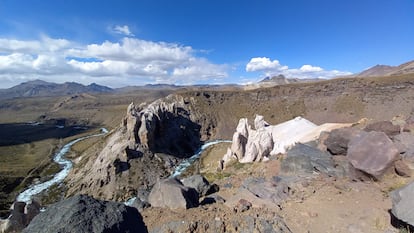
The species was classified as critically endangered in 2018 and has yet to recover from that status. “It is a species found only in the Alto Maule region, in the Pehuenche Valley, inhabiting small streams and wetlands fed by snowmelt and glaciers high in the central Andes, at elevations above 2,000 meters [6,500 feet],” Azat explained. “Its population numbers around 1,000 individuals.”

The conservationist acknowledges that, although campaigners had been raising concerns about the frog’s plight for years, the visibility generated by DiCaprio’s message has provided a decisive boost. “This is the second time he has supported a species in Chile. In 2019, he posted about the campaign to save the Loa frog, which was very positive because it changed the situation for that species,” Azat concluded.

Sign up for our weekly newsletter to get more English-language news coverage from EL PAÍS USA Edition

Continue Reading

Trending

Copyright © 2017 Spanish Property & News