
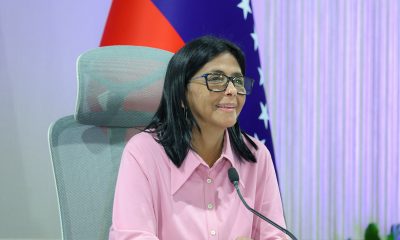
Delcy Rodríguez
María Corina Machado: ‘The Position Of The United States And Other Allies Weighs On My Decision To Return, The Timing Has To Be Right’

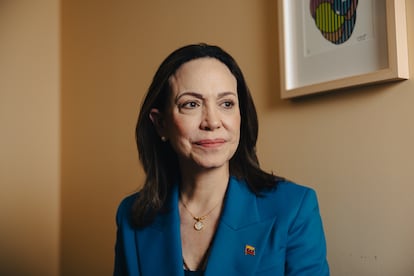
Watching her travel the world to meet with leaders in Europe, with businesspeople in California, or give interviews on YouTube, many may conclude that María Corina Machado, 58, is a leader in limbo, trapped in a situation that prevents her from returning to Venezuela. There, the mission she set for herself still awaits: carrying through the task of removing the Chavista regime from power. According to that view, every day she spends abroad is a gain for the siblings Delcy and Jorge Rodríguez, Venezuelan president and speaker of the National Assembly, respectively, and for strongman Diosdado Cabello —and rising pressure from the millions of Venezuelans waiting for her. But that is not the impression she conveys in person.
Machado is signing an English copy of her book The Freedom Manifesto when she is told that the Attorney General’s Office has confirmed the death of Víctor Hugo Quero Navas, who disappeared at the hands of security forces a year and a half ago. She listens, and it’s as if she’s been struck. A second later, she inhales and steadies herself: “It’s what we already knew. He was dead.” A staffer blurts out: “Bastards!”
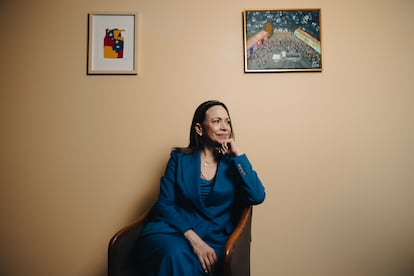
The Nobel Peace Prize laureate and her team work in a spartan Washington office whose furnishings have seen better days. She bursts into the kitchen to make coffee, brimming with energy, and treats her colleagues with familiarity and camaraderie. Each one seems to have a clear understanding of their specific role within a broader mission: to envision and plan the Venezuela they want to see in the coming decades. The beige walls are almost bare, save for a simple painting dated 2025 and a few illustrations by the Venezuelan cartoonist Rayma. Before sitting down in front of the camera, she asks for help concealing the microphone cable. A touch of vanity? “It’s to avoid distractions.”
Question. More than 100 days have passed since this new situation began in Venezuela: no Maduro, but Chavismo still effectively remains in power. What has really changed?
Answer. We need to look at it on several levels. Politically, things have happened that were unthinkable a few months ago. In a country where people didn’t even dare to pray for political prisoners in a church, today you can have 30 or 50 demonstrations of various kinds in a single day. More than 600 political prisoners have been released, although hundreds more remain in prison. You’re starting to see expressions of freedom of speech, of mobilization, of denunciation that didn’t exist before. However, this is far from a full restoration of civil rights. Economically, limits have been placed on the regime’s discretionary management of funds, and investments have been allowed, although no one knows their size or the terms of the contracts. There is no oversight. Annual inflation is 650%, and 86% of the population lives in poverty. And socially, there is growing tension: products are on the shelves, but people can’t afford them. We Venezuelans have learned the hard way that the economy cannot be solved without political change.

Q. Following events in Venezuela, it seems a sense of fatigue and uncertainty is brewing among the population. Is the expectation of change fading before the transition even takes shape?
A. There’s a bit of everything. There’s genuine anguish from people who can’t take it anymore, who see their children not eating well or not going to school. That’s what I call the ethical urgency. And there’s also a deliberate narrative of demoralization, which seeks to convince people that this process isn’t about democracy, but about oil, about foreign interests. That narrative suits the regime. But the fact that this is complex doesn’t mean it’s not moving forward. The approach of [U.S. President Donald] Trump and [U.S. Secretary of State Marco] Rubio, of the three phases that lead to a free and fair election, is correct and urgent.
Q. President Trump said last week that Venezuelans are “very happy.” What isn’t he seeing?
A. I don’t want to interpret what the president is thinking. What I can say is that there is a growing concern, not to say anxiety, that this is taking too long, because for many people, every day is a matter of life and death. The way to prevent this from turning into a chaotic process is to assure people that we will be able to uphold the will of the people through the electoral process. That’s what I tell Trump every time I speak with him. I say in public the same thing I say in private.
Q. What exactly do you say to him?
A. We have a great opportunity ahead for the Americas, and there is a momentum that we cannot afford to waste. Venezuela has the best-prepared society for an orderly transition: there are no deep religious, racial, or regional divisions; there is a level of civic organization that we have never had before. I tell him that we must adhere to a timeline that allows us to carry out this process properly, that we must make these elections a model for the world.
Q. Is that possible this year? The word is that elections will not be possible before 2027.
A. From a technical standpoint, you need approximately 40 weeks from the time you appoint a new National Electoral Council (CNE). That’s the trigger. It can be compressed somewhat, but we have to be serious. The important thing is to start now.
Q. Today, Washington controls a large portion of Venezuela’s oil, revenues, and business access. Trump has joked that Venezuela could be the 51st state. Where is the line that separates support from Venezuela’s most powerful neighbor and outright tutelage?
A. An election. The exercise of popular sovereignty is that path. To reach it, we will need the support of the international community and, first and foremost, that of the United States. Trump is the only head of state who has risked his position and resources for the freedom of Venezuela. We wouldn’t be where we are without that support. A criminal system only yields to a real threat.
Q. If you were to come to power under the current conditions, what would be your first concrete decision to regain sovereignty without breaking the alliance with Washington?
A. It’s all about trust. With the 2023 primaries, we decided to trust the people, and the people trusted us in return. Now we need to build trust in institutions: we need the trust of citizens, creditors, investors, and other governments. The key is the rule of law: a serious government, where there is an independent judiciary, the law is respected, and everyone is equal before it. That immediately creates the incentives for the country to transform itself.
Q. What happens if Washington is comfortable with things as they are and does not move towards political transformation?
A. I don’t think that’s possible. First, there is the migration incentive: almost a million Venezuelans in the United States, 65% of whom want to return as soon as there’s an election. Second, the economic factor: Venezuela has the potential for five million barrels, but reaching that level requires $200 billion in investment, and that only comes with the rule of law. The investors who are exploring the market today are doing so because they want an option. That option is worthwhile if we arrive; if we don’t, it’s worthless. A regime that stole, confiscated, and persecuted will never generate that confidence. And third: for these businesses to work, you need talent. The Venezuelan engineer working in Riyadh isn’t going to bring his family to a country without education or healthcare.
Q. The Chilean intellectual Fernando Mires recently said that Venezuela today is neither a dictatorship nor a democracy. You yourself seem to have moderated your tone. What is the regime today?
A. The same as always, with a few pockets that give the appearance of freedom. Some first steps toward dismantling a brutally repressive system. But if the executive controls the judicial, the legislative, and the electoral branches — what do you call that?
Q. A dictatorship?
A. Obviously.
Q. I’ll ask you a direct question, and I hope you don’t dodge it: when are you returning to Venezuela?
A. Soon. And I didn’t dodge it.
Q. In Madrid, you announced your return in weeks. You said the same thing two months ago. When then? May, June, July?
A. I have to finish the tasks I set for myself when I left Venezuela in December: speaking with heads of state, with investors, with creditors, with thousands of Venezuelans around the world. And there’s also all the internal preparation for this new stage. We’re working very hard on it.
Q. What is the objective condition that still doesn’t exist and prevents you from returning?
A. None.
Q. So you could pack your bag tomorrow and go.
A. Nobody wants that to happen more than I do.
Q. How much weight does Trump carry in that decision?
A. The position of the United States and other allies certainly carries weight. It’s a matter of coordination. My return will help the process flow smoothly, and that’s why it’s important that the timing is right.
Q. According to several accounts, at the breakfast on March 6, Trump advised you against returning. What does that reveal?
A. I didn’t release that information, so don’t take it as fact. There’s a lot of speculation. What I can say is that the U.S. government’s primary concern has always been my safety.

Q. Is there a point at which the strain of staying away outweighs the risk of returning?
A. I spent 12 years unable to leave, and everyone told me, “Go, you have to speak out abroad.” Now that I’m out, everyone tells me, “You have to come back.” My filter is always the same: where can I be most useful? I know that in Venezuela, I can help, contribute to moving everything in a firm and civic direction. But there’s also a lot to do here. I wish I could be in both places at the same time.
Q. Trump suggested on January 3 that you were not in the best position to guarantee governability. How would you control real power in a country where the army, the courts, the electoral council, and the oil industry remain in the hands of Chavismo, with criminal groups and guerrillas dominating parts of the territory?
A. It’s a fundamental problem, and that’s why we’ve spent years evaluating in detail the state of the country in each of these areas and what a process of institutional and territorial takeover would look like. My assessment is that the vast majority of those in these positions, from ministry employees to police and military personnel, would favor a transition. There are armed and financed groups seeking to create disruption, such as the DGCIM or some collectives, but they are very small and have already been identified. This isn’t about dismantling the Armed Forces, but about liberating them: the yoke and persecution they endure are intense. To those who fear retaliation, I give you my word: we will guarantee the rights and freedoms even of those who denied them to us.
Q. In Spain, you avoided meeting with Spanish Prime Minister Pedro Sánchez when Sánchez, together with Brazilian President Luiz Inácio Lula da Silva and Colombian President Gustavo Petro, was seeking to revitalize the left in the face of Trump’s rise. If the opportunity arose again, would you meet with him? What role could the Spanish government play in the transition?
A. Every decision is filtered through whether it helps the Venezuelan cause and accelerates the transition. If the answer is yes, I’ll meet him.
Q. You’ve spoken of a grand national agreement before the elections. Who would have to sit at that table, and what would you be willing to negotiate?
A. I see it as something broader than the electoral process. It’s a unique moment to articulate the consensus for the country we want to build: pluralism, limits on presidential power, the subordination of military to civilian authority, genuine decentralization, and the principle of subsidiarity between the state and the individual. This translates into concrete agreements, such as a ban on reelection and a bicameral legislature. The country is eager to discuss these issues.
Q. Would you support a ban on reelection?
A. Without a doubt.
Q. And would you sit down to negotiate directly with Delcy and Jorge Rodríguez?
A. It depends on the terms. We have offered, publicly and privately, our willingness to move forward with a negotiated transition. What we will not accept is another charade.
Q. When you see Delcy Rodríguez purging her inner circle and appointing ministers to strategic positions, aren’t they simply trying to present a façade of normality while holding on to power?
A. They will do that as long as they are allowed to. It shouldn’t surprise us. They have had to release prisoners, open communication channels, and place restrictions on the use of funds. On other issues, they haven’t budged. Part of our job is to persuade key players that certain decisions need to be expedited.

Q. Under what conditions could Chavismo survive as a political movement?
A. [Former Spanish prime minister] Felipe González told me in Spain: “In a transition, there are two things that cannot be amnestied: crimes against humanity and acts of corruption, unless those who stole return absolutely everything they stole.” I replied that he doesn’t know what he’s asking of us, because this is the biggest looting in history. It’s very complex. But I am aware of the historical responsibility to make this work well. A sustainable transition needs the support of the people, and those people will only accept difficult compromises if they trust the leadership that represents them. That’s why I say to those clinging to power: it’s in your best interest to negotiate with leaders who have legitimacy. You can achieve more.
Q. Hugo Chávez built a hyper‑personalist, caudillo‑style leadership. Some people compare you to him in that ability to sway people. How do you dispel the fear that you, too, could become a hyper-personalist leader?
A. I am the antithesis of Chávez. He started among the elites and the middle class; we began in the poorest neighborhoods and overcame urban skepticism. Chávez spoke of division; we went out to unite. He promoted revenge; we, reconciliation. Chávez offered gifts; I asked for work and responsibility. They humiliated; we valued dignity. He built a project based on hatred and violence; ours is rooted in love. They are completely opposite expressions.
Q. Two Venezuelas coexist today: one undergoing rapid economic liberalization that attracts investment, and another where millions survive on miserable wages. How do you reconcile those two countries and prevent that fracture from becoming permanent?
A. I don’t believe there are two countries. There is only one country that wants to live with dignity and transparency, that wants its children to return. That includes those who see investment opportunities today: if they do so transparently and in accordance with the law, their best interest is a democratic transition, because without it, those options are worthless. I travel the world and tell the major players in the technology and energy sectors: come to Venezuela, but let’s row in the same direction. A country with clear rules, no privileges, with transparent privatizations. My father, who was a great industrialist, used to tell me: “Making money is easy. What’s difficult is generating wealth.” A true entrepreneur creates wealth — for workers, for suppliers, for the entire country. That’s what we have to build.
Q. In Madrid, there was controversy over the chants of “get out monkey” directed at Delcy Rodríguez during your event in Puerta del Sol. What did you think, and what does it reveal about the mood of the Venezuelan exile community?
A. I can’t say for sure, but some people believe they were infiltrators. What I can say is that those chants don’t reflect who we are. When the event ended, the Spanish police told me, “We’ve never seen anything like this.” People were crying, singing, praying, and hugging each other. An aide to the premier of the Madrid region told me, “The last time we saw something like this was when Spain won the World Cup.” That’s Venezuela for you.
Q. Is there a vein of racial resentment in Venezuela that would be worth addressing without taboos?
A. You’re right, there’s no topic we shouldn’t address. But what I see today is a truly extraordinary level of cohesion around fundamental values: respect for human dignity, pluralism, individual responsibility, solidarity, love of freedom, property, and family. These are the values of our founding fathers. This has been a long march that has led us back to our roots.
Q. When you are alone and think about Venezuela, not about strategy or transition, but about the country, what do you see? What hurts you and what gives you strength?
A. I miss the light of my country. The colors in Venezuela are different to my eyes. I miss getting in my car and driving alone on any road. I love getting out anywhere and talking to people. When we traveled on tour, there were eight of us in the car; we sang llanera music in Los Llanos, eastern music in the east, gaitas in Zulia. I miss those very human things about the country so much. I’m sustained by the messages of energy and the prayers I receive every day. This movement has taken root culturally and socially. That’s why I always said: one day sooner, one day later, Maduro will be gone. And now I’ll say it again: one day sooner, one day later, this regime will finally be gone. What’s truly important is this Venezuela that is emerging, and how we ensure we build institutions that will last for centuries.
Q. And what gives you strength?
A. The people. This conversation. Being able to talk about the future. Sometimes I look back and say: how many times was I told it was impossible? And look at the incredible things we’ve done. I have a deep faith in the power of the people and their love of freedom. And I also feel that we’ve been guided by God.
Sign up for our weekly newsletter to get more English-language news coverage from EL PAÍS USA Edition








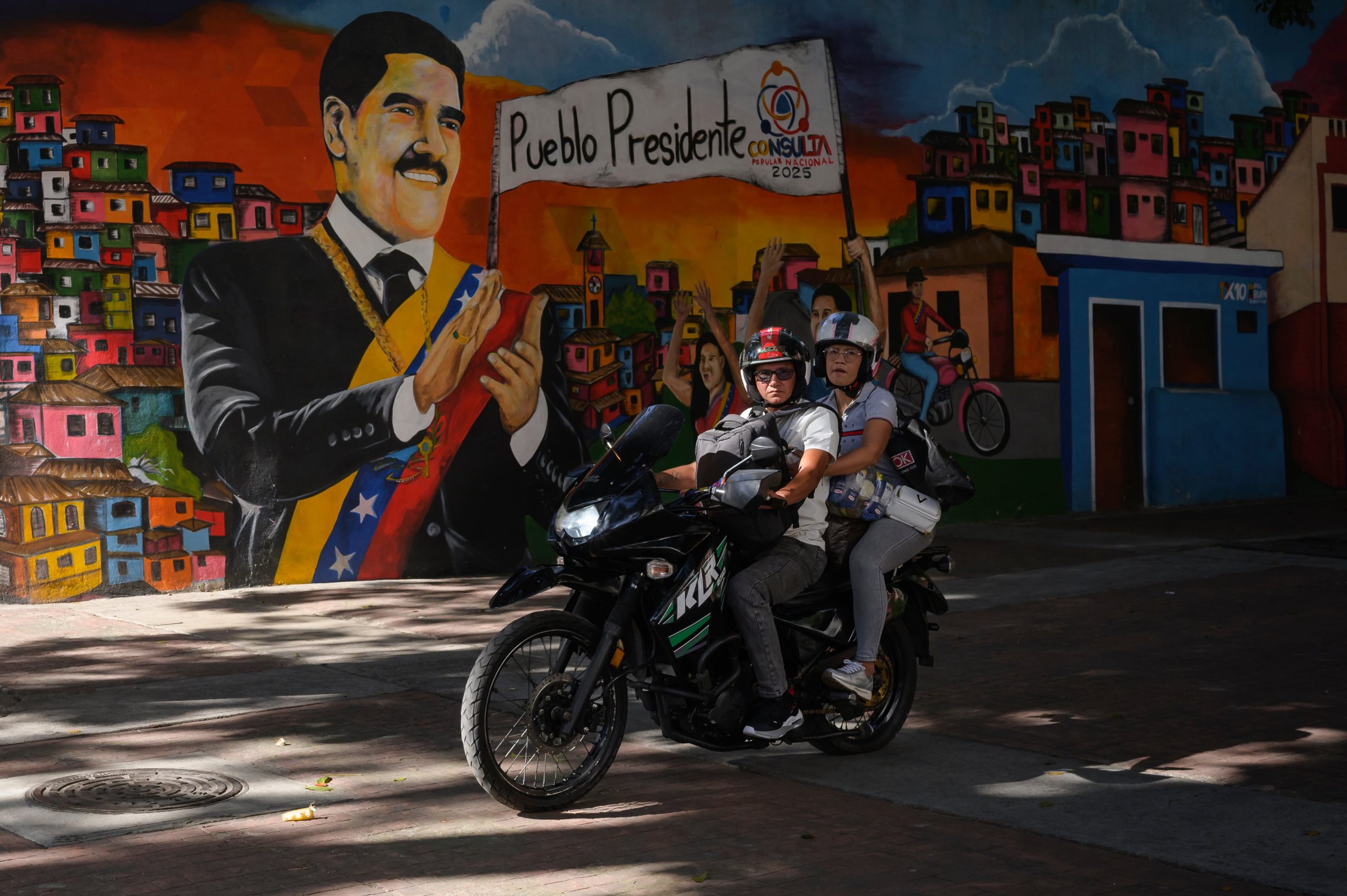
Ataque Estados Unidos a Venezuela
El Hijo De Maduro Habla De Su Padre Preso En Estados Unidos: “Él Siente Que Su Victoria Es Que Sigue Vivo”


La madrugada del 3 de enero, cuando el primer bombardeo sacudió Caracas, Nicolás Maduro alcanzó a grabarle un audio a su hijo. Él todavía no quiere hacerlo público —“en algún momento va a salir”, promete—, pero adelanta algunas frases: “Nico, están bombardeando. Que la patria siga luchando, vamos para adelante”. Era una despedida. “Él pensaba que ese día moría”, cuenta su hijo a EL PAÍS cuatro meses después del ataque que cambió abruptamente la historia de Venezuela. “Todos pensábamos que ese día iba a morir”.
Esta es la primera vez que Nicolás Ernesto Maduro Guerra —Nicolasito, como lo han llamado durante años para diferenciarlo de su padre— habla públicamente sobre el 3 de enero. Es, en realidad, la primera vez que alguien cercano al mandatario da detalles a un medio de comunicación sobre aquella traumática noche en la que murieron 83 personas, entre soldados y civiles. Cuando parece que Venezuela está pasando página, el único hijo de Maduro, de 35 años, es uno de los pocos en Caracas que sigue hablando en presente del autócrata.
Un mes y dos días después de aquella madrugada, a Nicolás Maduro Guerra le entró una llamada. Las cosas estaban más calmadas, se había abierto un “nuevo momento político” y él estaba en su escaño de la Asamblea Nacional en una de las sesiones en las que se debatió la ley de amnistía. Era uno de los hijos de su madrastra Cilia Flores.
—Nico. Nico, habla. ¿Aló?
Le estaban conectando con su padre al otro lado de la línea. Era la primera vez que escuchaba esa voz desde el 3 de enero. El diputado se quedó mudo. Se levantó de su asiento, caminó hacia atrás y subió las escaleras que hay detrás del hemiciclo. Y allí, lejos de las cámaras, lloró “un poquito”, dice ahora, sentado en una sala de juntas donde cabe varias veces el dormitorio donde detuvieron a su padre. Curiosamente, su oficina, ubicada en un barrio financiero de Caracas, está a pocos minutos del Marriott, el hotel donde los estadounidenses han instalado su base de operaciones para dictar el futuro de Venezuela sin su padre.
Desde aquel día, Maduro Guerra graba las llamadas que recibe desde la cárcel en Estados Unidos. Ellos también lo registran todo y así, ambos, van componiendo un archivo sonoro que ya es historia.
—To accept the call, press five—, escucha cada vez.
Nicolás Maduro, encerrado en el Centro de Detención Metropolitano de Brooklyn, la única prisión federal en la ciudad de Nueva York, cuenta con 510 minutos al mes para sus conversaciones con el exterior.
—Hello, good night, how are you?
Maduro vacila a su hijo, como vaciló a todos los guardias que le observaban cuando aterrizó en Nueva York después de su captura. “Happy New Year”, les dijo con las manos esposadas en la barriga, su chándal gris de Nike y un gorro de lana cubriéndole la cabeza.
Los primeros meses de Maduro en la cárcel han sido en una celda de aislamiento, sobre una cama estrecha. Café, comida demasiado picante, un escritorio. El Gobierno de Delcy Rodríguez ha negociado con Estados Unidos una mejora de las condiciones y, según cuenta su hijo, en Semana Santa pasó a relacionarse con otros presos con los que ve la televisión. Fue ahí cuando conoció al rapero Tekashi 6ix9ine, que lo primero que hizo al salir de la prisión fue mostrar un muñeco artesanal de Bob Esponja firmado por Maduro. “Debió coincidir con él un solo día. Mi padre me dijo que le había firmado algo, pero es que yo ni sabía que él era famoso”, recuerda. “Yo soy salsero”, bromea.

Maduro ha estado leyendo la Biblia de forma obsesiva. Todos los días. “Se la aprendió. Nos dice unos versículos locos”, dice entre risas. “Mi papá nunca había sido así, pero ahora, en las llamadas, a veces empieza por ahí: ‘Tú tienes que escuchar Mateo 6:33. Y Corintios 3. Y el Salmo 108”, cuenta. Maduro profesaba devoción por el líder espiritual indio Sathya Sai Baba, pero ahora parece hacerlo por el Papa. El diputado apunta los salmos que le recita Maduro en un cuaderno. No es casual que los dos escritos que su padre ha publicado desde la cárcel —uno tras la primera audiencia, el pasado 26 de marzo, y otro el Domingo de Ramos— se sostengan casi enteramente sobre versículos. “Más bien una misa”, le dijo el hijo cuando los leyó.
Por suerte para su hijo, hace tiempo que Maduro lee más libros. Lo primero que pidió fueron tres textos: el Discurso de Angostura de Bolívar, las obras completas del libertador y la Constitución de Venezuela. Después llegaron biografías, libros sobre la historia de Estados Unidos, Doña Bárbara, del venezolano Rómulo Gallegos. García Márquez. El Estado y la revolución, de Lenin. “Ya lleva como 60”, calcula el hijo, que asegura que ahora intercambia ejemplares con otros presos. También le ha mandado los libros de metafísica de Conny Méndez, una autora venezolana que leía su abuela. Y el código penal de Nueva York, para que Cilia Flores, abogada, lo estudie desde su celda del ala femenina de la prisión.
Maduro, el diputado, parece alguien distinto a su padre. No entra en detalles, pero es obvio que mantenían sus diferencias. Cuando era adolescente, el comandante Hugo Chávez le animó a hacer el servicio militar, pero él eligió estudiar Música y Economía. Su padre solo le tuvo a él, pero él tiene siete hijos. Su padre acabó liderando un régimen acusado de corrupción y de crímenes de lesa humanidad por la ONU, con cientos de presos políticos, denuncias de torturas y un éxodo migratorio sin precedentes en América Latina, pero él encaja las preguntas difíciles. E incluso agradece la franqueza.
Cuando se le pregunta por qué la apertura económica y política no se hizo antes si era —como él dice— el plan de su padre más allá de Donald Trump, responde que las liberaciones empezaron en diciembre. Cuando se le replica que en diciembre Estados Unidos ya estaba desplegado en el Caribe, admite: “Sí. Se cometieron errores de todos lados”. Hay una pregunta que Maduro Guerra dice que su padre debe estar haciéndose en estos meses, y que él también se hace: “¿Qué hice o no hice que pudo haber evitado el 3 de enero?”. La respuesta, afirma, no es una sola. “El 3 de enero fue una suma. De agresión, de sanciones, de errores. De intereses. De todo”.
Hoy, Maduro Guerra preside la Comisión de Política Interior, que supervisa garantías constitucionales y el sistema penitenciario. “Hemos visto excesos, por decirlo bonito”. Asume los errores del chavismo como propios, pero también marca distancias: “Yo soy miembro del partido, mi papá era el presidente, pero yo soy joven, yo no decidía”.
No parece que Maduro despache con su hijo los grandes temas de Venezuela. Tampoco está claro con quién lo hace. Ni si lo hace. En una entrevista con EL PAÍS, Jorge Rodríguez, presidente de la Asamblea Nacional, reconoció que no había hablado todavía con él. Tampoco consta que se comunique con su hermana Delcy Rodríguez. Lo que sí ha hecho Maduro es respaldar desde la cárcel la gestión de la presidenta encargada. El propio apoyo de su hijo a los hermanos Rodríguez estos meses ha sido un factor de estabilidad en una Venezuela donde aún se habla de traidores.
A su hijo, Maduro le pregunta por la familia, a veces, por la Asamblea, por la comida, por el fútbol… El pasado 14 de abril el Barça quedó eliminado de la Champions y fue lo primero que le dijo. Estaba enfadado. “Coño, esa fue una cagada”, se lamentó.
Antes de aquel “Nico, Nico, habla” del 5 de febrero, el diputado había dado a su padre por muerto durante horas.
Entre las dos y las tres de aquella madrugada de enero, en mitad de las explosiones y con varios aviones de combate sobrevolando la ciudad, el hijo llamaba a su padre insistentemente. Pero él le colgaba. “Se estará resguardando”, pensó. En esas horas críticas, Maduro Guerra dice que habló con Delcy y Jorge Rodríguez. Los hermanos llegaron a creer que estaba muerto y se negaron a hablar con los mediadores de Estados Unidos hasta que no les diesen una fe de vida. “Les dijeron que si habían matado al presidente, no iban a hablar con asesinos. Yo soy testigo de eso”, recuerda. Más tarde apareció Diosdado Cabello. Tampoco sabía nada. Ahí fue cuando le dijo a su esposa: “Yo creo que a mi papá lo mataron”. Llevaba demasiadas horas sin saber de él.

Mientras la cúpula chavista se recomponía e intentaba comprender qué estaba pasando, a Maduro lo cazaban en su propia ratonera. Mucho se ha especulado —y publicado— sobre cómo el entonces presidente de Venezuela corrió hacia una cámara acorazada para evitar que lo atrapasen y que fue justo en ese momento, cuando estaba a punto de salvarse, que lo apresaron. “La cámara acorazada era un clóset de madera”, bromea su hijo. La casa donde esa noche dormía su padre —dos pisos, dos habitaciones, vidrios sin blindar, paredes sin recubrir— sigue siendo un misterio para él. “No sabemos ni por qué estaba ahí”, dice.
Lo único que sabe es lo que le han ido contando: que a su padre lo agarraron mientras intentaba meterse por “instinto de supervivencia” en el armario, que volaron la puerta de un disparo, que le destrozaron la rodilla de un golpe y que su mujer, la también diputada Cilia Flores, acabó desmayada unos segundos después de darse un golpe contra un mueble. “Menos mal que supimos que Cilia estaba bien después, porque el charco de sangre que había era bárbaro”.
A pesar de las advertencias, Trump sorprendió a Maduro. Varias entrevistas de EL PAÍS con personas que conocen de primera mano los detalles de aquella madrugada revelan que el chavista menospreció la amenaza y además calculó mal las intenciones de su adversario. “Nosotros estábamos preparados para una invasión terrestre”, dice uno de los fieles de Maduro. “El presidente estaba preparado para morir en batalla, en un bombardeo o como fuera… Estaba más que claro que eso podía ocurrir, pero no que se lo llevaran vivo”, añade. “No entraba en razón y cuando quiso ceder, la orden ya estaba dada”, cuenta otro interlocutor.
El miedo y la paranoia se apoderaron de la cúpula chavista tras la captura de su líder. No era para menos. El 5 de enero, en un confuso capítulo que nunca se aclaró públicamente, una nube de drones estadounidenses tomó el cielo de Caracas. Según han contado a EL PAÍS varias fuentes que conocen este episodio, cientos de aparatos se dirigieron a puntos clave de la capital donde se encontraban los herederos políticos de Maduro. Se paraban en las ventanas, como si escudriñasen a quien les observaba detrás del cristal. Llegaron incluso al Palacio de Miraflores, donde Delcy Rodríguez se estrenaba ese mismo día como presidenta encargada. Hubo tiroteos para abatirlos. Hubo pánico. Nadie sabía bien qué hacían ahí. El propio Maduro Guerra los tuvo frente a su oficina. “Un amigo mío que estaba en la montaña del Ávila grabó Caracas llena de drones, pero yo los vi aquí mismo”, recuerda.
Maduro, asegura su hijo, está bien y fuerte a pesar del encierro. “Es que él está consagrado al país y a la política. Y yo creo que él estaba preparado para esto. Yo sé que él siente que su victoria es que sigue vivo. Es, además, una persona muy espiritual”.

El destino de Nicolás Maduro es incierto. Enfrenta cargos por cuatro delitos de narcoterrorismo y posesión de armas. Pero su hijo y su entorno lo tratan como un rehén. “Tenemos fe en que pueda volver”, dice Maduro Guerra. Pero no en los tribunales. “El juez parece un buen hombre, vamos a dar la batalla jurídica, pero esto [su vuelta] es parte de un acuerdo político”, dice.
El pago de su defensa, que cuesta millones de dólares, ha sido uno de los litigios de sus abogados, entre los que destaca el penalista estadounidense Barry Pollack, que defendió a Julian Assange. Los letrados han logrado que Estados Unidos levante el bloqueo para que Venezuela pague la defensa de la pareja presidencial en lugar de tener que dejar sus casos en manos de un abogado de oficio. La decisión —que ha indignado a muchos venezolanos— facilita, en cualquier caso, que el juicio siga adelante. Sin una defensa adecuada, sus abogados podrían insistir en la nulidad del proceso.
“Mi papá no tiene dinero, no tiene cuentas, no tiene testaferros, no tiene nada”, asegura el hijo a pesar de las acusaciones de corrupción contra su padre. “Sería absurdo decir que vivía mal, pero la única propiedad que mi papá tiene es el apartamento que compró cuando era diputado con Cilia en El Paraíso. Y ese siempre fue el sueño de ellos: volver a ese apartamento”.
Volver. Al apartamento, a Venezuela.
Tras una hora de conversación, EL PAÍS le hace la misma pregunta con la que empezó esta entrevista.
— ¿Y usted, cómo está?
En frío, al comenzar, respondió: “La respuesta automática es bien. Hay que tener paciencia, estoy saliendo del shock y uno va asimilando la situación”. En la segunda intentona se abrió algún centímetro más: “Guardo mis emociones, trato de estar sereno, pensando en cuál debe ser mi papel para ayudar al país. Ahora soy el pilar de mi familia, de mis tías que están mayores, de mis hijas. Y, también de mi papá”.
—Usted debe ser su mayor apoyo…
—No sé, la verdad es que no lo había visto así.


How To Get A Tourist Rental Licence In Andalusia (Spain) – Step-By-Step Guide 2025

Max Verstappen Nurburgring LIVE: NLS5 Schedule, start times and free live streams
Warning for drivers in Spain as week-long clamp down on speeding is underway


-
 New Developments3 weeks ago
How To Get A Tourist Rental Licence In Andalusia (Spain) – Step-By-Step Guide 2025
-
 Uncategorized3 weeks ago
Max Verstappen Nurburgring LIVE: NLS5 Schedule, start times and free live streams
-
Andalucia4 weeks ago
Warning for drivers in Spain as week-long clamp down on speeding is underway
-
Asia4 weeks ago
Al Menos Cuatro Muertos, Tres De Ellos Niños, En Un Tiroteo En Un Colegio Del Sur De Turquía
-
 Competiciones1 week ago
E
-
cabin crew4 weeks ago
Spain’s Supreme Court rules EasyJet must reveal cabin crew identities
-

 Uncategorized4 weeks ago
Lando Norris unleashes F1 2026 criticism after Nurburgring test
-

 Uncategorized4 weeks ago
Lewis Hamilton admits being