
America
Bruna Ferreira, The Former Sister-In-Law Of The White House Press Secretary Detained By ICE: ‘I Never Wanted To Be An International News Story’

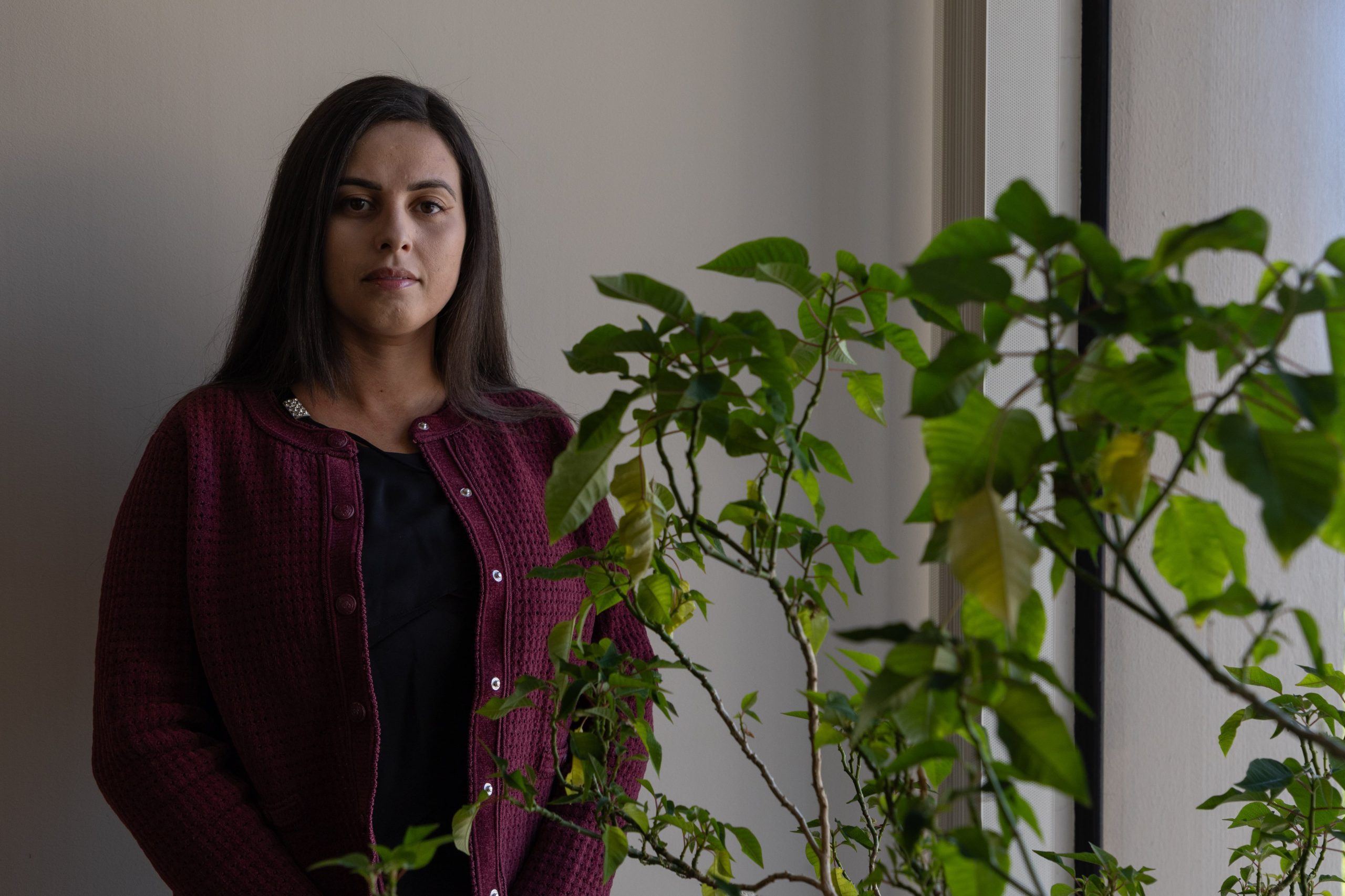
More than six months have passed, and Bruna Ferreira still does not understand why she was arrested. Nor does she understand why the Donald Trump administration labeled her a “criminal illegal alien” after her detention. What she does know for certain is that she has lived through a true “nightmare” ever since. She thanks God again and again that she only spent 26 days in a detention center before being released rather than deported, as thousands of migrants have been under the U.S. president’s mass deportation campaign. But her release did not bring an end to her ordeal. Getting her life back on track has proved difficult due to the massive media coverage her case received. After all, she is the mother of the White House press secretary’s nephew.
“I never wanted to be an international news story,” Ferreira said. The 34-year-old Brazilian met with EL PAÍS last Wednesday at her attorney’s office in Boston. For nearly two hours, she maintained steady eye contact, and her voice faltered only once. Speaking in flawless English, interrupted by only a few words in Portuguese — a reflection of the fact that she has spent virtually her entire life in the United States — she recounted how she arrived in this country as a child, her long struggle to regularize her immigration status, and her previous romantic relationship with the brother of Karoline Leavitt, President Trump’s press secretary.
One question naturally hung over the entire interview: did Michael Leavitt have anything to do with her arrest? Ferreira and Leavitt engaged in a bitter custody battle — now resulting in shared custody — over their 12-year-old son after their relationship ended a decade ago. It is the same question other detainees at the Immigration and Customs Enforcement (ICE) detention center in Louisiana, where she was held, asked her when they saw her case mentioned in the news on one of the facility’s televisions. It is also the question her son has asked her on several occasions.
“I just tell him that it’s not really his place to choose between a mother and father. Let things happen the way that they’re going to happen and we’ll get there, but I don’t want to make false accusations,” she says. However, both she and her lawyer agree that her arrest “appears to have been targeted.”
‘Are you Bruna?’
It happened on November 12, 2025. Ferreira is a woman of faith and spirituality: she remembers the date clearly because she and her son text each other every day at 11:11 a.m. to make a wish. The day before her arrest had been the 11th day of the 11th month. “It’s almost like we wished for something to change,” she says ruefully. I didn’t know it was gonna be this kind of change, but it came into fruition.”
It was a Wednesday. Ferreira woke up at 4:30 a.m. to take her son to school. The journey from her home in Revere, north of Boston, to his school in New Hampshire is more than 30 miles, which means early mornings are a necessity. After dropping him off, she returned home for a while, knowing she would have to make the same trip again that afternoon to pick him up. “I don’t think I even had the opportunity to change clothes,” she recalls. “I had some chicken noodle soup and headed out the door.”
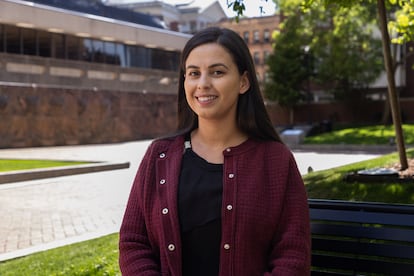
As she drove out of the parking lot of her apartment building on her way to pick up her son, her vehicle was surrounded by several unmarked cars. About half a dozen federal agents emerged and, within seconds, ordered her out of the vehicle, handcuffed her, and took her into custody, according to video footage of the arrest that was later leaked to the press.
“I recall one of the agents asking me my name, and I didn’t tell him what my name was because how would you be able to pull me over if you don’t have a warrant for my arrest? This vehicle isn’t insured under my name. If you ran the plate, it’s not my name? So obviously they knew who they were pulling over,” she recalled. Then, one of the agents suddenly blurted out, “Are you Bruna?” The video of her arrest that was released to the press does not include audio, but Ferreira says that at that moment she realized this wasn’t just a routine traffic stop.
The officers took her to the local police station while Ferreira begged to be allowed to make a call to make sure someone would pick up her son. Unable to reach her ex-fiancé, Michael Leavitt, Ferreira asked them to call the White House press secretary directly: “When they found out that I was related to Karoline Leavitt, one of the officers slammed the door and was like, ‘Fuck, what are we going to do? We have to get her out of here.’”
From there, ICE transferred her from facility to facility “like cattle,” as she describes it, moving her through Vermont, Philadelphia, Texas, and finally Louisiana. Attorney Todd Pomerleau took on her case, and it was through his efforts that, around Thanksgiving Day, Ferreira’s story and her connection to the Leavitt family became known in the national press. Before long, she had captured the attention of the entire country.
‘Criminal illegal alien’
The Trump administration immediately went on the offensive. While Karoline Leavitt — one of the most outspoken defenders of Trump’s deportation campaign — remained publicly silent, the Department of Homeland Security labeled Ferreira a “criminal illegal alien.” The department stated that the Brazilian national had been arrested for assault and that she had entered the United States “on a B-2 tourist visa, which required her to leave the country by June 6, 1999.” The White House, meanwhile, asserted that Ferreira had not spoken to the press secretary in years and that she had never lived with her son.
“All false,” Ferreira says. “Factually false and legally false,” her lawyer adds.
Ferreira arrived in the United States in 1998 when she was six years old. She was brought by her grandmother, with whom she had been living in Brazil, to reunite with her parents, who were already in the country. According to her account, her grandmother returned to Brazil and was supposed to come back for her a few months later, when Ferreira’s visa expired. But the woman died, and Ferreira remained in the United States with her parents.
Under U.S. immigration law, a person does not begin accruing unlawful presence in the country until turning 18. Once they do, they have 180 days (approximately six months) to adjust their status before triggering a three-year reentry bar if they leave the United States for any reason. If they remain without authorization for one year or more after turning 18 and then depart the country, they face a 10-year reentry ban.
As attorney Todd Pomerleau explains, after Ferreira’s visa expired when she was six years old, she could not be penalized for remaining in the United States without authorization until she reached adulthood. When she turned 18 in 2011, Ferreira married her high school boyfriend, a U.S. citizen, and began the process of applying for lawful permanent residency — a green card.
However, the marriage eventually fell apart, and the application was never completed or adjudicated.
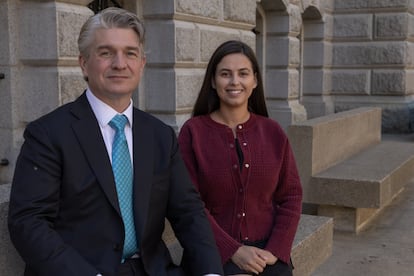
In 2012, she met Michael Leavitt and the two began a relationship. That same year, Ferreira also applied for DACA (Deferred Action for Childhood Arrivals), the legal program created by the Obama administration for undocumented immigrants who arrived in the United States as children, shielding them from deportation. She was granted the protection and, with it, authorization to work legally in the country.
For years, according to her attorney, her immigration case remained dormant while her application for permanent residency languished. Pomerleau maintains that Ferreira has never been unlawfully present in the United States because she has spent this entire period awaiting a decision on the residency petition she filed when she was 18.
But after Donald Trump returned to power in 2025 with a pledge to carry out the largest deportation operation in U.S. history, the government reopened her immigration file. “And shortly afterward, she was arrested,” Pomerleau says.
Addressing the Department of Homeland Security’s claims that Ferreira has a criminal record, Pomerleau argues that those allegations are also inaccurate. According to the attorney, the incident in question occurred in 2008, when Ferreira was 16 years old. She was summoned to juvenile court following an altercation with another girl outside a restaurant. The two teenagers had argued over eight dollars in change, but the dispute never turned violent, Pomerleau said. He further maintains that the court summons was not a criminal matter, that the case was ultimately dismissed, and that the proceedings should have remained confidential, as is standard for cases handled in juvenile court.
“She was never arrested, so how could she be a criminal illegal alien? It’s considered a crime if you’re an adult. She wasn’t an adult; that’s the whole point. You’re not supposed to be stigmatized for the rest of your life when you’re 14 or 15 years old and you go to a juvenile proceeding,” her lawyer points out.
Armed with these arguments, Ferreira’s legal team succeeded in persuading an immigration judge to grant her release on bond on December 8. The judge set the bond at the minimum amount permitted — $1,500 — and, after 26 days in detention, Ferreira was finally able to leave the Louisiana facility.
The Department of Homeland Security reiterated in a statement sent to EL PAÍS that Ferreira was arrested “because she is an illegal alien.” “A Biden-appointed judge allowed her to be eligible for bond. She paid her bond and was released while she continues in removal proceedings. She will have periodic mandatory check-ins with ICE law enforcement to ensure she is abiding by the terms of her release,” it added.
Ferreira still recalls, with a heavy heart, the women she met in detention — women who had spent months or even years trying to secure their release, who spoke no English and were unable to advocate for themselves in the way she was able to do. “It’s so wild to witness it firsthand because allegedly what my sister-in-law is conveying is that they’re locking up the big, the bad, and the ugly: rapists, murderers, and gangbangers. But I saw it firsthand that that is the furthest thing from the truth.”
‘He knew my immigration status was my Achilles’s heel’
Ferreira is now awaiting further progress in her immigration case before the courts, while also dealing with the consequences of her arrest. The Brazilian woman says her home-cleaning business has suffered losses, as some clients no longer want her inside their houses. She has also been targeted on social media, where she has been labeled everything from an absent and negligent mother to an opportunist and a liar. Her only mission, she says, is to protect her son from it all.
Ferreira had no contact with her son during the nearly month she spent in immigration custody. She alleges that the boy’s father never returned her calls seeking to speak with the child. After being released, she was reunited with her son and has continued seeing him since then: “I brought him to his first hot yoga class. I just went to the school concert. He had a solo. I was just sitting back crying. It was a very great moment for him. We have been able to spend time together. It’s not as much time as I would like, but he does have his own little life out of school with baseball and sports and extracurricular activities.”
Regarding the rest of the Leavitt family, she says, “I’ve been trying to avoid Mike (her son’s father) and his parents.”
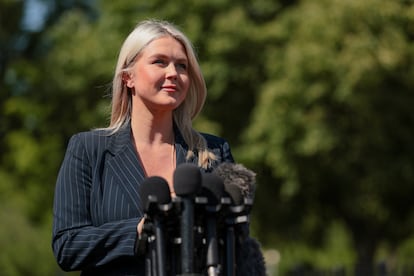
Ferreira and Michael Leavitt were together until April 2015. Before the relationship unraveled, Ferreira describes her interactions with the Leavitt family during those years as “cordial.” They were young at the time: the couple in love was in their early twenties, while Karoline was still a teenager. Their child was born in March 2014, and nearly a year later, Ferreira and Leavitt ended their engagement.
She says she decided to leave because the relationship had deteriorated following several “domestic altercations.” “It wasn’t good for a child,” she says, referring to the impact the relationship had on her son. According to Ferreira, Leavitt at one point threatened to have her deported, aware that her immigration status was her “Achilles’ heel.”
This newspaper attempted to contact Michael Leavitt but received no response; however, in comments to The Washington Post in December, he said he had nothing to do with Ferreira’s arrest.
The couple’s breakup was followed by a custody dispute over their son that lasted for years and was ultimately resolved through an out-of-court shared custody agreement, under which young Michael primarily lives with his father. During the court proceedings, The Washington Post reported in December, Ferreira and Leavitt accused each other of abuse and neglect. Both have denied the allegations.
Ferreira says she has explained her entire immigration situation to her son in case, “God forbid,” she is ever deported. Her mother recently obtained permanent residency, and her two siblings, both born in the United States, are citizens. But she remains in limbo. Following her arrest, Ferreira alleges, the Leavitt family told her sister that she should “self-deport” and attempt to return legally.
“A trap,” her lawyer says. He knows, as Ferreira does, that under the Trump administration’s anti-immigration crackdown, she would likely never be able to return.






America
Resultados De Las Elecciones En Perú, En Vivo | Los Sondeos A Pie De Urna Pronostican Un Empate Entre Keiko Fujimori (50,7%) Y Roberto Sánchez (49,3%)



America
‘It Feels Like A Mockery’: Justo Betancourt, A Former Detainee At Alligator Alcatraz Who Received A Congratulations Note From Trump

When Justo Betancourt, 55, was released from Alligator Alcatraz on May 14, after nearly six months in detention, he had lost 22 kilograms (48.5 lb) and could barely walk. Two days later he was admitted to hospital, on the verge of a diabetic coma. While in detention, he did not receive the insulin doses he needed, suffered strokes, and during one episode, he fell and lost a tooth. He has been left with neurological after-effects: his right hand trembles, and to climb a step, he lifts his leg from behind the thigh. “Sometimes I have to grab it and push, because it doesn’t respond,” he says on the ground floor of the apartment building where he lives, in Miami’s Little Havana. This week, President Donald Trump dedicated a message to him on Truth Social: “Welcome home to Justo Betancourt, whose Daughter, Arianne, fought very hard to free her father from Alligator Alcatraz. Enjoy your Freedom together!!!”
“It feels like a mockery. I think that’s what it is, more than anything else—a mockery,” says Betancourt, adding that the mention of his daughter has given him “a lot to think about.”
The president’s post marks the culmination of the public campaign waged for months by Arianne Betancourt, 33. Through it, she turned her father’s detention into a symbol of the resistance against Donald Trump’s immigration crackdown and became the face of allegations of human rights violations at Alligator Alcatraz.
The spotlight is not her father’s natural habitat. Justo Betancourt is a man of few words, with graying hair, a tanned complexion, and a taciturn gaze. He arrived in Miami in 1990 from Matanzas, in western Cuba, and for years he worked as a carpenter building kitchen cabinets. In 2016, he was sentenced to six years in prison for conspiracy to distribute methamphetamine, and was held in a federal prison in Nebraska until 2020. Upon his release, he was issued a deportation order and was subject to periodic check-ins with ICE. During one of those check-ins, in October, he was detained at the Immigration and Customs Enforcement (ICE) office in Miramar, north of Miami.
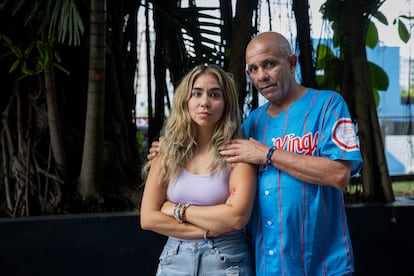
The campaign to secure her father’s release consumed Arianne’s life. After attending one of the vigils held every Sunday in front of Alligator Alcatraz, she quit her job as a tour guide in Miami and began volunteering with The Workers Circle, the organization that organizes the vigils. She has helped families contact their detained loved ones, publicly denounced her father’s health issues and the conditions at the detention center in Chicago, Minneapolis and Washington, and during former Secretary of Homeland Security Kristi Noem’s congressional hearing, and is now gathering information on detainees who lack legal representation in order to connect them with pro bono attorneys.
“I saw that there was a need for someone to represent families like mine—someone who would speak out and not be afraid. And when I saw that no one else was doing it, I stepped up. I didn’t do it so that people would tell me I’d done something good, but because it was the right thing to do,” she says. “Freedom comes at a price, and staying silent is the same as being an accomplice.”
Justo Betancourt says the federal prison where he was held in Nebraska was like “a five-star hotel compared to Alligator Alcatraz.” In the heart of the Everglades, he says, 32 people share spaces measuring about six by six meters, which he describes as metal cages with three aluminum toilets. “There are 32 people, each with different thoughts, in their own world, in their own despair. And the question we all ask ourselves: Why me? What are we doing here?” he says.
Betancourt doesn’t try to hide his past. “I made a mistake, but that’s in the past. And I paid for it. I followed the law. I live a quiet life, I don’t mess with anyone, I don’t hang out with anyone. I took the advice to heart,” he adds, shrugging.
When he arrived at Alligator Alcatraz, he had to be admitted to the facility’s clinic due to a hypoglycemic episode caused by his diabetes. He spent several days handcuffed to a bed and dependent on the guards, even to go to the bathroom or drink water. For any movement, no matter how brief, detainees are handcuffed and shackled, he explains.
When his condition improved and he was transferred with the rest of the detainees, he stopped receiving the insulin he needed. “They told me, ‘It’s not in the system. You have to wait three days.’ But 90 days went by,” he recalls. His health deteriorated. “I almost went into a diabetic coma. They took me to the hospital with cardiac arrest and the early signs of a stroke.” He remained hospitalized for three days before being returned to the center. “They took me back, and my family wasn’t notified at all,” he adds.
Months later a series of transfers began, taking him to various detention centers. First he was sent to Krome, southwest of Miami, and then to Texas, where authorities attempted to deport him to Mexico. At the border, he claims to have seen people being beaten for refusing to get off the bus. Mexican authorities refused to accept him due to his health issues—heart disease and schizophrenia, in addition to diabetes—and sent him back. A second attempt to deport him via Arizona had the same result. Finally, he was sent back to Alligator Alcatraz.
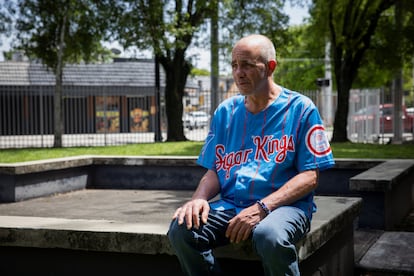
Betancourt was released after a federal judge granted his petition for habeas corpus, a legal tool rarely used in immigration cases that has become one of the few avenues of recourse for detainees who challenge the legality of their detention.
Recalling those months in detention, he asserts that nowhere else did he suffer treatment comparable to that at Alligator Alcatraz, which seems to have been created on purpose “to traumatize people, with a lack of humanity,” he says thoughtfully, as he watches the roosters and hens scurrying around the building’s yard.
“At four in the morning, they turn on the lights and don’t turn them off again until midnight. You know it’s five in the morning because it’s breakfast time. You know it’s eleven because it’s lunch time, and five because it’s dinner time. Other than that, you have no sense of time.” The food arrived in boxes that sat out in the open for hours. Sometimes it went bad before he could eat it, he says.
On top of the hunger and the conditions was the uncertainty of not knowing what would happen to him. “I asked an immigration guard what was going to happen to me, and he said, ‘You’re going to die here. You’ll leave here in a box or in a box. You won’t leave here on your own two feet. By order of the president.’” Another guard told him, “Didn’t you see the movies about the Nazis?” he recalls. “They completely destroy you, they break you.”
He says the degrading treatment continued right up until he was told he would be released. The guard told him he had five minutes to make his bed and stand by the door: “Otherwise, I’d have to stay. So I quickly scrambled to gather up the sheet—since I was on the bottom bunk—and when I turned around, he was gone. Four hours later, he came to get me. Just to be mean. If he knew he had to pick me up later, why did he make me go through that?”
During those months, he says that thinking about his family was the only thing that gave him the strength to keep going. “When I got out, imagine, I couldn’t believe it. I was with Arianne, my kids, and their mom in the car, and I was looking all around, saying: Is this real, is this real? Because I’d dreamed so much about that moment, about giving them a hug, and I’d open my eyes and see the bottom of the iron bunk bed, and I’d say: Oh!”
His son, Eddy Oney Betancourt, says it broke his heart to hear his father on the phone and sense that he was trying to stay upbeat. Sometimes weeks would go by without them being able to speak, and they knew that calls could bring good or bad news. They spent Christmas and their first Thanksgiving without him. Arianne had her birthday in February. His daughter said her first words. “I prayed every day that I was in there so I could see him one more time. Because you never know what’s going to happen in those places, and I heard stories of people who lost family members [in immigration custody].”
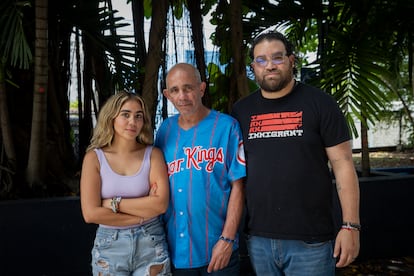
Arianne found Trump’s message counterproductive. “If he hadn’t created these immigration policies, I wouldn’t have had to leave behind everything I’d achieved, the life I’d built, to start fighting the government. This never should have happened.” She says she’s not sure of Trump’s intentions behind his post, but points to two possible scenarios: “I wouldn’t be doing what I do if I were easily intimidated.” So if the president is trying to use her case for his election campaign, she asserts, “he picked the wrong Cuban-American family”: “because he’s not going to use my story and the work I’ve put in to help him with the Cuban vote.”
The White House did not respond to a request for comment.
Last Sunday, Arianne and Justo Betancourt returned to the Everglades for the Sunday vigil, and they plan to go again next Sunday. Arianne says that what happened “cannot go unpunished,” and they are calling for an investigation that treats the site as a “crime scene.” “Someone has to be held accountable. There has to be justice.”
Sign up for our weekly newsletter to get more English-language news coverage from EL PAÍS USA Edition
Seis Personas Apuñaladas En La Principal Estación De Tren De Nueva York Horas Antes De La Visita De Trump
The Experts’ Tips For Staying Safe While Hiking In Spain’s Mountains
Los Agricultores Andaluces Piden Que Vox No Asuma La Cartera De Agricultura En Las Negociaciones Para La Investidura De Moreno
In The Final Stretch Of Colombia’s Presidential Campaign, Undecided Voters Are In High Demand

How To Get A Tourist Rental Licence In Andalusia (Spain) – Step-By-Step Guide 2025
Spain heatwave 2026: When the next extreme temperatures could hit and which areas may suffer most


-
Abelardo de la Espriella2 weeks ago
In The Final Stretch Of Colombia’s Presidential Campaign, Undecided Voters Are In High Demand
-
 New Developments3 weeks ago
How To Get A Tourist Rental Licence In Andalusia (Spain) – Step-By-Step Guide 2025
-
aemet3 weeks ago
Spain heatwave 2026: When the next extreme temperatures could hit and which areas may suffer most
-

 Uncategorized4 weeks ago
FBI investigation launched over Valtteri Bottas Cadillac theft
-

 Uncategorized3 weeks ago
Max Verstappen is no diva – Nurburgring rival on
-
Costa Blanca South4 weeks ago
Torrevieja opens registration for Concilia Verano 2026 summer school
-
 Argentina2 weeks ago
Trump Receives Flávio Bolsonaro In The Oval Office Three Weeks After Lula
-
Costa Calida4 weeks ago
Puerto de Mazarron prepares for San Isidro festivities with music and traditions