
Ceuta
Morocco Grows Bolder Thanks To Trump’s (And Israel’s) Support

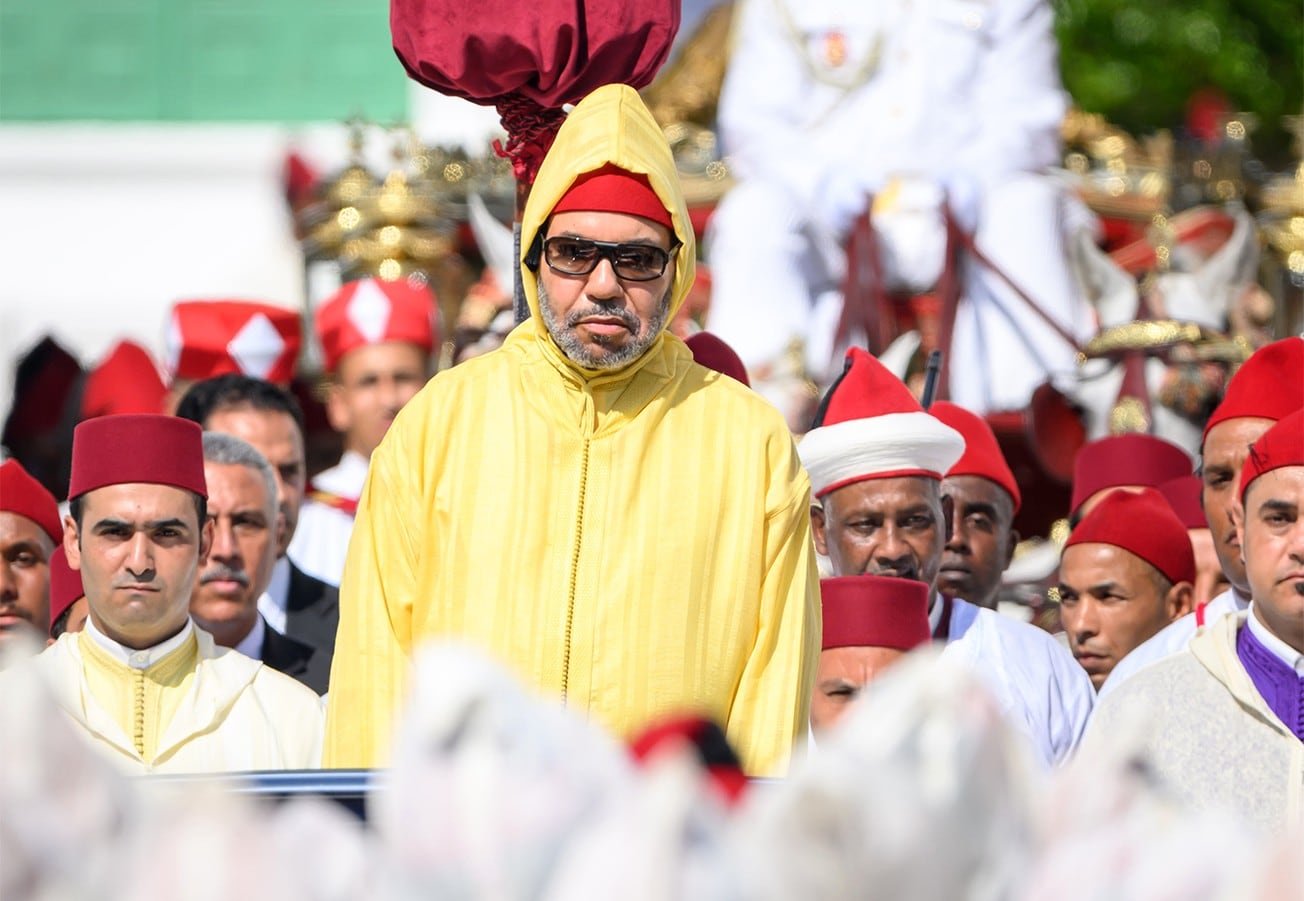
Morocco has made giant diplomatic strides on the international stage, far beyond its standing as an emerging regional power in North Africa, with the blessing of three permanent members of the United Nations Security Council — the United States, France and the United Kingdom — and abstentions from the other two — Russia and China. Over the past five years, this country of just over 38 million people and a gross domestic product roughly one-tenth that of Spain has also become the continent’s largest arms importer.
Donald Trump’s recognition of Moroccan sovereignty over Western Sahara, a disputed territory, at the end of 2020 marked a turning point in the country’s foreign policy, says Bernabé López García, an Arabist and long-time Morocco specialist: “For the first time, a great power like the U.S. endorsed Rabat’s position, bypassing the U.N. It happened in the final stretch of the president’s firm term in the White House, which gave the decision an improvised feel, as if it had been done through the back door,” recalls López García, noting that in exchange for Morocco establishing relations with Israel, Trump emboldened the country, which since then has hardened its foreign policy, even before U.N. Security Council Resolution 2797 was approved last October backing its own autonomy plan for Western Sahara as a basis for negotiations. “That proved very helpful once it had secured many more backers, including key countries such as France, the United Kingdom, Germany and Spain, the former colonial power.”
The next Security Council vote on Western Sahara is scheduled for late October. Until then, some observers have wondered whether the recent events in Ceuta (a Spanish exclave city in North Africa where there was a sudden mass influx of migrants on July 30 and 31 that has triggered a political crisis in Spain) could be a move by Morocco’s hardest-line faction to do “a favor to the American friend by putting [Spain’s Prime Minister] Pedro Sánchez in a tight spot (since he is viewed as an enemy of Trump), while at the same time supporting the irredentists (who advocate a Greater Morocco beyond its recognized borders),” with an eye to the September 23 legislative elections. Voter interest in the elections had been languishing before Ceuta’s migration crisis acted as a spur to mobilization at the polls.
The North African country appears stronger today in its foreign relations than it was during the 2002 crisis over an islet known in Spain as Perejil and to Moroccans as Laila, which marked the early years of King Mohammed VI’s reign and brought Morocco and Spain to the brink of armed conflict. Moroccan security forces occupied an uninhabited rock near the coast until they were expelled by the Spanish army. These days, Moroccan foreign policy looks even more assertive than during the 2021 Ceuta border crisis, when around 10,000 Moroccans rushed into the Spanish city amid lax Moroccan security measures. And in the midst of the migration crisis sparked in Spain since late July of this year, Morocco has also revived the question of sovereignty over Ceuta and Melilla (another Spanish exclave city). The matter has been voiced by several ministers, once in the presence of King Mohammed VI himself.
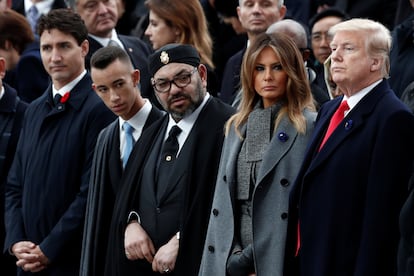
Entrenched in its plan for Western Sahara after the U.S. shift in its favor, Morocco now appears to be playing with an advantage. In 2022, Prime Minister Pedro Sánchez of Spain acknowledged, during a meeting with Mohammed VI in Rabat, that he considered the proposal of Sahrawi self-government under Rabat’s sovereignty to be the “most serious, realistic and credible” solution for the entrenched conflict, which marked its 50th anniversary in 2025. In return, Madrid and Rabat sealed a “mutual commitment to avoid the use of unilateral sovereignty claims and actions that could offend the other party.”
In light of the current upheaval in Ceuta, the scholar Bernabé López warns that Morocco should not be in a position to press any claim over the Spanish exclave cities without first fully resolving the Sahara issue. That would be “in line with earlier international law, but now everything is upside down.” Ceuta and Melilla are not considered territories to be decolonized the way that Western Sahara is, according to the U.N., and Morocco has never managed to change that status, although “in present times, that may matter little.”
With Washington’s backing, the North African country has rearmed to the point of surpassing Algeria — its main regional rival — in military purchases, according to the latest report from the Stockholm International Peace Research Institute (SIPRI). The United States supplies 60% of its arms acquisitions, compared with 10% from France, which has been displaced from second spot after Morocco restored relations with Israel six years ago.
Washington’s recognition of Moroccan authority over Western Sahara carried with it the normalization of Morocco-Israel relations that had existed under the radar. They advanced briskly in security and defense as part of the diplomatic domino effect of the so-called Abraham Accords. As Lahcen Haddad, a Moroccan academic and international affairs expert, explains, “the step taken by the U.S. represented a significant milestone. It was part of a diplomatic process started years earlier by Rabat to reach a solution through Morocco’s initiative for Western Sahara.” In his view, the importance of the decision lay in the hegemonic role of the United States in international relations and the coherence of its stance. “It helped reorient the debate toward a pragmatic, negotiated solution that takes into account realities on the ground,” the former minister and current parliamentarian adds.
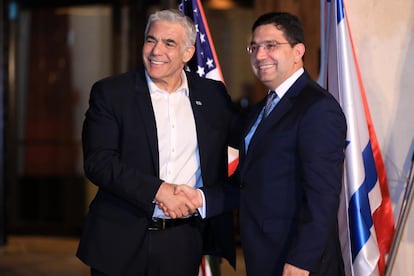
Regarding the resumption of relations with Israel, Haddad says it fell within the same diplomatic context and the “historical ties that bind Morocco to its own Jewish community and the diaspora in Israel [around one million people of Moroccan descent].” Beyond the security and defense agreements, Haddad highlights the expansion of cooperation in areas such as technology and cybersecurity.
Morocco has acquired the Barak MX air- and missile-defense system, manufactured in Israel and deployed as a desert iron dome over the Sahara, at a cost of €430 million. At the same time, the Israeli and Moroccan armed forces signed for the first time this year a military action plan that consolidates the defense cooperation agreement the two governments signed in 2021. It includes joint maneuvers, such as the African Lion exercises organized by the United States in southern Morocco in which Israeli troops participate, and the construction of two Ofek 13 spy satellites designed by Israel Aerospace Industries for €925 million for the Royal Armed Forces of Rabat.
Agreements with Russia, China and Latin America
The Western Sahara issue is what anchors Rabat’s foreign strategy, and Haddad acknowledges that Security Council Resolution 2797 represented “a significant diplomatic advance given the growing attention paid to Morocco’s initiative, although without prejudging the final outcome of negotiations.” He believes the abstentions by Russia and China can be read as an expression of their reservations and traditional approaches to the issue, but he emphasizes that no permanent member vetoed the resolution, “which confirms a diplomatic space to continue talks” based on Morocco’s plan.
Rabat signed a fishing agreement with Russia in 2020 that was renewed in 2025, while the European fishing fleet ceased operating in waters under Moroccan control in 2023. China has also taken initial steps to cast its nets in those same fishing grounds, although Beijing has focused its economic interest on installing giga-factories for electric battery production and other automobile components.
The Western Sahara issue is “the prism through which Morocco views its international environment,” according to the doctrine formalized in a speech by King Mohammed VI in 2022. The outstretched hand is offered only to those who share Rabat’s view for the territory; that is, autonomy under its own exclusive authority. The current monarch has pursued a strategy during his reign to draw closer to sub-Saharan states with the aim of reintegrating Morocco into the African Union in 2016. His father, Hassan II, walked out in 1984 after the accession of the Sahrawi Arab Democratic Republic (SADR), proclaimed by the Polisario Front.
The opening of some 30 consulates in Laayoune and Dakhla, the main cities of Western Sahara, and the shift in positions by several African states demonstrate the growing strength of Morocco’s relations in Africa, says Haddad, who is a member of the conservative, nationalist Istiqlal Party. Morocco has made the continent one of the central focuses of its diplomatic interests. For decades it has been weaving an economic, diplomatic and religious network in Africa, and it exerts influence over numerous sub-Saharan countries through investments in banking, insurance and telecommunications. Royal Air Maroc’s African routes have tripled in recent years, turning Casablanca airport into a connection hub between Africa and Europe.
In Latin America, Morocco has also sought to diversify and consolidate its alliances. Some states have reassessed their stance regarding the SARD, which is only a partly recognized state. The latest was Colombia, which on August 8 recognized Morocco’s sovereignty over Western Sahara and froze relations with the SARD, following the lead of other conservative Latin American governments that have displaced progressive administrations.
Like most Moroccans, Haddad reaffirms his country’s historical position on Ceuta and Melilla — as “occupied cities” that should be reintegrated into Morocco — while acknowledging the need to approach the matter cautiously and in a spirit of dialogue amid the election campaign. “Morocco can continue to express its [sovereignty] position while prioritizing cooperation and stability in its relations with Spain.”
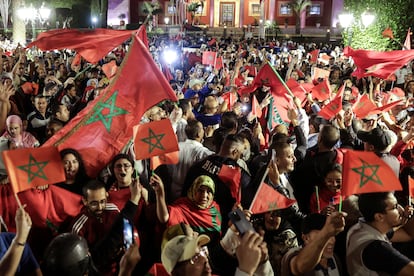
Trump’s 2020 decision on the Sahara marked a turning point for Morocco, although there were precedents to its diplomatic shift, notes international relations professor Irene Fernández Molina. The European Union’s invalidation between 2015 and 2016 of agreements with Rabat affecting Western Sahara (fishing, trade, agriculture…) produced an early turnaround in Rabat’s policy, which began prioritizing “territorial integrity.” Morocco then adopted a more aggressive stance, to the point of triggering a crisis with the EU, with no high-level political dialogue until 2019.
The opening of African consulates in Western Sahara later broke the international consensus over the former Spanish colony, explains the same expert on Moroccan foreign policy. “Trump’s declaration of sovereignty was the cherry on top that provided Rabat with an unimaginable diplomatic victory until then.” She adds: “Trump strengthened Morocco’s position, but everything ended in a coitus interruptus, since the Democratic administration of Joe Biden chose shortly afterward to put the recognition of sovereignty over the Sahara on hold, without applying it through concrete measures.”
The university analyst argues that Security Council Resolution 2797 of October 2025 did not represent such a radical change: “The United Nations Mission for the Referendum in Western Sahara (MINURSO) has not disappeared, as Rabat had wanted, and the referendum [on self-determination] still formally appears in its name.” Amid the “unprecedented centrality” achieved by Morocco’s plan after the U.N. vote, the ambiguity of earlier resolutions remains at bottom. “A new negotiation process was pushed by the U.S. at the start of this year, but it has lost momentum and dissipated, without producing further news since the beginning of the Iran war.” She cites meetings convened by Washington between Morocco and the Polisario Front, in the presence of Algeria and Mauritania, which officially began in February in Madrid. “Rabat waited for Trump’s return to the White House to take giant steps [on the international scene] with the aim of obtaining international legalization of its de facto control over Western Sahara.”
Analysts now ask whether Rabat is in a position to tackle the Ceuta and Melilla issue. “There is a hierarchy of priorities,” the expert clarifies, “and Morocco is still far from achieving full international recognition of the annexation of Western Sahara. It is an issue that has not yet been closed in line with its interests. Meanwhile, the Ceuta and Melilla question occupies a subsidiary place.”
Although voices in Morocco are now raising the claim to both cities, the political and media clamor is more easily explained by the September 23 legislative elections, the professor Fernández Molina adds, than by a genuine change in strategic orientation at the heart of the Moroccan regime.
Sign up for our weekly newsletter to get more English-language news coverage from EL PAÍS USA Edition









Ángel Víctor Torres
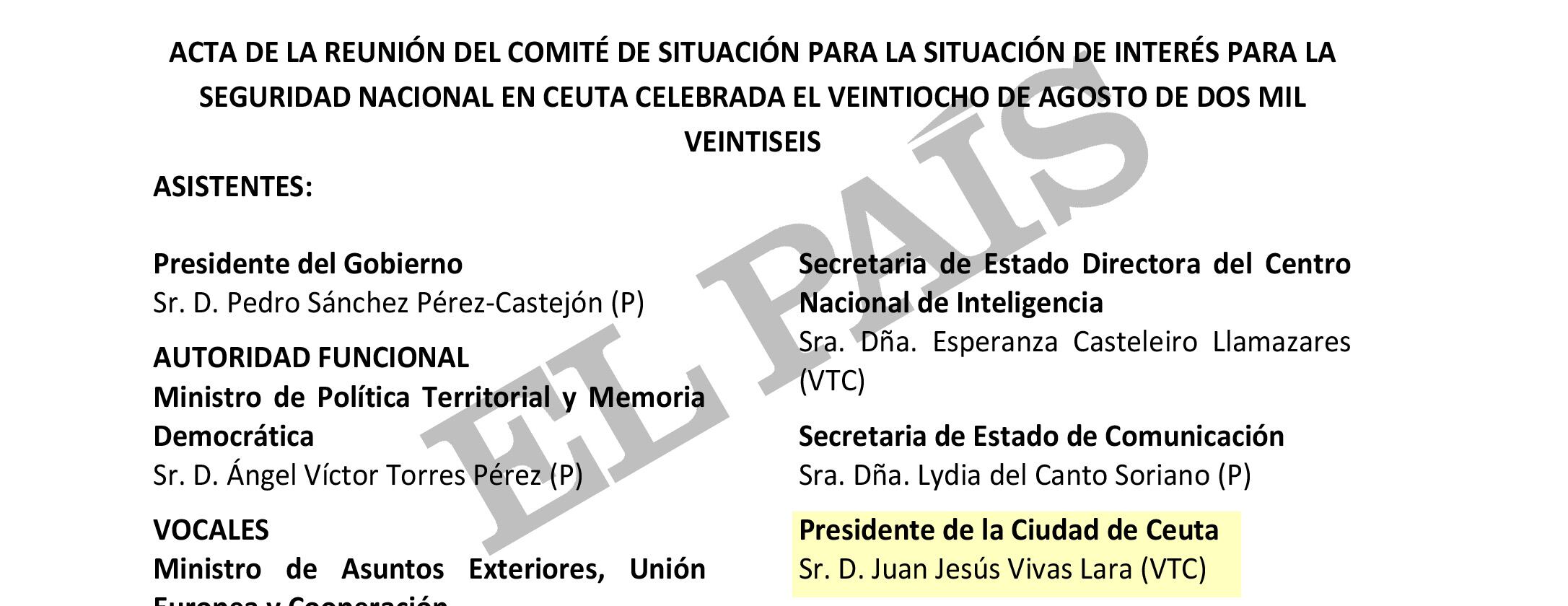
Las Actas Demuestran Que Vivas Apoyó El Uso Del Puerto En Sus Reuniones Con Sánchez Antes De Echarse Atrás

Alberto Núñez Feijóo
Spain’s Right Surges Past 50% In Polls For The First Time As PP And Vox Capitalise On Ceuta Migrant Crisis Anger

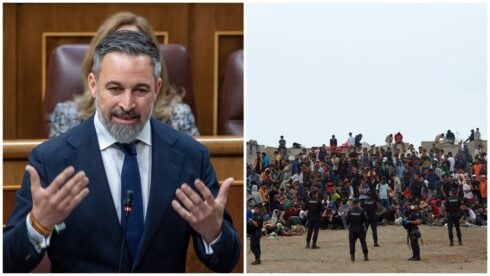
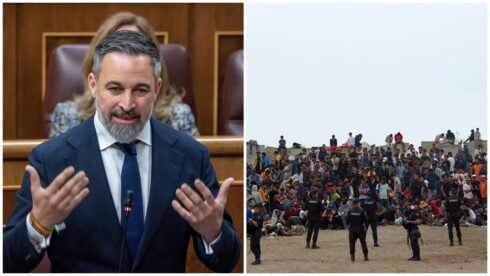 A NEW poll suggests that the PP and Vox would claim 50.2% of the votes at a general election, compared to 36.1% for Spain’s left-wing parties.
Alberto Núñez Feijóo
Última Hora De La Entrada De Inmigrantes A Ceuta, En Directo | Vivas Insiste En Que Marruecos Está Detrás De La Crisis Y Denuncia Que Ceuta “no Tiene Margen Temporal Para Seguir Aguantando”


Un Villarreal Muy Maduro Cae Ante El Borussia Dortmund En Su Debut En Champions

Spain’s School Results Hit Rock Bottom As Pupils Fall More Than TWO YEARS Behind British Children In Reading

Sweden’s ‘Pablo Escobar’ And Spain’s Biggest Kingpin Named Among Heads Of Dubai-Based ‘narcobank’ Trafficking Cocaine Into Spain
At Least 50 Injured After Fireworks Explode At Spanish Fiesta
France’s famous cheeses could taste different after drought forces farmers to change cows’ diets
Krakatoa exploded 143 years ago today: Noise heard 5,000km away that shaped Spain’s south-east


-
Latest2 weeks ago
At Least 50 Injured After Fireworks Explode At Spanish Fiesta
-
Abondance2 weeks ago
France’s famous cheeses could taste different after drought forces farmers to change cows’ diets
-
History2 weeks ago
Krakatoa exploded 143 years ago today: Noise heard 5,000km away that shaped Spain’s south-east
-
 %2 weeks ago
54 Hectares Destroyed In Barcelona Fire As Man Arrested Over Suspected Arson
-
cocaine1 week ago
‘Blazing Saddles’: bizarre discovery sparks major police operation in Spain
-
Airport malaria2 weeks ago
Mosquito stowaway kills two Frankfurt Airport workers in rare malaria outbreak
-

 ElPais2 weeks ago
Tim Curry, Star Of ‘The Rocky Horror Picture Show,’ Dies At 80
-
 Andalucia2 weeks ago
Spain’s Expat Havens: These Are The Towns Where Foreign Buyers Outnumber Spanish Ones – Sometimes By Two To One