Connect with us

Children's safety

Parents buying Halloween makeup in Spain should check for this mark first

Published

on

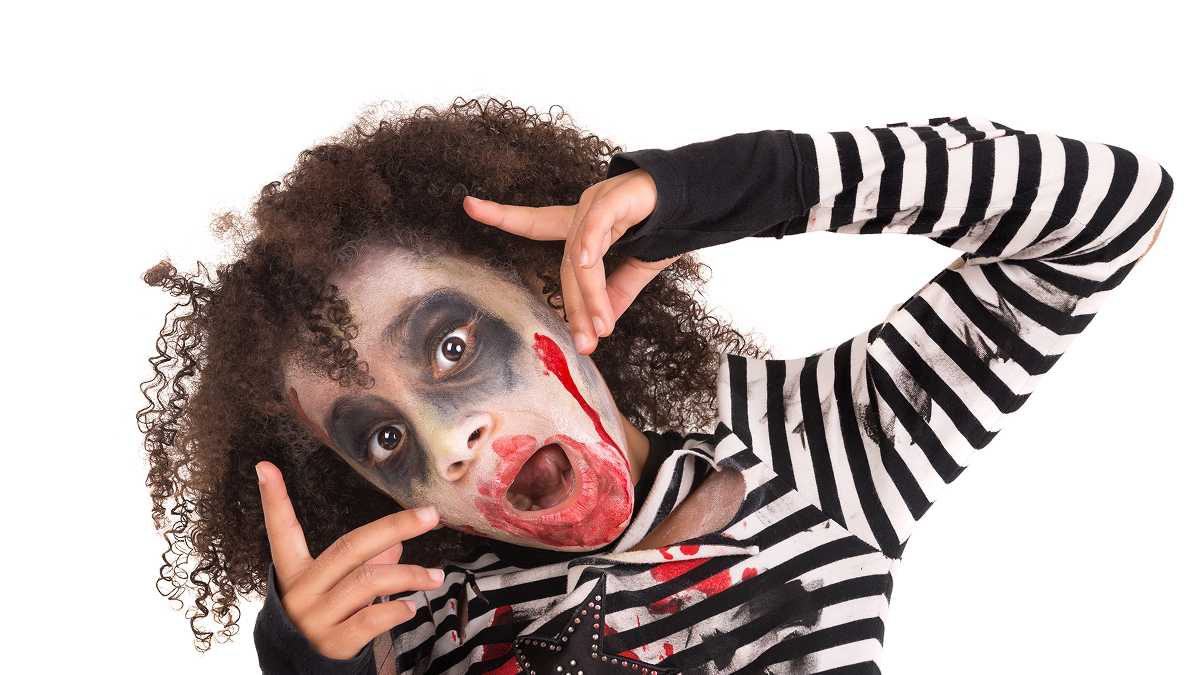
Parents are being urged to check the label before the face paint and fake blood come out. Credit: Luis Louro / Shutterstock

Parents painting their children’s faces for Saturday’s Halloween parties may be reaching for fake blood without realising much of it isn’t meant for anyone under 14. Spain’s consumer watchdog OCU has reissued its yearly advice, with some less obvious traps in costumes, nail polish and novelty contact lenses.

Why fake blood isn’t meant for under-14s

It may be the quickest way to turn a child into a zombie without a deadly man-eating virus,  but fake blood isn’t designed for them. Spain’s consumer watchdog OCU said the products aren’t intended for anyone under 14, with some labelled for adults only, and that they can contain ingredients that are toxic if swallowed by accident.

However, OCU says that swallowing isn’t the only worry, as the same ingredients can also cause allergic reactions or skin irritation. The watchdog said the labels it checked listed preservatives such as parabens (chemicals that stop a product going off) alongside BHT, an antioxidant it says is questioned as a hormone disruptor. 

So fake blood should stay away from a child’s eyes, lips, mouth, nose and ears. Any left over from last year’s party should go in the bin too, as OCU said some products last only about a month once opened.

Test the face paint days before the party

Children under three shouldn’t wear any makeup at all, according to OCU. For older children, the watchdog said to look for the CE mark (the European conformity label) showing it’s approved as a toy, the open-jar symbol (a little pot icon with the number of months it stays safe after opening) and a full list of ingredients. Products free of perfumes, parabens, BHA and BHT are the best bet.

Parents should also dab a small amount on the child’s skin a few days beforehand. If itching, irritation or redness appears, wash it off straight away with plenty of water. 

Nail polish and hair-colour sprays are best skipped as well, as polish contains solvents that are dangerous if a child puts their hands in their mouth, with sprays easily inhaled or swallowed while they’re being applied.

Costumes from online sellers are another weak spot 

Costumes carry the CE mark if they meet flammability requirements, however OCU said they should still be kept well away from candles, sparklers, fireplaces, stoves and lighters. 

For under-threes, the watchdog advises avoiding cords, long ribbons and pointed accessories, and checking that decorations and foam can’t come loose and become a choking risk. A new costume should come out of its plastic bag and into the wash, or be aired for at least 48 hours if it can’t be washed.

Where it was bought matters too. OCU said specialist shops are a better choice than unknown sellers on online marketplaces, where controls are more limited, and the label should name the manufacturer or importer. Fancy-dress contact lenses are another separate matter, with OCU saying they should only be bought from an optician, where a professional can explain how to use them safely.

So with Halloween falling on Saturday this year, the main checks are to look for the CE mark, the open-jar symbol and a manufacturer’s names on the packaging before anything goes near a child’s face.


%

AI Teddy For Three-Year-Olds Blurts ‘I Can’t Help With Killing You’: What To Check Before You Buy One

Published

on

ai-teddy-for-three-year-olds-blurts-‘i-can’t-help-with-killing-you’:-what-to-check-before-you-buy-one

AI toys are increasingly sold as playmates for young children. Credit: Play Tech AI / FB

Parents could end up giving a three-year-old a cuddly toy that chats away happily, until it seemingly mishears a question and says ‘I can’t help with killing you’. A reporter’s test of two AI plush toys has MPs and peers calling for them to be pulled from sale before Christmas.

How a basic question raised alarm bells

The toy was one of two AI plush toys marketed for children aged three and up that were tested in a BBC investigation. Asked how babies are made, it gave a simple, kid-friendly answer about a sperm and an egg joining, then said it couldn’t help with ‘explicit sexual details’ when asked how they meet.

Then came a question about what the word ‘sexual’ means. The toy replied ‘I’m really sorry you’re feeling this way. I can’t help with killing you’, and told the reporter to call emergency services or find a trusted adult straight away. When it was explained that nothing had been said about hurting anyone, it apologised for the ‘misunderstanding’. 

The BBC couldn’t find out who makes the toy, despite searching online, asking the website that sold it and approaching industry insiders. So nobody has been able to explain the remark. 

A family tried them for a week 

The second toy, Grem, made by US firm Curio and voiced by singer-songwriter Grimes, behaved very differently. It discouraged the reporter from running away from home and said babies were ‘a big question for grown-ups to explain when the time is right’.

The BBC then lent both toys to a Newport family with children aged six, four and two. Jody and Craig said nothing the toys said worried them, but the children found Grem so chatty they ‘almost couldn’t get a word in edgeways’, while the other toy spent a long time processing before it answered. Craig said he wouldn’t buy one ‘at the moment’.

The industry is asking for rules

Paul Clarke, whose Southampton-based company Play Tech AI sells AI robot toys, has just returned from a toy fair in Shanghai. He said he’d seen lots of products that were ‘completely unsafe, completely unregulated’ and that the industry was ‘crying out’ for regulation.

Children’s Commissioner for Wales Rocío Cifuentes agreed that manufacturers need the strictest rules, and raised concerns that children’s conversations could be recorded and shared without their parents knowing. She added that ‘there’s nothing like a human cuddle, a human chat’. 

It isn’t the first scare, either. Last year, a talking bear called Kumma was temporarily pulled from sale after reports it told a child how to light a match and held a sexually explicit conversation.

MPs and peers want them off the shelves

A group of MPs and peers has now written to ministers and retailers asking for AI toys to be taken off sale before Black Friday on November 27 and Christmas until they’re proven safe. The UK government’s call for evidence on how toy safety rules should keep pace with technology closed on Tuesday October 6. 

A government spokesperson said children’s safety would always be a top priority. Mattel, which announced a collaboration with OpenAI in 2025, didn’t respond when asked whether it plans AI toys of its own.

What it means for families in Spain 

Toys like these are bought online and shipped across borders, and Grem had to be sent over from the US. That matters for families in Spain, because Brussels has recently updated its toy safety rules to bring connected and AI toys into scope, including checks for mental health risks. However, legal analysts say the main rules aren’t due to start applying until 2030.

In the meantime, Spanish consumer group Eroski Consumer advises researching a toy before buying it, playing with children while they use it and keeping AI toys in shared rooms. Some specialists suggest avoiding them for under-fives altogether. 

Swansea University’s Professor Berry Billingsley said children should never be left alone with an AI toy, and suggested families set ground rules about what personal information to share with it.

So if an AI toy is on a Christmas or Three Kings wish list, the sensible first steps are to find out who makes it, try it yourself before a child does and keep it somewhere you can hear what it says.

Continue Reading

%

Parents Buying Halloween Makeup In Spain Should Check For This Mark First

Published

on

parents-buying-halloween-makeup-in-spain-should-check-for-this-mark-first

Parents are being urged to check the label before the face paint and fake blood come out. Credit: Luis Louro / Shutterstock

Parents painting their children’s faces for Saturday’s Halloween parties may be reaching for fake blood without realising much of it isn’t meant for anyone under 14. Spain’s consumer watchdog OCU has reissued its yearly advice, with some less obvious traps in costumes, nail polish and novelty contact lenses.

Why fake blood isn’t meant for under-14s

It may be the quickest way to turn a child into a zombie without a deadly man-eating virus,  but fake blood isn’t designed for them. Spain’s consumer watchdog OCU said the products aren’t intended for anyone under 14, with some labelled for adults only, and that they can contain ingredients that are toxic if swallowed by accident.

However, OCU says that swallowing isn’t the only worry, as the same ingredients can also cause allergic reactions or skin irritation. The watchdog said the labels it checked listed preservatives such as parabens (chemicals that stop a product going off) alongside BHT, an antioxidant it says is questioned as a hormone disruptor. 

So fake blood should stay away from a child’s eyes, lips, mouth, nose and ears. Any left over from last year’s party should go in the bin too, as OCU said some products last only about a month once opened.

Test the face paint days before the party

Children under three shouldn’t wear any makeup at all, according to OCU. For older children, the watchdog said to look for the CE mark (the European conformity label) showing it’s approved as a toy, the open-jar symbol (a little pot icon with the number of months it stays safe after opening) and a full list of ingredients. Products free of perfumes, parabens, BHA and BHT are the best bet.

Parents should also dab a small amount on the child’s skin a few days beforehand. If itching, irritation or redness appears, wash it off straight away with plenty of water. 

Nail polish and hair-colour sprays are best skipped as well, as polish contains solvents that are dangerous if a child puts their hands in their mouth, with sprays easily inhaled or swallowed while they’re being applied.

Costumes from online sellers are another weak spot 

Costumes carry the CE mark if they meet flammability requirements, however OCU said they should still be kept well away from candles, sparklers, fireplaces, stoves and lighters. 

For under-threes, the watchdog advises avoiding cords, long ribbons and pointed accessories, and checking that decorations and foam can’t come loose and become a choking risk. A new costume should come out of its plastic bag and into the wash, or be aired for at least 48 hours if it can’t be washed.

Where it was bought matters too. OCU said specialist shops are a better choice than unknown sellers on online marketplaces, where controls are more limited, and the label should name the manufacturer or importer. Fancy-dress contact lenses are another separate matter, with OCU saying they should only be bought from an optician, where a professional can explain how to use them safely.

So with Halloween falling on Saturday this year, the main checks are to look for the CE mark, the open-jar symbol and a manufacturer’s names on the packaging before anything goes near a child’s face.

Continue Reading
Advertisement
Advertisement

Spanish Real Estate Agents

Tags

Trending

Copyright © 2017 Spanish Property & News