
Costa Blanca North
Pedreguer brings five European countries together to tackle barriers in women’s basketball


A bid to tackle inequality in sport and stop teenage girls from giving up the game
Credit: AjuntamentdePedreguer
A small town in Spain has brought together female basketball players and sports organisations from five European countries in a bid to tackle inequality in sport and stop teenage girls from giving up the game.
Pedreguer hosted an international meeting from September 28 to 30, bringing together representatives from Spain, Croatia, Cyprus, Portugal and Turkey.
The gathering focused on finding ways to ensure girls have equal opportunities to play, train and take on leadership roles in basketball, as part of a European initiative coordinated by Pedreguer Town Hall.
Tackling the age when girls quit sport
The meeting centred on the EQUAL project, known as Equal Play: Breaking the Basketball Glass Ceiling, which aims to challenge gender inequality and encourage more girls to remain involved in sport as they grow older.
A key part of the initiative is addressing the drop-off in female participation during adolescence, when some girls stop playing sports altogether.
During a seminar at Pedreguer’s Casa de Cultura, participants presented a training programme developed through workshops involving girls aged 14 to 16, coaches and sports organisations across the five partner countries.
The aim is to provide practical methods that clubs and trainers can use to make basketball more inclusive and encourage young female players to continue developing their skills.
The project is funded through the European Union’s Erasmus+ Sport programme.
Pedreguer shares its basketball experience
As the coordinating town, Pedreguer used the event to showcase its own approach to developing women’s basketball.
Municipal sports officer Jordi Pons outlined the history of basketball in the town and how the participation of women and girls has evolved over the years.
Anabel Ahuir, coordinator of the Municipal Basketball School, also explained how the programme operates, including its organisation, training groups and coaching methods.
The presentations allowed visiting delegations to exchange experiences and explore how successful approaches could be adapted in their own communities.
The event was held alongside the iCARE project and coincided with European Week of Sport, the annual campaign promoting physical activity across the continent.
International players take to the court
The three-day programme combined discussions and training with opportunities for participants to experience local culture.
Delegates were welcomed at Plaça dels Pòrxens with traditional dancing and local refreshments before taking part in a guided tour of Pedreguer and watching a demonstration of pilota valenciana, a traditional ball game played in the Valencian Community.
The focus then returned to basketball at the municipal sports pavilion, where players received a motivational talk before joining local basketball school students on court.
Players from Croatia, Portugal and Turkey had the opportunity to play alongside their Spanish counterparts, putting the project’s message of inclusion and international cooperation into practice.
The meeting marked the latest stage of a European partnership involving sports and community organisations from all five countries.
By sharing coaching methods, experiences and opportunities to play together, the project aims to help create a future in which girls can continue playing basketball and progress in sport without gender-based barriers.
For Pedreguer, the gathering also highlighted how a local basketball programme can contribute to a wider European effort to promote equality through sport.







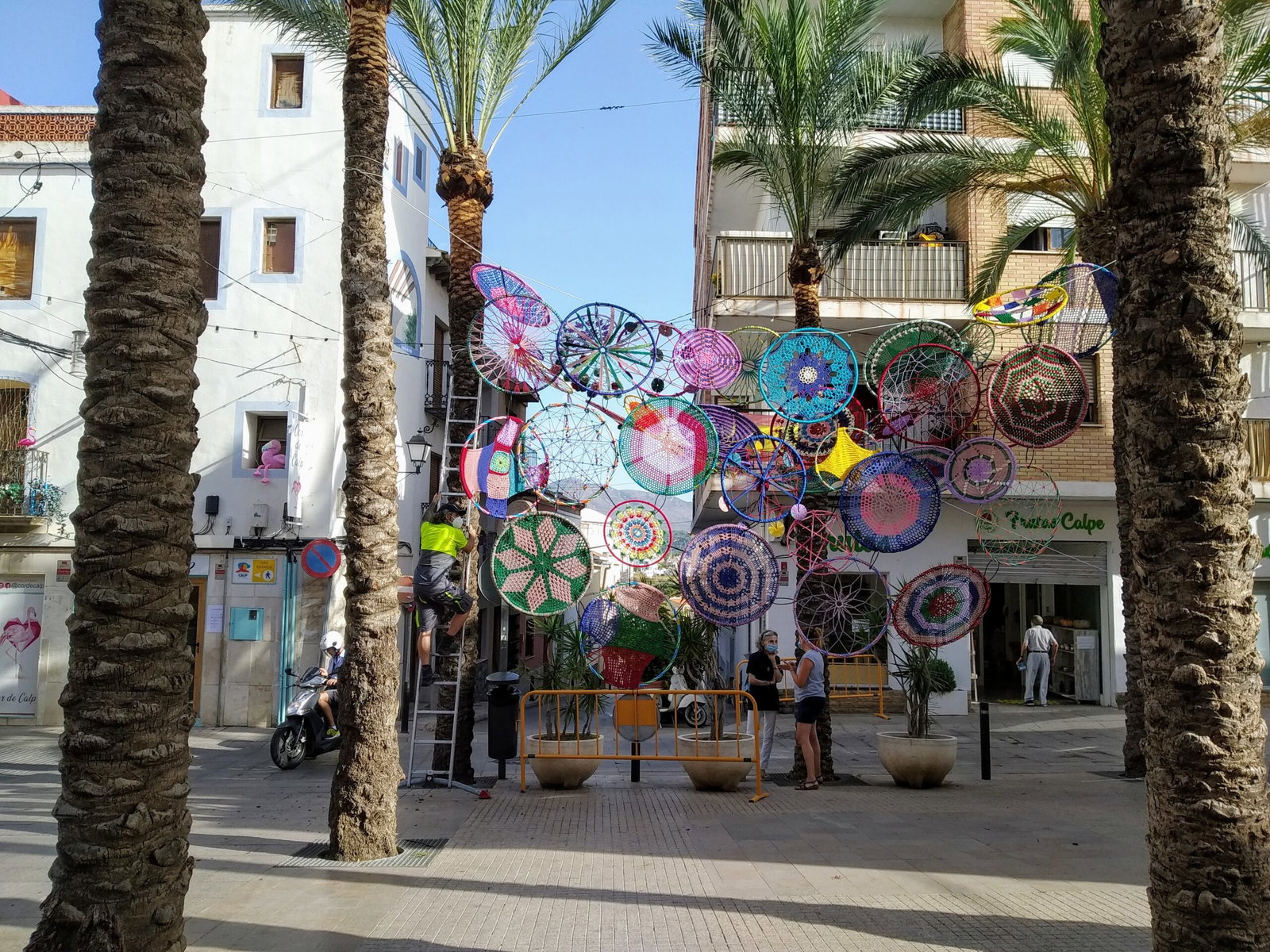
Calpe’s historic centre welcomes an outdoor art market this November.
Photo Credit: Calpe Town Hall
Calpe’s historic centre will be transformed into an open-air art gallery this November as the town welcomes another edition of La Calle del Arte, a cultural initiative bringing art and creativity directly to its charming streets. The event, which kicks off on Saturday, November 7 and will last until Saturday, November 21, will give residents and visitors an opportunity to explore the beautiful artistic displays while enjoying a chilly month in the town’s old quarter.
An outdoor gallery in the historic centre
Organised by Calpe Council’s Department for the Revitalisation of the Old Town, La Calle del Arte will bring cultural activity into the historic centre by turning part of its streets into an outdoor exhibition space. The market will be held along Calle Santísimo Cristo, running from 10:00am until 2:00pm during the event.
Bringing creativity into Calpe’s old town: Supporting the historic quarter through culture
The initiative offers a different way to experience Calpe’s old town, encouraging people to explore its historic streets while discovering art in an accessible, public setting. Rather than keeping exhibitions within traditional gallery walls, La Calle del Arte takes creativity outdoors, making the historic surroundings part of the cultural experience. Visitors can combine a stroll through the old quarter with an opportunity to appreciate the artistic activity taking place along the street.
The event is also part of the town’s efforts to encourage activity in the historic centre and make its streets attractive spaces for both residents and tourists.
A vibrant November for art lovers on the Costa Blanca
Residents and visitors looking for a relaxed cultural activity in Calpe will have the month of November to enjoy this unique artistic initiative and discover a different side of the town’s historic centre.
With vibrant art, talented local artists, and a passion for bringing culture to the beautiful streets of Calpe, this November is set to be a particularly colourful one in this charming Costa Blanca town.

A British couple living in Benidorm have formally challenged proposed mobility scooter restrictions, warning that they could lose an important part of their independence if the new rules do not account for people with disabilities.
A & A, who have lived in Spain for 20 years, have written to Mayor Toni Perez and town councillors after Benidorm approved an amendment to its Municipal Mobility Ordinance that would prohibit mobility scooters and powered chairs designed to carry more than one person.
Their objection comes as the council prepares to open a further 30-working-day public consultation before the proposed changes can receive final approval and enter into force.
British couple fear losing access to essential services
A & A have lived in Benidorm for seven years. Their circumstances changed dramatically this year following serious health problems that left both struggling to walk. They can now walk only with the help of a rollator. One suffered acute pancreatitis, which also substantially reduced their mobility.
The couple say they spent almost €4,000 on a two-seat electric mobility scooter, which now allows them to travel to local shops and the pharmacy. Steep inclines around their neighbourhood make getting around on foot particularly difficult. Without their scooter, they fear that even everyday errands could become much harder.
Why Benidorm wants to restrict tandem scooters
Benidorm Council approved the initial amendment to its mobility rules unanimously on October 26. Officials say the changes are intended to improve pedestrian safety and prevent multi-seat mobility vehicles from being used as recreational transport in busy public areas. The proposal follows earlier efforts to tackle misuse, including the police crackdown on holidaymakers using mobility scooters reported earlier this year, and goes together with broader national updates under Royal Decree 518/2026 on the protection of vulnerable road users.
Mobility Councillor Francis Muñoz has stressed that the measure is not intended to restrict people who genuinely need mobility assistance. However, the proposed wording prohibiting vehicles designed to carry more than one person has raised questions about how residents with legitimate needs will be treated. Euro Weekly News reported on the initial approval of the tandem scooter restrictions last week.
A & A argue that the council should distinguish between tourists hiring tandem scooters for leisure and people who depend on these vehicles because of health problems.
Their objection suggests that restricting rental businesses, rather than prohibiting every multi-seat model, could be one way to address complaints about misuse without affecting disabled residents.
Could Benidorm introduce exemptions?
The couple have asked councillors to consider a permit or identification system for residents who can demonstrate genuine mobility difficulties. Such an arrangement could, in principle, help the local police distinguish between people using a scooter as a necessary mobility aid and those using it for convenience or entertainment.
However, no specific exemption for tandem scooters used by disabled residents has been confirmed in the council’s published announcement. Benidorm has previously been recognised for accessibility efforts, including being named Spain’s most accessible city and expanding beach access for people with reduced mobility.
Whether such an arrangement would be legally or practically possible is therefore a question for the council to address during the consultation.
A & A have also raised the possibility of seeking compensation if they are forced to give up their scooter. This is a concern they have expressed, rather than an established entitlement to compensation.
What is likely to happen next?
The proposed amendment must pass through a further 30-working-day public consultation before the council can proceed to final approval and entry into force. That period gives affected residents an opportunity to raise concerns and ask councillors to consider their circumstances before the rules are finalised.
Key questions include whether exemptions could be introduced for people with demonstrable mobility needs, whether a permit system could work and whether restrictions on rental businesses could tackle irresponsible use without penalising disabled residents.
For A & A, the issue is about much more than a €4,000 purchase. Their scooter helps them reach essential services despite serious health difficulties.
Their case puts a practical question before Benidorm’s councillors: how can the town improve pedestrian safety without taking away a means of independence from residents who genuinely need it?
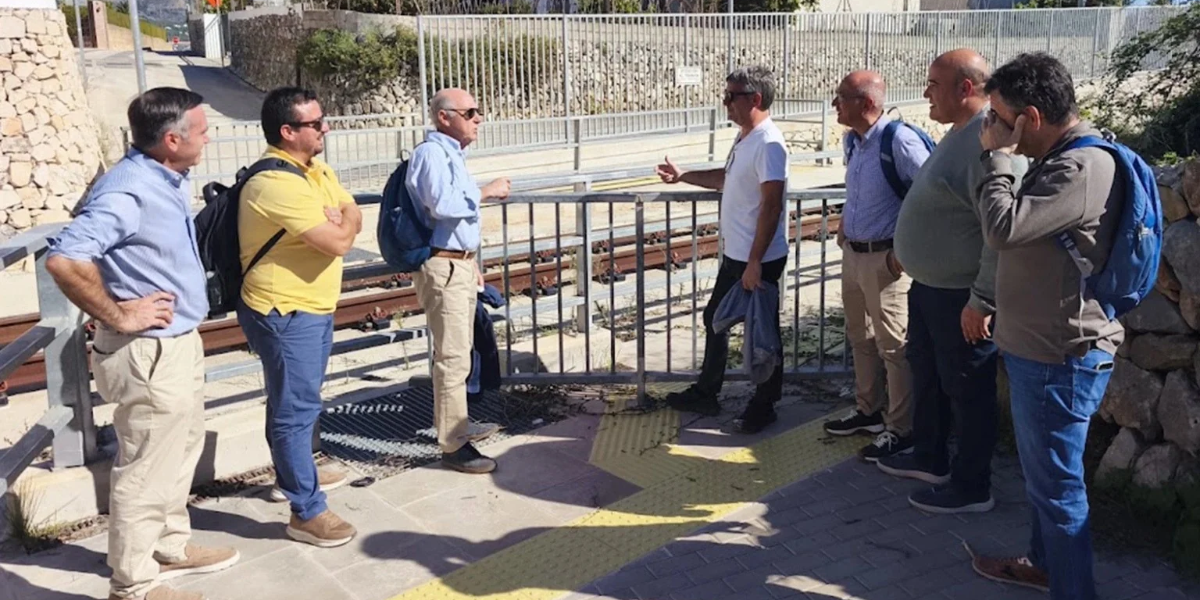
Gata de Gorgos is set for a major railway upgrade, with plans to renovate its historic station and reopen two level crossings as part of efforts to improve safety and transport links through the Costa Blanca town.
The local council and Ferrocarrils de la Generalitat Valenciana (FGV), the regional railway operator, have agreed on a timetable for the improvements, with the first works expected to begin taking shape in 2027.
The plans aim to make the TRAM railway line safer for pedestrians and motorists while improving its integration into the town centre.
Railway crossings set to reopen
The project to adapt the railway line to a more urban tram-style system will be carried out in two phases.
The first phase is expected to be completed in 2027 and will focus on reopening two level crossings that are currently closed.
The crossing at Miralbons will be reopened exclusively for pedestrians, while the crossing on Calle Jesús Pobre will be accessible to both pedestrians and vehicles.
Traffic lights will be installed at both locations to improve safety where road users and pedestrians cross the railway.
The changes are intended to improve movement around Gata de Gorgos while allowing the railway to operate more safely alongside everyday traffic.
The second phase will cover the remaining urban stretch, from Calle Jesús Pobre to the point where the railway leaves the town.
However, this stage will take longer because it requires further administrative procedures and a new technical project incorporating the planned improvements along the route.
Historic station renovation planned for 2027
Alongside the crossing improvements, FGV is preparing to move forward with the comprehensive renovation of Gata de Gorgos railway station.
The original project is currently being revised, with the regional operator expecting both the tendering process and the start of construction to take place during 2027.
The station forms part of the TRAM d’Alacant network, which connects destinations across the province of Alicante, including Dénia and Benidorm.
The latest agreement follows a meeting between Gata de Gorgos councillor for urban planning and management Josep Signes Costa, municipal technicians and an FGV delegation led by managing director Alfonso Novo.
The discussions were held to coordinate the next steps for both projects and establish a timetable for their delivery.
While the station renovation and railway changes will progress separately, both form part of a wider effort to modernise local transport infrastructure and improve the relationship between the railway and the surrounding urban environment.

Meet Rescued Horses In Coin

Bruselas Exige Cambios En El Sistema De Recomendaciones De TikTok Para Combatir La Adicción

El Juez Rechaza Imputar A Zapatero Un Nuevo Delito De Malversación Por Las Joyas


-
DGT3 weeks ago
Viral video in Spain sparks fury over drivers who ‘have no idea how to drive’
-

 Arabia Saudí4 weeks ago
Un Ataque De Los Hutíes Contra El Aeropuerto De Riad Causa Al Menos 12 Muertos Y Más De 300 Heridos
-

 America4 weeks ago
Un Tirador Mata A Ocho Personas En Una Vivienda En Pensilvania
-
Automated supermarket3 weeks ago
Spain’s 24-hour shop with no tills expands to Barcelona Airport
-
News from Spain4 weeks ago
Spain police warn parents over WhatsApp scam that uses their children’s real accounts
-

 %4 weeks ago
Concrete Balcony Slabs Collapse Onto Marbella Street
-

 America4 weeks ago
Trump Llega A Un Acuerdo Con Putin Para Que Rusia Libere Miles De Barriles De Diésel En Los Mercados Mundiales
-

 Uncategorized4 weeks ago
Williams F1 driver caught up in four-car pit lane pileup