
ElPais
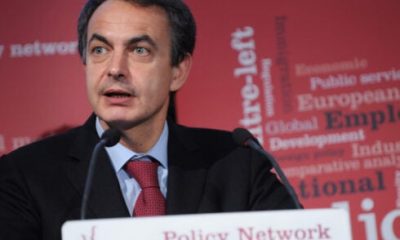
Profile | Zapatero, From Spotless Spanish Leader To Former Prime Minister Under Suspicion

La Moncloa, the seat of government in Spain, seems to carry a curse. Ever since Adolfo Suárez decided in 1976 to establish the headquarters of the first democratic government in 40 years at La Moncloa Palace, no prime minister has left it without calamity or disgrace.
Suárez himself was forced to resign amid rumblings of a military coup; Leopoldo Calvo‑Sotelo departed after an electoral defeat for the political‑science textbooks; Felipe González, besieged by an unmatched string of scandals; José María Aznar, marked by the disgrace over his lies over the 2004 Madrid train bombings; José Luis Rodríguez Zapatero, battered by an economic crisis he failed to foresee and that ultimately pushed him to betray his own programme; Mariano Rajoy, ousted by a no‑confidence vote and a damning corruption ruling…
The corruption that clings to Spanish democracy like an inseparable shadow has played a decisive role in the misfortune of almost all of them. It now threatens to blow apart Pedro Sánchez’s mandate. The Spanish prime minister is already the second‑longest resident of La Moncloa after González. Even the great totem of the transition to democracy, Juan Carlos I — the head of state who played a crucial role in restoring democracy after the Franco dictatorship — has ended up with his image in tatters because of his passion for filthy lucre.

Zapatero had escaped that stain. The former leader of the Spanish Socialist Party (PSOE) could boast of being the only prime minister who, after two terms in La Moncloa Palace, had not faced any significant scandal. Neither among his inner circle, nor in his party, nor anything else that concerned him. But in the end, he hasn’t escaped that fate — even if 15 years had to pass after he left office. The first prime minister since the dissolution of the Union of the Democratic Centre (UCD) to depart without even a hint of suspicion will also be the first former prime minister to testify before a judge as a defendant for allegedly murky dealings. Something that González, Aznar, and Rajoy never had to do despite facing major scandals.
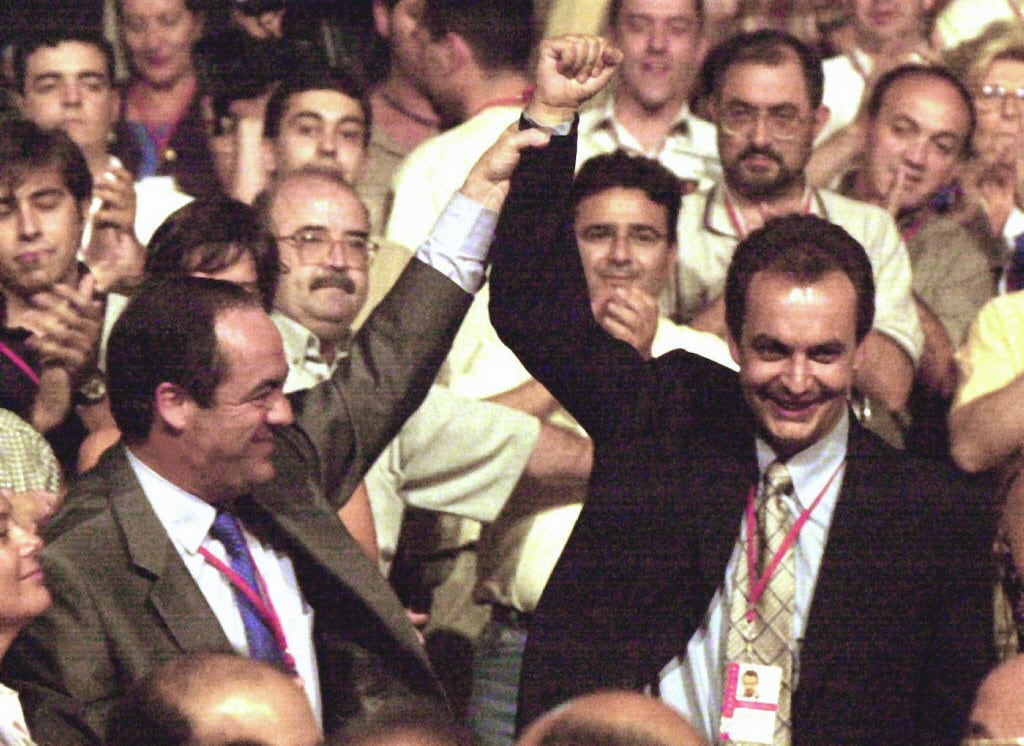
Zapatero’s political career has unfolded like a gallop from surprise to surprise. No one expected that, leading a group of second‑tier MPs, he could win that PSOE congress in July 2000 by just nine votes, where he stirred the audience’s fervour with a simple phrase: “We’re not doing that badly!” Nor could almost anyone foresee the popular reaction on March 14, 2004, against Aznar’s delusional determination to deceive an entire country about the worst massacre since the Civil War. It was this wave of indignation and enthusiasm that swept the discreet lawyer from the Spanish city of León into power.
The right never forgave him. Some set in motion the infamous conspiracy theory, a poison whose stench still seeps through certain drains of Spanish politics today. Those sectors, in a permanent state of rage, caricatured him as a radical leftist — a portrait hardly compatible with an economic policy that could not have been more orthodoxly liberal, summed up in one of his lines: “Cutting taxes is left‑wing.”
He raised his progressive banners along other paths — what would later be coined as identity politics. He inspired as much enthusiasm as resentment with the legalization of same‑sex marriage, a suite of feminist measures, and by recovering the memory of the defeated in the Civil War. His most recalcitrant detractors have never even acknowledged his greatest contribution to Spanish democracy: negotiating the surrender of the Basque terror group ETA. On the contrary, they accused him of being the one who surrendered and of betraying the dead.
For all the noise made by those trying to paint Zapatero with Machiavellian traits, the image that stuck was the nickname attributed to Alfonso Guerra’s eternal sarcasm: Bambi. ZP, the politician of soft, almost gentle manners, which he himself summed up in the word talante. A politician who, in opposition, endlessly offered state pacts, and who, once in power, dared to admonish Hugo Chávez at an Ibero‑American Summit for attacking someone as distant from him as Aznar.
Yet that kindly face also offered critics another side: a naïve, well‑meaning president, filled with what he called an “anthropological optimism,” set on fixing the world with a bombastic Alliance of Civilizations alongside figures as questionable as the Turkish leader Recep Erdogan.
His end at La Moncloa was a succession of hardships. He had promised he would never make the most vulnerable pay the price of the 2008 financial crisis, and he ended up a hostage of the high priests of austerity pulling Europe’s strings, forced into spending cuts and a stealth constitutional reform to appease the markets. Even so, he wrapped himself in an aura of honesty when he pledged that he would do everything possible to save the country, “whatever it takes, and whatever it costs me.”
His early years gave rise to no criticism. Not a bad word was heard from him against Rajoy, who had so often mocked him. In the PSOE’s internal leadership struggle, he, like most former leaders, backed the ultimately unsuccessful Susana Díaz. That distanced him from Sánchez — until Sánchez reached power and the relationship slowly improved. And as the old guard, led by González, enlisted in the national anti‑Sánchez crusade, Zapatero ended up as the great historical reference point for today’s PSOE — for its leadership and for much of its membership.
The most striking aspect of his public activity as a former prime minister had been his involvement in the Venezuelan hornet’s nest. For his supporters, it was yet another display of talante, of his desire to act as a good man easing tensions in a distant conflict — a sort of Spanish Jimmy Carter. His detractors, however, found a new line of criticism. Zapatero never publicly criticized Chavismo. According to him, this was to preserve his role as mediator. According to his critics, it was out of complicity with the regime.
The last election campaign revealed a new Zapatero. Now past 60, Bambi became a biting speaker with corrosive humour. He shone as a star and, by all indications, a decisive factor in energizing the Socialist electorate. And he once again became a target for the right. His opponents pieced together another, lesser‑known portrait: that of the lobbyist who may have used his relationship with the government for business and whose involvement in the Venezuelan drama might be far from disinterested. The truth of that account is what Spain’s High Court, the Audiencia Nacional, must determine. On June 2, it will offer yet another snapshot of a democracy that wears down its prime ministers.
Sign up for our weekly newsletter to get more English-language news coverage from EL PAÍS USA Edition







America
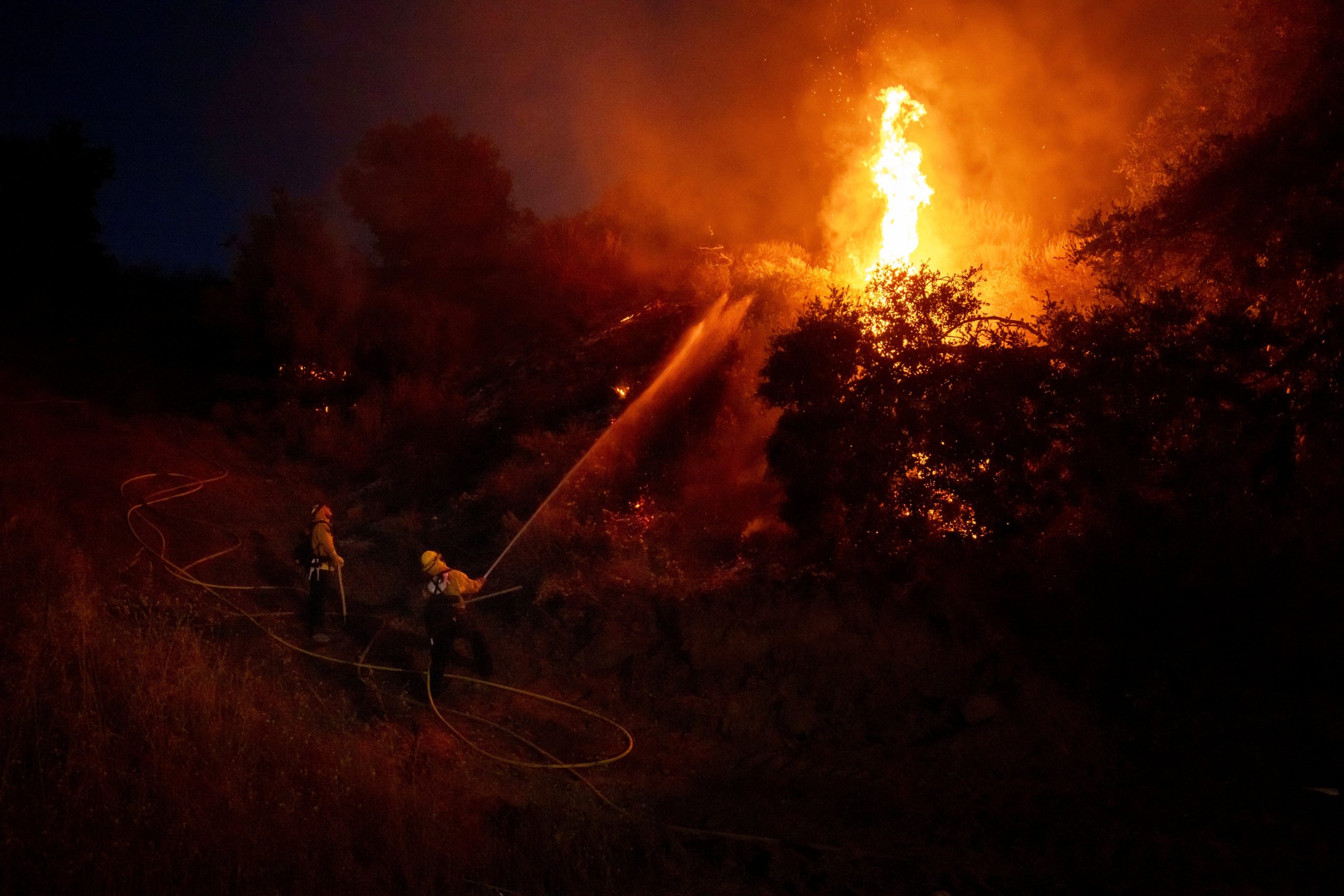
Sandy Fire: Thousands Under Evacuation Orders As Wildfire Spreads Across Southern California


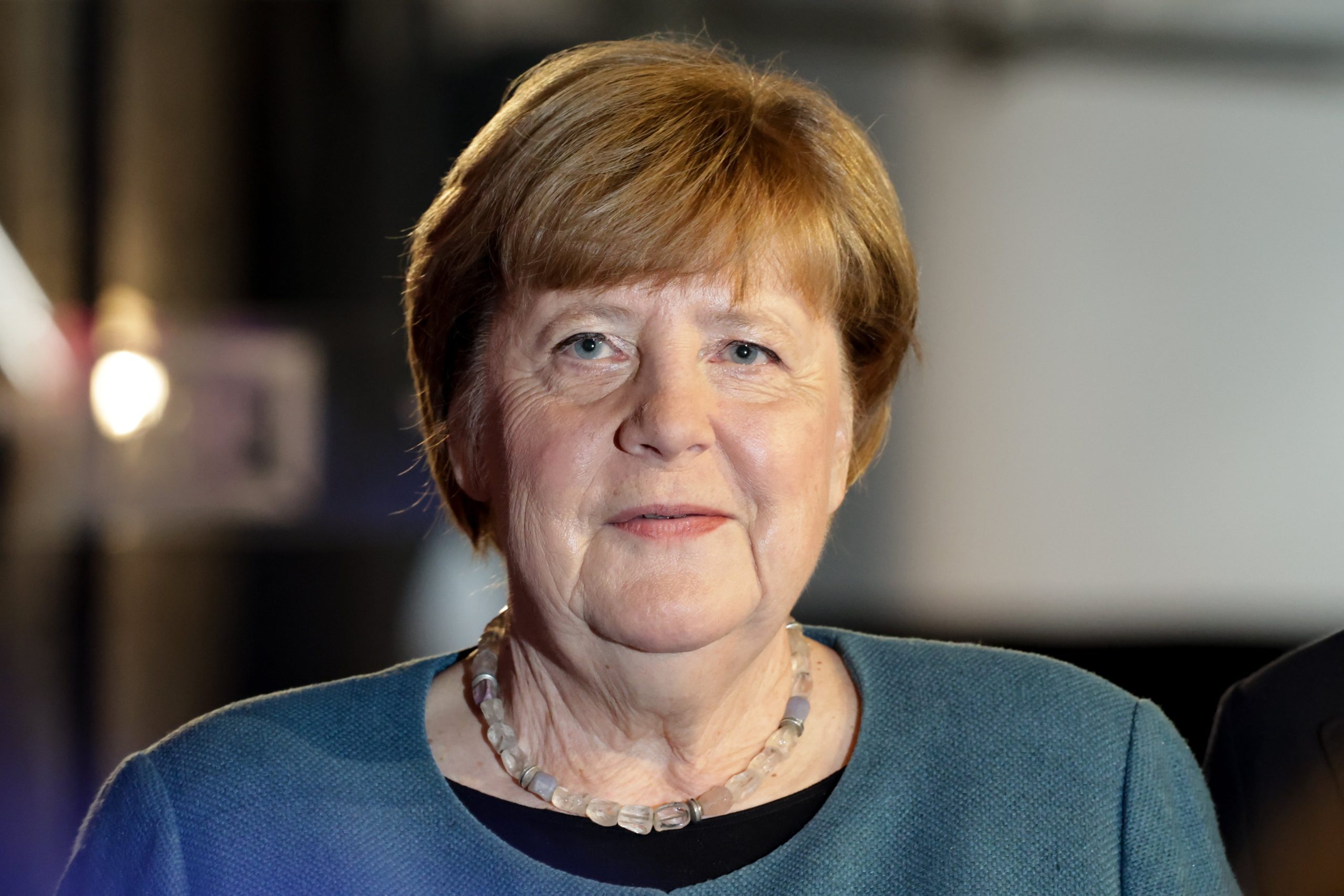
More than four years have passed since Angela Merkel said goodbye to politics in December 2021 after 16 years leading Germany. A period in which, as she promised, she has stayed out of politics except for the book tour for her memoirs and a few public appearances. She vanished so completely from the political scene that her presence last February at the federal congress of her party, the Christian Democratic Union (CDU) — the first time she had attended since leaving office — eclipsed the chancellor, Friedrich Merz, with whom she also does not have a good relationship.
Three months after that appearance — in which she did not even speak — she has resurfaced again, just as the conservative–social democratic coalition government is grappling with a deep internal crisis over its reform package and facing intense tensions with the United States over the war with Iran. First, last week, in an interview with the magazine Focus in which she called for calm. Then, this Monday, as part of the re:publica conferences on society and technology, held in Berlin. Coincidence or not, her return comes at a moment many in the German capital see as highly critical.
“Nothing is coincidental with Merkel,” says Hajo Funke, a political scientist and professor at the Free University of Berlin. “She worries about the state of the party and the republic, so she expresses that concern, and it carries weight,” he explains by phone. “She has no operational power; that is, she can’t impose change. But she is still a strong voice.” In his view, the former chancellor has been present “the whole time” and is simply now speaking “more forcefully.”
Merkel, who this Tuesday was awarded the European Order of Merit of the European Parliament for her “steady and fundamental leadership in advancing the European Union as chancellor of Germany,” as praised by former European Commission president José Manuel Durão Barroso, continues to enjoy high approval ratings. Especially among young people.
“Good reputation,” Merkel joked on Monday about it at the event organized by public broadcaster WDR as part of re:publica. Her visit had generated huge interest: the former conservative leader still fills enormous halls years after leaving politics. Everyone wants to hear her speak. People were crowding at the doors of the hall two hours before the event began. And many were left outside.

Applause erupted when Merkel took the stage. The audience — packed with young people — raised their phones to take photos and videos. Some even managed a selfie with her in the background. She looked relaxed, and she still knows how to connect with a crowd. First in a more formal setting, and later seated at a wooden table, with an image behind her evoking the kitchen of a shared flat and two young podcasters at her side.
In that atmosphere, there was a palpable sense of nostalgia— for Merkel herself, or perhaps for an earlier political era. Above all, the contrast with Friedrich Merz was striking: a chancellor whose poll numbers have sunk and who now faces a surging far right in the form of Alternative for Germany (AfD), which has led voting‑intention surveys for weeks. The latest INSA poll puts the party at 29%.
Merkel and Merz are two very different politicians. “Merz wants to change the status quo, to implement reforms. And Merkel did the exact opposite: she preserved it,” explains Thomas König, a professor at the University of Mannheim. “Merkel always played a mediating role. She was very reserved; she never stepped outside the script. She was always very hesitant, waiting for the polls to show what was popular and only then reacting, even during the refugee crisis. That is, a different style from Merz’s.”
On top of that, König adds, Merz “is not viewed positively by the media, which sees him as a figure from another era.” Still, he argues, Merz is now pushing reforms that Merkel should have enacted during her time in office. “And reforms always initially cause popularity to fall.”
Merkel, says political scientist Hajo Funke, was defined by a “pragmatic style that was and is calm, that took the mindsets of East Germans very seriously, and that gave the impression of being resilient in crises.” The political scientist believes she is regarded, “in general,” as a “successful chancellor.” “And by comparison, Merz is seen as a grump who does not control himself enough. That’s why he offends everyone, does not unite people, and does not lead in that sense,” he explains.
Has Merkel returned to the political debate, as some voices suggest? “Well, I try to find an appropriate rhythm. I remain a citizen engaged with politics and, of course, I care about these things,” the former chancellor said on Monday. She enjoys spending time at her home in Uckermark, the region north of Berlin near the Polish border, where she grew up. “I go to Uckermark more than before, and it makes me happy, but without withdrawing from public life.”
According to König, it is “normal to step back at first, and perhaps enjoy having time for other things,” but eventually former leaders miss appearing in public. The CDU’s more conservative direction, the expert notes, has meant Merkel has “less influence than expected,” since she symbolizes the political center. “In reality, she has somewhat moved into the background and her achievements are now evaluated with a little more scepticism than they were at the time,” he explains.
Her popularity among young people is due largely to the fact that many fear the future: “What Merkel symbolizes, by preserving the status quo, is security,” says König. But he points out there are also regional differences: “I can’t imagine she is popular in the east of the country, where AfD is very strong and is, in essence, an anti‑Merkel club.”

Merkel admits she is happy knowing people still come to hear her speak, but that does not mean she is considering a return to public office — including the idea, floated recently, that she might run for Germany’s presidency. “That is the highest office in our country. I was chancellor for 16 years. Before that, I spent many years in politics. And this role really requires someone with more energy… I can’t do that anymore,” said Merkel.
She also does not understand why her name was mentioned as a possible mediator at the negotiating table with Russian President Vladimir Putin, after he proposed former chancellor Gerhard Schröder, with whom the Kremlin has always had a good relationship. According to Merkel, that role should fall to “those who hold office and have responsibilities.” “To negotiate with Putin and be taken seriously, you need to have your own power,” she concluded.
Although Merkel does not want to return to an active political role, she knows her words resonate. Conscious of that, she urged people not to “underestimate Putin.” During her 16 years as chancellor, she not only had to deal with the Russian leader and with Donald Trump, in his first term, but also with the emergence of AfD, which emerged during the euro crisis and surged again during the refugee crisis, eventually becoming the second‑largest party in the last federal election, ahead of the Social Democratic Party (SPD).
Merkel still has an answer for almost everything — whether it’s a serious question about Russia’s invasion of Ukraine or a lighter one about how much a kebab will cost in 10 years. “When I started eating kebabs, in the early 1990s, they cost €3.50 [$4],” she recalled. “Now we are at €7.50 [$8.70], at least where I go. And in 10 years? We will be above €10 [$11.60]. At least,” the politician says.
She also reminisced about her years in the former East Germany, when she used to pick up discarded furniture from the street, and she laughed when asked about hypothetical jobs she might like to do — such as coaching the German national football team, given her passion for the sport. “So that tomorrow the headlines say: Merkel dares to become national coach? No,” she laughed. “Put that at the end of the list.”
Sign up for our weekly newsletter to get more English-language news coverage from EL PAÍS USA Edition

Italian tradition meets Costa Blanca sourcing at exclusive gastronomic finale
Don’t miss your flight. 19 Million cars expected on UK roads for May bank holiday
K-EXPO Spain 2026 brings the Hallyu Wave to Madrid this summer


-
 Competiciones3 weeks ago
E
-
blackout April 20252 weeks ago
Insurance company Mapfre decides to pay out €14 million compensation for 2025 blackout
-
Costa del Sol3 weeks ago
Why home care is the new gold standard for living well in Spain
-
 Foreign demand2 weeks ago
Who Bought Where In The Second Half Of 2025?
-
Bullfighter injured4 weeks ago
Second serious injury in Spain’s La Maestranza bullring reignites controversy
-
 %4 weeks ago
Gibraltar Sees Surge In Residency Applications After Border Agreement
-

 %4 weeks ago
Portugal Confirms High-Speed Rail Link
-
Animal protection law4 weeks ago
Spain moves to redefine legal pets as draft law raises wider welfare concerns