
Latest
‘Madrid-Andalucia AVE Is Not Safe’: Junta President Promises Review Of All Train Tracks In Andalucia After ‘114 People Lose Their Lives’ On Them In 2026

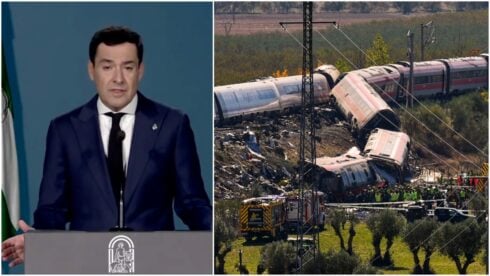
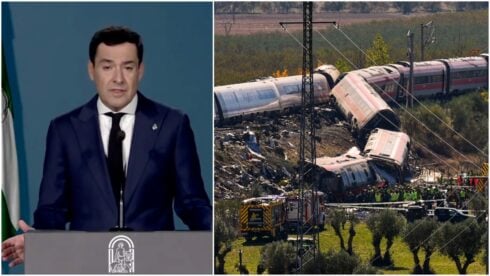 The figure equals the 46 killed at Adamuz, in Cordoba province, on January 18 plus the 68 dead reported when he spoke, plus another death.











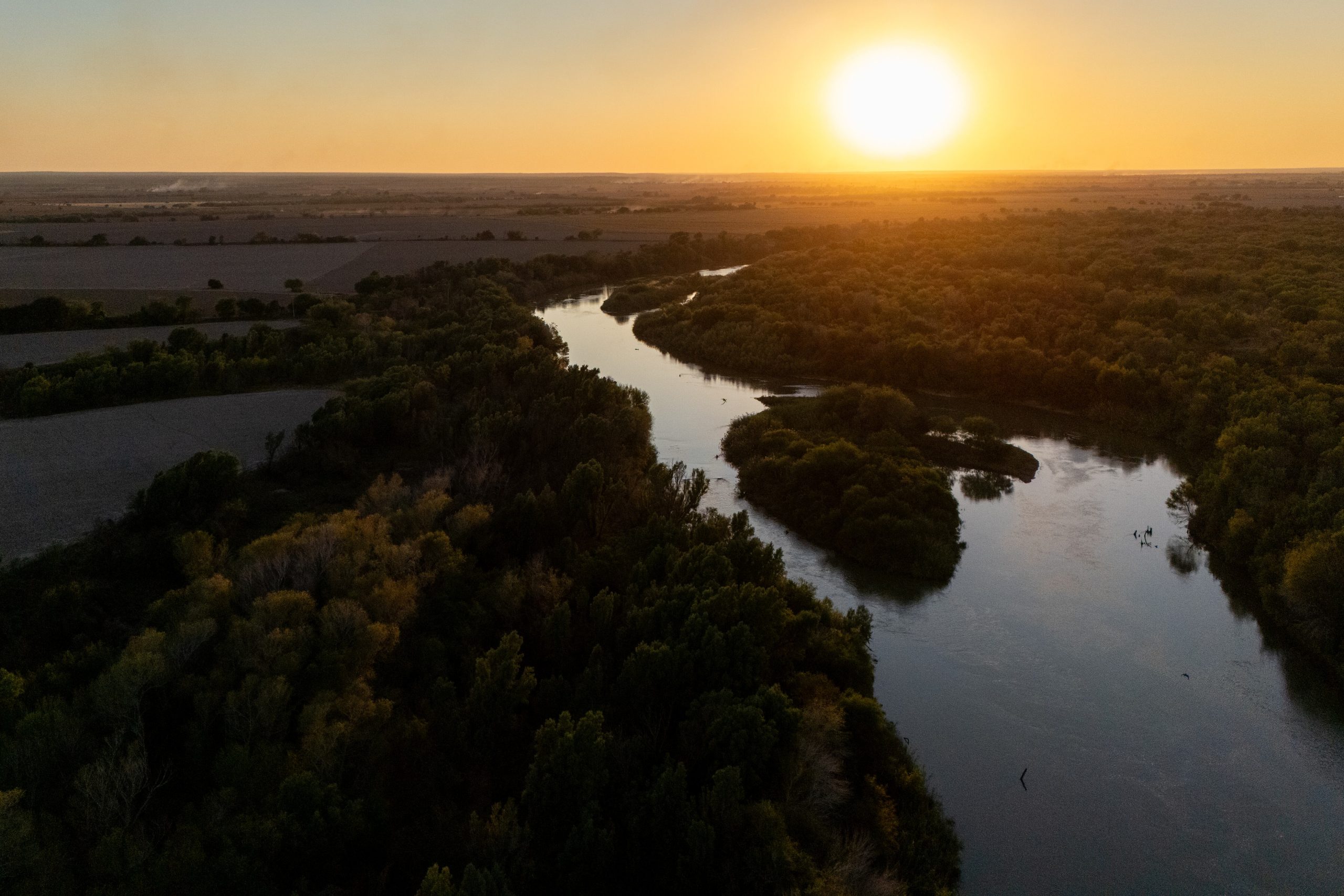
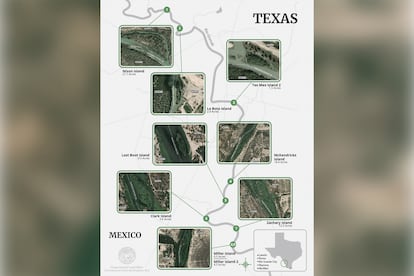
Since the start of Donald Trump’s second term, border security and stopping illegal immigration have become two of the main pillars of his administration. Based on those principles, and acting unilaterally, the Texas government has announced it has taken control of nine islands located in the water border between Mexico and the United States, along its territory between Laredo and McAllen. In a statement on Tuesday, Dawn Buckingham, that state’s land commissioner, authorized the Texas National Guard to access those small river islands in order to maintain the operational security of the southern border. The Mexican government has responded by asking that the 1970 Boundary Treaty between the two countries be respected and says that determination of the international boundary is the sole responsibility of the International Boundary and Water Commission.
Buckingham wrote in an official letter on October 26 to Major General Thomas Suelzer, commander and executive head of the Texas Military Department, and to Colonel Freeman Martin, director of the Texas Department of Public Safety. The letter says that after receiving a request from U.S. Customs and Border Protection regarding 28 islands in the Rio Grande that had previously been considered unclaimed or of undetermined ownership, the Texas General Land Office (GLO) determined it could access the islands, clear them and patrol them.
A spokesperson told this newspaper that the GLO used various sources to determine ownership of the islands, including historical maps, topographic surveys, aerial photographs and other geographic records.
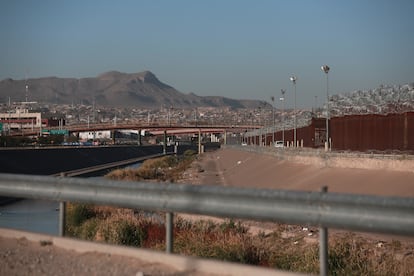
Mexico’s Foreign Ministry told EL PAÍS that the 1970 Boundary Treaty between Mexico and the United States establishes that the border follows the middle of the river’s normal channel. Therefore, island ownership can vary due to natural shifts in the channel, and it is solely up to the International Boundary and Water Commission (IBWC) to determine the international boundary. “Accordingly, any work or action intended to be carried out on these islands requires consideration and approval by both sections of that Commission in accordance with Article IV of the Treaty,” the ministry said.
This newspaper tried to contact the IBWC, both its Mexican and U.S. sections, but had received no response by the time this article was published. The Boundary Treaty was signed on November 23, 1970 to resolve border disputes, restore the Rio Grande’s role as a border, and regulate future changes in the river basin’s channels.
The GLO commissioner’s argument, according to the letter, is that “this effort builds on the GLO’s work to establish ownership of Rio Grande islands and ensure law enforcement can access state-owned property. While we have not confirmed criminal activity on these additional islands, past experience has shown how border islands can be exploited by cartels and smugglers,” a passage of the document says.
According to the same GLO spokesperson, agreements set out how the border is determined, including its relationship to the river channel. “For years, title to these islands had not been definitively established, creating uncertainty about whether they belonged to the state of Texas or the federal government or Mexico, and hampering access by state law enforcement and border security operations,” the agency replied to the request sent by EL PAÍS.
Rosario Sánchez, director of the nonprofit Binational Waters — an organization of scientists and water experts dedicated to improving the resilience of this resource across the Mexico–U.S. border region — says decisions about federal boundaries and waters “are not a state matter or decision.” She reiterates that the IBWC is the only body that can decide whether islands or the river channel have shifted due to natural conditions such as erosion, sedimentation or flooding, and whether that constitutes a change to the boundary.
Gabriel Eckstein, a water law scholar at Texas A&M University, says the real question is not whether they are taking islands that belong to Mexico but rather: “Are they claiming U.S. islands? That is, do they belong to the federal government or to the state of Texas?”
Eckstein, who is also president of the International Water Law Association, explains that if an island was part of Texas when it became a state in 1845 and remained U.S. territory according to the 1970 treaty, it could be argued that it is state property. But if an island was ceded by Mexico to the U.S. under the 1970 treaty, then it belongs to the federal government north of the Rio Grande.
However, the scholar notes that Texas’s claim that the islands had no owner is incorrect, since the boundary and title were already established by international treaties. “Texas contends that these islands are being used by cartels, which complicates the situation, because it is trying to assert its authority over concerns related to illegal immigration and drug trafficking,” Eckstein said by video call.
In 2023, the Texas General Land Office declared Fronton Island — a 170-acre island in Starr County — to be state land. After that declaration, the Department of Public Safety and the National Guard removed vegetation during operation Flat Top, which helped disrupt criminal activity there. For now, the decision is on the IBWC’s agenda.
Sign up for our weekly newsletter to get more English-language news coverage from EL PAÍS USA Edition
Cuba
Many Cuban Americans Feel Betrayed By Trump, But Most Will Still Vote Republican: ‘They Exploit Our Pain’

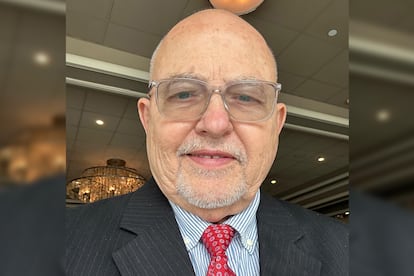
He was 12 and his sister was 14 when their mother told them they were leaving for the United States. It had been only two years since the Cuban Revolution, and fear had spread that the new government would strip parents of custody of their children or send them to the Soviet Union. Before they boarded a plane to Miami, their mother handed his sister a guitar and gave him a box of candy. Eleven days later, sitting on bed number eight in a shelter in Kendall, Frank Rodríguez felt hungry.
The boy remembered the box of candy and found it crawling with ants. “That’s when I realized the magnitude of what had happened, that this was serious, that the separation was real,” Rodríguez says. He was one of 14,000 children in Operation Peter Pan. He was taken in by a U.S. family in Montana, grew up, became an economist, and eventually became a U.S. citizen. Ever since, whenever he votes, he does so with one question in mind: which U.S. administration is more likely to change, or preserve, the future of Cuba, the country he has never been able to return to.
“I am a single-issue voter,” Rodríguez says without hesitation. He says he knows he is now “something of a rarity.” More than six decades have passed since he left Cuba, and people ask him how it is possible that he cares so much about what happens in Havana and does not spend more time on the politics shaped in Washington. But his reasoning is simple: “The United States already has plenty of patriots; the country that needs me is my homeland.”
A few days ago he went to the polling place in Florida’s 27th Congressional District in Miami and, without thinking twice, cast his vote for Republican Congresswoman María Elvira Salazar. Rodríguez has always been a loyal Republican, and although he is sometimes upset by U.S. President Donald Trump’s statements, which he says “play with the emotions of the Cuban exile community,” he has never seen an administration more committed to the fall of the Castro regime.
After nearly a year of the fuel blockade and sanctions against Cuban officials and entities, the charges against Raúl Castro for murder and the nearly monthly threats about the imminent fall of Cuba, the Trump administration delivered a new message to Cubans. “Cuba’s future belongs to those who act. Seize the moment and build the change you want to see,” said Commander General Francis L. Donovan, chief of U.S. Southern Command, in a message on October 23.
Donovan was not only referring to Trump’s recent comments at a Florida rally, where he again suggested he would turn his attention to Cuba once the war in Iran is resolved, but also to an appeal by Secretary of State Marco Rubio, who urged Cubans to “create positive change” through “a discrete [sic] partnership with the CIA.”
To Rodríguez, the proposal sounded like a joke from the famous Cuban humorist Guillermo Álvarez Guedes. And many Cuban Americans, both Republicans and Democrats, view it not only as an “insult” but as another tactic to win over voters ahead of the November 3 midterms.
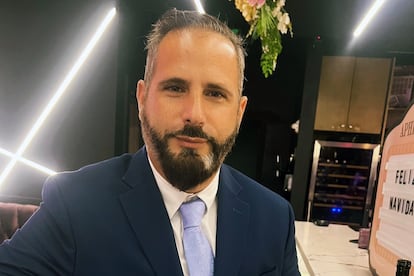
“We know it’s meant to win support, but what we need are more tools, regardless of how and when they give them to us,” says Alejandro Franqui Fernández, a 46-year-old DJ and real estate agent in Miami who has voted for the Republican Party since 2020.
Some, however, no longer believe anything this administration says. “Everything they say seems more deceitful than the last. They exploit the pain and hope of Cubans in the most shameful and brazen way. I believe they betrayed Cubans and Venezuelans,” says Cuban-American actress Indira Romero, an independent voter in Miami.
Rubio’s comments have not resonated with the Cuban American community in the way he might have expected among a predominantly Republican constituency that helped propel Trump back to the White House in 2024, with nearly 70% voting for him.
“Cuba is not a priority for this country. The political docility of the Cuban exile community and the ease with which it folds to this administration’s empty promises are an asset for any candidate,” says writer Jorge de Armas, a 59-year-old independent voter who has typically leaned toward Democratic candidates.
But things have changed, too.
In the past two years, Cubans have not been the “privileged” group that for decades enjoyed special immigration protections. Instead, they have seen relatives arrested, deported by the dozens to distant African countries, and family reunifications halted at a time when Cuba is facing the deepest crisis in its recent history. The well-known Cuba Survey from Florida International University (FIU), released on Wednesday, found that 76% of Cubans surveyed disapprove of the rise in deportations of Cubans who have no criminal records, and 87% agree that the government should resume processing immigration benefits.
Today, moreover, the Cuban-American voter shares the same fundamental concern as other Latinos in the United States: the economy. Rubio, who rose to prominence in Florida’s Cuban exile community, knows firsthand that there was a time when U.S. policy toward Cuba played a much greater role in shaping Cuban American voting intention. But now they worry more about inflation and how it affects rent or gasoline prices. The FIU survey proves this: Cuban Americans rank the economy as their top voting issue, followed by immigration, with policy toward Cuba coming in third.
Cuba is not the priority, but it still matters
Some believe there is a disconnect between what Trump or Rubio say about Cuba and what actually matters to voters in a community that has spent years watching South Florida politics revolve around the specter of Castroism.
“It’s an electoral tool,” De Armas says. “My vote always goes to whoever can work for living conditions in the district they represent. When I vote, I think about the United States. The Cuba issue matters, of course, but it doesn’t define me.”
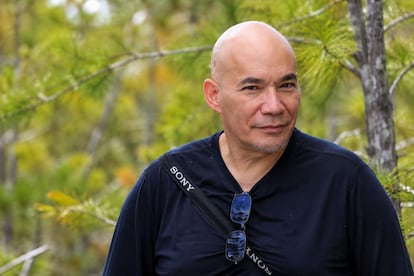
Fernández feels the same. When he goes to the polls in Broward County, he thinks first as a businessman, then about Cuba. “I want a safe country with opportunities to work, grow and prosper, and a foreign policy that helps people living under authoritarian regimes achieve freedom,” he says.
Romero, for example, worries less about the economy and more about threats to minority rights in this country, such as those of the LGBTQ+ community or women. “Today they are under threat from the right, and for me that is the most important thing,” she says.
Cuba remains an important issue, but after decades of unfulfilled promises, it has become a secondary concern in a country where making ends meet has become increasingly difficult. Michael Bustamante, a professor at the University of Miami and author of Cuban Memory Wars, agrees that it is first-generation exiles and their relatives who are most likely to be swayed as voters by policy toward the island. Still, he does not rule out the possibility that the administration’s anti-communist messaging could influence some voters’ decisions.
The White House has resurrected a Cold War framed around the specter of communism as the main opponent. “Communism will never reach the United States, but freedom will come to Cuba,” Trump promised in his recent speech at the United Nations. Republicans have capitalized on this and have made figures such as Democratic congressional candidates Darializa Ávila Chevalier of New York; Melat Kiros of Colorado; and Angie Nixon of Florida appear as threats in the eyes of Cuban and Venezuelan voters.
“In the electoral context, Cuba is used not only as a foreign policy issue but as a kind of sounding board to communicate certain messages, to in some way scare voters with the threat of socialism, reminding them they fled a socialist country,” Bustamante says, agreeing that Cuba is not the number-one priority for voters today, “but it can influence the electoral debate.”
Cuban Americans, loyal Republicans
There are those, like Romero, who plan to cast a “protest vote” against the Trump administration for all the harm they believe it has caused. “Two years into his term the Cuban people have already crossed the poverty threshold and the regime continues to profit from the people’s suffering,” she says.
De Armas doesn’t even believe that, as Trump promised, a real change on the island will be seen before the end of the year.

Other Cuban Americans do not need another promise from the White House to feel allied with the Republicans. For decades that party has worked to attract a community of 2.5 million citizens. Researchers trace Cuban Republican history to the first exodus after the 1959 Revolution; others mark that fervor to the Bay of Pigs invasion in 1961, when John F. Kennedy did not authorize the air attack that would have supported exiled Cubans in their fight against Castroist militias. Some credit the Republican administration of Ronald Reagan with winning over the majority of exiles.
Trump has not done less: he has had his coffee at Versailles, held rallies in Hialeah—the quintessential Cuban neighborhood of Miami—and since his first term has promised a hard line with Havana’s leadership.
Although many have felt betrayed by Trump or suffered under his policies, nothing so far has made Cuban American voters, as a group, any less Republican. Most plan to remain loyal on November 3.
The new FIU survey shows that 53% of registered voters are Republicans, 27% are independents and 18% Democrats. Sixty-eight percent say they would vote for the Republican candidate running in their congressional district, and they favor Ashley Moody over Angie Nixon and Byron Donalds over David Jolly.
Some Cubans find these figures humiliating. “I am truly ashamed,” Romero says. Others, like Fernández, believe there is no other path or party that speaks their language: prosperity first; but also the liberation of Cuba.
Sign up for our weekly newsletter to get more English-language news coverage from EL PAÍS USA Edition
Crecimiento económico
España Creció En El Tercer Trimestre Un 2,7% Impulsada Por El Consumo Y El Gasto Público

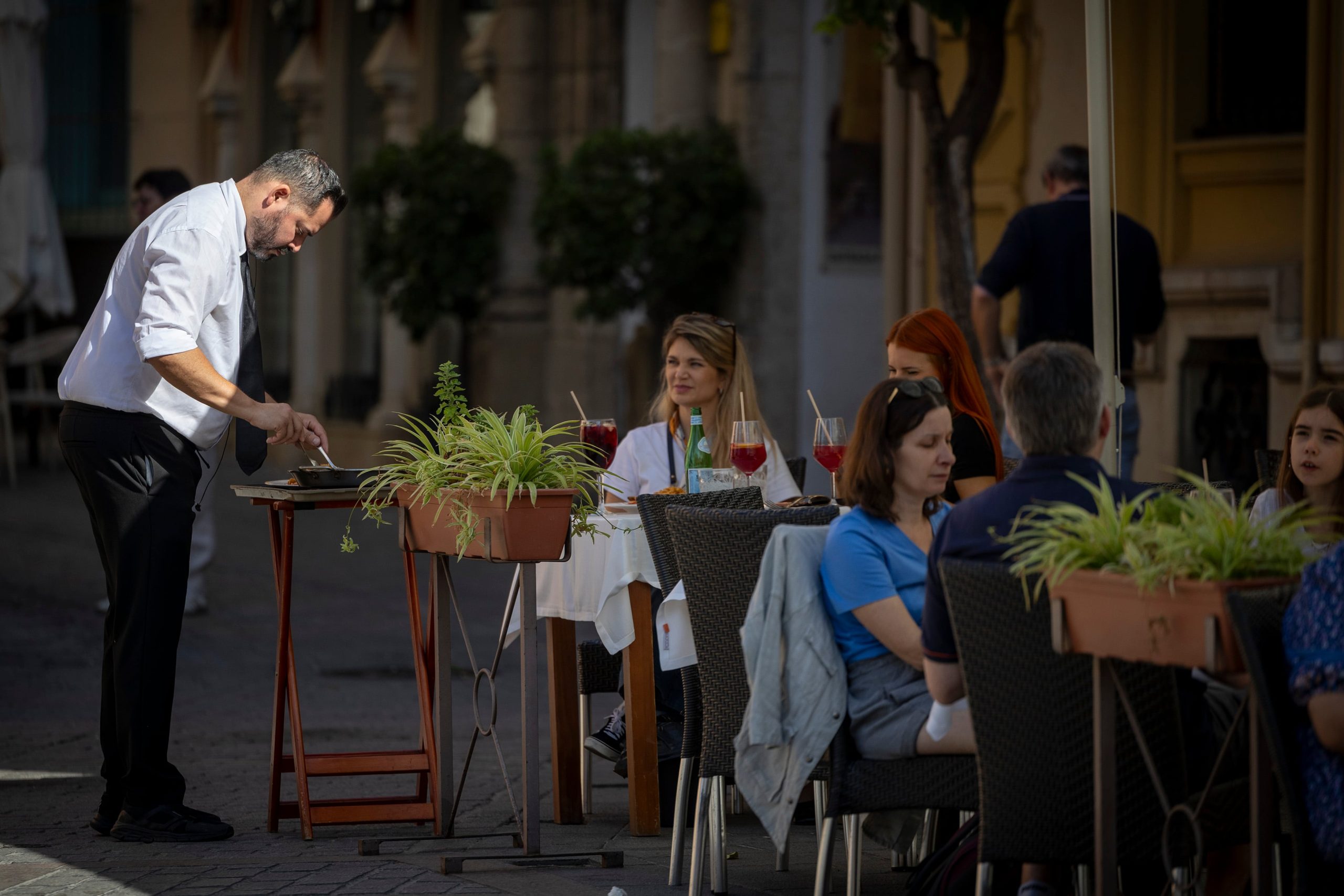
La economía española creció un 0,6% durante el verano, una décima menos en comparación con el trimestre de primavera, según los datos publicados hoy por el Instituto Nacional de Estadística (INE). Frente al mismo periodo del año anterior, el PIB subió un 2,7%, en este caso una décima por encima del dato interanual anterior. Los datos conocidos de la Encuesta de Población activa (EPA) ya apuntaban a una leve moderación de la actividad económica, que devolvió la tasa de paro a un nivel por encima del 10%.

Mexico Urges Respect For Treaties After Texas Seizes Nine Islands On Rio Grande

Many Cuban Americans Feel Betrayed By Trump, But Most Will Still Vote Republican: ‘They Exploit Our Pain’

España Creció En El Tercer Trimestre Un 2,7% Impulsada Por El Consumo Y El Gasto Público


-

 New Developments4 weeks ago
Luxury Villas For Sale, Estepona – ProjectL1
-
EU4 weeks ago
EU nicotine crackdown sparks warning that ex-smokers could be driven back to cigarettes
-
Catalonia4 weeks ago
Why the rain opened a hole in front of Granollers’ courts
-
British tourists arrested in Magaluf4 weeks ago
British tourists arrested after taxi driver left bloodied in Magaluf
-

 %3 weeks ago
Spain Payslip Change Coming In January 2027
-
DGT2 weeks ago
Viral video in Spain sparks fury over drivers who ‘have no idea how to drive’
-

 Arabia Saudí3 weeks ago
Un Ataque De Los Hutíes Contra El Aeropuerto De Riad Causa Al Menos 12 Muertos Y Más De 300 Heridos
-

 New Developments4 weeks ago
Stylish 3-Bedroom Apartment With Panoramic Sea Views – Benalmádena