
ElPais
Russians Make Mass Cash Withdrawals Amid Internet Shutdowns And Transfer Controls









Camilo José Cela
How A Group Of Young Italians Created An International Scandal With Their Trip To Spain In 1961 To Record Anti-Franco Songs

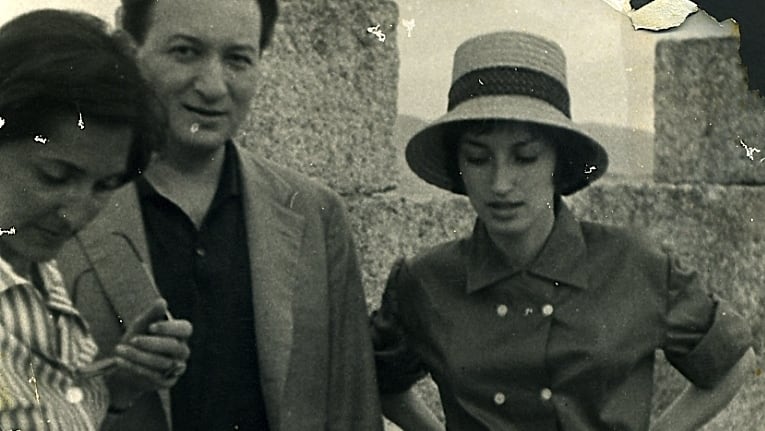
Seven young Italians — five men and two women between the ages of 20 and 30, with a spirit of adventure — sparked an international diplomatic conflict with Francisco Franco’s Spain in the early 1960s. They traveled through the country as tourists in 1961, secretly recording popular songs against the regime among the people, and later released two albums and a book. It was primarily the book, Canti della nuova resistenza spagnola: 1939-1961 (Songs of the New Spanish Resistance: 1939-1961) — published in 1962 by the prestigious Turin publishing house Einaudi, where the writer Italo Calvino, a friend of the group, worked — that triggered a major scandal.
The new Minister of Information at the time, Manuel Fraga, launched a campaign in the Spanish press against what he called a “libel,” and the regime pulled strings with the Vatican to secure its support, which it obtained, because some of the songs were violently anticlerical. Above all, there was one particularly scandalous song, recorded in the Spanish city of Santander, which became the focus of the controversy and which the Franco regime seized upon in its crusade against the book: “They say the hair of the Holy Christ of Limpias / grows / what grows is his cock / from fucking the clergy.” Four months later, the book was seized in Italy.

The authors of the book, Sergio Liberovici and Michele L. Straniero, were prosecuted in Turin for defaming religion, even being convicted in the first instance before being acquitted on appeal. But the incident led to the book being translated in many countries in Europe and America, because Einaudi freely granted the rights, and editions of the records were also released in several languages. It opened a rift in the image of Francoism. The book’s cover — black and depicting police officers restraining citizens — included a verse in Galician from one of the collected songs that summarized the spirit of a segment of the Spanish population: “Holy Christ of Fisterra / Saint of the golden beard / help me through / the dark night of Spain.”
“What bothered the Spanish government was the confirmation of the existence of a resistance movement, and since they wouldn’t admit it existed, it was their own stupidity in creating the scandal that made the book and records a success,” says 97-year-old poet, writer, and musicologist Emilio Jona, the only surviving member of that group, speaking by phone from his home in Turin. When asked what Spain was like in 1961, he replies: “An extremely archaic Spain.” He recalls the poverty and hunger in the villages of the Iberian plateau, on the outskirts of the cities. In any case, he immediately felt at home, because he is a Sephardic Jew, and he perceived something intimate, familiar, in the people and the landscapes.
This story was once widely publicized, but it faded into obscurity and has recently resurfaced thanks to the research of historian Alberto Carrillo, a professor of contemporary history at the University of Seville. He first learned of it in 2008 in the archives of the International Institute of Social History in Amsterdam. He then uncovered documentation, acquired the records, and eventually tracked down the only two surviving members of the group, Emilio Jona and Margot Galante, who passed away in 2017. “She remembered the suffocation, the police presence, and the feeling of being constantly watched,” he notes. Carrillo published his first article on the subject in 2012. The story was later adapted into a documentary, La marsellasa de los borrachos (or, The Drunkards’ Marseillaise), directed by Pablo Gil Rituerto, which premiered in 2024 and was presented last year at the Seminci Film Festival in Valladolid. In it, contemporary artists such as Nacho Vegas, María Arnal, Amorante, or Labregos do tempo dos Sputniks reinterpreted the songs.
Carrillo was immediately captivated by the story, and he recounted it in November in Rome at a conference on Italy’s ties to the anti-Franco resistance. The conference, organized by the Rosso un Fiore association to commemorate the 50th anniversary of Franco’s death, featured performances by the Coro Inni e Canti di Lotta Giovanna Marini choir, who sang some of the songs. “This story is perfect for a film,” Carrillo explains. “It has that impressive theatricality of the Franco regime. You run into Italo Calvino, the Vatican… What surprised me most was that simple songs, little verses that sometimes last only 40 seconds, could have the power to compel Franco to make these moves on an international scale. That something so small could have such a profound impact.”
Jona and his six friends were precisely seeking the subversive power of those small songs. They were part of the Turin-based musical group Cantacronache (Singing Chronicles), pioneers of protest and singer-songwriter music in Italy, with connections to the literary and intellectual world of the time. “Without them, the history of Italian song would have been different,” wrote Umberto Eco, another of their friends.
Jona recalls that they started singing almost as a game in the late 1950s: “We were irritated by the Italian songs that were fashionable at the time, the escapist kind, the ones from the Sanremo festival, and we wanted to make songs to escape from that escapism, to tell the reality of everyday life. In Italy there were no political songs, and our references were French singer-songwriters, like Brassens, or the Germans of the thirties.”
Their trip wasn’t spontaneous or improvised; it was part of a project to collect anti-fascist songs across Europe. They began by seeking information from the Spanish exile community in France and Switzerland, hoping to gain contacts. For example, they met with Antonio Soriano, founder of the Spanish bookstore in Paris, a key meeting place for Republican emigrants. And in Switzerland, they met the philosopher and mathematician Miguel Sánchez-Mazas, brother of Rafael and Chicho Sánchez Ferlosio. Carrillo notes that the latter “perfectly embodied the ideal of social, singer-songwriter, protest music that Cantacronache had been exploring and experimenting with.” He later contributed, anonymously, fundamental songs to other albums, songs that became popular in the 1960s, such as Gallo rojo, gallo negro (Red Rooster, Black Rooster).
This is how they obtained a list of trusted contacts in Spain. It was highly sensitive information, so they wrote it in tiny letters on matchsticks. Each matchstick had a name and address and could be burned in case of danger. This allowed them to visit artists and intellectuals in Spain such as José Agustín Goytisolo, Alfonso Sastre, the brothers Carlos and Antonio Saura, Jesús López Pacheco, and Gloria Fuertes. Some recordings emerged from these meetings, as well as from encounters with people in the labor and academic worlds. For example, a cha-cha-cha about a Basque priest who poisons the dictator during communion: “Here lies Paco Franco / from a poisoned host / they gave him in church / and it certainly does a fine job.” Or a song by López Pacheco, Una canción (A Song), precisely about the redemptive power of music: “People of Spain / start to sing / A people that sings / will not die.” Everything was meticulously recorded on technical data sheets, although always preserving the anonymity of the participants, for their safety.

The rest of the songs were simply collected along the way, randomly, when they gained someone’s trust and they felt comfortable enough to sing one for them. Workers, farmers, or the regulars at a bar where there was a guitar. “People weren’t afraid to open up to us, seeing that we were foreigners,” Jona recalls. This is the case with one of the most moving songs, Sin pan (Without Bread), about the hunger they endured, which, according to the record, is performed by an Andalusian taxi driver in Madrid. The songs addressed the hardships of daily life, social inequalities, and reflected a strong aversion to the clergy, Franco, and his wife. There were parodies, satires, outbursts of frustration, but also lyrical pieces, songs of hope, ideals, and even some with a surreal tone. “The songs had a dramatic and expressive power that anonymously documented the harshness of the repression,” Jona explains.
The group only traveled through the northern half of Spain, suggesting that a significant portion of the southern region’s musical heritage was lost. They entered from France via Bourg-Madame, traveling to Puigcerdá in Girona, and then on to Barcelona, Zaragoza, Madrid, and Toledo. They then split into two groups. One went to Cuenca and later rejoined the other in Santiago de Compostela. The second group passed through Ávila, Salamanca, Zamora, Ourense, and Vigo. Afterward, they all continued together through Cudillero, Llanes, Santander, Bilbao, and San Sebastián, leaving the country via Bayonne. They amassed several hours of recordings and hundreds of photographs. All the documentation is now archived at the CREO (Centro Ricerca Etnomusica Oralità) center in Turin.
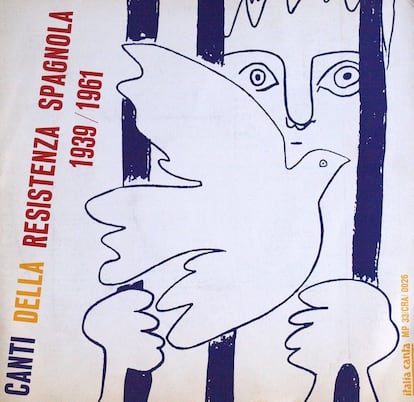
After selecting songs, Cantacronache arranged and performed them with instruments on two records released in 1961, Canti de la Guerra de Spagna 1936-1939 (Songs of the Spanish Civil War 1936-1939) and Canti de la nuova resistenza spagnola 1939-1961, the latter featuring a Picasso drawing on the cover. “They are truly two gems from a discographic point of view,” says Carrillo. But what sparked the scandal was the subsequent book that recounted the story of the voyage and included the lyrics, scores, and technical information for 25 songs, eight coplas, and three poetic texts.
The first thing the Spanish government tried was to prevent the book’s distribution by pressuring the publisher, Einaudi. The director general of information, Carlos Robles Piquer, took charge, threatening Giulio Einaudi with barring him from entering Spain, where he was scheduled to travel to participate in the awarding of the Formentor Prize, sponsored by the most prestigious European publishers. In a bitter exchange of telegrams, the Turin-based publisher responded: “You are calling on me to fulfill my duties as a publisher; I believe I can remind you, in turn, that no act of faith, no destruction of books, no censorship has ever been able to eliminate the evils of those who deny existence and stifle dissent.”
Then a massive media offensive was unleashed. The Franco regime seized upon the sacrilegious song about Christ, which was actually the only one of its kind, to denigrate the entire project as an attack on Spain with songs they claimed had been fabricated. “The government argued that it was a laboratory invention by the Italians to attack Spain and the Catholic religion; they wanted to give a religious spin to a matter of a clearly political and social nature,” explains Carrillo. This operation had the support of conservative European media outlets.
“Slime, carrion, disgust”
On January 9, 1963, a note from the General Directorate of Information appeared in the main Spanish newspapers announcing the prohibition of Einaudi’s entry into the country due to the publication of the book, without going into further details because “elementary scruples of public decency prevent the reproduction of the repugnant content of this libel.”
La Vanguardia published a scathing editorial titled Slime, Carrion, Disgust: “Slime, for the putrid residue that comprises it; carrion, because its pages offer no refuge for the slightest breath of noble life, but rather nothing but the death of spiritual dignity and the soul; disgust, because there is no well-born human being — blue, red, green, or yellow — who does not feel invincible nausea at the mere reading of one of Einaudi’s pages.” ABC stated that the book “gravely offends the Catholic religion and Spain” with a “pestilent attack” that transformed the Italian publishing house into “a cesspool at the service of ignoble lucubrations.”
This was the tone of the crusade against the book, which immediately spread to the Italian and European press. And things began to happen in Italy. The L’Osservatore Romano, the Vatican newspaper, wrote: “Under no pretext is the reproduction of sacrilegious obscenities justified, as they cannot constitute any valid political or ideological document, but only the depravity of language and custom.”
Two days after the Vatican’s intervention, the Turin Attorney General’s Office ordered the seizure of the book, accusing it of “obscenity, vilification of religion, and offense against a foreign head of state,” and called for the prosecution of its authors. A homemade bomb was even planted at the record label that had released the albums. In Spain, Fraga compiled all the articles against the book published both within and outside of Spain into a book published by his ministry, titled The Marseillaise of the Drunkards (Data for the History of Libel).
The end of the Formentor Prize and Cela’s intervention
But the response was also very significant. European publishers rallied around Einaudi and announced that the Formentor Prize would no longer be awarded in Spain. It disappeared a few years later and was not revived until 2011. Einaudi held a press conference to denounce what had happened, accompanied by writers of the stature of Italo Calvino, Carlo Levi, and Giorgio Bassani. The matter was even debated in the Italian parliament as an attack on freedom of expression.
In Spain, the writer Camilo José Cela took a stand against Einaudi, who was his publisher in Italy: “The tactic of slander doesn’t work among us. And even less so, that of blasphemy. The noble cause of freedom in Spain, for whose pursuit many Spaniards fight patriotically and without deviating from the rules — the code of honor we ourselves established — has not been strengthened by the book you published. Giving weapons to reactionary forces is certainly not helping those of us who love freedom.”
Despite such a display, the scandal only served to make the book and the records a touchstone of antifascism worldwide. Carrillo believes the regime misjudged its adversaries and the ensuing response because “they acted as they did with the internal opposition, with brute force, and they thought that would solve the problem.” Emilio Jona believes the Francoist reaction “was a symptom of its weakness and ideological poverty, which is why our modest and limited work assumed a dignity far exceeding its merits […] Unexpectedly, it made a significant contribution to the opposition to the Francoist dictatorship, and we felt then, and still feel today, proud and happy about that,” insists Jona, still delighted with that trip to Spain, 64 years later.
Sign up for our weekly newsletter to get more English-language news coverage from EL PAÍS USA Edition


Few associate Gabriel García Márquez with the asphalt jungle of New York. Collective memory places the Nobel Prize-winner in the heat of Mexico, the hustle and bustle of Barranquilla or the elegance of Barcelona. But for Colombian graphic designer and author Iván Onatra, the Big Apple was a crucial — and at times, forgotten — stage in the scribe’s life. García Márquez’s time in the city that never sleeps takes on new life in Onatra’s bilingual design book Macondo York, in which he explores the writer’s love-hate relationship that lasted for six months, while he worked as a journalist for the Prensa Latina news agency.
It was a period marked by frustration, which finally led him to leave the city for Mexico. According to Onatra, the trip was a definitive bridge: five years after the exhausting experiment in New York, García Márquez would publish One Hundred Years of Solitude, his masterpiece and perennial bestseller. In Onatra’s view, there is a deep connection between these two worlds. “Gabo saw New York’s magical realism,” and, though the city overwhelmed him, it was a fundamental seed to his creative process.
Macondo York is not a conventional photo book. Onatra, who has lived between New York and Colombia for more than a decade, describes the project as a “comprehensive graphic design approach” that blends literature, history and typography. The book’s visual origin stems from a “typographical safari” Onatra carried out in Brooklyn in 2014, which led him to discover how “the streets are alive.” With his camera, he captured not landscapes, but ephemeral urban messaging: signs, sewers and shop windows that are the true face of New York.
The idea for the book came out of a Gabo Foundation workshop in New York. After a series of mockups, Onatra designed the book’s title and cover, and it struck him that the project had potential. He used his images — capturing graffiti, signs and shop lettering — to tell the story of García Márquez’s relationship with the city. The result is a beautiful editorial object, a work made to delight lovers of graphic books.

Each page is accompanied by a quote from the author of No One Writes to the Colonel. “New York is the greatest phenomenon of the twentieth century… I find it so overwhelming,” wrote García Márquez. “Always so unequal and always so originally American,” he said.
The book also gathers the author’s own experiences, like the music shops he discovered on 116th Street: “They sell all the old Cuban and Antillean music… You can find real gems.” Or his relationship with the people of the city: “In New York, I start out speaking Spanish, and everyone understands me.”
To avoid using erroneous quotes attributed to the author on the internet, Onatra says he worked with the Gabo Foundation to make sure that every reference was verified. The book opens with a phrase from García Márquez that sums up the project’s essence: “Photography will be the best witness to history.”
Onatra also has a close relationship with photography. “I have always taken photographs, since I was in high school,” he says. “I never made a living from photography, but I have always had the camera with me. There’s not a moment on one of my trips that I don’t have a camera. And I took a course on typographical safari with the New York School of Visual Arts that consisted of looking for signs around Brooklyn. That’s when I said, ‘Oh, the streets are alive.’ And ever since, I began to take photos in the street without really knowing what they were for. Some day, I said, I’m going to use them.”
A sensory experience
Onatra presented Macondo York at the Centroamérica Cuenta Literary Festival, which featured more than 80 authors and took place in Panama. After the presentation, he tells EL PAÍS that the book’s impact has transcended its pages, leading to large-scale exhibitions in places like Bogotá’s Casa de Nariño and the International Book Fair, where 88 of its panels were presented.
At Hay Festival, the work was transformed into an olfactory and auditory experience, including a special perfume called Limón de Oro (Golden Lemon), and a band that blended New York sounds with atmospheric notes recalling Macondo, the mythic town of One Hundred Years of Solitude.

Its reception among new audiences has been notable. Onatra notes that the combination of two cultural powerhouses — Gabo and New York— creates an added “plus” that attracts even those who are not familiar with the author. The book is bilingual, and its urban aesthetic connects with young people who see design and street art as vital forms of expression.
Onatra says that Macondo York is just the first step of what he calls his “New York trilogy.” He is already working on the next installation, Lorca York, which will explore the homes of Spanish poet Federico García Lorca in the city, set against a graphic grid in “acid green,” continuing his mission to portray New York through the eyes of great, Spanish-speaking writers. His aim is to capture the essence of a project that demonstrates that, even if the street signs shown in the book disappear in a few years, the words of a genius like García Márquez will continue to speak to us.
Sign up for our weekly newsletter to get more English-language news coverage from EL PAÍS USA Edition

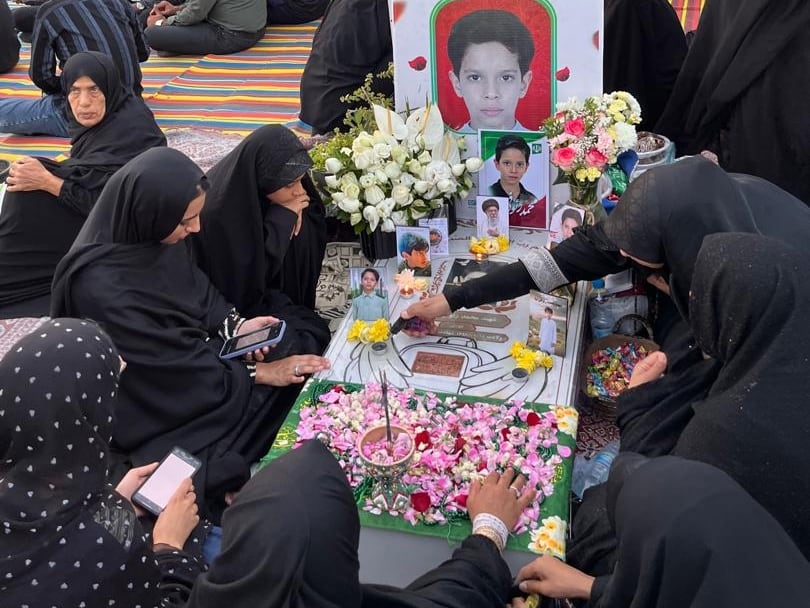
Three U.S. Tomahawk missiles forever changed the lives of dozens of families who, on a seemingly ordinary morning in late February, sent their children to the Shajarah Tayyebeh school in Minab, a city in southern Iran near the Persian Gulf. What followed was the deadliest attack of the war that, according to preliminary investigations, was conducted by the United States against the Tehran regime, killing 156 people, over 100 of them children. Two and a half months later, the wound remains open in Minab.
Last week, the Thursday market was bustling, but the trauma is palpable on every street. Minab remains plastered with banners commemorating the massacre. Ceremonies and events are being held throughout the city to keep the memory of the school victims alive. Across the country, Iranians have mourned the deaths of 3,469 people, according to the latest WHO figures, in a war that has strengthened national bonds and patriotic sentiment. Despite the ceasefire that has lasted for more than a month, nightly pro-government demonstrations continue in several cities, carrying a message of defiance against the “enemy.”
“In this war, women and children have been the target of systematic and targeted attacks… which constitutes a clear example of war crimes and crimes against humanity,” Iranian Foreign Minister Abbas Araghchi declared at the BRICS summit in New Delhi. “The most catastrophic example was the two-phase attack on the school in the city of Minab.”

Mandana Salari, a 29-year-old teacher, learned of the outbreak of war on February 28, when she heard that the compound of the country’s supreme leader, Ali Khamenei, had been attacked. Her last conversation with her brother, Mostafa Salari, took place about 20 minutes before her death. “The probability of an attack there is zero,” Mostafa explained to Mandana when she told him she feared strikes against the city, located about 800 miles from Tehran and home to some 80,000 people. Mandana was concerned about Minab’s proximity to the Strait of Hormuz, where Iranian military installations are located and which has become the epicenter of the conflict, having been the departure point for a fifth of the world’s hydrocarbons before the war.
When Mostafa was told that Shajarah Tayyebeh School had been attacked, he couldn’t believe it. He arrived at the school after walking several miles and then driving for an hour to reach Minab. Mostafa had two lives to fear for: those of his sister Mandana and his niece Liana. When he arrived, Mostafa saw parents weeping uncontrollably, sifting through the rubble with their bare hands. On the ground, he saw pieces of children’s bodies. “There was a little hand there, I saw a round face next to a stone, which I didn’t dare pick up. It was horrifying. I felt dizzy,” he recalls now, two and a half months later.
The rubble remains where the school once stood. The place is still a jumble of metal bars, bricks, and chunks of cement. Hanging decorations and a few belongings of the children are displayed on the remaining walls.

Mandana’s body was found alongside four other corpses: students she had embraced until death. Some of the children were allowed to leave, but seven-year-old Liana didn’t. She told her cousin, also a classmate, that she would stay and then go home with her mother, Mandana. She was playing with her mother’s cell phone: her hand was clutching the device, her backpack was on, ready to go home.
Liana loved making videos of herself lip-syncing. She had a flamboyant personality and liked to wear flashy clothes. “Her favorite character was Kuromi from the anime My Melody & Kuromi,” says Mohana, her aunt. The little girl was also very good at making rhinestone embellishments for clothes. “We had a wedding in three weeks, in Isfahan, during the Eid holidays… and Liana was so excited,” Mostafa says, her voice breaking.
The residents of Minab are certain that the U.S. and Israel are primarily responsible for the devastating attack. “They had full information and knew perfectly well that it was a school, and they still did it. To say they didn’t know because it was in a military garrison is a colossal mistake. But we are also outraged that a school is located in an area like this,” says Mostafa.
The Iranian regime is aware of the danger posed by having military buildings next to civilian institutions and is considering relocating some of its defense facilities. The school in Minab is located next to a naval building belonging to the Islamic Revolutionary Guard Corps. The first missile struck the schoolyard, and the children, gripped by panic, took refuge inside the building. The second and third missiles reduced part of the building to rubble.

The preliminary findings of a U.S. military investigation indicate that U.S. Tomahawk missiles likely struck the school. The coordinates used by the military may have been based on outdated information from the adjacent Iranian military base. Graphic evidence shows a Tomahawk missile falling on the school that day, and the U.S. is the only country involved in the conflict that possesses this type of missile. The final conclusions of the investigation will not be released for several months. U.S. President Donald Trump has blamed the Iranian regime for the attack. If confirmed, it would be “one of the deadliest attacks on civilians in decades,” according to Human Rights Watch, which considers it a potential war crime.

Safoora Pari Taghinejad rushed barefoot through the rubble of the school to try to save her two nephews and a cousin shortly after the missiles ripped through the schoolyard. Her nephews, Hani, 10, and Hamed, seven, had enjoyed a wonderful weekend. Just two days before they were killed, they had celebrated Hamed’s birthday.
On the morning of the attack, their 39-year-old aunt bathed them and dressed them in new clothes. The boys ran out of the house, full of excitement, without even saying goodbye to her. “Hani was a Real Madrid fan. He had bought them both Real Madrid jerseys,” explains his aunt, hesitant to speak because of the immense pain she carries inside. “He used to say, ‘I want to be a famous footballer,’” recalls Pari Taghinejad. Hamed’s body was found the night of the attack, but it took three days to recover Hani’s. “You weren’t just my nephews; you were the cut-short youth of the whole family,” she says, looking toward the graves.

“37, 38, 39, 40…” “Number 37, 37 is auntie!” shouted 23-year-old Mohammad Amir Fadavi, identifying Fatemeh Fadavi after agonizing minutes staring at the coroner’s projection screen. On the day of the bombings, Fatemeh, a beloved second-grade teacher, tucked her mother back into bed before leaving for work. “Sleep, mom, keep resting,” she said, stroking her head. The 41-year-old teacher, a staunch supporter of Ali Khamenei, was deeply distressed by the news of the attacks in Tehran. “I just got a phone call saying the Supreme Leader’s office has been attacked. Please keep me updated on his condition. I don’t have access to television here at the school,” Fatemeh sobbed to her siblings in what would be their last conversation.
Fatemeh’s older sister had seen the body at the morgue, but she didn’t want to believe it was her. “The screen showed images of fingers, a doll, gold jewelry, shoes, backpacks, and human remains. Fatemeh’s face was recognizable. There was some confusion between the numbers three and 37,” explains her sister, Tayyebeh. When the number 37 reappeared on the screen, they asked the operator to stop the image. The face on the screen was covered in blood. It had a broken nose, wounds around the eyes, and a swollen face. “There was only one other student in the classroom, and she also died in Fatemeh’s arms,” explains Tayyebeh.
Sign up for our weekly newsletter to get more English-language news coverage from EL PAÍS USA Edition

Stylish 3-Bedroom Apartment With Panoramic Sea Views – Benalmádena

Montoya vs Brundle BEEF, Newey
Russians Make Mass Cash Withdrawals Amid Internet Shutdowns And Transfer Controls

Mexico’s Most Controversial Politician, Rubén Rocha, Goes To Ground As Cartel Questions Intensify
Insurance company Mapfre decides to pay out €14 million compensation for 2025 blackout

Who Bought Where In The Second Half Of 2025?


-
 ElPais1 week ago
Mexico’s Most Controversial Politician, Rubén Rocha, Goes To Ground As Cartel Questions Intensify
-
blackout April 20253 weeks ago
Insurance company Mapfre decides to pay out €14 million compensation for 2025 blackout
-
 Foreign demand3 weeks ago
Who Bought Where In The Second Half Of 2025?
-

 New Developments3 weeks ago
Inside The Most LUXURIOUS Apartment Building In Spain!
-
Costa Blanca South3 weeks ago
Alicante police chief to retire after 17 years of service
-

 New Developments3 weeks ago
🌅 Stunning Penthouse With Panoramic Sea & Mountain Views Benalmádena
-
biggest ever cocaine bust4 weeks ago
Spain’s biggest-ever cocaine bust – massive Atlantic seizure stuns authorities
-
Costa del Sol3 weeks ago
Starlite Marbella 2026 offers over 1,000 summer jobs: Apply before positions fill fast