
ElPais
Russians Make Mass Cash Withdrawals Amid Internet Shutdowns And Transfer Controls







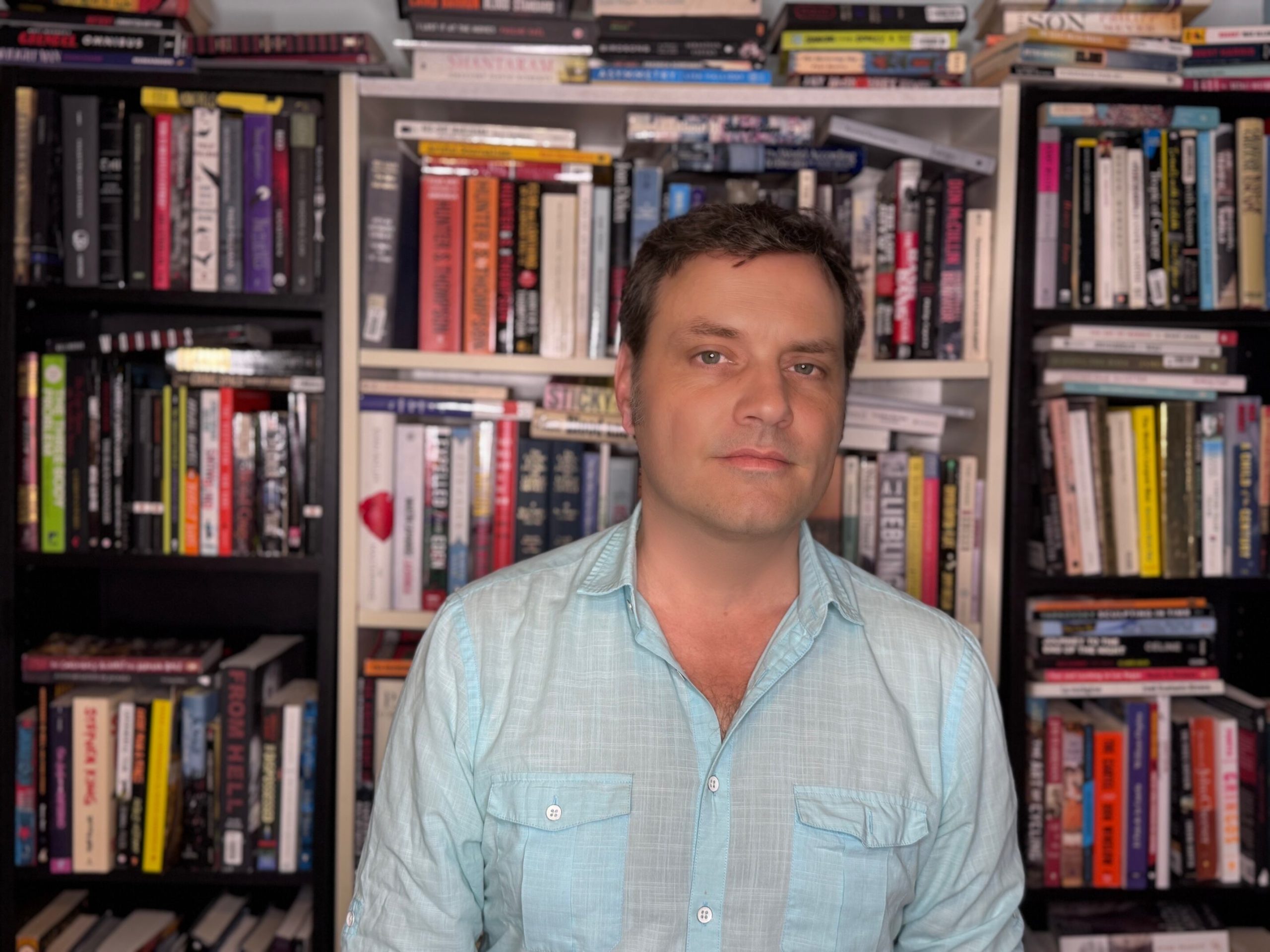
British-American writer and journalist Toby Muse has immersed himself in the underworld of drugs for more than 15 years. He has infiltrated narcotics labs and traveled through guerrilla camps in the Colombian jungle, in order to understand the aspirations and deprivations that drive thousands of people into the trafficking networks. Through his work, the 50-year-old – born in Chichester, United Kingdom – dismantles the failed promises of the war on drugs, while offering a stark portrait of the global cocaine empire.
“I didn’t want to tell the same old story,” Muse explains, via video call from Bogotá. “I think the emotions are what tells the real story. And I wanted to do a book about the emotions of cocaine, about the feelings of cocaine. What does the novia (girlfriend) of a Sicario feel? What does the widow of a narco [feel]?” The result was Kilo: Life and Death Inside the Secret World of the Cocaine Cartels (2021). Six years after its initial publication, the book is now also out in Spanish.
Drug lords fall and new bosses emerge. Governments come and go. And blood stains the streets red in Sinaloa and Medellín. But no matter what, cocaine remains universal. It corrupts politicians and police officers, fuels the insatiable appetite of Wall Street stockbrokers and London nightclubs, moves billions through European ports and confronts countries like Ecuador with an abyss that – until just a few years ago – was unimaginable. These are compelling reasons to return to the pages of Kilo, which narrates the journey of a silent protagonist: a bundle of cocaine. The narrative begins with its departure from the impoverished fields of Colombia, until it reaches the final consumers.
Question. The war on drugs has been going on for more than five decades. And yet, there’s more cocaine than ever. How did we get to this point?
Answer. We’re in the golden age of cocaine right now. Pablo Escobar couldn’t imagine this much cocaine. Production is concentrated in three countries: Colombia, Bolivia and Peru. Colombia, for about the last 10 to 12 years, has broken a new record every year.
One of the main reasons behind this is the peace process with the FARC in 2016. In many of the guerrilla-controlled territories, there were coca crops. When the FARC handed over their weapons, the deal was that the government would take those territories and establish law and order in return. But the government simply didn’t do it. It couldn’t. That’s why I believe — and I know many people don’t like to hear this — that the peace process was a failure. It wasn’t supposed to just mean peace between the government and the FARC, but rather peace for everyone in Colombia. And that, clearly, didn’t happen.
When the FARC laid down their weapons and gave the territory over, all of the other illegal groups flooded into the zones to take over [coca leaf production], and demanding that the campesinos (the peasants) plant more.
Every time I speak to the cocaleros, [I’m surprised by] the amount of them who are sick of the business. They want out. They hate the business now, because it doesn’t even bring them that much money. And now they have to live under the law of these armed groups. And this is what happens, because cocaine always brings violence. If you grow coffee, you don’t have to live with violence. But with cocaine, violence is always there. If the government were to present them with a coherent plan, an alternative, I’m sure they would stop cultivating coca.
I think it’s relevant that the world asks Colombia why it’s producing so much cocaine. It’s a completely legitimate question. But Colombia can also ask the rest of the world: “Why are you consuming so much cocaine?” Colombia produces cocaine because richer countries consume [it]. And yet, we don’t even talk about consumption. In England, who talks about why we consume cocaine? No one. [And] London is one of the centers of cocaine consumption. I never hear a Londoner ask that question
Q. The war on drugs has also created its heroes and villains. Do you think that Colombia is being treated as a scapegoat?
A. Yes, absolutely. It takes two to tango. Colombia produces drugs because people in the United States, which is the biggest market, consume drugs. Europe consumes drugs. Cocaine is capitalism: it’s [now scoping] out new markets in Asia.
Colombia is always portrayed as the villain. There’s a racist component, possibly, in how South Americans are viewed. And I think it’s unfortunate, because we’re all responsible for this. But I also think that there’s a bit of a pendulum swing. Sometimes, the end users are blamed for everything… and I don’t agree with that, either. When we think about the Prohibition years in the 1920s and 1930s, the real villains weren’t the people having a drink, but those who created these absurd laws.

Q. Who pays the highest price in this war?
A. Colombia has this never-ending supply of young men, [and] also young women, to a lesser degree, who are thrown to the frontlines to just die in this pointless war machine where, you know, they’re trained as a sicario (an assassin) at 15 or 16. They don’t live to be 25. It’s an extraordinarily nihilistic life. It’s fast money. [You say to yourself], “I want an actress girlfriend and I will never see 30.” In the best case scenario, [a cartel member] might leave some money behind for their wives or children.
But I think we all pay. If you look at the data in the United States, more than 100,000 people died from overdoses in a single year. That’s more than [all the Americans who] died in Iraq and Afghanistan. The police are also getting even greater power to snoop, because of drug policy-related laws. I think that the war on drugs does none of us any good.
Q. Are governments and politicians primarily responsible for this failure?
A. We all share some of the responsibility. We keep implementing the same policies… and that hasn’t been a very smart decision. But I think we also just don’t know what to do. We’re stuck in this thing where the war on drugs is obviously not working, but I don’t think we’re ready for legalization, either. So, we just keep doing the same thing over and over again. Politicians don’t do anything until they’re pressured. But certainly no one is pressuring Donald Trump to stop the war on drugs in South America. No, in fact, he’s escalating the war on drugs here in this region.
Q. What effect has Trump’s return to the White House had on the fight against the cartels?
A. There is immense pressure on Latin American governments. In the case of Mexico, it’s very clear that he’s asking the authorities to do more. Ecuador, on the other hand, seems much more inclined to accept U.S. resources in its fight against the cartels and criminal gangs. We’ll have to see what comes of that. Trump promised the same for Colombia… but that’s going to depend on who wins the presidential election that’s coming up.
Then, you have Venezuela. Venezuela is an interesting question, because the whole thing was framed in the terms of the war on drugs. You saw this merging of the war on terror and the war on drugs in Venezuela. And [the Trump administration] was talking about the Cartel de los Soles (the Cartel of the Suns). It was everywhere. Then, [Trump] took Venezuela, he took Maduro. And now, America’s basically helping to run Venezuela. And we never hear anything more about this cartel. [This isn’t meant to] minimize [that] Venezuela had clearly become an important transit point for cocaine, especially on its way to Europe. And then, you have the question of these bombings, of these boats – if every one of these boats [was actually] carrying cocaine. That’s the first question to ask. And we just don’t have an answer to that. But even if they were, you cannot just kill someone who is carrying out an illegal act. [The proper thing to do is] arrest them. You put them in front of a court. They [need to be] judged to be guilty.
Q. Cocaine usage has skyrocketed in Europe. Is it possible that, in the future, the violence will reach the same levels as in Latin America?
A. No, not the same levels, but I think a wave of violence [is coming in] Europe. Cocaine always follows a cycle. At the beginning, it’s always a golden age. And there’s no reason to fight, because everyone’s making enough money. [But] then, there comes a moment when the [cartels] get tired of sharing. They’re now so powerful: they can recruit more men and women, they can buy better guns. And then, they’re like, why are we sharing?
I think Europe is at the stage now where everyone’s making so much money. Could you imagine how much those mafias in Barcelona, Madrid [and] London are making? What are they doing with their money? [Well], they’re becoming stronger. You can see the situation in Rotterdam is incredibly out of control: I think the real level of corruption in those port systems is through the roof. You can see that there are teenage sicarios in places like Marseille. You’ve got hardened fighters coming out of Eastern Europe, places like Ukraine and Russia. You’ve got the recipe for something very, very, very ugly to happen. This is what I fear… and Europe is completely [unprepared] for this.
I think Europe’s going to have this moment when it’s going to wake up and say, “we let this problem get far too big.”
Sign up for our weekly newsletter to get more English-language news coverage from EL PAÍS USA Edition
Cuba
What Will Happen To Tourism In Cuba? Inside GAESA, The Military Conglomerate On Washington’s Radar

When a Cuban person on the island wants to refer to “those in charge,” they lightly tap their shoulder with two fingers. The subtle gesture, shaped by nearly seven decades of censorship, is a reference to the epaulet of a military uniform. In Cuba, people do not speak of the government or the party (the Communist Party of Cuba, the only legal one), but rather of the “country’s leadership.” It is a euphemism that points to the real political and economic power: the Revolutionary Armed Forces (FAR).
It is hard to imagine. But the hydra whose innards holds a parallel economy to Cuba’s — with multimillion‑dollar reserves in tax havens and accounts the government cannot audit — has its headquarters in a building with no name on its façade, on Avenida del Puerto, a road that runs along Havana Bay. It is the Grupo de Administración Empresarial, SA (GAESA), a military conglomerate that controls practically half of the island’s GDP. In one of his latest speeches, U.S. Secretary of State Marco Rubio pointed directly at the holding company: “Cuba is controlled by GAESA.”
The olive-green corporate empire monopolizes almost everything. The best way to sum up its reach is with Cuban sarcasm: “If dollars are involved, GAESA surely runs it.” Its portfolio ranges from hotels, transport, gas stations, and construction to wholesale and retail trade, telecommunications, remittances, foreign trade, and the Mariel Special Development Zone. And the crown jewel: the Banco Financiero Internacional (BFI), which handles Cuba’s international transactions. It also holds the accounts of diplomatic staff, embassies, foreign corporations in the country and the earnings of medical missions, which until a few years ago were the state’s main source of foreign exchange.
The U.S. order to fine Spanish companies that “traffic” with GAESA amounts to an invitation to leave the island and represents a shift in paradigm for a nationalized economy that could become market-based. Business sources very close to the Cuban government point to U.S. motives behind those sanctions. “They want to take over the Galician business” (referring to Spaniards who emigrated to Cuba at the end of the 19th century from the Spanish region of Galicia).
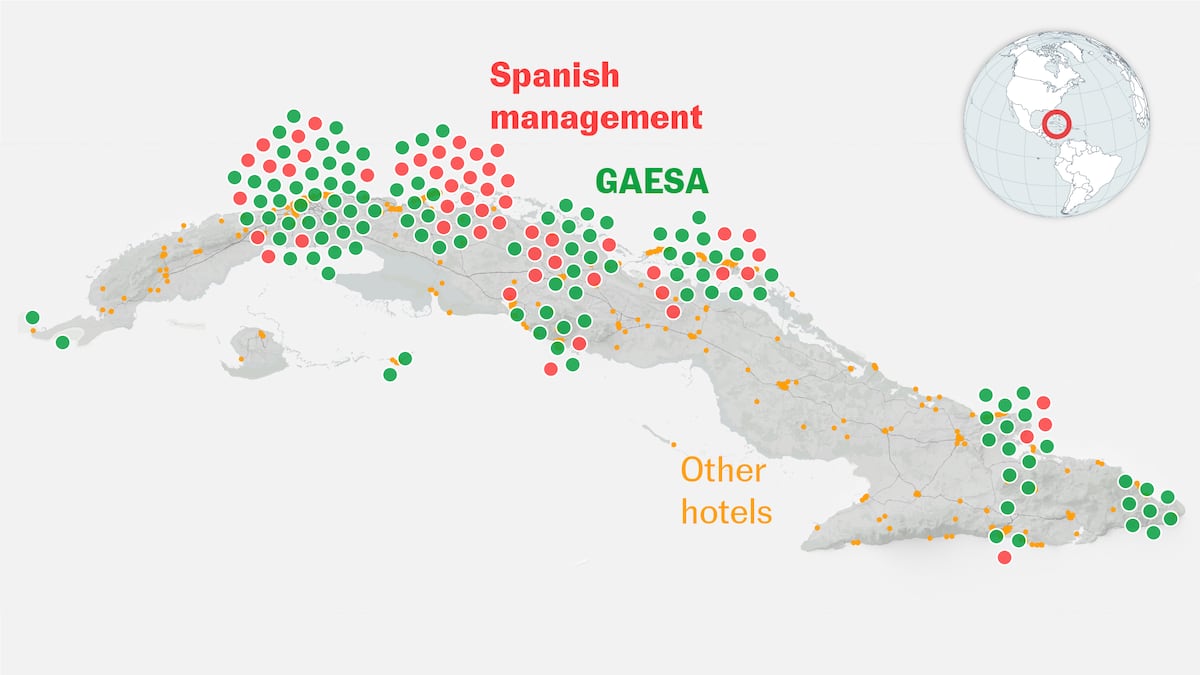
GAESA’s most important presence is in the hotel industry, which is one of the government’s main sources of revenue. Of the 120 hotels owned by Gaviota, the group’s hotel division, 62 (56.3% of the total) are managed by Spanish chains. Leading the list are Meliá, with 33 hotels, and Iberostar, with 18. The Meliá hotel chain prefers not to comment on the situation in Cuba, given the high degree of uncertainty. But the combination of power outages, difficulties in securing supplies of food and beverages, and the loss of air connections from Canada — the largest source market — has led it to have half of its hotels closed at the moment due to lack of demand.
Iberostar operates 18 hotels and, since May 2025, has run the largest in Cuba: a 42-story property with 600 rooms and a state-backed investment of $232 million. The opening of this property received barely any public attention in Granma or other state media. This was due to the difficulty of advertising such a large expenditure amid an economic and energy crisis in Cuba that is beginning to take on humanitarian dimensions.
It was not the only major investment. The key point is that GAESA owns the properties, and in a hypothetical scenario of economic opening led by the United States, management contracts with Spanish chains could be unilaterally terminated and transferred to U.S. giants such as Marriott, Hilton, IHG, or Hyatt, which would find a new destination to serve the millions of travelers enrolled in their loyalty programs (Marriott alone has 271 million Bonvoy members).
Spain’s Secretariat of State for Trade says it is monitoring the situation in coordination with the Spanish Economic and Commercial Office in Havana. “This work also includes continuous contacts with some of the potentially affected companies to learn their specific situation, identify possible risks and support them in evaluating scenarios,” says the department, which depends on the Ministry of Economy. “The objective is to maintain direct dialogue with companies, anticipate potential impacts, and facilitate the capacity to respond to any developments.”
That scenario in which the U.S. could move to take control of the tourism sector because of its sizeable returns is no longer far-fetched. A clear example came on May 21, when Canadian miner Sherritt International, which had a joint venture with the Cuban government, announced a non-binding agreement under which Gillon Capital, a company linked to a former adviser to Donald Trump, could buy a 55% stake in the company. The decision was allegedly made under pressure from U.S. authorities and the threat of possible sanctions if they did business with GAESA. A stark warning to Spanish hotel chains.
GAESA was born in the 1990s, in the wake of the Special Period, the severe crisis after the collapse of the Soviet bloc. Reluctantly, Fidel Castro opened the economy slightly. He allowed tourism and decriminalized possession of the dollar. The firm emerged as a way to finance the military amid the economic collapse. The absorption of much of the state apparatus happened progressively when Raúl Castro, who had served as minister of the Revolutionary Armed Forces for half a century, assumed the presidency in 2006.
That is how Emilio Morales, president of Havana Consulting Group in Miami, sums it up: “GAESA was not powerful. It had a modest market share in Cuba. But it made its power play in 2016 when it absorbed the BFI, by an order signed by Raúl [Castro],” he says in a telephone interview.
No one knows who runs the holding. Its accounts are secret. Neither senior government officials nor state media mention it. Not even when the United States has sanctioned it, most recently in early May. In 2025, a small part of its economic empire was revealed. The Miami Herald obtained, through a leak, financial statements for March and August of 2023 and 2024. Renowned economist Pavel Vidal, who worked at Cuba’s central bank, analyzed the documents and concluded the group accounted for 40% of the economy.

In a telephone interview, Vidal laments how little is known about the conglomerate’s profits and says that, from the scant information available after the leak, it is clear GAESA operates as an economy separate from the country’s political and civil structures. “It is clear where the revenues come from. It is known that those revenues are, in part, in bank accounts, but it is not clear what is done with the profits,” he says. In an interview with the Spanish news agency Efe in May 2024, then-Comptroller General of Cuba Gladys Bejerano acknowledged that the state had no jurisdiction to audit GAESA. She was dismissed two months later. She had held the post for 14 years.
According to 2024 accounts, the conglomerate had liquid assets of $14.5 billion. However, in a recent study, the Economist Intelligence Unit said that by the start of the year, the holding’s reserves, hit by Cuba’s tourism crisis and sanctions, were below $1 billion. “Now [in 2026] I wouldn’t know how much money they have anymore because, obviously, GAESA has been affected like the rest of the country’s economy,” Vidal says.
As with many things in Cuba, all roads lead back to the Castro family. The military hydra was built by a man entirely trusted by Raúl: his late son-in-law, Luis Alberto Rodríguez López-Calleja. He is also the father of Raúl Guillermo Rodríguez, better known as “El Cangrejo” (The Crab), the former president’s favorite grandson, ex-head of security, and the bridge between Havana and Washington in the most recent contacts with the White House. Rodríguez has been present at the forefront of high-level negotiations without holding a formal post in the Communist Party, the government, or the Armed Forces. He was also part of the select group that recently met with CIA Director John Ratcliffe in Havana.
Little is known about GAESA’s lifelong chief executive, who died in 2022. It is as if the conglomerate’s secrecy were mirrored in its CEO’s persona. At the time of his death, international agencies struggled to find a photo of the man who steered the military giant. It is known that Luis Alberto Rodríguez López-Calleja was born in 1960 in the central province of Villa Clara, that he was the son of a comrade-in-arms of Fidel Castro in the Sierra Maestra, and that he studied business administration in the Soviet Union. On its website, the Communist Party highlights his time in military counterintelligence. In a note in the communist newspaper Granma, the paper said the funeral of Raúl Castro’s former son-in-law took place “without fanfare or unnecessary protocol, just as Luis Alberto was in life.” In an unusual move, Raúl Castro appeared in state media eight days after his former son-in-law’s death during a tour of the Mariel Special Development Zone, another of GAESA’s lucrative businesses.
The military’s economic empire is also visible in the landscape: large luxury hotels that stand out beside ruined buildings and streets piled with garbage. It is the contrast left by a gamble that has failed. The diplomatic thaw with Cuba during Barack Obama’s administration (2009–2017) sparked the conglomerate’s voracious appetite for building huge five‑star tourist complexes.
Over the years, even after the first Trump administration resumed hostilities against the island, GAESA continued erecting hotels. The sharp drop in tourist arrivals did not halt the construction boom. In 2024, the last year with annualized data, almost 40% of state investments were concentrated in that activity. That figure is 11 times greater than what was allocated to education and health combined, according to official statistics analyzed by Efe.
For Morales, GAESA’s activities have broken the social pact of the Cuban Revolution: “Before becoming an octopus that absorbs everything that smells of dollars, Cuba took away the people’s basic rights in exchange for meeting their needs. But now it has gone from being a socialist state to a mafia state.”
Sign up for our weekly newsletter to get more English-language news coverage from EL PAÍS USA Edition
Cuba
The Desperation Of Cubans, Trapped Between Trump And The Regime: ‘How Can You Resist When You Have Nothing?’

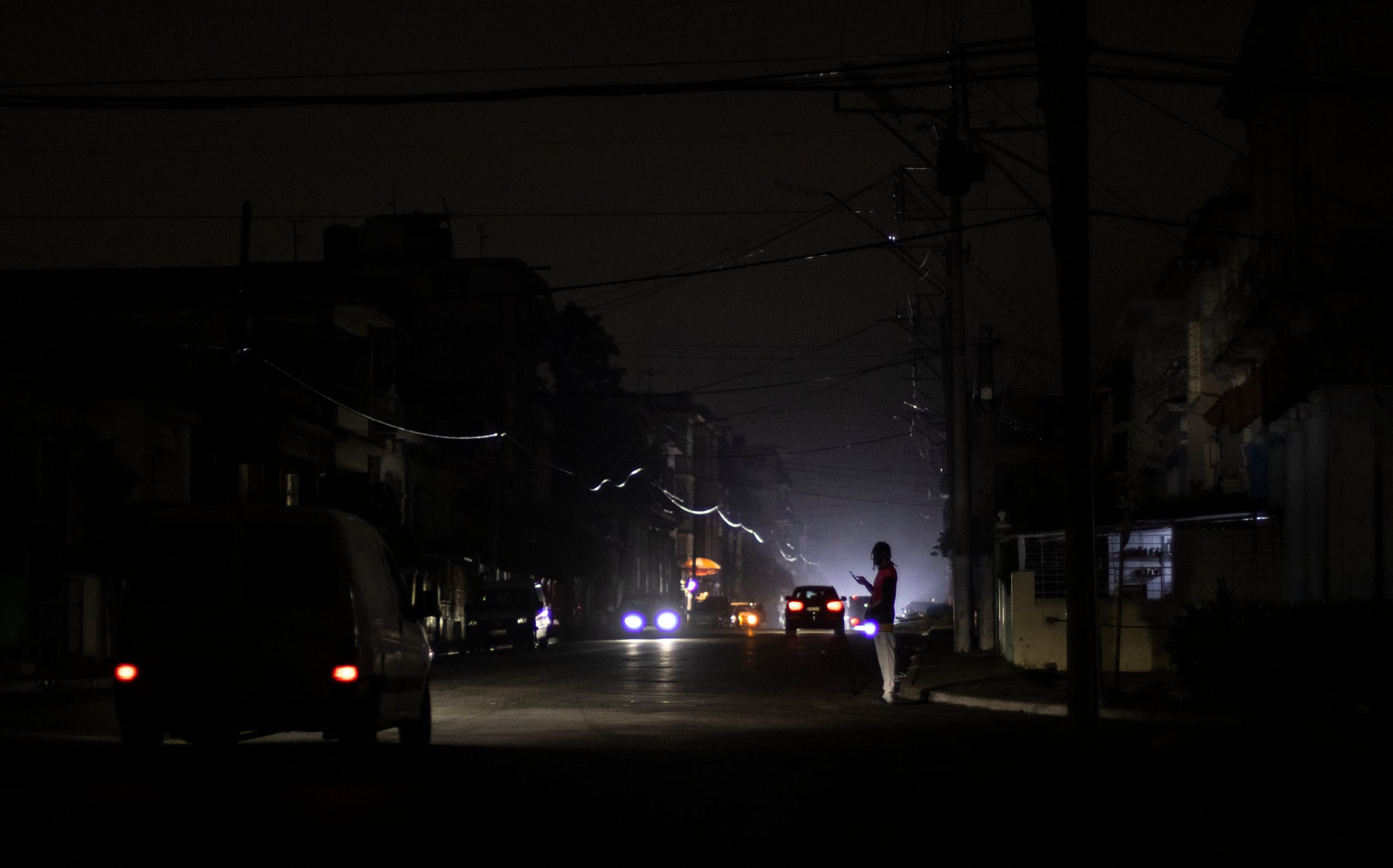
It’s midday and the bread still hasn’t arrived in one of the neighborhoods of central Havana. The open oven reveals empty shelves. Employees give an explanation that all the local residents have already heard: without electricity, there’s nothing to bake.
The 86-degree heat of the Caribbean spring mixes with the sticky humidity in the air. The street smells of garbage: it’s scattered everywhere, baking in the sun and swarming with flies. An auto-rickshaw, a bicycle, as well as a truck carrying drinking water pass by. People crowd around a store that sells eggs individually, because buying a carton of 24 costs more than half-a-month’s pension.
On one of those streets, Andrés, 37, pedals his rickshaw under the sun. “[I work] 12, 13, even 15 hours a day,” he says, while dodging potholes and puddles of foul-smelling water. He only drives his cart on weekends, and even then, there are hardly any tourists to be seen. From Monday to Friday, he works as a veterinarian. But despite the fact that he earns twice the average salary – about 15,000 pesos a month (around $27 when converted at the black market exchange rate) – he and his teenage daughter are experiencing a “very difficult” situation. “I haven’t had water at home for five days. And yesterday, I only had two hours of electricity,” he sighs.
In the fourth month of the energy siege imposed by U.S. President Donald Trump, stagnation is taking hold of what little was still functioning back in February. Since then, only one Russian ship has unloaded diesel on the island. And the Cuban regime has already admitted that fuel reserves have run out.
On the island, the feeling of collapse is spreading. And beyond the island, Washington is tightening the stranglehold. The biggest blow to the regime came last week, when a Florida court indicted 94-year-old Raúl Castro – the last living symbol of the generation that launched the 1959 Cuban Revolution – for ordering the downing of two planes belonging to an anti-Castro organization in 1996, killing four people. This is the first time, in decades of antagonism, that the United States has opened a criminal case against the Cuban regime. Never before has it pressured the country on so many fronts simultaneously.

The effects of the blockade are felt by all citizens. It seeps into the kitchens of homes where people have neither food to eat, nor the ingredients with which to cook; into the overheated skin of those who haven’t showered in days; into the stomachs of those who need a month’s salary just to buy two kilos of chicken that will spoil in the next blackout. It seeps into the sleep of Cubans, who struggle to rest in the dark, airless heat. It invades their dreams. The change they long for – starting with meeting their basic needs – never seems to arrive.
Meanwhile, everything rots. The expectation persists that the country will improve, or that pressure from the United States will bring about an economic opening and, even more importantly, a political transformation leading toward a democratic transition. But what has actually happened is that, after years of sliding down the slippery slope of poverty (now accelerated by the blockade), Cubans realize that they can still descend even further.
“How can you resist if you have nothing?” Andrés asks, as if challenging the Cuban regime, whose discourse since the end of January has centered on the idea of defending the homeland against the empire. Last week, Miguel Díaz-Canel, the president of Cuba, warned of “a bloodbath” if the United States uses military force against the country. This is one of the options on the table that’s been gaining traction in recent days: it’s compatible with Trump’s idea of “taking Cuba,” despite the fact that there’s an ongoing dialogue between the two nations. “Let Trump come already,” Andrés shrugs. “At least Venezuela has changed; we want to improve. And, as long as [the regime remains in power], it’s not going to happen. I don’t see a future for myself, or for my daughter. If this doesn’t change, my plan is to go to Brazil.”
The kidnapping of Nicolás Maduro in Caracas in a military operation in which 32 Cubans defending him were killed is often mentioned on the island. However, its application here is unclear. No one wants violence. Several interviewees who requested anonymity for fear of reprisals expressed a desire for “Trump to come,” envisioning a cleancut military operation (if such a thing is possible). Their strongest expectation is the fall of the regime, which Cubans perceive as a repressive kleptocracy, blaming it for the conditions that they’re attempting to survive… conditions that have gotten worse over the past three months, but which persisted for years before the siege.

On the streets, Cubans are unanimous in their yearning for change. And, in some cases, they want it at almost any cost. But it’s expressed in different ways, always tinged with fear and uncertainty, because no one knows what might happen. The only constant is the exhausting daily struggle for survival. Another precedent that frequently comes up is the repression of the massive citizen protests of July 11, 2021, after which hundreds of arrests were made. There are currently 1,260 political prisoners on the island, according to the organization Prisoners Defenders. And, in recent weeks, nightly pot-banging protests and spontaneous demonstrations involving the burning of uncollected trash have heightened tensions on the island.
One of the latest demonstrations occurred last week in front of the municipal government building in San Miguel del Padrón, an inland borough east of Havana. Videos on social media show dozens of people of all ages banging pots and pans in broad daylight. They surround the building, protesting the electricity, internet and water cuts. The situation, in addition to the sweltering heat, limits these actions from spreading rapidly.
Alejandro, 22, sells used tires to make a living. He dropped out of school two years ago. “This is Apagonia [Blackout City]; they cut the power every night. You can’t sleep because of the heat and the mosquitoes,” he says quietly, sitting in a patch of shade surrounded by flies. “There’s no future here. I haven’t had a phone in ages and I don’t watch TV. My dream has always been to leave this country, to help my mother. My father is in Spain, but he’s never bothered to help me with my papers.”
He has heard about the recent protest. “I don’t get involved, because [the security forces] hit people… I just watch,” he says. “Nobody agrees with this situation. If Trump came and changed things for the better…We can’t take it anymore.”
Alejandro’s main concern is his family. “My mother had thyroid surgery and needs to eat a healthy diet. I haven’t had breakfast today. She hasn’t, either. My uncle and grandmother also haven’t eaten. We live together and, last night, we went to bed without having dinner. How can I accept that? I just want to leave.”
Very close by, in a busy area – where auto-rickshaws that can fit six people apiece are now the main mode of transportation – lives Alexander, 54. He’s a physical education teacher and is currently trying to sell his four-bedroom apartment in downtown Havana for $4,000. He needs money to buy a plane ticket to another country, where his son lives with his family. “I don’t want to leave; I’ve lived here since I was three,” he points out. But he has already made his decision. “After everything we’ve been through, a military intervention would be sad… but I also believe that the only way [the government] will relinquish power is by force. Cubans are so desperate that they want change. The American government isn’t great either, but it can bring about change, even if [we become] slaves to the market economy. [Life] should be about living, not just surviving,” he says.

The regime’s rhetoric feels alien to him. “I used to think like a patriot: if they attack me, I’ll defend myself,” he says. “But now, I’d rather be thrown in jail than shoot someone. Before, there were hospitals, there was education… the country is [unhappy] because now, there’s nothing. What are you going to defend?” he asks. “Look at that building: they’re cooking over charcoal right now, there are people eating from the garbage. This is a failed system. The idea is good, but there’s no market economy: we don’t produce anything. [We’re not like] the Chinese, who are socialists in their own way,” he explains. He hopes that, in Cuba, there will be an operation similar to the one that removed Maduro in Venezuela, because he doesn’t believe that change can be achieved through protests. “From exile, it’s easy to say that we should take to the streets… but starting a battle only to lose isn’t worth it. Those from [the July 11 protests] are all in jail,” he states, referring to the demonstrations from 2021.
In another part of the city, the borough of Centro Havana, a couple sits in the doorway of their building, in the shade. Two of their four very young children play nearby. They’ve been without electricity since yesterday and without running water for several days. The man, a construction worker, has a cast that goes up to his knee, because he slipped while carrying water jugs that were delivered by truck. He’s on sick leave and isn’t getting paid, he says. And there are hardly any construction jobs or building materials, either. His partner works from home. Nowadays, they’re getting by with the help of their families.
The government has just updated and released the Family Guide for Protection Against Military Aggression. It suggests that Cubans prepare an emergency “bag or backpack” with documents, flashlights, candles or matches, canned food, medicine, toys… everything “depending on what each family has available to them.” The reasoning behind this guide is that it’s meant to protect the vulnerable by offering them basic advice. For example, the document describes how to make a tourniquet, because “if the enemy attacks, our revolution will defend itself until victory is achieved and they are expelled from the soil of the homeland.”
When asked if they’re familiar with the initiative, the woman responds sarcastically: “Yes, the backpack that no one can pack, because there’s nothing to put in it.” In Cuba today, the real emergency is hunger.
The Cuban government describes the current situation as “genocide.” The U.S. government calls it “pressure.” Both sides have been at the negotiating table at least since March, though little has been revealed about what’s actually being discussed. We only see what the two sides do and say, and the suffering is borne by the Cuban people. On top of the decades-long embargo that the United States has imposed on the island, Trump has added an energy blockade, sanctions against GAESA – the military-led conglomerate that controls up to 40% of the Cuban economy – individual sanctions against several ministers, as well as the detention of Cuban migrants. And now, accusations have been levied against Raúl Castro. On Friday, May 22, the regime responded with a demonstration of thousands of people, who packed the José Martí Anti-Imperialist Platform, a public event venue in Havana.

Faced with an overwhelming barrage of forceful measures, the regime, which has been in power for 67 years, hasn’t budged. Over the past few months, it has only announced a timid economic reform that allows Cubans living abroad to invest in the island, and has released some 2,000 people from jail (almost none of them political prisoners). The U.S. war with Iran has bought the Cuba regime some time, but it continues to signal resistance, even though collapse is imminent amidst this suffocating pressure. “We will give our lives defending the Revolution,” the Cuban president has declared.
“The government has settled into a pattern of action and reaction; it shows no signs of wanting to mitigate the escalation,” says Alina Bárbara López, a respected intellectual whose public criticism has earned her threats and harassment from the Cuban regime. “Why not grant amnesty to the political prisoners? [It would be] an act of justice, not because the Americans are asking for it, but because the Cuban people are,” she adds. “Many people don’t feel sovereign in their own country; this is because [we’ve] lost sight of the fact that the country belongs to us. [The Cuban people] are in survival mode.”
“In many cases,” she continues, “it’s not that Cubans like Trump for his own sake: rather, it’s that they don’t see change as possible from within and they don’t see themselves as political agents of that change. They refrain from participating in politics, because freedom of expression and association has been repressed,” the historian explains, speaking with EL PAÍS from the province of Matanzas, her phone line constantly interrupted.
However, Bárbara López, the co-director of the CubaxCuba website (described as a “civic thought lab”) and a critical voice against the regime, does believe that “change is possible from within, but help is needed… including from the United States.”
No one knows if the Cuban government speaks a different language at the negotiating table, but the propaganda remains tied to the notion of resistance. Last week, with tensions running high, the regime posted photos on social media that showed the delivery of 6.2 million signatures to Díaz-Canel (in a country of some 8.5 million inhabitants, following the massive migration of recent years), on a document that expressed condemnation of “the blockade, the energy embargo and the war.” For weeks, the petition was circulated in workplaces across the country, with signatures sometimes collected at people’s homes.
“Those parades on television, all this support for the Revolution… nobody believes that,” says Marta, a 23-year-old waitress at a café in Old Havana. She scoffs at these supposed displays of support. She’s putting her university studies in Tourism and her professional aspirations on hold, waiting for better times. “We all hope for change. I see the lives of young people in other countries, [how they] can travel…”
“I don’t want war or violence,” she clarifies. “That’s never good. But I hope to be able to go buy milk at the corner store and not have it cost me a month’s salary.”
Juana, 63, also believes that change is necessary and that the government “should negotiate with the Americans, make a deal,” because, above all, it’s about “avoiding war.” She would like to go to a demonstration to demand this, “but to defend Cuba, not Raúl,” she says, when asked about the pro-Castro rally.
On the island, despite the limitations caused by the power outages and poor internet connection, people are attentive to what Trump or Rubio say. In a hotel hallway, hours before the indictment of Raúl Castro, who still retains influence and power through his inner circle, a chambermaid uses her cellphone to listen to U.S. Secretary of State Marco Rubio speaking in Spanish to the “Cuban people.” In the video, Rubio acknowledges the “unimaginable hardships” they are going through, which he blames on the Cuban regime, and proposes “a new Cuba where you, the ordinary Cuban, and not just GAESA, can own a gas station or a clothing store, or a restaurant.”

Amist such a difficult situation, one doesn’t need to be an expert to understand which message resonates more: Rubio’s, or that of the Cuban president, who responded immediately on X to reject any blame for the consequences of the blockade, adding: “Only the most twisted minds could deny before the world this collective punishment, which is being inflicted upon an entire people; it’s already becoming an act of genocide.”
This isn’t just about words: the exchange reflects how the government has been discredited, as well as how disconnected it is from the population when the country – not just the regime – is at stake. “The government’s idea of resistance against the United States has a weak point: the [domestic] one. Furthermore, there’s no [segment of the] opposition capable of capitalizing on the discontent,” says Fabio Fernández Batista, a history professor at the University of Havana and a critic of the system from within.
Over time, the professor notes, the regime has abandoned the very people it so often appeals to. “The Revolution and the homeland were one and the same from the beginning. [But] now, political erosion has left the idea of homeland feeling empty, riddled with systematic lies.”
At 30-year-old Chabeli’s house, they’ve long since given up expecting anything from the government. She lives with her husband and four-year-old son in a neighborhood near the cemetery. Last night, because of the heat, she had to put a mattress on the floor to sleep beside her son. “I do want change; something has to happen, because this isn’t living. We want the bare minimum, which every citizen should have. But I’m afraid of a U.S. intervention, if they drop bombs.” Her partner, Reinier, chimes in: “Change will take time, even with Trump putting pressure. This requires too much investment; it will take years… and we don’t have that much time. We want him (referring to their son) to see something good. Cuba doesn’t have oil like Venezuela and some people here live well – [like] the military – but the embargo only affects us. I wouldn’t want things to turn out this way, with Trump, because [I’m patriotic]. But we can’t solve the problem; only those who govern us can. And they’re not interested.”
Sign up for our weekly newsletter to get more English-language news coverage from EL PAÍS USA Edition

Stylish 3-Bedroom Apartment With Panoramic Sea Views – Benalmádena

Montoya vs Brundle BEEF, Newey
Russians Make Mass Cash Withdrawals Amid Internet Shutdowns And Transfer Controls

Mexico’s Most Controversial Politician, Rubén Rocha, Goes To Ground As Cartel Questions Intensify
Insurance company Mapfre decides to pay out €14 million compensation for 2025 blackout

Who Bought Where In The Second Half Of 2025?


-
 ElPais1 week ago
Mexico’s Most Controversial Politician, Rubén Rocha, Goes To Ground As Cartel Questions Intensify
-
blackout April 20253 weeks ago
Insurance company Mapfre decides to pay out €14 million compensation for 2025 blackout
-
 Foreign demand3 weeks ago
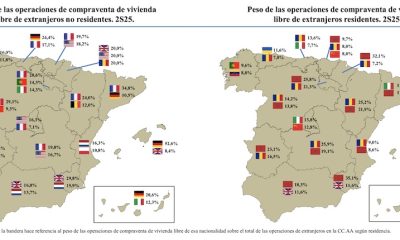
Who Bought Where In The Second Half Of 2025?
-

 New Developments3 weeks ago
Inside The Most LUXURIOUS Apartment Building In Spain!
-
Costa Blanca South3 weeks ago
Alicante police chief to retire after 17 years of service
-

 New Developments3 weeks ago
🌅 Stunning Penthouse With Panoramic Sea & Mountain Views Benalmádena
-
biggest ever cocaine bust4 weeks ago
Spain’s biggest-ever cocaine bust – massive Atlantic seizure stuns authorities
-
Costa del Sol3 weeks ago
Starlite Marbella 2026 offers over 1,000 summer jobs: Apply before positions fill fast