
America
Sad, Guilty And Afraid Of The Future: Young People In Colombia’s Aburrá Valley Feel That Climate Change Has Taken A Toll On Their Mental Health














America
Mikie Sherrill, Governor Of New Jersey: ‘Democrats Have To Move Fast And Show Wins Right Away’

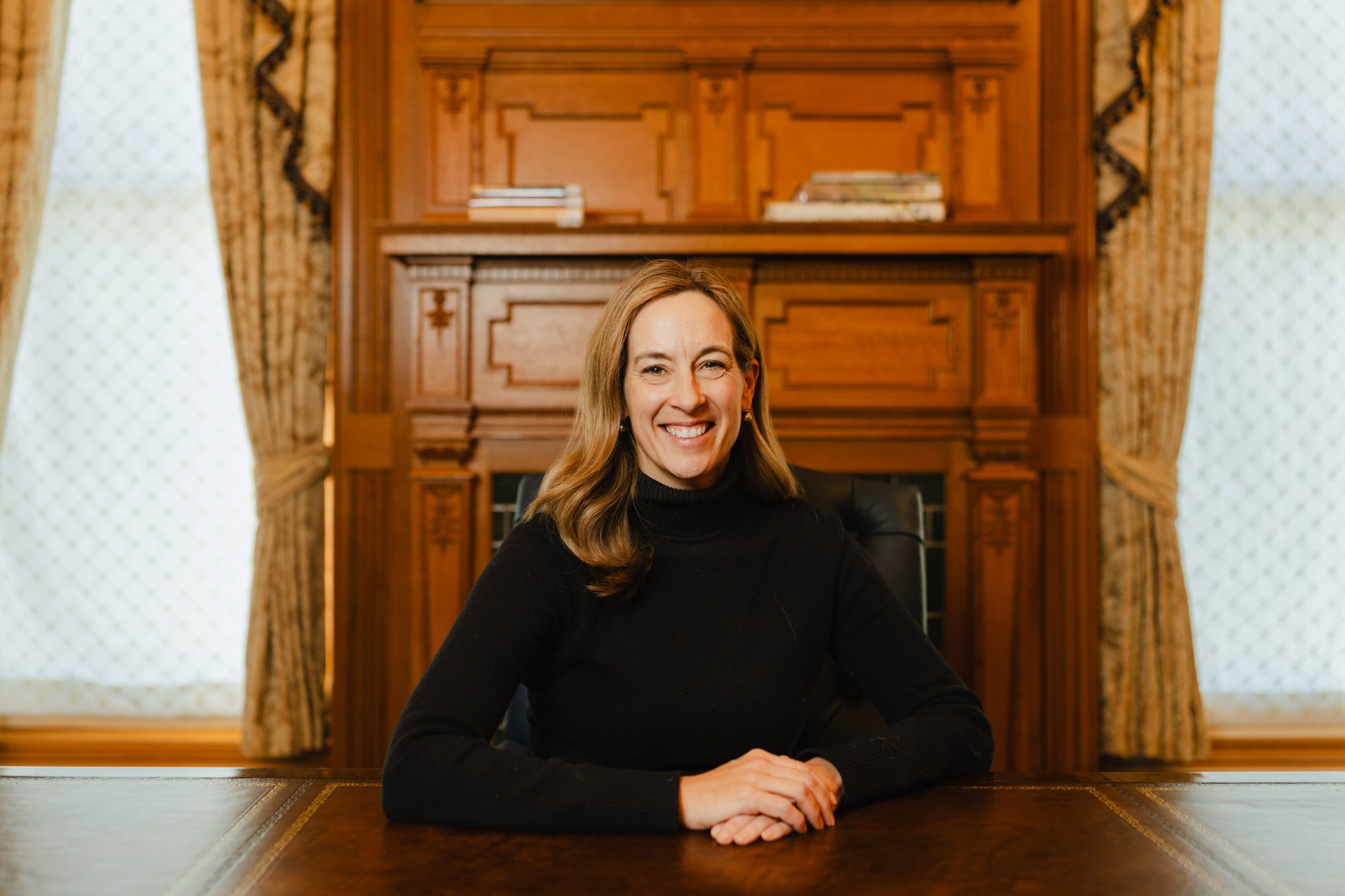
Mikie Sherrill has a firm conviction about the state of the Democratic Party. “We are in our strongest position in decades because we are all united,” she says without hesitation, following the resounding Democratic victory in the November 3 midterm elections.
However, the New Jersey governor warns that the biggest “challenge” facing her party when it takes control of Congress in January will be the need to act decisively and quickly. “You have to move fast and show wins right away because people are cynical, they’re struggling, and they want to see effective government. And as soon as you start to deliver that, they can start to breathe again because they think, ‘Okay, help is coming.’”
Two weeks have passed since the Democrats swept the midterm elections when Sherrill, 54, welcomes EL PAÍS for an interview at the New Jersey State House, the third-oldest state capitol in the United States. Sherrill arrived in its opulent coral-colored hallways last January as the second woman to serve as governor of the country’s most densely populated state (with 9.5 million residents) and the first Democratic woman to hold the office.
Sherrill considers herself a product of the Trump era. She is part of what she describes as “a new generation” of Democratic leaders shaping the party’s direction at a time when the rulebook of politics has been torn up. And the party’s North Star, she says, must be the working class.
Focusing on the cost of living has proven to be a winning strategy for Democrats, as the midterm elections made clear. Voters repeatedly cited Trump’s handling of the economy as their main concern when casting their ballots. It was a message Trump himself successfully exploited in 2024, even though he subsequently failed to deliver on his promises and, in fact, made matters worse with the war in Iran and his tariffs.
Now Democrats are reaping the rewards of those broken promises. Their campaigns drew inspiration and lessons from the victories last year of figures such as Sherrill in New Jersey, Zohran Mamdani in New York City, and Abigail Spanberger in Virginia. All won on platforms centered on affordability, which went on to become the party’s “model,” according to the governor.
“A lot of people would say affordability is a boring campaign, and that you need to run on fascism or democratic institutions or standing up to Trump… And those are all incredibly important things, but it’s not boring to people when they can’t afford their rent and you’re running on trying to fix that for them. It’s not boring when they cannot afford their utility costs and a corrupt president is making billions,” Sherrill argues.
But her own experience as governor over the past nearly 12 months has led her to reiterate a message she delivers not so much as advice but rather as a warning: “Moving quickly to deliver for people is key if you want to hold the public trust.” Democrats must stop the “bleeding” caused by Trump and address the affordability crisis and put an end to corruption within his administration, she says.
A veteran with an acute sense of urgency
Sherrill has said that her sense of urgency stems from her time in the military. Inspired by her grandfather, a World War II veteran, the governor knew from an early age that she wanted to be a pilot. She enrolled at the United States Naval Academy and graduated from flight school in the first class of women qualified to take part in combat operations. She subsequently served as a pilot in Europe and the Middle East. After nine years in the military, she went on to study law and became a federal prosecutor before running for Congress.
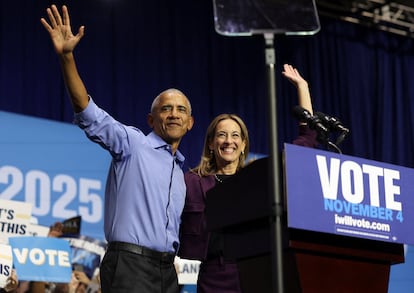
Her political career began during Trump’s first presidency, when she was elected in 2018 to represent New Jersey’s 11th Congressional District in the U.S. House of Representatives in Washington. That year, Democrats wrested control of Congress from Trump’s Republican Party, just as they did this November. Sherrill herself played a role in this year’s victory: she helped flip two congressional seats in New Jersey from Republican to Democratic hands and also campaigned for the now Democratic governors-elect of Texas, Gina Hinojosa, and Ohio, Amy Acton.
Now, as she considers the task facing Democrats as they regain power during the final two years of Trump’s presidency, she says she often draws on what she learned in the military about effective leadership, believing that the political class in this country has been “really, really poor” in that regard.
“Leadership is enunciating a vision. And you can take a disparate group of people and get them committed to that vision because it’s compelling and they trust you that you can get it done. That’s the military. And we recruit from all over the nation. We have people from every different background, and we all come together because we believe in the country. And so that’s what leadership in the Democratic Party is going to look like” after the midterms, she says.
When discussing the future of her party, the governor shows little interest in engaging in the debate over its different factions and divisions. “To me, there’s not one face that says, this is who the Democratic Party looks like. How could one person embody all that it means to be an American?” she asks.
“I hear all this stuff about how we have different ideas, and so it’s going to be ungovernable. I just don’t understand how you think you can govern America with just one person. It’s why we chose not to have a king,” she adds, fully aware that Trump considers himself one.
Sherrill, who belongs to the moderate and pragmatic wing of her party, brushes aside the question of whether the Democratic establishment will be able to coexist with the democratic socialists, who won a record number of seats and positions across the country in these elections. She considers that debate “artificial” and too far removed from people’s everyday concerns. “I can’t tell you the last time someone came to me and said, ‘Mikie, I’m worried about the moderates,’ or ‘I’m worried about the DSA candidates.’ Everybody comes up to me and says, ‘Mikie, I’m worried about affordability. I’m worried about Donald Trump,’” she insists.
Her own record shows that she shares some ideas with both the moderate wing of the party and its more progressive faction. One example is her position on immigration. Sherrill has been highly critical of the White House’s crackdown on immigrants. And although she has not gone so far as to call for abolishing Immigration and Customs Enforcement (ICE), as more progressive figures such as Mamdani have done, she has taken several steps to limit the immigration agency’s activities in New Jersey.
New Jersey was, for example, among the first states to ban immigration agents from covering their faces during their brutal enforcement operations. In response, the Trump administration sued the governor. The legal battle is ongoing. Sherrill has also called for the closure of the first detention center opened during Trump’s second presidency, Delaney Hall, located in Newark. The former prison, which was converted into a detention facility, has come under heavy criticism over its inhumane conditions. Last summer, hundreds of detainees launched a hunger strike that lasted a month. At least three people have died after being held at Delaney Hall.
“I don’t believe in private detention facilities. Delaney Hall should be shut down,” Sherrill says firmly.
A roadmap for 2028
The governor believes that the work she is doing in New Jersey should serve as a roadmap not only for Democrats in Congress over the next two years, but also for the party as it looks ahead to the 2028 presidential election. The Democratic nominee will face Trump’s successor since the president will be unable to run again. In that election, Sherrill says she would like to see a candidate much like herself.
Would she herself consider running in 2028? “I’m very happy being governor of New Jersey,” she replies with a laugh. “What I really want to see in 2028 is leadership that looks a lot like what we’ve done in New Jersey, meaning taking action right away.”
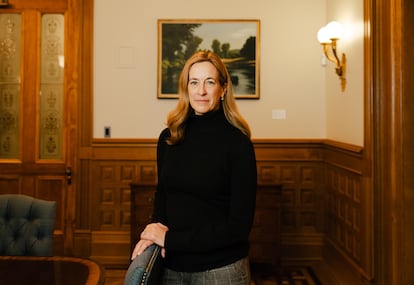
On paper, Sherrill has many of the qualities that make her an attractive candidate for the job: she is a military veteran, a former prosecutor, and a former member of Congress. However, her name does not appear on lists of potential presidential contenders, although she has said she has received calls from people asking whether she would be willing to run.
For now, she prefers to highlight her accomplishments as governor, including signing legislation to curb algorithmic rent pricing; signing a package of laws restricting state and local authorities’ cooperation with the federal government’s anti-immigration crackdown; and taking the Trump administration to court and winning a lawsuit to secure federal funding for the construction of a new rail tunnel connecting New Jersey and New York.
“You have to be fighting for the people you serve. That looks like getting in court really quickly. Not waiting, not trying to cut a deal; just when Trump’s acting illegally, take him to court. Don’t try to negotiate with him. Why are you negotiating for money, for example, for the Gateway Tunnel, when he is legally obligated to turn it over? There’s no negotiation there. There’s court, and he loses, and you keep moving. Having that kind of leadership is really important,” she says.
For the governor, this is the new formula for doing politics. “People are not okay with government inefficiency right now. They’ve seen how quickly Trump could move, and he moves really quickly at breaking things. So if you are going to be great at serving people, you need to move really quickly in rebuilding new things.”
Sign up for our weekly newsletter to get more English-language news coverage from EL PAÍS USA Edition




Nightmare as Barcelona bus goes up in flames and fire reaches flats and shopfronts

Nightmare As Barcelona Bus Goes Up In Flames And Fire Reaches Flats And Shopfronts
Your car could be spying on you, and Spain’s military has sounded the alarm


-

 New Developments3 weeks ago
Luxury Villas For Sale, Estepona – ProjectL1
-

 New Developments2 weeks ago
The San Roque Club – Townhouses For Sale
-

 New Developments4 weeks ago
How To Get A Tourist Rental Licence In Andalusia (Spain) – Step-By-Step Guide 2025
-
Age Concern Marbella - San Pedro4 weeks ago
Halloween lunch sells out as 51 join Marbella get-together
-

 %4 weeks ago
Spain Orders Replacement Of Eight Million Gas Meters: New Rules, Costs And Deadlines
-
countryside3 weeks ago
Rural revival: Five Almeria villages make moving inland easier and more enticing
-
Costa del Sol4 weeks ago
Where are they? Expat questions local police presence
-
costa blanca live music3 weeks ago
Beatles tribute: The Liverpool Band returns to Orihuela Costa