
Latest
‘Seek Your Tribe’: Your Tips For Making Friends In Spain


Esme Fox – esme@thelocal.es
Published: 22 Oct, 2026 CET. Updated: Thu 22 Oct 2026 15:14 CET

Add The Local as a preferred source
To mark Mental Health Awareness Month, we’ve run a series of articles on how loneliness affects foreigners in Spain, and how to beat it. Here are our readers’ recommendations for integrating and meeting people in your local community.
Become a member or log in to continue reading
More
Comments
See Also

Africa
Jacqueline Dunkley-Bent, Midwife: ‘Two Million Babies Are Stillborn Every Year Worldwide, One Every 17 Seconds’

Jacqueline Dunkley-Bent knew the baby had died. As the infant’s head began to emerge, she waited for the slightest movement, a turn to the left or right, any sign of life. None came.
“I knew the facts. But in my heart and in my head I could not accept it,” recalls the chief midwife for the International Confederation of Midwives as she reflects on the first stillbirth she attended.
“Come on, move a little,” she kept thinking silently. “I was very young and naïve. I thought I was entering a profession where everything would be about life and everything would be wonderful. And yes, there was life, but there was also death,” says the British midwife, who had only recently qualified at the time. More than three decades have passed, but the scene has never left her.
Behind every stillbirth, Dunkley-Bent says, there is a story that risks being buried beneath overwhelming statistics: “Two million babies are stillborn every year worldwide, one every 17 seconds.” Yet unlike other major global health crises, stillbirths are not part of the public conversation, nor does the issue attract significant resources.
Behind each of those figures, however, is a family returning home without the child they were expecting, and a grief that is rarely discussed. “The crib is empty. The arms are empty. The breasts are full of milk,” says the midwife, stressing that the pain does not end when parents leave the hospital. She points to another sobering statistic: around 41% of women who experience a stillbirth suffer from depression during the following year.
That lack of attention is one reason why maternal health experts have spent years calling for more investment to prevent deaths that, in many cases, could be avoided. Last week, at the World Health Summit in Berlin — one of the most important events in global health — the Gates Foundation and Wellcome Leap announced the launch of UZIMA, a $100 million initiative aimed at halving the number of stillbirths in several countries through new tools for monitoring pregnancy and childbirth.
The program, whose name comes from a Swahili word meaning “life and wellbeing,” will explore a range of innovations, from tests designed to detect pregnancy complications earlier to artificial intelligence systems to help identify them in low-resource settings.
“We are working toward a future in which no mother, no baby and no child dies from a preventable cause,” Anita Zaidi, president of Gender Equality at the Gates Foundation, which collaborates with this newspaper, said at the launch event in Berlin.
Technology alone is not enough
For Dunkley-Bent, however, no innovation will make a meaningful difference unless it is accompanied by stronger health systems. “An innovation alone is not enough,” she warns.
The midwife notes that the world still faces a shortage of nearly one million midwives, a gap that limits the ability to detect complications and intervene before it is too late. Identifying a high-risk pregnancy is of little use if there are no trained professionals, healthcare facilities or referral systems in place to provide care for the mother.
Dunkley-Bent stresses that many of these deaths could be prevented with adequate prenatal checkups, early detection of complications and timely access to specialized care when warning signs appear.

Often, she explains, the danger signs are there. “We look for changes in fetal movements, problems with the baby’s growth, infections or hypertensive disorders such as preeclampsia,” she says. These are signs that may indicate something is wrong during a pregnancy. The problem is that millions of women do not have access to regular checkups or seek care at health centers too late.
Also, not all women face the same risk. “Four out of five children” who are stillborn are born in sub-Saharan Africa and South Asia, where health systems typically have fewer resources and access to prenatal care is more limited. And sometimes, some deaths could be avoided with knowledge as “basic” as teaching mothers to recognize their babies’ movements, says Dunkley-Bent.
“In countries with more developed health systems, women are informed from the first weeks about the importance of knowing fetal movement patterns and of seeking help if they notice a change, so they know whether their baby usually moves at night, in the afternoon… They know their pattern,” the midwife explains.
And when something changes, they have someone to turn to. But in many other parts of the world, the opposite is true. “There is no one to go to. There is no education about fetal movements. There are people who can’t even afford a consultation or to go to the hospital,” she says. The result is that “some women stay at home unaware that the baby is in danger.”
This lack of information and access to healthcare has another consequence: many mothers end up blaming themselves for a death they may never have been able to prevent. The grief is often accompanied by silence. Dunkley-Bent says stillbirth remains a subject shrouded in stigma and guilt.
Many women spend years wondering whether they did something wrong during pregnancy or whether they could have prevented their child’s death: “Did I eat something I shouldn’t have? Did I work too hard? Did I wait too long to ask for help?” These are questions she says she hears again and again from mothers searching for an explanation for a loss that often has no simple answer.
The reactions of those around them do not always help. Some families offer well-intentioned comments that minimize the magnitude of what has happened. Remarks such as “you can have another baby” or “you’re still young, you can try again” can deepen the feeling of being misunderstood.
“No baby replaces the baby you lost,” says Dunkley-Bent. Each death, she adds, “means the loss of an imagined life, of plans and expectations that vanish in an instant.”
Dunkley-Bent struggles to understand why a tragedy on this scale continues to occupy such a marginal place on the global health agenda. “The knowledge to prevent some of these deaths exists,” she insists. The tools to detect many complications earlier exist as well.
What is often missing, she argues, is ensuring that these resources reach all women, regardless of where they live. “We have the opportunity to prevent these deaths and the responsibility to act,” she says. “And to act now.”
Sign up for our weekly newsletter to get more English-language news coverage from EL PAÍS USA Edition
China
John Kerry: ‘Trump’s Decision To Allow Purchases Of Russian Oil Is Counterproductive And Dangerous’


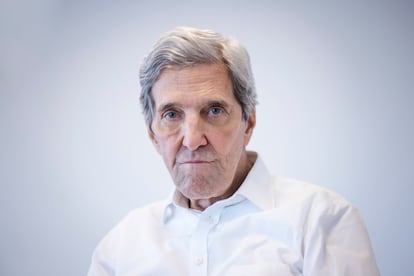
The political career of John Kerry, 82, has left a vast legacy that the Donald Trump administration is poised to squander. Among other things, Kerry was the key negotiator of the nuclear deal with Iran and the Paris Agreement. The former secretary of state and 2004 Democratic presidential candidate remains fully engaged in the energy transition through the global investment platform Galvanize. Kerry recently visited Barcelona to give a talk at Impact/Week, a conference for entrepreneurs, investors, and global leaders organized by Norrsken Barcelona, one of Europe’s largest startup hubs.
Question. Some of the biggest shifts on the global chessboard are being driven by energy: Trump’s diesel agreement with Russia and the tensions surrounding Iran. Is this proof that the energy transition is fundamentally a geopolitical issue, not just an environmental one?
Answer. Yes. It’s obvious that there are leaders in a number of countries who have said publicly that they’re not going to be dependent on the Strait of Hormuz for energy security, and there’s no economy that’s going to live in that kind of uncertainty. National security and international security challenges are now much more on the table. It is front and center.
Q. But many governments emerging across Europe today are not especially enthusiastic about the transition to renewables, and Trump is clearly not on board. Are we witnessing a backlash?
A. There is certainly a political backlash, and we shouldn’t minimize it. Decisions by governments matter. They can delay investment, create uncertainty, and make it harder to build the infrastructure we need. But I would distinguish the political debate from the reasons countries and businesses are pursuing this transition. They need affordable electricity. They want secure energy supplies. They want to compete for the industries and jobs of the future. Those interests don’t disappear when an administration changes. We also have to listen to what people are telling us. If people believe the transition means higher bills or that their community will bear the costs while somebody else gets the benefits, we have to address that. So yes, progress can be slowed, and gains can be reversed. Nothing about this is inevitable.
Q. Do you think then that the global climate agenda can survive a new era of economic nationalism?
A. It can. Economic nationalism is creating obstacles, but new technologies are making the economic case for the transition stronger. Better batteries, better turbines, and better solar panels can help overcome some of those barriers. Ultimately, business leaders have to look at their bottom line: What are their costs? What does this mean for their shareholders? What can they save by transitioning?
Q. Spain already generates more than half of its electricity from renewable sources. However, after the major blackout in April 2025, the debate over grid stability resurfaced. Do you believe that a renewables-dominated power system can operate safely without nuclear energy?
A. People are right to demand reliable electricity, but we have to be precise about what happened. The European investigation found a combination of failures involving voltage control, the way generating plants responded, and a cascade of disconnections. That is a much more specific diagnosis than saying Spain had too much renewable energy or was waiting for storage technology to be invented. The investigators also made clear that the solutions they recommend are technologically available today. Storage technology exists. Batteries are already being deployed at scale, and pumped hydropower has been operating for decades. We should keep improving those technologies, particularly for storing energy over longer periods. But storage is one part of the answer. You also need stronger transmission, connections between regions, flexible sources of power, and equipment and operating rules that keep the grid stable.
Q. What role do you see for artificial intelligence in the green transition?
A. I see enormous potential. AI can help us forecast electricity demand, operate grids more efficiently, develop new materials, and reduce the energy wasted in buildings and industry. Those are practical applications that can lower costs and accelerate progress. But we also have to account for the electricity, water, and infrastructure that AI requires. The benefits aren’t automatic. We need to measure what it actually delivers and make sure communities benefit from the investment. The growth in electricity demand creates an opportunity to modernize our infrastructure. We should use it to bring more clean power onto the grid, expand storage, and build a system that serves everyone more reliably. Ultimately, the test is whether we’re using this extraordinary capability to solve consequential problems. Can we make energy more affordable? Can we manufacture with less waste? Can we help communities prepare for extreme weather? That’s where I would focus our ambition.
Q. You have said we should move together in a multilateral system to achieve our goals, with the involvement of China. Do you think that is possible with the Trump administration?
A. No, but we have to. It’s worth talking about it, because you need to persuade people to make that happen. If people don’t engage in politics, you’re going to leave it to people who will screw it up. We’ve seen that.
Q. Do you expect any change after the midterm elections?
A. I do. If the House of Representatives becomes Democratic and the Senate does, you’re going to have a huge change.
Q. What is at stake in the midterm elections?
A. There’s a huge amount at stake: whether or not we’re going to be a country that adheres to law, enforces the law, respects the law. And whether or not we are going to act in a way that sends a good example for democracy. A lot of people are arguing against democracy, and democracy is going to have to prove its value and its capacity to deliver.
Q. Regarding the recent deal with Russia, do you think that Trump has put the short-term interests of his administration and himself ahead of the long-term interests of the U.S. and the security of its allies in Europe?
A. I wouldn’t frame it specifically that way. I think his decision to allow purchases of Russian oil despite sanctions is counterproductive and dangerous. It doesn’t honor the sacrifice of Ukrainians, and it undermines both what we ask of other countries and our support for Ukraine.
Q. You were one of the architects of the Iran nuclear deal. Looking at the current situation, do you believe there is still a diplomatic path forward, or has the conflict entered a dynamic that will be very difficult to reverse?
A. Let me be very clear: there is only a diplomatic way out. There is no possibility to resolve the question of Iran by war, and I think President Trump has already proven the inability of his strategy to be able to get what he wanted.
Sign up for our weekly newsletter to get more English-language news coverage from EL PAÍS USA Edition
Alberto Núñez Feijóo
Última Hora De La Actualidad Política, En Directo | El PSOE Responde Al PP Y Dice Que Participará En “todos Los Debates”, Incluido El De Vivienda


Christian Horner confirms recent Red Bull talks
Jacqueline Dunkley-Bent, Midwife: ‘Two Million Babies Are Stillborn Every Year Worldwide, One Every 17 Seconds’

Is Andalucia Earthquake-Ready? We’re About To Find Out


-

 Uncategorized3 weeks ago
F1 Bahrain Grand Prix will be live and FREE on TV this weekend
-
Blackout preparedness3 weeks ago
Brussels takes action against Spain over failure to update blackout plan
-

 New Developments3 weeks ago
Luxury Villas For Sale, Estepona – ProjectL1
-

 New Developments3 weeks ago
How To Get A Tourist Rental Licence In Andalusia (Spain) – Step-By-Step Guide 2025
-
EU3 weeks ago
EU nicotine crackdown sparks warning that ex-smokers could be driven back to cigarettes
-
 Foreign demand4 weeks ago
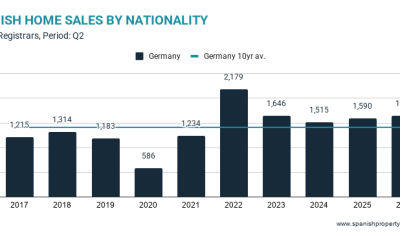
Market Snapshot: German Market In Q2 2026
-

 Uncategorized3 weeks ago
Lewis Hamilton F1 wish could come true as stunning plans for new track revealed
-
Latest2 weeks ago
The Changes To Spain’s IRNR Non-Resident Property Tax In 2027
Join the conversation in our comments section below. Share your own views and experience and if you have a question or suggestion for our journalists then email us at news@thelocal.es.
Please keep comments civil, constructive and on topic – and make sure to read our terms of use before getting involved.
Please log in here to leave a comment.