Connect with us

Abelardo de la Espriella

Sex-For-Contracts Allegations Rock Gustavo Petro And Colombia’s Left

Published

on

sex-for-contracts-allegations-rock-gustavo-petro-and-colombia’s-left

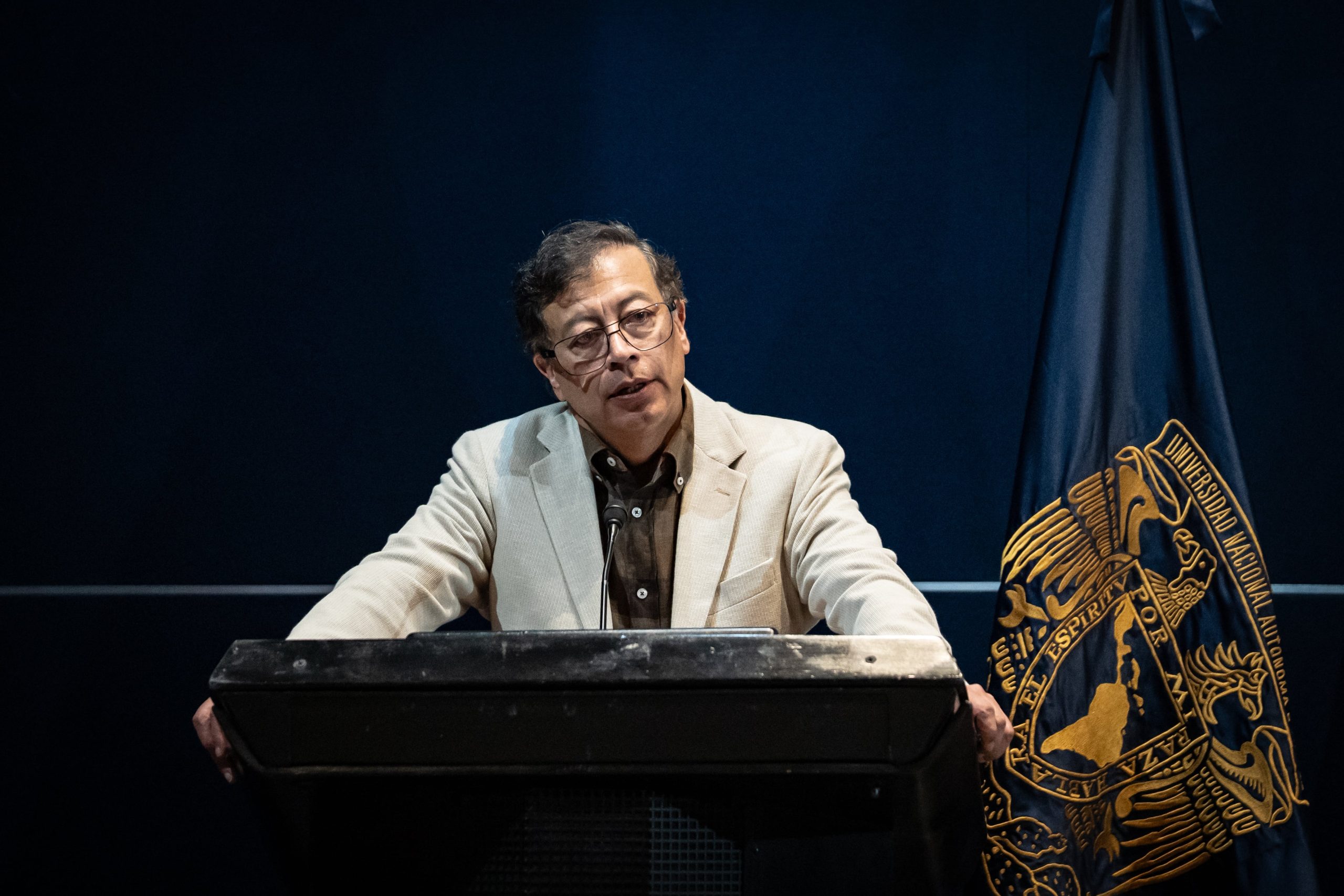
Gustavo Petro’s private life has become the focus of public debate in Colombia. The allegations against the former president have left Colombia’s left-wing opposition in a difficult position. Back in opposition after Petro’s presidency and now holding the largest bloc in Congress, albeit well short of a majority, it is trying to resist the offensive launched by the far-right government of Abelardo de la Espriella.

But the accusations, which claim that Petro awarded public contracts to women in exchange for sex, have opened a Pandora’s box over practices both in the previous administration and within the Pacto Histórico (Historic Pact), the left-wing coalition that united Petro’s supporters into a single party, where tensions between different factions are beginning to show.

The left finds itself caught between loyalty to Petro and a desire to distance itself from him. While many on the left insist on due process and the presumption of innocence, calls for introspection and self-criticism are growing, particularly over what critics see as a betrayal of the feminist principles the movement once championed.

The allegations go beyond the private life of the first left-wing president in modern Colombian history. Deicy Jiménez, a 26-year-old woman who received several state contracts during the previous administration, claimed last month that the 66-year-old former president set up a network of women whom he rewarded with public jobs in exchange for sexual relationships. Shortly afterwards, she released a video showing the two kissing. Since then, additional videos and chat messages have been leaked to the media.

Petro has denied the allegations, though not his relationship with Jiménez, who is 40 years his junior, and has said he will defend himself “before the courts,” rather than on social media, his preferred means of communication. Even so, he took to X on Monday to respond to what he described as a “false narrative.”

The head of President Abelardo de la Espriella’s Administrative Department of the Presidency, known as Dapre, has claimed that the network involved more than 40 women, though he has provided no further details or evidence, and the allegations remain under investigation. Beyond feminist criticism, the right has found a political gold mine in the former president’s scandal-ridden sex life and has seized on it to mount relentless attacks on his character and morality.

Last week, Noticias Caracol published a chat exchange from late 2025 in which Petro appears to ask the then head of Dapre to renew a contract for Deicy Jiménez at the Interior Ministry. Jiménez also held contracts with the Superintendency of Surveillance and with then-government senator María José Pizarro, who has said the accuser should be heard “with every guarantee” of due process.

Journalist María Jimena Duzán added to the controversy by writing in a column that at least 10 sources had described “getaways” with Petro involving “prostitutes, transvestites and friends who supplied him with hallucinogenic substances.” “Many of the people who attended his parties were paid with contracts to buy their silence,” Duzán wrote, without identifying her sources.

At a politically inopportune moment for internal divisions, the scandal has dealt a significant blow to Colombia’s left. Throughout his long political career, Petro, who has often been inclined to dominate the spotlight, has also been something of a politician without a party. After belonging to the M-19 Democratic Alliance, the political successor to the guerrilla movement he joined in his youth, he was a congressman, mayor of Bogotá and presidential candidate under a succession of parties and movements, including Vía Alterna, Polo Democrático Alternativo, Progresistas and Colombia Humana.

He ultimately reached the presidency backed by the Historic Pact, then a broad and ideologically diverse coalition of progressive forces. Under Petro’s influence, the coalition was transformed into a unified political party. Today it holds 26 of Colombia’s 103 Senate seats, more than any other single bloc.

Far from stepping away from politics after handing over power on August 7, Petro went on to take the helm of the Historic Pact, after promoting claims of electoral fraud that found no support among the country’s electoral authorities. He still retains considerable popular appeal, and there has been persistent speculation that he could run in next year’s local elections for mayors and governors, though the former president himself has neither confirmed nor denied the possibility.

That has not shielded him from criticism within his own camp as the scandal continues to unfold. Senator Iván Cepeda, the Historic Pact’s presidential candidate, who narrowly lost the runoff election to De la Espriella, urged the left on Sunday not to cover up violence against women out of political loyalty, though he stopped short of mentioning Petro by name. He hardly needed to. Speaking in Valledupar, Cepeda acknowledged that the Historic Pact still harbors “deep-rooted machismo and patriarchy in its leadership and throughout its structures.”

That tendency, added Cepeda, who is expected to lead the opposition, “manifests itself in strongman politics and the cult of male leadership; in the concentration of decision-making within circles of men; in the discrediting of women who exercise authority,” as well as “in the silencing of complaints and the revictimization of those who dare to speak out about abuse.” Progressives, he argued, cannot assume they are “immune” to such practices simply because of their history of social struggles. He called for a “collective reckoning” in which men acknowledge their privileges and examine their own behavior.

Sociologist and political analyst Sara Tufano, one of the first voices to denounce sexist practices within Colombia’s left and the Historic Pact, believes there is clearly a far-right campaign to discredit Petro that goes beyond the allegations, which she says must nevertheless be thoroughly investigated.

“One can recognize the achievements of the Petro government and, at the same time, acknowledge that he is sexist,” she says. “One can denounce his practices and, at the same time, denounce Abelardo’s tax reform. One can recognize the abuse of power and, at the same time, know that the right will instrumentalize the allegations.”“

She continues: “When there are accusations of this nature, and even more so when they involve a former president and party leader, the most sensible thing would be for him to step aside.”

Sign up for our weekly newsletter to get more English-language news coverage from EL PAÍS USA Edition

Abelardo de la Espriella

Bombings, Extraditions, And Militarized Cities Mark De La Espriella’s First 90 Days In Charge Of Security
Published

on

bombings,-extraditions,-and-militarized-cities-mark-de-la-espriella’s-first-90-days-in-charge-of-security

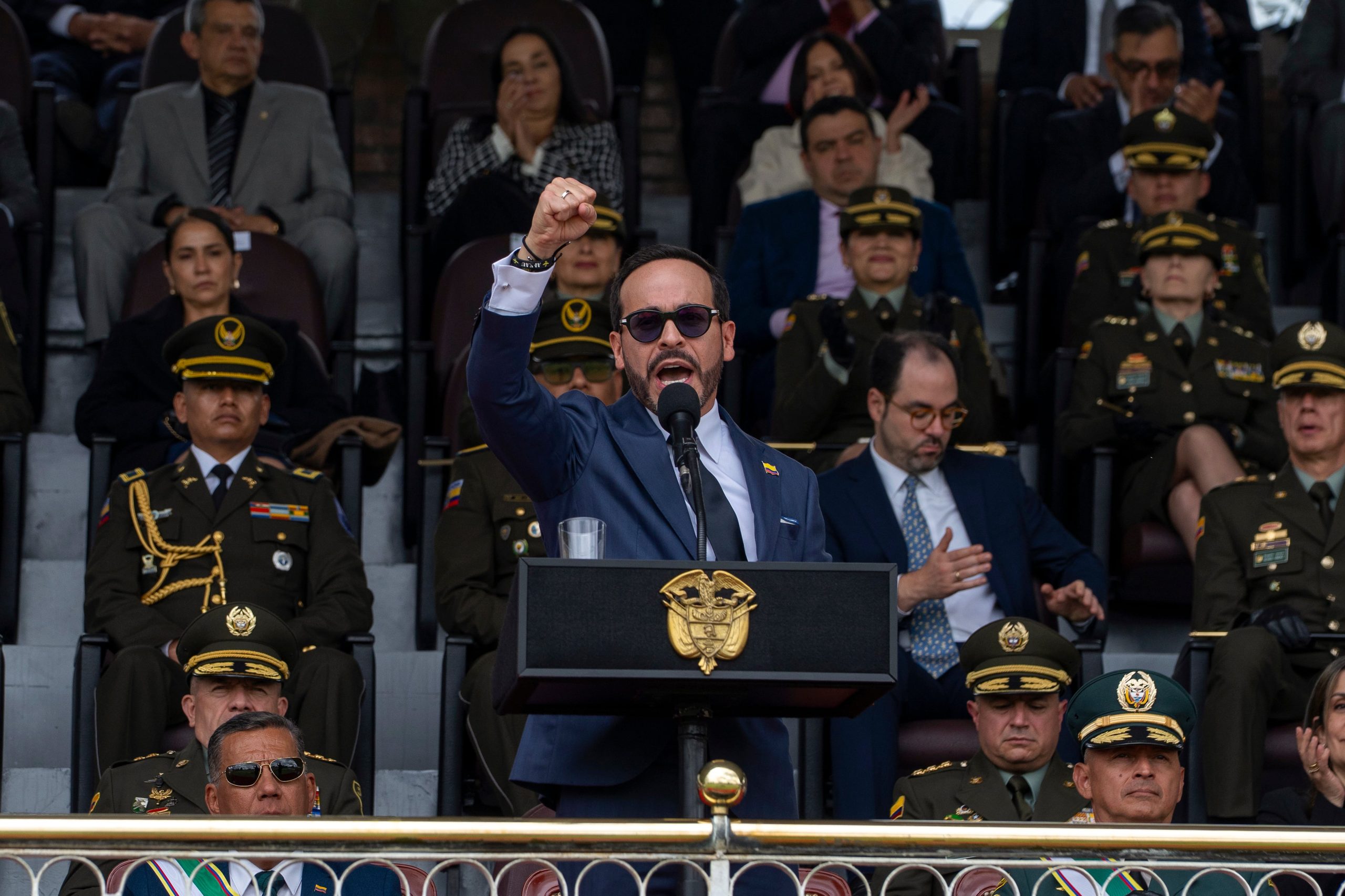
Abelardo de la Espriella represents the return of a hard line to restore security in Colombia. The restoration of authority was the central idea of the campaign that brought him to power, set against a backdrop of renewed violence and the failure of the total peace policy with which his predecessor, Gustavo Petro, sought to negotiate simultaneously with all armed groups. The far-right president had promised a “shock plan” for his first 90 days in office, which conclude this week.

To project the image of a hard line, De la Espriella has allowed himself to be filmed with a pistol on his hip during an operation in Santa Marta, and has walked among the body bags of fighters from armed groups killed in military strikes. He has also turned police raids against urban crime — appearing on the scene with a radio and a bulletproof vest — into a cinematic form of government communication. Those outings are part of his nascent program to fight crime in cities, dubbed Urban Security Defense Blocks (BODSU).

Ten years after the peace agreement with the FARC, which disarmed about 13,000 guerrillas, the war still burns, only now in a more fragmented phase. De la Espriella, who rejects that historic pact, inherited on August 7 a country with nearly 29,000 members of organized armed groups and at least 14 active zones of contest between illegal actors, according to estimates from the Public Forces compiled by the Ideas for Peace Foundation (FIP).

Three months later, the government has intensified airstrikes (there have been at least six, in which at least eight minors have died), extraditions, and the pursuit of so‑called high‑value targets, as well as militarizing both Santa Marta (in September) and Cúcuta (last week) in response to separate security crises.

De la Espriella promised during the campaign to reclaim the “lost territories” within those 90 days, but later clarified that the deadline was for launching a “shock plan” that would include the capture of “10 major heads of narco‑terrorism and organized crime.” In other words, the so‑called high‑value targets. So far, the highest-profile case has been Naín Andrés Pérez Toncel, alias “Naín” or “Bendito menor,” one of the leaders of the Sierra Nevada Self-Defense Forces (ACSN), who was killed two months ago in Riohacha, the capital of La Guajira. Although he was not the organization’s top boss, he became one of its most visible members because of his flamboyance, and that visibility made him a priority target for the government.

The president also proposed closer cooperation with the United States, including more extraditions — often publicized widely on his social media when signed — and the construction of new mega‑prisons modeled on what Nayib Bukele has done in El Salvador, projects that have yet to materialize.

“What we have seen in the first 90 days is a change in tone, alongside the will and initiative to take military action,” says Elizabeth Dickinson, deputy director for Latin America at the International Crisis Group, who highlights the rise in extraditions as a sign of alignment between the agendas of Bogotá and Washington (De la Espriella has joined the Shield of the Americas, Donald Trump’s alliance of like‑minded leaders to fight drug trafficking). “There is a new political will regarding military operations, and that is something many officers in the Public Forces acknowledge and appreciate,” Dickinson adds. Replacing criminal governance with legitimate state governance in many territories will be the hardest part, the expert warns.

Jorge Mantilla, a conflict specialist, likewise emphasizes that the state has regained military initiative, reflected in increased operations, arrests, and clashes. He says the image of effective leadership has been conveyed. “This is a government where the narrative matters more than the data. And there you see the whole staging of the radio, the white bags, the pistol, the green military uniform,” he says. Amid tensions within Colombia’s right, he believes De la Espriella’s major political gamble is to take the “security torch” from former president Álvaro Uribe (2002–2010).

De la Espriella has also managed to reestablish regional dialogue, Mantilla notes, after a breakdown in communication between national and local authorities that had persisted until a few months ago, before he took office. “The president’s collaborative work with the governors and mayors, through various mechanisms, can create a virtuous cycle,” he predicts. There is now greater coordination.

Several important questions remain. “The first of these is how to prevent these groups or their leaders — who are currently being targeted — from being rapidly replaced, in connection with a phenomenon that this government must address but about which it has not said a single word: the issue of forced recruitment,” Mantilla notes. The shadow of the humanitarian impact also looms large, with the civilian population caught in the middle of the military offensive and terrorist attacks such as those that occurred over the weekend in the southwestern part of the country, leaving at least five people dead. Furthermore, he concludes, there is a considerable gap between striking at armed groups and actually dismantling illicit economies, as De la Espriella has promised.

Sign up for our weekly newsletter to get more English-language news coverage from EL PAÍS USA Edition

Continue Reading

Abelardo de la Espriella

The US Takes Its Anti-Narcotics War Onto Venezuelan Soil With A Drone Strike Against The ELN

Published

on

the-us-takes-its-anti-narcotics-war-onto-venezuelan-soil-with-a-drone-strike-against-the-eln

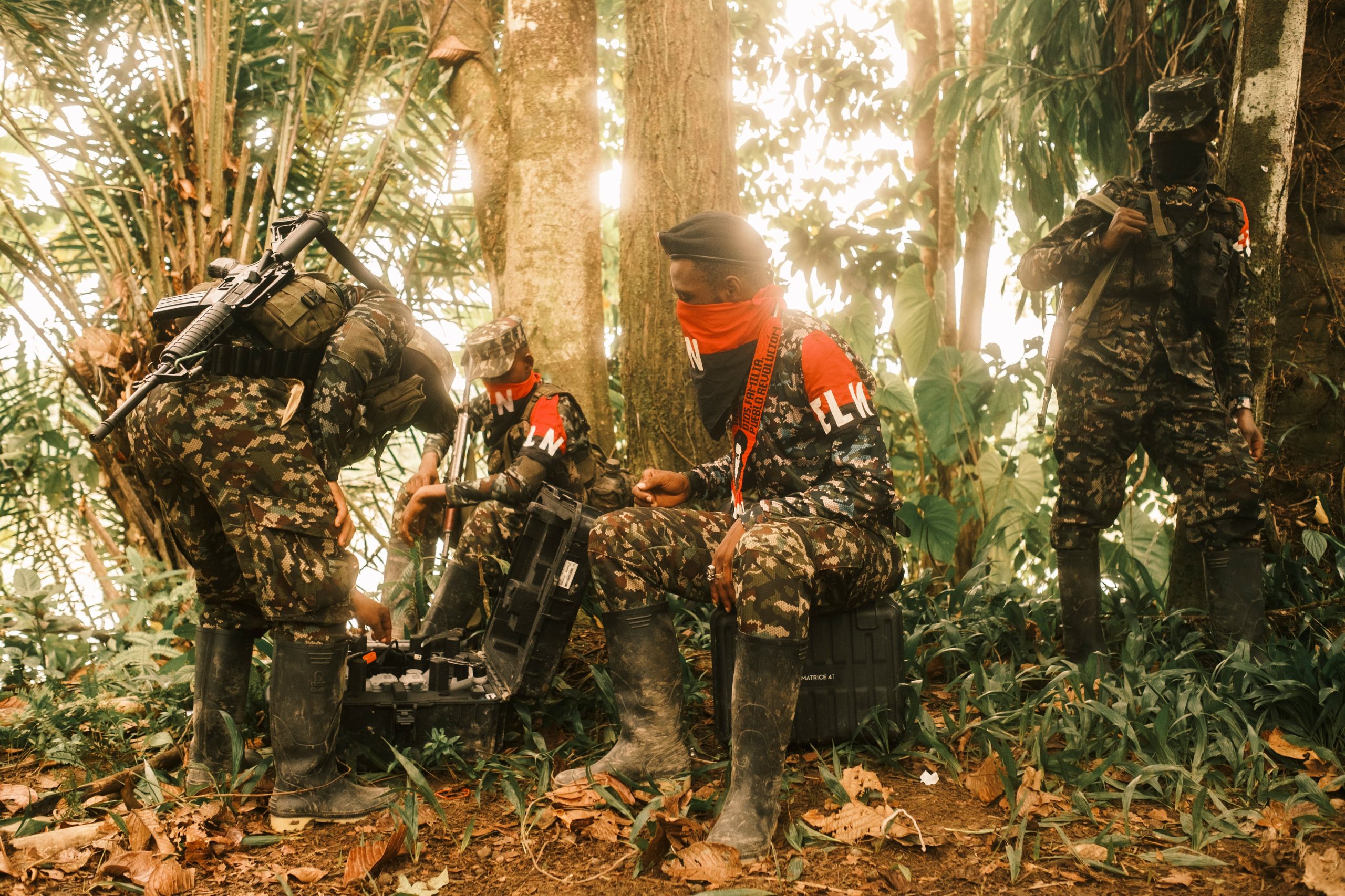
Last Friday, an operation was carried out against alleged members of the Colombian National Liberation Army (ELN) guerrilla organization in the Venezuelan state of Apure, near the border with Colombia. In the absence of official confirmation, human rights organizations working in the area, such as Fundaredes, reported at least 20 deaths. On Tuesday, The New York Times revealed that the United States participated in the strike, carried out with drones, in a direct offensive against the irregular Colombian groups that for years have established operations in Venezuela amid inaction by the authorities.

According to four U.S. officials quoted by the newspaper, the operation took place last Friday with U.S. intelligence and drone support. A senior Venezuelan military officer also confirmed the attack. Residents in Puerto Páez, an area controlled by the ELN, described a bombing, and photographs of some of the dead circulated in WhatsApp groups. Local reporters from Alianza Rebelde Investiga were able to identify eight of the dead, including two Colombians and four Mexicans, using information gathered from the morgue, the hospital, and San Fernando de Apure cemetery, around 250 miles from Caracas. Fundaredes, the first organization to raise the alarm, counted 23 dead and an undetermined number of wounded in attacks on an ELN base used as a cocaine distribution center, according to testimony the Times collected from survivors and local residents.

If confirmed, it would mark the second operation of this type, after an airstrike in June that killed the leader of the Tren de Aragua criminal organization, Héctor Guerrero Flores, aka “Niño Guerrero,” in the gold mines of Bolívar state, as Donald Trump claimed on his social media the day after local residents reported security operations in the area. The joint operation highlights how since last year the Trump administration has deployed a militarized strategy against drug trafficking in Latin America. Attacks on vessels off the coasts of Venezuela and Colombia have escalated to ground operations. The New York Times also revealed that Washington and Caracas were evaluating the possibility of deploying U.S. troops in Venezuela, as part of the tutelage the United States has exercised since January 3, when it captured former president Nicolás Maduro and his wife, Cilia Flores.
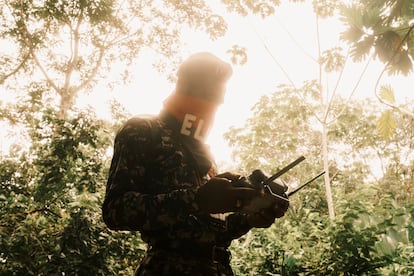
Venezuelan authorities have not reported on the incident. The interior and justice minister, Diosdado Cabello, merely said he had deployed the scientific police to the area to investigate some “strange deaths.” He also announced the dispatch of troops to the border with Colombia, in response to the militarization of the Norte de Santander department ordered by Colombian President Abelardo de la Espriella. “We do not want internal conflicts in Venezuela, especially those that are not ours,” Cabello said.

In recent years the ELN has been withdrawing into Venezuela. According to investigative reporting, it has between 900 and 2,000 fighters in at least 38 border municipalities in the states of Apure, Amazonas, Táchira, and Zulia, where it controls clandestine airstrips for drug trafficking and is also involved in fuel and mineral smuggling and extortion. For years the chavista regime was accused of sheltering ELN guerrillas and dissidents who broke away from the 2016 peace agreement with the FARC on its territory, although the government has always denied it.

FARC dissident groups have also penetrated some territories, and in 2021 Maduro’s government launched an operation against the guerrillas that displaced more than 5,000 people to Arauca, Colombia. Venezuelan authorities then fought groups from the defunct FARC who were contesting territory with the ELN, against whom they had so far avoided taking action. During that incident, one of the most serious in recent years, activist Javier Tarazona of Fundaredes was detained over his complaints about the presence of irregulars; he was released this year amid the political opening forced by the United States.

In the criminal indictment Maduro now faces in a New York court he is accused of being an ELN ally in the smuggling of cocaine to the United States. The ELN has also been accused of controlling mines in Venezuela’s south and of operating as an armed group allied with the Armed Forces to confront other criminal organizations, according to reports by the International Crisis Group.

Sign up for our weekly newsletter to get more English-language news coverage from EL PAÍS USA Edition

Continue Reading

Abelardo de la Espriella

Las Denuncias Del Gobierno Contra Gustavo Petro Por Corrupción Pasan Por Cuestionar Su Moralidad

Published

on

las-denuncias-del-gobierno-contra-gustavo-petro-por-corrupcion-pasan-por-cuestionar-su-moralidad

En el centro de la pelea entre el Gobierno de Abelardo de la Espriella y la oposición de izquierdas hay una nueva denuncia de corrupción que, esta vez, está ligada a la vida íntima del expresidente Gustavo Petro. Presidencia ha denunciado que el exmandatario ofreció contratos públicos durante su mandato a más de 40 mujeres a cambio de relaciones sexuales, una acusación que aún está por probar. Pero el tono de la denuncia, desde el primer día, no se ha limitado a la legalidad de sus acciones, pues ha llegado a la moralidad en su vida privada.

“Le vamos a demostrar al pueblo colombiano cómo, lamentablemente, la Casa de Nariño fue armada, organizada y confeccionada para otra cosa diferente: no a gobernar, sino a todos los días parrandear allá, llevar mujeres y generar lo que no deberíamos hacer nosotros, que es un protocolo de ejemplo”, dijo Carlos Ríos, el director del Departamento Administrativo de la Presidencia (Dapre), al hacer la denuncia. Para la Presidencia, el nuevo escándalo ha sido una oportunidad para ubicarse como un ejemplo moral de defensa de la familia tradicional y los valores conservadores que ven alejados de Petro.

La denuncia de Ríos no llegó sola. La reforzó días después Deicy Jiménez, una excontratista que alega haberse acostado con el expresidente a cambio de varios de esos contratos, y que ya ha dado su testimonio ante la Corte Suprema. Alega que el presidente hizo lo mismo con decenas de mujeres. Petro, por su lado, no ha negado conocer a Jiménez sino pagar relaciones con contratos, e interpuso una demanda contra Ríos alegando que este es quien presiona a mujeres que han sido contratistas para que le denuncien.

Si bien en Colombia la vida personal de los personajes públicos suele mantenerse privada, por años la intimidad de Petro ha sido objeto de debate público. Hace 15 años, cuando era alcalde de Bogotá, en los corrillos políticos rondaban chismes sobre su sexualidad; ya como presidente, apareció en Panamá, donde estaba por un viaje oficial, de la mano de una mujer que no era su esposa. Meses después, él mismo hizo público su divorcio. Uno de sus directores del Dapre, Angie Rodríguez, ahora lo acusa sin pruebas de buscar relaciones con menores de edad trans, algo que ella dice que escuchó de un tercero, por lo que también ha sido demandada por Petro. Con todo ello, sean los rumores o el divorcio, Petro representa para la derecha no solo la corrupción, sino una inmoralidad que dicen combatir.

“Ese desastre moral y ético es la verdadera cara del Pacto Histórico”, anotó el presidente del partido de Gobierno, el senador Enrique Gómez, sobre la denuncia de Ríos. En las cuentas de influencers cercanas al presidente, como ‘De La Espriella Presidente’, alegan que la de Ríos es una denuncia sobre “la degenerada vida privada de Petro”. José Obdulio Gaviria, miembro del más grande partido de derechas, Centro Democrático, tilda al expresidente de impostor “que cubre vicios y ambiciones con un discurso de virtud, pureza y principios elevados”. “Si el Estado pagó la poco ortodoxa e intensa sexualidad de Petro, sí es algo de interés público”, dice el senador del uribismo Andrés Forero, en un ejemplo de la mezcla entre una acusación de ilegalidad y un calificativo sobre la sexualidad del político de izquierdas.

“En varios países de la región donde está esta ola neoconservadora, que exalta cierto tipo de familia y cierto tipo de moral, se está dibujando en el discurso político una nueva frontera sobre quién es el antagonista político, ahora definido de acuerdo a la moral”, explica Juan Federico Pino, profesor colombiano de Ciencia Política en Flasco, Ecuador, y quien ha seguido las transformaciones del discurso político. “Durante muchos años, en Colombia se dibujaba ese límite diciendo que uno era neoliberal o uno era de izquierda; que uno apoyaba a los paramilitares o a la guerrilla. Los nuevos gobiernos buscan que esa delimitación pase por lo moral. Ahora la moralidad define un ellos y un nosotros, es la nueva batalla cultural que quieren posicionar”, añade.

En el pasado sí hubo rumores sobre la vida privada de expresidentes cuando ejercieron el poder, aunque una diferencia fundamental es que no llegaban a ser denuncias del sucesor en el Palacio de Nariño. En el caso de Petro, cuando la denuncia viene de presidencia, la Casa de Nariño se permite crear ese “ellos” contra el que dar “un ejemplo”, en palabras de Ríos.

No es el único espacio político donde se cuestiona la moral de los políticos haciendo referencia a la sexualidad. Esta semana, la gobernadora del Chocó, Nubia Córdoba, una política admirada a nivel nacional por su manejo de la crisis tras el terremoto de agosto, demandó a un ciudadano que la acusó de ofrecer dinero a mujeres para que se acuesten con ella ―el hombre también habla del “lesbianismo” como una aberración. No es una denuncia de corrupción tan seria como la de Jiménez y Ríos, que viene desde Presidencia y no desde un video viral, pero es otra muestra de cómo el juicio moral sobre la sexualidad ha avanzado como forma de debate público.

“Tal como se ha presentado hasta ahora la noticia de Petro, sí creo que hay una línea muy difusa entre la denuncia de corrupción y la de actividades sexuales pagas”, dice Olga Amparo Sánchez, feminista y directora de la Casa de la Mujer. Aclara que toda corrupción debe investigarse, y no le parece mal que haya algún tipo de conversación cultural alrededor de la prostitución. “Pero me parece que lo hacen desde la moralina, no intentando cuestionar el poder patriarcal”, dice Sánchez. “Se rasgan las vestiduras porque unos políticos compran sexo, pero no con que hay más de 20.000 hechos de violencia sexual en lo que va del año. Hay un hecho que se usa con fines políticos, y con ello no digo que no se denuncie, pero la sociedad lo ve moralmente para sancionar a un individuo”, termina.

Continue Reading

Trending

Copyright © 2017 Spanish Property & News