Connect with us

Claudia Sheinbaum

E

Published

on

e

America

Mexico’s Biggest Fortunes Seek Certainty Outside The Country

Published

on

mexico’s-biggest-fortunes-seek-certainty-outside-the-country

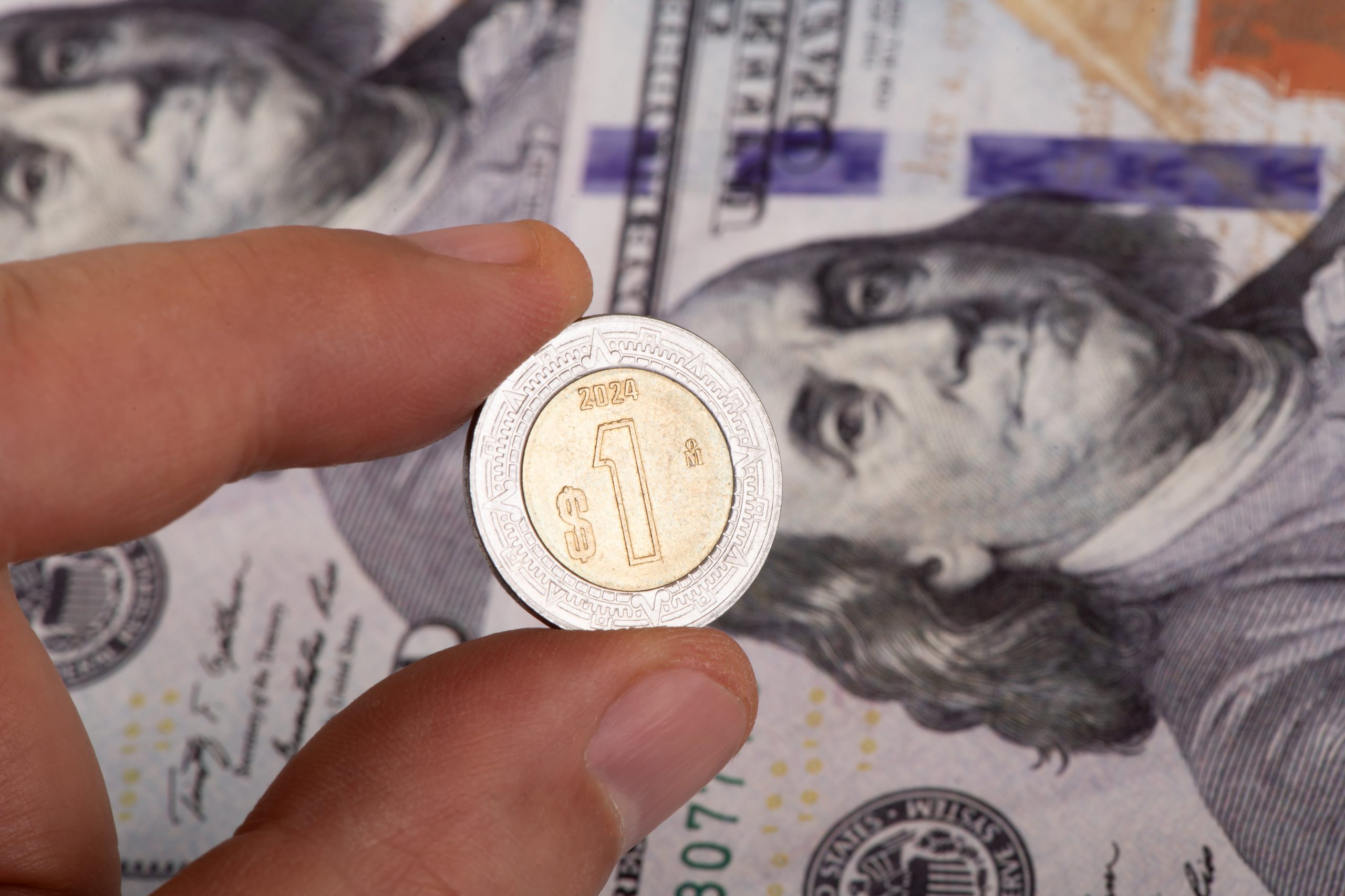
Mexican capital is changing hands and hence its destiny. As the largest wealth transfer in recent history gains momentum, younger heirs are diversifying and moving away from the industrial model that built their grandparents’ fortunes, instead directing their investments towards international markets. This silent but sustained shift occurs in parallel with the loss of confidence and the economic slowdown in the country, and threatens to accelerate the lack of productive domestic investment.

In Mexico, there is a dissonance between the weakening of the economy and the increase in wealth: while wealth is advancing at a double-digit rate, GDP is lagging behind. According to UBS bank, the average wealth per adult in the country has grown 150% since the 2008 financial crisis. And in 2025 alone, a year marked by the uncertainty generated by the trade war with the U.S., most Mexican business fortunes worth at least $400 million grew, led by those of Carlos Slim, 86, and Germán Larrea, 72, with a combined growth of 38%, according to the financial information service Infosel.

On the other hand, the GDP result at the end of the year was disappointing with growth of just 0.8%. Moreover, the first quarter of 2026 has seen a contraction of 0.8% triggered by austerity policies. Meanwhile, the flow of Mexican assets to destinations beyond its borders totaled around $25 billion last year, from direct investment and portfolios of bonds and shares, all of which combined to show sustained growth, according to the Bank of Mexico.

Firms such as the US-based BAI Capital are capitalizing on the growing interest of Mexican investors sinking their money into in other markets, offering schemes that combine real estate investment with access to permanent residence. “Capital is repositioning,” says Juan Carlos Eguiarte, general manager of the firm in Mexico. “This is not a theory, it is an active repositioning of global capital. Wealthy families in Latin America, and in Mexico, are making decisions right now. They are moving assets from unstable jurisdictions to markets with clearer rules,” he adds.

With offices in Mexico, Taiwan and soon China, the company is seeing investments moving to Texas, Florida and California as investors seek the protection of the dollar as a safe haven, access to a capital market with greater liquidity and, above all, legal certainty for its operations, amid the instability generated by the judicial reform in Mexico and the review of the USMCA in industrial plans. “They are also looking for something very important: succession planning, which is known as the Great Wealth Transfer phenomenon,” he says, referring to the hundreds of trillions of dollars that will be passed from the hands of baby boomers, who are approaching 80, to younger generations, such as Gen X, millennials and Gen Z.

This transfer is particularly relevant for Mexico due to the weight of family wealth in the economy, and it is this that is modifying investment preferences. Various studies estimate that about 90% of companies in Mexico are family-owned and that a relevant proportion of capital is still concentrated in the first or second generation. Younger millionaires are more open to global diversification and less conservative instruments, such as cryptocurrencies, real estate investment funds, tech-biased stocks, and baskets of assets such as ETFs (exchange-traded funds). According to a survey by investment firm Natixis, millennials are more inclined towards sustainable investments (32%) and nearly a quarter (24%) invest in cryptocurrencies.

Aversion to risk

This re-routing of resources, together with a sustained fall in gross fixed investment (GFI), which measures how much an economy invests in its productive capacity, together with the departure of buyers of Mexican debt, is taking its toll on the economy. Due to its closeness geographically to the U.S. and its commercial relationship with its neighbor, Mexico has managed to maintain its relative manufacturing advantage as the main supplier of goods to the world’s largest consumer. This has boosted its exports and foreign direct investment (FDI), which grew by 10.8% in 2025, becoming a lifeline regarding performance. However, the crumbling of infrastructure, security — both criminal and regulatory — and basic services has limited the expected nearshoring boom. In January 2026, the IFB showed an annual decline of 2.2%, a negative trend that has lasted 17 consecutive months, according to data from the National Institute of Statistics and Geography (Inegi).

“The fact that waves of capital are not entering reflects a great aversion to risk in the Mexican economy,” says Gabriela Siller, director of Economic Analysis at Grupo Financiero Base. The balance of the holding of government securities in the hands of residents abroad, such as bonds or Treasury certificates (Cetes), has stabilized at about 1.7 trillion pesos ($97.1 billion), after seven months of decline last year. However, Siller warns that the risk of capital flight persists in the face of greater global aversion due to the war in Iran and a deterioration in the perception of Mexico, associated with growing debt and tighter public spending. Siller adds that it is estimated that 70% of tax revenues are directed at social programs, the financial cost of the debt and contributory and non-contributory pensions.

“The Mexican economy has also fallen into a trap of stagnation, and this does not help,” Siller adds. Analysts’ forecasts suggest that Latin America’s second-largest economy will grow below 2% by the end of the year, reflecting a GDP with less capacity to absorb new capital and offer returns. “What any investor is looking for, even talking about fixed assets, is a good combination of risk and return. Faced with greater risk, obviously, they stop investing,” he says.

Sign up for our weekly newsletter to get more English-language news coverage from EL PAÍS USA Edition

Continue Reading

Cine

E

Published

on

e

Please enable JS and disable any ad blocker

Continue Reading

Claudia Sheinbaum

Fewer Classes, More Soccer: Mexico Changes School Calendar For The World Cup

Published

on

fewer-classes,-more-soccer:-mexico-changes-school-calendar-for-the-world-cup

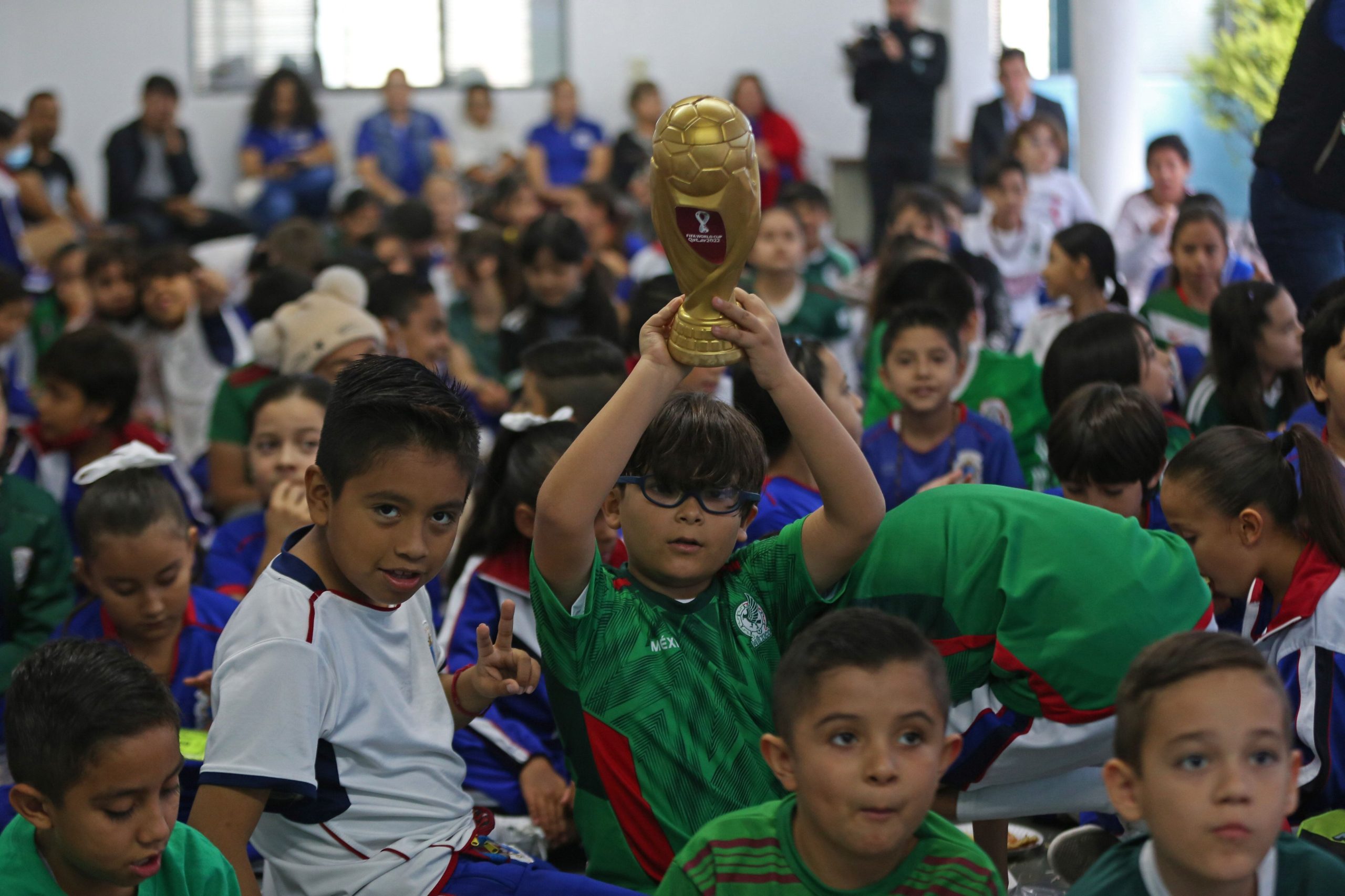
Mexico’s Ministry of Public Education (SEP) has announced “adjustments” to this year’s school calendar for elementary and high schools across the country, both public and private, due to the World Cup. Although in its official statement the ministry specified that its decision is also due to “the high temperatures” and “extraordinary heat waves,” there is no record of this happening before, regardless of the heat waves recorded in other years during Mexico’s summer months. Just a few minutes after the Secretary of Public Education Mario Delgado’s announcement, teachers took to social networks to complain that they had not been taken into account and to warn that it will now be practically impossible to teach the complete curriculum to the more than 29 million students in the country.

According to an official statement from the federal government, the measure emerged from a meeting of the National Council of Educational Authorities (Conaedu): “Requirements were raised in advance by 10 states, as well as a request presented in working meetings with the National Union of Education Workers [SNTE],” it said.

However, after the changes were announced, dozens of teachers from all over Mexico expressed their displeasure. The changes have also disrupted the plans of parents who coordinate their vacations, work schedules, and daily routines with their children’s school dates.

“I did not support the decision,” said one teacher. “We have not asked for these changes; do not blame us,” wrote two more. “This type of decision should involve more planning and organization; for months, families, students, and teachers have been organizing activities, vacations, work, and personal commitments based on the official calendar established at the beginning of the school year,” said another.

Parents consulted about the decision have said it is a change that puts their source of income at risk. “It puts me in a complicated situation: what do I do with my children for two months as a working mother?” said Adriana Montoya, who has two children and lives in Mexico City. “And it’s not that the school is a nursery, but clearly, [as an employee] you can’t ask for so many days off because even after working at the same place for years, you don’t have the right to so many days. And as a freelancer, I can’t pause my activities because I don’t have a secure salary. In any case, the reasons given for doing it are an insult to children and intelligence.”

Sylvia Munguía, a mother of two children in the state of Sinaloa, added: “For me, it is a drawback academically. My primary school child will need those weeks, I think. And although I have someone to take care of the children, it is an extra burden for my parents, who also help me.” Munguía adds that in her experience, heatwaves also occur in September, and the issue of the weather had not been a problem before. “At the end of the day, the heat is always there,” she said.

The official calendar established by the SEP for the current academic year (2025-2026) sets out 185 effective days of classes. It officially started in September 1, 2025, and was set to end on July 15. With the changes, the course will end on June 5 — more than a month earlier — with a return date (2026-2027) of August 31.

“With this measure, the educational authorities guarantee compliance with the curriculum and programs, as well as giving attention to the needs expressed by the states and the country’s international commitment,” the ministry’s statement reads, referring to the 13 matches that will be played in Mexico, in the stadiums of Mexico City, Guadalajara, Jalisco, and Monterrey, in Nuevo León.

Several teachers have decided to question the increase in workload due to the changes. “I am a practicing teacher, and I am dissatisfied with this,” said Mauricio Benítez. “We are already under pressure to finish the current month’s program, and now with this, the children will leave without completing their learning.” Another primary school teacher, who asked not to be named, added: “After the pandemic, being a teacher has become more complicated. The children do not have a good foundation and will continue to lag behind. Education is still a political tool.”

“An unacceptable error”

In a statement, Mexico’s National Union of Parents (UNPF), an organization that has been promoting and defending the rights of parents in the country since 1971, rejected the SEP’s decision and described it as “an unacceptable error.” They also pointed out that the change will increase teachers’ workload and worsen the learning gaps Mexico has long shown in national and international assessments.

“Using the World Cup as an argument to cut the school calendar is unacceptable. The education of our children cannot be sacrificed for a sporting event that will be held in only three of the 2,500 municipalities […] This is further proof that the SEP’s improvised approach will have irreversible consequences on the weak national education system,” the UNPF said.

In its statement, the UNPF also demanded that Claudia Sheinbaum’s government reconsider and revoke the agreement reached on Thursday, publish the technical analysis that justifies the decision, and guarantee the minimum number of effective school days for the millions of students affected

With the general minimum wage in Mexico set at 315 pesos a day (about $18), most families simply won’t have the income to attend any of the matches being played in the country, in what is already billed as “the most expensive tournament in history.sets”

Sign up for our weekly newsletter to get more English-language news coverage from EL PAÍS USA Edition
Continue Reading

Trending

Copyright © 2017 Spanish Property & News