
Ceuta invasion
Social Media Giants Meta And TikTok To Fact-Check Coverage Of Border Crossings Into Spain Following ‘mass Rush’ To Ceuta


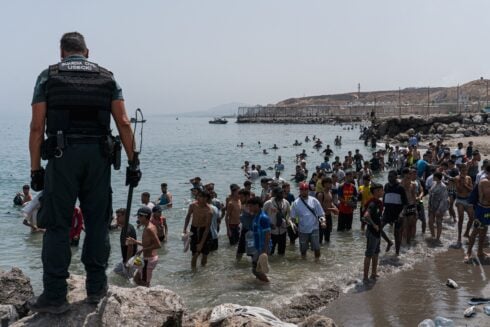 SOCIAL media networks Meta and TikTok have agreed to EU demands to fact-check content on border crossings into Spain following last month’s massive rush to enter the enclave of Ceuta


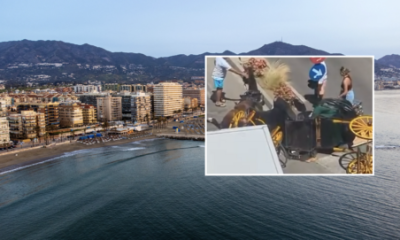



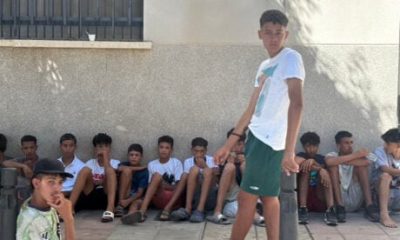



The situation demonstrates the scale of the pressure facing Ceuta. Photo credit: CitezenGo on X
Residents in Ceuta are facing a migration crisis that has moved far beyond the border, with around 1,500 migrants now living in makeshift shelters on a beach while police investigate alleged sexual assaults involving girls under 14. Thousands of people have taken to the streets demanding action, while Italy and Denmark are pressing for tougher European migration policies and repatriation centres outside the EU.
The situation has placed the Spanish enclave under intense pressure after the mass arrival from Morocco. Accommodation is struggling to cope, vulnerable migrants are living without permanent shelter and local authorities are calling for greater support as European governments debate how to prevent another large-scale crossing.
Around 1,500 migrants camp on Ceuta beach
Playa del Trampolín has become an improvised settlement for around 1,500 migrants who have nowhere else to stay after existing reception facilities reached capacity. Makeshift shelters made from reeds, branches, plastic and other materials now line parts of the beach. Many of those staying there are understood to be from sub-Saharan Africa, including a sizeable group of Sudanese migrants.
The beach has effectively become temporary accommodation, with people sleeping outdoors while waiting for authorities to determine what will happen next. The situation demonstrates the scale of the pressure facing Ceuta. The city has limited space and resources to accommodate a sudden increase in arrivals, while people requiring protection cannot simply be left without somewhere safe to stay. The beach camp has also created additional demands for local services, with municipal workers dealing with the consequences of hundreds of people living in an area that was not designed to function as a migrant reception centre.
Un safari por la Playa del Trampolín, en Ceuta. Así lucía esta mañana. Contrario a toda normativa municipal y quedando cada día más limitada la zona de baño para los ceutíes. Estoy esperando a ver si algún grupo ecologista se manifiesta al respecto. Háganlo ustedes y verán… https://t.co/Ev4QYVHlW9 pic.twitter.com/RkNnIzwwFS
— Rubén Pulido (@rubnpulido) August 9, 2026
Concerns grow over vulnerable children
The situation involving minors has added another serious concern, at least five girls under the age of 14 have reportedly been treated at Ceuta’s University Hospital following alleged sexual assaults, according to health sources cited by Spanish media. Police are investigating several suspected cases and prosecutors are examining some of the allegations.
The cases remain under investigation and the allegations should not be described as confirmed rapes. There have been no convictions establishing that the reported assaults took place as alleged. Nevertheless, the reports have intensified concerns about the safety of vulnerable migrants, particularly children who arrive without the protection of parents or other adults. The issue also highlights the difficulties faced by authorities when large numbers of people arrive in a short period and existing accommodation and safeguarding systems are placed under severe pressure.
Thousands protest in Ceuta
The situation has now triggered a major public response within the city as thousands of people gathered in Ceuta for a demonstration under the slogan “Basta ya. Ceuta no se rinde” (enough is enough, Ceuta will not give up) calling for action from the Spanish Government and greater support for the city.
The protest brought together people from different religious and cultural communities, making it broader than a demonstration organised around a single political group. The message from the streets was focused on the impact of the migration crisis on daily life in Ceuta and the need for authorities to regain control of a situation that has developed rapidly.
Ceuta’s president Juan Jesús Vivas has also called for greater assistance from Madrid, arguing that the city cannot be expected to deal with the consequences of a crisis of this scale on its own. The pressure is particularly acute because Ceuta is a small Spanish territory surrounded by Morocco. Its geography means that accommodation, healthcare and emergency services can quickly become overwhelmed when arrivals increase sharply.
This was Ceuta yesterday.
It doesn’t matter how hard Pedro Sánchez tries to sell us out, the people of Spain won’t allow it to happen. 🇪🇸❤️ pic.twitter.com/FgZensNzyM
— Ada Lluch (@AdaLluch) August 10, 2026
Italy and Denmark call for repatriation centres
The political consequences are no longer limited to Spain, Italian Prime Minister Giorgia Meloni and Danish Prime Minister Mette Frederiksen have joined forces in demanding a tougher European response to irregular migration. The two leaders have rejected what they describe as “uncontrolled immigration” and called for repatriation centres to be established in third countries outside the EU. Their proposal is aimed at people who have been ordered to leave Europe but cannot be returned immediately to their countries of origin.
Under the idea being promoted by the two governments, migrants awaiting removal could potentially be transferred to facilities outside the European Union rather than remaining inside Europe while their cases are resolved. Meloni has already pursued a similar approach through Italy’s agreement with Albania, although that arrangement has encountered legal and operational difficulties. The Italian and Danish governments are also calling for more effective deportations and stronger measures against irregular migration.
Migration policy under renewed pressure
The timing of the proposal is significant because the Ceuta crisis has provided a fresh example of the difficulties faced by European countries when large numbers of people arrive within a short period. The debate is not limited to how migrants enter Europe. Governments are also facing questions over accommodation, returns, child protection and what happens to people whose applications fail.
The European response has traditionally relied on a combination of border controls, asylum procedures, agreements with countries outside the bloc and returns. Meloni and Frederiksen are now pushing for greater use of arrangements outside EU territory, arguing that Europe needs alternatives to the current system. That approach is likely to face scrutiny over the legal safeguards that would apply to people transferred to third countries, particularly those seeking asylum or claiming protection.
Ceuta left dealing with immediate consequences
While governments debate longer-term solutions, Ceuta is dealing with the immediate consequences. Around 1,500 migrants remain in the beach camp, existing facilities are under pressure and allegations involving minors are being investigated. At the same time, thousands of residents have publicly demanded action and local authorities are seeking additional help. The crisis has therefore developed into three connected problems for Spain.
There is the question of what happens to those who arrived during the mass crossing, the urgent need to provide safe accommodation for those who remain and the wider question of how Europe intends to handle irregular migration in the future. For Ceuta, the consequences are already being felt on the ground.
A beach has become an improvised camp, local services are under strain and residents are demanding answers. Meanwhile, two European governments are using the latest crisis to press for a fundamental change in how migrants who have no right to remain are dealt with. The events in Ceuta have turned a sudden border crisis into a much wider European argument over migration, returns and who should carry responsibility when the existing system reaches its limits.


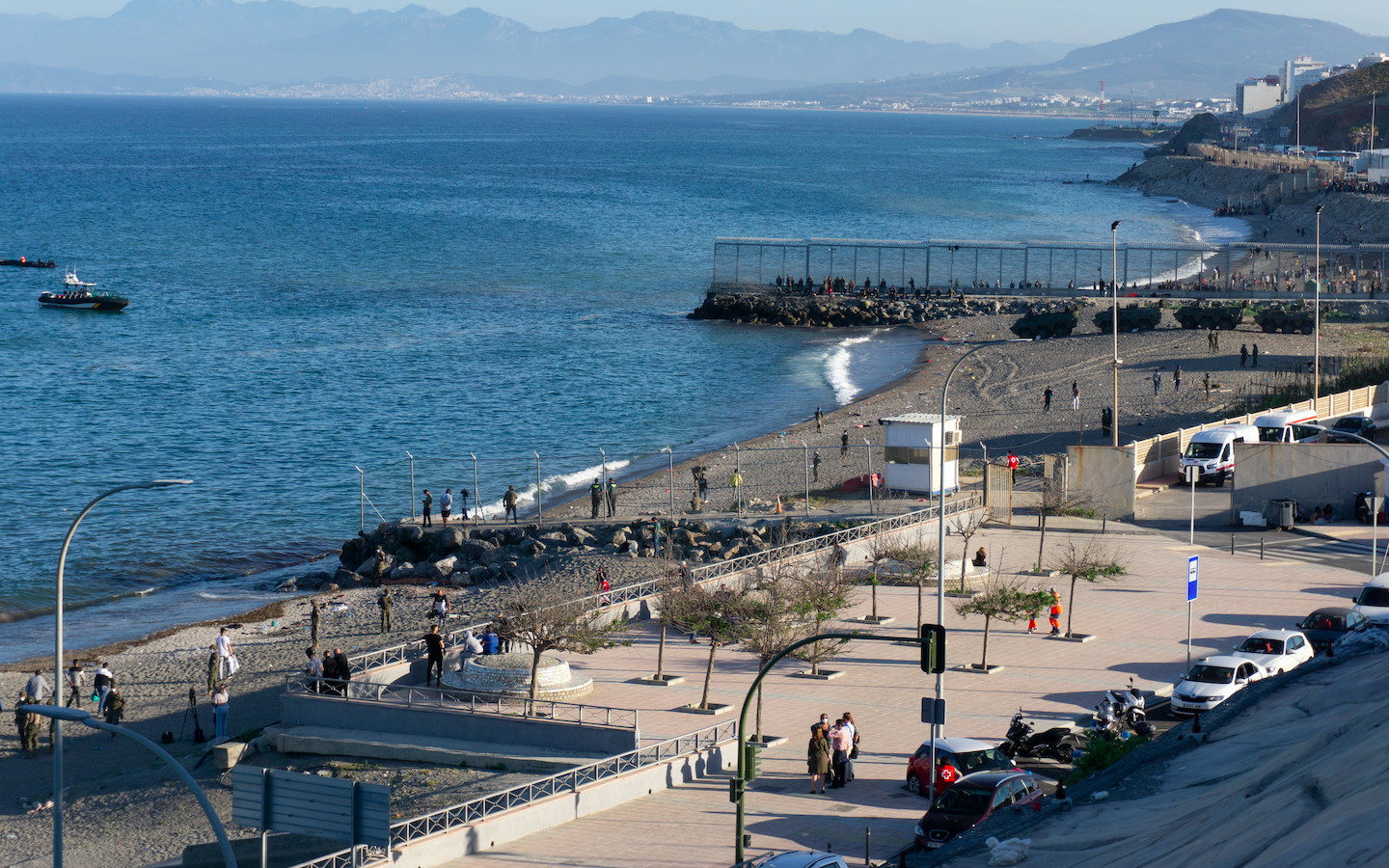
Thousands of migrants reached the Spanish territory within hours. Photo credit: Cristian Borrego Sala/Shutterstock
The migrant crisis that overwhelmed Ceuta has now reached Spain’s highest criminal court, with judges investigating whether the mass crossings were more than a desperate rush for Europe. The key question is whether thousands of people crossed the border spontaneously, or whether somebody organised it. The Audiencia Nacional has opened preliminary proceedings following the unprecedented migrant surge into the Spanish enclave on July 30 and 31, ordering police to determine whether the crossings were coordinated by a criminal organisation.
The move marks a significant new stage in one of Spain’s biggest migration crises in years. Rather than focusing solely on the migrants themselves, the investigation will examine whether criminal networks played a role in organising, directing or encouraging the crossings from neighbouring Morocco. At this stage, the court has reached no conclusion. It is seeking evidence to establish whether such an organisation existed.
A city overwhelmed in just two days
The scenes in Ceuta shocked Spain, thousands of migrants reached the Spanish territory within hours, overwhelming emergency services, security forces and reception centres already operating under intense pressure. Many crossed around the Tarajal border area, while others entered the sea in an attempt to reach Spanish soil. The humanitarian consequences were devastating.
Dozens of people lost their lives during the crisis, while rescue teams, police officers and volunteers worked around the clock to recover survivors and provide emergency assistance. The sheer scale of the crossings immediately raised questions. Could so many people have acted independently at the same time, or had somebody coordinated the operation? That is now the question before Spain’s National Court.
Police ordered to examine possible criminal involvement
Judge María Tardón has instructed the Comisaría General de Extranjería y Fronteras to prepare a detailed report examining what happened during the mass crossings. Investigators have been asked to determine whether the arrivals were “an action coordinated or directed by a criminal organisation.”
If evidence points towards organised criminal involvement, the report must also identify any individuals or groups believed to have planned or facilitated the crossings. The findings will help determine whether the Audiencia Nacional has jurisdiction to continue the criminal investigation,
The investigation follows a legal complaint
The proceedings were opened after a complaint was filed by Iustitia Europa, which alleges possible offences including crimes against state security, facilitating illegal immigration and involvement in a criminal organisation, opening preliminary proceedings does not mean the allegations have been proven.Under Spanish law, the purpose of these first steps is to establish whether there is enough evidence for a full criminal investigation to proceed, the Public Prosecutor’s Office has also been informed of the case.
Migration pressure remains a political flashpoint
The events in Ceuta have reignited one of Spain’s most sensitive political debates. The North African enclave has long been one of the European Union’s external borders, making it a focal point whenever migration pressure increases. Previous mass crossings have triggered diplomatic tensions between Spain and Morocco, prompted changes to border security and fuelled political arguments over immigration policy.
The latest crisis has once again placed Ceuta under intense national and international scrutiny. While emergency services dealt with the immediate humanitarian response, politicians argued over responsibility, border security and Spain’s ability to cope with large-scale arrivals. Now the focus is shifting from the border itself to the courts.
What happens next?
The police report requested by Judge Tardón will play a crucial role in deciding whether the Audiencia Nacional continues the investigation. If investigators conclude there are indications that organised criminal networks coordinated the crossings, the court could expand its inquiries into those responsible. If no evidence of organised criminal activity is found, the case could instead remain within the jurisdiction of other courts dealing with immigration-related offences.
For now, the investigation remains in its earliest stages, what began as a humanitarian emergency at Spain’s southern border has become a judicial investigation with potentially significant legal and political consequences. The central question is no longer only how thousands of migrants reached Ceuta. Spain’s highest criminal court now wants to know whether someone helped make it happen.

F1 insider claims plan to take cars electric aged badly, but there is a fix

El Gran Favorito, Marcell Jacobs, Se Lesiona A Los 40 Metros Y Deja Al Británico Romell Glave La Victoria En Los 100m De Los Europeos De Atletismo

Polish Swimmer Conquers Baltic After 55 Hours Then Doctors Make Strange Request


-
easyJet2 weeks ago
First EasyJet passenger from UK refused entry to Gibraltar after new treaty
-
Latest2 weeks ago
Trump And Far Right Seize On Spanish Migration Crisis
-

 New Developments2 weeks ago
Inside The Most LUXURIOUS Apartment Building In Spain!
-
Latest2 weeks ago
Thousands Of Migrants Swim From Morocco To Spain’s Ceuta Territory
-

 Uncategorized2 weeks ago
Ex-Sky Sports star teases tell-all after shock F1 exit
-

 Latest2 weeks ago
Suspect In Murder Of Hungarian Woman In Benahavis Attempts To Slit His Own Throat As Guardia Civil Make Arrest
-
Costa Blanca beaches2 weeks ago
Tragedy at Jávea beach as 68-year-old swimmer dies despite hour-long rescue attempt
-

 Uncategorized6 days ago
Lewis Hamilton hits gold with $10bn jackpot but British star snubs Monaco move: F1 News Recap