Connect with us

%

Someone In Fuengirola Is €35,000 Richer

Published

on

someone-in-fuengirola-is-e35,000-richer

Somewhere in Fuengirola, a coupon that cost only €2 is now worth €35,000. Anyone who bought a ONCE coupon in the town on Thursday has good reason to check their numbers.

Silvia Sanchez sold the winning coupon

Silvia Sanchez, a ONCE seller, sold the ticket worth €35,000 from the Cupon Diario (daily coupon) draw held on Thursday, October 29. ONCE announced the result on social media and congratulated both Silvia and the ticket holder.

How the Cupon Diario works

Draws take place every Monday to Thursday from 9:25pm. Players choose a five-digit number, and each draw offers 49 prizes of €35,000 to those who match all five digits, while the top prize of €500,000 goes to the five-digit number that also matches the winning series. Prizes at this level turn up regularly across Spain, since each draw offers so many of them.

Players can add an optional extra called La Paga (literally “the wage”). If the series number matches as well, it pays €3,000 a month for 25 years on top of the €35,000.

Where the money goes

ONCE is Spain’s organisation for blind and visually impaired people, and its lottery sellers work in towns and cities across the country. Many sellers are people with disabilities, and money from ticket sales helps fund ONCE’s support services. Every coupon sold supports that work while also giving buyers the chance to win a prize.

Not the first win for Fuengirola

It is not the first time Fuengirola has featured in ONCE’s recent run of good fortune. In July, a local resident won €1 million on a Mega Millonario scratchcard bought from seller Jose Manuel Campos, known as Josele, in Plaza de la Hispanidad near the fairground. Earlier the same month, a Fuengirola seller handed out a €1.5 million Sueldazo jackpot, part of a €1.82 million haul for the town

What to do next

Bought a coupon in Fuengirola on Thursday? Check the number against the results—the winning five-digit number was 61177. Congratulations to Silvia, and to whoever is holding the winning ticket.

%

TV Warning For Spain Residents As Channels Move And New Free Station Launches

Published

on

tv-warning-for-spain-residents-as-channels-move-and-new-free-station-launches

Viewers across Spain need to retune their televisions on Thursday. Credit: AI Generated / Shutterstock

Viewers across Spain who flick to Clan, BeMad or Atreseries next week may find them in a different spot, or not showing up properly, as the national channels are shuffled to make room for a brand new free station. The fix takes a few minutes and doesn’t need a new television.

Households will need to retune on Thursday November 5

Households across Spain are being told to run a fresh channel search on Thursday November 5, with the Government recommending viewers do it from 8am, once overnight technical work has finished. The changes are the first phase of Spain’s move to a new broadcasting standard called DVB-T2, the technology behind ultra-high-definition (UHD) free-to-air TV. Only one of the national multiplexes (the bundles of channels sent out together), known as RGE2, switches over this time, while all the others carry on as they are.

There’s no need to do anything before 8am on the day. Broadcasters have been running information campaigns since Monday October 5, and a second phase, which will make UHD the standard across national, regional and local channels, will only follow once enough households own compatible equipment. No date has been set for that yet.

Clan, DKISS, Atreseries and BeMad are among the channels on the move

The Government’s own retuning guide names Clan, DKISS, Atreseries and BeMad among the channels that change place, with Spanish press reports adding Boing as Mediaset reorders its channels. Clan’s move comes first, in the early hours of Tuesday November 3, when it joins one of the RTVE (Spain’s public broadcaster) multiplexes.

None of them are leaving Spanish television, and the official guidance says viewers won’t lose any channels. However, after the reshuffle a channel may sit under a different number, turn up further down the list, or not show properly until the television has searched again. Anyone with pay-TV from Movistar Plus+, Orange TV, DIGI or Vodafone TV doesn’t need to do anything, as those platforms update their own channel lists.

A new free channel, La Séptima, launches the same day

Joining the line-up is La Séptima, a new national free-to-air channel that starts broadcasting in high definition on Thursday November 5. It will share a multiplex with DKISS, so it’s one more reason to retune. The licence was awarded in May to a company called Servicios Integrados Entretenimiento Televisivo, and journalist Javier Ruiz, who has left RTVE, is lined up as its presenter and editorial director. 

Like every other channel, it won’t appear on a television until the search has been run, so viewers who skip the retune simply won’t find it. 

You won’t need a new television or aerial

For anyone wondering ‘do I have to buy a new telly?’, the answer from the Government is no. There are no changes needed to aerials, shared building installations, amplifiers or cabling, and no installer is required just to keep watching. Most channels stay in HD, and televisions without DVB-T2 will keep receiving every channel that’s still on the current system. Newer sets are likely to cope anyway, as every television sold in Spain since the National Technical Plan for TDT (digital terrestrial television) was approved in March 2025 has to be able to receive UHD.

The only catch is the new UHD (sometimes called 4K) versions of La 1, La 2, Antena 3 and Telecinco. To watch those, a television or set-top box must handle both DVB-T2 and a video format called HEVC, and a 4K screen on its own isn’t enough. Each of those channels is also broadcast in HD with the same programmes, so nobody misses out.

How to retune your television in Spain

The menus differ between brands, but the steps are much the same. Press Menu, Home or Settings on the remote, then look for a section called Channels, Broadcast, Installation, Setup or Tuning. 

Choose automatic channel search (Búsqueda automática or Sintonización automática), picking Antenna if the television asks for the signal type. Then leave the television switched on until the search finishes, as turning it off halfway can leave the list incomplete. 

When it’s done, save the changes and check that every channel is there. The list may come back in a different order, often alphabetical, but most televisions let you move channels around using an Edit channels or Sort channels option.

If something is still missing, ask your community of owners or building administrator, or call Televisión Digital, the Government’s helpline, on 901 20 10 04.

Continue Reading

%

Would You Feel Safe On Spain’s Trains? Transport Minister Insists They Are Safe

Published

on

would-you-feel-safe-on-spain’s-trains?-transport-minister-insists-they-are-safe

By Nazario Rodriguez • Updated: 30 Oct 2026 • 21:01 • 3 minutes read
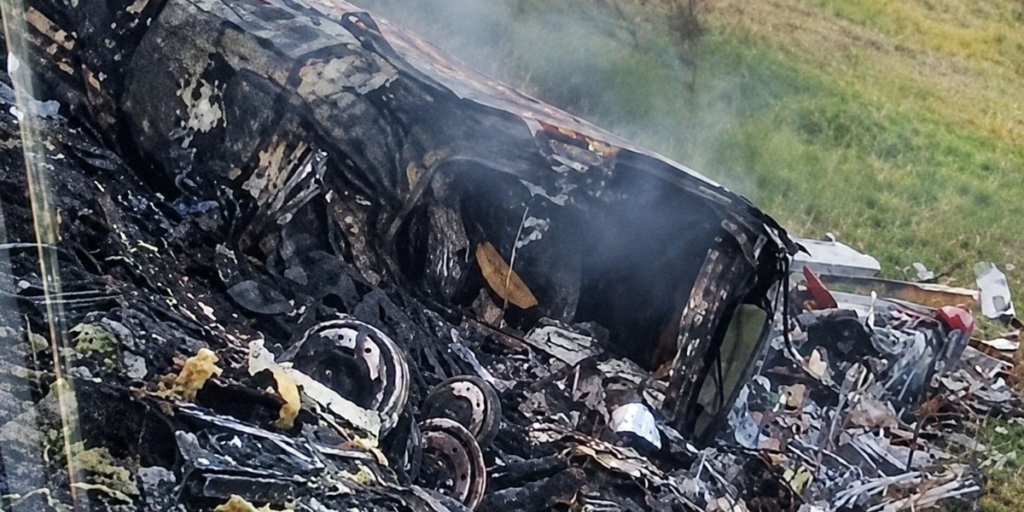
Spain high-speed train crash: Two carriages plunge down embankment as emergency crews rush to scene

Eyewitness described a desperate effort to rescue passengers Credit: Rafa Martín FB (passenger)

An unfinished safety upgrade, repeated outages and criticism of the minister’s response have left the Government facing questions that passengers deserve to see answered.

If you travel by train in Spain, the deadly collision near Toledo raises a question that affects every journey. What protects you when a safety system fails? With an overdue upgrade still unfinished and earlier faults already reported, passengers deserve to know why the remaining safeguards did not prevent the crash and what will change to keep them safe.

The collision between a Renfe AVE and an Iryo train near Urda killed 69 people. Investigators must establish exactly what happened. The Government must also explain the decisions, delays and arrangements that preceded it.

A safety upgrade remained unfinished

Adif awarded a €93.8 million contract in 2021 to replace the LZB train control system on the Madrid to Andalucía line with ERTMS. The project had a 52 month schedule, with completion expected in 2026.

The replacement was still not operational when the collision happened. Transport Minister Óscar Puente now says it is expected to enter service in early 2027, attributing the delay to the complexity of installing equipment while keeping trains running.

Earlier problems had also been raised. Three weeks before the crash, Iryo’s chief executive told a Senate committee that drivers had experienced trains stopping and taking time to reconnect after LZB faults.

These details do not establish that the delayed upgrade caused the collision. They do require an explanation of how the risks were assessed while the existing system remained in service.

A reliable system with 160 outages

During the transports minister’s appearance on Friday morning, he defended LZB as highly reliable while acknowledging 160 outages during 2026 so far.

According to 20minutos, the minister said 75 per cent involved external circumstances, including maintenance and track works. His argument was that the system responded correctly by stopping trains.

That distinction matters. An outage does not automatically mean the system failed to protect passengers. But repeated interruptions make the procedures used afterwards particularly important. If outages are expected, the arrangements for managing them must reliably keep trains apart.

In January, EWN questioned how repeated disruption had become normal on Spain’s railways. The Toledo disaster gives that concern a far more serious dimension.

Why did safety depend on a human decision?

We live in a world where passengers can follow an aircraft’s journey across continents on a phone. Trains also have tracking and signalling systems, making the circumstances of this collision difficult to comprehend. How could one train be authorised to continue towards another stopped on the same track?

Tracking a vehicle and automatically preventing a collision are different functions. Nevertheless, passengers deserve to understand why the information and safeguards available did not keep these trains apart.

Puente said that when technology fails, people must take over. He announced that protocols, training, staffing and the verification of decisions would be examined.

His explanation left a crucial question unresolved. When automatic safeguards become unavailable, what protects passengers if the person managing the situation makes the wrong decision?

Investigators must establish which protections remained available at Urda and how they were used. Saying that staff must take over does not explain why the remaining procedures failed to prevent the collision.

The transport minister’s response and the Ministry’s record

Puente’s first appearance after the crash drew strong criticism for focusing on an apparently mistaken instruction from Adif’s control room before investigators had established the full circumstances. Railway unions accused him of singling out a worker while wider questions remained unanswered.

On Friday, he ruled out resigning and promised not to use any worker as a shield. Identifying an operational mistake would not, by itself, settle questions about the delayed upgrade, maintenance, staffing or supervision.

The Ministry also faces a public trust problem shaped by the record of former minister José Luis Ábalos. In October, the Supreme Court rejected attempts by Ábalos and his former adviser Koldo García to overturn their corruption convictions. The offences included bribery and the misuse of public funds. The judgment also addressed jobs obtained for associates in public companies, as EFE’s reporting details.

Those convictions do not establish a connection with the collision. But they add another layer to concerns about a ministry where delays, faults and scandals risk becoming accepted as normal. Each requires its own answers. Together, they make assurances alone insufficient to restore public trust.

The Government must explain why the upgrade was delayed, how earlier faults were handled and whether the protections maintained during that delay were adequate.

Passengers should not have to choose between trusting technology and trusting that a worker will never make a mistake. They deserve a system designed to protect them when either fails, and ministers willing to answer for how that protection is delivered.

Google News

Follow Euro Weekly News on Google News

Get breaking news from Spain, travel updates, and expat stories directly on your Google News feed.

Follow on Google News

Sign up for personalised news

Subscribe to our Euro Weekly News alerts to get the latest stories into your inbox!

By signing up, you will create a Euro Weekly News account if you don’t already have one. Review our Privacy Policy for more information about our privacy practices.

Continue Reading

%

Halloween Plans Change

Published

on

halloween-plans-change

Streets full of Halloween revellers. Credit: Ayto

Council-run Halloween celebrations have been cancelled or rearranged across the Axarquia and Costa Tropical following three days of national mourning after a fatal train accident in Toledo.

Families planning to attend Halloween celebrations this weekend will need to check the latest arrangements, as several town halls have cancelled their events while others have moved activities to November 1 and 2.

The changes follow the Spanish Government’s declaration of three days of official mourning after a fatal train accident in Urda, Toledo, on October 28.

For a wider explanation of what the mourning period means for private parties and commercial celebrations, read EWN’s guide to whether Halloween is cancelled in Spain.

Halloween cancelled in parts of the Axarquia

Several municipalities in the Axarquia have decided to cancel their planned Halloween celebrations altogether.

Rincon de la Victoria has suspended its municipal Halloween activities in the town, La Cala del Moral and Benagalbon. The cancellation was confirmed following the announcement of the national mourning period.

Velez-Malaga has also cancelled its entire municipal programme. The decision affects the town and surrounding population centres, including Torre del Mar, Caleta de Velez, Benajarafe, Almayate, Chilches, Valle-Niza, Cajiz, Triana, Mezquitilla and Lagos. The Velez-Malaga Town Hall announcement confirming the cancellation of all municipal Halloween activities lists the affected areas.

Halloween celebrations in Torrox and El Morche have also been cancelled, while Frigiliana has suspended its municipal festivities.

The decisions are part of wider changes across the Axarquia, with several other municipalities also cancelling or rearranging their programmes.

Maroween moves to Sunday in Nerja and Maro

One of the area’s best-known autumn celebrations has not been cancelled.

Maroween, the traditional combination of Halloween and the Chestnut and Sweet Potato Festival in Maro, has been moved to Sunday, November 1.

Nerja Town Hall has confirmed that the programme will start at 5pm, with the planned activities including:

  • A Halloween parade.
  • Traditional roasted chestnuts and sweet potatoes.
  • Fancy dress competitions.
  • Live musical performances.

The official Nerja Town Hall announcement confirming the new Maroween date confirms that the original programme will be maintained.

Almuñecar moves Halloween to November 1

On the Costa Tropical, Almuñecar has moved its municipal Halloween party to Sunday, November 1.

The change was announced by the Culture Department as part of wider adjustments to the town’s events programme during the national mourning period.

The announcement from Almuñecar’s Culture Department confirms that the Halloween party will go ahead on Sunday.

Other cultural events have also been rearranged, including the Fall Fest concert, which moves to Monday, November 2.

Motril rearranges Halloween celebrations

Motril has also confirmed that its Halloween activities will take place on Sunday, November 1, instead of the original date.

The revised programme includes a spooky parade leaving Plaza de España at 7pm, followed by a DJ party at Plaza de las Comunidades Autónomas from 7.40pm.

A haunted passage will also open at 7.40pm in the basement of the Tourist Office.

The Motril Town Hall announcement confirming the revised Halloween programme provides the updated timings.

Salobreña spreads celebrations over two days

Salobreña has reorganised its Halloween programme across Sunday, November 1, and Monday, November 2, rather than cancelling the celebrations.

Activities on Sunday will take place in the neighbouring communities of Lobres and La Caleta, between 6pm and 8pm.

Children and young people can enjoy inflatable attractions, fancy dress competitions and sweets, with local groups also organising traditional refreshments.

Lobres will have roscos, chocolate, chestnuts and anise, while La Caleta’s Juventud Escaletera group will provide a spooky afternoon snack.

Salobreña’s main municipal celebrations will then take place on Monday, November 2, between midday and 2pm.

Activities will include inflatable attractions, a fancy dress competition, sweets and a horror maze.

The official Salobreña Town Hall announcement confirming the November 1 and 2 Halloween programme provides the full details.

Check before heading out

Residents and visitors are advised to check their local council’s announcements before travelling to Halloween events, as programmes and arrangements have changed at short notice.

While some municipalities have decided to cancel their celebrations, others have made alternative arrangements so children can still enjoy Halloween after the period of official mourning.

Continue Reading

Trending

Copyright © 2017 Spanish Property & News