Connect with us

%

Spain’s Mental Health Crisis Drives Opposition’s Largest Healthcare Pledge Yet

Published

on

spain’s-mental-health-crisis-drives-opposition’s-largest-healthcare-pledge-yet

In some regions of Spain, non-urgent appointments with psychologists or psychiatrists can take several months. Photo credit: PP. es

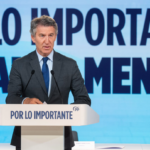
Spain’s opposition Partido Popular, led by Alberto Núñez Feijóo, has presented a national mental health plan that proposes investing up to €700 million a year to recruit 10,000 additional professionals for the public healthcare system. The proposal sets out annual funding in the range of €500 million to €700 million and focuses on expanding access to psychiatric and psychological care across Spain.

According to the party, the plan is designed to respond to rising demand for mental health services and reduce pressure on existing structures within the national health system. Feijóo presented the initiative at a political and healthcare event, where he outlined concerns about what he described as an overstretched system and uneven access to treatment depending on region. The plan forms part of the opposition’s wider health policy agenda ahead of future national debates on public spending.

Recruitment plan targets 10,000 new mental health staff

Under the proposal, the Partido Popular says the funding would allow for the recruitment of 10,000 professionals, including 2,000 psychiatrists, 3,000 psychologists and 5,000 mental health nurses. The party argues that increasing staffing levels is essential to shorten waiting times and improve continuity of care.

It also proposes closer coordination between primary care services, specialist mental health units and hospital networks in order to improve patient pathways through the system. The plan also includes strengthening prevention programmes and early intervention services, particularly within public healthcare settings where patients first present with symptoms.

Focus on young people, prevention and suicide reduction

A significant part of the proposal is directed at children, adolescents and young adults, groups that health professionals have identified as increasingly affected by anxiety, depression and related conditions in recent years. The Partido Popular says schools, universities and primary care centres should play a greater role in identifying early signs of mental health difficulties and ensuring quicker referral to specialist services.

The plan also includes expanded suicide prevention measures, alongside additional training for healthcare workers involved in frontline care. Rural access is another stated priority. The party highlights disparities in availability of mental health professionals across Spain, with some areas facing longer travel distances and fewer specialist services.

What it could mean for people needing mental health support

For patients currently seeking mental health care, the proposal is intended to address long waiting times and limited access to specialists in parts of the public system. In some regions of Spain, non-urgent appointments with psychologists or psychiatrists can take several months, particularly in areas with fewer professionals per capita.

If implemented, the increase in staffing could reduce pressure on existing services and allow for faster assessment and treatment, especially for people experiencing moderate to severe conditions. It could also improve access to follow-up care, which is often cited as a weak point in overstretched systems.

The emphasis on early intervention may also affect how quickly individuals are able to access help after first contacting a GP or school service, potentially reducing delays between initial symptoms and treatment. However, the impact would depend on recruitment success and how evenly professionals are distributed across Spain’s autonomous communities, where healthcare responsibilities are managed regionally.

Wider debate on mental health provision in Spain

Mental health has become a growing political issue in Spain following increased demand for services in recent years. Health professionals and patient organisations have repeatedly highlighted shortages of psychologists and psychiatrists within the public system, as well as significant waiting lists in some regions. Current national mental health strategies have focused on prevention, coordination and improved care pathways, but critics argue that staffing levels remain insufficient to meet demand.

The Partido Popular has positioned its proposal as a more expansive approach, arguing that investment and recruitment must increase significantly to match current needs. The plan is expected to intensify debate over how mental health services should be funded and structured, particularly as pressure on Spain’s public healthcare system continues to grow.

%

SIPS First Foray Onto The Costa Del Sol

Published

on

sips-first-foray-onto-the-costa-del-sol

Barcelona’s SIPS has been named the World’s Best Bar by The World’s 50 Best Bars. Also ranked in the global top three every year since 2022 and impressively crowned Best Bar in Europe for three consecutive years. Now it is coming to Marbella. SIPS has announced a residency at the Bar La Plaza in the luxurious Puente Romano resort. 

A bar built by two of the industry’s most decorated names

SIPS opened in Barcelona in 2021 as the brainchild of Marc Alvarez and Simone Caporale. Caporale previously led the team at Artesian in London, where the bar claimed the World’s Best Bar title four consecutive times, a record that still stands. Alvarez, who is known throughout the industry as one of the world’s leading mixologists, has built his reputation on technical precision and an uncompromising approach to quality.

In 2023, SIPS claimed the No.1 spot at The World’s 50 Best Bars, earning both the World’s Best Bar and Best Bar in Europe titles simultaneously. It has retained the Best Bar in Europe title in 2024 and 2025, ranking No.3 globally in both years. At the 2025 ceremony held in Hong Kong, Caporale was additionally honoured with the Industry Icon Award, one of the most prestigious individual accolades in the drinks world.

La Plaza at Puente Romano is the perfect fit and just makes sense

Now Marbella gets to enjoy some of SIPS creations. Bar La Plaza sits at the centre of Puente Romano Marbella, a luxury resort that is also home to Nobu, GAIA, Leña  and Cipriani. It oozes sophistication, so this residency with its creative mixology programme sits perfectly as a collaboration. 

What will I be sipping this summer at SIPS

Bar La Plaza by SIPS will carry a menu representing the bar’s creative range. Confirmed cocktails include the Bubble Pornstar Martini, vodka, coffee reduction, passion fruit and vanilla, the Paloma Santoni Spritz, made with white tequila and Amaro Santoni and the Maple Wood Old Fashioned, maple syrup, fragrant sherry and tonka bean. All a true reflection of  SIPS approach of working with clean, identifiable flavours and avoiding unnecessary complexity.

How to book your table

Bar La Plaza is open daily from 6pm to 3am, with reservations available on (+34) 682 112 233. Given the reputation that precedes SIPS and the popularity predicted by this residency, booking early is advisable.

Continue Reading

%

New Report Reveals Why Thousands Of Immigrants Are Leaving Spain Again

Published

on

new-report-reveals-why-thousands-of-immigrants-are-leaving-spain-again

Like several other European countries, Spain faces demographic challenges linked to an ageing population and low birth rates. Photo credit: Renata Photography/Shutterstock

More than half of the immigrants who arrive in Spain eventually leave again, according to a new report from Spanish economic think tank Funcas, which says high housing costs, insecure employment and limited long-term stability are making it difficult for many foreign workers to remain in the country.

The study examined migration patterns between 2002 and 2024 and found that around 15 million foreign nationals arrived in Spain during that period. However, the country’s net increase in foreign population was only around seven million people, indicating that a large proportion later moved elsewhere or returned to their countries of origin.

Researchers said the figures place Spain among the European countries with the lowest immigrant retention rates, with only around 48% of arrivals remaining in the country over the long term.

Housing and unstable work linked to departures

According to the report, the main reasons many immigrants leave Spain are connected to economic pressures, particularly difficulties accessing stable employment and affordable housing. The report suggested that many migrants initially arrive to work in sectors such as hospitality, agriculture, construction and care services, where labour shortages continue in parts of the economy. However, temporary contracts, seasonal employment and lower average wages compared with some other European countries often make long-term settlement difficult.

The report also highlighted the growing cost of housing as a major factor. Rising rents in cities including Madrid, Barcelona, Valencia and Málaga have increased pressure on lower-income households, including many foreign workers. Researchers noted that limited housing supply and increasing competition for rental properties can leave many migrants in temporary or overcrowded accommodation, particularly in larger urban areas and tourist destinations.

Spain remains dependent on immigration

Despite the high number of departures identified in the report, Spain continues to rely heavily on immigration to support workforce demand and population growth. Like several other European countries, Spain faces demographic challenges linked to an ageing population and low birth rates. Economists have repeatedly argued that immigration will play an important role in maintaining labour supply and supporting public services in the future.

The Funcas study warned, however, that attracting migrants may not be enough if many continue to view Spain as a temporary destination rather than a place to settle permanently. Researchers argued that immigration policy cannot be separated from wider economic issues such as housing affordability, salary levels and employment conditions. Without improvements in these areas, they suggested that Spain may struggle to retain workers over the long term.

Pressure grows on rental market and services

Housing affordability has become one of Spain’s most sensitive political and social issues in recent years. Rental prices have risen steadily across many major cities and coastal areas, while housing construction has not kept pace with demand in some regions. The study suggested that migrants are often particularly affected because many arrive without established support networks and frequently work in lower-paid sectors of the economy.

Several migrant support organisations have also raised concerns over overcrowded living conditions and difficulties accessing secure rental accommodation. In some areas, high tourism demand and the growth of short-term rentals have added further pressure to the housing market. At the same time, businesses in sectors already facing labour shortages have warned that difficulties retaining foreign workers could create additional staffing problems. Hospitality, agriculture and care services are among the industries most dependent on migrant labour in Spain.

Debate over migration policy expected to continue

The report is likely to add to ongoing political debate surrounding immigration, housing and economic policy in Spain. Successive governments have promoted immigration as part of the solution to labour shortages and demographic decline. However, the Funcas findings suggest that long-term integration may become increasingly difficult if living costs continue to rise faster than wages.

Researchers concluded that Spain’s challenge is no longer only attracting migrants, but ensuring conditions allow people to remain in the country over time. The report argues that improving access to housing, increasing employment stability and strengthening long-term economic opportunities will be essential if Spain wants immigration to remain a sustainable part of its economic and demographic future.

Continue Reading

%

Spain To Install 337 New Fast EV Chargers

Published

on

spain-to-install-337-new-fast-ev-chargers

Spain plans to install 337 new rapid chargers to reduce EV charging blackspots across the country. Credit : m.e.s.t.o.c.k, Shutterstock

Running low on battery while driving across Spain is still a genuine fear for many electric car owners. Outside the biggest cities, there are still stretches of road where drivers can travel for kilometres without finding a rapid charger that actually works.

Now the Spanish government is trying to fix that problem with a €100 million investment aimed at installing 337 new fast charging points across the country. The plan specifically targets the areas drivers complain about most: the so called ‘shadow stretches’ where charging infrastructure is weak, unreliable or simply non existent.

The project, backed through the IDAE energy agency under the Moves charging corridor programme, is designed to make long distance electric travel in Spain feel far less stressful. Most of the new chargers will offer 150 kW rapid charging, allowing drivers to recharge much faster during motorway journeys.

For Spain, the issue has become urgent. Electric car sales continue growing, but many drivers still hesitate to switch because they are not convinced the charging network is reliable enough once they leave major urban areas.

Spain has more chargers than before but many still do not work

On paper, Spain’s charging network has expanded quickly.

According to AEDIVE, the country had almost 55,000 operational charging points by May 2026. That sounds impressive at first glance. But drivers often point out that the real problem is not only how many chargers exist. It is whether they are working when people actually need them.

Industry figures from ANFAC suggest more than 16,000 charging points installed across Spain were still not operational at the end of 2025.

Some have not yet been connected to the electricity grid. Others are out of service, damaged or stuck in administrative delays.

That leaves many electric motorists relying heavily on a relatively small number of dependable charging stations, especially on longer journeys and holiday travel can become particularly stressful.

Drivers heading across Spain during busy periods often find themselves checking apps constantly, calculating battery percentages and hoping the next charger on the route is available and functioning properly.

For people considering buying their first electric car, stories like that continue putting many off. The fear is rarely about driving around Madrid, Barcelona or Valencia.

It is the idea of getting stuck somewhere between cities with very limited charging options. That is exactly what the government is now trying to address.

Where the new rapid charging hubs will appear

Several major charging operators are receiving funding through the programme. Wenea secured the largest allocation, receiving almost €14.8 million for 25 projects around Spain. Zunder will receive roughly €13 million to develop 54 charging installations.

Some locations will reinforce charging points that already exist but need greater capacity. Others will create entirely new charging hubs in areas where drivers currently have very few options.

Among the locations mentioned are Villafranca del Penedès in Barcelona province, Almansa in Albacete and Verín in Galicia.

The Iberdrola BP Pulse partnership also received more than €12 million to develop 41 charging hubs in places including Málaga, León, Jaén, Cáceres, Toledo and Badajoz. A number of projects focus directly on routes that electric drivers have long viewed as problematic.

Some hubs will appear near motorway service areas, hotels and major road connections where rapid charging access is especially important during long journeys. One of the biggest funded projects announced so far is a charging hub in Villena.

Other significant developments include stations planned in Malpartida de Plasencia and Argamasilla de Alba.

The idea is not only to increase charger numbers but to create a network drivers can realistically depend on while travelling across the country.

Spain wants more people buying electric cars but confidence remains a problem

The government knows charging infrastructure remains one of the biggest obstacles slowing electric vehicle adoption in Spain.

Price still matters, of course. Electric cars remain expensive for many households even with subsidies. But confidence is equally important.

A lot of drivers simply want reassurance that they will not spend hours searching for a charger during a family trip or holiday drive.

That concern becomes even stronger in rural areas or on routes where charging stations remain scarce.

Spain has been under pressure to accelerate the transition towards electric mobility, particularly as other European countries continue moving faster in EV adoption. But infrastructure gaps have repeatedly frustrated both drivers and manufacturers.

The challenge is not only about building more chargers. It is also about making sure they are fast, operational and properly distributed around the country.

Drivers complain that too many chargers are concentrated in larger cities while major routes still contain long areas with limited rapid charging access. That imbalance has fuelled the reputation of Spain’s ‘shadow stretches’.

The new programme is supposed to reduce those gaps and make cross country travel feel more practical for EV owners.

And for drivers who already own electric cars, the difference between a working rapid charger and a broken one can completely change a journey.

The race to make electric driving feel normal

Spain is clearly trying to reach the point where electric driving feels routine rather than carefully planned.

Right now, many EV owners still organise trips around chargers instead of simply driving normally and stopping when convenient. That is something governments across Europe are trying to change as they push for lower emissions and greater electric vehicle adoption.

The expansion of rapid charging hubs is a big part of that effort. Fast chargers with 150 kW capacity can dramatically reduce waiting times compared with older systems, making longer trips far more manageable.

For Spain, improving infrastructure may end up being just as important as offering purchase subsidies if the country truly wants more drivers to switch to electric cars. Because for many motorists, the question is no longer whether electric vehicles are the future.

It is whether they trust the charging network enough to rely on one today.

Continue Reading

Trending

Copyright © 2017 Spanish Property & News