Connect with us

%

Spain’s Oldest Lifeguard Is 72 And On Torrox Beaches

Published

on

spain’s-oldest-lifeguard-is-72-and-on-torrox-beaches

Guillermo Lachica Pando, Torrox’s longest serving lifeguard. Credit: provita.es

One 72-year-old lifeguard starts every day with a swim. Guillermo Lachica Pando is 72, but you certainly would not guess it watching him work on the Costa del Sol. The Buenos Aires-born lifeguard cycles around 10 kilometres to his job in Torrox Costa before starting a nine-hour shift watching over beachgoers.

His working day runs from 11.30am until 8.30pm, but Guillermo’s day starts much earlier. He heads into the Mediterranean and swims between one and two kilometres before getting on with his duties. “I do it for the love of the sea,” he says.

From Argentina to the beaches of Axarquia

Guillermo has worked as a lifeguard since 1977 after completing a year-long Red Cross course that included demanding training on beaches around the South Atlantic and Rio de la Plata.

Agricultural engineering was his profession, while the sea became his passion. He later became a yacht captain, competed in triathlons and swimming races, and even tackled Aconcagua mountain.

Family ties eventually brought him towards southern Spain. His grandmother came from Malaga, while his grandfather was from Rubite, giving Guillermo a strong connection with Andalucia.

Nine hours on the sand involve plenty of walking, constant observation and stepping in when swimmers take unnecessary risks. Guillermo says he has saved “some lives”, although thankfully not too many.

Triathlete still competing at 72

Age has done little to slow him down. Guillermo remains a federated triathlete and continues to compete in swimming crossings and running races. His advice for staying active is remarkably straightforward: exercise, rest and a healthy diet. Junk food has no place in his routine.

With Ironman team
Still competing.
Credit: Guillermo Lachica Pando FB

“I have never been an office person. I couldn’t stand it,” he says.

Keeping his qualifications up to date is also part of the job. Rescue procedures have changed over the years, so Guillermo regularly refreshes his training and maritime safety certificates.

Retirement does not appear to be on his radar. “The sea is my passion,” he says, adding that he is happy to spend his later years enjoying what he calls Europe’s best climate. S, if you happen to see Guillermo on your beach, know that you are in probably the safest hands on Torrox’s coastline.

%

Morocco Stops Hundreds Of Migrants Near Ceuta Border

Published

on

morocco-stops-hundreds-of-migrants-near-ceuta-border

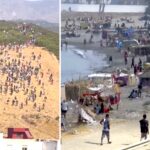
Hoards of people run towards border fence August 15, 2026. Credit: Viral X videos

Spanish and Moroccan security forces kept a tight grip on the frontiers around Ceuta and Melilla this Saturday, August 15, after social media calls urged another mass attempt to cross into the Spanish enclaves. Calm held on the Spanish side while Moroccan police broke up a large group of would-be crossers outside Castillejos, detaining nearly 300 people, most of them reportedly of sub-Saharan African origin.

Heavy police presence on both sides of the border prevented any repeat of the late-July chaos when tens of thousands entered Ceuta in a matter of hours. Guardia Civil, Policía Nacional units stayed on high readiness in Ceuta. Similar reinforcements, around 150 officers plus a patrol boat, helicopter and specialist teams, operated in Melilla.

Government officials there described the day as normal and free of incidents. A floating barrier and extra fencing on the Melilla breakwater added extra layers of control following a Supreme Court ruling that limited certain push-backs by sea.

La situación en Ceuta va cada cada vez peor, más de 10.000 invasores ya están creando campamentos en la playa, la situación de insalubridad es total, la playa está llena de mierda literalmente, la basura se acumula, cada vez aparecen más chabolas, ya van más de 8 violaciones a… pic.twitter.com/k8JtYuBiQH

— Javier Negre (@javiernegre10) August 14, 2026

Moroccan forces break up mountain gathering near Castillejos

Moroccan security sources said hundreds of migrants, largely sub-Saharan, had hidden in the hills southwest of Ceuta near Castillejos. Agents used tear gas and a helicopter to scatter the group before making the arrests for encouraging illegal migration. Road checks remained in place on the main routes from Tetuan and Tangier. The urban centre of Castillejos itself stayed quiet under a large police presence.

Ceuta under Islamist attack from two sides. pic.twitter.com/AhwORyrRMC

— RadioGenoa (@RadioGenoa) August 15, 2026

This came two weeks after the biggest recent influx, when estimates put arrivals into Ceuta somewhere between 50,000 and 80,000 people, many swimming or walking around coastal barriers. Most returned within days, yet several thousand, mainly sub-Saharan men and some minors, were still in the city. Officials counted at least 90 deaths across both sides of the border during that earlier rush, the majority by drowning.

Spanish reporters told to leave Castillejos at once

A local representative of Morocco’s Interior Ministry, identified as Youssef Hajji, ordered journalists from the most respected Spanish news agencies, EFE and TVE, to leave Castillejos while they were covering the police operation against the migrants. He gave no reason beyond saying he was following instructions and warned that press credentials and equipment could be seized if they stayed. Hotels later told the teams the same message from local authorities.

La policía marroquí abre fuego contra los asaltantes de Ceuta mientras la Guardia Civil mira. pic.twitter.com/XynvCEhsaQ

— Muy.Mona/🇪🇸💚 (@Capitana_espana) August 15, 2026

Why keep the cameras away right now?

Questions quickly arose about Morocco’s decision to push Spanish media out of the area. Controlling the images and narrative around these events matters for Rabat. Past episodes have shown how migration flows at Ceuta and Melilla can become a pressure point in relations with Spain. In May 2021, after Spain allowed Polisario Front leader Brahim Ghali medical treatment, Moroccan forces eased controls, and roughly 8,000 to 10,000 people crossed into Ceuta, many of them Moroccan, including minors. Controls tightened again once diplomatic talks advanced.

Analysts have long described the ability to open or close the tap on migrant movements as a recurring tool linked to wider disputes, including Western Sahara.

Morocco routinely cooperates with Spain and the EU on returns and interdictions, and has used force against attempts, as seen in the deadly 2022 Melilla events. Yet selective non-enforcement has appeared during periods of tension. Illegal emigration itself carries serious penalties under Moroccan law, which helps explain why many who reach Ceuta fear being sent back.

Unconfirmed reports have circulated of Moroccan police opening fire during some past crossing attempts, adding to the climate of risk for those involved.

Spanish side stays locked down

Miguel Angel Perez Triano, the government delegate in Ceuta, spent the early hours checking the Tarajal crossing in person. Extra barriers on the Spanish side, including the floating one at Melilla, reflect lessons from July. Social media calls for another August 15 push had circulated widely, so both capitals prepared in advance. EU migration experts were already on the ground in Ceuta assessing needs after the earlier crisis.

Residents in both enclaves continue to feel the strain and have been crying out for more security from central government. Ceuta’s reception centres remain under pressure from remaining arrivals and unaccompanied minors. Local leaders have called for more mainland support while insisting the situation is under control for now.

Looking back at the pattern

Migration pressure at these two Spanish cities on the North African coast has flared repeatedly for two decades. Scale varies, yet the geography stays constant: short sea or land distances, economic gaps, and political undercurrents. Morocco does not recognise Spanish sovereignty over Ceuta or Melilla and has used the frontier as leverage before. Spain maintains both are integral parts of its territory and the only land borders between the EU and Africa.

For the moment the fences held, and the planned mass attempt failed. Whether the calm lasts depends on continued coordination between Madrid and Rabat, plus the ability of authorities on both sides to keep social media-driven crowds from gathering again. Spanish media exclusion from Castillejos leaves fewer independent eyes on the Moroccan side of the story just when tensions are still high.

Continue Reading

%

Local Mar Menor Charity Actively Seeking New Volunteers

Published

on

local-mar-menor-charity-actively-seeking-new-volunteers

Local charity seeks volunteers for office, outlet, and driving roles. Photo Credit: HELP Murcia Mar Menor

Locals and residents in the Los Alcazares area have a chance to make a positive impact in the area, meet new people, and become part of a kind-hearted group: the non-profit organisation HELP Murcia Mar Menor has announced that they are actively seeking new volunteers to join the long-standing charity, inviting enthusiastic and passionate people in the area to help its dedicated team across a variety of roles.

Crucial roles currently open to volunteers: Administration, store helpers, and van drivers

To be specific, the organisation is currently seeking volunteers in three areas. Those who are well-organised and enjoy administrative tasks can assist in the local Los Alcazares office by handling phone enquiries, filing, and data entry to keep operations running smoothly behind the scenes. For those who prefer meeting people and working in a more social environment, the San Javier outlet shop needs friendly helpers to serve customers, price items, and sort through incoming donations. Finally, the charity is looking for van drivers with a valid driving licence to handle the collection and delivery of donated goods and store purchases.

What is HELP Murcia Mar Menor? Supporting the community through times of need

HELP Murcia Mar Menor, which was first established in 2002, provides essential support, information, and emergency assistance to local residents and visitors in the Region of Murcia. For example, the charity has lent vital mobility equipment including wheelchairs to individuals during health crises. 

More recently, in June, the organisation made a sizeable donation of €2,000 to another local charity dedicated to helping those with dementia, the Forget Me Not centre in Camposol. In July, HELP Murcia Mar Menor also raised awareness to help Paul Gaynor, an active volunteer and nurse, who suffered a devastating brain aneurysm.

As HELP Murcia Mar Menor approaches its 25th anniversary in 2027, volunteer support is needed more than ever to ensure its vital community work continues to thrive.

How a few hours can transform lives: Volunteering at the charity

Those who are interested in collaborating with the charity do not need to commit to a lot of hours to make a difference. Even a couple of hours a week can directly help to raise vital funds and support good causes throughout the local community. Volunteering at the charity can also offer a rewarding opportunity to learn new skills, connect with fellow residents, and enjoy plenty of good company along the way.

Those who want to lend a hand, can reach the team by emailing helpmmm@gmail.com, or visiting their official website at helpmurciamarmenor.es.

Continue Reading

%

More Than A Tonne Of Trash Removed As Murcia Volunteers Unite To Clean Up Local Nature Reserves

Published

on

more-than-a-tonne-of-trash-removed-as-murcia-volunteers-unite-to-clean-up-local-nature-reserves

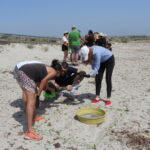
Murcia volunteers removed more than a tonne of waste from natural areas. Photo Credit: Region of Murcia

Residents in the Region of Murcia have, once again, demonstrated their commitment to environmental conservation through the incredible tenth edition of the national campaign “1m² contra la basuraleza” (“1m² Against Trashure”). Organised by Project LIBERA, an initiative created by SEO/BirdLife in partnership with Ecoembes, the campaign mobilised thousands of citizens across Spain to clean up trash and protect local ecosystems.

Hundreds of volunteers clean up key natural sites in the Region of Murcia

In the Region of Murcia, a total of 456 volunteers joined forces across 33 different collection points in beaches, rivers, mountains, and protected natural areas in the region to clean up and fight against the ‘Trashure’, a portmanteau of “trash” and “nature” that has come to define overly polluted areas in Spain. Their collective effort resulted in the removal of 1.1 tonnes of abandoned waste from valuable natural sites, including the El Valle y Carrascoy Regional Park, the Segura River near Beniel, and the Las Amoladeras beach in Cartagena. Local administration officials, educational centres, community associations, and private businesses also collaborated to help with the initiative and show their commitment to the environment.

Data collection exposes plastic as the primary and most dangerous pollutant

In addition to physical cleanup, the campaign places a strong emphasis on citizen science. Using the “Basuraleza” mobile application, volunteers categorised more than 1,100 collected items to contribute to the national Barómetro de la Basuraleza, or “Trashure Barometer”. This tool provides environmental researchers with crucial data on the types of waste polluting natural habitats. In Murcia, the data revealed that 54 per cent of the identified litter consisted of plastics, a material that is particularly harmful to the environment due to its long degradation period.

Expanding the campaign to drive long-term awareness in Murcia and in Spain as a whole

This year’s edition introduced an expanded nine-day schedule, and featured scheduled activities for large community groups, aligning with European environmental movements including Let’s Clean Up Europe.

Murcia’s contribution to this nationwide project, which accounted for 3.6 per cent of the 919 cleanup points across Spain, highlights a growing citizen dedication to ecological consciousness. In addition to removing immediate trash, the initiative serves as a vital reminder of the ongoing need for environmental education, preventive waste management, and sustained collaboration between citizens, non-profits, and public institutions to keep natural spaces in Murcia clean, beautiful, healthy, and resilient.

Continue Reading

Trending

Copyright © 2017 Spanish Property & News