Connect with us

Latest

Spain’s Population On Verge Of Reaching 50 Million

Published

on

Spain’s population reached a record 49.8 million in the second quarter of 2026, the country’s official stats body announced on Thursday, with more than 100,000 new residents added to the census in just three months.

Spain’s population continues to grow month by month in 2026, and it’s looking likely that the country will reach 50 million inhabitants by this year or the next. 

Spain saw an increase of 104,178 inhabitants from April to June, a faster increase than in Q1 2026.

As of July 1st 2026, Spain’s population had reached a total of 49,801,559 inhabitants, the highest figure in the historical record, according to the National Statistics Institute’s (INE) Continuous Population Survey, released on Thursday August 6th.

In annual terms, the estimated population growth in Spain is already 444,205 people.

According to the INE, Spain’s population growth is due once again to the increase in people born abroad.  

READ ALSO: What would Spain be like with fewer immigrants?

In fact, the number of people born in Spain -including to foreign parents – decreased by 20,367  compared to the previous quarter .

The stats show that Spain’s population born abroad now totals nearly 10.3 million people, around one in five residents in Spain, but this includes those who’ve acquired Spanish citizenship.

If you look at the foreign-born population without Spanish nationality, they currently number 7,437,543 people.

The number of foreigners living in Spain increased by 87,197 people during the second quarter.

The population with Spanish nationality grew by 16,981 people, due largely to the aforementioned naturalisations.

READ ALSO: Births rise in Spain for first time in over a decade

The main nationalities of new immigrants during that period were Colombian (with 34,000 arrivals in Spain) , Venezuelan (23,300), and Moroccan (21,100). 

Interestingly, the most numerous nationalities of emigrants – those who left Spain – were also Colombian (with 11,500 departures), Moroccan (10,900), and Venezuelan (5,900).

If you’re wondering if Spain’s widely reported migrant amnesty has had an impact on the second quarter’s increase in population, the answer is most likely no. 

Even though over a million undocumented people living in the country applied for residency earlier this year, INE already included most of these migrants in the census, as most were registered in the padrón town hall.

During this second quarter, the population has grown in all Spanish regions and cities. 

The largest increases occurred in the Valencian Community (0.43 percent), the Balearic Islands (0.36 percent), and the Principality of Asturias (0.29 percent).

Aragón (0.28 percent), Castile-La Mancha (0.28 percent), and Catalonia (0.27 percent) also saw population growth rates above the average of 0.21 percent.

Spain surpassed the barrier of 35 million inhabitants in 1974, 40 million in 1997, and 45 million in 2007.

Continue Reading
Click to comment

Leave a Reply

Your email address will not be published.

Aeropuertos

Primer Día De Control A Los Viajeros Procedentes De Italia: La Policía Pide La Documentación A Solo El 5% O 10% De Los Pasajeros

Published

on

primer-dia-de-control-a-los-viajeros-procedentes-de-italia:-la-policia-pide-la-documentacion-a-solo-el-5%-o-10%-de-los-pasajeros

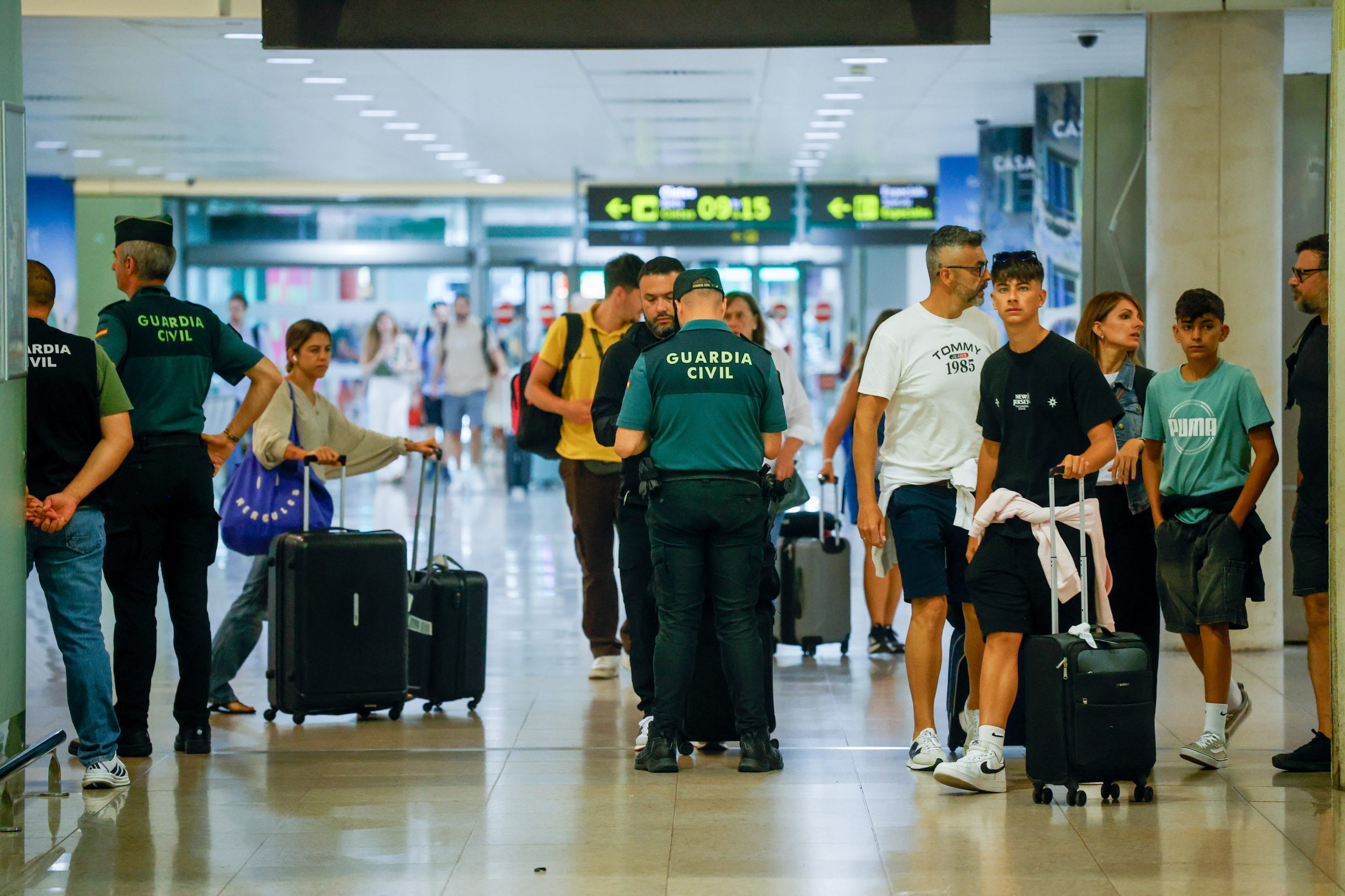
Agentes de la Guardia Civil realizan controles de pasaporte y aduana en la Terminal 1 del aeropuerto Josep Tarradellas El Prat, en Barcelona.

Desde este sábado, un centenar de agentes de la Policía Nacional participa en los controles fronterizos establecidos para los viajeros procedentes de Italia, según fuentes del Ministerio del Interior. El despligue deriva de la decisión del Gobierno, adoptada a última hora de la tarde del viernes, de restablecer temporalmente los controles en aeropuertos y puertos españoles con conexiones directas con el país transalpino. La medida entró en vigor a las 00.00 de este sábado y se mantendrá, inicialmente, hasta la misma hora del próximo 7 de septiembre, aunque el plazo podrá modificarse en función de la evolución de la situación. España reestableció los registros fronterizos después de que el Gobierno de Giorgia Meloni rechazara levantar los que aplica desde el 1 de agosto a los viajeros procedentes de España, tras la entrada masiva de migrantes en Ceuta, un territorio que, no obstante, no pertenece en la práctica al espacio Schengen, porque a todos los viajeros que quieren ir de allí hacia la Península se les controla la documentación.

Seguir leyendo

Continue Reading

Carles Puigdemont

Rufián Acusa De “ridículo” A Puigdemont, En La Reivindicación De Su Fuga De Barcelona

Published

on

rufian-acusa-de-“ridiculo”-a-puigdemont,-en-la-reivindicacion-de-su-fuga-de-barcelona

Aniversario agridulce para Carles Puigdemont, el día que ha querido reivindicar que se cumplen dos años de su irrupción fugaz en el centro de Barcelona, y posterior fuga ante el dispositivo policial que habían montado los Mossos d’Esquadra para detenerlo. El expresidente catalán ha expresado que sigue en libertad, residiendo fuera de España, y que aquella maniobra sirvió para “dejar en evidencia” al Tribunal Supremo y su voluntad por bloquear la amnistía. “Ridículo” y “frívolo”, le ha acusado Gabriel Rufián, portavoz de ERC en el Congreso de los Diputados, una calificación que ha dado pie a un fuego cruzado de declaraciones entre bandos del independentismo. La acritud que hay entre Junts y ERC sigue subiendo de grado a la misma velocidad a la que mejoran las expectativas de voto de la ultraderecha independentista que representa Aliança Catalana.

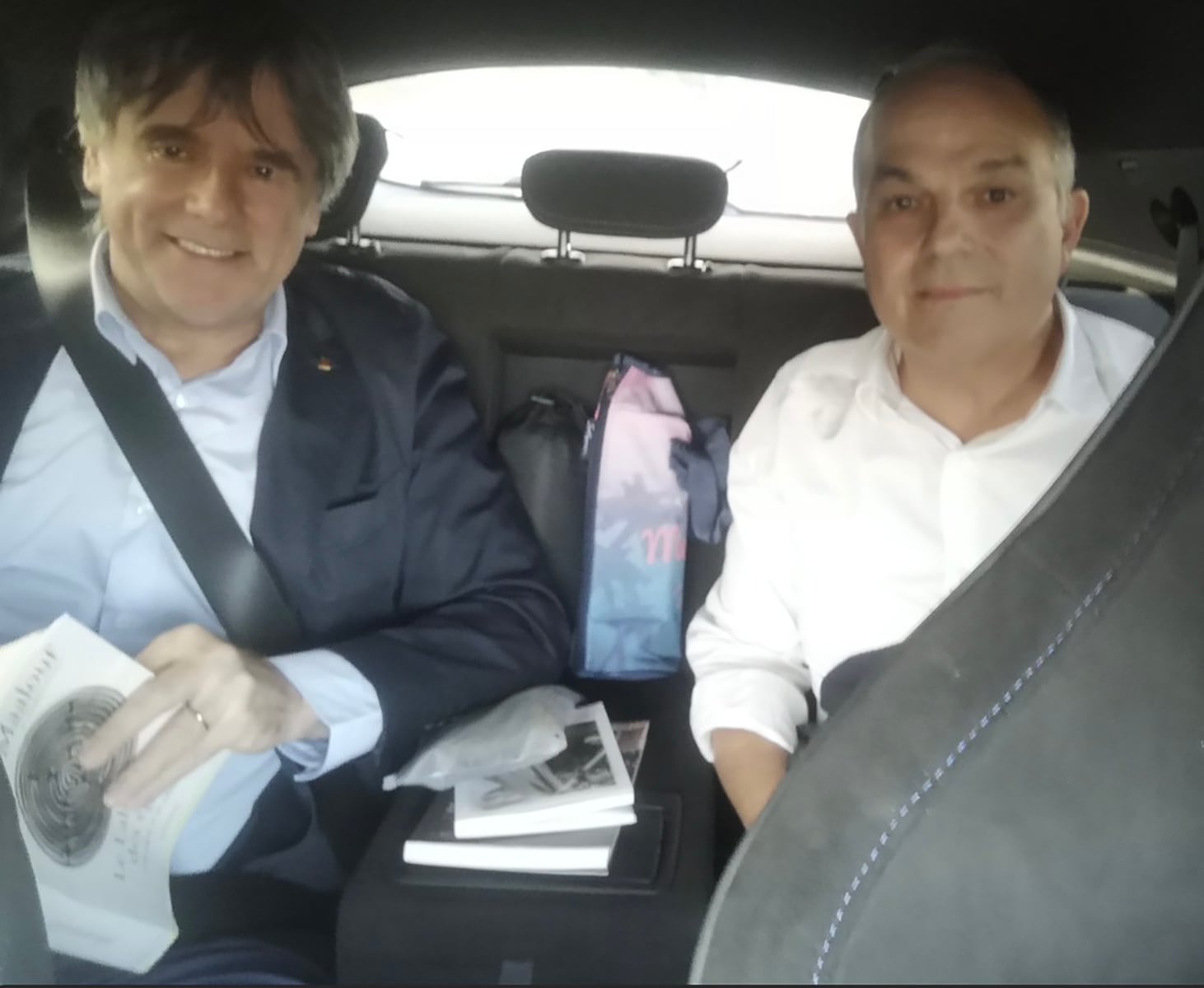
Carles Puigdemont ha revelado que aquel mes de agosto de hace dos años entró en Cataluña el día 6, 48 horas antes de la sesión de investidura de Salvador Illa como president. Puigdemont ha publicado una foto inédita para ilustrar que viajaba dentro de un coche con Jordi Turull, secretario general de Junts. “Ni en un maletero, ni con disfraces, ni camuflados de noche”, explicita el expresidente catalán sobre aquel viaje de vuelta. “Era la primera vez que lo podía hacer desde el 29 de octubre de 2017″, asegura, en alusión a la fecha en que se marchó de España para no ser detenido.

“Era importante salir en persona para poner en evidencia lo que, dos años después, aún es más escandaloso: la actitud de rebeldía del Tribunal Supremo, que se negaba y aún se niega a aplicar la Ley de amnistía”, razona Puigdemont, en una suerte de explicación dirigida a las dudas que generó, incluso dentro de su propio partida, su decisión de presentarse en Barcelona para escapar de nuevo, desafiando al cuerpo de los Mossos d’Esquadra.

Aquella operación “puso en evidencia las flaquezas del Estado”, ha referido también Jordi Turull en un escrito colgado en las redes sociales. Gabriel Rufián ha respondido que aquella fue una acción “indigna” de un presidente y de un partido “que da lecciones de patriotismo”. Rufián ha sido contundente con la calificación de aquella acción: “Solo hicisteis el ridículo”, ha manifestado.

Su escrito ha activado una cadena de réplicas, entre ellas la del propio Jordi Turull, que ha acusado al portavoz de ERC en Madrid de ser “un inmenso océano de notoriedad” con el empeño de “salvar España”. Gonzalo Boye, abogado de Puigdemont, ha redactado otra reacción dirigida a Rufián y apuntando que “algún día se sabrá para quien trabaja”.

Continue Reading

Latest

EU Tells Meta, TikTok To Boost Monitoring, Fact-Checking

Published

on

By

The EU’s tech chief called on Meta and TikTok to “act decisively” to stem disinformation at times of crisis, saying the European Commission held talks with both platforms Friday following last week’s Ceuta migrant surge.

A wave of social media disinformation is believed to have played a large part in the deadly rush of tens of thousands of men, women and children into Spain’s north African territory, after a rumour that the Ceuta border was open spread on social media.

“Platforms must act decisively in keeping the integrity of the digital space, in particular during crisis situations,” said Henna Virkkunen, commissioner for tech sovereignty, security and democracy.

“Monitoring must increase, cooperation with fact-checkers to be strengthened,” said Virkkunen, adding the EU would be “following up on Monday”.

Spain moved swiftly to send people back from Ceuta, announcing Tuesday that of 72,000 people who entered the enclave from Morocco on July 30-31, all but 2,000 had returned. Spanish authorities said 80 people died in the crossings.

The incident was pounced on by right-wing voices as evidence Europe is under siege from uncontrolled immigration. It has caused a diplomatic rift between Spain and fellow EU member Italy, which pushes a tough line on migration.

The EU’s migration chief Magnus Brunner on Tuesday described the Ceuta episode as a “test” of the bloc’s border security and “resilience to disinformation”.

The crossings were “fueled by criminal smuggling networks and also disinformation,” Brunner said, while cautioning it was “too early” to say who was behind the online “instrumentalization” of the situation — whether smugglers or a foreign power such as Russia.

He warned however that the EU “must strengthen our capacity to follow misinformation trends on social media, working hand in hand with Europol and all other EU agencies.”

An open-source investigation by technology company Golden Owl has concluded “with a high degree of confidence” that the migrant rush “was a deliberately organised operation”.

AFP, along with other media outlets, is paid by some platforms (Meta, Google, TikTok) for work to tackle disinformation.

Continue Reading

Trending

Copyright © 2017 Spanish Property & News