Connect with us

%

Will Spanish Rental Law Demand 12-Month Compensation?

Published

on

will-spanish-rental-law-demand-12-month-compensation?

Friday’s vote is decisive. Credit: Adam McCullough – Shutterstock

Thousands of people renting, especially expats, in Spain are not on a fresh five-year contract. The paperwork ended years ago, they stayed, and the landlord kept taking the rent each month. Both sides treated it as normal and an agreement based on a handshake and good relationships.

That arrangement has a legal name: tácita reconducción. Once the original term and the Urban Leases Act extensions are finished, staying 15 days with the owner’s consent creates a new automatic tenancy even without a formal contract being signed. If rent was set monthly, it usually rolls month to month. Paying on time does not freeze the old contract forever. It does mean you are still a tenant, not a squatter.

Congress will vote on Friday, October 2, on a second royal decree that could change that picture. Cabinet split this week’s housing package in two. The first decree (or bill) eviction protection to 2030, a two-year extension for some contracts ending before December 31, 2028, tighter rules on seasonal lets (is the one most parties may swallow). The second is the fight: automatic five-year renewals and a payout if the landlord wants the tenant out without needing the home for themselves or close family.

Leaving tenants could be in for 12 months rent golden handshake

Under the leaked text, that payout is at least 12 months’ rent to be given by the homeowner to be given back to the tenant, using the state reference-price system, and never less than one month for each year the tenant has lived there. Notice needed to be given would normally be six months. The landlord would not pay if they need the flat for their own household, if the tenant has another adequate home in the same town, or if the tenant has barely lived there.

Tacit tenants are included. Under the draft, the new rules would apply from the first time their rolling tenancy comes up for renewal after the decree has been in force for four months. The years already spent in the property under the original contract would count towards the five-year minimum. If the landlord has already given valid notice to end the tacit tenancy before that 4 months after the bill is put into law, that notice would still stand and would not trigger any compensation.

That timing is the practical point. If the text is published on Thursday and survives Friday, a landlord who has done nothing may later face a large cheque. A landlord who has already sent a proper burofax (most official letter, legally) ending the tacit period is in a different position. Junts (Catalonia) and the PNV (Basque Country) have not promised their votes and will no doubt attempt to negotiate. The second decree is the one most likely to fall.

None of this is legal advice. A lawyer would need to wait for the BOE wording, look at the date your original contract started, and whether any notice has already been served. For many expats quietly paying an old rent every month, Friday is not another housing headline. It is the difference between a rolling monthly stay and a rule that makes ending it expensive.

%

New Writing Club In Los Alcazares Invites Beginners To Join Creative Group

Published

on

new-writing-club-in-los-alcazares-invites-beginners-to-join-creative-group

New Los Alcazares writing club invites beginners to join monthly. Photo Credit: Avesta / Unsplash

For those seeking an opportunity to begin a new writing hobby, even as a complete beginner, a new writing club is looking for passionate members of the community to participate in fun and creative monthly meetings. David Lees, a neighbour based in Los Alcazares who is himself new to the writing hobby, is looking for people in the town and surrounding areas who enjoy writing of any kind – stories, poetry, memoirs, or any other kind of creative work – to meet and share ideas, offer encouragement, and help each other to grow as writers.

Why writing is good for the brain: ‘If you do not use it, you lose it’

“I am on a mission to find a new hobby, one that will exercise my brain,” said David about creating the group. “I know how to exercise my legs and other appendages; you just go for a walk. But my brain is quite a different problem. I may have to consult the wife on that one.”

David and his wife, Andrea Wellington, shared some valuable insight on why writing is an important hobby for those looking to exercise their brain.

“It is a sad fact that at our age, our vocabulary shrinks,” stated David. “Writing makes you search for old friends, old phrases that can conjure up old stories, helping us to relive our memories and yes, some sad ones too, but they are…who we are.”

“Simple: if you do not use it, you lose it.”

Andrea also shared that an autobiography could be a great starting point for beginner writers. “You already have a timeline, you have a written storyboard, and characters lining up to be in your story.”

Aspiring writers from Los Alcazares and surrounding areas welcome

For the moment, David is focusing on interested attendees from Los Alcazares; however, he is open to suggestions for meeting places, as it depends where the interest in the group is most active. Writers of all ages and experience levels are welcome, and those interested in joining the group can contact David directly via email at davidlees968@gmail.com and arrange a casual coffee morning meeting to discuss details and get to know other members of the group.

Those who are interested in joining a friendly community group of amateur writers where they can explore their creative side, work on their novels, or simply meet new friends should not hesitate to contact David and Andrea and jot down their best ideas for the next meeting.

Continue Reading

%

Almost 400 Motorists Caught In Bizarre German Speed Camera Trap

Published

on

almost-400-motorists-caught-in-bizarre-german-speed-camera-trap

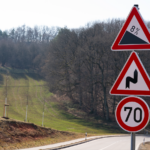
Police say the sign had been constructed from a round 70 km/h sign. Photo credit: Mentor Beqiri/Shutterstock

When driving on a motorway, you generally trust the signs telling you what speed you can legally travel. You are hardly going to pull over and investigate whether somebody has quietly put up a fake one, particularly when it looks like an ordinary road sign.

That is the bizarre situation motorists found themselves in on a road in Haldensleben, Germany, after an unknown person interfered with the speed limit next to a mobile speed camera.  It looked convincing enough to affect what drivers believed they were legally allowed to do. By the time authorities realised what had happened, the consequences had already become a headache for the town, and for hundreds of motorists who had been caught on camera.

The fake sign looked convincing

The bizarre incident happened on Magdeburger Straße, a main route into Haldensleben in Saxony-Anhalt. The road is surrounded by businesses and petrol stations, meaning a change to the speed limit did not necessarily look suspicious to passing motorists. The fake sign showed a maximum speed of 70 km/h, despite the actual limit being 50 km/h. It had been put up independently and was not an official traffic sign issued by the authorities. 

Police say the sign had been constructed from a round 70 km/h sign, a stand and a metal pipe. While officials noticed differences between the homemade setup and the equipment normally used by the authorities, it was apparently convincing enough to affect drivers passing the location. There was an important detail that the person putting up the sign presumably knew: a mobile speed camera was operating on the same stretch of road.

Almost 400 drivers caught by the camera

Between September 4 and September 6, the camera recorded almost 400 photographs of vehicles exceeding the 50 km/h limit and issued the fines. For a driver who had just passed what appeared to be a legitimate 70 km/h sign, being photographed at 60 or 65 km/h would have seemed particularly unfair. From their point of view, they were below the speed shown on the sign.

The problem became even bigger for the authorities once they discovered that the sign had been placed there illegally. The city removed the fake sign, but by then hundreds of photographs had already been taken. What happened next was an unusual twist: the motorists caught by the camera fortunately did not end up paying the fines. 

Almost 400 cases had to be dropped

The city of Haldensleben ultimately had to discontinue all the affected penalty proceedings from that weekend. The reason was not simply that there had been a fake sign. Authorities could not establish beyond doubt exactly when the sign had been put up. Without knowing the precise point at which the fake 70 km/h limit appeared, it was impossible to determine with sufficient legal certainty which drivers had passed the camera while the misleading sign was in place.

That meant the cases could not simply be pursued on the basis of the camera photographs. The decision even affected motorists who had been travelling faster than 70 km/h. The city therefore lost the fines that could otherwise have been issued from the affected measurements. 

Police believe it was deliberate

Authorities are not treating the incident as someone putting up a strange road sign for a laugh. Police believe the unknown person may have deliberately wanted to mislead motorists and cause them to exceed the genuine 50 km/h limit, knowing that the speed camera was operating nearby.

The police have opened an investigation for Amtsanmaßung, a German offence involving unlawfully assuming or exercising an authority that belongs to a public official. They are also describing the incident as a dangerous interference with normal road traffic. There is currently no identified suspect but police have appealed for witnesses who may have seen someone putting up the sign or noticed suspicious activity around the location.

The sign was removed, but the damage was already done

Once the authorities discovered what had happened, the homemade sign was taken down.That solved the immediate problem for motorists, but it could not undo the hundreds of speed-camera photographs already recorded over those three days. The incident has left Haldensleben with an unusual outcome: almost 400 motorists were caught by a speed camera, yet the uncertainty surrounding a single roadside sign meant the resulting penalty cases had to be abandoned.

For drivers, there is also an obvious lesson in how easily a convincing piece of roadside equipment can create confusion. The sign looked official enough to influence traffic, while the camera continued operating according to the actual 50 km/h restriction. And whoever put it there remains unknown.

Continue Reading

%

British Tourist Dies After Being Pulled From Sea At Ibiza Beach

Published

on

british-tourist-dies-after-being-pulled-from-sea-at-ibiza-beach

An autopsy is expected to help determine the exact cause of death. Photo credit: Go My Media/Shutterstock

Ibiza is usually the place people go to switch off, with long afternoons by the water and the promise of little more than sun, sea and a few carefree hours. But for one British visitor in Portinatx, Tuesday afternoon became a very different experience. The incident happened at s’Arenal Gros, one of the beaches in the popular northern resort, where what began as an ordinary afternoon by the sea quickly became a serious emergency. The details of what happened are now emerging, with emergency services called to the beach and a major effort made to help the woman involved. 

People at the beach rushed to help

The woman, aged 81, was pulled from the water and lifeguards immediately began CPR. They continued with basic resuscitation for around 25 minutes before additional medical assistance arrived. A British doctor who was in the area also stepped in to help, alongside a Spanish nurse and a firefighter. Their efforts continued while emergency services made their way to the beach.

The 061 emergency service eventually took over the resuscitation attempt, with a mobile intensive care unit and a basic life-support ambulance sent to the scene. Despite the prolonged attempts to revive her, the woman unfortunately could not be saved and was pronounced dead at around 5.30pm. Policia Local from Sant Joan de Labritja also attended, while Guardia Civil officers later arrived and took charge of the proceedings. 

British woman was staying in Portinatx

The woman had been staying at the Hotel El Greco in Portinatx, according to local reports. S’Arenal Gros is the largest of the three beaches around the sheltered Portinatx bay, with s’Arenal Petit and the resort’s harbour completing the small coastal area. The beach sits in the centre of the bay and is surrounded by hotels, restaurants and other tourist facilities. 

The incident happened as the tourist season continues into late September, when Portinatx remains a popular base for visitors looking to stay in the quieter northern part of Ibiza. For those familiar with the resort, s’Arenal Gros is a particularly recognisable part of Portinatx, forming the main sandy stretch of the bay.

Exact circumstances remain unclear

Although local reports describe the incident as a drowning, the precise circumstances leading to the woman’s death have not been publicly established. An autopsy is expected to help determine the exact cause of death, as the medical examination will be able to establish whether drowning itself was the cause of death or whether another medical event may have occurred before she entered difficulty in the water. The emergency response nevertheless involved an extended attempt to resuscitate the woman, with people already at the beach and trained professionals joining forces before the 061 team continued the effort.

Her death is the latest fatal incident involving a British visitor to Ibiza this year. In July, a 64-year-old British man died after becoming unconscious following a water-slide incident at a hotel in Cala Tarida. That earlier case was also a separate incident and occurred at a hotel rather than on one of Ibiza’s beaches. The circumstances surrounding the womans death are now in the hands of the relevant authorities, while the medical examination is expected to provide further information about what happened to the 81-year-old woman.

Continue Reading

Trending

Copyright © 2017 Spanish Property & News