
Donald Trump
Testosterone Fever: The Only Hormone That Has An Ideology

Morning erections are the gold standard for gauging testosterone, according to several male-oriented forums on Reddit, where an entire subcategory is devoted to the hormone, which is referred to online simply as T. In those groups—some aligned with the manosphere and others not—members swap and compare blood tests every six months. Being labeled in that universe as low T (low in testosterone) is a stigma that taps into several male anxieties: weak sexual drive, low energy, a certain timorous attitude toward life and a precarious bank balance.
Until about a decade ago, men lived largely oblivious to their hormones, but they have recently discovered that their wellbeing and reputation also depend, as with women, on chemical messengers that rise and fall erratically and therefore must be monitored and, when necessary, replaced with synthetic versions. Puberty is when testosterone concentrations in male blood are highest, between 500 and 700 ng/dl. From age 35 a slow but inexorable decline begins; it does not fall abruptly as estrogen does in women, but the steady drip of about 1% a year continues until levels reach those of an elderly man—around 300 ng/dl. That would be the physiological, natural decline.
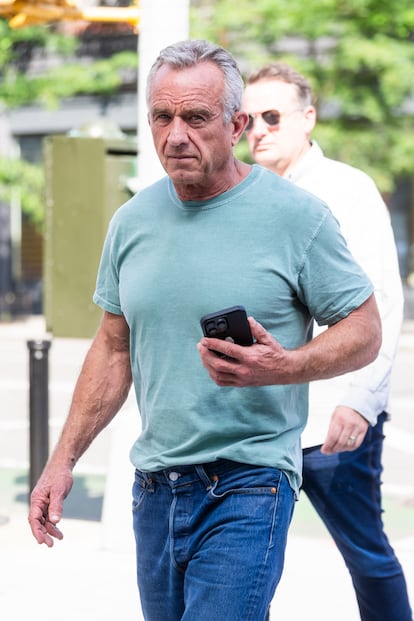
But now that testosterone has been elevated to pop-culture status, nature must of course be corrected, and those natural declines are scrutinized in another rapidly expanding medical field: longevity. It was Robert F. Kennedy Jr., in charge of the MAHA (Make America Healthy Again) project, who revealed Donald Trump’s T figures on a podcast. He explained that, after reviewing his records, doctors had found “exceptionally high” testosterone levels for a man in his seventies. “He has the constitution of a god,” he reported. Kennedy Jr. said the secret of his energy, acuity and vigor lay in his hormones—specifically one of them. U.S. political analysts say Trump won the young male vote because he presented himself as the only candidate with enough testosterone to tackle the masculinity crisis that, in his view, the woke movement had created.
The day before the 2024 election, J. D. Vance was a guest on Joe Rogan’s podcast: “Have you seen all the studies linking testosterone levels in young men to conservative politics?” It was a rhetorical question; Vance himself supplied the answer: “It seems that less healthy people turn left.” Perhaps we are dealing with the only hormone that has always had an ideology. It was isolated and first synthesized in a laboratory in 1935 and quickly found a market eager to “correct deficits of masculinity.” Newsweek reported it was useful to “avoid feminine characteristics in men,” and Time magazine said a substance was being synthesized that could “revitalize the old and cure homosexuals.”
That was the first testosterone fever, which lasted until 1941, when a study found that supplementation with the hormone could cause prostate cancer. The impact was so strong it lasted for the rest of the 20th century. In 2010 several clinical trials linked TRT (testosterone replacement therapy) with the risk of strokes and heart attacks. The FDA recommended a comprehensive study of its real risks. That clinical trial, which included 5,200 men aged 45 to 80, ended in 2023 and concluded that testosterone was safe. By 2025 nearly 12 million people had obtained prescriptions for it, compared with scarcely one million who had been medicated in 2000, according to the consultancy IQVIA. Many others obtained hormones in gyms or online, where TRT is marketed as a lifestyle product.
Dr. Álvaro Campillo, of the longevity unit at The Beauty Concept, says it is relatively easy to identify a genuine testosterone deficiency. “They’re tired, they sleep worse even if they go to bed early, they’ve gained weight and lost muscle mass… In those cases, after the appropriate tests, replacement therapy is useful because it rebalances everything,” Campillo explains, adding that testosterone falls not only with age but also because of a sedentary lifestyle, poor diet, tobacco, alcohol or drug use and the accumulation of visceral fat, which feminizes men. Global figures from large studies, the most recent published in 2025, show that younger generations have lower testosterone levels than their predecessors at the same age—a circumstance Kennedy Jr. calls “an existential threat.”
“I would say testosterone’s role has been greatly simplified. It is not true that more testosterone automatically means more libido, more muscle or more masculinity, nor a stronger jawline. It does influence sexual desire, energy, muscle mass and body composition, but always within a broader context that also includes sleep, stress, vascular health, diet, exercise and other hormones,” explains Rafael Navas, a hormonal health expert at SHA Wellness. In his view, the goal should not be sky-high testosterone but the right level, and correcting a deficit if it exists and causes symptoms.
Some estimates put the prevalence of testosterone deficiency at 5.6% among men aged 30 to 79, mainly at older ages, but only one in five receives treatment. The paradox is that TRT use has surged especially among men 35 to 44. Physicians suspect many do not need it. The American Urological Association notes that one-third of men prescribed the drug do not have a diagnosis of hormone deficiency.
Although the impact of testosterone supplements in young men has been little studied, doctors believe in those cases testosterone would primarily increase muscle mass (many patients will already be pleased with that). But that is not what is reported on the Reddit forums, where men describe a before and after—a new life with more sex and a drive to take on the world. “They have probably also improved their diet and stopped drinking,” adds Dr. Navas, who thinks it is a mistake to reduce all male hormonal health to testosterone. “The body works like a symphony. Cortisol is directly related to the stress response, sleep, energy and metabolism. A man under chronic stress can present symptoms very similar to those of testosterone deficiency.”
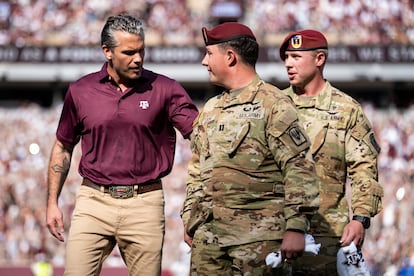
What has also started to emerge in some clinics are young men with fertility problems and an almost zero sperm count. In almost all cases they had been taking prescribed testosterone obtained from online clinics and were never informed of that side effect. Apparently the supplements send the brain a message of excess and the testicles stop producing testosterone and sperm. According to The New York Times, the hormone is so effective at reducing sperm that it is being tested as a male contraceptive in a trial that entered its final phase in 2024. That, certainly, was not foreseen by Kennedy Jr. Nor by Pete Hegseth, the U.S. secretary of War, who likes to show off his deltoids and pectorals to his adversaries. He did so days before the Iran war in a video lifting weights cheered on by a court of toned torsos, and he repeated it in Guantánamo, where he stepped off a plane wearing shorts, took off his shirt and completed a set of bench presses before his troops. The video was posted on X under the name The High-T Department of War.
Sign up for our weekly newsletter to get more English-language news coverage from EL PAÍS USA Edition









America
Trump Dice Que España Sufrió Una Entrada “masiva Y Repentina” De Inmigrantes De Ceuta Y “no Está Haciendo Nada”


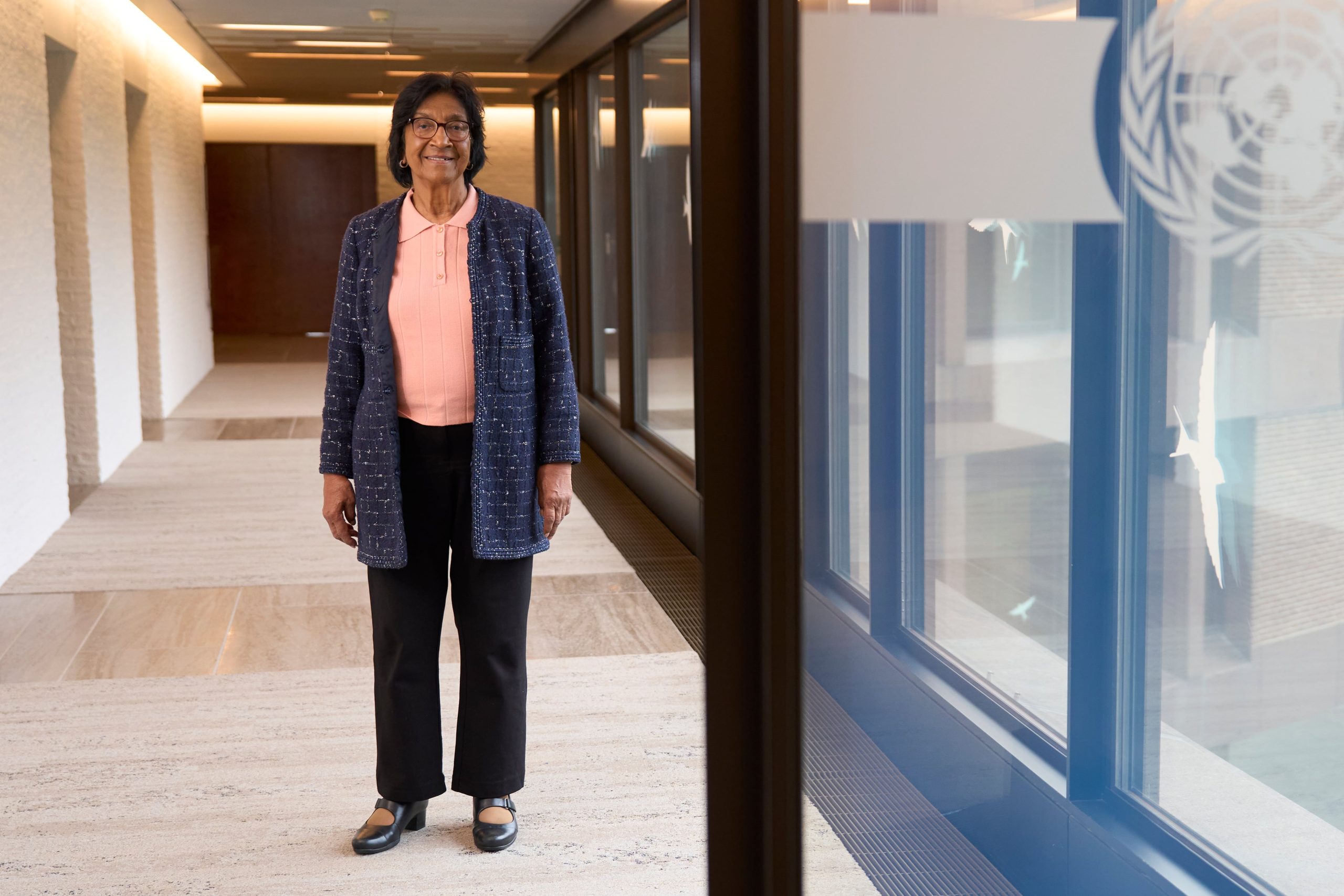
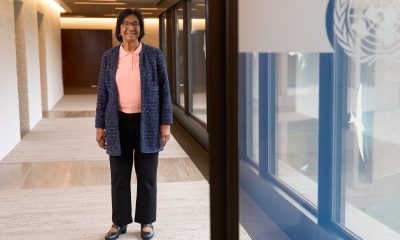
Eloquent and resolute, Navanethem “Navi” Pillay, recently awarded the Nobel Peace Prize, retains at 85 the passion and determination to continue the work that has defined her life: the defense of human rights.
Born in South Africa, she grew up under the apartheid regime and became a lawyer because she wanted to know “what people’s rights are.” The Norwegian Nobel Committee highlighted her efforts to uphold international law at a time when the International Criminal Court (ICC), as well as the International Court of Justice (ICJ), face attacks from the United States and its main ally, Israel.
Pillay has worked at both institutions, but the strongest backlash from Washington and the Israeli government came after she concluded in 2025 that the administration of Israeli Prime Minister Benjamin Netanyahu is committing genocide in Gaza.
Another pivotal moment in her career came in 1998, when, as a judge at the then International Criminal Tribunal for Rwanda, she sat on the bench that ruled that rape and systematic sexual violence constituted an integral component of the crime of genocide.
With her schedule packed with trips and engagements since receiving the prize, she speaks to EL PAÍS by video call and admits that “it’s just sinking in.”
Question. The Norwegian Nobel Committee said that “peace requires justice” when it announced that you had been awarded the Nobel Peace Prize on October 9. Hours later, the United States imposed financial and trade sanctions on the ICC. What is the greatest threat to the international rule of law today?
Answer. The resort to force is clearly the greatest threat to the international rule of law. And when powerful states take up that view and then get collaboration from other powerful people and states. These are all risks when, really, the rest of the world — that is, the majority of people — want peace and they want justice as the route to achieving it. They do not want more wars and more deaths. Because civilians are the ones who lose their lives most in modern warfare and remote armed drones. States have a peremptory obligation to protect civilians and to prevent crimes such as genocide. And we have to uphold those basic principles even in civil society. NGOs take great risks in going on the street to assert that.
Q. In 2025, as chair of a U.N. Independent International Commission of Inquiry, you concluded that there were reasonable grounds to say that Israel has committed genocide in Gaza. You came under fierce criticism from both Israel and the United States. Are you confident in the evidence your commission gathered? Why do you believe this amounts to genocide, the gravest of crimes and the one that is often considered the hardest to prove?
A. We analyzed both the Hamas attacks and Israel’s reaction, and we did it just like a court of law would. We did not put in a single piece of evidence in our report that we did not personally verify. Each department did its own investigation, and then we compiled all that together. Thanks to my previous experience in investigating genocide in Rwanda as a judge [in 100 days in 1994, between 500,000 and one million Tutsis and moderate Hutus were killed by the Hutu government and local militias], and based on the evidence of acts against the population in Gaza, together with statements made by leaders, genocidal intent by the government can be inferred. But we named three individuals: President Isaac Herzog, Prime Minister Benjamin Netanyahu, and former defense minister Yoav Gallant, as individuals who should be investigated and tried for genocide.
Q. Israel and the United States flatly reject your conclusions. Do you think the response from other democratic countries has been strong enough?
A. When we made the report, we exposed ourselves to criticism for concluding that there had been genocide in Gaza. I would change some parts of the text if it could be shown that certain things did not happen. But that is not the criticism we’re getting. We have been met with very serious and violent insults from Israel and the U.S., who call me a liar. That’s not so. The report seeks action by courts, whether national or the ICC, and it is significant that only these two countries have launched personal accusations without addressing the substance of the work. The Nobel Committee highlighted my work in respect of this conflict and this report. That vindicates our work and gives us a clear idea as to where the world is headed. We are not looking for another world war. We’re looking for an end of this conflict and for justice and accountability for these crimes to prevail.
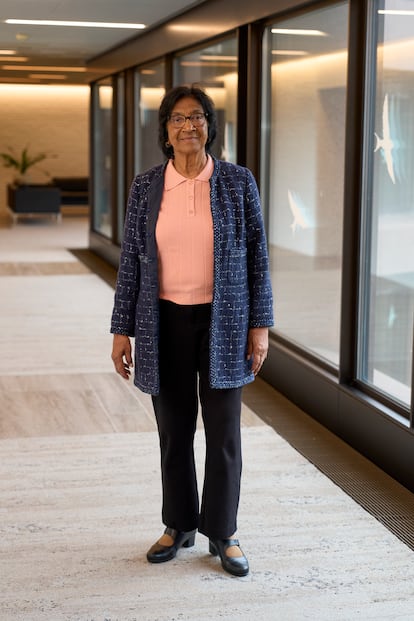
Q. You served first as a judge and later as president of the International Criminal Tribunal for Rwanda. In 1998, the tribunal ruled that rape and systematic sexual violence can constitute genocide if intended to destroy a specific group. It was a landmark ruling, but why has it taken so long for these crimes to be treated as more than a recurring horror of war?
A. They were not treated as crimes. I looked through some U.S. military manuals from the Vietnam War, and they encouraged soldiers to take those “yellow women” as a reward for fighting well. Some people think only killings amount to the destruction of a group, so this was the first time that view changed. On the other hand, I was told that many women will not come forward to give evidence, and that is a myth. Of course, if a group of white men goes to Rwanda, as they did, to hold big meetings and asks survivors what happened, they will not publicly say they were raped. Activists and NGOs have always said witnesses must be protected, and because we had reliable testimony, we were able to deliver convictions. I want to salute the courage of survivors of sexual violence who came forward to testify.
Q. You were born in South Africa and suffered under apartheid. Did you always want to be a lawyer or a judge?
A. I did it because those of us who grew up under that regime had no rights, and as a child I felt I wanted to know what people’s rights are. In that extreme situation where laws institutionalized racism, we were not exposed to what the U.N. was doing. There is a Universal Declaration of Human Rights that states everyone is equal. And apartheid was declared a crime against humanity, but this kind of information did not reach the general public in South Africa until some of us, the lawyers, used the outside mechanisms of international law. We wrote letters and sent them to leaders around the world, from then-prime minister Indira Gandhi of India to the French intellectual Simone de Beauvoir. The lawful struggle of civil society is a hard road, but it is the road that was chosen.
Q. On December 10, you will receive the Nobel Peace Prize in Oslo. Have you thought about what you will say in your acceptance speech?
A. We are witnessing an attack on the rule of law and going through precarious times where poor countries are being demonized by rich countries. I will speak about my life’s work and the way we approach these matters. I want to say that, right now, Spain is one of my favorite countries. I have great admiration for the King [Felipe VI], whom I have described as a human rights champion. And I respect that the prime minister [Pedro Sánchez] has taken a principled position on the Israel-Palestine conflict. I also salute Spain for its consistent efforts to support the abolition of the death penalty.
Sign up for our weekly newsletter to get more English-language news coverage from EL PAÍS USA Edition
Alex Saab
A White House Feud With A Turkish Twist: A Whirlwind Romance, A Trumpist Wedding And Missing Millions

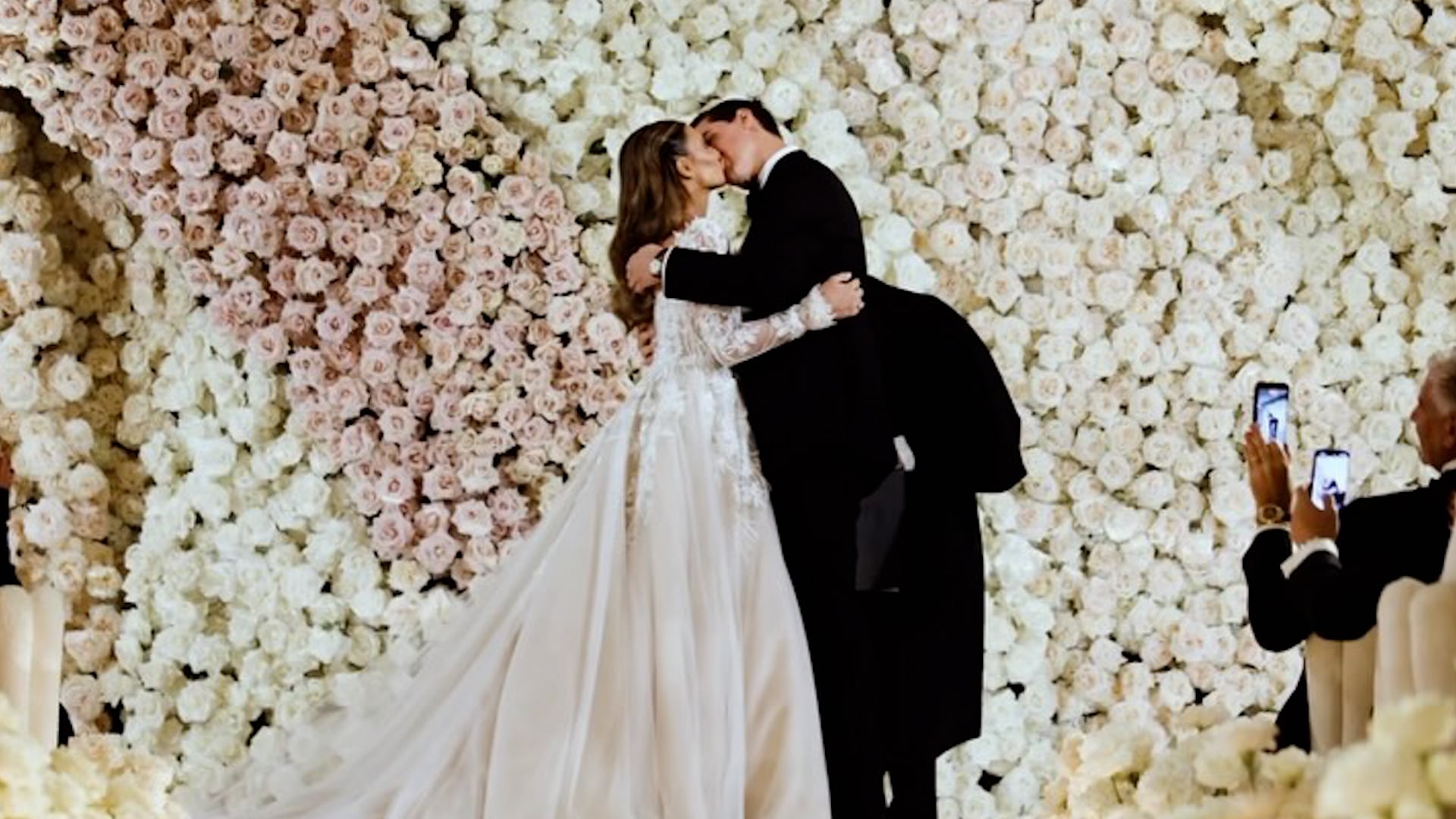
About 900,000 fresh flowers hung from walls, columns and ceilings; there were tins of caviar for each guest, Dom Pérignon, three wedding dresses and a 30-piece orchestra. The Waldorf Astoria ballroom in New York hosted a wedding in September that was put together in under three months and cost around $10 million, according to the U.S. media. It was the week of the United Nations General Assembly, with Manhattan full of heads of state and diplomats, and the party drew major figures from U.S. power circles, oligarchs, Congolese politicians, the rapper Nelly on stage, and even former boxer Mike Tyson. But above all the celebration brought together the top ranks of Trumpism: the attorney general Todd Blanche; the FBI director Kash Patel; and White House counsel Will Scharf. It was a MAGA wedding for the glossy magazines.
The hangover from that party has passed, but the couple has been dominating headlines for more than a week. No longer so much for their lavish wedding as for their connections and, above all, for the bitter fight that has erupted after this fairy-tale union. The bride, Alina Habba, 42, was once Donald Trump’s personal lawyer. The groom, Turhan Mildon, who says he is 29 — although some documents list him as being 25 — is a Turkish investor who did business in Venezuela thanks to Alex Saab, former president Nicolás Maduro’s front man. The couple met in late 2025 at Washington’s Kennedy Center and began dating in early 2026. And into this brief romance stepped an old friend of the couple, Richard Grenell, former U.S. special envoy to Caracas — which now explains why no one invited him to the party.
What might read like a Turkish soap opera is, at its core, a fight over Venezuela. Weeks after the wedding, on October 9, Habba entered the Oval Office to accuse Grenell of making millions of dollars transferred by her newlywed husband disappear. She did not pick an ordinary day: it was one day after The New York Times sent her husband a series of questions about his businesses in Venezuela.
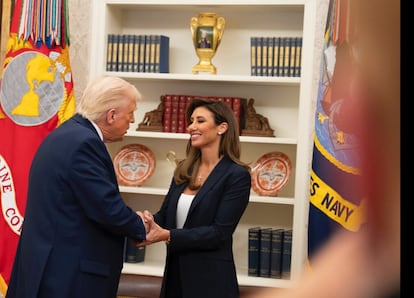
Habba’s account, according to Axios and the Times, is that in the spring of 2025 Grenell persuaded Mildon to transfer $17.6 million to TX-AT, a Texas security and defense firm for which Grenell worked as a consultant in 2024. The details of the deal behind that transfer remain unclear, but Axios reports thatGrenell sent a message promising that the investment would be rewarded with access to the U.S. president, VIP events and administration officials. Of that total, $5.6 million was meant to be used as a donation to the Kennedy Center, which Grenell was then running, but the money never arrived.
The tangle has grown in recent days. The money transfer, The New York Times reports, did not actually come directly from Mildon but from an account linked to the government of the Democratic Republic of Congo, whose president had hired the Turkish businessman as an adviser. Grenell calls the whole thing absurd, denies the messages and says he never received a cent from Mildon.
The struggle over Venezuela
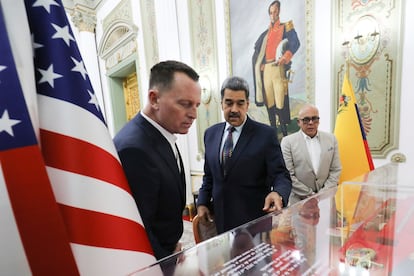
The plot goes beyond Washington power squabbles and exposes two men who tried to profit from the U.S. push against Chavismo and were swept up by Maduro’s fall. On October 12, The New York Times published a piece laying out the first details of the dispute that was about to erupt. It linked the Turkish investor to Saab’s front operations and reported that in June the interim president of Venezuela, Delcy Rodríguez — the same official who handed Saab over to Washington — had ordered the freezing of Mildon’s contracts in the country. Rodríguez cited failure to meet investment goals, but the punishment, the Times reports, did not last long. The chavista leader reversed course as soon as she learned the name of the Turkish investor’s new bride.
The Kennedy Center’s starring role turns this story into a personal matter for Trump, who appointed himself chair of its board. U.S. media have revealed Trump had grown disenchanted with Grenell over a string of negative headlines about the institution. The president announced Grenell’s departure in March of this year, and earlier, in November 2025, Democratic senators had opened an investigation into him and the center’s leadership over cronyism and corruption, which Grenell denied. This time, Trump put the case in the hands of Will Scharf, his counsel, one of the notable guests at the wedding. Mildon’s lawyer handed over text messages and a transfer receipt. In one message from May 2025, Grenell allegedly said he wanted to make Mildon the U.S. face in Venezuela.
The formula for success
Mildon grew up in a small Turkish town near the Dardanelles Strait, where his family owned auto shops and gas stations. He summed up his formula this month to Forbes Turkey with a play on English words: previously the emphasis was on know-how, now it’s on know-who. He put that premise to use in 2021 by marrying the daughter of a construction magnate close to Turkish President Recep Erdoğan. Later, in the RDC — where in 2023 he began advising President Félix Tshisekedi — he obtained a diplomatic passport and won major public contracts. And in June 2025, just months after his divorce, Mildon became engaged to María Eugenia Ceballos, daughter of Venezuelan Admiral Remigio Ceballos, the entrepreneur’s spokesman told the Times. Ceballos was for years the operational chief of Venezuela’s armed forces, a man sanctioned by the U.S. for corruption and human rights abuses.
At the end of 2023 Mildon landed in Caracas and found his true godfather. Alex Saab had just returned from a U.S. prison after a prisoner swap with the Biden administration, and months later Maduro appointed him minister of industry, in charge of dealing with foreign investors. In March 2025, Saab awarded him the operation of the state cement plants. Months later, he handed him a shrimp business expropriated from its founder, who was jailed after being accused of financing the opposition. Mildon boasted to Forbes Turkey of producing 4.5 million tons of cement a year, three times the country’s total output according to figures seen by the Times. In June he visited a cement plant wearing chavista red and posed with his thumbs up, in a Trump-style gesture. His business group said in a statement there have been no cancellations of its contracts and that its business volume continues to grow.
Mildon not only did business with Saab but also tried to sell his virtues to Washington. According to The New York Times, he spent months trying to build ties between Maduro’s front man and Republicans in Trump’s circle. Several people who met Mildon before the autocrat’s capture on January 3 told the paper that he praised Saab and presented him as “the main power operator in Venezuela and the key to a peaceful resolution of the conflict with the United States.” The Trump administration even considered sanctioning Mildon, two people involved in those talks told the paper. His spokesman called that a “totally false and malicious rumor,” and a U.S. official also cast doubt that sanctions had been seriously contemplated.
Grenell, for his part, had positioned himself as the man of dialogue in Venezuela. In January 2025 the diplomat met with Maduro at Miraflores and returned with six freed Americans. He sold that as his great achievement, although behind the scenes there was also Harry Sargeant III, an American oil magnate who has been sidelined by Washington. For months Grenell argued that an agreement with Chavismo was possible, even opening Venezuela’s oil in exchange for Maduro remaining in power.
Mildon and Grenell were allies of the same cause and defended Chavismo’s survival, though their fates are now uncertain. The dialogue strategy ended up in a drawer in the Oval Office. Marco Rubio cornered Grenell, persuaded Trump to harden his stance, capture Maduro and select Delcy Rodríguez as successor. With January 3, both men lost influence, although Mildon’s fortunes have been radically altered by his romance with Habba. Love triumphed while also unleashing an internal war.
Sign up for our weekly newsletter to get more English-language news coverage from EL PAÍS USA Edition
Could AI decide you’re bad at your job? Spain’s rules on workplace monitoring
PP and Vox seek pact to block Sánchez’s allies from controlling Spain’s senate

PSG – Barcelona En Directo | El PSG De Luis Enrique Derrota Al Barça, Que Encaja Su Primera Derrota De La Temporada


-

 Uncategorized3 weeks ago
F1 Bahrain Grand Prix will be live and FREE on TV this weekend
-
Blackout preparedness3 weeks ago
Brussels takes action against Spain over failure to update blackout plan
-
EU2 weeks ago
EU nicotine crackdown sparks warning that ex-smokers could be driven back to cigarettes
-
 Foreign demand3 weeks ago
Market Snapshot: German Market In Q2 2026
-

 New Developments3 weeks ago
How To Get A Tourist Rental Licence In Andalusia (Spain) – Step-By-Step Guide 2025
-

 Uncategorized3 weeks ago
Lewis Hamilton F1 wish could come true as stunning plans for new track revealed
-
Latest2 weeks ago
The Changes To Spain’s IRNR Non-Resident Property Tax In 2027
-
 Housing access / crisis / affordability3 weeks ago
Radical Housing Decrees Defeated As Snap Election Talk Grows