
ElPais
The Big Problem With Meta Glasses: Does Recording And Sharing Everything Put Us At Risk?

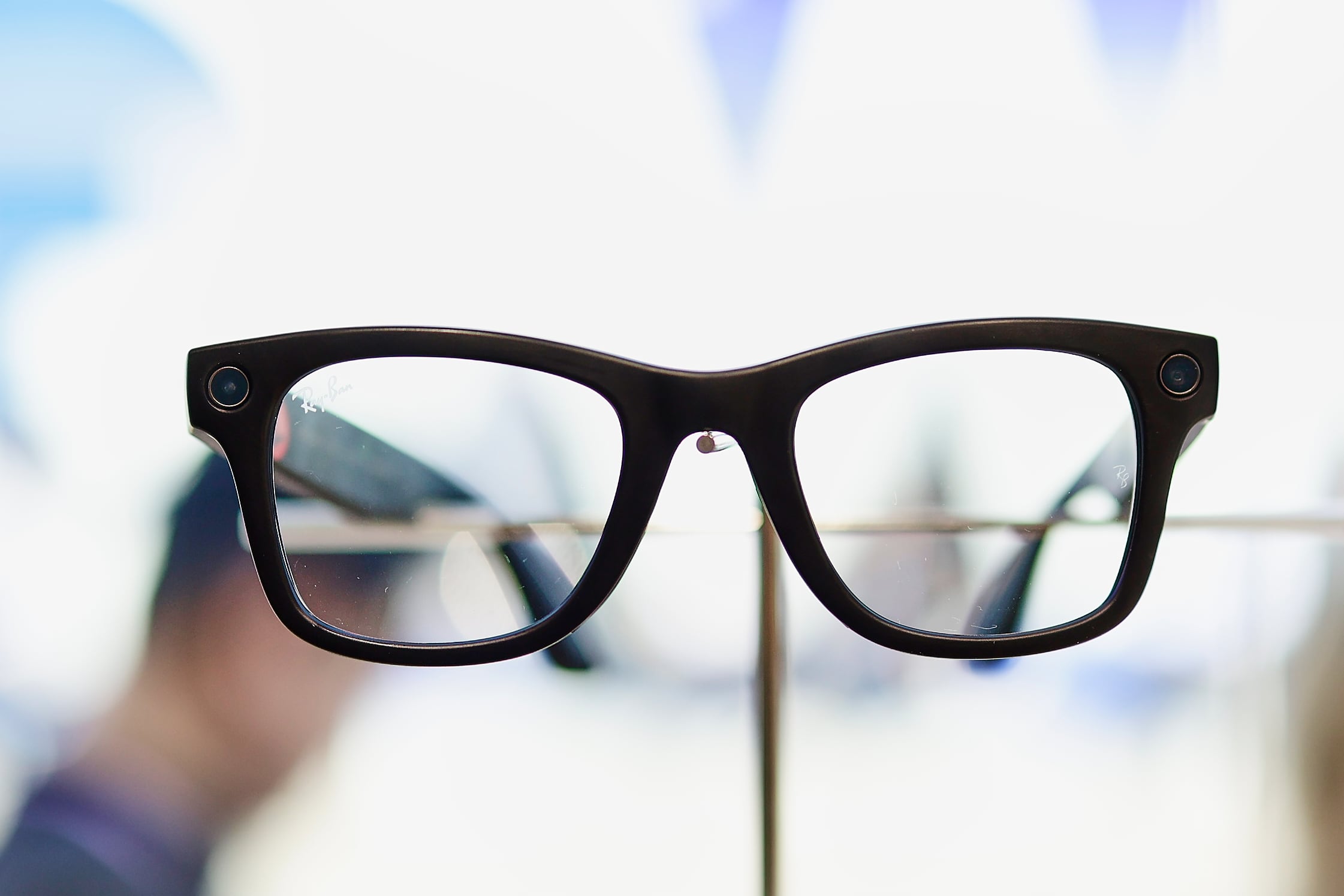
“To hell with those glasses. Don’t buy them. They’re not sexy,” Lorde said during her appearance at the Mad Cool music festival in Madrid. She was not talking about just any glasses, but Meta Glasses, which are equipped with cameras and microphones and can record video or take photographs.
“It’s getting harder and harder to know what’s real. Now you can’t tell whether someone is wearing sunglasses or that crap,” the singer added.
Ever since so-called smart glasses went on sale, in several versions, some developed in partnership with brands such as Oakley and Ray-Ban, there have been concerns about privacy. To address those fears, the devices were designed so that a small LED light illuminates and a shutter sound plays whenever the user records a video or takes a picture.
“It’s our way of ensuring that we protect other people’s privacy. It also protects the user’s privacy, because they can switch off the glasses in environments where they don’t feel comfortable,” Ankit Brahmbhatt, Meta’s head of product, told EL PAÍS. Facebook even published a guide to responsible use urging owners to let others know when they’re being recorded and “be respectful of people nearby.”
But any technology can be misused, and bad actors exist. Manfluencers — male content creators operating within the internet’s so-called manosphere who monetize misogynistic content — have posted videos of themselves approaching women they hope to pick up, effectively turning harassment into a form of livestreamed content.
The women are unaware they are being recorded and therefore have not consented to the videos being shared online. Stephanie Wescott, a feminist scholar, author and lecturer in Education, Culture and Society at Australia’s Monash University, told CNN that smart glasses can be an ideal tool for misogynistic content creators because they send a clear message about power.
According to Wescott, men can “be watching, recording and therefore controlling women’s images in public spaces without their knowledge and therefore, that the public spaces belong to men.”

The rise of a type of content filmed with Meta glasses, often focused on women, service-sector workers and homeless people, highlights how smart glasses can reinforce existing inequalities and enable new forms of surveillance directed largely at women. Given that women are the primary targets of online abuse, the devices pose a direct threat to their safety and open the door to new forms of harassment and exploitation.
Fabio Assolini, a cybersecurity expert, says the legality of such recordings depends on the context, the country and how the footage is used. “The fact that a device can technically record does not mean any use is legal,” he says. “In general, capturing images, audio or personal data of other people may be subject to privacy and data protection rules, especially when the recording is done without the knowledge of those affected, is shared publicly or is used for purposes other than those permitted.”
The real concern, he argues, lies in what happens to the information once it has been collected: where it is stored, who has access to it and whether it can be used to identify, profile or harm the people being recorded.
Despite the controversy, Meta has sought to broaden the appeal of its smart glasses among women by partnering with Kylie Jenner on a co-designed model. Yet, as journalist Andi Zeisler argues, even though Meta recruited a celebrity to make smart glasses seem safe for women, this strategy has not worked.
“If Meta really wanted to appeal to women, there are plenty of ways to do that,” she wrote on the website Salon. “But it can’t change the message inherent in the technology: that your consent doesn’t matter, that other humans don’t deserve a baseline expectation of privacy. Even the most beautiful face can’t hide the profit motive of that malignance.”
Content creator Matt Bernstein has come out strongly against the collaboration. “Meta glasses have evaporated any defenses you might have from being photographed or recorded in secrecy. Who does this appeal to? Who would this benefit? Obviously, creepy men,” he says. “You can’t have a hit product without women. […] So who better to hire to manufacture consent among women for predator goggles than the single most famous woman on the internet, who also happens to be a morally bankrupt, ruthless capitalist, who would sell her audience just about anything if the price is right.”
According to Meta’s website, the glasses, which retail from $399, can record video clips of up to three minutes and include an LED indicator to alert others when the camera is active. In response to users physically covering the LED light, Meta has introduced an update that disables recording whenever the indicator is obscured.
Last year, a man complained on social media after a woman smashed his smart glasses on the subway, fed up with being recorded. He appeared to expect public sympathy, but the overwhelming majority of commenters sided with the woman.
In September 2025, a video went viral in which a woman recounted the moment she realized that the woman waxing her bikini line at a New York beauty salon was wearing Meta smart glasses.
“New phobia just dropped cause I can’t believe one day I’ll be in the same space as someone wearing Meta glasses and I won’t know I’m being recorded or what that person will do with the footage,” one user commented on X.
The fear is not unfounded. In May last year, a man was arrested in Barcelona for using smart glasses to record hundreds of young women without their consent.
María Aperador, a criminologist specializing in cybersecurity, explains on her social media channels how people can tell when they are being recorded. “When someone starts recording with these glasses, a small light flashes rapidly. Thanks to that, we can know they are recording,” she says.
What is impossible to know, she warns, is whether the wearer is simply recording a public space or secretly monitoring someone from a distance. “That’s why they can be so worrying,” she warns.
Opposition to the controversial devices has even spawned merchandise. T-shirts are already being sold with messages against the use of recordings made with the glasses. “I do not consent to the company Meta and their subsidiary companies using, storing and recording my appearance, voice and location with their smartglasses,” reads one design.
Assolini says the main risks include non-consensual recording, the inadvertent capture of sensitive information, the use of artificial intelligence to analyze recorded images, and the possibility that stored data could be compromised by cybercriminals.
“It’s important that these devices incorporate privacy and security by design, including user controls, data encryption, security updates and transparent mechanisms that allow people to know when they are being recorded,” he says.

“Currently, if you are recorded without your consent and that video is ridiculed, sexualized or you even receive sexual harassment, it is very likely that you will be the only one left unprotected,” Cecilia Bizzotto, a sociologist and official spokesperson for JOYclub in Spain, tells EL PAÍS. “The people who record women without their consent face no consequences and may even profit from their videos going viral, while those who report them have virtually no avenues for recourse in these situations.”
Glasshole, a derogatory term combining glasses and asshole, was coined to describe early users of Google Glass, the smart-glasses project that flopped a decade ago. The term implied that wearers were jerks who recorded people in public without their consent. Today, some people refer to Meta’s devices as “pervert glasses.”
“I’m not saying these are glasses for creeps, but I can’t help but feel like one while wearing them,” Boone Ashworth wrote in his review of Meta’s second-generation smart glasses for Wired.
And it’s not just men feeling this discomfort: “I wore Meta’s smartglasses for a month – and it left me feeling like a creep,” Elle Hunt wrote in her review for The Guardian.
Last year, Meta sold more than seven million glasses worldwide.
Sign up for our weekly newsletter to get more English-language news coverage from EL PAÍS USA Edition






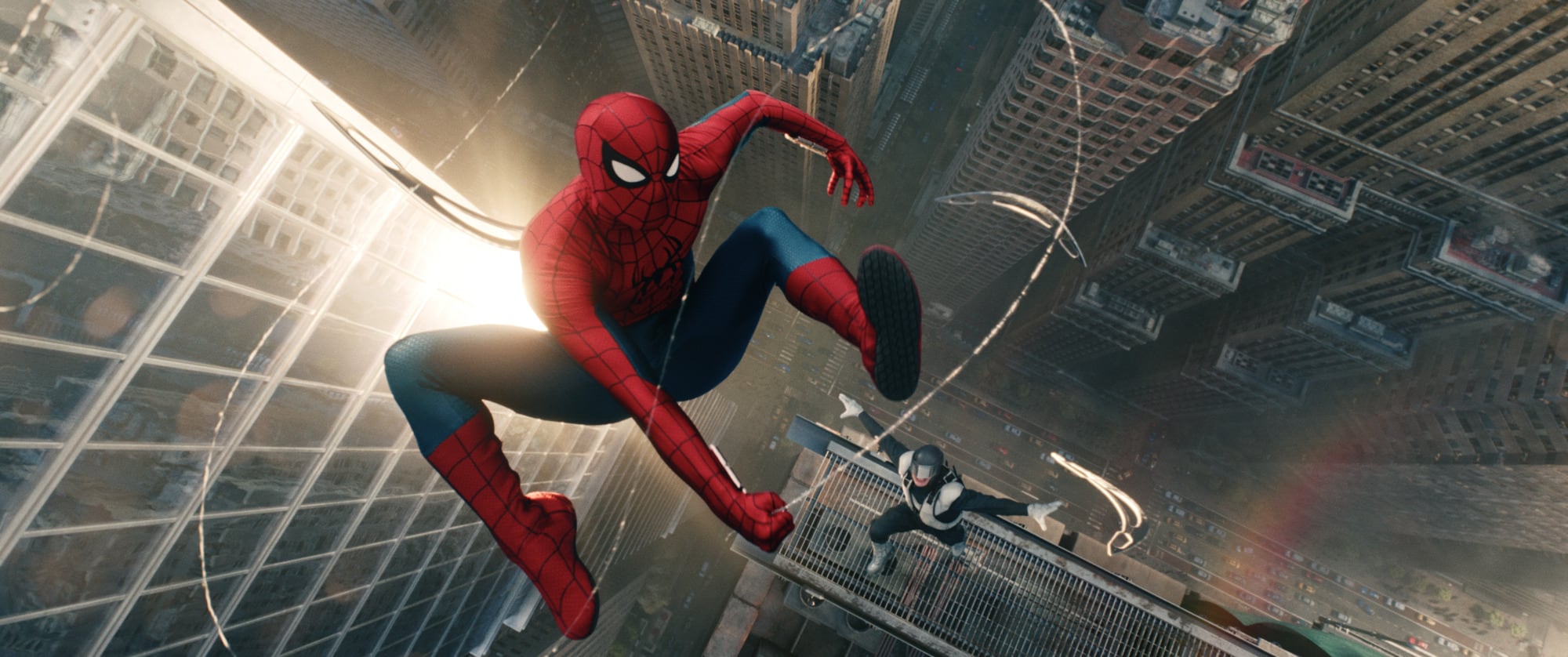
Spider-Man is always present. The philosopher Grafton Tanner coined the term “foreverism” to refer to phenomena like the Star Wars saga (which never ceases to explore its own intricacies), or those veteran rock bands that never stop reuniting and never quite break up.
These are cultural expressions that have transcended their era. They remain relevant, generation after generation, making nostalgia impossible (and business always possible). Such is the case with Spider-Man: the industry surrounding this character continually offers products for people of all ages and backgrounds. He’s still, quite literally, a kid at heart. And to demonstrate his enduring appeal, the latest installment in the franchise, Spider-Man: Brand New Day (2026), is premiering between July 29 and July 31 around the world.

“What’s interesting is that he’s a character who feels timeless,” says Julián M. Clemente, author of the seminal book Untold Tales Of Spider-Man (2015), published in Spanish by Panini Comics. “If you’re a kid from the 1970s or 1980s, if you grew up with the cartoons from the 1960s, you’ll see him as someone who’s always been around. But a kid carrying a Spider-Man backpack today sees him as something very current. He’s managed to metamorphose; he doesn’t seem outdated to the new generations.”
The infinite comic book
An X-ray of the superhero helps contextualize his unstoppable success. Spider-Man was created by Stan Lee and Steve Ditko in issue #15 of Amazing Fantasy, published in the United States in August of 1962. It told the story of young Peter Parker, who, after being bitten by a radioactive spider (it was the era of nuclear fervor and terror), acquired strange powers that were inspired by the abilities of these arachnids.
One of the novelties of the character was that he was an adolescent with limited social skills. And, with the comic books featuring a teenage protagonist (who wasn’t merely the sidekick to an adult hero), many readers were able to identify with him.

The Spider-Man franchise just kept getting bigger and bigger. The 1980s and 1990s saw numerous milestones, including the black suit, the appearance of Venom, as well as the 1994 animated series. And, in the 21st century, he would be embodied by another character who wasn’t Peter Parker (something previously unthinkable): in 2011, after Peter Parker’s death in a branch of the Marvel Universe, writer Brian Michael Bendis and artist Sara Pichelli created Miles Morales, a young man of color. Half African-American and half Puerto Rican, he resonated with the era’s focus on diversity.
Later, in 2014, writer Dan Slott came up with a wild idea: the Spider-Verse comic book series, which also focused on diversity. Spider-Men of all kinds emerged, from a Spider-Punk to the futuristic Spider-Man 2099. One version was inspired by cowboys of the Wild West, while another was inspired by 1930s film noir. There was even a Spider-Ham (Peter Porker)!
“These [were] fresh ideas that worked out really well; they led to a series of highly-original animated films. [The many versions] demonstrated the character’s resilience, allowing him to reach another generation,” Clemente explains.
While there’s a wide variety of Spider-Man stories aimed at younger audiences, there are also options for those in middle age: Dan Slott’s Renew Your Vows series focuses on a 40-something-year-old Peter Parker’s married life with Mary Jane Watson. In that parallel universe, they have two children together, a situation also found in Jonathan Hickman’s recent Ultimate Spider-Man comic book series. “[This scenario] really connects with the audience that came to Spider-Man in the ’80s and ’90s,” Clemente points out. Going even further, Spider-Man: Reign shows an older, gray-haired Peter Parker, who’s around the age of 70. His eternal love, Mary Jane, has already died. He now lives under the rule of an authoritarian regime, in an atmosphere of darkness that seems inspired by Frank Miller’s aged Batman in The Dark Knight Returns.
A spider on screen

“Spider-Man’s audiovisual situation has always been peculiar. The film rights still belong to Sony, even though Marvel Studios has managed to integrate the character into its universe, thanks to agreements between the two companies,” says Jorge Iván, co-director of the Celsius 232 comic book festival in Avilés, Spain.
The truth is that Spider-Man is, by a long shot, the superhero who has best conquered cinema. While Superman certainly paved the way for major adaptations — and even though Batman influenced several generations — the wall-crawler is the character who has been consistently successful for more than two decades.
Sam Raimi’s 2002 film, Spider-Man, was a turning point for modern superhero cinema: it demonstrated that a comic book hero could become a global phenomenon, paving the way for the genre’s explosion in the following years. Since then, few characters have amassed so many cinematic versions: Tobey Maguire, Andrew Garfield and Tom Holland have all portrayed Peter Parker at different stages in his life, culminating in Spider-Man: No Way Home (2021), an event that brought all three generations together on screen and became one of the franchise’s biggest hits. Together, these films have grossed over $7 billion. And, in addition to that figure, we can add the animated saga that began with Spider-Man: Into the Spider-Verse (2018), considered by many to be one of the best superhero movies ever made, with its revolutionary visual style and a story that turned Miles Morales into yet another icon of the franchise.
“Spiderman has managed to adapt to each generation, without losing his essence. In recent years, the biggest success has been Miles Morales, born in the Ultimate Universe (an imprint created by Marvel Comics) and firmly established through the Spider-Verse films,” Iván explains. He maintains that this so-called “Spider-Verse” is the most interesting aspect of the Spider-Man franchise today. “Its success lies in the fact that it presents complex storylines, while respecting both veteran fans and new generations.”
The truth is that Spider-Man’s dominance in film goes far beyond the character’s movies. For years now, Sony, which owns the film rights to the character, has tried to build a parallel universe, starring some of the villains and supporting characters (without including the hero himself). The result has been mixed: productions like Morbius (2022), Madame Web (2024) and Kraven the Hunter (2024) have received a lukewarm reception from critics and audiences alike. However, there is one major exception: Venom, the oil-like symbiote that bonds with people and grants them powers similar to Spiderman’s. The version starring Tom Hardy resonated with audiences, thanks to its more irreverent tone. It was so popular that it became a highly-successful trilogy.
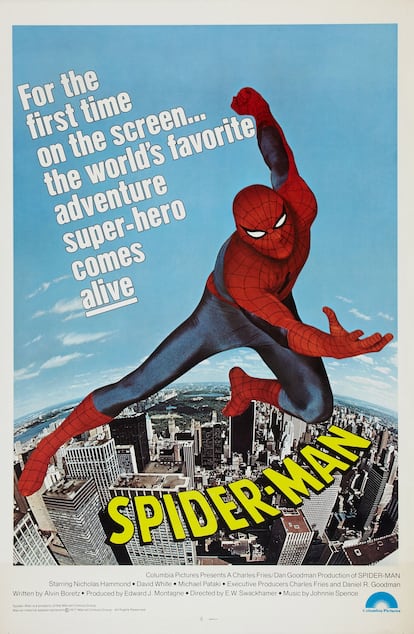
And then, of course, there are the numerous TV series. From the 1977 live-action series to the recent Spider-Noir (starring Nicolas Cage and featuring a film noir aesthetic), the hero has appeared in numerous television productions for audiences of all ages. In fact, in recent years, the children’s series have become a global phenomenon, such as Spidey and His Amazing Friends, a show for young viewers that breaks ratings records and fuels a vast merchandising ecosystem.
Web-swinging through New York
Spider-Man’s capacity for reinvention is also evident in another of the most successful facets of the Marvel Universe: video games, where the superhero stars in some of the industry’s most ambitious productions.
After decades of adaptations (of varying quality), the character found his definitive consecration with the saga developed by Insomniac Games for PlayStation. Since 2018, Marvel’s Spider-Man (2018), Marvel’s Spider-Man: Miles Morales (2020) and Marvel’s Spider-Man 2 (2023) have put together a spectacular web-swinging system through New York City, with visually stunning combat scenarios and a narrative on par with the best films. Their commercial success (analysts indicate that these three games have grossed over $3 billion) has made the franchise one of PlayStation’s cornerstones, further bolstered by budgets worthy of a cinematic blockbuster (close to $250 million were spent in the case of the second installment).
Few characters can boast of performing equally well across such diverse types of media. Spider-Man demonstrates that his popularity transcends formats, generations and technologies. So, with all this dominance across popular culture, what, then, is the superhero’s great secret?
“Spiderman triumphs because the true protagonist isn’t the superhero: [in fact], it’s Peter Parker. There [have been] many superheroes, but people became fans of the person beneath the mask,” Jorge Iván concludes. “He’s a profoundly human character: he’s constantly worried that his Aunt May will discover his identity, he has precarious jobs and he barely makes ends meet. Unlike other heroes, his everyday problems are just as important as the villains [he faces]: if he gets fired, he doesn’t have money for food.”
Ultimately, deep down, he’s not a hero. He is, as the wall-crawler reminds us, just “your friendly neighborhood Spider-Man.”
Sign up for our weekly newsletter to get more English-language news coverage from EL PAÍS USA Edition




The Haworth moor, the birthplace of the Brontë sisters in the heart of the English countryside, was filled last weekend with women dressed in red. None appeared to know the others, yet all knew exactly why they had come: on July 30, a century and a half apart, Emily Brontë and the singer who turned her novel into music were born. In 1977, at age 18, Kate Bush wrote her song Wuthering Heights, named after the novel Emily Brontë published under the pen name Ellis Bell, and after watching the final scene of a BBC series: a hand coming through a window, featuring glass and blood. She only later discovered she shared a birthday with the woman who had written it. All those who dance are called Cathys, after both the novel’s heroine and the singer who gave her a voice.
The Most Wuthering Heights Day is a joyful event. Every July it is danced in dozens of cities worldwide, with thousands of participants who mimic the choreography from Kate Bush’s music video: arms flung wide, sharp turns, hands pushing at the air… Its exaggerated theatricality seems to tell the story with the body and evoke Cathy’s spirit as she asks to be let in through the window. It is not a pretty or technical dance. It is strange, dramatic and a little ghostly. But it does not matter whether it is danced well or poorly because no one has come to show off; they have come to be part of the choreography. What began in Brighton in 2013 as a festival parody has accrued meaning until, in Haworth, it has become almost the opposite: a pilgrimage that brings together people from around the world on the actual land of Charlotte, Emily Jane and Anne Brontë. This year the 500 spots sold out quickly, and the proceeds will go to women’s organizations.
Pilgrimage to Haworth is not new. In November 1904 a very young Virginia Woolf climbed here and wrote about the visit in a London weekly. Sylvia Plath and Patti Smith, among many other women, signed the Brontë parsonage guestbook. For more than a century it has mostly been women who came here seeking other women. Woolf wondered whether this or other pilgrimages to writers’ homes were mere sentimentality, and answered that they are only justified when the place adds something to the books. With the Brontës, she concluded, the journey was worth it: Haworth and the sisters, she wrote, fit “like a snail in its shell.” It is impossible to separate the work from the place that produced it.
And it is true. Haworth today is something of a theme park, with magnet shops, literary-slogan t-shirts and the image of the three sisters repeated on every souvenir. A waitress at one of its cafés confirms it: more people have come following the latest film, written and directed by Emerald Fennell and released earlier this year, but the trend goes back much further. “The village has always received pilgrims,” she says. Yet when you step off the cobblestones and the moor wind blows down the street, something emerges beneath the merchandise: an energy that the literary souvenir shops cannot quite touch. Because Emily did not write about the moor: she wrote from within its logic, where love and cruelty are not opposites but the same untamed force. One could say there are no lessons in Wuthering Heights: there is force. The landscape is not a mere backdrop because it is the one in charge, turning people into geological accidents of its fury. That is why the place and the book, like the snail and its shell, cannot be separated.

The novel does not describe this land; it is made of it. The moor is not a pretty place: it is harsh, windy and seems to swallow people up. And yet from here came the work of three women who wrote out of narrowness, isolation and loss, without waiting for conditions to improve first, perhaps because they knew that was an impossible wish. The three signed their work as the Bell brothers (Currer, Ellis and Acton), keeping their real initials and adding a false surname, seeking just enough ambiguity so no one would know they were women. It was the condition for being taken seriously because, while the misty, sombre moor inspired their work, the world demanded they hide their authorship.
A century and a half later, one of its hills is full of women who hide nothing. They all wear the same red, and in that uniform they do not disappear: they recognize one another. Watching the dance, it is impossible not to think of the irony produced by a work created in the most extreme isolation, and how it continues to generate its own world a century and a half on. A short distance away is the Parsonage Museum where they lived, overlooking the churchyard and the church, but culture cannot be contained within a building; it is something reactivated in the living bodies of all these magnificent women, turning the moor into a sea of red mingling with the scent of heather in bloom, with mossy dry-stone walls and the undulating hills of the vast horizon.

One might think that dressed all the same they become a mass or mere crowd, and yet, when you see them, the opposite happens: without the common color, each would be just a lone woman like a flower in a field; with it, many discover they are both the same and different. The red does not erase anyone; it makes them appear together. And it is not, of course, an innocent color. Kate Bush did not choose red at random to embody Cathy. It is the red of the passion that pulses through the novel, the only color that refuses to go unnoticed against this tapestry of greens and browns. Among the women there is a man in a dark wig playing Cathy, and others adorned with a red flower at the throat. Red, ultimately, does not ask who you are: it only asks that you be there. What the Brontës had to hide is celebrated today with shouts on this astonishing hill by anyone willing to put on the dress.

There are people sitting on plastic chairs, a blue wheeled suitcase in the middle of the field, a table with things on it, some umbrellas and black coats over the dresses because it is a grey, rainy, windy day. It is not a perfect postcard: it is a real pilgrimage, with its disorder, its cold, its wait. And that is precisely what saves it from being kitsch. People have climbed a muddy field on a cloudy day to do something that appears ridiculous, and they do it with absolute commitment. There is dignity in the gesture, in that no one is posing for anyone. Emily, who wrote and described the moor as a force prior to any law, still summons the living. That is why she does not grow old.
Sign up for our weekly newsletter to get more English-language news coverage from EL PAÍS USA Edition

F1 boss: Removing battery usage from TV is good – Star Wars director told me so

Dog Survives Four Days Alone As Guardia Civil Makes Emotional Wildfire Rescue

Última Hora De La Entrada De Inmigrantes A Ceuta, En Directo | Al Menos 10 Migrantes Han Muerto Al Intentar Entrar A Nado En Ceuta
Axarquia wildfire cause emergency response across Archez, Competa and Canillas de Albaida
Buyers are pushing back against high house prices in Spain

El Escurreplatos De Dos Niveles Que Libera Espacio En La Cocina Está Rebajado Más De Un 50%


-
andulacia wildfires2 weeks ago
Axarquia wildfire cause emergency response across Archez, Competa and Canillas de Albaida
-
House prices2 weeks ago
Buyers are pushing back against high house prices in Spain
-
 Amazon2 weeks ago
El Escurreplatos De Dos Niveles Que Libera Espacio En La Cocina Está Rebajado Más De Un 50%
-

 New Developments2 weeks ago
Inside The Most LUXURIOUS Apartment Building In Spain!
-
Are dogs allowed on trains in SPain2 weeks ago
Renfe opens all trains to dogs weighing up to 40 kg
-

 Uncategorized2 weeks ago
F1 press conference shut down over Red Bull driver transfer rumours
-
Axarquia2 weeks ago
Salobreña launches free beach book libraries for beachgoers
-

 America2 weeks ago
Trump Amenaza A Canadá Con Aranceles Por Los Incendios Que Contaminan El Aire Del Noreste De Estados Unidos