
ElPais
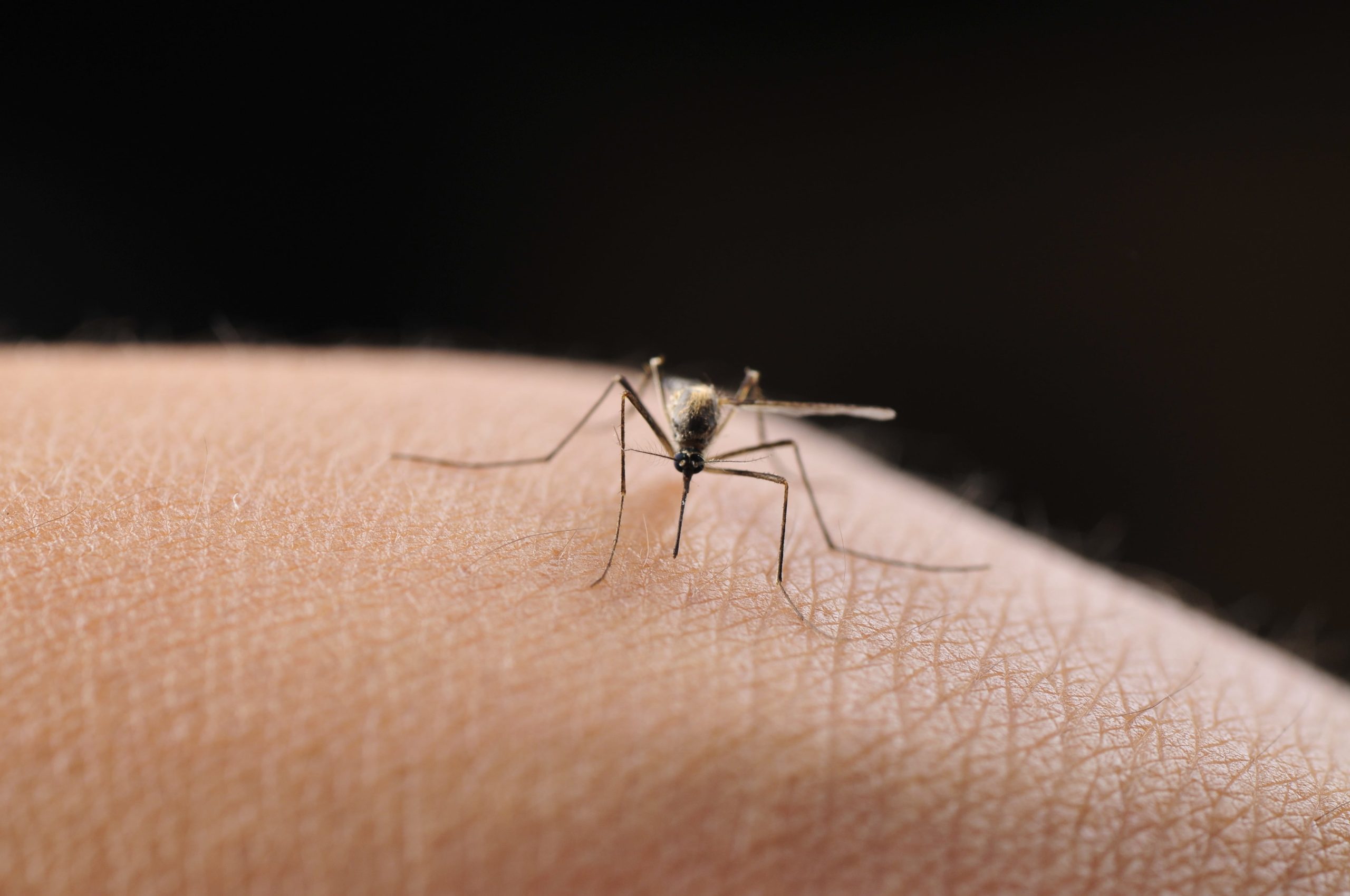
The Secret Weapon Mosquitoes Are Using To Win The War Against Humans: Evading Insecticides






Spider-Man is always present. The philosopher Grafton Tanner coined the term “foreverism” to refer to phenomena like the Star Wars saga (which never ceases to explore its own intricacies), or those veteran rock bands that never stop reuniting and never quite break up.
These are cultural expressions that have transcended their era. They remain relevant, generation after generation, making nostalgia impossible (and business always possible). Such is the case with Spider-Man: the industry surrounding this character continually offers products for people of all ages and backgrounds. He’s still, quite literally, a kid at heart. And to demonstrate his enduring appeal, the latest installment in the franchise, Spider-Man: Brand New Day (2026), is premiering between July 29 and July 31 around the world.

“What’s interesting is that he’s a character who feels timeless,” says Julián M. Clemente, author of the seminal book Untold Tales Of Spider-Man (2015), published in Spanish by Panini Comics. “If you’re a kid from the 1970s or 1980s, if you grew up with the cartoons from the 1960s, you’ll see him as someone who’s always been around. But a kid carrying a Spider-Man backpack today sees him as something very current. He’s managed to metamorphose; he doesn’t seem outdated to the new generations.”
The infinite comic book
An X-ray of the superhero helps contextualize his unstoppable success. Spider-Man was created by Stan Lee and Steve Ditko in issue #15 of Amazing Fantasy, published in the United States in August of 1962. It told the story of young Peter Parker, who, after being bitten by a radioactive spider (it was the era of nuclear fervor and terror), acquired strange powers that were inspired by the abilities of these arachnids.
One of the novelties of the character was that he was an adolescent with limited social skills. And, with the comic books featuring a teenage protagonist (who wasn’t merely the sidekick to an adult hero), many readers were able to identify with him.

The Spider-Man franchise just kept getting bigger and bigger. The 1980s and 1990s saw numerous milestones, including the black suit, the appearance of Venom, as well as the 1994 animated series. And, in the 21st century, he would be embodied by another character who wasn’t Peter Parker (something previously unthinkable): in 2011, after Peter Parker’s death in a branch of the Marvel Universe, writer Brian Michael Bendis and artist Sara Pichelli created Miles Morales, a young man of color. Half African-American and half Puerto Rican, he resonated with the era’s focus on diversity.
Later, in 2014, writer Dan Slott came up with a wild idea: the Spider-Verse comic book series, which also focused on diversity. Spider-Men of all kinds emerged, from a Spider-Punk to the futuristic Spider-Man 2099. One version was inspired by cowboys of the Wild West, while another was inspired by 1930s film noir. There was even a Spider-Ham (Peter Porker)!
“These [were] fresh ideas that worked out really well; they led to a series of highly-original animated films. [The many versions] demonstrated the character’s resilience, allowing him to reach another generation,” Clemente explains.
While there’s a wide variety of Spider-Man stories aimed at younger audiences, there are also options for those in middle age: Dan Slott’s Renew Your Vows series focuses on a 40-something-year-old Peter Parker’s married life with Mary Jane Watson. In that parallel universe, they have two children together, a situation also found in Jonathan Hickman’s recent Ultimate Spider-Man comic book series. “[This scenario] really connects with the audience that came to Spider-Man in the ’80s and ’90s,” Clemente points out. Going even further, Spider-Man: Reign shows an older, gray-haired Peter Parker, who’s around the age of 70. His eternal love, Mary Jane, has already died. He now lives under the rule of an authoritarian regime, in an atmosphere of darkness that seems inspired by Frank Miller’s aged Batman in The Dark Knight Returns.
A spider on screen

“Spider-Man’s audiovisual situation has always been peculiar. The film rights still belong to Sony, even though Marvel Studios has managed to integrate the character into its universe, thanks to agreements between the two companies,” says Jorge Iván, co-director of the Celsius 232 comic book festival in Avilés, Spain.
The truth is that Spider-Man is, by a long shot, the superhero who has best conquered cinema. While Superman certainly paved the way for major adaptations — and even though Batman influenced several generations — the wall-crawler is the character who has been consistently successful for more than two decades.
Sam Raimi’s 2002 film, Spider-Man, was a turning point for modern superhero cinema: it demonstrated that a comic book hero could become a global phenomenon, paving the way for the genre’s explosion in the following years. Since then, few characters have amassed so many cinematic versions: Tobey Maguire, Andrew Garfield and Tom Holland have all portrayed Peter Parker at different stages in his life, culminating in Spider-Man: No Way Home (2021), an event that brought all three generations together on screen and became one of the franchise’s biggest hits. Together, these films have grossed over $7 billion. And, in addition to that figure, we can add the animated saga that began with Spider-Man: Into the Spider-Verse (2018), considered by many to be one of the best superhero movies ever made, with its revolutionary visual style and a story that turned Miles Morales into yet another icon of the franchise.

“Spiderman has managed to adapt to each generation, without losing his essence. In recent years, the biggest success has been Miles Morales, born in the Ultimate Universe (an imprint created by Marvel Comics) and firmly established through the Spider-Verse films,” Iván explains. He maintains that this so-called “Spider-Verse” is the most interesting aspect of the Spider-Man franchise today. “Its success lies in the fact that it presents complex storylines, while respecting both veteran fans and new generations.”
The truth is that Spider-Man’s dominance in film goes far beyond the character’s movies. For years now, Sony, which owns the film rights to the character, has tried to build a parallel universe, starring some of the villains and supporting characters (without including the hero himself). The result has been mixed: productions like Morbius (2022), Madame Web (2024) and Kraven the Hunter (2024) have received a lukewarm reception from critics and audiences alike. However, there is one major exception: Venom, the oil-like symbiote that bonds with people and grants them powers similar to Spiderman’s. The version starring Tom Hardy resonated with audiences, thanks to its more irreverent tone. It was so popular that it became a highly-successful trilogy.
And then, of course, there are the numerous TV series. From the 1977 live-action series to the recent Spider-Noir (starring Nicolas Cage and featuring a film noir aesthetic), the hero has appeared in numerous television productions for audiences of all ages. In fact, in recent years, the children’s series have become a global phenomenon, such as Spidey and His Amazing Friends, a show for young viewers that breaks ratings records and fuels a vast merchandising ecosystem.
Web-swinging through New York
Spider-Man’s capacity for reinvention is also evident in another of the most successful facets of the Marvel Universe: video games, where the superhero stars in some of the industry’s most ambitious productions.
After decades of adaptations (of varying quality), the character found his definitive consecration with the saga developed by Insomniac Games for PlayStation. Since 2018, Marvel’s Spider-Man (2018), Marvel’s Spider-Man: Miles Morales (2020) and Marvel’s Spider-Man 2 (2023) have put together a spectacular web-swinging system through New York City, with visually stunning combat scenarios and a narrative on par with the best films. Their commercial success (analysts indicate that these three games have grossed over $3 billion) has made the franchise one of PlayStation’s cornerstones, further bolstered by budgets worthy of a cinematic blockbuster (close to $250 million were spent in the case of the second installment).
Few characters can boast of performing equally well across such diverse types of media. Spider-Man demonstrates that his popularity transcends formats, generations and technologies. So, with all this dominance across popular culture, what, then, is the superhero’s great secret?
“Spiderman triumphs because the true protagonist isn’t the superhero: [in fact], it’s Peter Parker. There [have been] many superheroes, but people became fans of the person beneath the mask,” Jorge Iván concludes. “He’s a profoundly human character: he’s constantly worried that his Aunt May will discover his identity, he has precarious jobs and he barely makes ends meet. Unlike other heroes, his everyday problems are just as important as the villains [he faces]: if he gets fired, he doesn’t have money for food.”
Ultimately, deep down, he’s not a hero. He is, as the wall-crawler reminds us, just “your friendly neighborhood Spider-Man.”
Sign up for our weekly newsletter to get more English-language news coverage from EL PAÍS USA Edition


“In Europe, Madrid was playing in a lower league than it deserved. The major European capitals are Paris and London. And then, there’s another tier: Berlin, Milan, Amsterdam… [but] Madrid wasn’t even there.”
“[he city] finally had the opportunity to grow up. And I think the fact that [Spain’s economy] is doing well has also played a big role, since money attracts money,” explains Andrés Rodríguez, sitting in the lobby bar of Forbes House, a five-story private club (plus rooftop and basement). He’s the director, founder and mastermind of the establishment.
In an interview with EL PAÍS, he tries to answer the following question: what has had to happen in Madrid for so many private clubs to suddenly spring up like mushrooms?


Rodríguez explains how, for decades – and until just a year-and-a-half ago – the world of private clubs in Madrid was divided into two types. “The traditional clubs, which, with all due respect, were like our parents’ clubs: Nuevo Club, Club Financiero Génova, Puerta de Hierro,” he lists. “And then, there was the Matador Club, geared toward a creative crowd.”
However, in 2025, Forbes House arrived on the scene. And, this year, Club Metrópolis has emerged, located in one of Madrid’s most emblematic buildings. “It is the second-most photographed after the Puerta de Alcalá,” the club promoters affirm, referring to the triumphal arch that Madrid is known for.
The promoters – Sandro Silva and Marta Seco – lead the Paraguas Group, a set of six fine dining establishments. They’ve spent more than 20 years leading the biggest success story in Madrid’s restaurant industry, including an international expansion to London, Dubai and Monte Carlo.
“Many of the clients we’ve had over the years are the ones who put their trust in us to set up this club, even before we even started construction,” they state. Conceived as an exclusive, international private club, Metrópolis houses seven different dining spaces, including a restaurant specializing in lobster and a terrace under its famous dome. There’s also a luxury boutique hotel for clients and VIPs.


The latest arrival is Club Vega, in the Salamanca district. Its public face is Iñigo Onieva, the “bad boy” with a heart of gold. He’s beloved by the tabloids for his marriage to Tamara Falcó. The daughter of socialite Isabel Preysler and aristocrat Carlos Falcó, she is the singer Enrique Iglesias’ half-sister.
Onieva’s explanation for the shift in Madrid begins in London. He studied there, experiencing a lifestyle in which many personal, professional and social interactions take place within private clubs. When he returned to Madrid in 2018, he considered importing the model, but he ultimately concluded that the city wasn’t ready yet. Now, he affirms, it is.
“Madrid is finally ready for this,” he repeats several times, during his conversation with EL PAÍS.
Over the past few years, Madrid has been changing so rapidly that it seems as if nobody has had time to realize it. For decades, it was a reasonably large and important capital. But suddenly, it began appearing in international investment rankings. Luxury hotels multiplied. Major brands began competing for prime locations along the so-called “Golden Mile.” Investment funds set up shop on the Paseo de la Castellana, a major thoroughfare. “Latin American students arrived, attracted by the business schools. And then, their parents came,” Rodríguez notes.

Vega is a prime example of the new Madrid: it occupies a huge space on Lagasca Street, surrounded by luxury boutiques, law firms and asset management companies. The club combines a restaurant, event space and meeting rooms, giving the impression that it’s essentially a place for celebrities to have fun, without fear of appearing in the press. This must be what Onieva means when he constantly talks about “community.”
He explains that they want a mix of businesspeople, artists, athletes, designers, politicians and executives. Spaniards and foreigners, youngsters and older folks. “We don’t want it to be a business club or a creative club. We want diversity,” he emphasizes.
But not diversity when it comes to finances, of course. Membership in these clubs costs around €4,000 a year, or $4,500. And that’s just for entry: drinks are extra. And exclusivity isn’t so much in the price as in the selection process. To get in, you have to be recommended by a member and accepted.
Rodríguez insists that Forbes House isn’t a club for the rich. Rather, he clarifies, it’s a club for success. The difference seems minor, but for him, it’s fundamental. “In Spain, there’s still a certain idea that success has to be invisible,” he explains. “Here, there’s no shame in saying that you want to boost your business, your personal brand, or meet interesting people.”
For members only
The three projects are distinct. And yet, they share an intuition. Madrid no longer behaves like the open and relatively egalitarian city that it once was. Or, at least, not only like that. There have always been clubs for Madrid’s elite, but leisure activities mostly revolved around the bar: a democratic space, open to everyone (in principle). The new clubs reflect the expansion of the elite social class and replicate its principle of exclusion. Forbes House has an admissions committee. Vega has a selection process. And, at Metrópolis, memberships sold out before the club even opened. These are places where who gets in is just as important as who gets left out.
Sign up for our weekly newsletter to get more English-language news coverage from EL PAÍS USA Edition


One day, someone will look back on these strange times as the age of maxxing — the phenomenon driven by an obsession with maximizing some aspect of one’s life or body. There’s looksmaxxing, ballmaxxing… and now fibermaxxing, which has turned fiber into the new protein amid growing interest in gut health.
There is even a device that analyzes your stool, prompting some content creators who once shared sleep metrics to now proudly post the analyses this gadget generates after a trip to the bathroom. There is even a hashtag, #hotgirlshaveibs, in reference to irritable bowel syndrome (IBS).
“POV [Point of View]: you’re a hot girl with IBS about to crush your colonoscopy,” one woman writes in a video in which she enters the clinic in slow motion, as if filming her arrival at a beauty center for a cosmetic treatment. If anyone ever joked that influencers would eventually show us even how they go to the toilet, that joke has now become reality.
The device in question is called Dekoda, and it provides information about gut health, hydration and the presence of blood in the toilet bowl.
“The bathroom stands as an untapped hub of vital health data and information. Every day, we flush away insights that could help us better understand our bodies and our health,” the company says.
Dekoda is installed inside the toilet and, for $449 — plus $70 per year for the Kohler Health app — it records every use of the toilet and uses artificial intelligence to analyze the contents. Until recently, celebrities such as Gwyneth Paltrow and Kim Kardashian shared data about their sleep through the Oura Ring, a smart ring that tracks biometrics such as sleep quality, heart rate, stress levels, body temperature, and physical activity. Now, some influencers are sharing data about their bathroom habits thanks to devices like Dekoda or Throne, a smart sensor that attaches to a toilet and automatically monitors gut health, hydration, and urinary health. There are even toilets on the market that include systems for monitoring stool and logging the results in an app.
“In an optimization-obsessed world, stool-gazing has become nearly as popular as sleep-tracking or counting steps,” Alaina Demopoulos writes in The Guardian.
Hannah Marriott, also writing in The Guardian, says “a fascination with faeces — or stool-gazing as it is sometimes known — is burgeoning on the internet.”

Dr. Karina Cuiñas, author of Tripas en acción: Vence el estreñimiento y mejora tu salud intestinal (Guts in Action: Beat Constipation and Improve Your Gut Health), believes it is very positive that people are starting to pay more attention to their stools, but she warns that the devices and apps currently gaining popularity are not infallible.
“Consistency is useful for knowing how our intestinal transit is doing and rectal bleeding is a sign that should never be ignored, but gut health goes far beyond that,” she explains. “If what we want is to record our bowel habits, it would also be important to assess the time we spend sitting on the toilet, the straining required to evacuate, pain during defecation and the feeling of complete emptying afterward.”
“Constipation is not only having hard stool,” she continues. “These smart cameras can tell you your consistency is optimal when in reality every visit to the bathroom is torture. Frequency is not a good indicator of gut health either: you can go every day and still be constipated. And stool volume depends largely on diet: without knowing what each person eats, that isolated data point tells you little. I also see a bias problem. It’s more likely that people already worried about their bowel habits will buy this type of device, and in my clinic I often see that this kind of monitoring increases hypervigilance about digestive symptoms, which can be counterproductive.”
Dr. Malena García Arredondo, founder and director of MGA Healthy Digest, believes that for the vast majority of people, simply learning to look is enough.
“The human eye can detect the really relevant changes: blood, black stool, very pale stool, persistent diarrhea, prolonged constipation or a major change in bowel habits,” she says. “Artificial intelligence can be an interesting tool for research or for very specific patients who need objective follow-up, but at the moment there is not enough evidence to recommend this kind of device as part of routine care for a healthy person.”
She concludes: “My message is simple: it’s useful to know which aspects of stool are important and which changes should prompt a consultation, but we shouldn’t obsess over them every day.”
“It’s a wellness product; it’s not a diagnostic,” warns Kash Kapadia, CEO of Kohler Health, the company that owns Dekoda. “This is another frontier of insights they didn’t have access to, which they now do.”
Dr. Arredondo welcomes the fact that, for whatever reason, people are beginning to talk about fiber, the microbiome, fermented foods, and exercise as pillars of digestive health.
“That shift in mindset has enormous preventive potential,” she says. “What worries me is that, alongside scientific interest, an industry has emerged that conveys the idea we must constantly monitor our gut. And that is not supported by the evidence. The goal is not to have perfect stool every day. It is to have a gut that functions well, without warning symptoms, within each person’s normal variability. Technology will be welcomed as long as it provides useful, proven information.”
“I think we’re losing focus and chasing one fad after another: from anti-inflammatory diets to blaming SIBO [Small Intestinal Bacterial Overgrowth] for all our digestive problems,” Dr. Cuiñas adds. “We need to return to basics — what we know works for gut health: a diet based on plant foods, regular physical activity, stress management and seeking help when something is wrong.”
In principle, it seems as simple as going to the bathroom.
Sign up for our weekly newsletter to get more English-language news coverage from EL PAÍS USA Edition
Hundreds Of Migrants Swim From Morocco To Spain’s Ceuta Territory

A Spider-Man For Every Person And Generation

The Secret Weapon Mosquitoes Are Using To Win The War Against Humans: Evading Insecticides


-
andulacia wildfires2 weeks ago
Axarquia wildfire cause emergency response across Archez, Competa and Canillas de Albaida
-
House prices2 weeks ago
Buyers are pushing back against high house prices in Spain
-

 New Developments2 weeks ago
Inside The Most LUXURIOUS Apartment Building In Spain!
-

 Amazon2 weeks ago
El Escurreplatos De Dos Niveles Que Libera Espacio En La Cocina Está Rebajado Más De Un 50%
-

 España2 weeks ago
Lotería Nacional: Comprobar Sorteo Del Jueves 16 De Julio
-
Are dogs allowed on trains in SPain2 weeks ago
Renfe opens all trains to dogs weighing up to 40 kg
-

 Uncategorized2 weeks ago
F1 press conference shut down over Red Bull driver transfer rumours
-

 America2 weeks ago
Marco Rubio Convoca A 66 Países A Un Encuentro Para Combatir A “los Extremistas De Izquierda” En Todo El Mundo