
Delcy Rodríguez
The Family That Returned From Spain To Venezuela And Was Buried By The Earthquakes

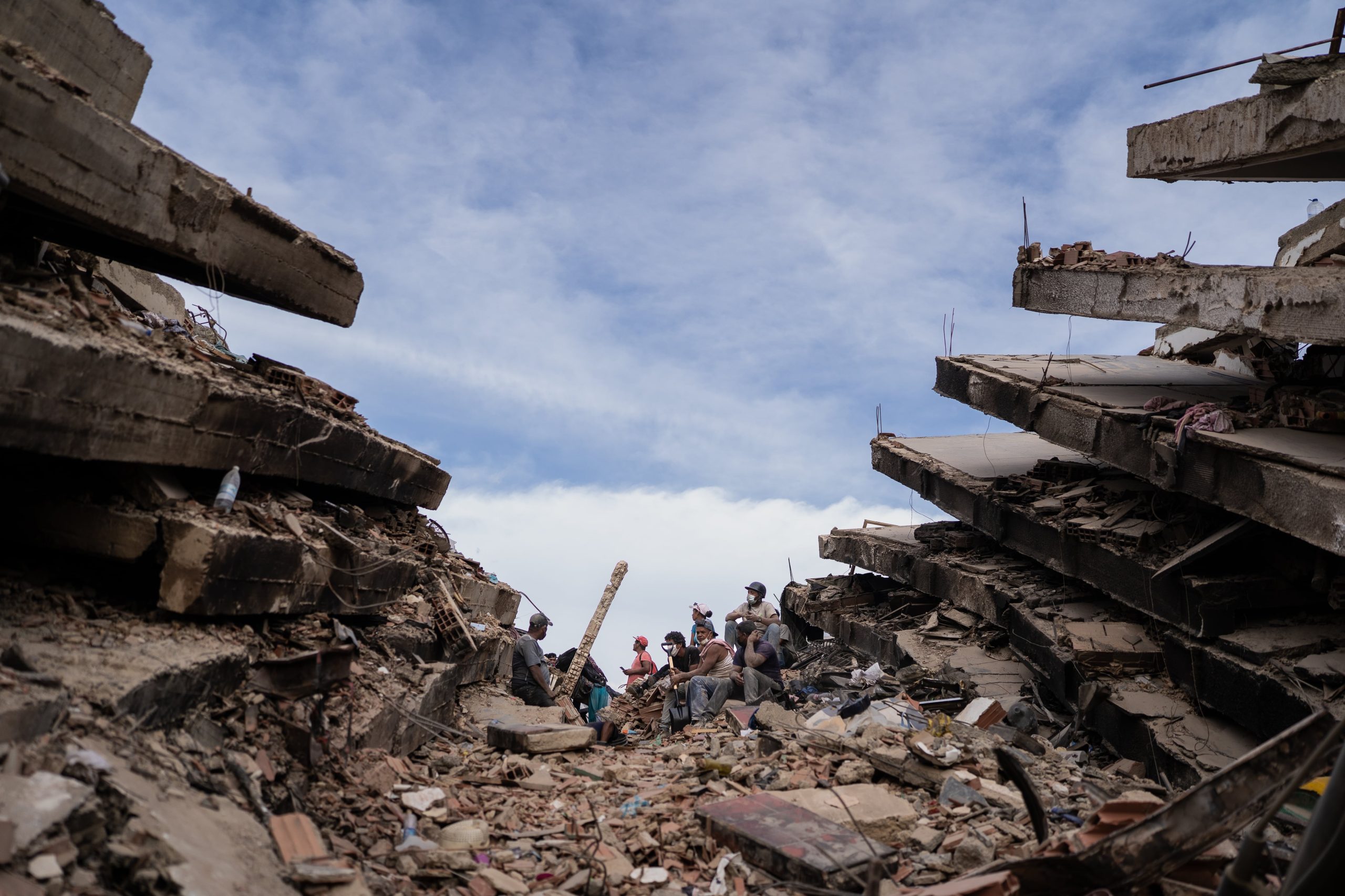
“It has been utter despair.” Eduardo Campos was driving to work with the radio on when the first morning bulletin reported on the Venezuela earthquake disaster. He pulled over onto the shoulder and sent a WhatsApp message that never went through. Since then, this resident of Marín, in the northwestern Spanish region of Galicia, has done the only thing he could from 4,000 miles away: tell his neighbors’ story to anyone who would listen. To acquaintances in the military, to a cousin in Panama, to his son, a doctor living in Florida, and to the local press. He searched survivor lists for names, requested heavy machinery, asked about a satellite antenna to help locate them amid the rubble. And on Sunday he called EL PAÍS: “Help me get them out of there.”
In a forgotten corner of La Guaira, the ground zero of last Wednesday’s double earthquake, a family from Marín remains trapped: Yhosvany Hernández, the coach of the hockey club where Campos’s son plays; his wife, Adela Taberneiro, the club president; and the couple’s two children, Lía, nine, and Ulises, eight. Buried alongside them are the grandparents, Carmen Rosa Fernández and Roger Hernández, who were hosting the family during their visit to the Venezuelan city wedged between the Caribbean and the mountains.
The Hernández Taberneiro family had emigrated to Galicia seven years ago, and this was their first visit back to Venezuela since leaving.
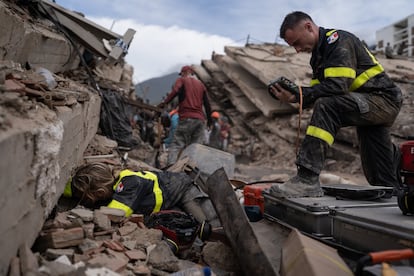
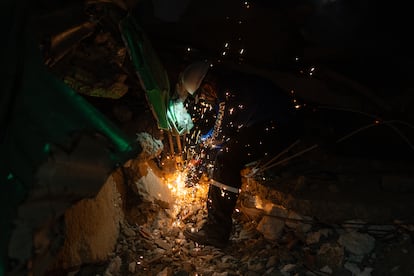
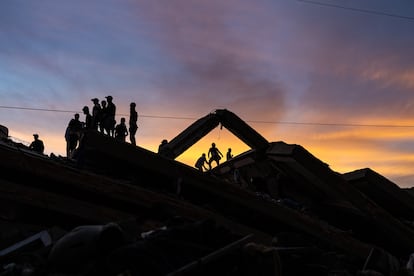
“He had to take the children away so they could have a better education; those were his words,” recalls his sister. They had return tickets for July 16, but they are now four of the 138 Spanish citizens — the family held dual nationality — listed as missing after Venezuela was struck by two earthquakes.
So far, 17 Spaniards have been confirmed dead. Spanish sources in Caracas warn that those figures are little more than a preliminary accounting and are likely to rise significantly. The overall death toll reached 1,450 on Sunday, while tens of thousands of people remain unaccounted for.
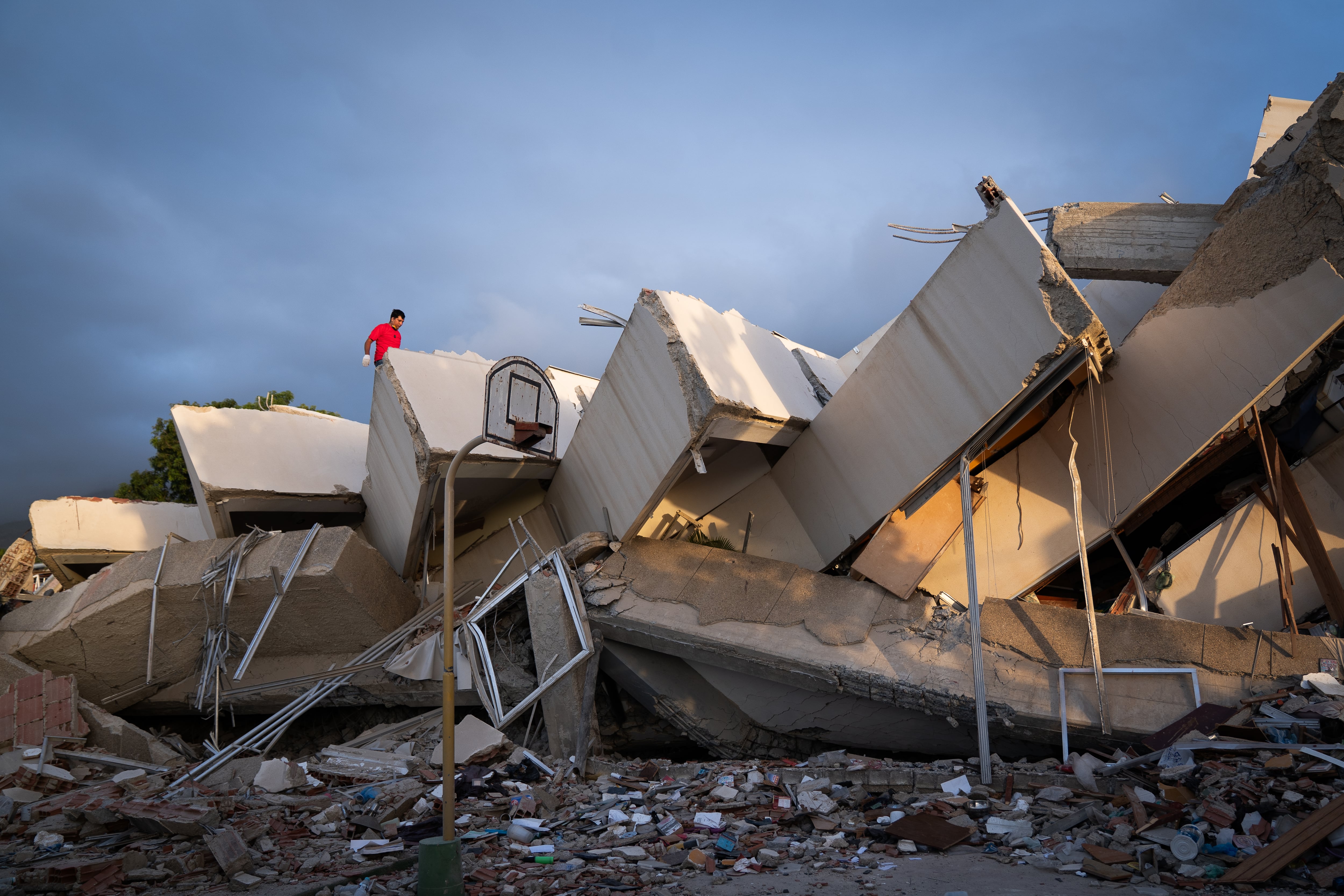
The six of them were celebrating their reunion that Wednesday afternoon. It was also the birthday of both the grandfather and the children’s father. They were all gathered around the dining table in the second-floor apartment — a floor that nobody now knows how to locate beneath the rubble. The tower collapsed forward.
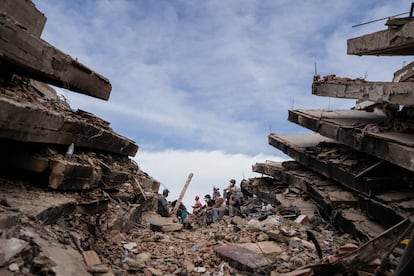
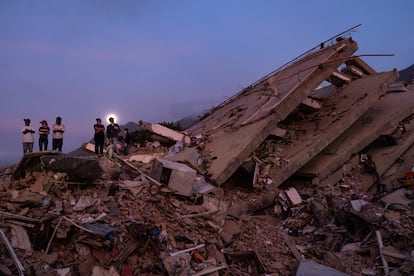
Until Sunday, not a single excavator had reached the modest, devastated neighborhood where the grandparents lived. Standing outside the ruined building since Wednesday is Mabel Hernández, Yhosvany’s sister. She sleeps out in the open on a vacant lot where an old stranded boat is rotting. Some residents have laid out mattresses and blankets there so they can keep watch over the mountain of concrete they are trying to dismantle with their bare hands.
It was Mabel who had arranged the family reunion. Eight months earlier, she had brought her parents from Cuba, and the family tried to get together every year on June 23 and 24, the birthdays of her father and her brother.
“In the end it was like a farewell,” she says. Faced with the tragedy, the woman has one consolation. By sheer chance, her son and his wife, who had been at the celebration, survived. They had stepped outside for a cigarette. “The children are here and I don’t want to smoke in front of them,” the wife had said. The building collapsed while they were on the street. They escaped unharmed.
Her desperation over the rescue effort mirrors that of thousands of Venezuelans these days. “I’ve been here since Wednesday and they have done nothing,” says Mabel, who is demanding heavy machinery to break through the cement and reach her loved ones.
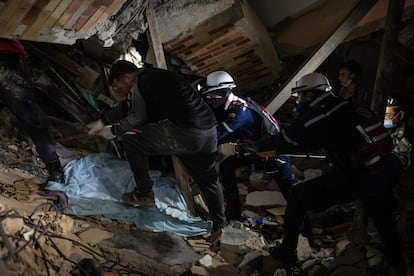
Everyone around her feels the same way: powerless and near collapse. Rescue workers, she says, “come looking for life, but when they don’t hear anything they leave.” Beyond the 72-hour mark, which passed on Saturday, the chances of finding survivors diminish dramatically.
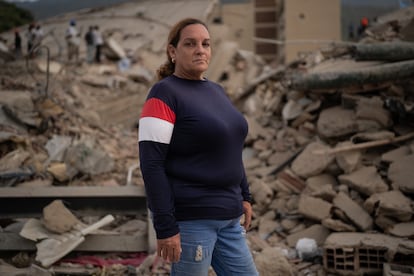
A second excavator arrived after the first, but it cannot operate because there is no fuel. “They lent us a machine, but there is no diesel to put in it. How can they tell me there is no diesel in this country for the machine?” she asks. “Venezuela has no resources, despite being a very [oil] rich country.”
The tower where her parents lived was part of a public housing complex that collapsed entirely. Unlike the wealthier residential developments, with their swimming pools and better construction, these buildings were reduced to rubble. It is also the area where the fewest rescue workers and machines are visible, where residents dig through the debris until their hands bleed, working day and night by the light of their cell phones.
Utter helplessness
The sense of helplessness is overwhelming because many already fear it is too late. That only a miracle could save those still trapped. “If they died, it was because of negligence. I’m sure of it,” Mabel says through her tears. “There’s nothing here. Everything is for them, everything is about making money, everything is about being seen on camera and nothing more,” she says of authorities she feels have abandoned them.
Until Saturday, Mabel still allowed herself to believe her family might emerge alive from beneath the rubble. At night, lying in the vacant lot, she would tell herself they were still breathing: “You know when you just feel something? Up until yesterday, I kept saying they were alive. My father is 84, but the children could hold on a little longer.” Today, she weeps and asks only for a hug.
Meanwhile, in Marín, Eduardo struggles with the anguish of distance and the lack of information. He came to know the family through the children. His son and Ulises became friends in their first year of primary school. Both were shy, similar in temperament — “as thick as thieves, inseparable” for the past two years. When Eduardo started a hockey team at the school, Ulises was already playing, and the friendship carried over from the classroom to the rink.
The family had left Venezuela when Lía was two years old and Ulises had not yet turned one. This was the children’s first trip back to the country where they were born. They were “very, very excited,” Eduardo says.
On Friday, amid the confusion and uncertainty, reports emerged suggesting that the family had appeared on a list of survivors and were safe. The relief was short-lived. It turned out to be a mix-up involving a message from another Yhosvany — the coach’s son from a previous marriage, a doctor living in Florida.
He cannot bring himself to talk about it. “Remembering all that, I feel it would not do me any good right now, I’m sorry,” he says from the United States.
Edu, Eduardo’s six-year-old son, still does not know what has happened in Venezuela. On Friday in class, the children had to write the name of their best friend. Edu drew two figures: he wrote the name of another classmate under one, and Ulises under the other. “Honestly, I would almost prefer not to have any hope,” Eduardo laments. “On Saturday I couldn’t find a corner to cry in. I had to leave the house so I wouldn’t do it in front of the boy.”
Sign up for our weekly newsletter to get more English-language news coverage from EL PAÍS USA Edition





Caracas
A McDonald’s Turned Into A Hospital: Improvisation And Neglect Mark The First Week Of Venezuela’s Earthquake Tragedy

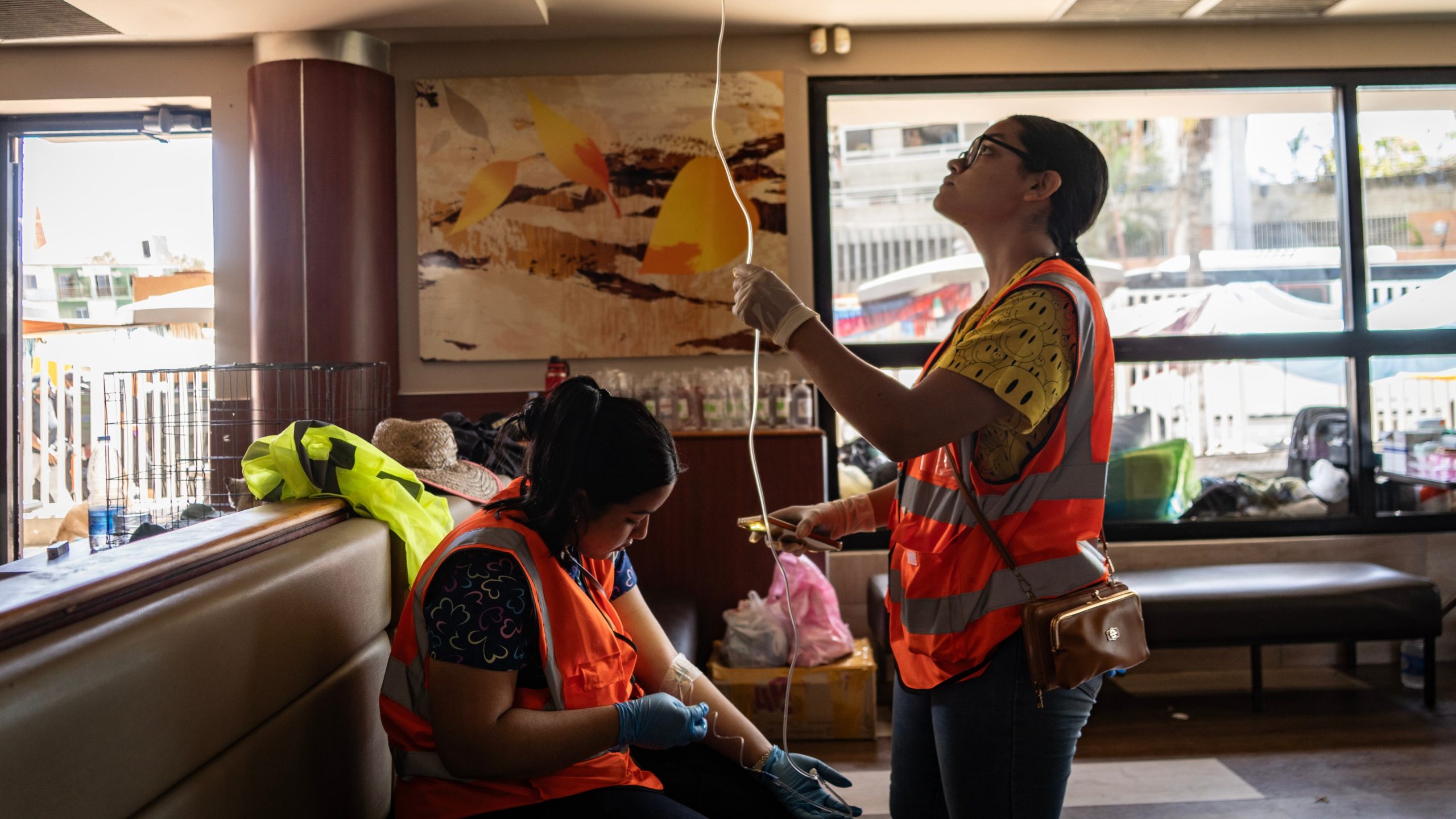
Dr. Romero remembers that the woman arrived “walking like a little penguin and dripping.” She had just given birth on her own and still had pieces of the placenta inside her. Two nurses rushed her into surgery, and an operation began to prevent her from bleeding to death.
Using a cannula, Dr. Romero carefully removed the remaining tissue and, in less than an hour, extracted it all with precision Kocher forceps.
It was not the first time Romero had performed such a procedure, but it was the first time he had done so in temperatures above 40°C (104°F), in the dark, illuminated only by the nurses’ cellphones, and while operating on a McDonald’s stool.
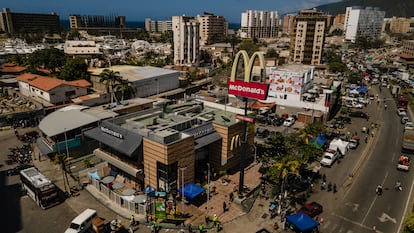
The fast-food restaurant has been turned into a field hospital amid the devastation in La Guaira, at the epicenter of Venezuela’s earthquake disaster. The makeshift facility, set up by volunteer doctors and supplied through donations from civil society, has become a symbol of the extreme needs, institutional abandonment and improvised response that persist a week after the worst natural disaster to strike Venezuela in more than a century.
The window of hope for finding survivors beneath the rubble is growing ever narrower, but the toll of the disaster continues to rise. One week on, the death toll has surpassed 1,900, with more than 10,000 people injured. According to the Venezuelan government, which issues brief daily updates with few details, 855 buildings have been affected, of which 189 have suffered a total collapse.
Jorge Rodríguez, the president of the National Assembly and the official leading the government’s sparse daily briefings, announced on Tuesday that 50 camps have been set up on the outskirts of the capital to shelter survivors. Authorities have also improvised eight new morgues, where bodies are piling up.
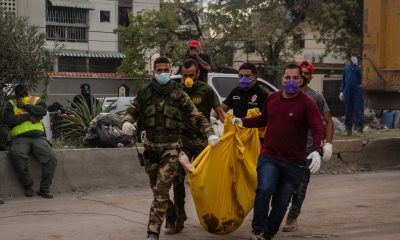
At the port of La Guaira, hundreds of bodies await identification by relatives, who queue for hours in lines stretching for blocks. While waiting to enter the port facilities, many rummage through mountains of clothing piled up in the street, searching for possessions recovered from the disaster.
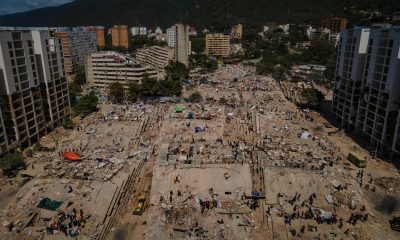
The coastal state has borne the brunt of the disaster, with tourist towers more than 10 stories high reduced to mountains of rubble and countless victims buried beneath them. But there are also poorer neighborhoods where little, if any, aid has arrived.
The U.N. Refugee Agency (UNHCR) said on Tuesday that there has been a “dramatic surge in humanitarian and protection needs” in the hardest-hit areas, citing severe food shortages, the collapse of basic services and growing protection risks for displaced people.
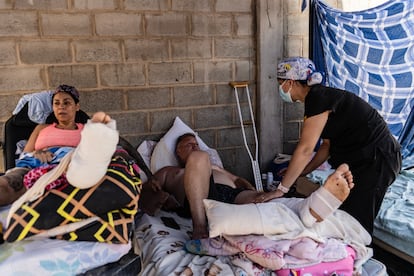
In the face of the government’s inadequate response, a final-year medical student from Caracas who arrived in the disaster zone during the first days set up a makeshift clinic “with a blanket and two tarps tied to a tree” near the McDonald’s abandoned after the earthquake.
One of his first patients was a police officer suffering from low blood pressure.
“We stabilized him and I took the opportunity to ask him to let us use the restaurant so we could work in better conditions,” he says outside the building, which is cordoned off with yellow police tape.
The arrangement was that the doctors would be allowed inside while police officers would provide security against theft and looting, which have become increasingly common in the hardest-hit areas.
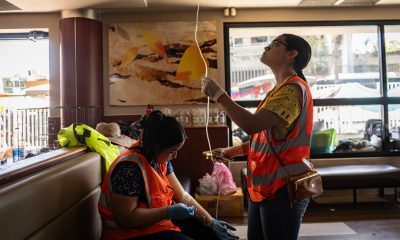
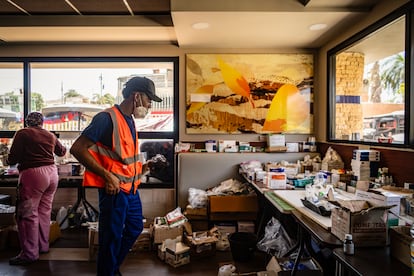
They gained access on Saturday and, the following day, after clearing away debris, converted the building into a functioning medical facility. The operating room — where they treated the woman who had just given birth — was installed in the first-floor dining area. The pharmacy was set up beside the counter where hamburgers were once served. Upstairs became a rest area, filled with worn mattresses where doctors and nurses can sleep.
Relations with the police have not always been easy. The student, who serves as a liaison with the officers, says he trusts “only the commanders.”
“The rank-and-file officers try to take advantage of the tragedy,” he says.
In the dining area, doctors have hung IV bags and vitamin drips from the ceiling using bandages. With an IV line in his right arm, Officer Nelson Guerrero, a heavyset 52-year-old, explains that he asked medical staff to administer insulin because he has only one kidney following a traffic accident.
“We’re here to stop people from taking advantage, to make sure nobody does what they shouldn’t,” he says, as the drip delivers insulin and sweat runs down his forehead.
Tension
Inside the McDonald’s-turned-hospital, the atmosphere is even more tense than usual. The medical team has just been warned that the building next door — a massive pastel-colored apartment block with more than 100 units that is still standing — is on the verge of completely collapsing.
It is one of the public housing projects built by the Chávez government under the Misión Vivienda housing program for low-income families. Residents recall that when former president Hugo Chávez came to inaugurate the complex more than two decades ago, he invoked a famous line from his political hero. During reconstruction efforts after the devastating 1812 earthquake that struck Caracas, Simón Bolívar declared: “If nature opposes us, we will fight against it and make it obey us.” Chávez repeated the same messianic rallying cry after the deadly mudslides that devastated this very region in 1999, the first major disaster his movement faced after coming to power.
“It seems we’re cursed,” says one resident, his face covered with a T-shirt to shield himself from the sun and the stench of decay.
The government of Delcy Rodríguez, which has been under U.S. supervision since president Nicolás Maduro’s capture in January, is also facing its first major test. Public frustration, already stretched to the limit, is growing by the day. With thousands of armed soldiers and police officers deployed across the disaster zone, the risk of social unrest is a latent threat with unpredictable consequences.
“We have had no news from the government. They certainly aren’t supporting us here,” says Dr. Miguel Romero, the surgeon leading the field hospital, although responsibility for directing operations rotates among the medical teams when they head out into the field.
Romero, 34, is pursuing a doctorate in neurology in Germany. He arrived in Venezuela one day before the earthquake to visit family in Coro, a coastal city. Since reaching the disaster zone after a bus journey of more than 10 hours, he has slept only a couple of hours a day.
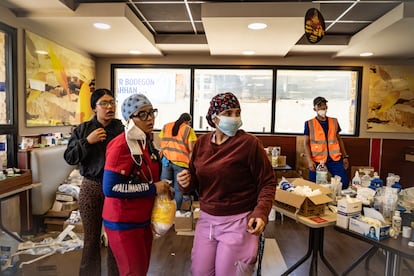
The McDonald’s pharmacy is well stocked, the doctors say. It has intravenous painkillers, surgical supplies, anti-anxiety medications and even veterinary drugs, used to treat pets in the parking lot, where until a few days ago customers drove through to pick up their Big Macs.
Upstairs, the restaurant is also housing international rescue teams with nowhere else to spend the night. More than 2,300 specialists have arrived from countries including Mexico, China, Spain and Qatar.
Monday night was particularly difficult. It rained in La Guaira for the first time since the disaster, something many had expected given that it is the rainy season. The sky had been forgiving until then. Rain and mud have made everything even harder.
But Dr. Ramírez, who is close to completing his studies in Germany, remains hopeful: “I trust in the strength, resilience and stoicism of a people mobilized and clinging to life.”
Sign up for our weekly newsletter to get more English-language news coverage from EL PAÍS USA Edition
America
Última Hora Del Terremoto En Venezuela, En Directo | El Gobierno De Venezuela Eleva A 1.943 Los Fallecidos Por El Terremoto Y A 10.571 Los Heridos

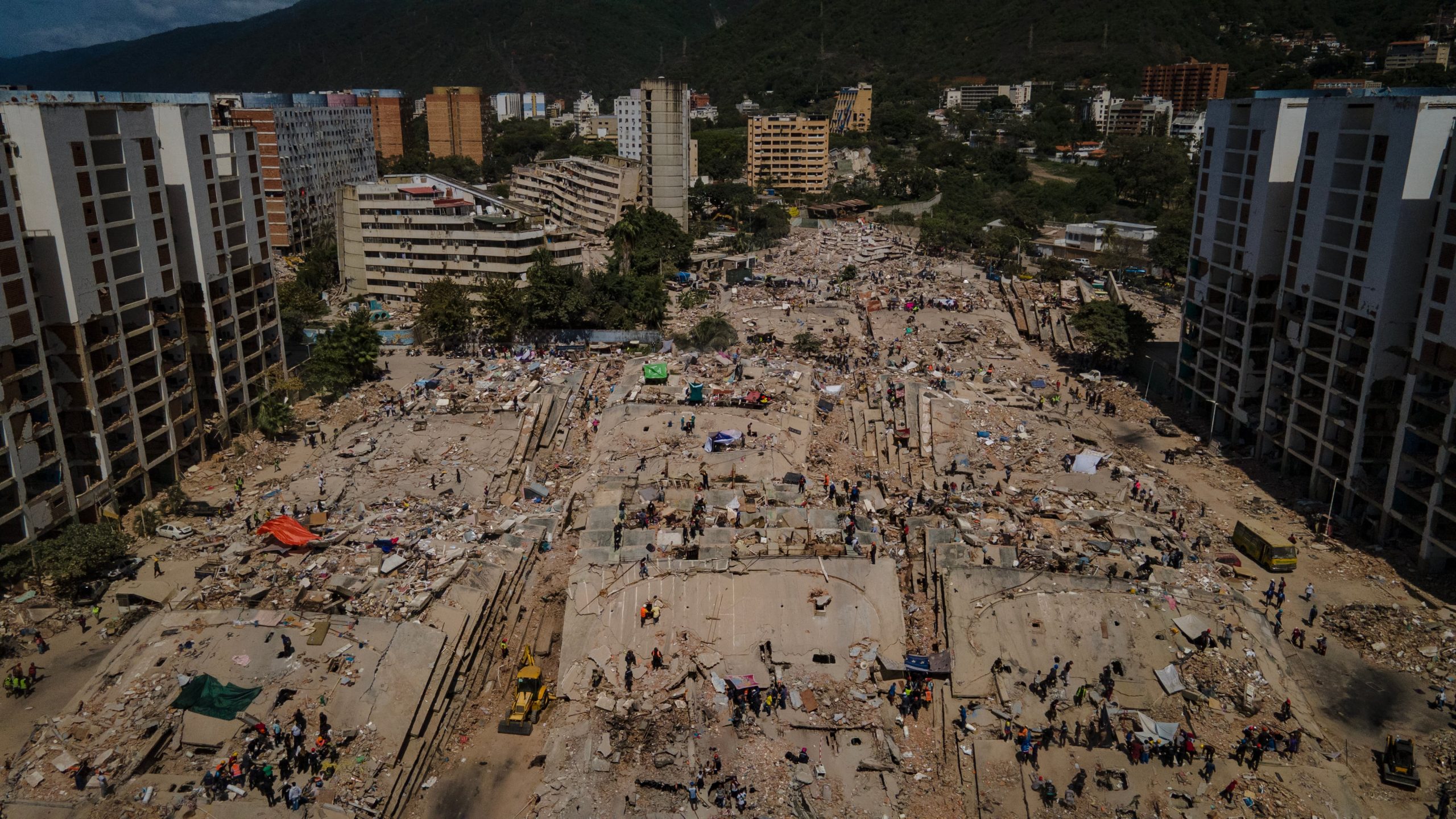
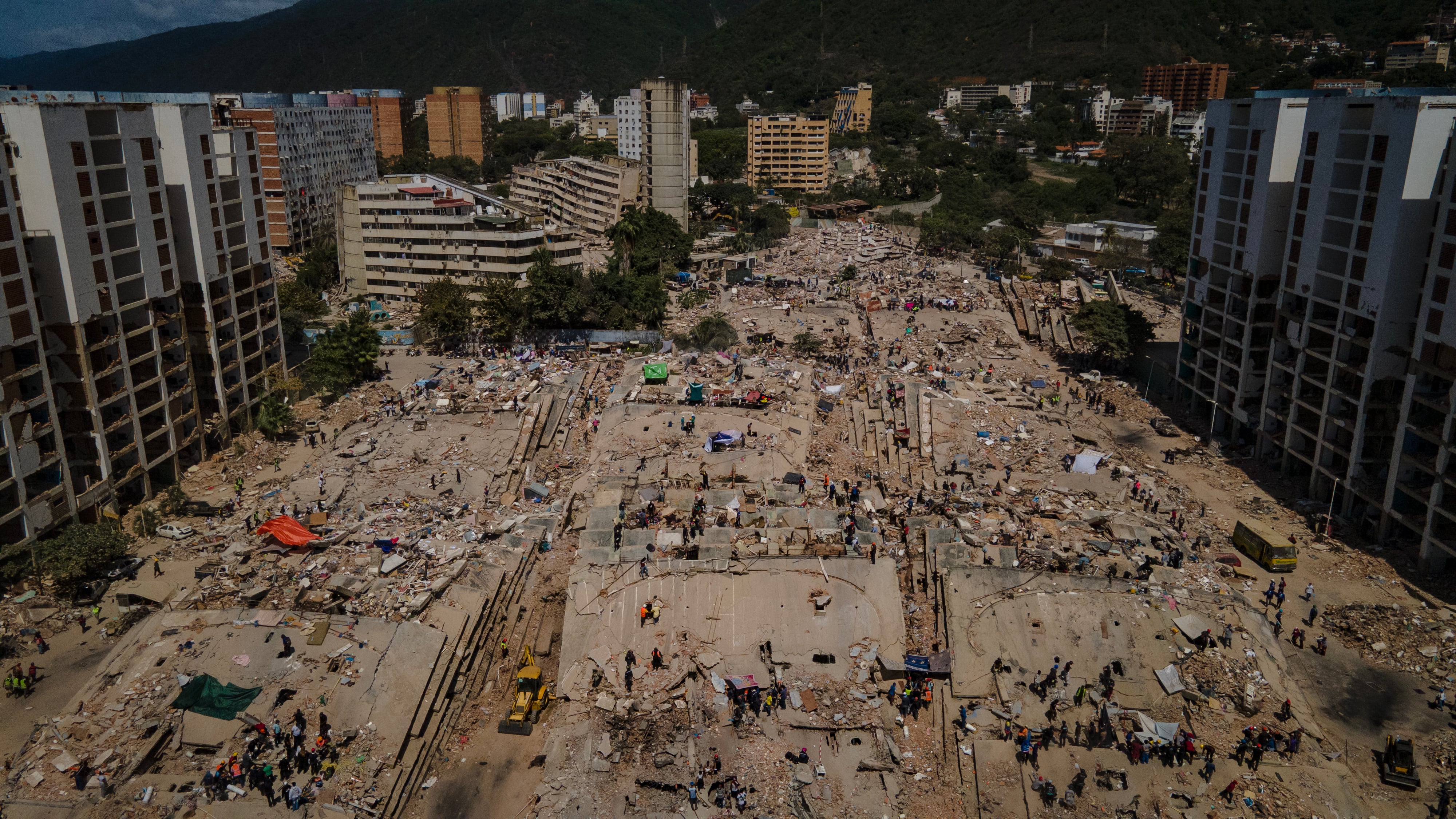
El presidente del Parlamento venezolano, Jorge Rodríguez, ha comunicado este martes, seis días después del doble terremoto que sacudió el norte del país el pasado miércoles, que la cifra de fallecidos por la catástrofe se sitúa ya en 1.943 personas y la de heridos en 10.571. Se trata de una brusca subida en ambas cifras con respecto al día anterior: un alza de 224 muertos y de más de 5.500 heridos. Del total de víctimas mortales, 19 son españoles, según ha informado el ministro de Asuntos Exteriores de España, José Manuel Albares, que ha añadido que sigue habiendo 131 desaparecidos y 12 localizados bajo los escombros. Los daños causados por los dos terremotos en viviendas y activos económicos, como vehículos, edificios o comercios, tienen una estimación preliminar de 6.700 millones de dólares (5.800 millones de euros), según una evaluación satelital basada en el Análisis Digital Rápido del Programa de Naciones Unidas para el Desarrollo (PNUD). Las autoridades venezolanas han informado de que hay 855 edificios afectados, de los cuales 189 han sufrido “un colapso total”.
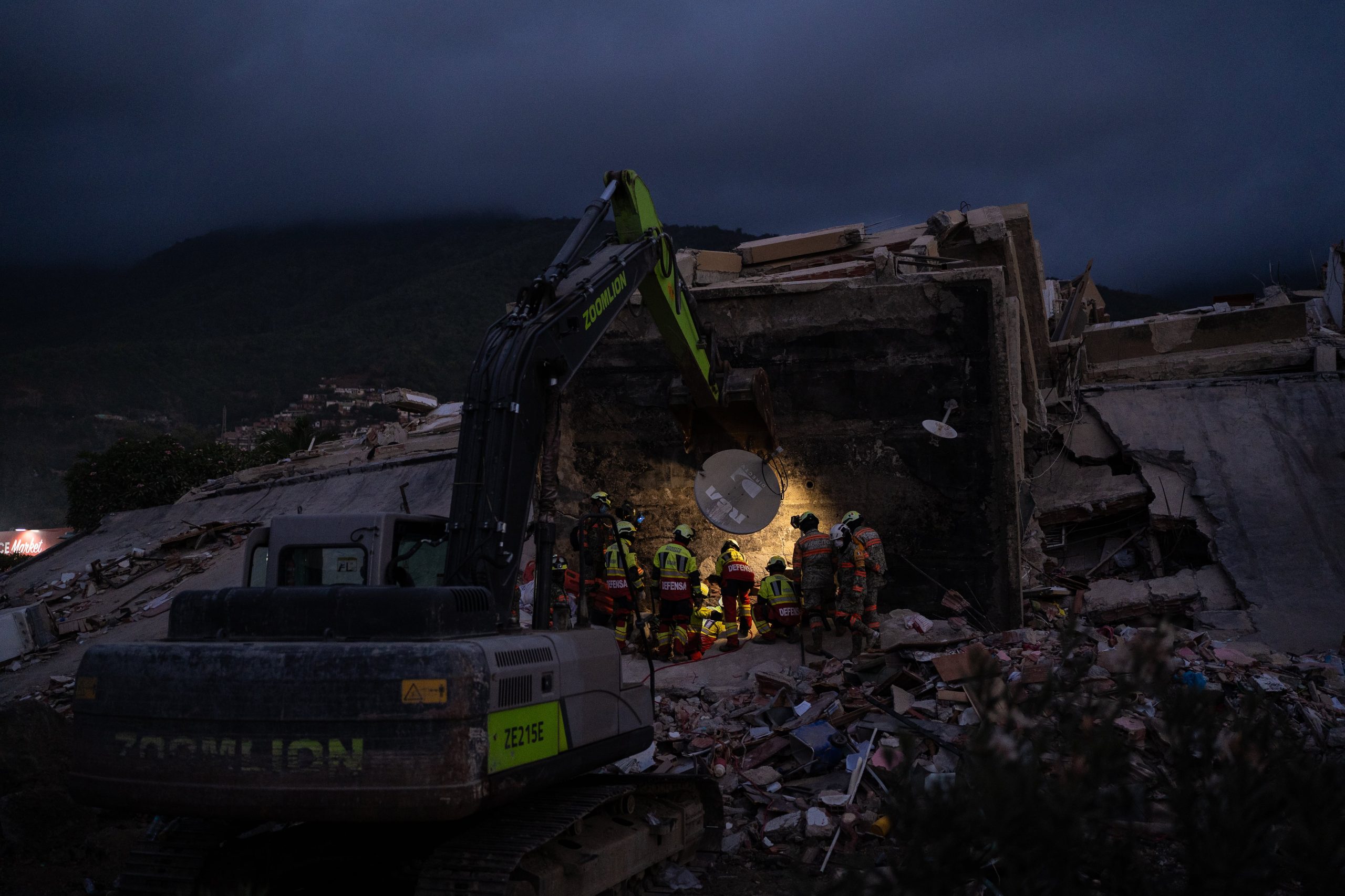
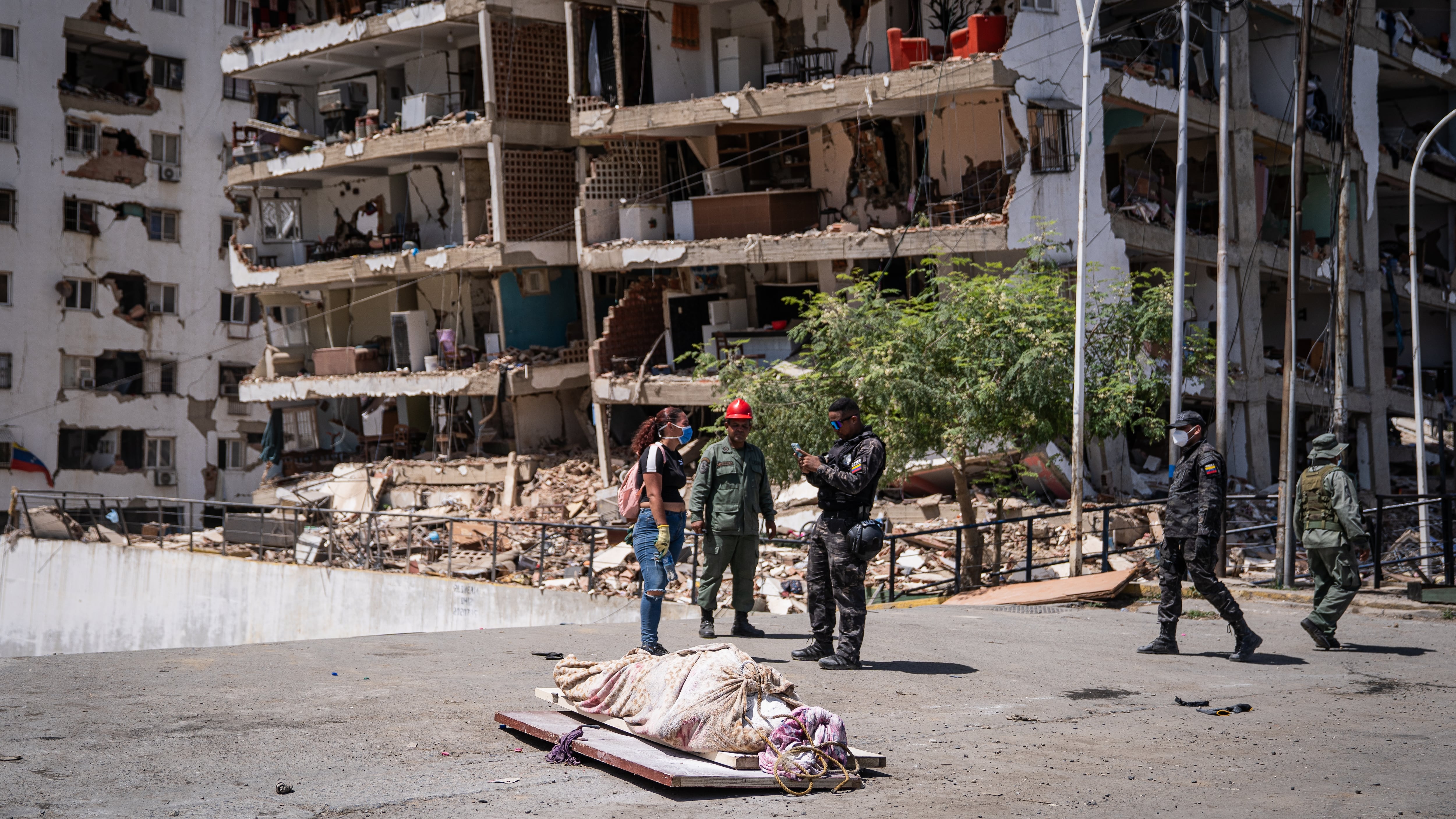
La tanatóloga tiene dos mujeres muertas a sus pies y una hija que grita, desgarrada, por su mamá. Uno de los cadáveres lleva más de una hora al sol, cubierto con sábanas y cobijas. Le han echado cal por encima para que huela un poco menos. Por fin se los van a llevar en una camioneta, pero hay que escribir sus nombres y el número de su cédula para que no sean solo unas bolsas blancas. Otras más. “¿Alguien tiene un papel? ¿Algo para escribir? ¿¡Alguien!?”, grita desesperada. En la peor tragedia de Venezuela del último siglo faltan hasta etiquetas y rotuladores para ponerle nombre a los muertos.

Trump’s Other Businesses: From Hotels And Golf Clubs To Watches And Bibles
Al Menos 13 Muertos En Un Ataque Masivo Ruso Contra Kiev

Laporte Descansa En La Tranquilidad De ‘El Niño’ Cubarsí: Una Nueva Pareja De Centrales Para Una España Imbatida
Dinosaurs are roaring over to Estepona this summer in a massive 5,000m² exhibition

Families Caring For Elderly Parents In Spain Say Brexit Has Left Them With Impossible Choices
Denia launches new La Marineta music festival this summer with Fangoria and Nil Moliner


-
Costa del Sol2 weeks ago
Dinosaurs are roaring over to Estepona this summer in a massive 5,000m² exhibition
-
 %2 weeks ago
Families Caring For Elderly Parents In Spain Say Brexit Has Left Them With Impossible Choices
-
Costa Blanca North2 weeks ago
Denia launches new La Marineta music festival this summer with Fangoria and Nil Moliner
-

 %2 weeks ago
One Of Spain’s Top Supermarkets Has Just Been Ranked Among Europe’s Most Innovative In A Major New Report
-
 ElPais2 weeks ago
Primary Elections In New York, Maryland, And Utah: Date And How To Vote
-
Latest2 weeks ago
KEY POINTS: What Changes About Life In Spain In July 2026
-
Finland2 weeks ago
Finns abroad keep Juhannus traditions alive on Spanish coast in 2026
-
Costa del Sol2 weeks ago
Local community gets ready for its annual Calahonda Day celebration on June 27