Connect with us

%

The Hidden Line On Your Spanish Electricity Bill That Could Be Costing You Money

Published

on

the-hidden-line-on-your-spanish-electricity-bill-that-could-be-costing-you-money

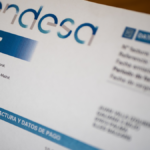
The fixed part of a Spanish electricity bill can keep costs high even before summer air-con use rises. Credit: 1 Media / Shutterstock

A new OCU analysis of almost 10,000 electricity bills suggests many households in Spain may be overpaying because their contracted power is higher than needed. The finding is especially timely before peak summer use, when air conditioning can hide smaller fixed charges that keep appearing every month.

How a fixed electricity charge can keep bills high 

Before blaming the new air-condition unit installed during a heatwave, households in Spain preparing for higher summer electricity use may have another cost to check. 

A new analysis by the Organización de Consumidores y Usuarios (OCU), Spain’s main consumer organisation, found that around one in three homes in its sample could reduce their electricity bill by adjusting their contracted power, known in Spanish as potencia contratada. OCU estimated the average saving for those households at €88.11 a year, including taxes, while keeping the same tariff.

That figure is not about using less electricity. It relates to the fixed part of the bill, the amount paid for the level of power a home has available at any one time. A property with too much contracted power may pay more every month, even if its actual consumption is lower.

This is one of the least familiar parts of the Spanish electricity bill. In flats with low use, empty holiday homes, older villas, properties inherited from previous owners, or rental homes where the contract has not been reviewed for years, this can be of higher importance to check and see where the money is going. 

Why one in three homes may have more power than they need

OCU analysed 9,806 electricity bills from households on Spain’s free electricity market, known as the mercado libre. The bills were issued between October 1, 2025 and March 31, 2026, and came from 12 electricity suppliers representing around 90 per cent of free-market household customers, according to the study.

The report found that 34.2 per cent of households analysed could save money by reducing their contracted power during peak hours. For nearly a quarter of the bills studied, the excess contracted power was at least 1 kilowatt.

This doesn’t mean every household should immediately lower its power. Contracted power controls how much electricity can be used at the same time. A home running an oven, induction hob, dishwasher, water heater and air-conditioning together may need more capacity than a small flat used only part of the year. But OCU’s findings suggest many homes may be paying for a safety margin they do not use.

What residents should look for on a Spanish electricity bill

Spanish electricity bills for domestic supplies of up to 15 kilowatts must include the contracted power for each time period and the maximum power demanded during the previous year, according to Spain’s official state bulletin, the Boletín Oficial del Estado (BOE).

That means residents can compare the power they are paying for with the highest power actually recorded by the meter. This information may also be available in the online customer area of the electricity distributor, which is not always the same company as the supplier sending the bill. 

The term to look for is potencia contratada. Some bills may also show potencia máxima demandada, or maximum power demanded. If the contracted figure is consistently much higher than the maximum demanded, there may be room to ask the supplier about reducing it.

OCU recommends caution, especially with the lower-cost off-peak power period, known as valle. Its report says the best approach is to review maximum power peaks, reduce peak contracted power only where there is a clear margin, and avoid unnecessary changes that could cause inconvenience later.

Why switching supplier is not the only way bills can change

The same OCU study also found large differences between companies for similar household consumption profiles. It said a representative average home could pay up to 57 per cent more with one supplier than another, equivalent to around €450 a year for an identical supply.

The consumer group said differences can also appear between customers of the same supplier, especially when contracts have been reviewed or renewed over time. Residents who signed a deal years ago should check whether the terms still match newer offers.

OCU disclosed that the study was financed under a collaboration agreement with Octopus Energy España. The report says this collaboration allowed the study to be expanded and was carried out under transparency requirements for consumer association agreements.

For that reason, the useful takeaway is not which supplier ranked best in the sample. It is that the full bill should be checked, and suppliers should be compared fairly. 

How residents in Spain can compare tariffs safely

Spain’s energy regulator, the Comisión Nacional de los Mercados y la Competencia (CNMC), offers an official energy supply comparison. The regulator says the tool includes around 800 offers from more than 80 suppliers, with characteristics checked by CNMC technicians before inclusion.

CNMC also says consumers have the right to choose their electricity or gas supplier freely, changing suppliers is free, and the maximum period for a supplier switch is 21 days.

The regulator’s own household panel has shown why this remains confusing. In the second quarter of 2025, 52.2 per cent of Spanish households did not know how to distinguish between the free electricity market and the regulated electricity tariff, known as the Precio Voluntario para el Pequeño Consumidor (PVPC). 

Before summer bills arrive, residents can check their contracted power, compare it with the highest recorded demand, look for fixed charges or maintenance extras, and compare the total annual cost of any new offer rather than only the advertised electricity price.

%

Samaritans In Summer Social Evening

Published

on

samaritans-in-summer-social-evening

Support Samaritans in summer social evening with live music, stalls and tombola

By Lucy Ramnought • Published: 04 Jul 2026 • 10:08 • 1 minute read

artisan market

Charity market in Benahavis Credit:Igisheva Maria/shutterstock

A charity‑focused summer gathering is taking plan on Thursday, July 9 in Benahavis, inviting everyone to an early‑evening event in aid of the wonderful charity the Samaritans in Spain. Organisers are encouraging anyone who would like to take art and hold a stall at the community sale at Cafe‑Bar Town Hall Benahavis from 5pm.

Artisans invited to take part in sale

Local makers are being encouraged to reserve a stall and bring their handmade items to the evening. Organisers are looking for bakers, candle makers, jewellery designers and artists, are all welcome, to be able to offer customers a broad mix of crafts. Interest can be registered by messaging the event team directly at the Samaritans number or via the Cafe-bar. Spaces are expected to be taken quickly as Benahavis  attracts creative individuals from nearby towns.

Friendly relaxed summer gathering with music

Live music will also be coming to you as part of the evening in the form of local singer Lucy and her stunning vocals, creating the perfect vibe for browsing, chatting and enjoying a warm July night in the village. Guests can also try their luck at the tombola that will run throughout the event, with all proceeds going directly to Samaritans in Spain.

Samaritans in Spain providing a life-line for people in need

Samaritans in Spain offers a confidential emotional‑support service for anyone experiencing distress, worry or loneliness. Its FREEPHONE helpline (900 525 100) operates daily from 10am until midnight, staffed by trained volunteers who provide non‑judgemental listening support to English speakers across Spain.

Funds raised at the Benahavis event will help maintain this service, supporting ongoing volunteer training and extended helpline hours.

How to take hold a stall or just come along to browse

Anyone wishing to reserve a stall can contact the organisers for details to secure a space. Those planning to attend just to enjoy, can simply arrive at Cafe‑Bar Town Hall Benahavis on Thursday, July 9 from 5pm.

Google News

Follow Euro Weekly News on Google News

Get breaking news from Spain, travel updates, and expat stories directly on your Google News feed.

Follow on Google News

Sign up for personalised news

Subscribe to our Euro Weekly News alerts to get the latest stories into your inbox!

By signing up, you will create a Euro Weekly News account if you don’t already have one. Review our Privacy Policy for more information about our privacy practices.

Continue Reading


Continue Reading

%

San Fermín, Spain’s Famous Bull Run, Is About To Begin, But Police Are Preparing For A Different Danger


Published

on

san-fermin,-spain’s-famous-bull-run,-is-about-to-begin,-but-police-are-preparing-for-a-different-danger

Pamplona police warn San Fermín visitors about rising festival pickpocketing. Photo Credit: Shutterstock

Thousands of visitors heading to Pamplona for the 2026 edition of San Fermín, Spain’s most famous bull run, may feel nervous about the charging animals and their horns. However, local Pamplona police are preoccupied with a very different danger that tends to spike when this celebration comes around, and that few people think about at the event: theft.

Local Pamplona police prepare for hundreds of San Fermín complaints

As San Fermín returns, a special, temporary reporting office is opening for the celebration after hundreds of complaints were recorded during last year’s festival, with theft accounting for more than half of them.

As it stands, last year officials received a whopping 340 complaints during the famed festival, of which 196 were theft complaints. This represents an incredible 57.64 per cent of all complaints. Additionally, another 45 cases involved lost belongings or documentation.

The office, located at Calle Zapatería 40, will be added on July 5, just before the festival’s opening day, due to the expectation of high demand for this year’s edition of the event. Additional staff will also be added in order to help locals and holidaymakers that may have had their belongings stolen. The opening hours for the office will be from 11:30am to 11:30pm on each day of the festival. This office will be in operation until the end of San Fermín, on July 14.

While visitors watch the bulls, thieves watch the crowds

Every year, large numbers of people visit Pamplona for San Fermín, particularly during major festival moments. This means that, while visitors and holidaymakers are dazzled by the charging animals and the festivities, these crowded areas create ideal opportunities for pickpockets and thieves to whisk belongings away.

The problem is well-known and widespread throughout the festivities; so much, in fact, that the official San Fermín safety information guide warns visitors about the possibility of being pickpocketed while surrounded by a packed crowd.

Getting pickpocketed could be especially disastrous for foreign tourists: visitors may be carrying essential and valuable items including phones, bank cards and identification while moving through an unfamiliar city and extremely dense crowds.

Leaving your passport at your accommodation

To avoid having valuables like a passport stolen while enjoying a festival, there are a few things visitors can do:

  • Only carry what is needed.
  • Avoid carrying a passport unless necessary.
  • Keep a secure copy or digital record of important travel documents.
  • Do not keep a phone and wallet together in an easily accessible pocket.
  • Be particularly careful and aware of your surroundings in tightly packed crowds, even if you think a thief could not easily get away.
  • Know where the temporary police reporting office is before attending the busiest festival events.

A stolen passport can turn a fun Spanish festival trip into a nightmare

Having your passport stolen, especially abroad, can give travellers quite the headache. When a visitor reports their passport as stolen, the document is immediately flagged as cancelled. Even if the passport is found later, it cannot be used to travel anymore.

Additionally, the traveller, without an emergency travel document issued by their home country, could be grounded and miss their flights and other trips, compounding government fees for replacement documents with the expense of a new booking.

Finally, the process to report the document as stolen can be lengthy and annoying, as the embassy often needs to prove the loss before being able to help the victim.

For British visitors, a lost or stolen passport can be reported to the UK government, and an Emergency Travel Document may be required if the person cannot travel using their existing documentation.

Irish visitors, on the other hand, can apply either online or through the post for a replacement of their stolen passport. Additionally, the theft can be reported to the Gardaí and with the submission of a Garda Certificate of Loss, along with a letter signed by the victim, which will mark the passport as lost or stolen.

What is San Fermín?

San Fermín officially begins on July 6 and is a world-famous Spanish celebration in honour of the town’s patron saint. To celebrate, the town hosts its famous bull runs, which happen on each morning of the festival, from July 7 to July 14 at 8:00am.

FAQs about the 2026 edition of San Fermín

Q. When does San Fermín 2026 begin?

A. July 6.

Q. When are the San Fermín bull runs?

A. Every morning from July 7 to July 14 at 8:00am.

Q. Where can I report a theft during San Fermín?

A. The temporary Municipal Police complaints office is located at Calle Zapatería 40 and operates from July 5 to July 14, from 11:30am until 11:30pm.

Q. What is the emergency number in Spain?

A. 112

Continue Reading

%

Wildfire Spreads Through Popular Tourist Hotspot In Spain As 12,000 Confined Indoors

Published

on

wildfire-spreads-through-popular-tourist-hotspot-in-spain-as-12,000-confined-indoors

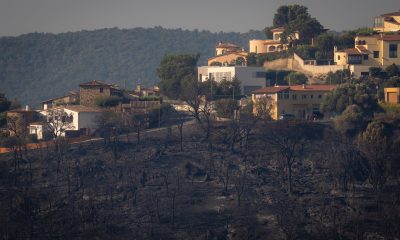
The wildfire has already burned approximately 1,200 hectares of land. Photo credit: Carlos Calvo Torregrosa/Shutterstock

A fast-moving wildfire tearing through the Costa Brava has left more than 12,000 people confined to their homes as flames continue to spread across dry forest and rural land, with firefighters still unable to bring the blaze under control. What started as a local fire in Girona province has escalated into a serious emergency across one of Cataluña’s busiest coastal regions, with smoke, road closures and growing concern spreading well beyond the immediate fire zone.

For many residents, the situation has changed within hours from normal summer routine to being told to stay indoors, keep windows shut and avoid any unnecessary movement outside. With the fire still active and shifting unpredictably, there is a growing sense that the situation could worsen quickly if wind conditions change again.

A fire moving faster than crews can contain

The blaze broke out in the Baix Empordà area and was caused apparently by a man working with a grinder near a road, it has since ripped through more than 1,200 hectares of land, driven by dry vegetation and strong winds that have pushed flames through woodland and open countryside at speed. Firefighters are dealing with multiple active fronts, and despite continuous efforts, the fire has not been stabilised.

At points, wind shifts have caused flare-ups that forced crews to pull back and rework containment lines, slowing down progress at critical moments. Aerial support has been brought in to help tackle areas that ground teams cannot safely reach, but officials have warned that conditions remain unstable and difficult to predict, with no clear sign yet of full containment.

Holiday region hit by sudden disruption

The Costa Brava is one of Cataluña’s most visited coastal destinations during the summer, and the sudden escalation of the wildfire has caused disruption across a wider area than the immediate burn zone. Travellers in nearby towns have reported changing conditions throughout the day, with smoke occasionally spreading across roads and affecting visibility.

While not all tourist areas are directly in the fire’s path, the uncertainty alone has been enough to cause concern for those staying in the region. For local communities, the impact has been even more immediate. Normal daily life has effectively stopped in the worst-affected areas, replaced by updates, alerts and the constant sound of aircraft and emergency vehicles.

12,000 people told to stay inside as smoke spreads

The scale of the confinement order has added to the sense of alarm across the region. More than 12,000 residents have been told to remain indoors while emergency services work to keep the fire away from populated area, meaning entire neighbourhoods suddenly shut in, with residents advised to close doors and windows as smoke drifts across parts of the Costa Brava.

In some areas, visibility has dropped noticeably, with a strong smell of burning vegetation reported even in locations away from the main fire front. Road closures have also been introduced in several zones, not only because of the fire itself but to ensure emergency vehicles can move quickly and safely through the affected area.

Fire behaviour raising concern on the ground

One of the biggest challenges for firefighters has been the unpredictable way the fire is behaving. Wind shifts have repeatedly changed its direction, forcing crews to respond in real time as new hotspots emerge. The terrain is also making progress difficult.

Much of the affected area is made up of forest and scrubland, where access is limited and flames can spread quickly through dry vegetation. Fire crews have been focusing their efforts on protecting populated areas and stopping the fire from moving closer to residential zones, but officials have acknowledged that the situation remains highly changeable and far from secure.

Growing uncertainty as blaze remains active

Despite continuous firefighting efforts, the blaze is still not under control, and there is no confirmed timeline for when conditions may stabilise. The combination of wind, heat and dry land has created an environment where the fire can continue to shift and spread unexpectedly.

The scale of the response has increased throughout the day, with additional resources deployed to support local teams already stretched across multiple fronts. Even so, the focus remains on containment rather than extinguishing the fire entirely at this stage.

A region watching and waiting

For now, thousands of people across the Costa Brava remain indoors as the situation develops outside. The fire continues to burn across a wide area, and while emergency crews are working continuously to contain it, the mood on the ground is one of uncertainty. With 1,200 hectares already affected and multiple hotspots still active, authorities are warning that the situation could evolve quickly depending on weather conditions. What is clear is that this is no longer a small local incident, but a fast-moving wildfire that has placed an entire region on alert, with residents now watching and waiting as firefighters continue their battle against the flames.

Continue Reading
Advertisement
Advertisement

Spanish Real Estate Agents

Tags

Trending

Copyright © 2017 Spanish Property & News