
Barcelona
The Photographic Universe Of Valérie Belin: Beauty Between Reality And Fiction

Valérie Belin, 62, maintains that, “throughout history, beauty has functioned as a Holy Grail.” That is, as an ideal that’s eternally pursued. It fascinates because it’s an enigma that no one has been able to fully decipher.
For the French photographer, who was born in Boulogne-Billancourt, an inner suburb of Paris, beauty is a social and illusory construct: “Synonymous with power,” she notes, “but, at the same time, with danger.” This is what happens with unattainable promises. From this starting point, a significant part of her work reflects a vain quest — one that is embodied in people who aspire to this ideal, as well as in objects that reproduce and stage it in the same way.
Recognized as one of the most outstanding photographers of her generation, Valérie Belin has developed a body of work that reveals the complex process of how identity and perception are constructed via images and stereotypes. The boundary between reality and fiction is blurred in her photography.
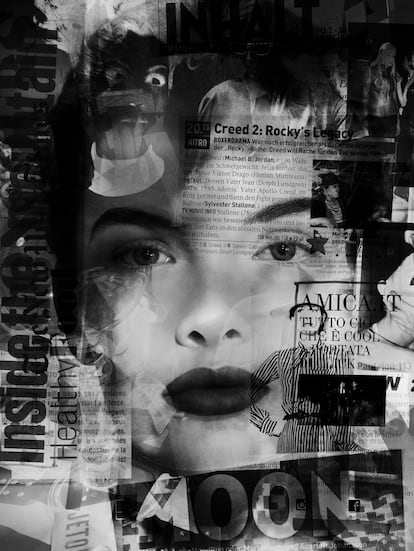
Belin’s large-format photographic series feature human figures, mirrors, masks, mannequins, shop windows and still lifes. These carefully-constructed images highlight the omnipresence of simulation in contemporary society, where the boundaries between beings, objects and images are blurred. Nothing is stable and nothing is what it seems in her work.
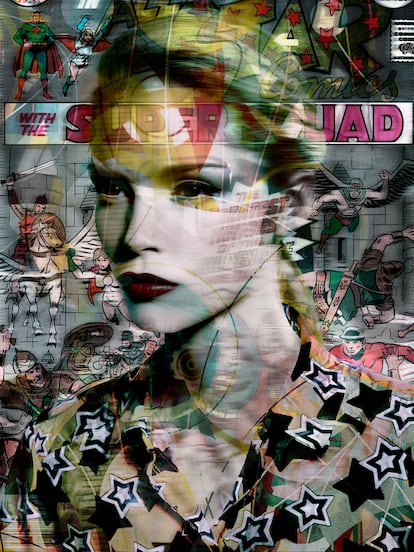
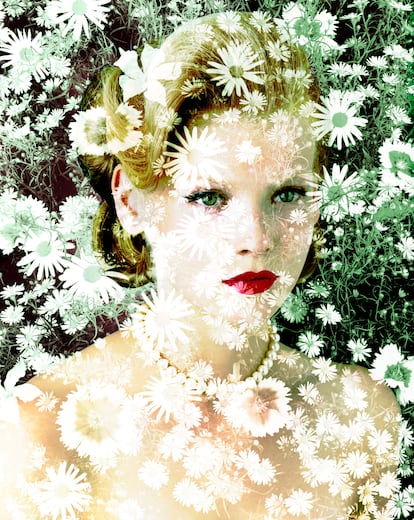
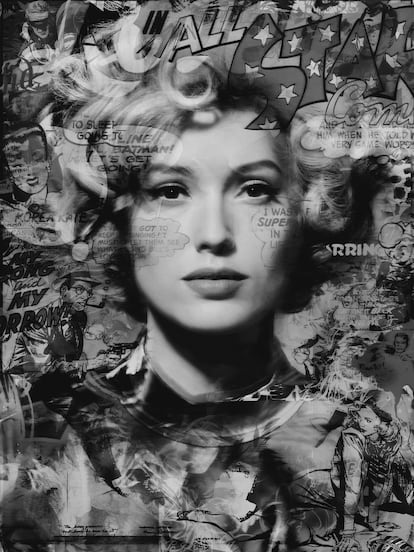
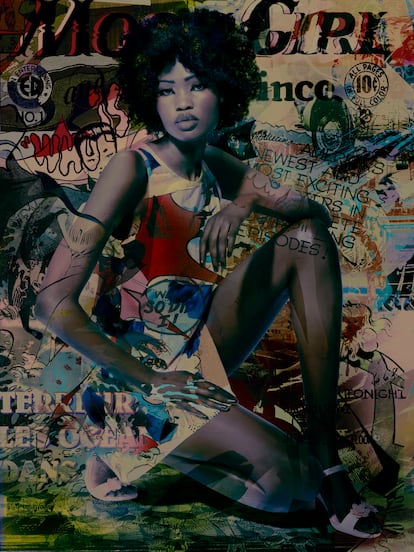
The Picasso Museum in Barcelona is dedicating an exhibition of 32 pieces to the photographer, representing her most emblematic series. Among them, three stand out: Venice II (1997), which multiplies the image to the point of almost erasing it through the use of mirrors; Black-Eyed Susan (2010), in which she merges female faces and flowers, blurring the boundary between subject and ornament; and Cover Girls (2026), where she combines close-ups of models in the studio with superimposed cutouts, to show how identity is shaped by multiple media influences. The exhibition invites us to imagine photography as a flexible medium, linked to artifice, interpretation and transformation.
Belin came to photography in the mid-1980s, while studying Fine Arts. Unlike the more introspective experience of painting, photography allowed for — and also demanded — an active connection with the outside world. “I’m very observant. I’m more about observation than about the act of creating something on a canvas,” the artist states.
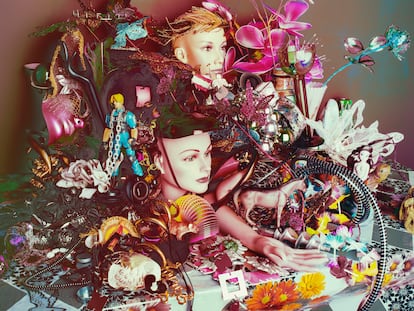
Her work departs from naturalism, occupying a space that’s both painterly and abstract. It draws on diverse influences, such as minimalism, pop art and the Baroque. In this context, exaggeration becomes a central element of her work: “[Since I created] my earliest pieces, I’ve photographed subjects and objects that are out of the ordinary, seeking a form of extreme beauty, often linked to excess,” Belin emphasizes.
She works intuitively, always leaving a gap between the initial idea and the final result. Her images are presented as fictions, in which post-production constitutes an experimental phase that takes up half of the creative process. “The objective of my photographs isn’t to show a soul, but rather its existence,” she clarifies. “That’s why, in my work, everything tends to stay on the surface, whether it’s the surface of objects or human beings. They’re phenomena or typologies. I work on that surface as a kind of canvas, on which I’m going to create a character [whose] gaze, posture, or expression reveals attitudes of alienation, narcissism, or psychological confinement.”
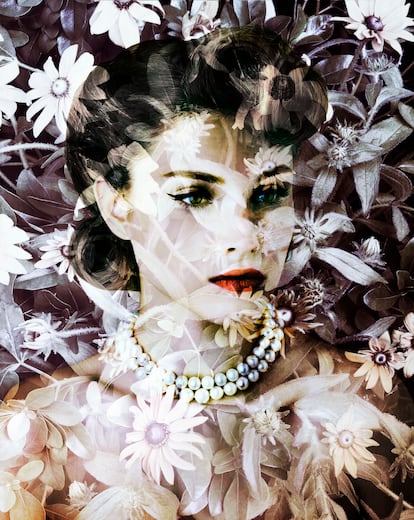
Similarly, she explores the tension between presence and objectification: “My images are of beautiful young women, but there’s always something jarring in them. You can sense that this woman is half-alive, in an intermediate state between existing and not existing; between being an image and being someone who resists this.” In her view, women remain vulnerable to stereotypes: “For a long time, the patriarchal system has made seduction a woman’s only weapon. There’s been progress — there are movements fighting against it — but it remains deeply ingrained in the collective unconscious.”
Her series share a common thread: the continuous reference to the fragility of life and a certain disorder that permeates our existence. Belin reminds us that everything we see, be it an object or a human being, is at once, an enigma, a reflection and a constantly-transforming canvas, where appearance becomes the very substance of meaning.
Sign up for our weekly newsletter to get more English-language news coverage from EL PAÍS USA Edition









Barcelona
El Nuevo CaixaResearch Institute Consolida Barcelona Como Centro Neurálgico En Biomedicina

Barcelona cuenta desde este viernes con el primer centro de investigación especializado en inmunología de España. El CaixaResearch Institute, impulsado por la Fundación La Caixa, se incorpora a un ecosistema biomédico en expansión en la ciudad y refuerza su peso en un ámbito clave para el desarrollo de nuevas terapias. Con una inversión inicial de 100 millones de euros, el centro destinará su actividad al estudio del sistema inmunitario y su papel en enfermedades como el cáncer, las infecciones o los trastornos neurodegenerativos. De momento cuenta con seis grupos de investigación y la previsión es alcanzar entre 30 y 40 en unos seis años.
El CaixaResearch Institute pretende utilizar la inmunología como punto común para estudiar procesos compartidos en patologías distintas. El objetivo es entender cómo funciona el sistema inmunitario en condiciones normales y qué ocurre cuando se desregula, tanto en el inicio como en la progresión de las patologías. “El sistema inmunitario es como nuestro guardián silencioso que mantiene el equilibrio del organismo”, ha sintetizado el presidente del Comité Científico, Josep Tabernero, durante la presentación, que a la vez lo ha catalogado como “uno de los sistemas más complejos y sofisticados de nuestro cuerpo”. El Instituto buscará estudiar bajo un mismo marco patologías que comparten mecanismos biológicos, como el cáncer, las infecciones o los trastornos neurodegenerativos, para avanzar en prevención y tratamiento. “La respuesta del sistema a veces se queda corta y pueden progresar infecciones o tumores; y en otras, se descontrola y reacciona frente a estímulos que no suponen ningún peligro, como ocurre en las alergias y en las enfermedades autoinmunes”, plantean desde el Instituto. Entender estos procesos, añaden, “es uno de los grandes desafíos de la biomedicina actual”.
En este sentido, la ciencia aspira a encontrar fórmulas para restaurar los mecanismos de control del sistema, modular la intensidad de la respuesta y recuperar su capacidad de autorregulación. “No es una tarea sencilla, pero abre la puerta a tratamientos más precisos y duraderos”.

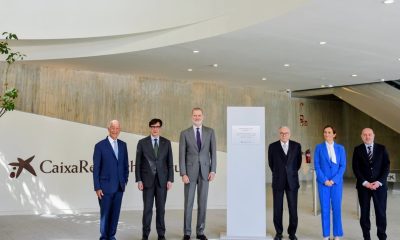
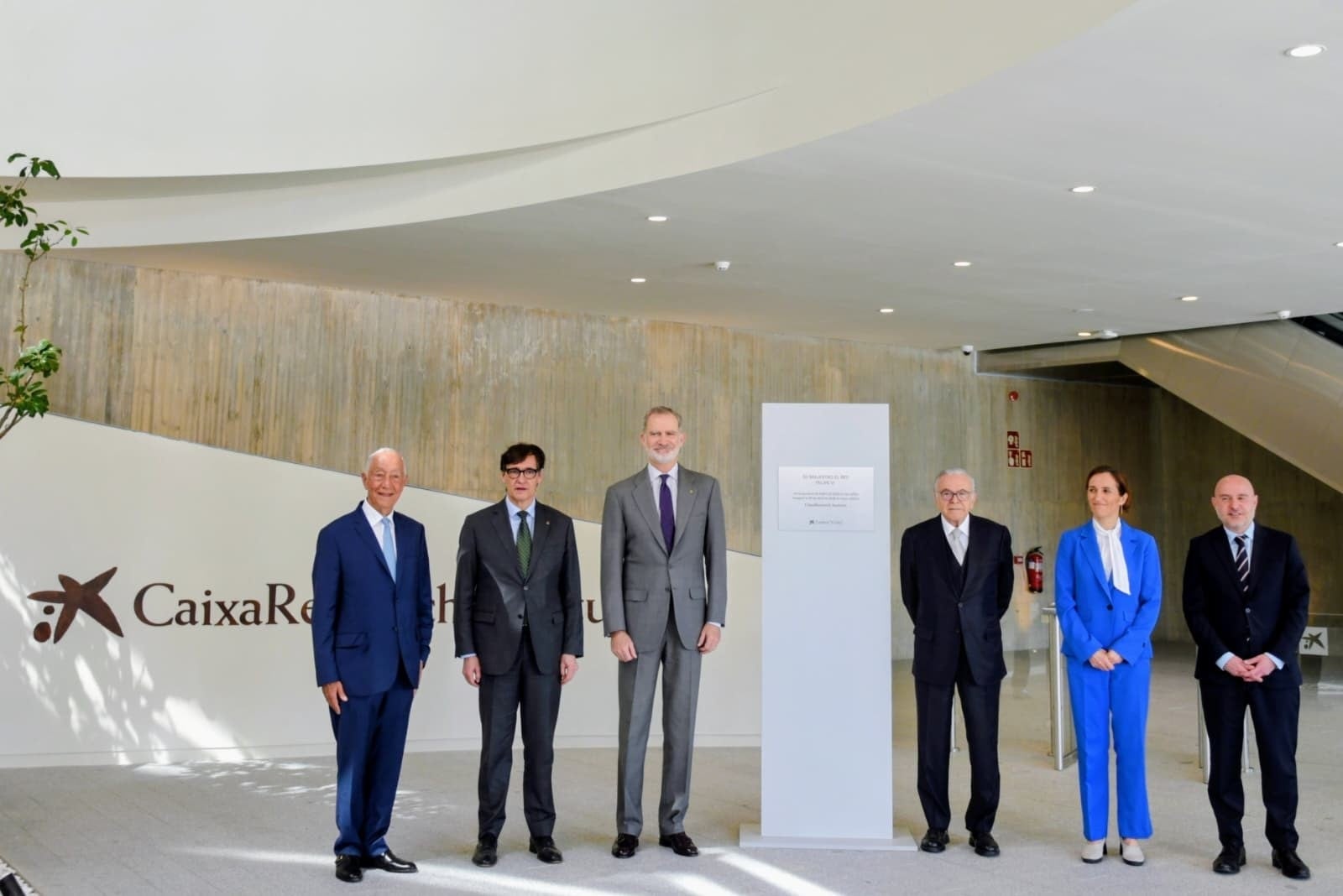
El acto de inauguración, celebrado este viernes en la nueva sede, ha contado con la presencia del Rey Felipe VI, el presidente de la Generalitat, Salvador Illa, la ministra de Sanidad, Mónica García, y el presidente de la Fundación “la Caixa”, Isidro Fainé, entre otras autoridades. “Queremos que este centro de investigación sea un referente internacional que persigue el progreso de nuestra sociedad”, ha celebrado Fainé. Durante su inauguración, Fainé ha pedido “mejorar la calidad de vida de las personas”, aunque ha admitido que necesitarán “tiempo” para obtener los primeros resultados. “Tenemos talento, experiencia y recursos, y saldremos adelante”, ha advertido.
Ubicado a los pies de Collserola, enfrente del Museo de la Ciencia, el centro ocupa 20.000 m² y pretende albergar a 500 profesionales, 425 de ellos científicos. El instituto contará ahora con un presupuesto de unos 10 millones de euros destinado a la captación de talento y al equipamiento científico con el propósito de “consolidarse como un centro de referencia en inmunología”. El proyecto cuenta con cinco grupos de investigación, que serán seis en los próximos meses. El objetivo es alcanzar alrededor de 40 grupos en un plazo de entre seis y ocho años y situar la ciencia en el núcleo del debate público. “Con el aumento de las fake news y la democratización de herramientas de IA, una comunicación rigurosa y accesible contribuye a contrarrestar mitos y rumores”, defiende la entidad.
El nuevo centro se suma a una red de instituciones impulsadas por la Fundación, como IrsiCaixa (enfermedades infecciosas e inmunidad), el Vall d’Hebron Instituto de Oncología (VHIO, oncología), ISGlobal (salud global y factores ambientales), el Barcelonaβeta Brain Research Center (alzhéimer) y el Institut de Recerca Sant Joan de Déu (patologías pediátricas), además del Gulbenkian Institute for Molecular Medicine en Portugal (biomedicina). En conjunto, este ecosistema reúne a más de 1.500 investigadores y supera los 200 millones de euros de presupuesto anual, según datos de la entidad. Barcelona amplía así su red de centros biomédicos en un entorno que ya concentra hospitales, universidades y empresas del sector.
La Fundación La Caixa destina actualmente un 20% de su presupuesto anual (147 millones de euros en 2026) al ámbito sanitario y ofrece convocatorias propias de ayudas a proyectos de Investigación e Innovación en Salud o de fomento del talento investigador, como las becas de doctorado INPhINIT o las de posdoctorado Junior Leader.




Marc Márquez Baila Sobre El Agua En Jerez Para Conseguir La ‘pole’ En El GP De España
When the dream home never arrives

When The Dream Home Never Arrives

Luxury Villas For Sale, Estepona – ProjectL1

Stylish 3-Bedroom Apartment With Panoramic Sea Views – Benalmádena
Brussels warns Spain that migrants regularised under controversial scheme will be deported back to Spain if they try to move to other EU countries


-
 New Developments3 weeks ago
Luxury Villas For Sale, Estepona – ProjectL1
-
 New Developments3 weeks ago
Stylish 3-Bedroom Apartment With Panoramic Sea Views – Benalmádena
-
eu response to spain migration policy2 weeks ago
Brussels warns Spain that migrants regularised under controversial scheme will be deported back to Spain if they try to move to other EU countries
-

 %3 weeks ago
Poland Disconnects Utilities At Russian Consulate That Moscow Refuses To Hand Over
-

 Uncategorized4 weeks ago
How Lewis Hamilton spent break with A-list star
-

 Uncategorized4 weeks ago
Lewis Hamilton goes from Karate Kid to Samurai Warrior with Kill Bill guru
-
AER Lingus4 weeks ago
High-speed internet at 35,000 feet: Aer Lingus launches Starlink Wi‑Fi
-
Costa del Sol2 weeks ago
Easter on the Costa del Sol: a time of renewal