
ElPais
The Summer Spain’s Queen Sofía Could Have Married Harald Of Norway

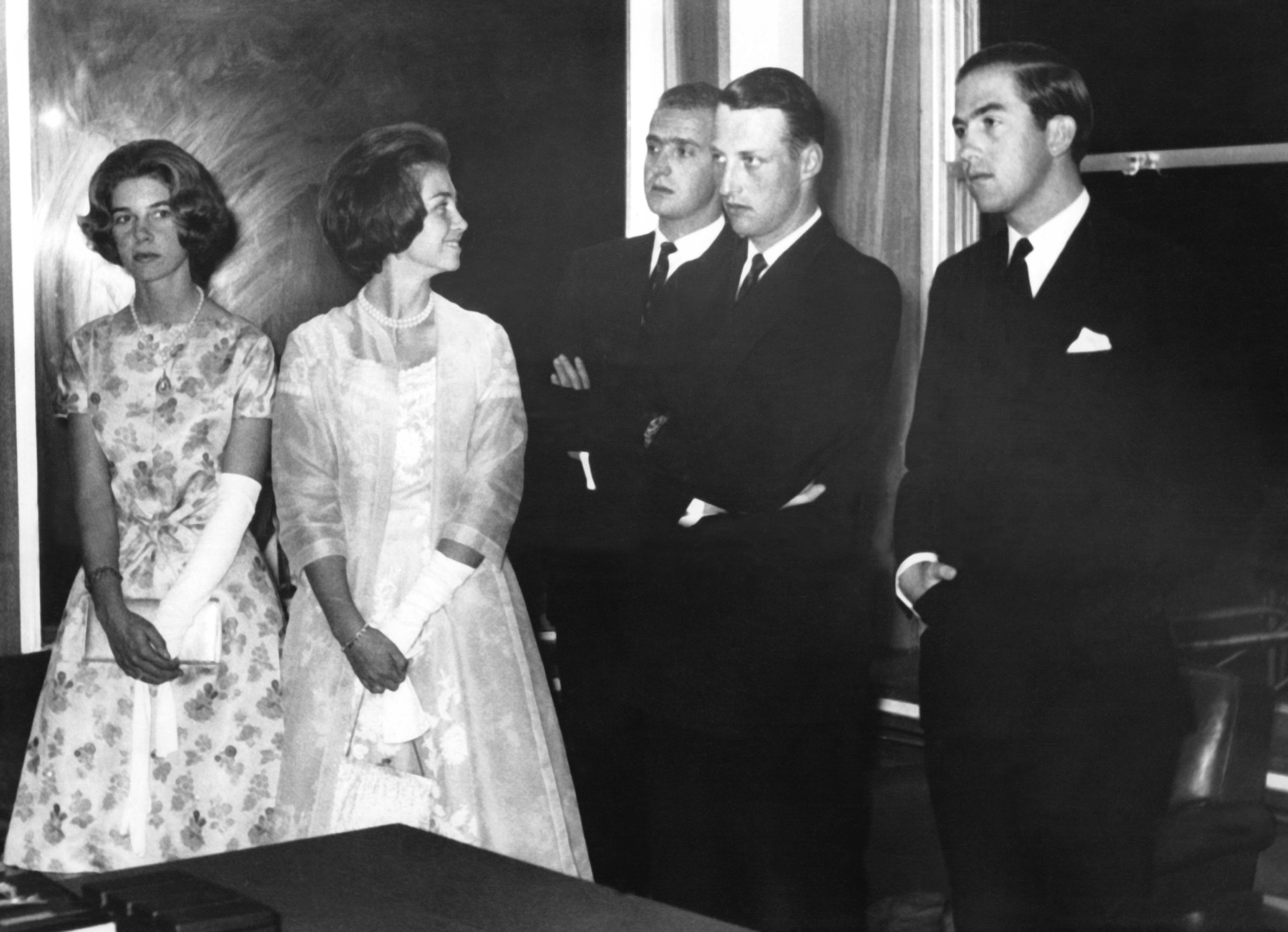
In the summer of 1954, Queen Frederica of Greece organized an 11-day cruise through the Aegean Sea for around a hundred European princes and princesses. Officially, the wife of King Paul I of the Hellenes arranged the voyage aboard the luxury yacht Agamemnon to help reopen Greece to tourism after the devastation of the Second World War. Unofficially, Frederica, who shared her great-grandmother Queen Victoria’s talent for matchmaking, conceived the trip as an opportunity for Europe’s future monarchs to meet and, if luck allowed, fall in love.
It was on this cruise that the then Princess Sofía, Frederica’s eldest daughter, first met Spain’s Juan Carlos de Borbón. As both would later recount, there was no spark between them during the Agamemnon voyage. Seven years would pass before they met again, married, and became the king and queen of Spain. Sofía later took the title of queen emerita after Juan Carlos abdicated in 2014 and their son, Felipe VI, ascended the throne.
What did emerge during that August 1954 cruise was a shared ambition between Queen Frederica and Princess Astrid of Norway, daughter of King Olav V. According to contemporary accounts, Astrid, then 22, became determined to engineer a romance between her younger brother, Prince Harald, the future King of Norway, and Sofia of Greece. Frederica, famed for her court intrigues, readily embraced the idea.
The young royals first met in the summer of 1959, when King Paul and Queen Frederica toured Scandinavia by car with their children. Former Queen Sofía later recalled the visit in The Queen, her official biography published by Pilar Urbano in 1996.
“I was about to turn 21. And I had never in my life seen Prince Harald of Norway. Well, the moment we set foot on Norwegian soil, we woke up to Oslo newspapers already treating us as a couple. Incredible! On the front page, a photo of Prince Harald and a photo of me. And we didn’t know each other! He had not come on the Agamenón cruise. We had never seen each other!” Queen Sofia told Urbano.
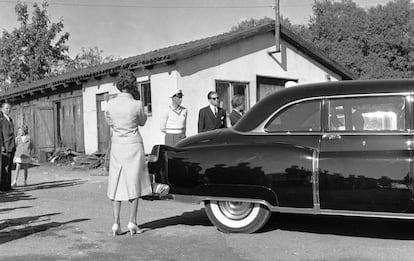
According to historian Françoise Laot, author of Juan Carlos y Sofía (Juan Carlos and Sofía), Queen Frederica was determined to “steer her eldest daughter toward a northern monarchy, and the only future king of marriageable age was Harald of Norway.”
Laot recounts how regattas, balls and gatherings of European royalty were organized to give the young royals opportunities to get to know one another. In the summer of 1960, the Greek royal family hosted Harald at Mon Repos, their summer residence on the island of Corfu. The Norwegian heir spent several weeks holidaying with his Glücksburg relatives, both families being descendants of King Christian IX of Denmark and Britain’s Queen Victoria, but the hoped-for romance failed to materialize.
“I know there was interest in marrying us off. Meetings were arranged, people made predictions, the press ran wild, etc., etc., etc. The result of that forced pairing was nil,” Queen Sofia told Urbano.
It was never made clear who rejected whom, but according to royal journalist Jaime Peñafiel, Harald was already in love with another woman: Sonja Haraldsen, a dressmaker and the daughter of merchants with no noble background.
King Olav did not want his son to marry Haraldsen, so attempts to pair him with Sofía continued. The Norwegian king and the Greek queen sent their children to the wedding of Prince Edward, Duke of Kent and cousin of the late Elizabeth II, to aristocrat Katharine Worsley in London in the summer of 1961. At one banquet, Harald and Sofía were seated together, and by then many people already regarded them as a couple. Someone within royal circles even leaked that the press would be summoned to the Savoy Hotel for an announcement of their engagement date. Despite all these efforts, however, the Norwegian prince showed little interest in his “Greek cousin.”
“Harald never expressed any interest. And she responded in a very feminine way. He was the one who closed the door. And she, as a slightly spurned woman, turned the key twice. There was never anything at all,” Urbano told EL PAÍS in a telephone conversation. “That she may have liked him? That remains her secret. When I spoke with the queen, I believed her when she told me there was nothing. In private she was very expressive and animated. From her gestures, I believed her. She told me it had all been an artifice of the Norwegian and Spanish press and that there had never been anything there. End of story.”
Journalists such as Jaime Peñafiel and Pilar Eyre take a different view. “Harald was Sofia’s great love. The person who was not her great love was King Juan Carlos,” Peñafiel told EL PAÍS. “They had a more or less public relationship. I don’t know whether Frederica protected it or ruined it. It would have been a good marriage.”
“Harald and Sofia became a couple and were close to marrying, no matter how much the queen herself denies it,” Eyre recently told the magazine Lecturas. “It was a proper courtship that left such a bitter aftertaste that she has even chosen to lie about that episode of her life.”
According to Eyre, Harald snubbed Queen Sofía at the Duke of Kent’s wedding. “He didn’t dare sit in the seat assigned to him next to Sofia, who felt humiliated in front of all the guests… Ashamed, she lowered her eyelids, fanned herself with the hymn book… Until a gangly, fairish young man said to her, ‘Sofi, may I?’ and, without waiting for an answer, sat down beside her,” the journalist recounts.
Another wedding emerged from the Kent wedding, though not the one everyone had expected. That lanky, fair-haired young man was Juan Carlos de Borbón. This time, “Juanito,” as he was then known, hit it off with “Sofi”. Both were staying at Claridge’s Hotel in London and used the occasion to get to know each other better. They went to see Exodus, the Paul Newman film about the founding of the State of Israel; had tea and dinner at the Savoy; shopped incognito around Mayfair; and danced together at a party at Hovingham Hall, the Worsley family’s country estate in North Yorkshire.
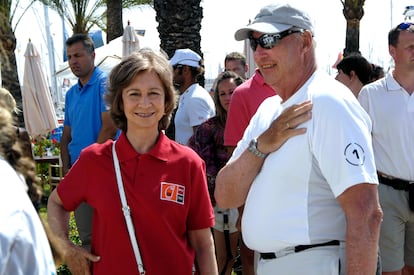
“It was then that we began to feel the pull of attraction,” Queen Sofia confessed to Urbano in interviews for the book The Queen.
After the Duke and Duchess of Kent’s wedding, José Ibáñez Martín, Spain’s ambassador to Portugal, sent a report to dictator Francisco Franco detailing aspects of the budding romance between the son of the Count and Countess of Barcelona and the daughter of the King and Queen of Greece.
Just a year later, Juan Carlos and Sofía married in Athens. Harald of Norway, meanwhile, married Sonja Haraldsen in 1969 after a lengthy standoff with his father. The Norwegian heir had publicly declared that he would renounce his claim to the throne if he was not allowed to marry her.
The aborted romance between Sofía and Harald has become one of royal correspondents’ favorite stories, a tale that resurfaced following the death of the Norwegian monarch on August 28. Over the decades, however, the two royals and their families maintained a long and close friendship.
For Queen Sofía, the death of the Norwegian king at the age of 89 marks another personal loss after a series of bereavements in recent years: her brother, King Constantine II of Greece, in January 2023; her cousin and closest friend, Tatiana Radziwill, in December 2025; and her sister and confidante, Irene of Greece, in January this year.
Sign up for our weekly newsletter to get more English-language news coverage from EL PAÍS USA Edition



Arnold Schwarzenegger
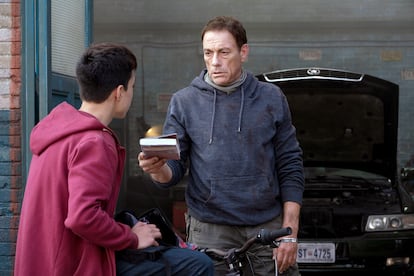
‘Despite Being An Action Star, He Is Very Insecure And Shy’: Jean-Claude Van Damme’s Downfalls And Comebacks

Ciudad Real Airport was one of the great fiascos of Spain’s property bubble era, a ghost airport that cost up to €1 billion ($1.16 billion) and was eventually auctioned off for a fraction of that amount.
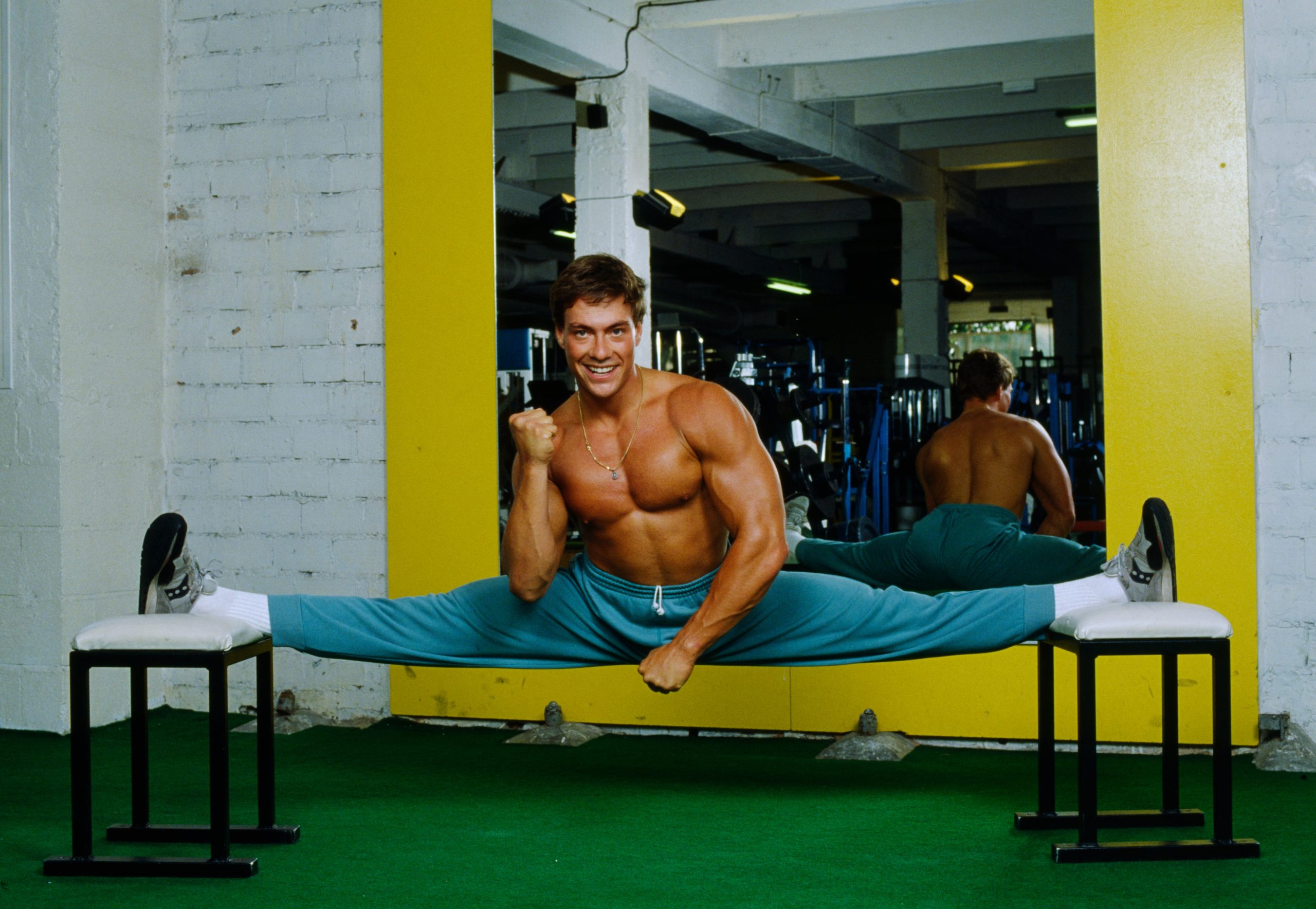
Yet some might consider it money well spent when they learn that it served as the setting for The Epic Split (2013), Volvo’s astonishing advertisement in which Jean-Claude Van Damme performed his most famous pose, the spagat (a 180-degree leg split), standing between two moving trucks to demonstrate the vehicles’ stability. With 127 million views on YouTube alone, the commercial rivals some of the action star’s most famous films in popularity, including Kickboxer (1989), Street Fighter (1994) and Universal Soldier (1992).
The spagat is also the concept that cultural journalist and filmmaker Lorenzo Ayuso, 39, uses as the starting point for his in-depth study of the Belgian actor’s career in Van Damme. El héroe de Vitruvio (Van Damme: The Vitruvian Hero), a nearly 700-page book. The cover, illustrated by Azahara Gómez, is, naturally, a recreation of Leonardo da Vinci’s drawing of the ideal proportions of the human body, except that Van Damme is doing the splits, something the Renaissance genius had not factored into his calculations.
“Van Damme has always been searching for balance, something that’s hard to maintain in an exercise like the spagat. That’s why it worked as an image to talk about his two extremes,” the author explains.
That duality — contradictions and tensions — has marked the star’s career and shapes Ayuso’s journey through his filmography. The writer identifies four periods: Kumite (1986-91), films centred on martial arts tournaments; Deluxe (1991-99), his leap into big-budget Hollywood productions; Via Crucis (2001-08), when he descended into the direct-to-video market; and In Pro Per (2008-18), his reinvention through semi-autobiographical projects.
Ayuso admits that his own evolution as a Van Damme fan ran in parallel to the actor’s career. “I saw Kickboxer when I was four and two images stuck with me: Tong Po [the villain] kicking a beam and, above all, Van Damme stuffing his fists with resin and glass for the final fight,” he says.
“All that martial arts mythology had a huge impact on me,” he continues. “The usual thing happened: I took up karate and rented all his films. Then I hit adolescence, studied audiovisual communication and went through a period of distance. It seems that when you want to take cinema seriously, certain genres, actors or films no longer fit with what a true cinephile is supposed to admire.”
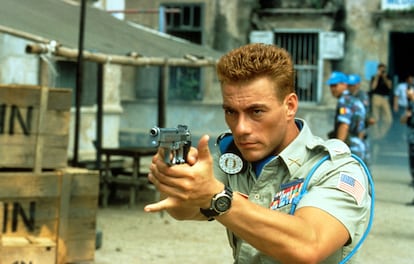
In 2008, something changed, both for Ayuso and for the press, which had traditionally loathed Van Damme’s films. With JCVD, the actor ventured into autofiction in a drama in which he played himself. Confessional in tone, the film stripped away his status as a martial arts star and revealed a flawed, erratic human being beneath. At least in the eyes of many critics and viewers, the scandals surrounding his cocaine addiction, multiple marriages and bouts of unprofessional behaviour were atoned for, and he received the best reviews of his career.
“When I saw it, I felt the need to reconnect with him,” the writer says. “I went back to his films and discovered someone who had done more interesting things than he’s credited for, who doesn’t fit the stereotype of an action hero.”
For Ayuso, Van Damme deserves to be considered an actor-auteur, someone who leaves a distinctive stamp on his films even when he is not directing or writing them. That is not to say he never worked behind the camera: he made his directorial debut with The Quest in 1996. While less invested viewers may see the exploits of various muscle-bound action stars as largely interchangeable, Ayuso argues that only Van Damme could have made films such as Bloodsport (1988) or Lionheart (1990).
“They are very distinctive and idiosyncratic,” says Ayuso. “That comes from his unusual mix of influences, combining martial arts with his European background. He’s always said that his idols are Alain Delon and Jean-Paul Belmondo, actors with a screen presence very different from that of the classic American hero. Another fascinating thing about Van Damme is that he has become, almost accidentally, a very good storyteller of his own life. He’s also a tough guy, but very graceful. His screen persona is difficult to replicate.”
Recurring themes also run through Van Damme’s films. The most obvious is the doppelgänger: stories in which he has a twin, a double or a clone, someone he may either join forces with or confront. In a 2024 EL PAÍS article, psychologist David C. Hayes, an admirer of the Belgian martial artist, linked this motif to the bipolar disorder Van Damme has spoken about publicly, describing it as a device that “highlights the struggle with oneself”.
“From the start, Van Damme has had many conflicts about what he wanted to be,” says Ayuso. “In his youth he trained in karate and ballet, two very different disciplines, although the latter gave him flexibility he wouldn’t otherwise have had. Double Impact, the film where he establishes the twin device, allows him to preserve aspirations of stardom while showing he can express himself in different ways, that he’s not limited to one register or merely a physique.”
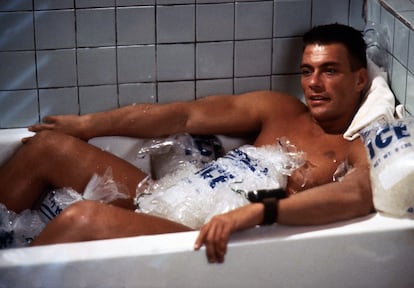
“I don’t know if I want to fuck you or fight you”
During the promotion of the frenetic Hard Target (1998), Van Damme recounted to a journalist an epiphany he experienced in Hong Kong as a result of cocaine use. In his hotel room, he wrote 80 pages straight while analyzing his emotions.
“I wrote and wrote, and I nearly passed out. I was dying. I saw my body lying there. I felt cold, I felt hot. I felt fear. I didn’t feel like a man or a woman,” he said.
Beyond illustrating the destructive spiral he was caught in during the 1990s, the episode highlights another distinctive aspect of the actor: the gender fluidity of his screen persona. Once again, Ayuso turns to the spagat to explain the idea. “As an exercise, the spagat has often been seen as feminine,” says the writer. “This breaks with the idea of the action hero in constant movement. The spagat is based on the passive display of physical capacities.”
Another example of this kind of pure display can be found in one of the most memorable scenes in Van Damme’s filmography, in Kickboxer, when he provokes a group of bar toughs with a wildly uninhibited dance routine.
But according to Ayuso, “the film where it’s most evident is Lionheart. In an illegal fight, one of his opponents tells him: ‘I don’t know if I want to fuck you or fight you.’ The real antagonist is the woman who puts him in that circuit, trying to turn him into her slave and increasingly sexualize him. There is an obvious desire to put himself on display, to show off his body. He likes to be looked at, to be both subject of action and object of desire.”
The Madrid-based author also devotes attention in his incisive book to one of the defining trademarks of the Belgian star’s films: the “butt shot.”
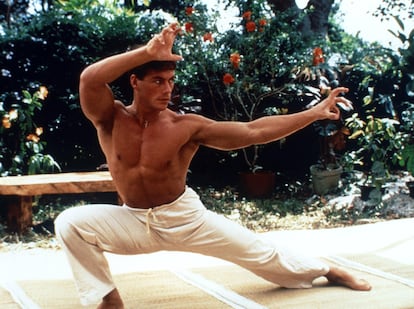
“The female gaze is very much present in his films,” Ayuso argues. “There is a commercial element to it. He knows he has an exceptional physique, and that by taking his clothes off he can reach an audience that probably would not otherwise watch his movies. The action scenes are sometimes framed as a female fantasy, and they can verge on parody, as in Inferno, when he is in the middle of a threesome with two women, yet what really matters is his physique.”
To top it all off, the scene ends with an elderly female voyeur peering through the window. “It is also about pushing the body to its limits and blurring gender boundaries. Bodybuilding is ultimately based on enlarging and exaggerating the same muscles, so male and female bodies tend to resemble each other,” says Ayuso.
Van Damme has been married for decades to bodybuilder Gladys Portugues, and their daughter Bianca is a martial artist.
Trained in Belgium by martial arts master Claude Goetz, Jean-Claude Van Damme arrived in the United States with a French-speaking accent he never lost, questionable acting skills and a determination to make it in movies. From his first significant role in the 1986 martial arts classic No Retreat, No Surrender, in which he played the nemesis of a young fighter trained by the ghost of Bruce Lee, he advanced the only way he knew how. Cannon Films founder Menahem Golan, the first major producer to back him, was never particularly impressed, but Van Damme’s athletic and acrobatic abilities were impossible to ignore. His reputation for being difficult, often delivering real blows during choreography, did little to endear him to colleagues.
The success of Universal Soldier and Timecop (1994) turned him into a major star and briefly shook the dominance of action cinema’s reigning kings, Arnold Schwarzenegger and Sylvester Stallone. He also helped reshape Hollywood action films by bringing over some of the brightest talents from Hong Kong cinema, including directors John Woo, Ringo Lam and Tsui Hark. But poor management and poor handling of fame, coupled with his self-destructive tendencies, eventually brought him down.
“At this point, any Van Damme fan knows that he has a tendency to sabotage himself,” Ayuso admits. “No matter how much of a muscular action star he is, apparently very tough and rugged, he is actually quite insecure and shy. At times, he has been attached to promising projects that failed to live up to their potential because he refused to compromise with directors, demanded changes or interfered in the editing process out of a need for control. At other times, he seems afraid that he’s the butt of a joke, or afraid of taking the leap and crashing.”
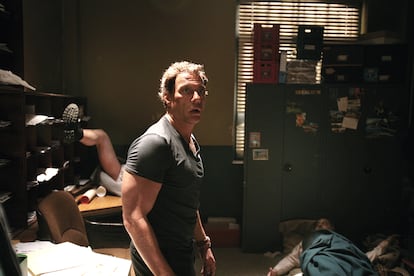
In Van Damme: The Vitruvian Hero, Ayuso recalls how JCVD nearly didn’t happen when, shortly after production began, its star considered walking away from the project. The crisis was defused only after an emergency visit from Mabrouk El Mechri, the film’s director and a devoted Van Damme fan, who reassured him that the film was not intended to humiliate him.
In recent years, besides showing a greater willingness to poke fun at himself, as in Jean-Claude Van Johnson (2016), the series in which he plays a secret agent posing as an actor, the Belgian star has taken his screen characters in a darker direction. In the belated sequels Universal Soldier: Regeneration (2009) and Universal Soldier: Day of Reckoning (2012), for example, the former hero becomes almost indistinguishable from a killer or a psychopath, a shift that can also be read as a rebellion against being confined to a single archetype.
Among his future projects, Van Damme has spent the past 16 years teasing a second directorial effort, Frenchy (formerly known as Full Love, Soldiers and The Eagle Path). The 2010 film has yet to be released as a result of repeated re-edits and the shooting of additional scenes.
His most notable return to the headlines came after allegations surfaced in April last year linking him to a purported human-trafficking network in Romania in 2015. No formal charges have been brought against the actor, who has denied any involvement, and no significant developments have emerged since.
“Personally, the accusations left me quite disturbed,” Lorenzo Ayuso laments. “From what I could dig up, it seems the case has stalled. Again, without knowing more, it’s one of the reasons I try in the book to establish how Van Damme has created a cinematic personality that is larger than the person. A projection of what a hero is isn’t necessarily reality.”
Sign up for our weekly newsletter to get more English-language news coverage from EL PAÍS USA Edition

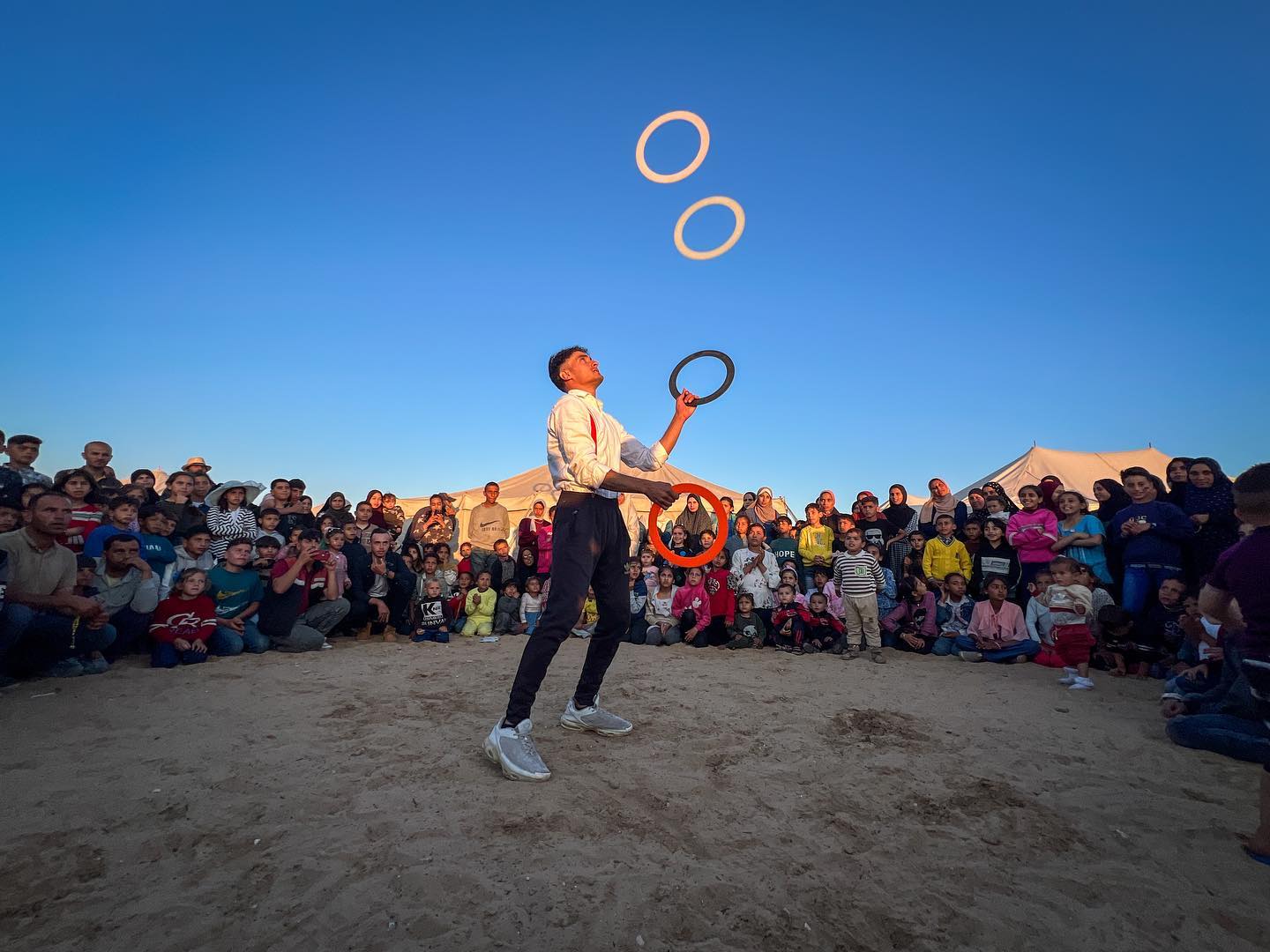
In 2018, after spending his adolescence in an Israeli-blockaded Gaza watching videos online about circus activities abroad, Muhammad Jader decided to bring what he had learned to his community. After waiting a decade to painstakingly acquire the necessary equipment, he and nine other Palestinians opened the Free Gaza Circus.
The aim was to “spread circus culture” among children and young people through workshops and courses based on what they had learned on social media. In a “modest space” they set up in the Jabalia refugee camp in northern Gaza, they began teaching those skills, he recalls today, eight years and much suffering later. The project, which he founded with his brother Yusef, grew steadily until it reached 480 students at a time when leaving Gaza was already difficult.
In October 2023, Hamas launched its surprise attack and Israel began bombing the enclave, killing hundreds of people a day and ordering the displacement of more than half of Gaza’s then 2.3 million residents from the north, where Jabalia is located, to the south. “We didn’t know where to go or what to do. We left all the equipment behind in the middle of the bombardments. For a month, we were simply traumatized,” he remembers.
As Benjamin Netanyahu’s government turned life in Gaza into a mix of attacks, repeated displacement, hunger and destruction, teaching circus tricks would have seemed like an ill-timed luxury. Jader, displaced from his native north to the southernmost city of Rafah, realized that the circus could no longer be about skills. It had to become a tool for mental health and survival.
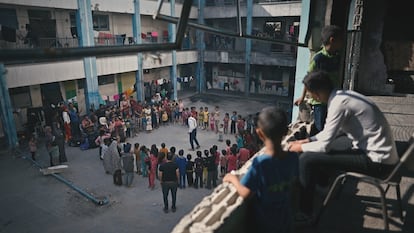
“We sat down and decided we had to use our energy to start giving our people hope. To make them feel safe for a while and break the routine of tension and bombardment. Until October 7, 2023 [when the bombings began], our goal was training and teaching. When the war started, it became about providing emotional and social support through activities in the displacement camps. About distracting children and young people from the bombing and destruction around them,” he says during a patchy phone call. Many Gazans rely on mobile signals from neighboring Egypt or Israel, or use international SIM cards, because Israel has barred journalists from freely entering Gaza for nearly three years.
A loudspeaker and scraps of fabric
The first thing they did was buy a small loudspeaker. Then they set about searching through the rubble for scraps of fabric and colorful clothing, which they stitched into their own clown costumes.
The circus shifted its focus to free outdoor performances aimed at bringing smiles amid adversity, using little more than red noses, juggling balls and stilts made from salvaged pieces of wood.
The systematic destruction of buildings left most Gazans living in tents. During the summer, this new version of the circus would wait for the fierce daytime heat to subside before gathering crowds of all ages eager for a brief escape from the daily routine of queuing for food and drinking water from humanitarian and charitable organizations, or from hours spent scavenging wood or even plastic among the rubble to use as fuel for cooking.
“Older people came too, and it was very moving to see that we were putting smiles on adults’ faces as well,” recalls Jader, now 27. “They had no work, they were sitting around with nothing to do, and afterward they would tell us how happy they were and asked us to keep coming.”
“When the army withdrew from Khan Younis, we went there to perform and saw more smiles on the faces of elderly people than on those of children,” he continues. “That convinced me even more that the circus is very important in this situation.”
Created as a permanent educational initiative, the circus was thus forced to reinvent itself as a traveling troupe focused on psychosocial support. According to UNICEF, virtually all of Gaza’s 1.1 million children require mental health and psychosocial support services. Even before the invasion, Gaza had only one psychiatrist for every 100,000 inhabitants.

In the spring of 2025, Israel intensified its use of hunger as a weapon of war by preventing any food from entering Gaza. The result was famine for more than a million people, with dozens of emaciated children dying from starvation.
The circus decided to stop. “Children wake up and go to bed hungry […] We cannot offer psychological support to people who have not been able to eat anything. Even we, as performers, are exhausted from hunger and worn down by this situation,” they said in a statement.
That October, U.S. President Donald Trump imposed a ceasefire on Netanyahu in Gaza, and the circus resumed its activities. Israel continues to carry out airstrikes, with 1,320 people killed during the 10 months of the ceasefire, controls 60% of Gaza, prevents reconstruction in the devastated territory and still restricts the entry of aid. But the attacks are far less intense, the constant displacement has become a thing of the past, and there is considerably more food available in the markets.
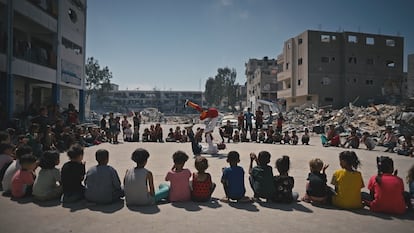
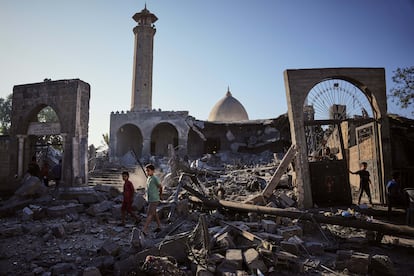
Since this was the closest thing to stability they could hope for in the short term, they resumed training in May. Not in Jabalia, where the center that once housed their activities now lies in ruins, but in Deir al-Balah, the new home of hundreds of thousands of displaced people. And not with the full team. Of the 10 partners who founded the circus, three have been killed during the Israeli invasion. Only four of the survivors have managed to reunite and restart training and educational activities in a tent provided by the Palestinian philanthropic foundation Tamer, in collaboration with UNICEF.
Last January, they took advantage of the ceasefire to return to the original site and search for equipment among the rubble. “We only recovered simple things,” like carabiners or mats, “but it gave us hope,” Jader recalls. The most expensive and hardest-to-get items remain buried there, like the bicycle or the unicycle and the rigging needed to hang aerial silks. “Outside Gaza, they’re easy to find, but for us, getting them in the first place was like finding treasure,” he says.
That is why the circus focuses on teaching floor acrobatics and clowning, which require fewer resources. And in a Gaza where few people speak of the future with any sense of hope, the project survives largely through personal commitment. “We don’t have projects, nor a clear plan, nor steady support, nor an operating budget,” Jader admits.
For now, though, he is worried about something more immediate: the nearly 190 children enrolled in the activities. “I think,” he says, “I have a problem with the size of the tent.”
Sign up for our weekly newsletter to get more English-language news coverage from EL PAÍS USA Edition

Luxury Villas For Sale, Estepona – ProjectL1

WATCH: Demolition Finally Begins Of Doomed Two-Star Hotel Ibis In Malaga – Four Months After Devastating Fire Gutted Building

Tan Decorativos Como Prácticos: Los Flexos De Colores Que Darán Personalidad A Tu Habitación


-
Latest2 weeks ago
Six EU Countries Urge Windfall Tax On Energy Firms
-

 Antonio Hidalgo2 weeks ago
El Deportivo Agua La Fiesta Del Málaga En Su Debut Liguero En Casa
-
asylum seekers2 weeks ago
Europe splits over migrant returns as Spain refuses Italy transfers
-

 %2 weeks ago
TikTok Changes How Gen Z Finds Holidays
-
Costa del Sol2 weeks ago
Mijas police step up rubbish patrols as residents complain about dumped waste
-

 Uncategorized2 weeks ago
Ferrari F1 star Charles Leclerc teases major family event:
-
Latest2 weeks ago
6,000 Lost Bags And 270 Flights Cancelled: Barcelona Airport Strike Rages On
-
European News2 weeks ago
Spain faces potato price uncertainty as France loses nearly a quarter of its crop