
Baja California
The Two Borders Of Mayito Flaco

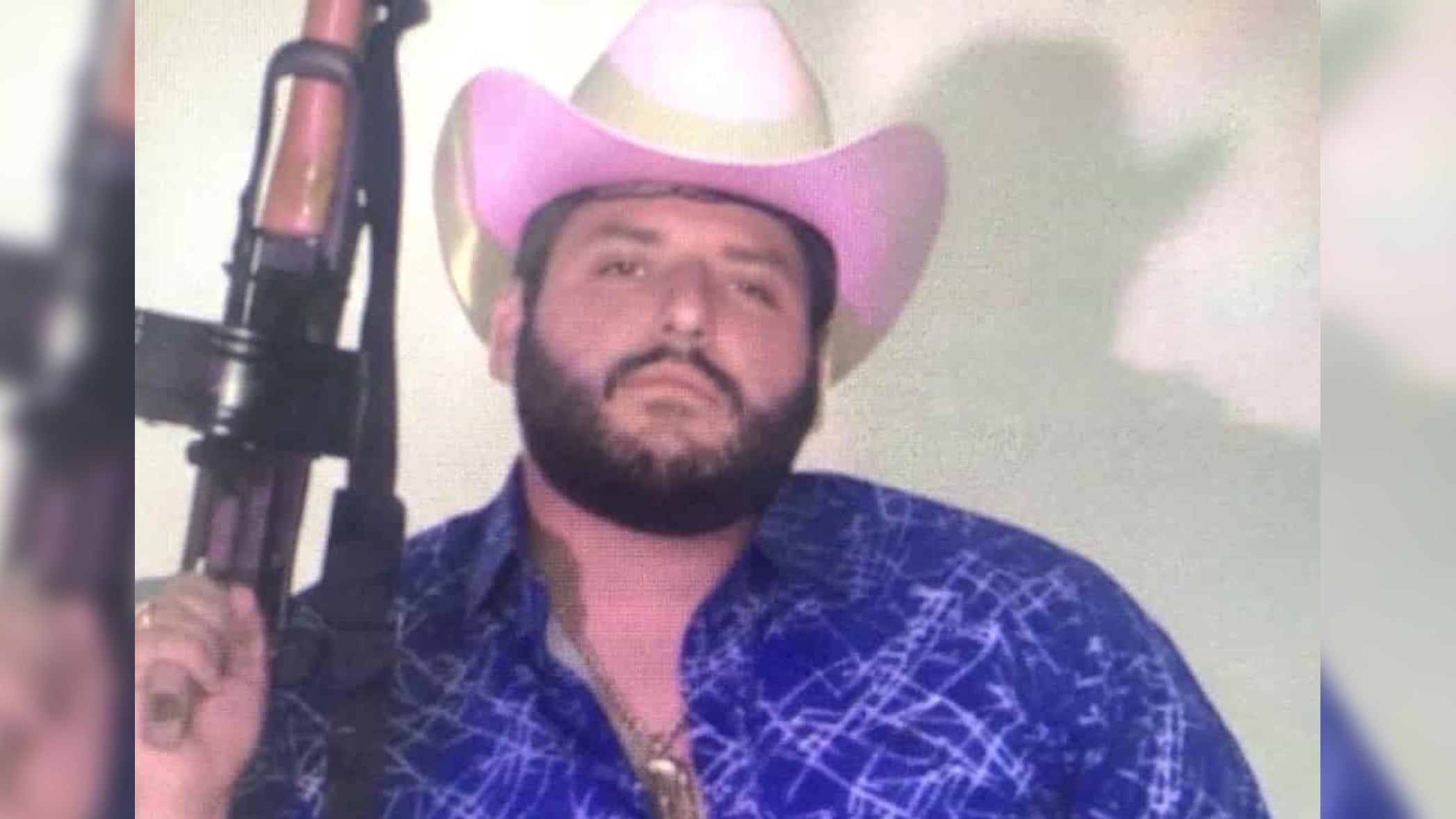
On the day of his sentencing hearing in New York this summer, Ismael “El Mayo” Zambada read a letter overflowing with remorse. After a decades-long career in drug trafficking, the former leader of the Sinaloa Cartel said his goodbyes with a mea culpa for everything he had done, without expanding greatly. Given his expected influence over the regional underworld, he dared to send a message to young people. “Choose a different path,” he said. “There is no honor in violence nor anything lasting in crime; they only bring pain and loss.” It is not known whether his second-born son knew about his father’s letter. But it is fairly clear that, if he did, he paid it no heed.
Ismael Zambada Sicairos (Anaheim, California, 1982), known as “Mayito Flaco,” leads the offensive that his criminal faction, nicknamed La Mayiza, has waged for two years against their former allies, Los Chapitos, led by the sons of Joaquín “El Chapo” Guzmán. Typical of narcocorrido narratives, the battle answers to the latest link in a chain of betrayals between the two sides — some more explicit than others, some apparently inevitable. Patriarch of the family clan and a key cartel figure, El Mayo said in an earlier letter that he was taken down because Joaquín Guzmán López, one of El Chapo’s sons, had betrayed him. He was seized, put on a small plane and taken to the United States, where both capos were arrested.
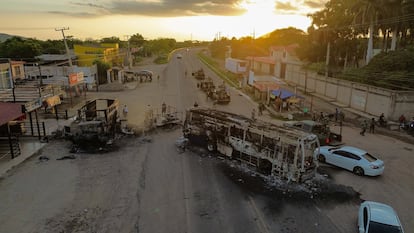
That happened at the end of July 2024, an episode exhaustively covered in the media. Analysts and experts predicted a war. They were not wrong. For two months the factions sharpened their knives, and in September the fighting began. It started in Culiacán, the capital of Sinaloa, and over the following months spread across the state. Known for the culiacanazos — urban guerrilla-style actions launched to protect its leaders from possible arrests — Los Chapitos had carved out a place in Mexico’s narco mythology. The same could not be said for Mayito Flaco, whose rise is explained by this current war and by his growing importance.
Little is known about what El Mayo wanted for his children, although it is evident that he never tried to dissuade the eldest from following in his footsteps. Vicente Zambada Niebla, known as “Vicentillo,” began trafficking drugs to the United States at the end of the 1990s, when his father was consolidating his control over Pacific routes. El Chapo Guzmán had been arrested in 1993, and El Mayo, his partner, took over routes and contacts. A ranch man raised amid the hardships of southern Culiacán, his firstborn benefited from his father’s networks. The problem for him was that, unlike El Mayo — who was imprisoned after decades of eluding the authorities — Vicentillo was caught in midstream.
Zambada Niebla was arrested in 2009 and extradited north the following year. He served 11 years in prison and was then released, a reward for good behavior. Vicentillo submitted to the Department of Justice’s prosecutorial pressure and accepted a cooperation agreement. He testified, inevitably, at the trial against El Chapo Guzmán, where, after implicating him, he offered his own form of apology. “My compadre Chapo is not my enemy,” he said. “He knew I would testify because I pleaded guilty and agreed to cooperate with the prosecution.” Accounts of that trial say Vicentillo lifted his chin to greet El Chapo, and El Chapo returned the gesture.
El Mayo received all those reports from the remoteness of the Sinaloa mountains. Did the case against Vicentillo change his worldview? Who knows. In any case, any advice he wanted to give his children arrived too late. The youngest, Serafín, had been arrested in 2015, at the border; the second-to-last, Ismael — with the same name as Zambada Sicairos but a different mother — had been arrested earlier, in 2014, and was extradited. Although he had many daughters, he only had one son still at liberty: Mayito Flaco. The question is whether he had trained him or tried to steer him away from the narco world; whether Mayito Flaco wanted to follow in his footsteps or ignored his father’s misgivings.
All signs point to the former. The U.S. first placed El Mayo’s second-born in the drug trade in 2005. In the first indictment against him, in 2014, California prosecutors alleged that Mayito Flaco, his father, and his brother Ismael Zambada Imperial, known as “Mayito Gordo,” had trafficked cocaine and methamphetamine to the country at least since May 2005. That date — May 2005 — is a surprisingly specific detail. It is possible that the first indictment drew, at least in part, on revelations from two distributors in his U.S. network, brothers Margarito and Pedro Flores, although that seems unlikely given that both worked in Chicago, not California. What is certain is that the Flores brothers clearly signaled Zambada’s intentions: he wanted his sons to succeed him.
Mayito Flaco’s movements appear here and there in official documents since 2014. In military intelligence reports leaked to the public by the hacker group Guacamaya, the Mexican army placed Zambada Sicairos in Culiacán in 2017 as part of the Sinaloa Cartel’s structure in the capital. It does not indicate any rank, but of the 14 operatives listed in the hierarchy, he is the only one shown in Culiacán; the rest appear in other municipalities. Only one casts a slight shadow over him: Kevin Alonso Gil, Los Chapitos’ head of security, arrested more than a year ago and located in the town of Jesús María. This report is curious because the war between the factions expanded the idea that it was Mayito Flaco who was trying to take Culiacán, Los Chapitos’ stronghold, not the other way around.
Although perhaps it is not so curious, because in another report, from 2020, the III Military Region placed Mayito Flaco as head of the “Pacific Cartel” in Quintana Roo. Analysts noted the criminal group had a presence in every municipality of that state, from Tulum to Benito Juárez, the official name of Cancún. It is not known exactly what he did afterward, but the Treasury Department illuminated his network in Baja California on September 29, alliances it apparently began documenting in 2023. They may have existed earlier; they may have served him from the south. What seems clear is that Mayito Flaco became the man of both borders, the northern and the southern.
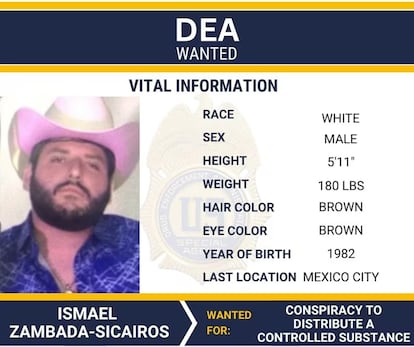
Now a priority target for Washington, the DEA followed developments this Wednesday with the release of its updated most-wanted list. In Mexico it surprised many that the last known location of the alleged criminal was the country’s capital. Everyone imagined him fighting in the Badiraguato highlands, yet the leader of La Mayiza had been moving through the heat of Mexico City’s summer. Mayito Flaco is the last remnant of the drug trade, just like the remaining Chapitos who are still at large. Like so many others who walked the paths of the narco world and, when the time came, had to go into hiding.
Sign up for our weekly newsletter to get more English-language news coverage from EL PAÍS USA Edition




Baja California
US Treasury Targets ‘Mayito Flaco’ Network, Including Baja California Governor’s Ex-Husband

The U.S. Department of the Treasury struck on Tuesday at the criminal network led by Ismael Zambada Sicairos, alias Mayito Flaco, leader of a criminal organization operating in Sinaloa, Durango and Baja California, among other regions of Mexico. The son of longtime Sinaloa cartel boss Ismael Mayo Zambada, Sicairos appears as a person of interest to the U.S. government, which has sanctioned a total of 21 individuals, as well as 25 companies linked to the network.
Among the 21 individuals, in addition to the organization’s leadership, is Carlos Torres, the former husband of Baja California governor Marina del Pilar Ávila, of Mexico’s governing party Morena. Torres and Ávila have been at the center of one of the great controversies in the country’s public life since last year. In May, the governor and her then-husband announced that the United States had canceled their visas. Rumors about Torres’ ties to organized crime began to emerge in the media. At the end of the year, Del Pilar announced her separation from Torres. In January, Televisa’s N+ Focus reported that the Attorney General’s Office (FGR) was investigating Torres for alleged links to organized crime, a situation that was later confirmed.
After their separation, Ávila and Torres tried to cushion the blow. Torres said that “it is not an investigation based on facts.” For her part, the governor pointed out that “Carlos has already issued a position. I am convinced that the Attorney General’s Office is an extremely serious institution that is going to carry out an in-depth investigation and the facts will be clarified.” The US Treasury statement now contends that “this Sinaloa Cartel-enabled narco-corruption has reached the highest levels of the Baja California state government. At the center of this narco-corruption scheme is the ex-husband of the Governor of Baja California, Carlos Torres, and his brother Luis Torres.”
The OFAC accuses Carlos Torres of using “his political influence to facilitate cartel activities and protect the Sinaloa Cartel from government and law enforcement intervention in Baja California.” The agency says that Torres has an alliance with Juan José Ponce Félix, alias El Ruso, the strongman of Mayito Flaco in Mexicali, a city east of Tijuana and one of the strongholds of his criminal group in Baja California. In addition, it says that Torres received payments from the criminal group through Pedro Mendivil, former director of Public Security of Mexicali, arrested in July for crimes of forced disappearance, vehicle theft and criminal association. Mendivil was later released.
U.S. authorities also link Torres to Rafael Buenrostro Marín, a former Customs official assigned to Chihuahua and former legislative advisor to the Baja California state government. The Treasury places Buenrostro near another of the leaders of the Mayito Flaco faction, Jose Angel Rivera Zazueta, alias Don Flaco, arrested last week in Mexico City. At the time, the authorities said that Zazueta is viewed as a coordinator and financier of an organization dedicated to the transfer of chemical precursors from China to Mexico and the United States.
Following the publication of the OFAC statement, the Mexican government’s Financial Intelligence Unit announced that it will include “the subjects included in OFAC’s designation,” including Torres, “to the Blocked Persons List (LPB), as a preventive measure of an administrative nature.”
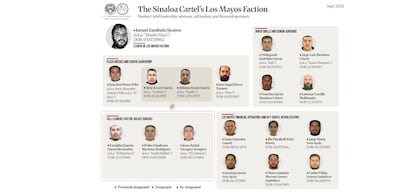
Beyond Torres, El Ruso, Zazueta and Sicairos himself, the OFAC statement describes for the first time in detail some of the most important circles of the organization. For example, it establishes the criminal leader’s close circle, made up of the Mendoza Uriarte brothers, Jorge Luis and Francisco, workers that Sicairos inherited from his father. Jorge Luis, alias Güero Chompas, “is now the head of security for Los Mayos,” according to the agency. Also included in that group is Hildegardo Gastelum García, alias Aldo, “one of Mayito Flaco’s most trusted advisors, as well as a significant narcotics trafficker, and the owner of a Culiacan-based hotel business who uses his illicit revenue streams to finance Los Mayos’ war against the Chapitos.”
The aforementioned war refers to the conflict between the two groups following the arrest of Mayo Zambada in July 2024 in Culiacán, after the sons of his old partner, Joaquín “El Chapo” Guzmán, betrayed him and handed him over to U.S. authorities. That movement opened an unbridgeable rift between the two families – Los Mayos and Los Chapitos – and their influential groups, which has left thousands of people murdered and disappeared in the state since then. Until now, the group hardest hit in the war seemed to be Los Chapitos, also besieged by the authorities. The arrests of members of the opposing group in recent times have also increased, although the war does not seem to be ending.
Sign up for our weekly newsletter to get more English-language news coverage from EL PAÍS USA Edition
Gibraltar patients get good news as taxis to Spanish hospitals remain available

Gibraltar Patients Get Good News As Taxis To Spanish Hospitals Remain Available
The Sevilla village where the housing crisis doesn’t exist and rent costs just €20


-

 Uncategorized1 week ago
F1 Qualifying Today: Azerbaijan Grand Prix schedule, times and TV channel
-

 %1 week ago
Is Your Supermarket Kefir Really Kefir? Spanish Study Raises A Surprising Question
-
Latest2 weeks ago
‘It’s The Law Of The Jungle’: Pensioner’s Eviction Exposes Spain’s Housing Crisis
-
Barter system1 week ago
British drug dealer swaps cocaine for Pokémon cards in bizarre barter deal
-

 Argentina2 weeks ago
Mexico Joins Latin American Crackdown On Cellphones In Schools
-
Balearic Islands2 weeks ago
Tourists driving to Menorca could soon need a permit and pay to bring their car
-

 Cody Gakpo1 week ago
Xavi Y Klopp Se Reparten Puntos En Su Debut Como Seleccionadores
-

 Austin2 weeks ago
Venezuelan Migrant Shot By ICE In Austin Cites Lack Of Medical Care: ‘How Are They Going To Leave The Bullet In There?’