Connect with us

Delcy Rodríguez

They Have Sold Venezuela With Venezuelans Still Inside

Published

on

they-have-sold-venezuela-with-venezuelans-still-inside

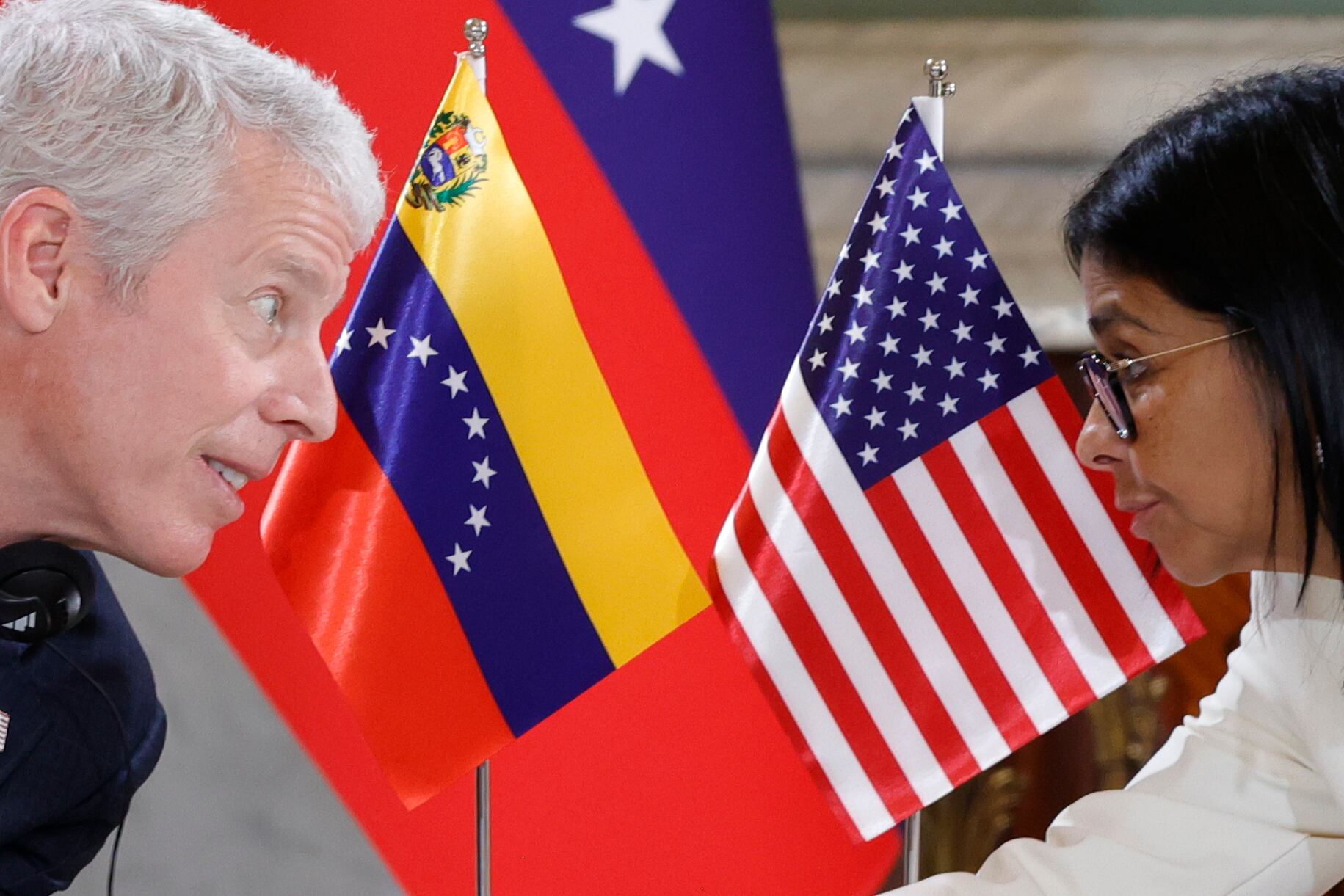
The “biggest oil deal in world history” between Donald Trump and Delcy Rodríguez, brokered through the controversial businessman Alejandro Betancourt, marks a pivotal moment in Venezuela’s history. And it does so for all the wrong reasons: the scale of what was negotiated, the opacity of the process, the lack of democratic legitimacy of those who negotiated it, and the extraordinary powers it grants Washington over Venezuela.

Although it will very likely bring a multibillion-dollar inflow of investment to Venezuela, it is a bad deal. So bad that, for the first time in more than two decades, the opposition and dissident members of Chavismo (the ruling movement founded by the late president Hugo Chávez) have joined in condemning it. From what little has leaked, a troubling conclusion can be drawn: handing the United States 35% of 55% of Venezuelan oil and another 20% at steep discounts, “at no cost to U.S. taxpayers,” and for the space of a century, is an absurdity and a burden that will weigh on generations to come.

They have sold Venezuela with Venezuelans still inside.

More than an oil agreement, this is a Faustian pact. The ruling Chavista government gets what it most needs: political survival. Washington gets what it most desires: privileged access to one of the world’s largest oil reserves and unprecedented oversight over the Venezuelan economy. The immediate benefit may be the recovery of a devastated country. The historical cost, however, is far harder to calculate: a cession of sovereignty on an extraordinary dimension.

That appears to be the agreement’s underlying logic. U.S. Secretary of State Marco Rubio confirmed last week that the United States must control Venezuela’s oil revenues to prevent rulers and elites from stealing the country’s resource wealth again. The irony is obvious: those rulers and elites are the very same people who have been in power for nearly three decades. But Rubio is not seeking to break that continuity; he is seeking to manage it. Because to control Venezuela’s oil wealth, the Trump administration must control the political conditions surrounding it, and that requires stability, not change.

It is a spurious agreement from beginning to end and must be denounced for what it is: the counterpart to the U.S. tutelage over Venezuela that has enabled Washington to control the country’s wealth since Nicolás Maduro’s removal.

But there is more. It is the beachhead for a broader influx of Trump-linked oil, financial and telecommunications companies into the country, a network of allies and business associates that includes figures who have served in his administration and donated to his campaigns. That includes the companies Sable and Primavera, as The Financial Times has reported.

That tutelage has only been possible because the Chavista troika has guaranteed its operation on the ground. The hidden side of the oil agreement is a second, political pact that allows Chavismo to remain in power with the blessing of the White House. In other words, the Rodrigato — the government of acting President Delcy Rodríguez and her brother, Jorge Rodríguez, who is head of the National Assembly — is handing over the country in exchange for power.

Alejandro Betancourt occupies a singular place in this story. The most prominent of the so-called bolichicos, the young businessmen who became extremely wealthy through contracts with the Chávez government, is not a mere intermediary: he is the bridge between the corruption of old Chavismo, the survival of a post-Maduro order and Washington’s interests. According to Marc Caputo in Axios, it was Betancourt who connected Delcy Rodríguez with Marco Rubio in the early hours of January 3, while U.S. troops stormed Fuerte Tiuna. Other Venezuelan sources maintain that his ties to Trump’s circle go back much further. If the Qatar talks at the end of 2025 had already revealed that Delcy was being positioned as Maduro’s successor in a negotiated transition, we now know who helped close the circle, and who has an interest in ensuring that circle is never broken by an election.

Trump confirmed this point when, asked about presidential elections in Venezuela, he replied that “they’re not ready.” The remark was both cynical and revealing. An overwhelming majority of Venezuelans support holding elections in the near term, but elections would introduce precisely the uncertainty that the new architecture of power in Venezuela was designed to avoid.

Therein lies the paradox of the agreement: it may attract the investment Venezuela’s economy needs to emerge from ruin while simultaneously entrenching a system that denies Venezuelans the right to determine their own future and deepens the country’s dependence on Washington under Chavista rule.

Trump has shown little regard for Venezuelan democracy. What matters to him is business and the advantages he can extract from it. If Venezuelans are already happily dancing in the streets, as he has repeatedly claimed, why would they need elections or democracy? Faustian bargains always offer something desirable. That is why they are so seductive. Venezuelans may well see short-term economic improvements. But the hidden cost is existential: it has been achieved through alliances with anti-democratic forces, and it will ultimately be paid for in sovereignty, institutions and the capacity for self-determination.

Venezuela’s ruling elite has already signed on. It has abandoned the defense of national sovereignty and the anti-imperialist struggle that for years served as the ideological justification for its political project. In return, it received a survival bonus.

After several days of silence, María Corina Machado condemned the opacity of a negotiation conducted behind closed doors by a government lacking democratic legitimacy, but stopped short of questioning the Trump administration’s role as the other party to the agreement. That caution is understandable. It is also a mistake: denouncing only one of the signatories is tantamount to accepting the other.

Machado therefore risks becoming trapped within the logic of the Faustian bargain. If Chavismo has traded sovereignty for political survival, she cannot simply wait for Washington to correct the problem whenever it sees fit. Trump is interested only in preserving a power structure that allows him to advance his own interests.

Machado would do well to understand that there are only two ways to emerge unscathed from a relationship with Trump: through absolute submission or by wielding as much power as he does. The first may win favors, but it offers no guarantees. Machado already tried the diplomacy of deference when she presented Trump with her Nobel Peace Prize diploma after the January 3 snub, when the MAGA leader humiliated her by describing her as weak and undeserving of respect. It failed because Trump does not want her. And because he does not want her, he does not see her as the central figure in his Venezuelan project.

There is a third way of dealing with Trump: standing up to him. The best recent example is Canadian Prime Minister Mark Carney, who responded to Trump’s tariffs despite knowing the economic cost to Canada would be significant. Canadians understood that some concessions come at too high a price, and they rewarded Carney with their support.

Machado does not have the power necessary to challenge Trump on equal terms in any arena. But she has something no one else has: the support of a majority of Venezuelans. That is why she should defy him, return to the country immediately, reunite a fractured opposition, re-energize politics and mobilize the public to demand the renewal of the electoral authority and free presidential elections. She must challenge both the Rodrigato and the system of tutelage that sustains it.

But first, she must understand her role in what is at stake and recognize that this may be her last chance. Only then will Venezuela keep alive the hope of reclaiming its freedom and renegotiating the biggest oil deal in world history, rather than going down in history as a de facto colony that never even becomes the 51st state of the Union. And only then will she remain worthy of the responsibility Venezuelans entrusted to her when they chose her as opposition leader with 93% of the vote. The challenge before her is not simply to defeat Chavismo. It is to prevent the Faustian bargain from becoming Venezuela’s permanent destiny.

Sign up for our weekly newsletter to get more English-language news coverage from EL PAÍS USA Edition

Delcy Rodríguez

Miami’s Venezuelan Community Demands Answers From Lawmakers Over ICE Detentions

Published

on

Humberto Castro, a 59-year-old Venezuelan, was driving to work as usual from his home in Doral, where he has lived for eight years, when he was detained by agents from U.S. Immigration and Customs Enforcement (ICE).

“My dad has a work permit valid until 2030. His asylum case is pending. He was on his way to work, driving normally, and they pulled him over and handcuffed him,” said his daughter, Arianna Castro, 29. Her father arrived in the U.S. on a visa and has an asylum application pending, she said. He has no criminal record.

Castro’s case comes amid a wave of immigrant arrests in South Florida that has alarmed the Venezuelan community, which is the largest in the United States. Now, with just three months to go before the midterm elections, they are demanding answers and concrete measures from their congressional representatives.

Two leading exile organizations, Venezuelans Persecuted for Political Reasons in Exile (Veppex) and the multicultural activists group Voice and Expression (Amavex), have prepared a report they sent to members of Congress asking for an investigation into the detentions of Venezuelans with pending asylum claims and other immigration cases.

The report says that Venezuelans in the United States have been affected by the rollback of temporary and humanitarian protections, and that people with pending asylum claims and other immigration cases are being detained for deportation, including to distant third countries such as Liberia. It also notes that the authorities do not publish data on how many detained Venezuelans have criminal records or pending immigration proceedings.

As a point of reference, the report notes that as of July, about 65,765 people were in ICE custody, more than 70% of whom had no criminal record. It also documents at least three cases of Venezuelans detained between July and August despite having work authorization and pending asylum claims.

Helen Villalonga, president of Amavex, says the Trump administration’s immigration policies have “brutally harmed” the community.

Nearly half the population of Doral, a city in Miami-Dade County, is Venezuelan. Last year, the city entered into a 287(g) agreement to cooperate with federal immigration authorities.

Much of South Florida’s Venezuelan community supported Donald Trump in the last election, expecting that he would increase pressure on Nicolás Maduro’s regime in Venezuela and that the mass deportation campaign he promised would target criminals and people with ties to Chavismo, Villalonga says. Now, she adds, even Venezuelans with links to the Republican Party have called her after the report’s publication to say: “This isn’t what we voted for. This isn’t what we were expecting.”

Villalonga says the report is intended to put pressure on South Florida lawmakers ahead of the November elections. While some legislators have expressed sympathy for the plight of Venezuelans, she argues that this has yet to translate into meaningful solutions, and the report calls for concrete results. According to Villalonga, none of the lawmakers have acknowledged receiving the document since it was sent to them.

“We are tired of [lawmakers] issuing statements on social media or sending a letter. What we need are immediate actions in Congress, actions within the Department of Homeland Security, within the State Department,” she said.

The report calls on Congress to hold oversight hearings on the detention of Venezuelans and to require DHS and ICE to publish data on detainees’ nationalities, criminal records and pending immigration cases. It also calls for a Government Accountability Office (GAO) audit of arrests carried out at airports. In addition, it urges DHS and U.S. Citizenship and Immigration Services (USCIS) to review cases individually and pursue alternatives to detention for people with no criminal record who are complying with their immigration proceedings.

“It seems the administration has done the opposite of everything we have been asking for,” said José Antonio Colina, president of Veppex. “We agree that the government should enforce U.S. immigration laws, which seems reasonable. What we do not agree with is trying to criminalize Venezuelan immigration.”

The administration has taken actions that have left many people without legal status, Colina says. “Many who applied for political asylum are now being detained because that is not a status.”

In his view, lawmakers “have to move from rhetoric to action, because the facts and the actions show they have been neither forceful nor consistent.”

“I personally believe they [South Florida lawmakers] have no influence within the White House at the moment. They are not being heard,” he said. Representatives María Elvira Salazar, Carlos Giménez and Mario Díaz‑Balart, all Republicans, did not respond to requests for comment for this report. DHS did not respond either.

Democratic Congresswoman Debbie Wasserman Schultz told EL PAÍS that she is “deeply concerned by ICE’s recent push to arrest Venezuelans, Haitians and other law‑abiding immigrants at airports” and that she has contacted DHS about several issues related to ICE, “including the increase in its operations at airports and in our communities,” but so far has not received a concrete response.

Wasserman Schultz’s office added that several reports “have shown an increase in ICE activity at airports, and not only against Venezuelans.”

However, it noted that for the GAO to open an investigation, the request must come from “senior congressional leaders or the chairs or ranking minority members of committees or subcommittees with jurisdiction” over the issue. “Otherwise, requests are often rejected or go unanswered. The congresswoman does not fall into any of those categories when it comes to ICE oversight, but she is exploring the options available to her to push for an investigation and stronger oversight,” it said.

The issue puts the spotlight on two Miami lawmakers with oversight roles in Congress: Giménez, who chairs the Homeland Security subcommittee responsible for airport security, and Salazar, who chairs the House Foreign Affairs Subcommittee on the Western Hemisphere, which has jurisdiction over relations with Latin America.

Since January of last year, at the start of Trump’s second term, then Homeland Security secretary Kristi Noem revoked Temporary Protected Status (TPS) protections for Venezuelans that the Biden administration had extended through October 2026, as well as humanitarian programs. DHS later terminated the 2021 and 2023 TPS designations.

More recently, the anti‑immigrant offensive has expanded to people with pending asylum cases who had been allowed to hold work permits. ICE agents are now detaining people whose asylum claims remain pending but whose visas have expired. DHS has also allowed certain asylum cases to be referred directly to immigration courts without an interview with USCIS.

Last year, the three Republican lawmakers from South Florida called for Venezuelans with no criminal record who had fled persecution under Maduro to be treated differently, and pledged to “do everything possible” to protect them. In January, Giménez urged Noem to adopt a “case-by-case solution” for exiles, while Salazar backed bipartisan legislation to grant TPS protections to “law-abiding” Venezuelans. In March, Salazar again called for protections for Venezuelans.

Maduro was captured in January in a U.S. military operation and is being held in New York awaiting trial. His vice president, Delcy Rodríguez, is acting as interim leader. The U.S. and Venezuela restored diplomatic relations in March, and last Friday, President Trump announced an agreement under which the United States will take control of 65 billion barrels of Venezuelan oil reserves, more than double U.S. reserves.

Meanwhile, Arianna Castro says her father is being held at ICE offices in Miramar, north of Miami, and she is trying to secure his release on bond. “It feels totally unreal. We came here seeking a better life and all we have done is work, build a life here and contribute to the community,” she said. “My sister graduated from college; I also graduated; I’m a nurse. Now my husband doesn’t want me to leave the house. It’s strange to return to that fear we once had in Venezuela, that we couldn’t go out because we would be persecuted. You can’t live like that.”

Sign up for our weekly newsletter to get more English-language news coverage from EL PAÍS USA Edition

Continue Reading

Ataque Estados Unidos a Venezuela

La Eterna Espera De Los Damnificados En Venezuela Que Viven En Refugios Y Albergues Desde Hace Más De 15 Años

Published

on

Refugio 'La Posada de Catia' en Caracas, Venezuela, el 10 de agosto.

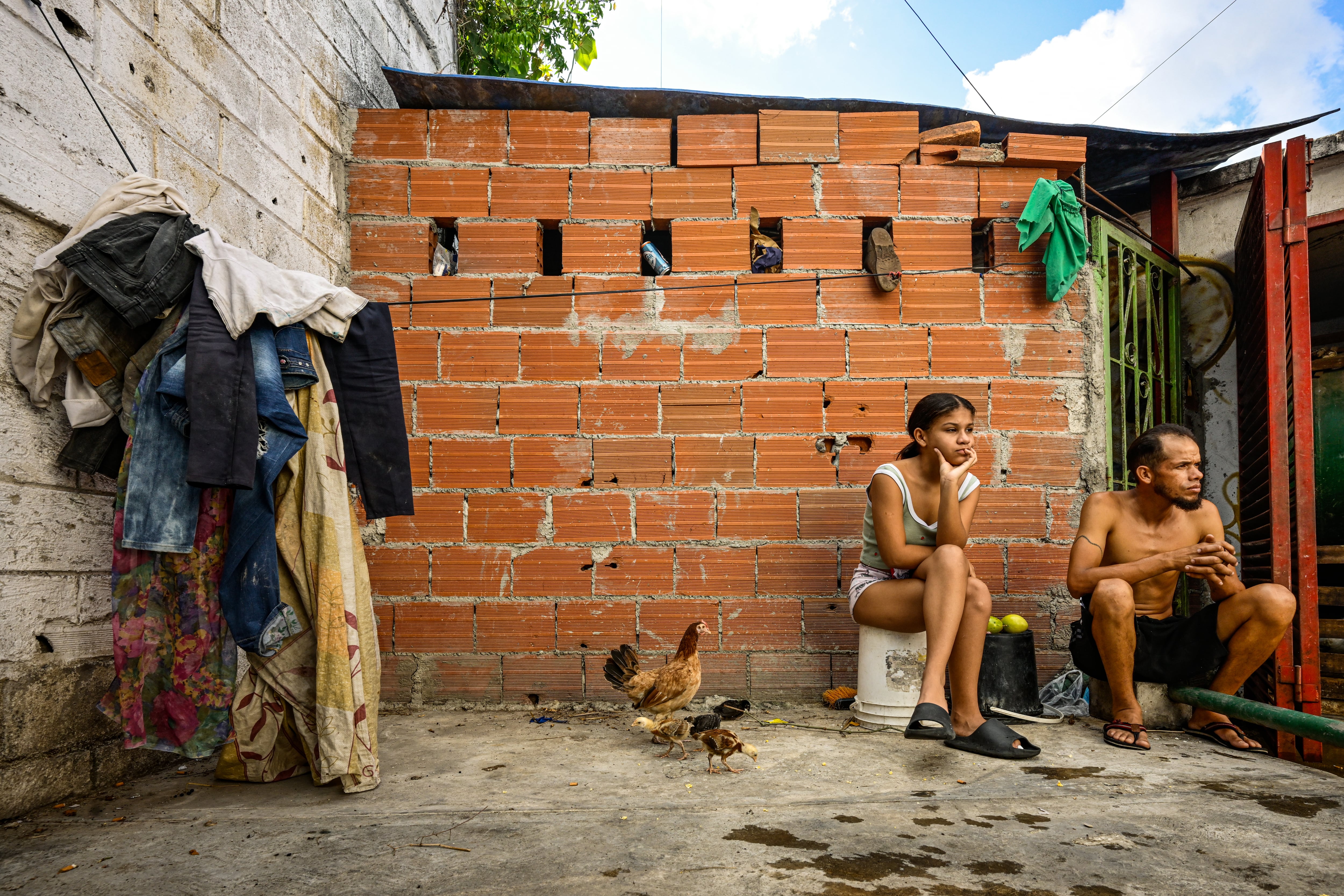
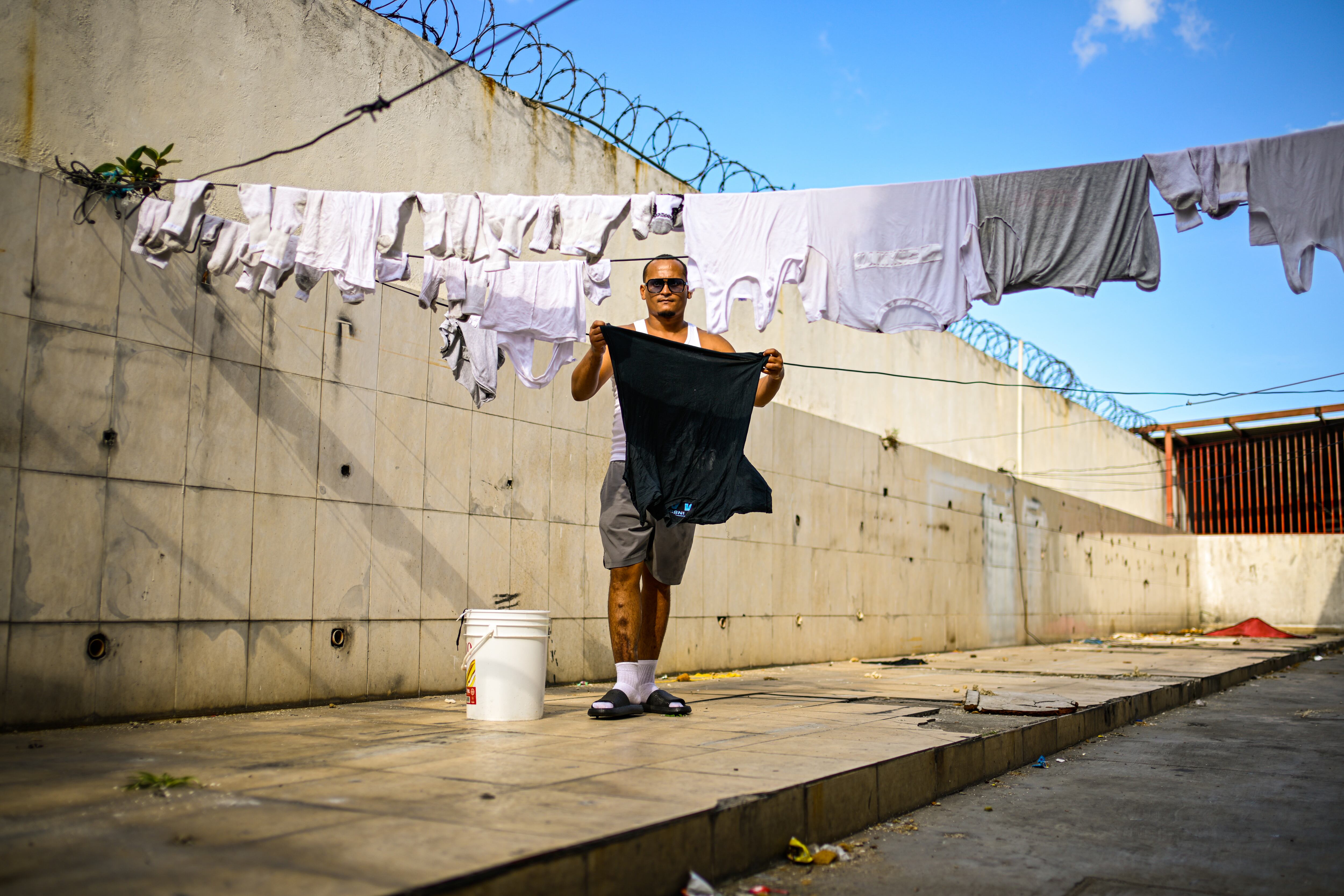
Hace unos años que Magdalena compró una vajilla que soñaba estrenar en la vivienda que pudiera otorgarle el Estado después de haberse quedado sin casa en 2012, cuando se deslizó la tierra en Catia, al oeste de Caracas, a causa de las lluvias, y su hogar se derrumbó junto con los de otras 60 familias. En ese momento fue a parar a un edificio abandonado de la avenida José Ángel Lamas, que ya era refugio de otras familias damnificadas. Algunas de ellas accedieron a una vivienda —incluso en La Guaira, que volvieron a perder después del terremoto—, pero Magdalena nunca pudo salir de ahí. En 2025, después de 13 años, murió en la espera, con su caja de platos aún sin estrenar.
Seguir leyendo

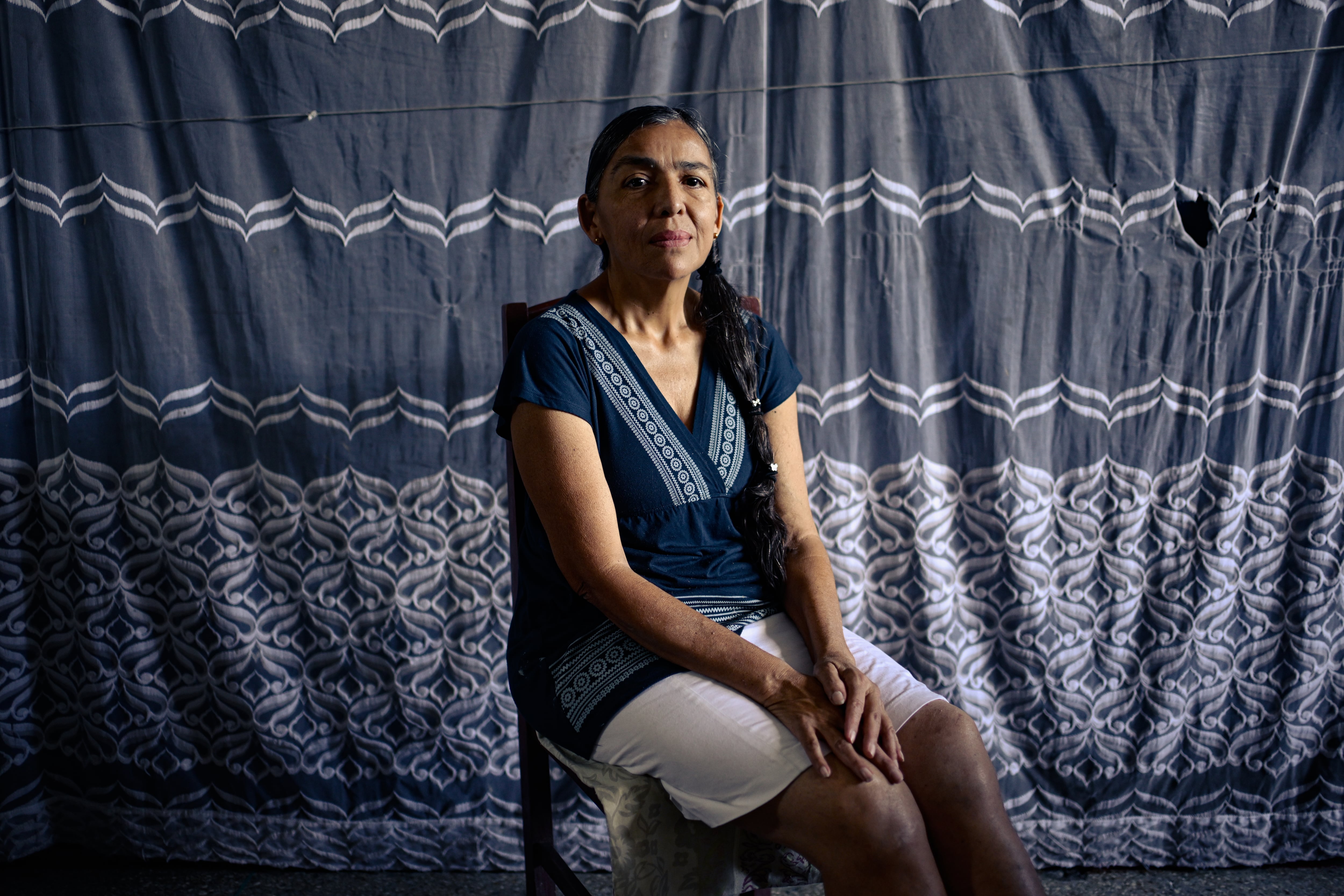
Moraima Afanador en el refugio José Ángel Lamas de Caracas, el 10 de agosto.Yeiker García, tiende su ropa para secarla en el patio del refugio La Posada de Catia.Niños juegan en el refugio La Posada de Catia,en Caracas.Yarceli Diaz abraza a su hijo en el espacio que le asignaron en la Torre Pomarrosa, en Caracas,e l 10 de agosto.


Continue Reading

Alejandro Betancourt

Inside The US-Venezuela Oil Agreements: Big Promises, Little Clarity

Published

on

inside-the-us-venezuela-oil-agreements:-big-promises,-little-clarity

The oil agreement announced between the United States and Venezuela has been touted with great fanfare for the many benefits it is supposedly set to deliver. At the same time, it has been met with surprise, skepticism and disappointment by public opinion in both countries.

In some sectors of Venezuelan politics, concern is growing over the strengthening ties between the United States and the Venezuelan government. The unease remains largely personal and has yet to find organized political expression. There is a growing perception that Washington is maneuvering to shore up the political status quo and has little interest in Venezuela’s opposition leadership.

Discontent is also evident among dissident supporters of the ruling United Socialist Party of Venezuela (PSUV), who have voiced frustration with the government’s decisions. The government and the PSUV party establishment, led by Diosdado Cabello, have closed ranks in a characteristically disciplined show of support for the agreement.

What does the agreement involve?

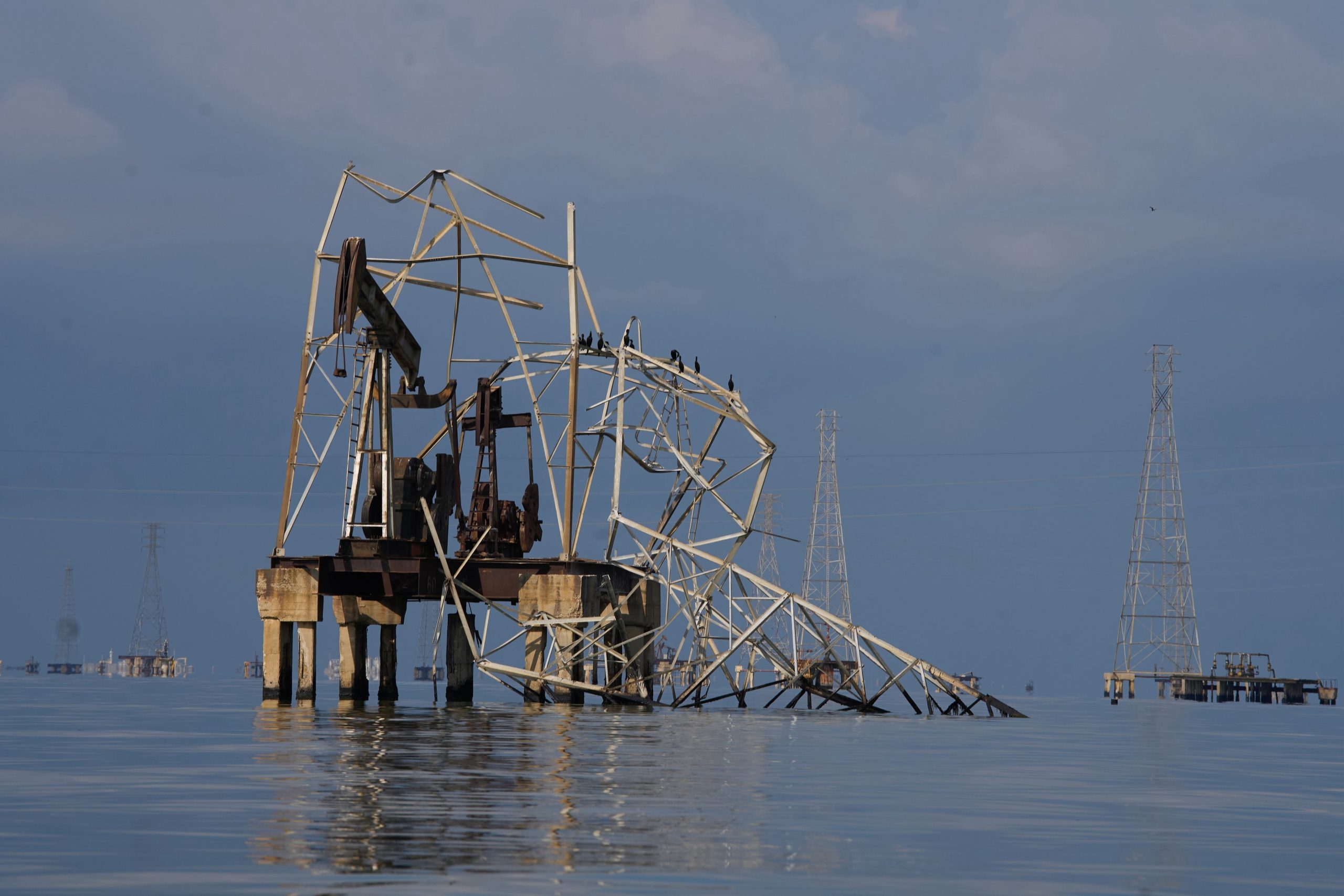
The United States has announced a deal to develop 17 Venezuelan oil fields containing an estimated 65 billion barrels of proven reserves, a figure equivalent to roughly 22% of the country’s total reserves based on the Venezuelan government’s estimate of around 300 billion barrels.

The arrangement takes the form of a long-term grant of development rights. However, the duration is disputed. Venezuela’s government, led by acting President Delcy Rodríguez (Nicolás Maduro’s former vice president), has described it as a preferential 25-year concession, while Washington maintains that the rights will extend for 100 years.

The figures cited so far include about $100 billion in investment and an estimated $209 billion in royalties and tax revenues for the Venezuelan state during the first 25 years of the project.
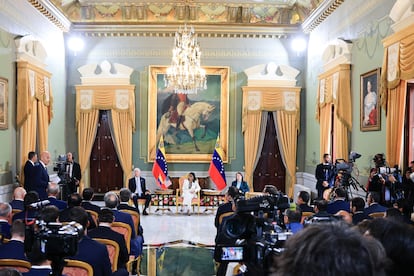
Economist Leonardo Vera, from the Central University of Venezuela, acknowledges that, if realized, these investments could be very positive for the national economy. However, he warns: “We are so desperate for investment in Venezuela that even a deal like this — murky, flawed, and takes the country back to forms of contracting with foreign interests that had already been left behind — is being welcomed by some people.”

Who is Alejandro Betancourt and why is NABEP central?

The agreement will be implemented through North American Blue Energy Partners (NABEP), the company that has been granted the rights to develop the oil fields. The U.S. government holds a 35% stake in NABEP’s parent company through the Strategic Capital Office of the Department of War, while the State Department is guaranteed access to 20% of production at cost and holds a right of first refusal on the remaining 80%. The company’s board must have a majority of U.S. citizens, and Washington has veto power over board appointments.

Vera views NABEP’s concentration of power with concern, warning “it could be used against national interests; it has always been more advantageous to negotiate with several companies.” For the economist, the agreement represents a step backward in Venezuela’s relationship with oil companies and international capital.

NABEP is controlled by the controversial Venezuelan businessman Alejandro Betancourt, who was once close to Hugo Chávez’s government and is now considered an ally of Washington. U.S. Secretary of State Marco Rubio has publicly defended Betancourt, arguing that the arrangement is not an agreement between two countries but rather a partnership between the United States and a businessman with extensive experience in the oil industry and ties to Venezuela’s opposition during the era of Juan Guaidó, the leader who self-proclaimed himself president of Venezuela.

“This transaction will unleash that potential to the great benefit of both Venezuelans and Americans,” Betancourt said in a NABEP statement.

Why is Betancourt such a controversial figure?

Betancourt has been the subject of investigations in Venezuela, the United States, Spain and Switzerland. He was arrested twice in the United Kingdom in 2025 following extradition requests from Spain and Switzerland, the two countries that still have open money-laundering investigations into him. He has never been formally charged and has consistently denied any wrongdoing.

Speaking about Betancourt at Miraflores Palace on Wednesday, Delcy Rodríguez defended the businessman, saying: “He has no outstanding issues with the courts. The problem is that sometimes it is the press that passes judgment on people, not the courts.”
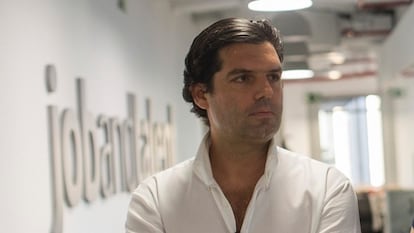
In Venezuela, Betancourt was accused of using his company, Derwick Associates de Venezuela, to orchestrate the purchase of spare parts and second-hand equipment at inflated prices, secure government contracts without competitive bidding, and profit from influence-peddling during the country’s 2011 electricity crisis.

That year, Derwick was awarded contracts by the Venezuelan state to supply, install and bring into operation equipment intended to address the emergency. The crisis would worsen in the following years, particularly by 2014, and has since become a chronic problem across the country.

Despite those allegations, Betancourt has proved adept at cultivating ties with two rival governments and now appears to be at the height of his business influence. Rubio has described the Trump administration’s experience with Betancourt as positive, saying that U.S. authorities have found no information linking him to wrongdoing.

What is the criticism of the deal?

The deal has come under fire in both countries. Critics have portrayed it as a remarkably brazen attempt by the White House to gain control over Venezuelan oil, with the acquiescence of a Chavista government that once made a point of its anti-imperialist rhetoric.

Critics have also questioned whether Washington has effectively sidelined its longstanding commitment to promoting free elections in Venezuela. In an interview with journalist Sergio Novelli, Rubio insisted that democratic elections remain a U.S. objective. But on Wednesday, Donald Trump said that Venezuela is still not ready to hold them.

In Venezuela, discontent is evident across a broad spectrum of society, including academia, labor leaders, the business community, social media, pro-democracy activists and significant segments of Chavismo, the ruling movement founded by the late president Hugo Chávez. The government, by contrast, has remained firmly committed to its optimistic narrative about the agreement.

Among opposition politicians, frustration has been tempered by a reluctance to alienate the United States. Even so, some criticism has emerged from figures who have traditionally been sympathetic to Trump, both because the agreement is seen as legitimizing Rodríguez’s government and because of Washington’s partnership with Betancourt.

In the U.S. Congress, Democrats including Gregory Meeks and Jeanne Shaheen have pressed Rubio over the absence of a clear institutional roadmap linking the economic arrangement to a democratic transition in Venezuela. Their concerns reflect a growing chorus of voices urging Trump to make a more explicit commitment to that goal.

How do Trump and the Delcy Rodríguez government defend the deal?

Both governments argue that they have secured an exceptionally advantageous deal.

The United States says the agreement significantly expands the pool of energy reserves under its sphere of influence. The White House claims that figure will rise from roughly 46 billion barrels to more than 100 billion barrels, while also guaranteeing abundant supplies of oil and inexpensive fuel for the foreseeable future. Venezuelan heavy crude is particularly well suited to the refineries along the Gulf Coast. The arrival of U.S. capital and technical expertise is also expected to curb the influence of China and Russia, which previously operated in some of these fields. This is in line with Washington’s broader strategic objectives, as expressed in the Monroe Doctrine.

For Rafael Quirós, an oil economist and graduate professor at the Central University of Venezuela, the deal is also a “headline-grabbing move to control the collateral damage from the Iran war, which has dragged on and could bog down the White House. It is an effort to improve the [Trump] administration’s narrative and regain ground in the polls ahead of the midterm elections in November.”

Venezuela, for its part, argues that it has secured a major influx of investment and revenue for state coffers. “It does us no good to have the world’s biggest oil reserves if we don’t extract them to meet our people’s needs, worsened by international sanctions and the effects of the double earthquake,” said Rodríguez.
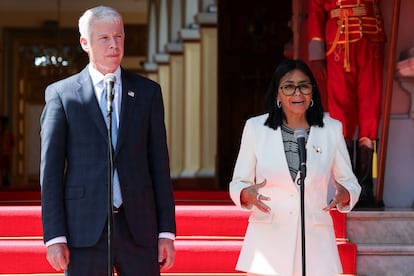
The acting president has insisted that Venezuela retains sovereignty over its natural resources and that the concessions granted under the agreement will help revive the economy once and for all. Many Venezuelans, however, fear that what is taking shape is not so much foreign investment as one country gaining control over another’s natural resources, while at the same time strengthening Chavista rule with Washington’s backing.

What other investments have been announced?

The NABEP agreement has paved the way for a series of new investment announcements by oil companies seeking to expand operations in Venezuela’s oil fields.

On Wednesday at Miraflores Palace, Rodríguez welcomed U.S. Energy Secretary Chris Wright along with representatives of several multinational companies interested in investing in the country, including GeoPark, Keo Capital, Primavera, Aspect Energy and GE Vernova.

Leading the investment push is Chevron, which announced plans to invest more than $7 billion to double its production in Venezuela to about 600,000 barrels per day within five years. The company said the funds would be directed toward its joint ventures with state-owned PDVSA, including Petropiar, Petroindependencia and Petroboscán.

Italy’s Eni also signed an agreement to expand its operations in Venezuela, including at the Junín 5 block. Meanwhile, negotiations advanced with General Electric and other companies to introduce new technology under production-sharing arrangements.

Sign up for our weekly newsletter to get more English-language news coverage from EL PAÍS USA Edition

Continue Reading
Advertisement
Advertisement

Spanish Real Estate Agents

Tags

Trending

Copyright © 2017 Spanish Property & News