
Africa
‘They Should Leave Us Alone And Go Away’: Indigenous Leaders Protest Against Nature Conservation Projects That Are Forcing Them Off Their Land

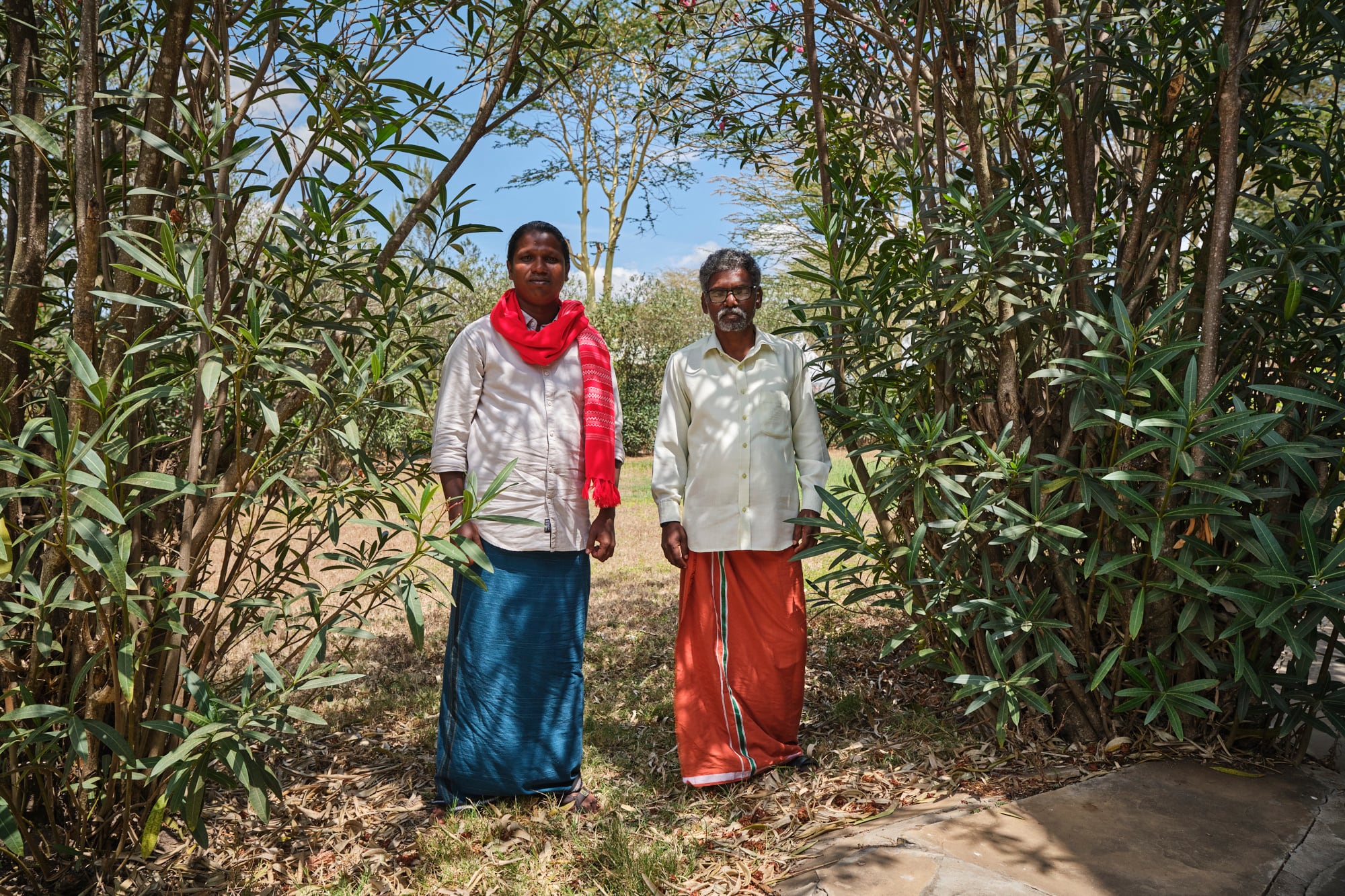
Mirihai Ngilepoi knows what it means that his cattle can’t graze in his Tanzanian village. A carbon-trading and emissions-reduction program restricts the use of his land. Across the Indian Ocean, JA Shivu has witnessed the expulsion of thousands of families. In India, to make room for a tiger reserve, they’ve been kicked off their ancestral lands.
Ngilepoi and Shivu come from two different continents. They belong to Indigenous peoples with distinct histories and cultures. But, when it comes to conservation, their concerns converge: they face the loss of their territory, restrictions on its use and decisions made from outside their communities. They share a staunch opposition to what they call “fortress conservation.” This model, they argue, transforms inhabited territories into protected areas, and ultimately imposes limits on those who have lived there for generations.
At 31, JA Shivu is one of the young leaders of the Jenu Kuruba, an Indigenous tribal group in southern India. Before she was born, her family was expelled from the forests that now form part of Nagarahole National Park, established in 1983. Between the 1970s and 1980s, during the creation of the park, more than 3,000 families were evicted from the forest. Shivu’s family ended up working on a nearby coffee plantation, where she was born and raised. “The working conditions were terrible. My people began to live in a system of slavery that was passed down from generation to generation,” Shivu recounts.
The creation of the park didn’t bring an end to the conflict. In 1999, Nagarahole was also declared a tiger reserve. According to Shivu, since the creation of the protected area, some 20,000 Jenu Kuruba tribespeople have been expelled from their lands and prevented from returning. For the Indigenous leader, the situation presents a contradiction: the park opens its doors to tourists, while closing them to the communities that historically inhabited the forest.
“They welcome tourists and turn us away. This can only mean two things: that they see the forest and the animals as sources of income, and that none of this can be categorized as conservation,” she affirms.
After decades of conflict, and faced with the harsh living conditions on the coffee plantations, in May 2025 more than 50 families decided to return. Led by Shivu, they went back to their former village – Karadikallu Attur Kolli – located within the tiger reserve. There, they built shelters and resettled on the lands from which they had been expelled four decades earlier. They did so under the protection of the Forest Rights Act of 2006. This Indian law recognizes certain rights of forest-dependent communities regarding the use and management of (and access to) forest resources.
The local forest department considers those who have returned to be “invaders,” according to Shivu. “Us, invaders? We were illegally expelled [from our land]. We have the law on our side. And [they still] call us invaders. No one should be calling this ‘conservation,’” she affirms.
Along with dozens of other Indigenous leaders, Shivu recently participated in a meeting organized by Survival International in Kenya. The event brought together representatives from Africa, Asia, North America and Latin America. “We are against the commodification of our relationships with land, air, water and every living thing, against carbon trading and offsets, REDD+ (Reducing Emissions from Deforestation and Forest Degradation), biodiversity credits and offsets, and geoengineering. We are against colonial and fortress conservation. We are against extraction dressed up as protection,” reads the joint statement from the Our Land, Our Nature meeting, held in late-September, in Nairobi.
Carbon credits
One day back in 2024, thousands of miles away from the Indian tiger reserve, SUVs belonging to Soils For The Future Tanzania rolled into the village of Eluai. Representatives of the private company, which is associated with CarbonSolve LLC and Volkswagen, met with Maasai chiefs and presented them with a proposal: the Longido and Monduli Rangeland Carbon Project (LMRCP). The project involved the transfer of 970,000 hectares of Maasai grazing land for a period of 40 years, and the imposition of a rigid 14-day rotational grazing schedule. “They came to teach us how to graze our cattle,” Mirihai Ngilepoi recounts, during one of the conference breaks.
According to the Tanzanian Indigenous leader, his predecessor signed that contract without the Free, Prior and Informed Consent (FPIC) of the community. Ngilepoi tells EL PAÍS that the company offered the village 51 million Tanzanian shillings (equivalent to $19,000, or less than the price of a Volkswagen Polo) as compensation for signing the contract. “The agreement involved selling carbon credits on community grazing land. The contract made it possible to use the land for a carbon project, which [imposed] severe restrictions: a ban on grazing, human presence and any other activity in the area,” Ngilepoi explains.
Volkswagen, on the other hand, claims to respect the “history, resilience and challenges of the Maasai people” and maintains that the project doesn’t involve the acquisition or transfer of land, but rather upholds the communities’ rights to their territories and traditional grazing practices. In a statement published in March of 2025, Volkswagen ClimatePartner and its associates, Soils For The Future Tanzania and CarbonSolve LLC, defended the project’s long-term duration as necessary for grassland restoration. They highlighted the process of Free, Prior and Informed Consent (FPIC) with respect to the communities, while claiming that the project seeks to generate economic and environmental benefits through sustainable land management and benefit-sharing mechanisms.
In July of 2025, the Maasai International Solidarity Alliance (MISA) responded to Volkswagen, calling its statement savior-like and insensitive: “To be clear, we are not arguing that Volkswagen is buying Maasai land. Village lands where Maasai grazing areas are located will remain under the ownership of the local communities. What we are concerned about is that we will effectively lose autonomy and control over decision-making on how to use the land.”
This is yet another form of environmental conservation. In the village of Eluai, the territory didn’t disappear behind a reserve fence, nor did its inhabitants have to abandon their homes. Instead, something more subtle occurred: ostensibly, the land remained theirs, but there were suddenly more conditions determining what they could actually do with it.
Despite the decision by the new village government, led by Ngilepoi, to withdraw from the agreement, the Tanzanian government continued to block their attempts to terminate it, sowing doubt about the Maasai’s actual decision-making power. However, in April of 2026, the efforts made by Ngilepoi and his community led Soils for the Future to formally accept the termination of the contract in Eluai. However, the Longido and Monduli Rangeland Carbon Project as a whole continues to operate in other villages.
The carbon market, which reached a value of almost $800 billion in 2025, has transformed something that previously had no direct price (carbon stored in ecosystems) into a new economic resource. For proponents of this, carbon offset projects can help finance conservation, improve rangeland management and provide income for communities. For its critics, problems arise when putting a price on carbon means determining – for decades – which uses are compatible with a project and which are not.
During the press conference held by Survival International in Nairobi this past September, when carbon credits were mentioned, Tanzanian lawyer and human rights activist Joseph Oleshangay received a standing ovation after raising his voice. He said: “You want an alternative that works? I’ll give it to you: go away, disappear, leave us alone.”
Translated by Avik Jain Chatlani.
Sign up for our weekly newsletter to get more English-language news coverage from EL PAÍS USA Edition
.










Africa
Jacqueline Dunkley-Bent, Midwife: ‘Two Million Babies Are Stillborn Every Year Worldwide, One Every 17 Seconds’

Jacqueline Dunkley-Bent knew the baby had died. As the infant’s head began to emerge, she waited for the slightest movement, a turn to the left or right, any sign of life. None came.
“I knew the facts. But in my heart and in my head I could not accept it,” recalls the chief midwife for the International Confederation of Midwives as she reflects on the first stillbirth she attended.
“Come on, move a little,” she kept thinking silently. “I was very young and naïve. I thought I was entering a profession where everything would be about life and everything would be wonderful. And yes, there was life, but there was also death,” says the British midwife, who had only recently qualified at the time. More than three decades have passed, but the scene has never left her.
Behind every stillbirth, Dunkley-Bent says, there is a story that risks being buried beneath overwhelming statistics: “Two million babies are stillborn every year worldwide, one every 17 seconds.” Yet unlike other major global health crises, stillbirths are not part of the public conversation, nor does the issue attract significant resources.
Behind each of those figures, however, is a family returning home without the child they were expecting, and a grief that is rarely discussed. “The crib is empty. The arms are empty. The breasts are full of milk,” says the midwife, stressing that the pain does not end when parents leave the hospital. She points to another sobering statistic: around 41% of women who experience a stillbirth suffer from depression during the following year.
That lack of attention is one reason why maternal health experts have spent years calling for more investment to prevent deaths that, in many cases, could be avoided. Last week, at the World Health Summit in Berlin — one of the most important events in global health — the Gates Foundation and Wellcome Leap announced the launch of UZIMA, a $100 million initiative aimed at halving the number of stillbirths in several countries through new tools for monitoring pregnancy and childbirth.
The program, whose name comes from a Swahili word meaning “life and wellbeing,” will explore a range of innovations, from tests designed to detect pregnancy complications earlier to artificial intelligence systems to help identify them in low-resource settings.
“We are working toward a future in which no mother, no baby and no child dies from a preventable cause,” Anita Zaidi, president of Gender Equality at the Gates Foundation, which collaborates with this newspaper, said at the launch event in Berlin.
Technology alone is not enough
For Dunkley-Bent, however, no innovation will make a meaningful difference unless it is accompanied by stronger health systems. “An innovation alone is not enough,” she warns.
The midwife notes that the world still faces a shortage of nearly one million midwives, a gap that limits the ability to detect complications and intervene before it is too late. Identifying a high-risk pregnancy is of little use if there are no trained professionals, healthcare facilities or referral systems in place to provide care for the mother.
Dunkley-Bent stresses that many of these deaths could be prevented with adequate prenatal checkups, early detection of complications and timely access to specialized care when warning signs appear.

Often, she explains, the danger signs are there. “We look for changes in fetal movements, problems with the baby’s growth, infections or hypertensive disorders such as preeclampsia,” she says. These are signs that may indicate something is wrong during a pregnancy. The problem is that millions of women do not have access to regular checkups or seek care at health centers too late.
Also, not all women face the same risk. “Four out of five children” who are stillborn are born in sub-Saharan Africa and South Asia, where health systems typically have fewer resources and access to prenatal care is more limited. And sometimes, some deaths could be avoided with knowledge as “basic” as teaching mothers to recognize their babies’ movements, says Dunkley-Bent.
“In countries with more developed health systems, women are informed from the first weeks about the importance of knowing fetal movement patterns and of seeking help if they notice a change, so they know whether their baby usually moves at night, in the afternoon… They know their pattern,” the midwife explains.
And when something changes, they have someone to turn to. But in many other parts of the world, the opposite is true. “There is no one to go to. There is no education about fetal movements. There are people who can’t even afford a consultation or to go to the hospital,” she says. The result is that “some women stay at home unaware that the baby is in danger.”
This lack of information and access to healthcare has another consequence: many mothers end up blaming themselves for a death they may never have been able to prevent. The grief is often accompanied by silence. Dunkley-Bent says stillbirth remains a subject shrouded in stigma and guilt.
Many women spend years wondering whether they did something wrong during pregnancy or whether they could have prevented their child’s death: “Did I eat something I shouldn’t have? Did I work too hard? Did I wait too long to ask for help?” These are questions she says she hears again and again from mothers searching for an explanation for a loss that often has no simple answer.
The reactions of those around them do not always help. Some families offer well-intentioned comments that minimize the magnitude of what has happened. Remarks such as “you can have another baby” or “you’re still young, you can try again” can deepen the feeling of being misunderstood.
“No baby replaces the baby you lost,” says Dunkley-Bent. Each death, she adds, “means the loss of an imagined life, of plans and expectations that vanish in an instant.”
Dunkley-Bent struggles to understand why a tragedy on this scale continues to occupy such a marginal place on the global health agenda. “The knowledge to prevent some of these deaths exists,” she insists. The tools to detect many complications earlier exist as well.
What is often missing, she argues, is ensuring that these resources reach all women, regardless of where they live. “We have the opportunity to prevent these deaths and the responsibility to act,” she says. “And to act now.”
Sign up for our weekly newsletter to get more English-language news coverage from EL PAÍS USA Edition
Africa
The Cost Of Basic Groceries, Measured In Wages: 1.2 Hours Of Work In Ireland And A Month In The Central African Republic




Donald Trump ally met with deafening boos on F1 podium in Austin

Estas Lámparas De Pared Funcionan Sin Cables Y Se Controlan Con Mando A Distancia

La Bolsa De Calor Eléctrica Que Está Sustituyendo A La Tradicional Porque No Necesita Agua Caliente


-

 Uncategorized4 weeks ago
F1 Bahrain Grand Prix will be live and FREE on TV this weekend
-

 New Developments4 weeks ago
How To Get A Tourist Rental Licence In Andalusia (Spain) – Step-By-Step Guide 2025
-

 New Developments3 weeks ago
Luxury Villas For Sale, Estepona – ProjectL1
-
Blackout preparedness4 weeks ago
Brussels takes action against Spain over failure to update blackout plan
-
EU3 weeks ago
EU nicotine crackdown sparks warning that ex-smokers could be driven back to cigarettes
-

 Uncategorized4 weeks ago
Lewis Hamilton F1 wish could come true as stunning plans for new track revealed
-

 Housing access / crisis / affordability4 weeks ago
Radical Housing Decrees Defeated As Snap Election Talk Grows
-
British tourists arrested in Magaluf3 weeks ago
British tourists arrested after taxi driver left bloodied in Magaluf