
Africa
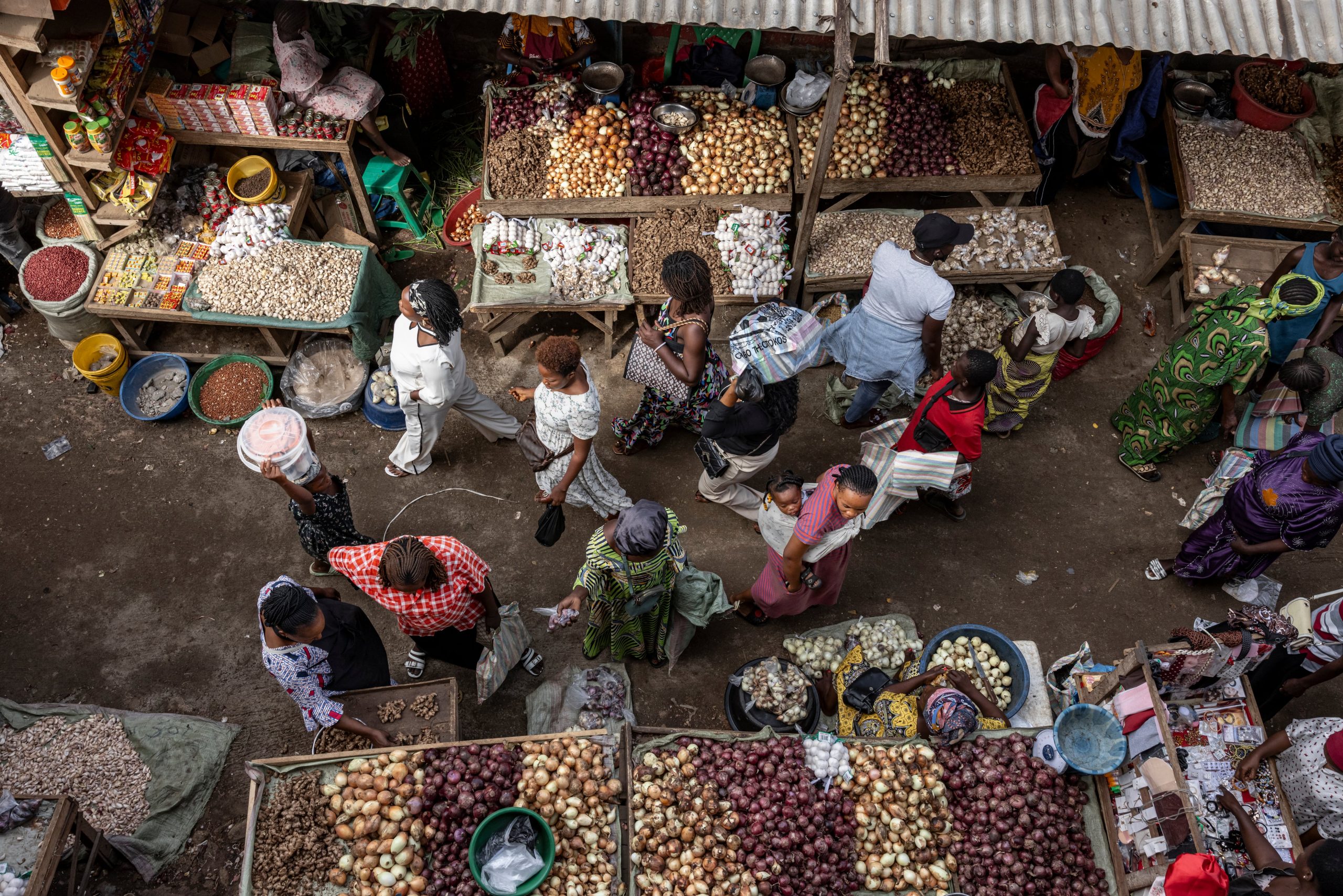
The Cost Of Basic Groceries, Measured In Wages: 1.2 Hours Of Work In Ireland And A Month In The Central African Republic









Abdel Fatah al Sisi
Egypt Steps Up Persecution Of Independent Media With Arrest And Alleged Torture Of Six Journalists From An Investigative Outlet




Africa
Three Colombians Deported By Trump To Africa Seek Protection In Spain: ‘I Don’t Feel Anger Toward Congo, I Feel It Toward The US’


A Spanish police patrol car passes through one of Valencia’s largest parks and Lorena López, a 29-year-old Colombian woman, freezes and completely loses focus in her boxing class. She remembers the U.S. agents who held her for a year and a half at the Eloy Detention Center in Arizona and the officers from the U.S. Immigration and Customs Enforcement (ICE) who deported her, handcuffed at hands and feet, to the Democratic Republic of the Congo (DRC) on April 15, 2026. When she sees the officers, she also recalls the armed men she and 14 other Latin Americans encountered at the hotel where they were held in Kinshasa for two months. But then she immediately realizes that since she was able to leave that African country in June she is free and safe in Spain.
She knows that if the police ask her for documents she can take out her phone and show a photo of her receipt proving she applied for international protection in July. “Our lawyer has explained to us that they are denying asylum to Colombians,” she fears, “but we know a small percentage are approved. We cling to that hope.”
López agreed to speak to this newspaper about the ordeal she has endured as a result of the Trump administration’s policy of expelling migrants to third countries, but on the condition that her real name not be used. “Imagine always hiding from the police or immigration agents. There is this fear of being treated like cargo: ‘grab them and send them far away,’” says this woman, who says she was victim of gender-based violence. In 2025, Colombia recorded 118 femicides and more than 15,000 cases of domestic violence against women.
Sitting beside her, Carlos Rodelo, another Colombian national deported from the U.S. to the DRC, listens and nods. He gives his real name and agrees to be photographed because he is seeking help from Spain to have his international protection claim considered. “I want to make it clear that we are not here on a whim; it’s for our safety. We cannot return to Colombia,” says this 43-year-old from Barranquilla, who says he was a victim of extortion and death threats. Reports of extortion in Colombia rose 144% over the last decade to 13,417 cases in 2025.
By WhatsApp, Daniela, 31, born in Cúcuta, says she fled Colombia after being harassed and threatened by a police commander. “After everything that has happened to me, I have faith that things will get better and that someday I will be able to see my mother and my daughters again,” she says in a voice note from another city in the Valencia region. She asked that her surname be withheld for security reasons.
These three Colombians had received CAT protection in the U.S. (from the UN Convention Against Torture). But that protection was not a visa or a form of political asylum: it only prevented them from being returned to Colombia, but not to a third country. They ended up in the DRC against their will and are among more than 25,000 people Washington deported to third countries between January 20, 2025 and September 2026. According to data from Human Rights First and Refugees International, two NGOs that monitor these forced transfers, the U.S. government has signed agreements with more than 35 countries in Africa, Asia and the Americas. More than 300 detainees have been taken to 14 African countries, including the DRC, Eswatini, Liberia, the Central African Republic and South Sudan.
Among the group of 15 people who landed in Kinshasa on April 17 — after stopping in Senegal and Ghana — there were eight Colombian citizens. Three of them were able to leave the DRC by their own means and enter Spain, where the Spanish Commission for Refugee Aid (Comisión Española de Ayuda al Refugiado, CEAR) provides legal support for their international protection applications.
I want to make it clear that we are not here on a whim; it’s for our safety. We cannot return to Colombia
Carlos Rodelo
The process will not be easy, says Jaume Durà, head of CEAR’s legal team in Valencia. Of the 40,512 Colombian applications decided in Spain in 2025, only 3% obtained some form of protection, according to the organization’s data. A year ago, the European Union placed Colombia on its list of countries considered “safe” despite the fact that some areas remain threatened by armed actors, drug trafficking or criminal groups and despite being the country where the most environmental defenders are killed.
“Violence in Colombia continues to be very high, with a lack of protection from the state [for victims of various crimes]. Spain grants a very low recognition rate to protection claims from people fleeing the country. That should not be the case; each case must be examined individually,” he says in a telephone interview.
Getting out of the DRC
The U.S. and the DRC signed a bilateral agreement in December for the African country to receive deportees. The deal, made public in April, established that people would be admitted with a short-term permit. The first and only group sent to the DRC to date was housed at the Venus Village hotel, about 30 minutes from Kinshasa airport. There, the International Organization for Migration (IOM), at the request of the DRC government, provided assistance.
“Although it was a hotel, it felt like a prison because we couldn’t go out,” Rodelo says. If they needed to buy food or go to a phone center to receive money their families had sent, he says, they had to request accompaniment. They also suffered daily power cuts and frequently ran out of water. “The food was unpleasant and everything was full of mosquitoes. One bit me and I got malaria,” he adds.
When there was internet service, Rodelo searched for information about the country he was in. “I had never heard of that place in my life,” he says. Browsing Google, he learned that in the eastern DRC, since early 2025, the war between the state and the rebel group March 23 Movement (M23) had intensified and had left thousands dead and 6.1 million displaced. “I also learned there is illegal mining, mafias and poverty. Imagine: it was going from bad to worse—danger in Colombia, danger in the U.S. and now danger in the Congo,” he recalls. With his phone he also managed to communicate with the hotel staff, who spoke Lingala and French.
López, for her part, connected online to speak with her lawyer and to look for ways to leave. “She explained to me that I had the right to go to another country and to seek a nearby alternative,” she recalls. They chose Spain and declined the assisted voluntary return to their country of origin that the IOM offered. They then contacted the Colombian consulate in Kenya to help issue new passports. Her lawyer confirms ICE had confiscated hers.
Then a race against time began because in mid-May the WHO declared a ‘public health emergency of international concern’ over an Ebola outbreak in eastern DRC. They feared travel or migration restrictions. When they obtained passports, they managed to raise the money to buy tickets to Madrid through online fundraisers or support from family.
Daniela was able to leave the DRC on June 1 bound for France. López and Rodelo flew to Spain on June 8. “I don’t feel anger toward Congo. I just don’t feel it can give me the security I seek,” López says, adding: “I’m angrier with the U.S.”
Lorena* had the chance to get a passport, the money to travel and to enter a large number of countries without a visa. Most people are forced to choose between returning to their country, where they may suffer violence, or finding a way to stay in a place that is not safe and where the government does not offer them permanent status.
Alma David, lawyer for Lorena López*
It is not easy for people deported by the Trump administration to leave these third countries. According to monitoring by Human Rights First and Refugees International, in addition to the DRC group, some deportees sent to Uganda have also managed to leave. Alma David, López’s lawyer, who handles other similar cases, says what happened to her client is “exceptional.” “She had the opportunity to get a passport, the money to travel and to enter many countries visa-free. Most people are forced to choose between returning to their country, where they may suffer violence, or finding a way to stay in an unsafe place where the government does not grant them permanent status,” she explains via WhatsApp messages.
In a press release, the IOM explains that since 2025 it has assisted and advised 800 people in this situation. “Some 300 of them later opted for voluntary return. The difference between that figure and the tens of thousands of people relocated is not an indicator of IOM’s effort but reflects the small number of governments that invited us to intervene or that met the conditions we demanded. Most relocated people have received no support.” If a person decides to leave on their own, the IOM supports them while they are in the country, but they do not receive the benefits of the assisted voluntary return program.
Others have been less fortunate. Some of those expelled to Eswatini more than a year ago remain confined in a maximum-security prison.
Starting over in Spain
López, Rodelo and Daniela reunited in Spain. They entered through Madrid as tourists because they feared applying for international protection at the border and being expelled or detained, as had already happened to them in the U.S. “We passed customs and we were so emotional we left a suitcase back at the airport,” López laughs. A few days later they went to Valencia. But no one would rent them a room and they couldn’t find beds in humanitarian shelters. “We slept in parks. But even so we were happy and free. Our lives depended on ourselves, not on other people,” she recalls.
One day they arrived at CEAR’s offices and received psychological and legal support to begin their international protection application. Once the process was underway, they obtained a Foreigner Identity Number (NIE) that allowed them to find rental housing, register their residency and access public healthcare. However, it does not grant work authorization. Rodelo, for example, is using the last of his U.S. savings to avoid asking his family in Colombia for help. He has not been able to send remittances for more than a year.
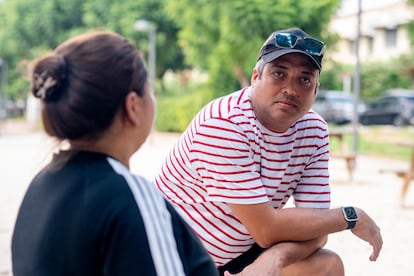
While their cases are being resolved, the three Colombians live with a mix of peace and fear. They have seen on the news that the new EU migration and asylum pact has come into force, speeding up but also tightening the procedures for resolving international protection claims. It also opens the door to creating deportation centers in third countries to expel migrants in an irregular situation. The Spanish government, however, has rejected that last measure. For that reason, despite everything, they say they have placed their hopes in Spain to regain the normality they lost in recent years.
López never managed to establish a life in the U.S. The first time she tried to enter and seek asylum, in January 2024, she was deported. After being threatened again by her ex-partner in Colombia, she tried again: she requested an appointment through CBP One, a U.S. government mobile app that allowed migrants to seek lawful entry or asylum. However, the day she was summoned to the checkpoint on the Mexico border, in September 2024, she was detained for a year and a half. Although she was released in February of this year, ICE detained her again in March and deported her to the DRC.
Rodelo, meanwhile, had arrived in the U.S. in May 2023 and obtained CAT protection in February 2025. With that document he obtained a work permit and made a living as a driver and courier until ICE detained him at its offices in August 2025 during a routine migration appointment. He spent eight months in a Louisiana correctional facility until, in mid-April, officers knocked on his cell. They took him to the airport and only there did he learn he was bound for the African continent.
Daniela crossed the Mexico border in December 2024 and surrendered to migration authorities. She was detained until February 2026 and after her release, with CAT protection and a work permit, she applied for authorization to settle in Dallas. “On April 2, ICE came to where I lived. They knocked on the door to verify my supervision order. They told me I had to accompany them. I agreed, they put me in handcuffs and once I was in their offices they told me they would send me to a third country,” she recounts.
The U.S. has defended its deportation policy despite criticism from international organizations and human rights NGOs. A Department of Homeland Security (DHS) document states that, before transfer, the government verifies whether the receiving country guarantees the person will not be sent to another destination where they could suffer torture. If the State Department deems those assurances credible, the deportation can proceed without additional procedures and without asking the person whether they fear for their safety in that country.
Nevertheless, the measure has been taken to several U.S. courts and is now in dispute. On September 18 a federal appeals court ruled that the expulsions were illegal and violated due process by failing to notify people with sufficient time of the decision to transfer them to a third country. Days later, the Trump administration filed an emergency appeal to the U.S. Supreme Court seeking to suspend that ruling and allow the procedures to continue.
Sign up for our weekly newsletter to get more English-language news coverage from EL PAÍS USA Edition
Today In Spain: A Roundup Of The Latest News On Friday
The €4,000 cost of getting around Spain is putting jobs out of reach

The €4,000 Cost Of Getting Around Spain Is Putting Jobs Out Of Reach


-

 Uncategorized2 weeks ago
F1 Bahrain Grand Prix will be live and FREE on TV this weekend
-
Blackout preparedness2 weeks ago
Brussels takes action against Spain over failure to update blackout plan
-

 Uncategorized2 weeks ago
Lewis Hamilton F1 wish could come true as stunning plans for new track revealed
-

 Foreign demand3 weeks ago
Market Snapshot: German Market In Q2 2026
-
Latest2 weeks ago
Spain’s Government Dealt Huge Blow As MPs Reject Housing Crisis Laws
-

 Housing access / crisis / affordability2 weeks ago
Radical Housing Decrees Defeated As Snap Election Talk Grows
-
EU2 weeks ago
EU nicotine crackdown sparks warning that ex-smokers could be driven back to cigarettes
-

 New Developments2 weeks ago
How To Get A Tourist Rental Licence In Andalusia (Spain) – Step-By-Step Guide 2025