
Guardia Civil
Torrevieja hospital thief targets vulnerable elderly expats

Spanish Guardia Civil officers detained a 62-year-old man suspected of committing three thefts from patient rooms inside Torrevieja Hospital in Alicante. Close collaboration with the hospital’s private security service proved instrumental in arresting the suspect.
Suspect preyed on elderly foreign patients in Torrevieja hospital
Investigators from the Torrevieja unit launched their probe after receiving two formal complaints regarding the thefts. Detailed examination of surveillance camera images allowed officers to pinpoint the suspect while confirming every victim belonged to the elderly demographic and held foreign nationality.
CCTV revealed disguised thief’s methodical M.O.
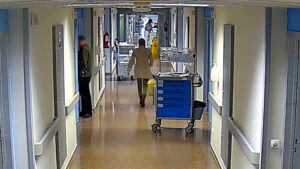
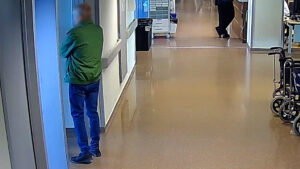
Surveillance recordings captured the man partially hiding his identity beneath a baseball cap while feigning use of his mobile phone. He methodically and nonchalantly traversed hospital corridors, carefully selecting rooms and gaining access only when victims remained absent, slept soundly or underwent diagnostic procedures before departing with plunder discreetly hidden inside his jacket.
Vital medicines stolen together with high-value personal tech
Subsequent analysis of the complaints uncovered a consistent pattern indicating one individual exploited patient absences or their particular vulnerability to remove personal belongings. The offender focused primarily on expensive technological items, including mobile phones and tablets, yet went further by taking a bag containing medical material essential for a victim’s ongoing treatment.
Elche resident with criminal history behind hospital thefts
Officers established the man as a resident of Elche with a record for prior convictions for comparable crimes. Hospital security staff notified authorities once more during the morning of March 3 after detecting the individual performing another theft.
Guardia Civil probe leads to conditional release of suspect
Following completion of necessary procedures, authorities transferred the detainee to the Torrevieja investigating court section. Judicial officials ordered his release subject to precautionary measures. Such investigations are part of the Guardia Civil Coopera Programme, which hopes to tighten partnerships with private security entities via information exchange and mutual operational assistance benefiting overall citizen security.





La manifestación de policías y guardias civiles convocada este sábado por la plataforma Justicia Salarial Policial (Jusapol, la plataforma de agentes surgida en 2018 para reclamar la equiparación salarial con los mossos d’Esquadra) para protestar contra las políticas del ministro del Interior, Fernando Grande-Marlaska, ha reunido a 4.500 manifestantes en el centro de Madrid, según datos de la Delegación del Gobierno. Es una cifra muy alejada de las 20.000 personas que llegaron a participar en la protesta celebrada el 21 de noviembre de 2021 en el mismo escenario para cargar contra la reforma de la ley de seguridad ciudadana, la conocida como ley mordaza. Incluso el número de participantes facilitado por los organizadores, que han hablado al término de la misma de “más de 15.000″ y calificado esta cifra de “éxito rotundo”, se queda muy lejos del que dieron en aquella multitudinaria protesta de hace más de cinco años, cuando aseguraron haber congregado a 150.000 manifestantes. El descenso del número de participantes ha sido, de hecho, una constante en estos años en un colectivo que se acerca a los 160.000 agentes.
El pinchazo de esta última convocatoria se ha notado también en el respaldo político a la misma. Si bien ha habido cargos de PP y Vox, los dos partidos que suelen acudir en apoyo de las protestas policiales, en esta ocasión el número y la relevancia pública de sus representantes ha sido mucho menor. Así, si en la manifestación de 2021 participaron Pablo Casado, en aquel momento líder de los populares; Santiago Abascal (Vox) e Inés Arrimadas, entonces al frente de un Ciudadanos que aún tenía representación parlamentaria, este sábado por el PP ha acudido el diputado Pedro Muñoz Abrines, portavoz de la Comisión Constitucional en el Congreso, y por el partido ultraderechista, el portavoz nacional de Seguridad e Inmigración, el policía Samuel Vázquez ―recientemente condenado por delito electoral―, y la concejal en el Ayuntamiento de Pozuelo (Madrid) Ainhoa García Flórez.
Además, en esta ocasión la manifestación tampoco ha contado con el respaldo de otros sindicatos policiales y asociaciones de guardias civiles, como sí tuvo la de 2021. Estas organizaciones han optado en su mayoría por encuadrarse en otra plataforma que, si bien comparte en líneas generales las reclamaciones de Jusapol, discrepa en las formas y las estrategias. Por ello, han rechazado sumarse a la protesta de este sábado y han convocado otra para mayo que tendrá, además, un cariz muy distinto: pretenden acudir en masa y de uniforme (pero sin arma, para no vulnerar la ley) a una misa en la Catedral de la Almudena, de Madrid.
La manifestación ha partido de la Puerta del Sol y, tras recorrer parte de la calle Alcalá y el Paseo de Recoletos, ha concluido dos horas después en las inmediaciones del Congreso de los Diputados. Iba encabezada por una pancarta en la que se leía “Profesión de riesgo, ya”, una de las tres reivindicaciones que tanto Jusapol como las dos organizaciones surgidas de ella que participaban, el sindicato Justicia Policial (Jupol) y la asociación profesional Justicia Guardia Civil (Jucil), han esgrimido para convocar la protesta, que ha contado con el apoyo de la Central Sindical Independiente y de Funcionarios (CSIF) y la Asociación de Tropa y Marinería Española (ATME). Por detrás, otras pancartas recogían las otras dos grandes reclamaciones: la equiparación salarial con los cuerpos policiales autonómicos y mejores condiciones de jubilación.

Tanto en el manifiesto leído al final de la protesta como en las declaraciones a la prensa de los dirigentes de las organizaciones convocantes y los eslóganes coreados por los participantes en la protesta, se ha insistido en culpar al Gobierno y al ministro del Interior de hacer oídos a estas tres reclamaciones en estos últimos ocho años. “Ya está bien de tomarnos el pelo. Si quieren guerra, la van a tener”, ha proclamado Aaron Rivero, secretario general de Jupol, que ha asegurado que policías y guardias civiles cobran “entre un 20 y un 30% menos” que sus compañeros de los cuerpos autonómicos. “Este gobierno se esconde”, ha criticado Miguel Gómez, de Jusapol.

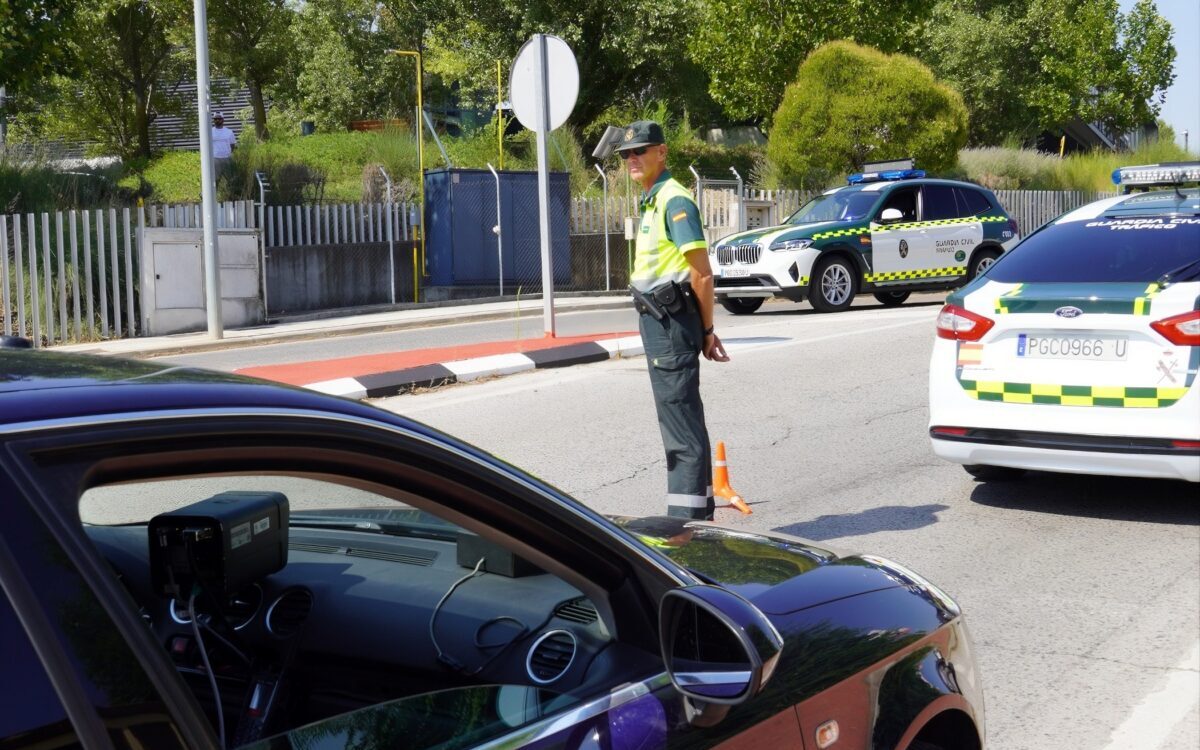
Drivers on Spanish roads this week face intensified speed checks as authorities target one of the leading causes of fatal crashes. Expect a lot more roadside mobile speed cameras, hidden Guardia Civil cars, as well as local police speed traps in some of the least expected places.
Heightened vigilance across all road types
Spanish traffic officials began a special seven-day operation on Monday, April 13, running until Sunday, April 19. Guardia Civil traffic officers are working with regional police and participating local forces to monitor vehicle speeds on motorways, conventional roads and urban stretches.
Speed remains a deadly factor in crashes
Inappropriate or excessive speed ranks as the third most common contributing element in road incidents, particularly those ending in deaths. Figures for Spain show this factor appeared in 291 fatal accidents in 2023 before rising to 307 cases in 2024. Overall, traffic experts link roughly 30 per cent of deadly collisions to drivers exceeding limits or failing to adjust for conditions.
Higher impact speeds release greater energy during collisions. That extra force transfers directly to vehicle occupants and vulnerable road users, worsening injuries even when crashes occur.
Previous operation exposed widespread non-compliance
Data from a similar August 2025 project in Spain revealed the scale of the issue. Officers checked 275,340 vehicles and issued fines to 30,175 drivers, representing 10.9 per cent of those stopped.
Breakdown by road category showed clear patterns: 63 per cent of offences took place on motorways and dual carriageways, while almost 37 per cent occurred on conventional roads and just 0.18 per cent in built-up areas.
Call for greater caution behind the wheel
The DGT, the national authority that governs traffic in Spain, stresses that maintaining proper speeds gives motorists more time to react to unexpected hazards. Appropriate speed also limits damage when incidents prove unavoidable. The DGT also encourages everyone to respect limits and adapt driving to weather, traffic density and road layout for safer journeys throughout the region.
Do any police in Spain get paid extra to dish out speeding fines?
No, not since pre-2010 have Guardia Civil officers received performance related pay regarding this type of traffic control campaign, and neither do local police officers. The type of police in Spain who are likely to stop a car for traffic offences are the following:
- Local police: These operate within the urban areas of a municipality or town under the jurisdiction of a local council. With this kind of national or regional campaign, they work in coordinated cooperation with the DGT. In smaller villages that do not have a specific budget for a local police squad, the Guardia Civil is likely to take this responsibility.
- National Police (dark blue uniforms): Generally, they do not participate in traffic campaigns, or hand out speeding fines. However, if the situation is deemed “conducción temeraria” (dangerous driving) and an immediate threat to the safety of others, do not be surprised to see them pounce into action. In this case, the offender will almost certainly end up in a police cell.
- Guardia Civil (green uniforms): These work directly with the DGT on motorways, national routes, in the countryside, and in coordination with local police sometimes. Often equipped with specialist traffic policing gear, this is the force which works most closely with the DGT on traffic issues, or motorways, country roads, and generally outside built up areas.
This focused crackdown forms part of wider European efforts to cut speed-related harm during a busy spring period on Spanish highways. So, keep an eye out for extra olive cars and more traffic cameras while the campaign continues, and be careful with that accelerator pedal.

F1 star Oscar Piastri

Drivers threatened with ban ahead of Monaco Grand Prix after

UK Approves Lifetime Tobacco Ban For Everyone Born After 2008


-

 New Developments3 weeks ago
Luxury Villas For Sale, Estepona – ProjectL1
-

 New Developments2 weeks ago
Stylish 3-Bedroom Apartment With Panoramic Sea Views – Benalmádena
-

 %2 weeks ago
Poland Disconnects Utilities At Russian Consulate That Moscow Refuses To Hand Over
-
eu response to spain migration policy2 weeks ago
Brussels warns Spain that migrants regularised under controversial scheme will be deported back to Spain if they try to move to other EU countries
-

 Uncategorized3 weeks ago
Lewis Hamilton goes from Karate Kid to Samurai Warrior with Kill Bill guru
-
AER Lingus3 weeks ago
High-speed internet at 35,000 feet: Aer Lingus launches Starlink Wi‑Fi
-

 Uncategorized4 weeks ago
F1 legend Martin Brundle reveals the thing he hates about living in London
-

 Uncategorized3 weeks ago
How Lewis Hamilton spent break with A-list star