
Alaska
Trump: On The Defensive In The Polls, Uncontrolled At Rallies

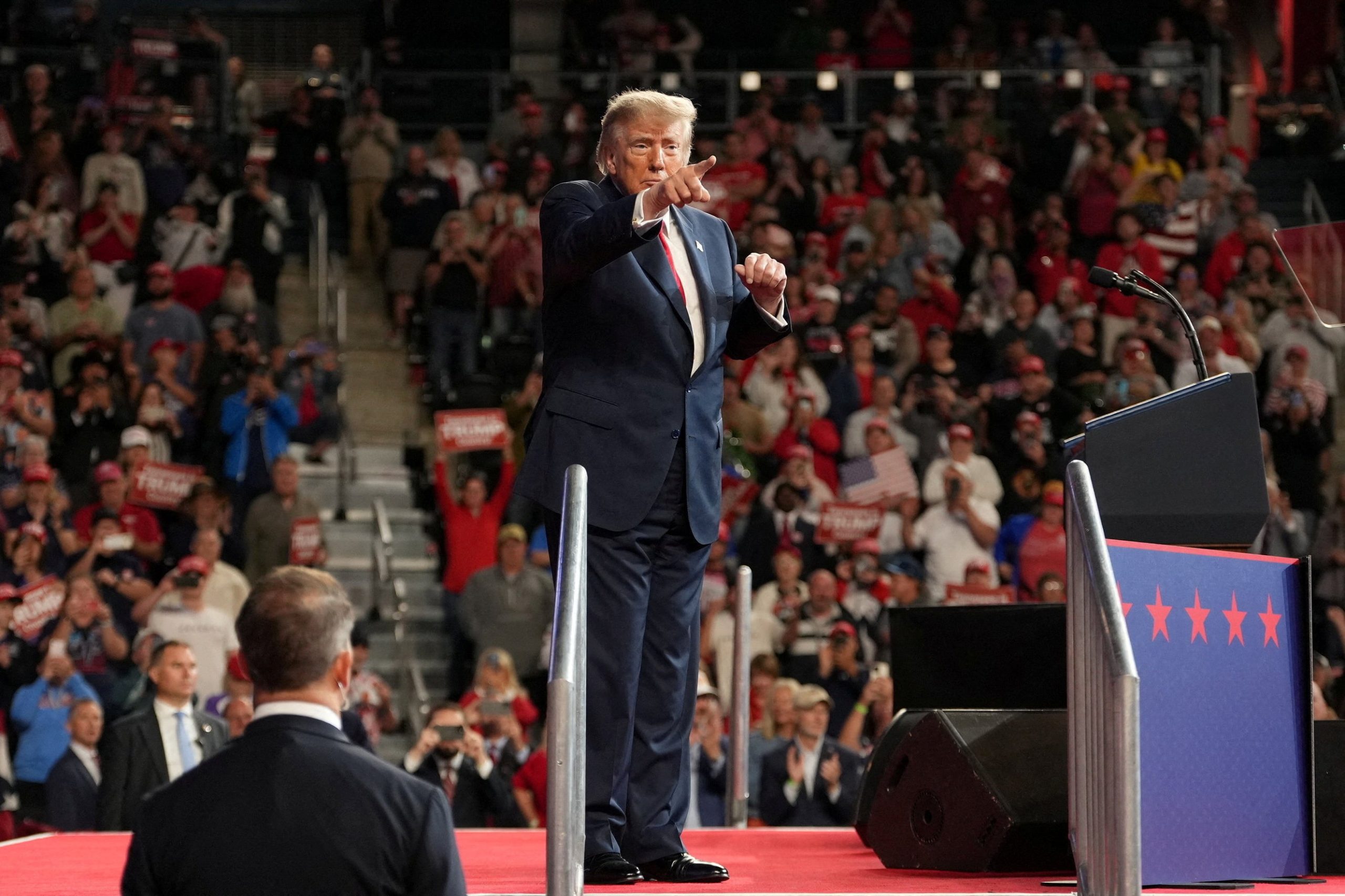
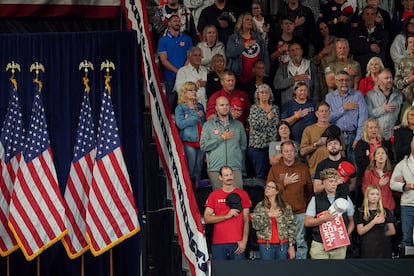
U.S. President Donald Trump was halfway through his speech at a campaign rally in Clarksville, Tennessee, this Saturday, surrounded by his usual supporters: mostly white, dressed in red, wearing MAGA hats, and displaying messages of support for the Republican. “It’s amazing. I could say the stupidest things and you’d clap me,” he boasted. On cue, the crowd, amid laughter, applauded.
A little later at the same rally, the president recalled executive orders he has signed during his year-and-a-half in office since reelection to rename the Gulf of Mexico and Lake Ontario at the Canadian border to Gulf of America and Lake America, respectively, on official documents. “We need a river, we need an ocean. So, I was thinking of either the Atlantic or the Pacific. We call it ‘Trump Ocean’ or ‘Ocean of the Americas,’” he said, again to applause and laughter from his followers.
This bluster is not especially new. The U.S. president has built his image and electoral success on statements like these — shocking and aggressive remarks, threats he may or may not carry out — to the delight of his audience, which cheers comments it would never tolerate from any other politician. He said it himself during his first term: that if he opened fire on a pedestrian on New York’s Fifth Avenue, he wouldn’t lose a single vote.
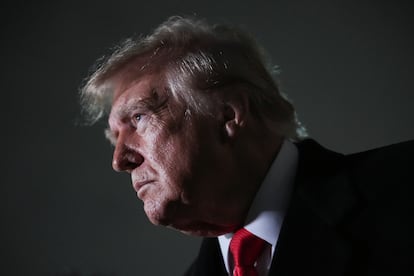
But he has hardened his tone and ramped up provocations noticeably in the final stretch before the midterm elections on November 3, in which Republicans trail in the polls. Convinced, like a modern Louis XIV, that the Republican Party is him, the president has launched an ambitious tour that takes him, almost daily, to states across the country where he won during the 2024 presidential election. And at each rally Trump — never known for holding his tongue — says increasingly whatever comes to mind: repeating one-liners, going on long tangents in which he can lose the thread, or lashing out cruelly and insulting his enemies, especially Democratic rivals.
At every rally and every press appearance he comes across as more defiant, more provocative, more polarizing. High fuel prices? They’re temporary, he insists. He says it’s worth paying them to prevent Iran from obtaining a nuclear weapon — the argument with which he launched the war in February. Iran? Its economy is a disaster, but the enemy could “take out” the Californian cities of San Diego and Los Angeles. The data centers voters hate? “Excellent sources of wealth!” The president surprised even his own party by announcing a deal to buy diesel from Russia — thereby aiding Moscow’s war against Ukraine — and by promising $5,000 checks to every citizen; but only if the Republicans win the elections.
In various appearances he has hurled insults at personalities he detests, from Nobel Peace Prize laureate Navi Pillay — “no one knows her” — to New York attorney general Letitia James (“disgusting dog”). On Saturday he blamed Ukrainian President Volodymyr Zelenskiy for high global diesel prices for bombing Russian refineries, although the shortages are due to the situation in the Persian Gulf.
He knows that these kinds of references, however rude or false they may be — or precisely because of that — succeed with his loyalists. And he also knows that in a country as polarized as the United States, where few voters remain undecided, the key to results on November 3 will above all be which party mobilizes its voters more, whatever the cost. Being an ever-more Trump-like Trump and turning this encounter with the ballot box into a referendum on himself is, in his eyes, the best way to galvanize his supporters. “Let’s pretend that I’m on the ballot,” he urges his followers. “I’m very popular. I really am,” he insisted, against all odds, to his devotees in Clarksville on Saturday.
Outside the ranks of the die-hards, the scene is no longer the same as during the presidential campaign, when he packed Madison Square Garden in New York. Nor is it the same as the 100 days after his return to the White House, when hundreds queued for hours to hear him at a sports center on the outskirts of Detroit. The venues for his rallies are now smaller and yet television cameras still show empty rows. Not even the conservative TV network Fox, to which he owes so much of his political career, broadcasts those events in full any more, to the president’s annoyance.
Each new poll is another pounding for the president. Only a quarter of voters approve of Trump’s handling of the economy, a figure that falls to 20% for his specific management of inflation, according to a survey published Sunday by the Financial Times. Two-thirds of respondents say the economy is headed in the wrong direction. Another Pew Research Center poll found that support for the president among those who voted for him in 2024 has fallen to 67%, down from 75% in July.
Even within his own party, some lawmakers are already rushing to distance themselves from their leader. After Trump announced an agreement with Russian President Vladimir Putin for Moscow to supply diesel fuel to the United States in order to lower prices, more Republican senators than Democratic senators — four and three, respectively — who are members of the Foreign Relations Committee signed a statement on Sunday demanding that the president cancel the deal on the grounds that it is illegal. “The United States must not provide Putin with a financial lifeline while Russia continues to kill Ukrainian civilians,” they wrote.
Trump insists everything is going according to plan and that his rallies are the perfect remedy for any Republican discouragement. “My Rallies, legendary they have already become, have made a tremendous difference with the enthusiasm of the Republican Party. They have been waiting for them to happen, even though I never thought I’d have to be doing Rallies again,” he wrote Sunday on his social media platform, Truth. “The good news is, I love them, the music, and the incredible enthusiasm, and will always be in favor of what’s good for America — and that means the Republican Party,” he added, announcing visits this week to Ohio and Alaska.
A touch of nostalgia
On his tour Trump always goes where Republican candidates are struggling. In part, this campaign has an almost nostalgic tone. About to become a lame-duck president — the term U.S. political language ascribes to an outgoing president, especially if his party loses its majority in both chambers of Congress on November 3 — his route includes solidly Trumpist states, like Tennessee, seemingly chosen to remind him of the good times. That he has fans who support him.
“You almost always go to a state where it’s close, and that makes sense, but I’ve gone to Alabama, where I won by 45 points, or something crazy like that. I’ve gone to Texas, where we won by 17 or 18… Why am I in Tennessee? I don’t need to be campaigning here. But sometimes it’s good to go to a place where you don’t need to, to thank the people who voted for you three times,” he told his followers in Clarksville on Saturday.
Whether it’s a Republican state or one where the race is much less clear-cut, there’s one thing the president won’t forgive: he wants people to talk about him during those visits, which—judging by what he says—sometimes seem to exasperate him: “I didn’t know it was going to be a Saturday afternoon. I could be doing a lot of other things on a Saturday afternoon,” he also remarked in Clarksville. And Trump gets angry when he’s ignored.
On social media last Thursday he complained that Fox News had not aired his rallies. “Sad to see that Fox & Friends (Sunday) is not covering our packed house and incredibly enthusiastic (beyond!) Rally that took place in Ohio last night, or the ones in Alabama, Texas, or Oklahoma, over the past two days,” he said. “Our people want to see our Rallies, and reports on our Rallies, on FoxNews, or they will very quickly stop watching (like I am doing right now!)”
The complaint about the coverage has not remained a mere anecdote. This Saturday, as the president was returning from Tennessee to the White House, the Department of Justice confirmed that it has launched an investigation into the five major television networks regarding their coverage of the president and whether their decision not to record his remarks was made while Trump’s order denying three media outlets access to the presidential compound was still in effect.
Sign up for our weekly newsletter to get more English-language news coverage from EL PAÍS USA Edition









Alaska
The Most Relevant Initiatives That Will Appear On The Ballots In November’s Midterm Elections


Up To 10 Years In Prison For Criticizing Cuba’s Government On Social Media: How The Castro Regime Punishes Dissent

Trump: On The Defensive In The Polls, Uncontrolled At Rallies

Spain’s National Day – Why Do The Spanish Celebrate It On October 12?


-

 Uncategorized2 weeks ago
F1 Bahrain Grand Prix will be live and FREE on TV this weekend
-
Latest1 week ago
Spain’s Government Dealt Huge Blow As MPs Reject Housing Crisis Laws
-
Latest2 weeks ago
Why You Can’t Donate Blood In Spain If You Don’t Speak Spanish
-
British tourists arrested in Magaluf1 week ago
British tourists arrested after taxi driver left bloodied in Magaluf
-

 Foreign demand2 weeks ago
Market Snapshot: German Market In Q2 2026
-
Blackout preparedness2 weeks ago
Brussels takes action against Spain over failure to update blackout plan
-

 Uncategorized2 weeks ago
Lewis Hamilton F1 wish could come true as stunning plans for new track revealed
-

 Housing access / crisis / affordability1 week ago
Radical Housing Decrees Defeated As Snap Election Talk Grows