california
From Police Officer To Store Employee: The Life Change Of A ‘Dreamer’ Who Turned In His Badge
Published
22 hours agoon
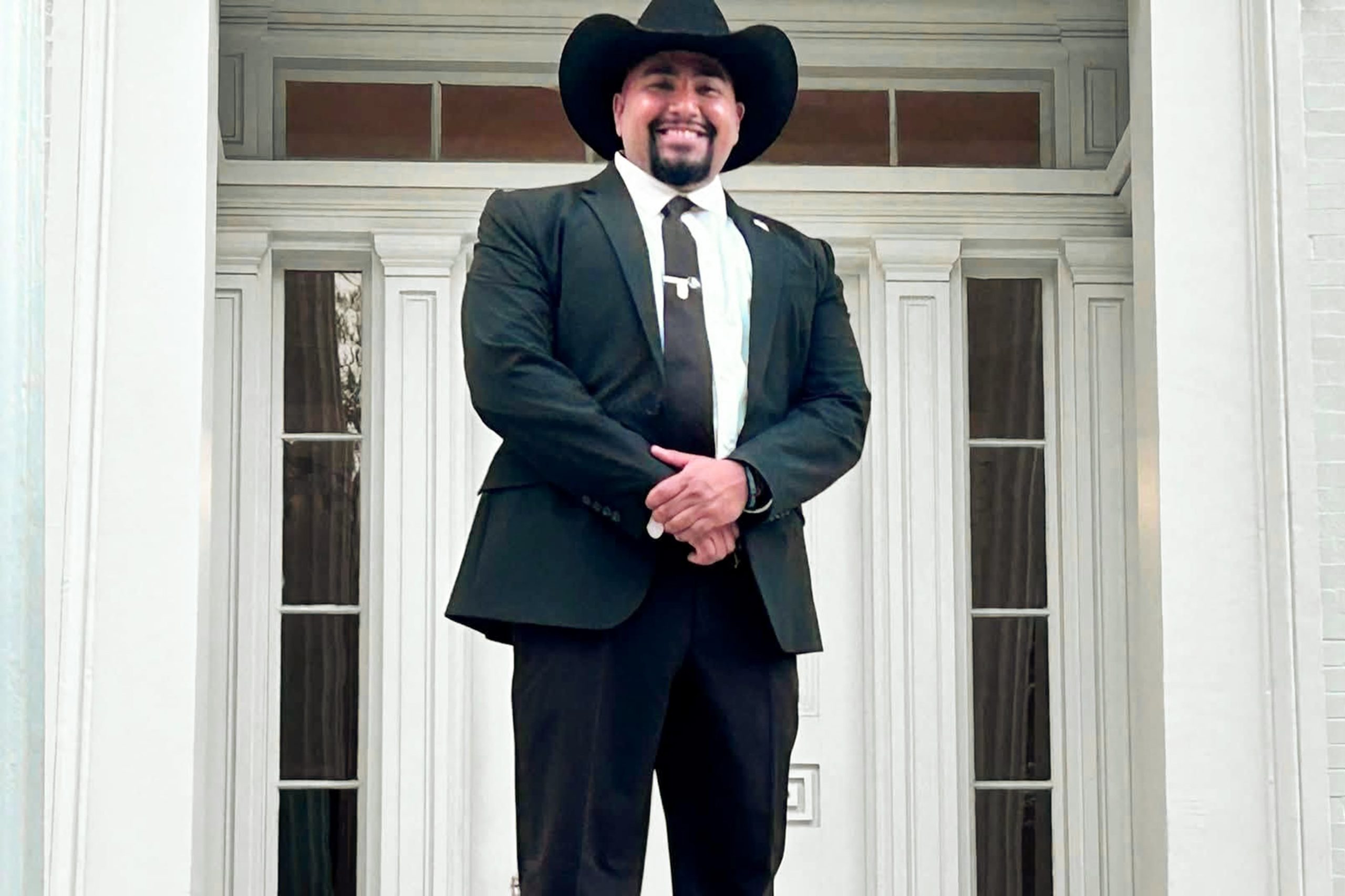
Édgar Vázquez Silva’s worst fears came true. His boss at the Stone County sheriff’s office in Mississippi called him and asked him to turn in his badge and uniform. The order was clear: all department officers had to be U.S. citizens or, at minimum, permanent residents.
Born in Mexico and brought to the United States without papers by his mother as a child, Vázquez Silva held neither status. For several years he had relied solely on a work permit obtained under DACA, the immigration program enacted by then-president Barack Obama to shield from deportation those who arrived in the country as minors without authorization.
“I felt awful. I held back the tears, but I went into the department and handed everything over,” Vázquez Silva recalls about the moment he returned his badge and uniforms, which he kept in a purple plastic bag. It was a quick procedure, and he was accompanied by his young son. There were no farewells, hugs or words of encouragement: none of his colleagues were at the station. “You have a dream and they take it away from you,” he laments.
Vázquez Silva is not the only one in this situation. Several officers in California have had to surrender their badges and guns or been placed on unpaid administrative leave because they could not renew their DACA status in time. The process has become increasingly complex and slow; it must be completed every two years and affects about 500,000 beneficiaries.
Those affected worked in the police departments of Los Angeles and Santa Ana. Others, like Vázquez Silva, lost their jobs after supervisors imposed stricter requirements on immigration status.
Amid the campaign against the DACA program under the Trump administration, processing times have increased and, for some, submitting a renewal months in advance was not enough. Average wait times rose from 15 days in 2025 to 70 days this year, an increase of more than 360%, according to data from U.S. Citizenship and Immigration Services (USCIS).
The end of a police career
Vázquez Silva had spent months lobbying for a green card that would allow him to keep his job at the Stone County sheriff’s office. He thought going public with his case might help. He gave interviews to several media outlets, met with the governor of Mississippi and with a congressman, and maintained an active presence on social media under the name “Deputy Dreamer.” Nothing worked.
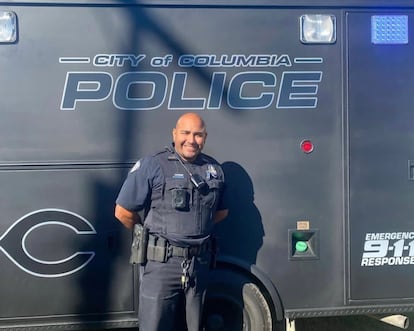
The order to require immigration status for all law enforcement officers came directly from Amy Vanderford, head of the State Department of Public Safety. “The sheriff told me he was very sorry, but there wasn’t much he could do. He told me he needed me to hand over the badge,” he recalls.
That ended a five-year law enforcement career in Mississippi, which he had managed to extend despite losing authority and ending up in a part-time role where he couldn’t even carry a firearm. He now works as an assistant manager in a store. “They paid me well and I have benefits. But it’s very different compared with being a police officer,” he says.
Vázquez Silva was born 36 years ago in the border state of Tamaulipas. He has no memories of Mexico. He was only three when his mother crossed with him into Texas, without documents. His stepfather’s construction work moved the family from state to state until they finally settled in Mississippi. When he was 12, his mother told him something that would change how he saw himself. “Son, you don’t have papers,” she said. He understood the meaning of those words years later, in high school as he began to plan his life. “And now what am I going to do?” he recalls asking his mother.
After finishing school, he worked as a gardener, bricklayer, and gas station attendant. His prospects changed in 2012 with the introduction of DACA, and a chance encounter sealed his future. A police officer he met invited him to ride around the city in a patrol car. When the ride ended, Vázquez Silva had one certainty: “This is what I want to be.”
“We are not criminals”
In 2021 he graduated from the part-time officers’ academy and began patrolling the streets of Columbia. Three years later he was selected to enter the full-time academy. But midway through training he received devastating news: he had been disqualified because he was neither a permanent resident nor a citizen. “You can finish the academy, but we can’t give you the badge,” they told him.

From that moment he was not allowed to carry a firearm and his career was put on hold. For a time he was responsible for guarding a public school in Columbia, although he was forbidden from using the shotgun in his patrol car. “I never felt right because I didn’t have a weapon. They could kill me,” he says.
In 2023 he found a new opportunity at the Stone County sheriff’s office, where he worked part time transporting inmates to their court hearings. He did so without carrying a weapon, despite the risks. Although he renewed his DACA card in 2025, the requirement to have at least a green card prevented him from keeping the position.
Vázquez Silva says he will keep fighting to get his police badge back. He now believes one of his options is to meet President Trump in person. “I would tell him to look at my story, to invite me to the White House and give me a chance to be an American and be a police officer again,” he says. “To prove that we, the Dreamers, are not criminals; we love this country deeply and we want the American dream.”
Sign up for our weekly newsletter to get more English-language news coverage from EL PAÍS USA Edition
You may like
-
La Comentarista Katie Zacharia, Nueva Portavoz De Trump
-
Trump Llega A Un Acuerdo Con Putin Para Que Rusia Libere Miles De Barriles De Diésel En Los Mercados Mundiales
-
La Jueza Sudafricana Navanethem ‘Navi’ Pillay, Premio Nobel De La Paz 2026
-
Tragedy At A Neonatal Ward In Mexico: ‘There Were Weeks When All The Moms Left Without Their Babies’
-
WHO Offers Technical Support To Russia Over Suspected Plague Case In Siberia: ‘We Need More Information’
-
Rebeca Grynspan Mantiene El Liderazgo En La Votación Para La Jefatura De La ONU Pero Aumentan Los Países Que La Rechazan
Arnold Schwarzenegger
The Electoral Cost Of Trump’s Remarks That Iran Could ‘take Out’ LA Or San Diego
Published
4 days agoon
October 7, 2026
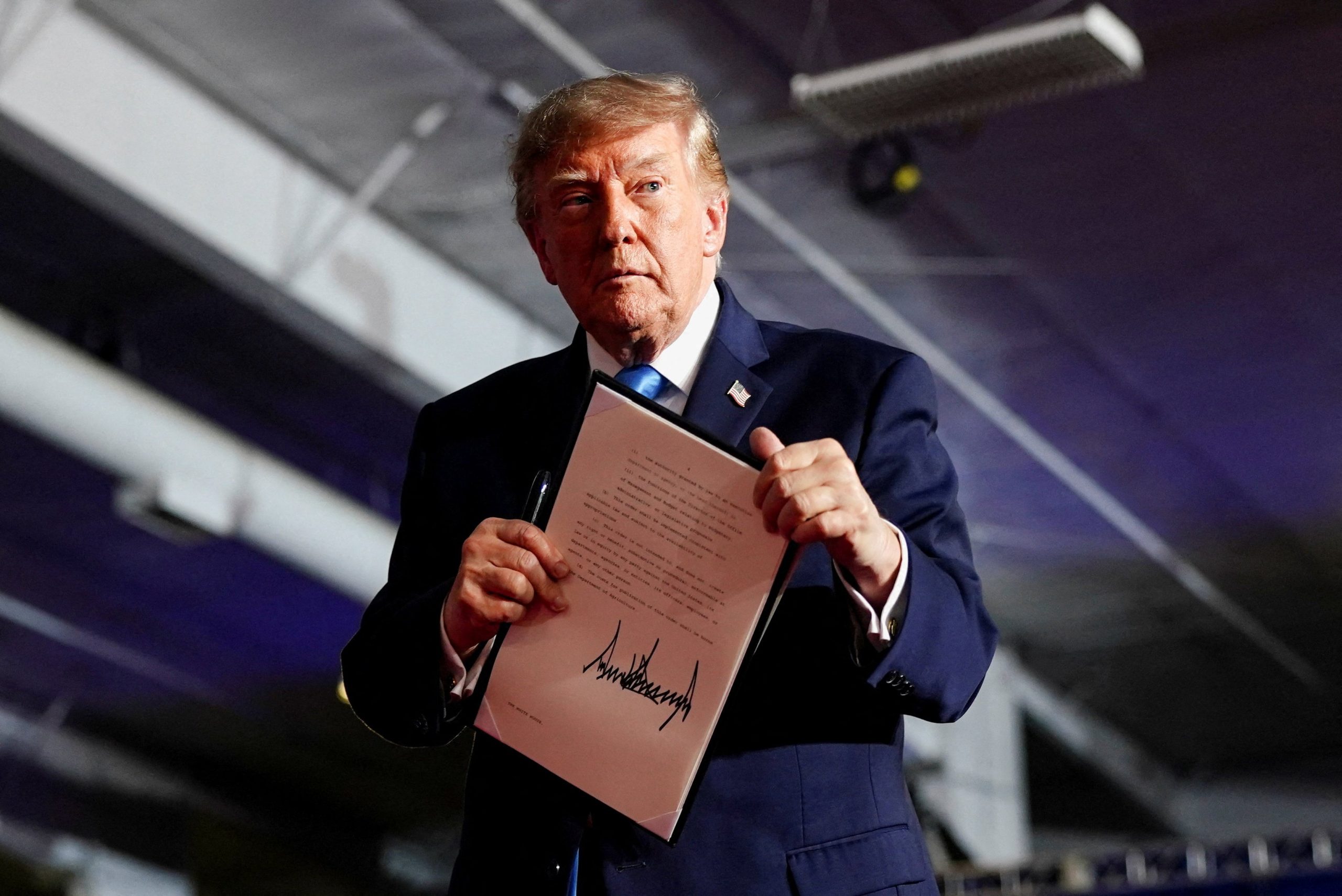
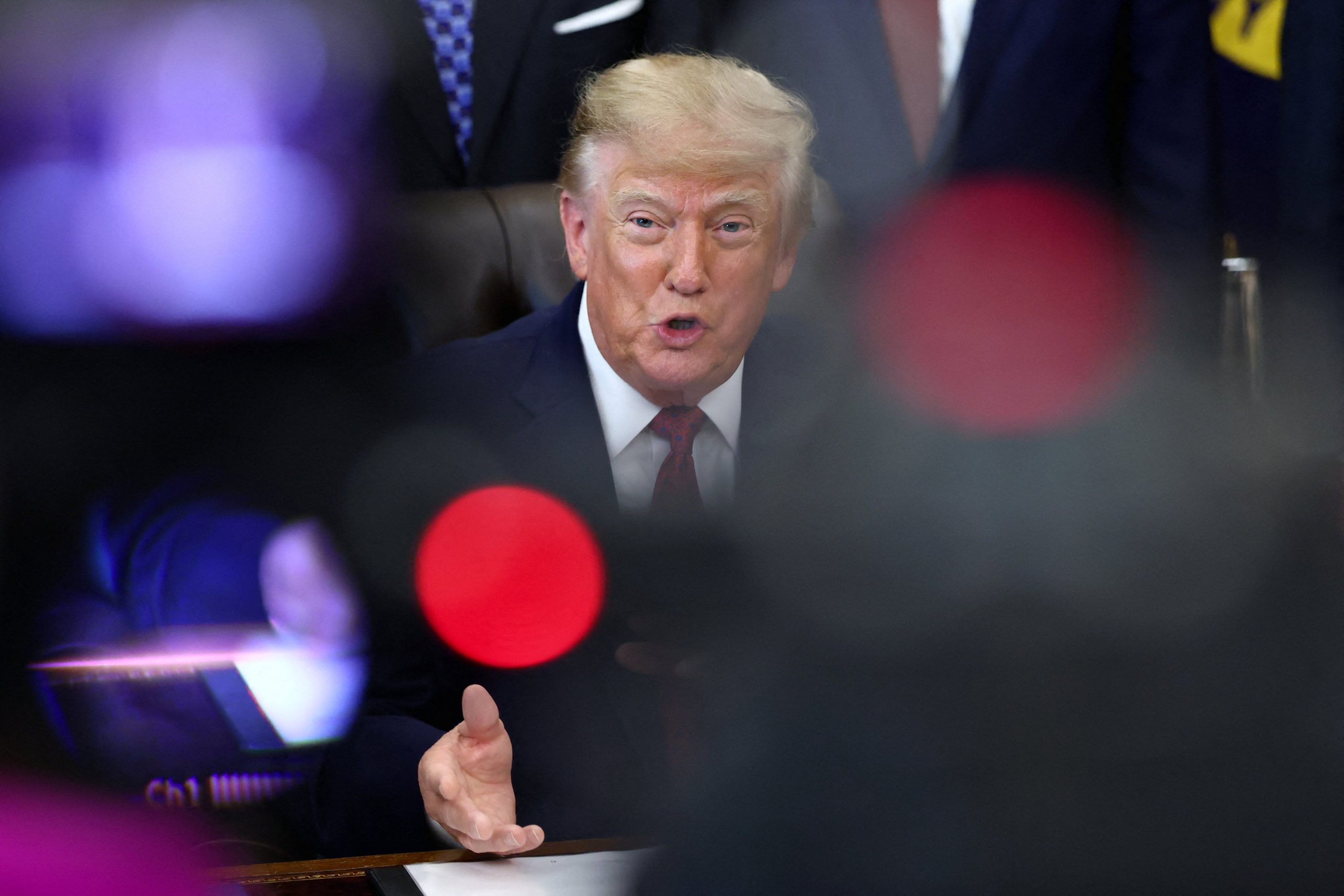
President Donald Trump said it without weighing the possible electoral consequences for Republican candidates in California, less than a month before the midterm elections. Far from generating laughter or support for his war with Iran, his comments have raised concern and could affect the vote in a state governed by Democrats since 2011. During a rally in Nebraska on Monday, the president said Iran could “take out” Los Angeles or San Diego, two of the largest cities in the United States, calling it a “small price” to pay to eliminate what he says is the threat posed by the Iranian regime.
As part of his campaign tour across the country to support Republican candidates —generally in places where a Republican victory is more likely, since in tighter races Trump could be more a liability than a boost— the president moved awkwardly from urging turnout in the midterms on November 3 to talking about war with Iran and the “small price” it represents “to keep the world safe.”
Polls show it will be difficult for Republicans to hold narrow control of both chambers of Congress, and Trump’s Nebraska speech seems unlikely to help them. “They could take out a city. Let them take — Let them take out Los Angeles. Let them take out San Diego. That’s — this is a very small price to pay, and it’s going to be over with very soon. It’s essentially almost over with,” Trump said of a war that has stretched for more than seven months without any clear signs of ending.
There is a fairly recent precedent for the threat Iran could pose to California. In March, Californians were alarmed after a report from the Federal Bureau of Investigation warned that the Iranian regime might be planning drone attacks against the state in retaliation for U.S. military actions on its territory. Both the federal government and Governor Gavin Newsom then said there was no imminent threat to California.
Trump’s recent remarks also appeared framed by rising oil prices and, consequently, higher gasoline and other fuel costs in the United States, driven by the conflict in a region crucial to crude transport. That “small price” Californians are paying, in particular, is actually very high: this week a gallon of gasoline sold for $6.37 —and in some places even $9— about 46% above the national average, according to AAA. The difficult economic situation, with the cost of living, health insurance and housing at the forefront, is voters’ top concern, according to various polls.
Ballots began arriving this week in the mailboxes of thousands of Californians.
“It complicates their campaigns”
Miguel Tinker Salas, professor emeritus of History and Chicano Studies at Pomona College east of Los Angeles, says Trump’s comments could have consequences for Republican candidates in California before the polls close. “It complicates their campaigns; it makes the political landscape harder for them,” the professor says.
In California, Republican hopefuls are running for governor, the state attorney general’s office and other key positions, as well as seats in the House of Representatives. For many of them it is an uphill race in a Democratic stronghold, and even more so after the recent redistricting pushed by Governor Gavin Newsom to favor his party’s contenders, part of a nationwide battle. In that context, Tinker Salas believes Trump’s Nebraska remarks will end up hurting his own candidates.

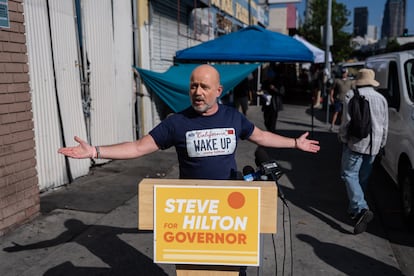
One of those most affected may be Steve Hilton, a British-born former political strategist for David Cameron’s Conservative Party before Brexit who became a conservative commentator on Fox News, and is now the Republican candidate for governor. So far, Hilton has not commented on the controversy. Since Arnold Schwarzenegger left office after two consecutive terms from 2003 to 2011, no other Republican has won that post.
“California hasn’t elected a Republican in many years. There was an opening with Hilton, in a way, because he was not only the opposition candidate but the anti-establishment opponent who had committed many failures. But as the campaign has unfolded he has lost support, and his closeness to Trump increases that loss,” Tinker Salas said.
Trump is very present in the race. He has officially endorsed Hilton, and a network of donors aligned with the president, from various parts of the country, continues to funnel resources into his campaign. The president’s strategy is not limited to the governorship: at the Republican convention ahead of the midterms he even said people should vote as if his name were on the ballot and promised a $5,000 payment to all American adults if his party retains control of the House of Representatives.
Hilton’s disadvantage
Hilton has fallen behind in the polls. One of the most recent surveys, conducted by the Institute of Governmental Studies at the University of California, Berkeley, shows the Democratic candidate, Xavier Becerra, has increased his lead: 58% of respondents said they would vote for him, compared with 33% who favored the Republican. The gap widened by seven percentage points from the previous measurement.
In that same poll, about 44% said their main concern was “reducing the cost of living,” while 37% identified “fighting the policies of the Trump administration” as their priority. Not even polls commissioned by Hilton’s campaign work in his favor. The latest, published this week, puts Becerra six points ahead: 45.7% to Hilton’s 40.1%.
Becerra has joined Democratic leaders —including Los Angeles Mayor Karen Bass and San Diego Mayor Todd Gloria— in criticizing Trump’s remarks. “Thirteen million Californians call LA and San Diego counties home. Their lives are not a ‘small price to pay’ or a punchline for Donald Trump,” he wrote Monday night on his X account. Responses to the post were divided.
Thirteen million Californians call LA and San Diego counties home. Their lives are not a “small price to pay” or a punchline for Donald Trump. https://t.co/TG23f6b5XF
— Xavier Becerra (@XavierBecerra) October 6, 2026
Some users commented under the post that California Republicans who once voted for Trump may now be “disappointed.” Others downplayed the president’s words, calling them a “joke,” and argued that a doctored video of the Nebraska rally was being spread. The latter reflects voters’ sometimes selective distrust of what they see on social media.
The president’s remarks also drew no laughter from Governor Gavin Newsom, one of the Democrats who most often confronts him and who is about to leave office after two consecutive terms, and is being discussed as a possible presidential candidate in 2028. Newsom called the president “deranged and dangerous” and said he had even ordered the State Threat Assessment Center to actively monitor the situation “in case foreign actors interpret the president’s remarks as an invitation to attack California.”
Professor Tinker Salas was also troubled by the crowd’s reaction during Trump’s rally. After the president said Iran “could take out a city,” some attendees responded with a “yesss.” Others applauded when he added that the targets could be Los Angeles or San Diego.
“It reflects a cynical attitude, it reflects information manipulation. But what is most worrying is how the message was received by the people behind Trump,” the professor says. “You can expect any foolishness from Trump, but people applauded. We are in a critical situation regarding the social fabric of this country.”
Reported by Patricia Vélez Santiago.
Sign up for our weekly newsletter to get more English-language news coverage from EL PAÍS USA Edition
Alaska
The Most Relevant Initiatives That Will Appear On The Ballots In November’s Midterm Elections
Published
5 days agoon
October 5, 2026
The U.S. midterm elections will not only determine who will occupy the Congressional seats and governorships up for grabs in November. In several states, voters will also find ballot measures seeking to amend laws, approve tax changes, or add new provisions to state constitutions.
These measures allow certain public policy decisions to be put directly to voters, either through initiatives introduced by state legislatures or through citizen-led processes. From voting rules to taxes, housing, immigration, and reproductive rights, these are some of the most relevant initiatives that voters will consider in the midterms.
California: Voter ID and taxes on the wealthy
California will vote on 14 ballot measures. Five were placed on the ballot by the legislature, while nine came from citizen initiatives.
The most contested is Proposition 39, which would require voters to present an official ID to vote in person and provide the last four digits of one of those IDs on mail-in ballots. The initiative would also provide free identification cards and require annual reports on the percentage of voters with verified citizenship in each county. The state currently requires identification and a Social Security number to register to vote, but not at the polling place. The measure is opposed by the American Civil Liberties Union (ACLU), Common Cause, the League of Women Voters, and the California Democratic Party.
The other major battle is over taxes. Proposition 3 would make permanent the tax on high incomes approved in 2012 and extended in 2016, with 89% of the revenue going to public schools and 11% to community colleges. Proposition 40, better known as the billionaires’ tax proposal, would impose a one-time tax of up to 5% on people with assets exceeding $1 billion.
Housing is another major area. Proposition 1 would authorize a bond for affordable and veterans’ housing, costing state coffers between $500 million and $600 million annually for about 25 years, according to the Legislative Analyst’s Office. Proposition 37 would create loans for middle-income buyers of newly built homes, while Proposition 45 would expedite environmental reviews for housing, water, transportation, and clean energy projects.
Florida: ‘Save Our Homes’
In Florida, voters will decide on three amendments, all proposed by the legislature, which require 60% of the vote to pass.
One of them, known as Save Our Homes, is the most controversial. It seeks to substantially increase tax exemptions for primary residences and halve the annual cap on increases in the assessed value of nonresidential properties. It is controversial because, while supporters say it would provide much-needed, significant economic relief in response to inflation, critics and public safety agencies warn that the measure would create a severe shortfall in local budgets, putting funding for essential public services such as police, fire departments, and education at risk.
Immigration enters the ballot box
The American Immigration Council, an organization that advocates for immigrants’ rights, is tracking nine state measures affecting these communities. Most concern who can vote.
Arkansas, Kansas, South Dakota and West Virginia will put amendments to a referendum specifying that only citizens may vote; Alaska and Arizona are considering similar initiatives, while Arizona’s would also require identification and ban foreign contributions to political campaigns. There are recent precedents: in 2024, eight states approved measures of this kind. Supporters present them as a matter of common sense; opponents point out that federal law already prohibits noncitizens from voting and that, according to available data, such cases are extremely rare.
Another major measure is Colorado’s Amendment 81, which would require local police to notify the Department of Homeland Security, within 72 hours, when a person who is unlawfully in the country or whose immigration status cannot be determined is charged with certain crimes. Opponents argue that it would apply to people who have been charged but not convicted and could even affect someone with a prior felony who is charged with a minor offense, such as a traffic violation.
Idaho, meanwhile, will vote on an amendment to establish English as the official language in its Constitution. If approved, and unless required by federal law, English would be the only language used in the state’s public proceedings and documents, affecting Spanish-speaking communities.
Other initiatives
In Missouri, Amendment 3 proposes an almost total ban on abortion, with exceptions for rape, incest, and medical emergencies, and would enshrine in the state Constitution a ban on gender-affirming care for minors. It will be the first time voters decide whether to repeal an abortion right they themselves approved at the ballot box. The state will also hold a referendum on the congressional map, although the state Supreme Court ordered the 2022 map to be used in these elections.
Virginia will vote on reproductive freedom, the removal of the ban on same-sex marriage, and the restoration of voting rights after completing a sentence. Nevada, meanwhile, will vote again on its abortion amendment, which would establish abortion as a fundamental right.
Sign up for our weekly newsletter to get more English-language news coverage from EL PAÍS USA Edition
california
Has Trump’s Luck Run Out? Now Who Will Woo The Latino Vote…
Published
7 days agoon
October 4, 2026By
Boris Munoz
If there is one thing no one can deny about Donald Trump it is that he is a lucky man. The president has beaten the odds more than once. Notably, when he left the presidency in January 2021 after the shameful assault on the Capitol, his political career seemed to have hit rock bottom. But not only was he acquitted in a second impeachment trial, and spared from an AR-15 rifle round that came within millimeters of blowing off his head (to name just two examples of his extreme luck); he also easily defeated Democratic candidate Kamala Harris in the presidential election.
But if 2024 was his annus mirabilis, everything indicates that 2026 will be his annus horribilis. Today Trump’s approval rating stands at just 32%, while disapproval of his administration sits at 66% — the worst figures of his political career. And more importantly: Latino voters, who helped seal his victory in 2024, have turned their backs on him and are likely to be the decisive factor in the Republican defeat in the midterm elections on November 3.
It’s natural for many to ask whether Trump’s luck has run out. But that is only half the story. A more useful question is why. Trump treated his promises to Latino voters as an electoral transaction. But Latinos don’t experience politics from the White House; they experience the effects of bad policies and the president’s mistakes firsthand, from the immigration raids to the cost of embarking on a war with Iran. That is why a punishment vote weighs more than a mere change of mood: it is a response to a deceptive electoral offer. And it also leaves an open question for Democrats, who could win that vote without having worked for it.
In 2016 Trump won 28% of the Latino vote, compared with 66% for Hillary Clinton. Eight years later he got 48%. That 20-point gain is explained by two promises. The first was law and order. Trump stoked fear of immigrants (those crossing the southern border were “poisoning the blood of our country,” he proclaimed), but he assured voters that ICE would go after only those with criminal records and not the “good people,” those with their papers in order who pay taxes. The second, perhaps the more important, was economic. Although the country had recovered from the pandemic, voters longed for the prices of his first term, and Trump did not miss the opportunity: “When I win, I will lower prices immediately, from day one.” Most voters, including nearly half of Latino voters, took the bait.
The realities of his second presidency have been the perverse opposite of those promises. The cost of living has been high for a long time. Just go to the supermarket, open an electricity bill, or stop at a gas station to feel it as a hit to the pocket and a pang in the gut. Despite Trump’s claims in every speech that the economy has never been better, the country is barely growing and is dangerously close to a recession, while the Federal Reserve has just raised interest rates for the first time since 2023 to prevent rising prices from turning into stagflation.
To summarize the changes in immigration policy, it is best to illustrate them with a handful of quick images: crops rotting in Oregon, classrooms with dozens of empty desks in border communities, masked agents terrorizing parents, children, uncles and grandparents everywhere; human beings kept in cages like animals and others who vanish and are held incommunicado until they are deported, sometimes to countries they have never even been to before; more people gunned down in their cars or on the street, churches closed, festivals canceled, many people confined to their homes as during the pandemic.
The common denominator of all those by-now-routine images is the terror inspired by ICE raids. The declared pretext is to control migration and clean the country of undesirables, but the real objective is to terrorize. That is Trump’s great achievement: having established across the country an ecology of fear through an army of hooded agents that keeps millions of immigrants and their communities in check.
Although polls show immigration ranks below economic concerns, the combination of both has shifted preference toward rejection. Today, 67% of Latinos disapprove of Trump, 65% disapprove of ICE and 72% want substantial changes to immigration policy.
A reliable indicator that Trump and his policies are already a burden is the recent campaign announcement by Representative María Elvira Salazar, who accuses the president of having gone too far in his targeting of immigrants. Salazar has represented a predominantly Hispanic, middle-class Miami district since 2021, one that also voted for Trump in 2024. “The same Hispanics who brought you to the White House feel betrayed today,” she told him.
The Latino shift has put Salazar’s reelection at risk and threatens to derail the Republican strategy of redistricting. Experts have read her announcement as a desperate attempt to distance herself from a president whose anti-immigrant policies she supported with her votes, and her Democratic challenger, Eliott Rodriguez, has not missed the chance to remind voters of that. But the most important point has been underplayed: a prominent Republican is campaigning against her own president to warn that the raids do not distinguish between migrants with legal papers and those without, and that Republicans need Latinos to keep winning elections.
The administration’s response was swift. Salazar is pushing, together with Democratic Representative from Texas Verónica Escobar, the Dignity Act, an immigration reform that would grant a renewable legal status to millions of immigrants and protection to so-called “dreamers.” It is not an amnesty, but the MAGA government treats it as one. The Department of Homeland Security (DHS) replied to the congresswoman’s announcement with a blunt statement: “Under the leadership of President Trump and Secretary Mullin, THERE WILL BE NO amnesty for illegals. Not now, not ever. DHS is focused on carrying out the largest mass deportation in HISTORY [capitalization in the original].” Trump, for his part, moved from the predictable show of disdain (“She only won because of me”) to undercutting her days later (“We need a NEW Republican to replace Salazar”).
Salazar’s standoff with Trump is not an isolated case. Every day brings more evidence of a rift within Republican ranks between those who continue to support the president at all costs and those who seek to distance themselves, whether because they are personally affected like Salazar or because they genuinely want an end to the cruelty and ongoing violations of the human rights of hundreds of thousands of immigrants.
Latino civil society and the private sector are also mobilizing, and examples are popping up everywhere with a month to go before the elections. On September 29 a coalition of 270 Latino organizations and community, religious and business leaders — Democrats, Republicans, and independents — demanded that the White House and Congress enact immigration reform and protection for “dreamers” and TPS recipients. It is a sign that opposition to Trump transcends partisan politics. It also reflects the sentiment of communities that largely want to secure the border, but not at this cost.
The midterms are one month away; the countdown has begun. If trends continue as they have, Latino voters will be the spearhead of the Democrats’ reconquest of Congress. Trump has given them plenty of reasons to feel betrayed. Have the Democrats offered voters good reasons to turn a punishment vote against Trump and the Republicans into loyalty to their party? The answer is likely yes, but in a situational and insufficient way.
A few weeks ago the pollster Mike Madrid told EL PAÍS that Latinos, for historical, racial and cultural reasons, defy binary political categories in the United States. At the same time, he argued that the very diverse Latino experience offers the possibility of building a bridge to overcome the racial and political antagonisms that underlie American society. That bridge is cultural, but also economic, because Latinos are today the most dynamic ethnic group and aspire to the same things other immigrant groups in U.S. history have sought: family, education, employment and homeownership — that is, prosperity and a better future for their children.
Therein lies the trap for the Democrats. If they mistake a punishment vote for loyalty, they will commit the same error Trump is about to pay for: assuming that an electorate that does not fit binary categories can be taken for granted.
Sign up for our weekly newsletter to get more English-language news coverage from EL PAÍS USA Edition

Un Ataque De Los Hutíes Contra El Aeropuerto De Riad Causa Al Menos 12 Muertos Y Más De 300 Heridos
PSG manager’s daughter involved in a fatal crash with British Olympic show jumper
PSG Manager’s Daughter Involved In A Fatal Crash With British Olympic Show Jumper
Tags
Trending
-
Uncategorized2 weeks agoF1 Bahrain Grand Prix will be live and FREE on TV this weekend
-
Latest2 weeks ago
Why You Can’t Donate Blood In Spain If You Don’t Speak Spanish
-
Latest1 week ago
Spain’s Government Dealt Huge Blow As MPs Reject Housing Crisis Laws
-
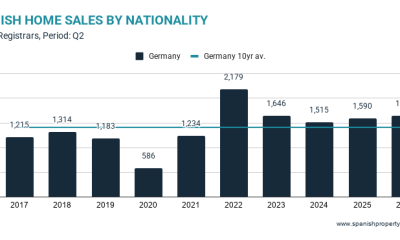
Foreign demand2 weeks agoMarket Snapshot: German Market In Q2 2026
-
Housing access / crisis / affordability1 week agoRadical Housing Decrees Defeated As Snap Election Talk Grows
-
Blackout preparedness1 week ago
Brussels takes action against Spain over failure to update blackout plan
-

Uncategorized1 week agoLewis Hamilton F1 wish could come true as stunning plans for new track revealed
-

Uncategorized2 weeks agoRed Bull F1 chief shares important Isack Hadjar injury update after Baku return