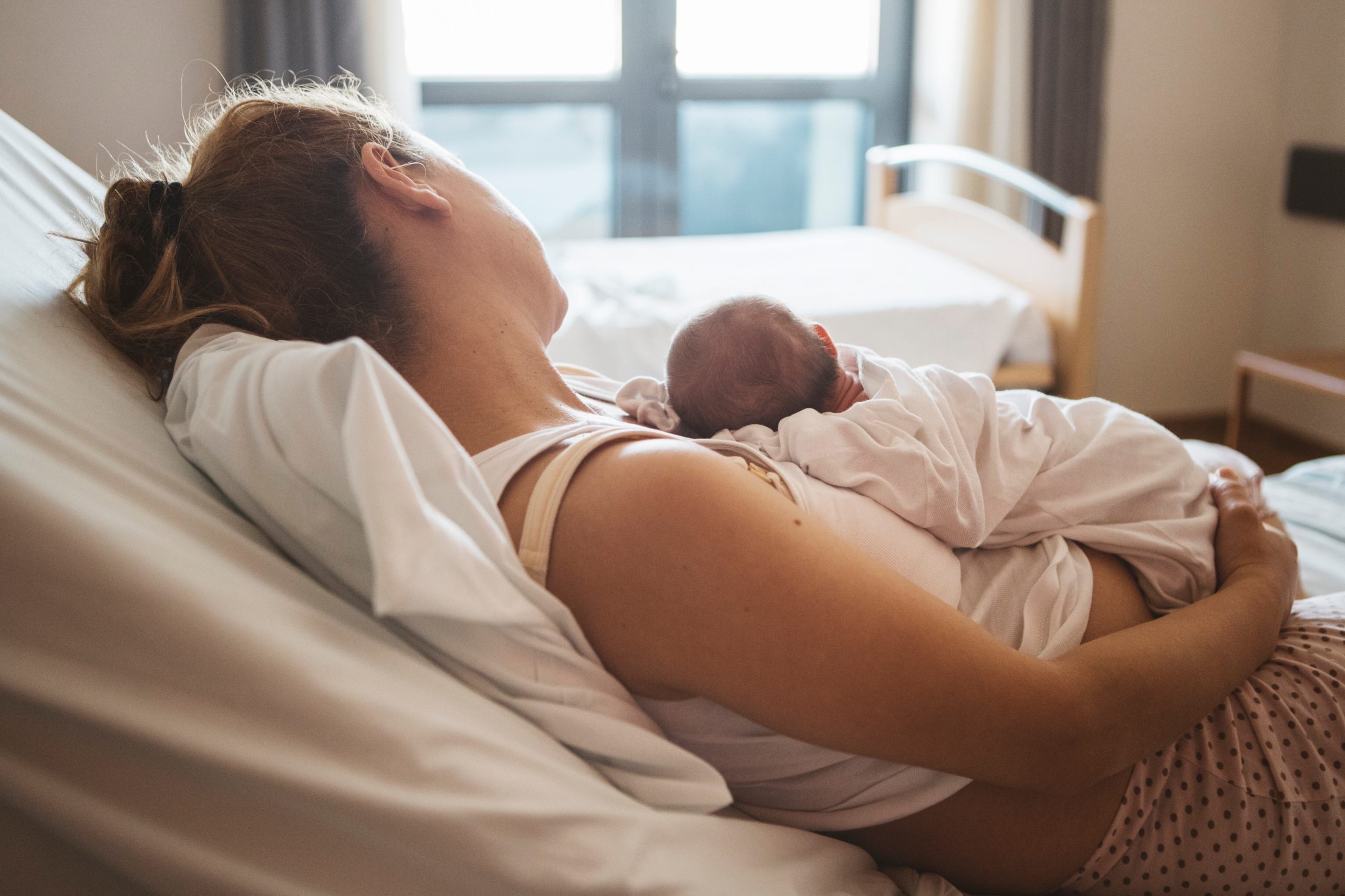
Our collective imagination paints pregnancy and the postpartum period as an idyllic time, forever flush with happiness, no matter the circumstances. No other scenario is even considered. But reality is often much more complicated, its difficulties rendered invisible. There can be joy and excitement, but the period can also involve fits of crying with no apparent cause, sadness, anxiety and a feeling of emptiness that, on occasion, can be a precursor to serious mental health issues. A study published Thursday in The Lancet Psychiatry journal offers statistics related to serious depression in the peripartum period — which runs through pregnancy, and up to one year after childbirth — concluding that at least one in every 16 women suffers from major depressive disorder during that time. The most critical phase is two weeks after birth, during which there is the highest risk of experiencing the mental health condition.
Alize Ferrari, a researcher from the University of Queensland and author of the study, says that the scientific community knew that the prevalence of the disorder was greater among women during pregnancy and postpartum than in the general population, but that it did not know the magnitude of that difference. Scientific evidence was limited. Some studies put the proportion of the disorder between 14% and 17%, but many study authors say that the methods were at times inconsistent, with loose criteria and measurement errors. The new study, which makes use of a scientific review compiling data from two million women and girls from 90 countries, concludes that serious depression appears in 6.2% of women during pregnancy (that is, one in every 16) and in 6.8% of mothers (one in every 15) during the year after birth.
The study reopens a debate over the cultural narrative of birth as a luminous time. “For many women, it is no picture-perfect scene. And it’s not about weakness or a lack of love, but rather, biological processes and a heavy history,” writes psychiatrist Gemma Parramon in her book Será por las hormonas (Maybe it’s the hormones).
After analyzing the study, in which she did not participate, Parramon, who works at Barcelona’s Vall d’Hebron Hospital, says that Ferrari’s research is “very methodologically potent, and amounts to a solid contribution to prevalence, because it helps to order heterogeneous studies.” That being said, the psychiatrist asks for caution when it comes to interpreting its results, so as “not to underestimate other disabling conditions.” “Here, they are evaluating major depressive disorder, but not other conditions that are frequent during postpartum that are equally debilitating,” she underlines.
Parramon is referring to conditions like the “baby blues”, which involves mild depressive symptoms like irritability and sadness. Though it may not initially fulfill diagnosis criteria for serious depression, if it becomes chronic and worsens, it may develop into it. “The reading should not be that there is less postpartum depression than we thought. There are other cases involving subclinical depression [which does not fulfill all the technical criteria for the more serious diagnosis] that can be very important and impact functioning and motherhood,” she says.
The psychiatrist suspects that the difference in prevalence between studies (some peg it as up to 17%, much higher than Ferrari’s results) is due to the fact that some studies include depressive disorders of varying levels of seriousness in the same category.
Ferrari’s research excludes transitory states of sadness and emotional instability, and places the focus on the most complex version of the mental health condition associated with peripartum. Major depression, in contrast to more subtle, passing mood changes of postpartum sadness, involves serious and persistent symptoms: grief and despair, but also a loss of interest and difficulty coping with daily life.
Prevalence of serious depression is higher in all phases of peripartum than among the general population, but it is particularly elevated (at 8.3%) two weeks after birth. “Our findings emphasize the need for early identification and intervention for serious depressive disorder during the peripartum period, but especially when women and girls are reaching the end of the first two weeks after birth,” says Ferrari.
Biology and biography
The factors behind the greater vulnerability to mental health problems during pregnancy and birth are varied. Biology and biography can play roles, say experts consulted for this article. “It’s likely that the rise in prevalence of major depressive disorder in the peripartum period is due to the complex interaction between diverse stress factors, like abuse and violence, biological factors, poverty, growing inequality, differences in access to health services, barriers to medical care and other factors that influence the support that women and girls receive during the peripartum period in different countries,” says Ferrari. According to her data, the prevalence of serious depression during the phase was highest in sub-Saharan southern Africa and southern Asia; and lowest among high-income communities in the Asia-Pacific region.
Parramon says that, “serious depression can arrive through many situations.” It can be influenced by hormones, for example. After giving birth, there is an abrupt hormonal decrease, and women with high levels of hormonal sensitivity can experience more severe symptoms after that drop, she says. That would explain, in large part, why Ferrari’s study found a spike in serious depression at the beginning of postpartum, coinciding with that hormonal decline.
In addition to all this, says Parramon, there are also psychosocial factors. These include socioeconomic conditions, familial relations and the sharing of childcare responsibilities. “Contextual aspects can be an influence, as well as the expectations we have: motherhood is sometimes very demanding and it is anything but self-care. There are depressions that are derived from demands on the self to fulfill what society has told them they have to do to be good mothers.”
Invisible illness
Endocrinologist Carme Valls emphasizes in her book Mujeres invisibles para la ciencia (Invisible women to science) that postpartum depression is recognized as a condition, but that it is rendered invisible. “It’s not clear when it takes place due to lived conditions and conflictive partner relationships, from personal isolation when faced with the work at hand, endocrine disorders and nutritional deficiencies that have gone unseen, because they have not been studied either.”
The doctor emphasizes how circumstances as disparate as symptoms of anemia, coupled with a lack of domestic help and fatigue during the lactation phase — especially if care duties and household chores are not equally shared — “contribute to the feeling that some women have that they are not up to the task of caring for their children, which can contribute in part to the onset of postpartum depression.”
Not to mention the cloak of silence and lack of awareness that surrounds these conditions. When added to the weight of rigid social conventions that can characterize this time of obligatory happiness, it does little to correct myths and destigmatize these highly debilitating symptoms.
Sign up for our weekly newsletter to get more English-language news coverage from EL PAÍS USA Edition

























 Ataque contra Irán3 weeks ago