
Costa Blanca South
Villena exhibition celebrates artistic legacy and Moors and Christians costume designs

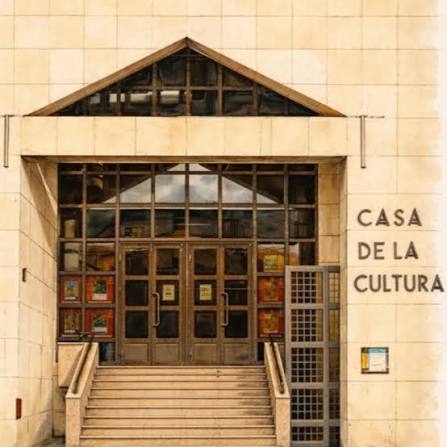
Fiesta exhibition now open at the Casa de la Cultura in Villena. Credit: KAKV.
Villena is celebrating the work of local artist Pedro Marco with an exhibition exploring the important role he played in designing costumes for the town’s famous Moors and Christians fiestas.
The exhibition, The Dress Made Art: Pedro Marco’s Contribution to the Fiesta, is now open at the Casa de la Cultura and continues until September 27.
Marco, who lived from 1949 to 2022, was a prolific artist and designer whose connection with Villena’s fiestas stretched across more than five decades.
Costumes that helped shape the fiestas
The exhibition includes paintings dedicated to the Moors and Christians celebrations, with particular attention given to the women’s costumes Marco designed during the late 1980s, when women were first permitted to take part in the fiestas.
His designs form part of an important period in the history of the celebrations, when women’s participation brought changes to the appearance and development of the different fiesta groups.
Visitors can see how Marco used his artistic skills to create clothing specifically for the celebrations, turning traditional fiesta costumes into another form of creative expression.
The exhibition also offers an opportunity to look back at how the visual identity of Villena’s famous celebrations developed during Marco’s long association with them.
Designs for Villena’s Tuaregs
Visitors can also discover Marco’s work for the Tuaregs group of the Moroccan side.
From the late 1960s onwards, Marco created elaborate tunics and distinctive turbans for the group, helping to establish a recognisable style that became closely connected with its appearance during the fiestas.
His contribution went well beyond costumes. The exhibition also includes examples of his extensive graphic work, including posters and covers created for fiesta magazines and books.
Together, the different pieces show the wide-ranging influence Marco had on the visual character of the celebrations over several decades.
Exhibition continues until September 27
The exhibition is open daily from 6:00 PM to 9:00 PM and continues until September 27.
Visitors should note that it will be closed on August 29 and 30 and from September 4 to 10 during Villena’s patron saint fiestas.
The Casa de la Cultura is located at Plaza Santiago, 7, 03400 Villena. For more information, call (+34) 965 80 11 50.






Rojales is looking for performers for its XI Night of Stars Festival. Credit: Gorodenkoff / Shutterstock.com.
Do you fancy taking to the stage and showing Rojales what you can do? The town is looking for performers for its XI Night of Stars Festival, giving locals the chance to dress up, perform and become their favourite music stars for the night.
Anyone can enter, either alone or as part of a group of up to 15 people. The idea is to imitate a well-known singer or group as realistically as possible, performing in playback and bringing plenty of personality to the stage.
Become your favourite music star
Participants will have the opportunity to recreate the appearance and performance style of their chosen artist, making costumes, choreography and stage presence all part of the fun.
Each performance can last up to four and a half minutes, and entrants can put forward a maximum of two possible acts featuring different artists.
The festival gives local performers the chance to get creative and entertain the audience, whether they choose to recreate a famous solo singer, pop group or another well-known music act.
There are only 24 performance places available, which will be allocated in order of registration, so anyone keen to join the fun should get their entry in early.
Registration open until September 2
Registration remains open until September 2 at the Information Office inside Rojales Town Hall.
Entrants need to provide their contact details, chosen artist and song, performance length and number of people taking part, together with the completed registration form, inside a sealed envelope.
Anyone considering two different performances can include both options, provided they feature different artists. With places limited, registering early will give performers the best chance of securing a spot in the festival.
Under-18s can also take part but will need permission from their parents or legal guardians before entering.
The event offers friends, families and individuals the chance to put together their own tribute performance and experience what it is like to step into the spotlight in front of a local audience.
Rojales Town Hall is at Calle Malecon de la Encanta, 1, 03170 Rojales, where completed registrations can be submitted before the September 2 deadline.
With just 24 places available, budding performers hoping for their moment in the spotlight are being encouraged to choose their song, prepare their costumes and get their entries in as soon as possible.
Costa Blanca South
Costa Blanca residents asked to help track disease-carrying mosquitoes using mobile app

Costa Blanca residents being asked to help track mosquitoes. Credit: Asier Romero / Shutterstock.com.
Residents across the Costa Blanca are being encouraged to help track mosquitoes using the Mosquito Alert app, as health authorities strengthen monitoring of species capable of transmitting disease.
The Ministry of Health is asking people to send photographs of mosquitoes, report possible breeding sites and record bites through the citizen science app. Observations submitted by members of the public are reviewed by specialists and used alongside official monitoring systems.
Anyone can participate, making it possible for residents to contribute useful information about mosquito activity simply by reporting what they see in their local area.
Tiger mosquitoes already established on Mediterranean coast
The scheme is particularly relevant to the Mediterranean coast, where the tiger mosquito, Aedes albopictus, is already established.
Monitoring mosquitoes is important because some species can transmit diseases including chikungunya, dengue and West Nile virus.
Spain had recorded 108 imported cases of chikungunya by July 19, compared with 37 during the same period last year. However, there have been no locally transmitted cases in Spain this year.
There were also 124 imported dengue cases, although again no locally transmitted cases have been reported during 2026.
The distinction means the infections were contracted outside Spain rather than through mosquito transmission within the country.
West Nile virus monitored in Alicante
West Nile virus is also being monitored by health authorities.
By July 22, one human case had been confirmed in Alicante province, alongside two in Sevilla.
The monitoring programme allows authorities and researchers to build a clearer picture of where different mosquito species are appearing and identify potential changes in their distribution.
Public reports can also help specialists locate possible breeding areas and detect invasive species in places where they have not previously been recorded.
Residents can submit mosquito sightings
Mosquito Alert has been running since 2014 and has helped identify invasive mosquitoes in almost 500 Spanish municipalities.
It has contributed to 32 per cent of the first recorded detections of invasive mosquitoes in Spain, demonstrating how information submitted by members of the public can complement official surveillance.
Anyone can participate simply by using the app to submit sightings and possible breeding locations, as well as reports of mosquito bites.
Photographs sent through the platform are checked by specialists before being added to the wider monitoring system.
With mosquito activity particularly noticeable during the warmer months, Costa Blanca residents are being encouraged to take part and help provide researchers with more information about the insects appearing across the region.
For more information about the app and how to participate, visit mosquitoalert.com.
Moclinejo Fair 2026 dates revealed: Full programme for San Bartolome weekend
Heartfelt farewell as Age Care Ana bids emotional goodbye to Costa del Sol charity
Blues fans head to Cajiz village for free fourth annual night of live music this Saturday


-

 Uncategorized2 weeks ago
Lewis Hamilton hits gold with $10bn jackpot but British star snubs Monaco move: F1 News Recap
-

 Uncategorized2 weeks ago
Racing star was destined for F1, now he
-
airport threat2 weeks ago
Explosive device on drone sparks major German airport investigation
-
Mallorca2 weeks ago
Palma mayor fights to keep TUI water bus project afloat
-
Latest1 week ago
EU Tells Meta, TikTok To Boost Monitoring, Fact-Checking
-
F12 weeks ago
The Grand Prix is back: Madrid prepares for its first F1 race in 45 years
-
Altea1 week ago
Fireworks disaster at Costa Blanca spectacular leaves 27 injured in Altea
-
News from Italy2 weeks ago
Woman accidentally throws away €1 million lottery ticket. Bin men help her get it back.