
Columnists
VW ID.7 Tourer – classy, comfortable, practical


The ubiquitous SUV is continuing to curry favour with buyers to the detriment of other styles of car, one victim being the traditional estate car. Even legendary estate car maker Volvo has a much-diminished range. Volkswagen Group still value the estate car though and they’ve moved them into their electric range.
VW’s ID line-up has the ID.7 Tourer which is not only classy and stylish but rather practical too. With the rear seats folded there’s 1948 litres of space, with the rear seats up 605 litres, and when folded it’s a pretty flat load area too.
The three-car range starts with the Pro Match Plus at €60,785/£52,225 and generous standard equipment including keyless entry and start, 38cm/15” navigation screen, tri-zone climate, LED matrix auto head lights, heat pump, privacy glass, power front seats, heated, folding and dipping door mirrors, rain sensor, area and rear-view cameras. In the mid-range Pro S Match Plus the equipment level and battery size climbs with a starting price of €64,810/£55,710. The top-of-the-range GTX Plus 4 MOTION includes all-wheel-drive and prices starting from €70,300/£60,400.
My mid-range Pro S Match Plus comes with the larger 86kwh battery, the lead-in car has a 77kwh battery, that gives an official combined range 679km/422miles. In the real-world, depending on your driving style, roads and weather, you’ll probably not find it difficult to see 482-563km/300-350 miles.
On the road the Tourer is a very nice drive with, given it’s an estate car, surprisingly good handling. You can push it along the twist and flow of cross-country roads at a decent pace. At cruising speeds it’s quiet and refined, not all EVs share those qualities, and there’s good adjustment on the seats to ensure a comfortable position.
On the downside there’s the inevitable rash of touchscreen activity and even where there are a few manual options, such as the touch/slider heating controls, they’re fiddly and imprecise when you’re trying to operate them while driving. Equally, the steering wheel mounted switches are too easy to catch. Then there’s the wiper, which sweeps across from the left (passenger side), stops directly in your line of sight. And then, when it moves back to the left, it leaves a line of water, again in your line of sight. It’s distracting!
All-in-all though, despite a few gripes and an admittedly high price, the ID.7 Tourer is a proper estate car, stylish, comfortable, nicely bolted together and for an EV very capable of long-distance drives. I was genuinely sorry to see this one head back to VW.
Facts at a glance
- Model: VW ID.7 Tourer Pro S Match Plus
- Engine: Electric with 86kwh battery developing 286PS
- Gears: Automatic
- Price: €64,810/£55,710
- Performance: 6.7s to 100kph/62mph – 180kph/112mph maximum speed
- Economy: Combined range 679km/422miles
- Emissions: 0 g/km
Model tested was UK-specification and equipment levels and prices may vary in other markets



ALS treatment advances
Motor neurone disease breakthroughs: Why research offers new hope for the future
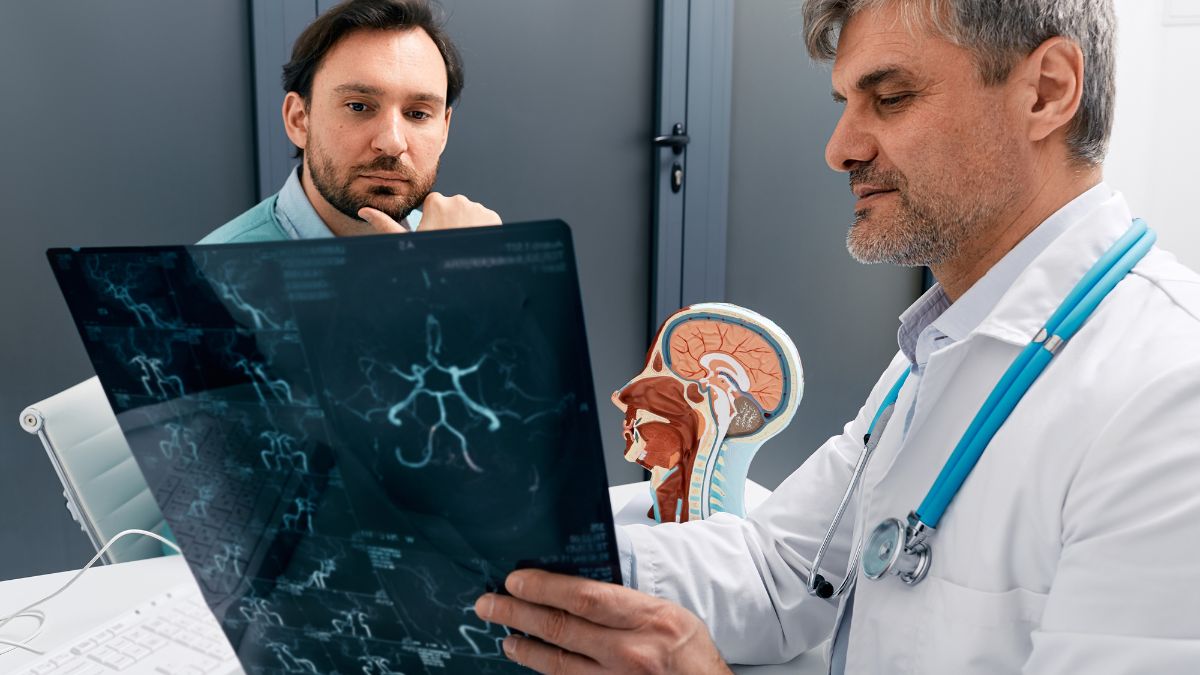
Medical imaging and diagnostic breakthroughs continue to improve early detection and care pathways for complex neurological conditions. Credit: Peakstock/Shutterstock
Motor neurone disease (MND) has long been regarded as one of the most heartbreaking diagnoses in modern medicine, gradually robbing individuals of their physical independence while leaving memory and cognition untouched. However, international research is entering a revolutionary new era. From groundbreaking gene-silencing therapies and AI-assisted drug discovery to early-detection blood tests and stem cell studies, scientists are shifting their focus from merely managing symptoms to targeting the root causes of the disease. These clinical advances provide genuine, evidence-based optimism for patients and families worldwide.
For many years, motor neurone disease (MND) has been regarded as one of the most heart-breaking illnesses in medicine. It gradually robs people of their ability to walk, use their hands, speak, swallow and eventually breathe, while often leaving their thinking and memory untouched. It is a cruel diagnosis, not only for those living with the disease but also for their families and loved ones.
Shortly after I graduated in the late eighties, I had to watch my grandfather die from motor neurone disease. At the time it wasn’t making headlines, and to be honest not many people had even heard of it. I had to pull some textbooks to try and understand the pathology, but even then, I was left much in the dark. I can remember thinking how little we really understood many conditions that affected us, and no amount of training can prepare you to witness something so horrid.
Since that time, we have learned a lot.
Researchers around the world are making faster progress than ever before. New discoveries about what causes MND are leading to treatments that target the disease itself rather than simply helping to manage its symptoms. There is still no cure, but many experts believe we are entering a new era in MND research.
What Is Motor Neurone Disease and How Does It Progress?
Motor neurones are the nerve cells that carry messages from the brain to the muscles. Every time you smile, lift a cup of coffee or take a step, these nerves are doing their job.
In people with MND, these nerve cells gradually stop working and die. As fewer signals reach the muscles, they become weaker and waste away. Everyday tasks become increasingly difficult, and as the disease progresses, patients often need more help with even the simplest activities.
Most people who develop MND have no family history of the condition. However, around one in ten cases are inherited, and understanding these inherited forms has opened exciting new avenues for research.
Targeted Gene Therapy: Stopping MND at Its Genetic Source
Perhaps the biggest breakthrough has been the development of treatments that target faulty genes.
Scientists have identified several genes that can cause inherited forms of MND. Instead of treating the symptoms, researchers have developed medicines that switch off these faulty genes before they can produce harmful proteins that damage nerve cells.
I know this all sounds a bit science fiction, and these treatments are only suitable for a small number of patients at present, but they prove that it is possible to slow the disease by tackling its underlying cause. That is a huge step forward and offers hope that similar treatments could eventually be developed for many more people.
How Artificial Intelligence Is Accelerating Medical Drug Discovery
Artificial intelligence, apparently it could put an end to all of us in the next ten years if you believe that, but the truth is that it is helping researchers make discoveries at an astonishing speed.
By analysing enormous amounts of medical information, AI can spot patterns that would take humans years to identify. It is helping scientists discover new drug targets, identify existing medicines that might be useful for MND, and even match suitable patients to clinical trials more quickly.
Of course AI doesn’t replace medical researchers—it simply gives them a remarkably powerful new tool.
Stem Cell Research: Protecting Healthy Nerve Cells
Stem cell research has attracted headlines for years, although the reality has often been less dramatic than the publicity suggested.
Today’s research is much more realistic. Scientists are no longer expecting stem cells to magically replace damaged nerves. Instead, they hope stem cells can protect the healthy nerve cells that remain by releasing substances that reduce inflammation and support nerve survival.
Early studies are encouraging, but much more research is needed before stem cell treatments become widely available. Unfortunately, political decisions still block this type of research in some regions.
Controlling Inflammation: Protecting the Nervous System
One of the biggest discoveries in recent years is that MND is not just a disease of nerve cells.
The body’s own support cells, which normally protect the nervous system, can become overactive and accidentally contribute to further damage by producing harmful inflammation.
This has led researchers to investigate medicines that calm this inflammation, potentially slowing the disease while leaving the immune system able to fight infections normally.
Earlier Diagnosis: The Role of Biomarkers and Blood Tests
Doctors are also getting better at diagnosing MND earlier.
Researchers have identified substances in the blood that can act as warning signs of nerve damage. One of the most promising is a protein called neurofilament light chain, which is released when nerve cells are injured.
A simple blood test may help doctors confirm the diagnosis sooner and monitor how quickly the disease is progressing.
This is important because many of the new treatments are likely to work best before too many nerve cells have been lost.
Multidisciplinary Care and Assisted Technology
While everyone hopes for a cure, improvements in everyday care have already made a real difference.
Patients today often benefit from specialist clinics where neurologists, physiotherapists, speech therapists, dietitians, respiratory specialists and nurses all work together. This team approach has been shown to improve both quality of life and survival.
Modern breathing support, nutritional advice and communication technology are also helping people remain independent for longer.
Eye-controlled computers, for example, allow many people who have lost their speech to continue communicating with family and friends using only their eye movements.
International Collaboration and Global Clinical Trials
One reason progress has accelerated is that researchers are no longer working in isolation.
MND is a relatively uncommon disease, so international collaboration has become essential. Scientists across Europe, North America, Australia and Asia are now sharing information and working together on large clinical trials, despite political interference.
Patient organisations have also played a vital role by funding research, raising awareness and encouraging people to take part in studies.
The Future of MND Care: Personalised Therapies and Hope
No one is pretending that MND has been solved. It remains one of the most complex neurological diseases doctors face, and much work still lies ahead.
However, the picture today is far brighter than it was even ten years ago. Scientists understand far more about why the disease develops, they have identified promising new treatment targets, and dozens of new therapies are being tested around the world.
Many experts now believe that the future will involve diagnosing MND much earlier and treating it with a combination of therapies tailored to each individual—rather like the way cancers and HIV are treated today.
For people living with motor neurone disease and those who love them, that offers something which, until recently, was in short supply: genuine reason for optimism.
Every new discovery brings us a little closer to the day when MND can be slowed significantly, controlled—or perhaps one day even prevented altogether.
While that day has not yet arrived, it no longer feels like an impossible dream.
If you, or a loved one, are affected by MND you can contact the Spanish MND association on Telephone 91 311 3530 or by email at adela@adelaweb.org.
The information provided in this column is for educational and informational purposes only, and does not constitute medical advice. It is not a substitute for a professional medical consultation, diagnosis, or treatment. Always seek the advice of your own physician or other qualified health provider with any questions you may have regarding a medical condition.
Dr Marcus Stephan

By Carlos Baos (Lawyer) • Published: 23 Sep 2026 • 17:48 • 2 minutes read
I might want to leave my inheritance to my grandchildren. Is this possible? Credit: Maria Sbytova
More families than one might expect, particularly among the international community living along the Costa Blanca, are asking a similar question these days. Could a person leave a meaningful share of their estate directly to their grandchildren, bypassing their own children in the process?
The first thing to establish, before anything else, is which country’s succession law actually applies. This is not automatically decided by nationality. Under Regulation 650-2012 of the European Union, the law that applies to a person’s estate is, by default, that of their last habitual residence, unless the testator has expressly chosen the law of their nationality instead.
For someone who has lived in Spain for years and has never made that choice, Spanish succession law will very likely apply. And that changes the picture considerably. Unlike countries such as England and Wales, where a person can generally leave their estate to whomever they wish, Spanish law protects children as forced heirs.
Under the Civil Code of Spain, an estate is divided into three equal thirds. The first one must go to the children, in equal shares, with no exceptions worth relying on. The second one is reserved for children or other descendants — a category wide enough to include grandchildren. Spanish courts, including the Supreme Court, have confirmed that this second third can be awarded entirely to a grandchild, even while their own parent is alive. The third and final portion carries no restriction at all.
Put together, someone whose estate is governed by Spanish law could direct up to two thirds of it towards their grandchildren, while their children would still receive their full protected share of the remaining third.
There is a further wrinkle. If those grandchildren are under 18 years old, their inherited assets would typically end up managed by their own parents — precisely the people the arrangement was meant to bypass. Naming a separate administrator in the will, if done properly, avoids this outcome.
None of this (including the question of which law applies in the first place) is something to assume from general impressions about where someone happens to hold a passport. Getting it right calls for looking at each case individually. At White-Baos Lawyers we have been advising British expats for almost two decades. If you want your will properly drafted, and your wishes genuinely respected, reach out to us today.
You may be interested in the following services and articles:
Inheritance Tax payment from the deceased’s bank account. Inheritances in Spain. Is it possible?
Carlos Baos (Lawyer)
White & Baos.
Tel: +34 966 426 185
E-mail: info@white-baos.com
White & Baos 2026 – All Rights Reserved.

Picasso exhibition. Credit: nikkimeel / Shutterstock.com
With more than £666 million worth of parcels pinched by “porch pirates” from British doorsteps in 2025, it’s hardly surprising householders there are retreating behind video doorbells and CCTV. Even Picasso might have applauded the irony.
In fact, a small Picasso still life staged the most low-key disappearance imaginable. ‘Naturaleza muerta con guitarra’ (1919), a modest gouache and pencil work valued at €600,000, was reported missing last October while supposedly travelling from Madrid to Granada for exhibition. The truth was less glamorous: the painting barely left the building.
When the CajaGranada Foundation failed to receive the work on 3 October, Spain’s Policía Nacional began an investigation. Three weeks later the ‘lost’ Picasso was recovered, taken in by a neighbour after the transport company left the package in a Madrid doorway! Mistaking it for a forgotten delivery, the neighbour stored it safely until her husband recalled news of a “missing Picasso”. The police were promptly called.
The foundation later admitted the works were carefully packaged but incorrectly numbered. The delivery was signed off regardless. Only during unpacking was the painting’s absence noticed.
The exhibition went ahead anyway. Picasso’s work, long coveted by thieves, has survived worse crimes: from Paris burglaries to a London gallery heist at gunpoint. This time, however, art history briefly collided with doorstep logistics, nearly lost – and risked snatching defeat from the jaws of victory!
Thanks for emails to my website below. Thrilled you enjoy my novels too!
Nora Johnson’s 15 critically acclaimed psychological suspense crime thrillers, including the latest ‘The Girl in Red’ (www.nora-johnson.net), all available online at Amazon etc. Profits to Cudeca cancer charity.
Male contraceptive pill moves closer as WHO backs new birth control options
Spain’s 10pm dinner is disappearing and it could change your nights out
Deadly crash and landslide chaos wiped out 800,000 Málaga-Madrid journeys


-
Latest1 week ago
The Vocabulary You Need To Understand The Spanish Citizenship Process
-

 Argentina2 weeks ago
The Falklands: The Open Wound That Unites Argentines
-
Holiday rentals2 weeks ago
Ibiza council hits illegal tourist rental with €793,000 fine – but will the owner pay that much?
-

 Energy efficiency & certificates2 weeks ago
94% Of Spanish Homes Are Energy Inefficient – Could Tighter Rules Be Coming?
-

 Alex Saab1 week ago
Maduro Ally Alex Saab Pleads Guilty In US Money-Laundering Case
-
easyJet2 weeks ago
146 slide off easyJet flight after powerbank fire at Milan airport
-

 New Developments2 weeks ago
Inside The Most LUXURIOUS Apartment Building In Spain!
-

 Uncategorized2 weeks ago
F1 champion Max Verstappen reveals his