Connect with us

%

What This Pilot’s Court Battle Means For Expats Who Travel For Work

Published

on

what-this-pilot’s-court-battle-means-for-expats-who-travel-for-work

Spanish court rejects Ryanair pilot’s tax exemption for international flights. Photo Credit: Blake Guidry / Unsplash

Expatriates and international workers living in Spain may be in for a stark reality check following a recent ruling by the High Court of Justice of the Basque Country. The court has dismissed the appeal filed by a Ryanair pilot in Biscay, after he claimed tax exemption for work performed abroad, arguing that most of his flight time was spent outside of Spain. This ruling may shatter a belief common among cross-border professionals, digital nomads, and airline crew members about income taxes while physically working outside of Spain.

The argument: Ryanair pilot spent most of his daily life outside Spain in 2022

The pilot, according to local outlet El Diario Vasco, had aimed to reduce his personal income tax settlement for the 2022 fiscal year by €20,940. The Ryanair pilot is a tax resident in Biscay, and argued that since most of his work was carried out beyond the country’s borders and directly benefited the Irish airline, he met the requirements for the tax exemption outlined in the region’s legislation.

To talk numbers, the pilot received a gross salary of €124,382 in the 2022 fiscal year, and had €43,360 withheld for personal income tax (IRPF, as it is known in Spain). He had applied for the exemption to reduce his taxes by €20,940.

The pilot also cited a Supreme Court ruling from April 2025, regarding crew members of Spanish Navy warships operating in international waters.

Basque court rejects appeal

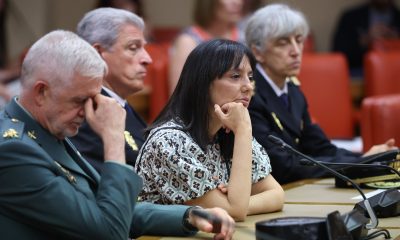
However, the ruling issued by the Basque court rejected the claim, ruling that the pilot’s workplace was located at the Barcelona-El Prat airport in Catalonia, from where he started and ended his workday on a daily basis. The court found that all the flights piloted by the Ryanair employee departed from and returned to Barcelona on the same day, and the payments of income tax were made and declared for tax purposes by Ryanair’s representative office in Spain.

According to the ruling, as El Diario Vasco reports, pilots and other workers linked to commercial airlines are all assigned a “base” from which they operate, and this is the determining factor to establish where their work activity is carried out daily.

The Basque Country High Court of Justice also rejected the comparison to the crew members of the Spanish Navy warships, stating that the situation was “completely different” and that, to qualify for this exemption, it is not enough merely to travel outside of Spanish territory, but the workplace must also be located, even temporarily, abroad.

What this means for expats who travel for work: Tax exemptions may not apply, even if you spend most of your time outside Spain

For many expatriates working in Spain (especially those who are high-earning, consultants, or regional remote workers), this case highlights the distinction between travelling for work and displacing the workplace. People who live in Spain but travel, even frequently, to other countries for meetings, client pitches, or other obligations, cannot automatically assume that income is exempt from taxes.

That is to say, if your contract is with a Spanish subsidiary, you get paid into a Spanish bank account, and you return home to your Spanish residence at the end of the day or week, Hacienda will still review your tax obligations as if you had never left the country; if your ‘home base’ is here, so are your tax obligations.

%

Los Alcazares Pride Returns With Star-Studded Line-Up And Free Health Services

Published

on

los-alcazares-pride-returns-with-star-studded-line-up-and-free-health-services

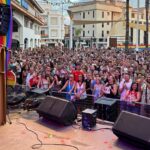
Mar Menor pride festival returns with headliners Nebulossa and parades. Photo Credit: Los Alcazares Town Hall

Los Alcazares is set to celebrate diversity on the shores of the Mar Menor with the return of its annual Pride celebration. Running from Monday, July 6 to Saturday, July 11, this third edition of “El Mar Menor vibra con Orgullo” promises nearly a week of events dedicated to the LGTBIQ+ community, equality, and respect.

Star-studded line-up at Plaza de la Feria

The main stage at Plaza de la Feria will host as many as 30 diverse acts throughout the week. Acclaimed artists Nebulossa and Malena Gracia will top the star-studded bill, alongside popular performers like Satín Greco, Le Cocó, Pitita, Kuve, and Keunam.

The festival’s major highlights begin on Thursday, July 9, with the Gala Míster Orgullo del Mar Menor. This is followed on Friday by the colorful Gala Divas y Reinas. The celebrations reach their peak on Saturday, July 11, starting with a lively parade along the seafront at 19:00, marching from Plaza del Espejo to Plaza de la Feria.

Following the march, Mayor Mario Pérez Cervera and the “Lo tienes claro?” Association will deliver a pride manifesto, setting the stage for an opening speech and a massive closing gala, featuring unforgettable musical performances.

Highlighting health and advocacy on the coast

In addition to the fun aspect of the event, it will also have another main focus: public health. All day on July 10, and in the morning of July 11, organisers will provide quick, confidential, and free HIV tests at the Town Hall, available for anyone who wants to take one.

Local businesses along the Los Alcazares promenade are also actively participating, with many hosting themed events, decorative displays, and special promotions to welcome the influx of international and local visitors.

This vibrant coastal celebration will successfully blend high-energy entertainment with important advocacy, welcoming residents and visitors to honour equality and have fun together. Organisers suggest that anyone interested in attending arrive early to the event, and enjoy one of the most colourful and fun celebrations in the town’s local summer calendar.

Continue Reading

%

Pies, Pints & Pipas.

Published

on

pies,-pints-&-pipas.

Every country has its own way of fuelling matchday. Steak pies in England. Scotch pies in Glasgow, bags of pipas in Spain and sizzling choripan in Argentina, food is as much a part of the experience as are the roars from the stands. Food matchday traditions are part of what make football culture so unique.

England, the home of the pint and the pie

No country is more closely associated with football food than England. For generations, supporters have gathered in local pubs before kick-off, pint in hand, before heading to the ground for a hot pie. It’s a tradition that dates back to the late 19th century, when football clubs grew alongside Britain’s industrial towns and a hearty pie offered an affordable meal on a cold afternoon.

Today, pies are still a fixture at grounds across the country, classic steak and kidney and steak and ale, with Birmingham’s famous Balti Pie earning cult status among supporters.

Modern stadiums may now serve gourmet burgers and loaded fries, but for many supporters nothing beats the simple comfort of a pie and a pint before the first whistle.

As one Reddit fan put it “Football without a pie just doesn’t feel right.”

Scotland, where the Scotch Pie reigns supreme

Right far up north, the Scotch pie, a small, double-crust pastry traditionally filled with seasoned minced meat, has long been Scotland’s signature stadium snack and remains to this day a matchday institution. Macaroni pies, steak pies and sausage rolls are also popular choices

UEFA even notes that England and Scotland both love their pies and locals will happily debate the differences between them for hours, a rivalry almost as fierce as some of the matches themselves.

Spain, the kingdom of Pipas

Spain absolutely owns the sunflower seed. Few football traditions are as recognisable as supporters cracking open bags of roasted sunflower seeds, or pipas. The familiar crunch of shells has become part of the soundtrack at stadiums across Spain, and because fans eat pipas by the handful, stadium floors in Spain are famously left completely white with a literal “snowstorm” of discarded seed shells by the 90th minute. Many fans also arrive carrying a freshly made bocadillo, filled with jamon serrano, tortilla española or chorizo, with a cold cana before the match completing the experience.

Germany, bratwurst before kick-off

German football has arguably one of Europe’s best matchday experiences, and the food is no exception. Outside Bundesliga grounds, the unmistakable aroma of sizzling bratwurst fills the air long before kick-off.

Served in a bread roll with mustard, bratwurst is the classic choice, often accompanied by a giant pretzel and a locally brewed beer. It’s straightforward, satisfying and perfectly suited to watching the game

Argentina, football meets the barbequed meat

In Argentina, some of the best football food isn’t found inside the stadium but on the streets surrounding it. As supporters make their way to the ground, vendors fire up grills serving choripan, a grilled chorizo sausage in crusty bread topped with chimichurri. Empanadas are another matchday favourite, an easy snack to enjoy while soaking up the atmosphere.

North America. A taste of the 2026 World Cup

The 2026 FIFA World Cup has shown that football food is not restricted to pies, burgers and hot dogs. Across the United States, Canada and Mexico, supporters have been able to try the dishes each host city is known for, turning every match into an opportunity to experience local flavours as well as world-class football. Visitors have sampled everything from Texas barbecue and Philadelphia cheesesteaks to Canadian poutine, Miami’s famous Cuban sandwiches and authentic Mexican tacos.

Every stadium has its own flavour

Of course, these are just a few of football’s matchday food traditions. Dutch supporters are known for bitterballen, crispy, deep-fried meat croquettes that pair perfectly with a beer. In Italy, fans often grab pizza al taglio (pizza sold by the slice) or freshly made panini before heading to the stadium, while in Portugal, the bifana, a garlic and white wine-marinated pork sandwich is a matchday favourite. Belgian supporters rarely say no to a cone of crispy frites, traditionally served with mayonnaise, and in Brazil, coxinhas (golden chicken croquettes) and pão de queijo (warm, chewy cheese bread rolls) are popular pre-match snacks.

As football grips countries across the globe during the World Cup 2026 , cuisine will vary, but back home in your home ground, what do you eat at your matches?

Continue Reading

%

The Kind Of Abuse No One Sees Is Now Being Treated As A Crime In The Netherlands

Published

on

the-kind-of-abuse-no-one-sees-is-now-being-treated-as-a-crime-in-the-netherlands

Psychological abuse is being treated as a pattern of behaviour rather than a single event. Photo credit: KieferPix/Shutterstock

For many people, the idea of abuse is still linked to something visible. A raised voice, a confrontation, or injuries that can be explained and seen. But for others, it looks very different. It can be quiet, gradual and almost impossible to describe from the outside. It might be a partner who wants to know where you are all the time. Who questions your friends. Who checks your phone. Who slowly starts to make decisions feel less like your own.

Nothing may ever look dramatic enough for anyone else to notice, but over time, life begins to feel smaller, more controlled, and harder to step away from. In the Netherlands, that kind of behaviour is now being brought into focus in a way it never has before. Psychological abuse and coercive control are moving towards being treated as crimes in their own right, even when no physical violence is involved.

When control replaces love

Psychological abuse rarely arrives as something obvious. It often begins with behaviour that is easy to dismiss at first. A partner becomes overly jealous. They want to know where you are all the time. They start questioning your friends, your family, your decisions. Slowly, the space you once had in your own life begins to shrink.

Over time, this can turn into something more suffocating. Access to money is restricted. Social contact is controlled. Movements are monitored. Small choices become something that needs approval. Many victims describe it not as one dramatic moment, but as a gradual loss of independence they only fully recognise once they are already deep inside it.

Because there are no visible injuries, it is often misunderstood from the outside. Friends may not see it. Even the person experiencing it may struggle to find the right words for what is happening.

Why invisible abuse is being taken more seriously

The shift taking place in the Netherlands is built around a simple idea: abuse should not only be recognised when it turns physical. Psychological abuse and coercive control are now being treated as patterns of behaviour that can trap victims long before violence escalates. That includes intimidation, isolation, constant surveillance, threats, humiliation and emotional manipulation.

One of the key reasons behind this approach is timing. In many domestic abuse cases, controlling behaviour has been identified as an early warning sign that situations can escalate into physical violence later on. Recognising those patterns earlier gives authorities a chance to intervene before harm becomes more serious.

It also reflects a growing understanding that many victims never report what they are going through because they cannot easily “prove” it in the traditional sense. Without visible injuries, the abuse can remain hidden for years.

How this compares with Spain

Spain already has some of Europe’s strongest domestic violence protections, with laws recognising both physical and psychological harm within relationships. However, psychological abuse is generally dealt with as part of other domestic violence offences rather than as a standalone crime focused specifically on coercive control patterns.

The discussion now emerging in Europe raises a broader question about whether more countries should explicitly define controlling behaviour itself as a separate offence, rather than relying on broader categories of domestic abuse once harm has already escalated. For victims, the distinction is important. It can affect how early intervention happens, how cases are investigated, and how patterns of behaviour are understood in court.

A change in how abuse is understood

Across Europe, there is a gradual shift in how people talk about domestic abuse. It is no longer seen only through the lens of physical violence, but increasingly as a spectrum of behaviours that can begin with control, isolation and psychological pressure. The impact on victims can be long-lasting, affecting confidence, independence and mental health even after a relationship has ended.

The Netherlands’ move has added momentum to that conversation, highlighting how different countries are starting to approach the issue in different ways. Whether Spain follows a similar path or not, the debate itself reflects a changing reality: abuse is not always visible, and it does not always arrive in the form people expect.

When harm is real even if it cannot be seen

For many who have experienced psychological abuse, the hardest part is not what happened during the relationship, but what comes after. Explaining something that left no physical trace can be difficult. Being believed can take time. And rebuilding independence often happens slowly, long after the control has ended.

That is why this change matters. It challenges the idea that harm must be visible to be real, and it places focus on patterns of behaviour that can quietly shape someone’s entire life. Even without bruises, broken bones or public scenes, the impact can be profound. And as more countries begin to recognise that reality, the definition of abuse itself is starting to change.

Continue Reading
Advertisement
Advertisement

Spanish Real Estate Agents

Tags

Trending

Copyright © 2017 Spanish Property & News